Tag: Things to do in the Algarve

  • Carvoeiro’s Iconic Jazz Club Manoel’s reopens under new management

    Carvoeiro’s Iconic Jazz Club Manoel’s reopens under new management

    Since its opening in 1985, the venue has been a major presence on the jazz scene in the region, welcoming famous national and international artists

    – August 18, 2023
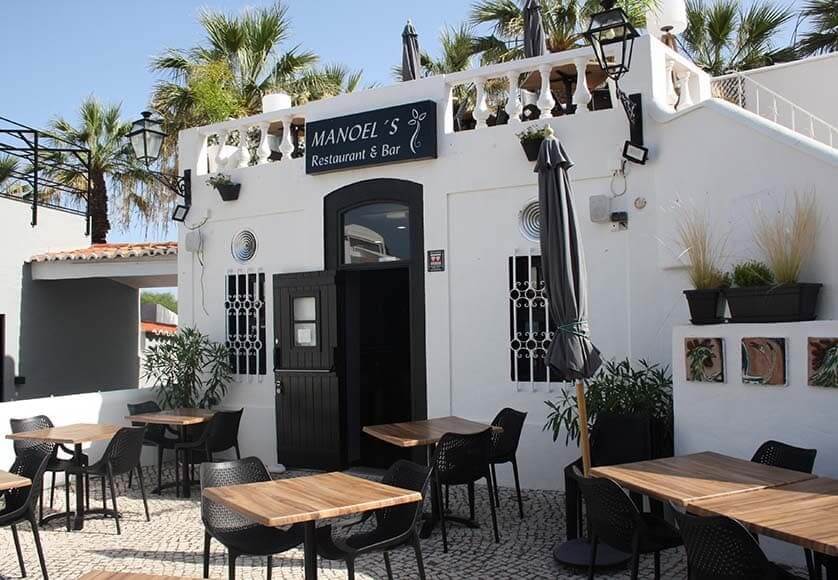
    Manoels Jazz Club by Michael Bruxo
    Manoel’s Jazz Club has an outdoor terrace and a rooftop boasting seaviews Photo: MICHAEL BRUXO/OPEN MEDIA GROUP

    Manoel’s Jazz Club, the iconic jazz venue which local musician Manuel Guerreiro opened in Monte Carvoeiro in 1985, officially reopened earlier this summer under the management of French couple Sabrina and Thomas Bourhis.

    The special occasion was celebrated with a performance by Carvoeiro’s famous percussionist and singer Beto Kalulu alongside his band featuring Joaquim Brandão (bass), Tomé Rocha (drums) and Marcos Vita (keyboard), as well as a special appearance by Enzo d’Aversa (piano).
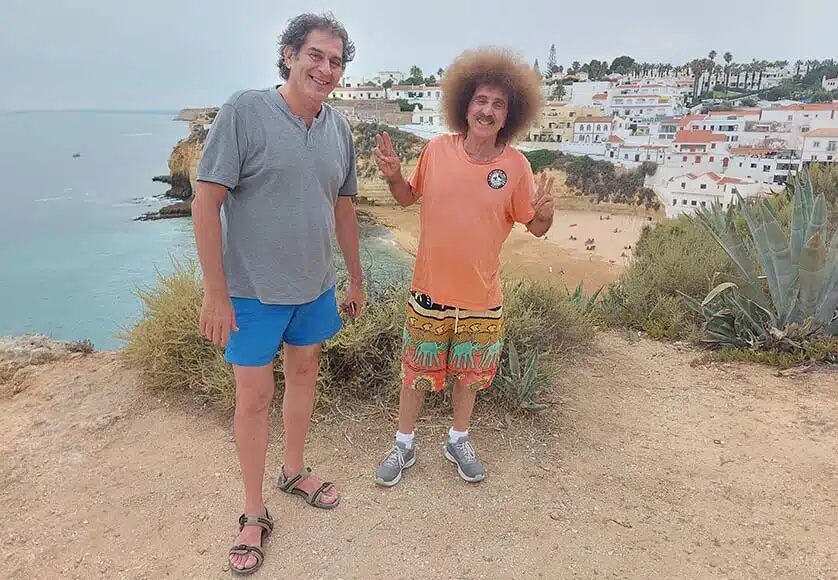
    Beto Kalulu e Enzo dAversa 1 Fotos Ines Lopes
    Beto Kalulu and pianist Enzo d’Aversa (left) – Photo: INÊS LOPES/OPEN MEDIA GROUP

    The jazz club is located below Manoel’s Restaurant and Bar, which is open every day from 5pm onwards, serving dinners and cocktails inside the restaurant, at its outdoor terrace and on its rooftop with a view of the sea.

    Sabrina and Thomas are well aware of the deep-seated history of the venue, which for decades welcomed nationally and internationally famous jazz musicians, which is why they have decided to maintain its name and a similar theme.
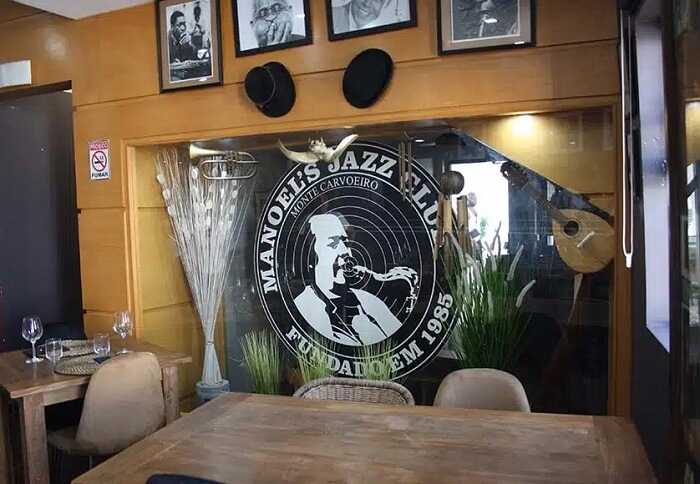
    Manoels Jazz Club by Michael Bruxo 687
    Founder, the late Manuel Guerreiro
    Photo: MICHAEL BRUXO/OPEN MEDIA GROUP

    Their goal is to offer live music every night at 10pm and welcome a wide range of musicians from several genres, not exclusively jazz.

    But how did the couple end up taking over one of the Algarve’s best-known jazz venues?

    “We have been holidaying in the Algarve for several years and had been planning to move out of France, even before the pandemic,” said Sabrina and Thomas, adding that they visited several towns in the region until their travels led them to Monte Carvoeiro, on the western hill of Carvoeiro.

    The couple have around 25 years of experience in the restaurant industry, having run a beach bar back in France, and decided to bite the bullet and start a new life in Portugal by reviving the iconic venue.
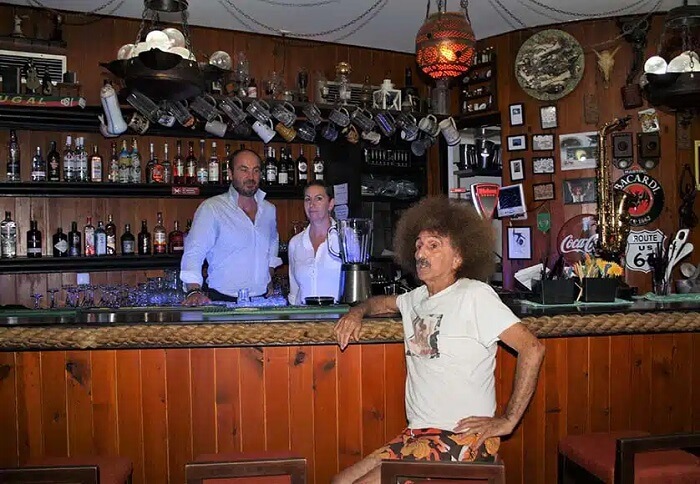
    Manoels Jazz Club by Michael Bruxo 683
    New owners Thomas and Sabrina Bourhis, with Carvoeiro’s famous percussionist and singer Beto Kalulu
    Photo: MICHAEL BRUXO/OPEN MEDIA GROUP

    “Manuel was a true friend”

    Beto Kalulu has been playing an important role in Sabrina and Thomas’ new adventure, helping the couple grasp the history of the venue and also acting as a link to the local community of musicians.

    He was a very close friend of Manuel Guerreiro, the talented saxophonist who played a pivotal role in the Algarve’s jazz scene by opening Caldeirão, his first jazz club, in Ferragudo in 1975.

    “I opened Caldeirão for my friends; I didn’t do it for commercial purposes,” Manuel Guerreiro is quoted as saying in a pamphlet promoting an exhibition honouring him at Portimão Museum, which can be visited until September 3.
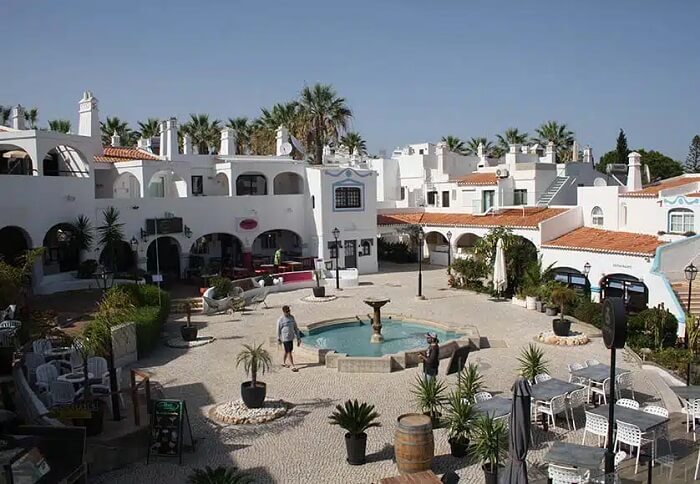
    Manoels Jazz Club by Michael Bruxo 700
    Monte Carvoeiro
    Photo: MICHAEL BRUXO/OPEN MEDIA GROUP

    Caldeirão stayed open until 1985, when Manuel Guerreiro was invited by Monte Carvoeiro developer Klaus Müller to open a new jazz club at the resort.

    Manoel’s Jazz Club became the place to play for jazz musicians, with jam sessions galore and a long list of acclaimed musicians from all over the globe performing at the venue.

    Manuel Guerreiro, who passed away in 2005, also played a key role in helping musicians from ‘Aldeia de Almansor’, a multicultural community of artists who lived in makeshift homes at an abandoned half-built hotel site, until they had to abandon the area when construction resumed (to build the Almansor hotel; now Tivoli Carvoeiro).

    Manuel was very important for the local musicians in Carvoeiro. He was the one who booked concerts for us, and many times would give up his cut of the performance fee in order to help us,” Beto Kalulu told us.

    It was this very “mentality of collaboration” that was later replicated at Manoel’s Jazz Club, with musicians often turning up to perform simply for the fun of it.

    Article originally published by Michael Bruxo on Portugal Resident.

    Read more Algarve News:

  • Carvoeiro welcomes Easter Fair from April 7-9

    Carvoeiro welcomes Easter Fair from April 7-9

    Carvoeiro’s main square to showcase local handicrafts, sweets, and regional products

    – April 4, 2023

    Easter Fair Carvoeiro Beach April 7, 8, 9, 2023, Feira de Páscoa Praia do Carvoeiro Abril 2023 - Photo by Jill Wellington

    The annual Easter Fair returns to Lagoa and Carvoeiro with festivities taking place between April 7 and 9 in Carvoeiro’s main square.

    The event is promoting and encouraging the consumption of local and regional products, so visitors can find everything from food to beverages to traditional and regional non-food items.

    The Easter Fair will take place in the Largo da Praia do Carvoeiro between 10am and 7pm.

    Read more Algarve News:

  • Intimistic Concert at the Morgado do Quintão wine estate this Friday

    Intimistic Concert at the Morgado do Quintão wine estate this Friday

    Enjoy a glass of wine to the sound of a harp and flute

    – February 8, 2023

    This Friday, February 10, at 7pm enjoy an intimistic concert at the Morgado do Quintão wine estate in Lagoa.

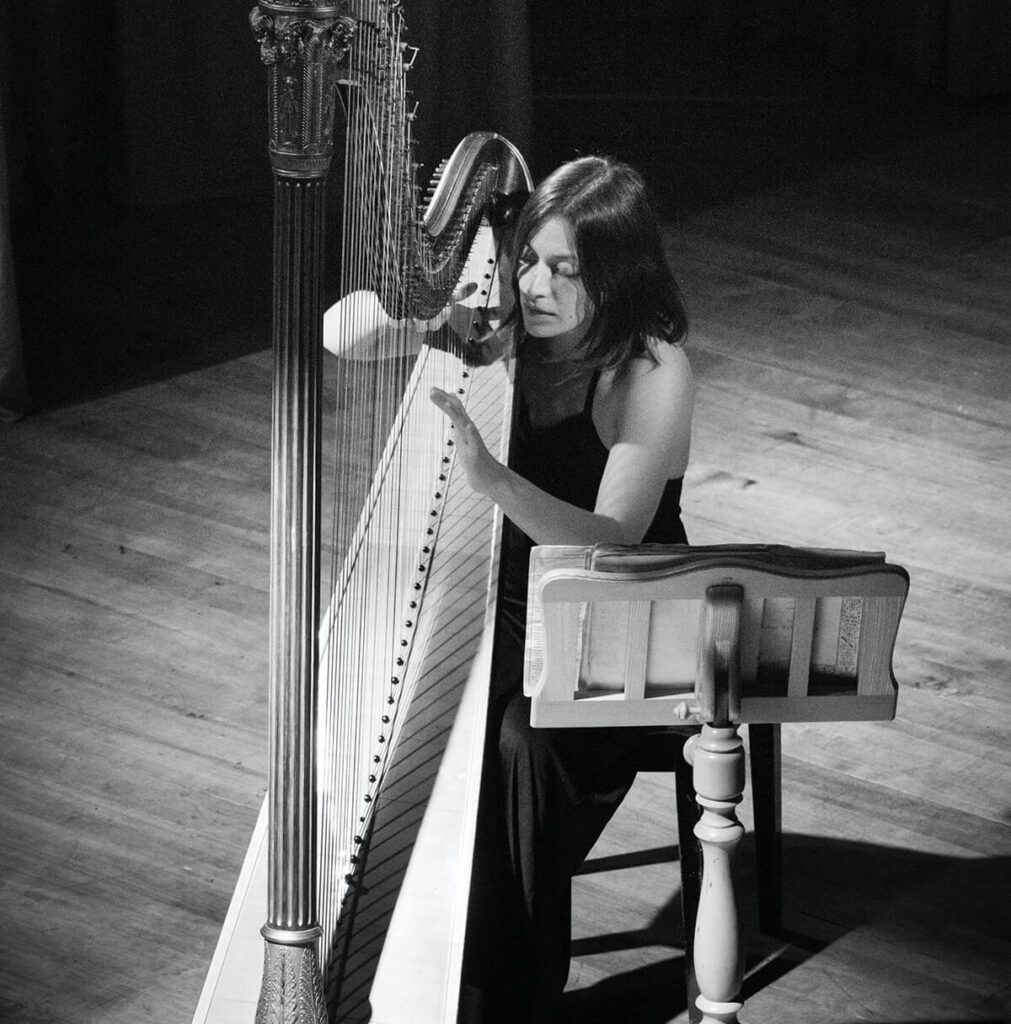
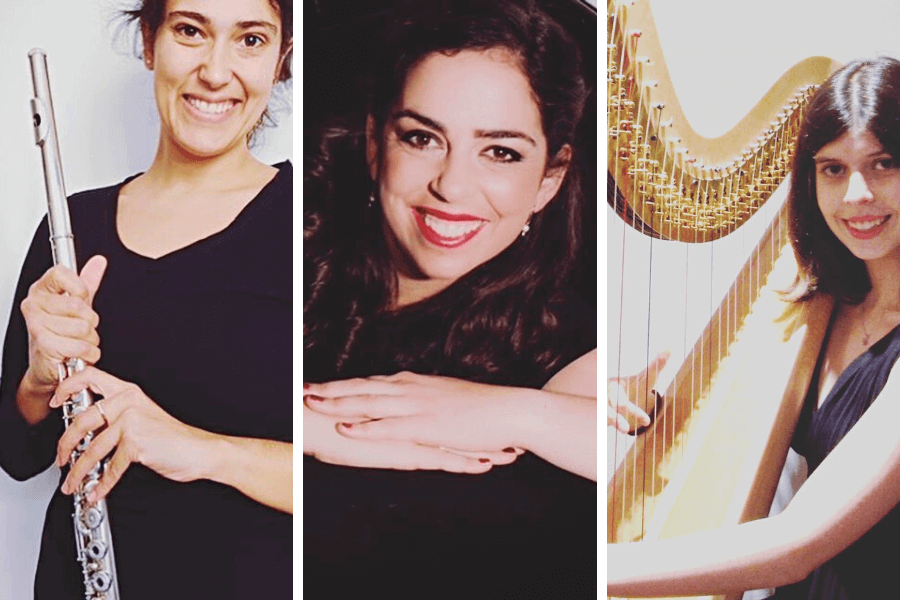
    The gentlness of Ravel’s songs, and the different nuances of Britten’s music, among other musical treasures, will be performed by Portuguese musicians Luísa Vaz Pinto (Mezzo-soprano), Rute Gomes (flute) and Inês Cavalheiro (harp).

    Programme:

    • Ballade du coeur qui a tant battu de Louis Sauter
    • 8 Folk songs de Benjamin Britten
    • The Salley Garden de John Corigliano
    • Entr’acte de J. Ibert
    • La lettre du jardinier de Marcel Tournier
    • 5 Melodias gregas de Maurice Ravel
    • The Gipsy and the Bird de Julius Benedict


    The concert is part of the “Ciclo de Canto” (Singing Cycle) cultural programme by the ARTIS XXI organisation which hosts concerts across all of the Algarve region and aims to acquire a portative organ.

    Entrance to the event is free, however, a contribution to the ARTIS XXI will be asked in order to attend the event. Seats are also limited.

    For more information about the event, visit ARTIS XXI’s Facebook and Instagram or contact +351 965 202 529.

    Read more Algarve News:

  • LAGOA’S GOLDEN COAST

    LAGOA’S GOLDEN COAST

    [inpost_galleria thumb_width=”175″ thumb_height=”175″ post_id=”1602″ thumb_margin_left=”3″ thumb_margin_bottom=”2″ thumb_border_radius=”2″ thumb_shadow=”0 1px 4px rgba(0, 0, 0, 0.2)” id=”” random=”0″ group=”0″ border=”” show_in_popup=”0″ album_cover=”” album_cover_width=”200″ album_cover_height=”200″ popup_width=”800″ popup_max_height=”600″ popup_title=”Gallery” type=”yoxview” sc_id=”sc1467804768196″]

    JOURNALIST ANABELA GASPAR TAKES US ON A GUIDED WALK ALONG ONE OF THE MOST SPECTACULAR STRETCHES OF COASTLINE IN THE AREA

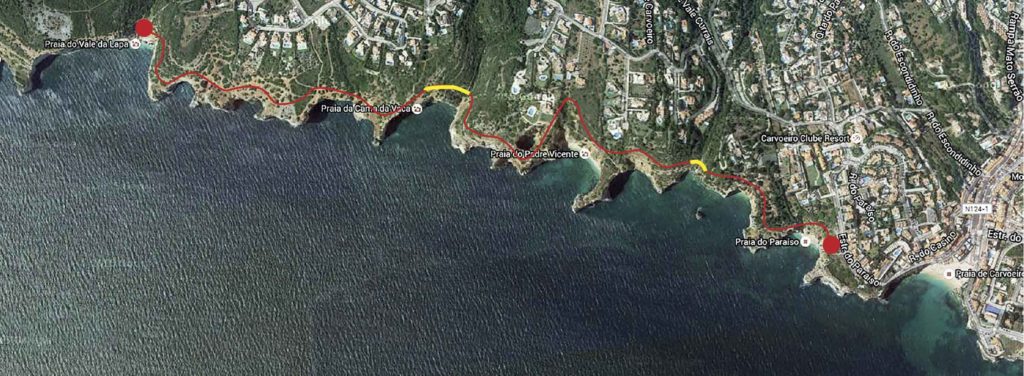
    Awalk along Lagoa’s coastline is a thrill, no matter how many times you do it. For this issue, we discovered the stretch between Praia do Paraíso and Praia do Vale da Lapa – an un-signposted section.
    No matter how many times I walk above Lagoa’s cliffs, I am always left speechless by its stunning scenery. The entire coastline is shaped by an array of rugged golden cliffs, dotted with sinkholes, arches, caves, evergreen pine trees and mastic shrubs, and washed by the shimmering vast Atlantic Ocean. And yet, along the coast’s various sections nature offers ever-new perspectives, and always appears different to the viewer. When we took these photos in early spring, the cliffs were at their greenest with Bermuda buttercup blossoms here and there. Our starting point is Praia do Paraíso (paradise beach) west of the well-known beach of Carvoeiro. This small, sheltered bay, boasting fine sand and clear water, more than deserves its name. As the beach is only accessible via a long, steep staircase there will always be a little spot for your towel here, even in the height of summer. But the beach is not our destination today, despite clear skies and sunshine. In the car park we take some pictures of the bay, and down the white cobblestone stairs nestling in the slope, before passing the restaurant, and joining the trail above the cliffs. From here the white houses above the bay shine in the spring sunlight and you can spot a small cave on the beach’s eastern side. Soon Vale Currais beach extends before us, to the west. Fine sand is nowhere to be seen. Instead black rocks protrude from the water. Red cliffs protrude skyward, in a distant nod to America’s magnificent Grand Canyon. This isn’t the work of the sea’s erosive powers, surely, rather that of a talented sculptor? These natural sculptures also remind us that these rocks won’t be here forever. So be careful, especially where the path passes close to the edge and also when descending into the valley to the west of this beach.
    The fence along the path is a great support in this respect, preventing walkers from slipping. The path heading up the other side of the valley proves just as steep. This stretch of coastline doesn’t require the height of fitness, we just managed it after all, but it isn’t suitable for people with walking difficulties or children. A magnificent view from the headland at Praia Salgadeira will reward you for your efforts shortly after, stretching to Lagos and Ponta da Piedade in the west and on a clear day you can even make out Sagres on the horizon. The sandy Padre Vicente beach extends west of the headland. Girdled by a group of caves, this bay is one of Lagoa’s many wild beaches that can only be reached by boat. Even though there’s a ladder at the western end, down which you can climb to the beach, the fence above the rocks blocks any access to driveable tracks. The path leads slightly below the cliff line at this point, around the cleft in the valley and then along a property fence back to the edge. Here we find one of the largest sinkholes along Lagoa’s coastline. We had been looking forward to peering down into the depths, onto the turquoise water below, but soon realise that the land is private and therefore fenced in. Slightly disappointed, we continue down into the valley of Cama da Vaca beach. At this point we lose our bearings and end up on a tennis court far from the cliffs. It is best to stay as close as you can to the edge, we learn. The path bends round the rock and then descends steeply. The Cama da Vaca beach, the strange name of which (cow bed) I will make no comment, is allegedly one of Lagoa’s best kept secrets. It is a small space – where you could only fit a cow, hence the name, perhaps – below a cliff, of which not a single centimetre remains dry at high tide. Like most beaches in this coastal section, it is only accessible by boat.
    Then we head up the steep track, onto the cliffs again. Half way up my slightly out of breath walking partner remarks: “This is almost like on Kilimanjaro!” A slight exaggeration of course, but I must admit that the ascent is quite a challenge and I reach the top in a sweat. The last part however is pretty simple and flat. To the east we can see the whitewashed houses of our starting point (Carvoeiro) in the distance and not far away to the west lies our destination, Vale da Lapa beach. Shortly before Vale da Lapa I find myself standing on a rock jutting out into the sea, from which the view over the coast is incredibly beautiful. I take a deep breath of the fresh salty air,
    enjoying the views in all directions. In my mind I see the scene in which Leonardo Di Caprio stands with open arms at the bow of the Titanic and I’m tempted to scream out “I’m the King of the World”. But the dizzy height I find myself at stops me. After all, I am standing on a rock just a metre and a half wide, about twenty metres above the shimmering waters below. Shortly after this quick little detour we reach our destination, one and a half hours after setting off. This beach is also very small and entirely flooded at high tide, but it is accessible by land, over a wide, driveable dirt road at first, followed by a rocky track.
    The return trip is a little quicker, not least because we’ve already taken so many amazing pictures on the way there. But we still come to a halt now and then, in contemplative admiration. There are always new things to see, even the way the light falls makes the rocks seem different now.
    

    PHOTOS ANABELA GASPAR & SUSANNE RÖHL