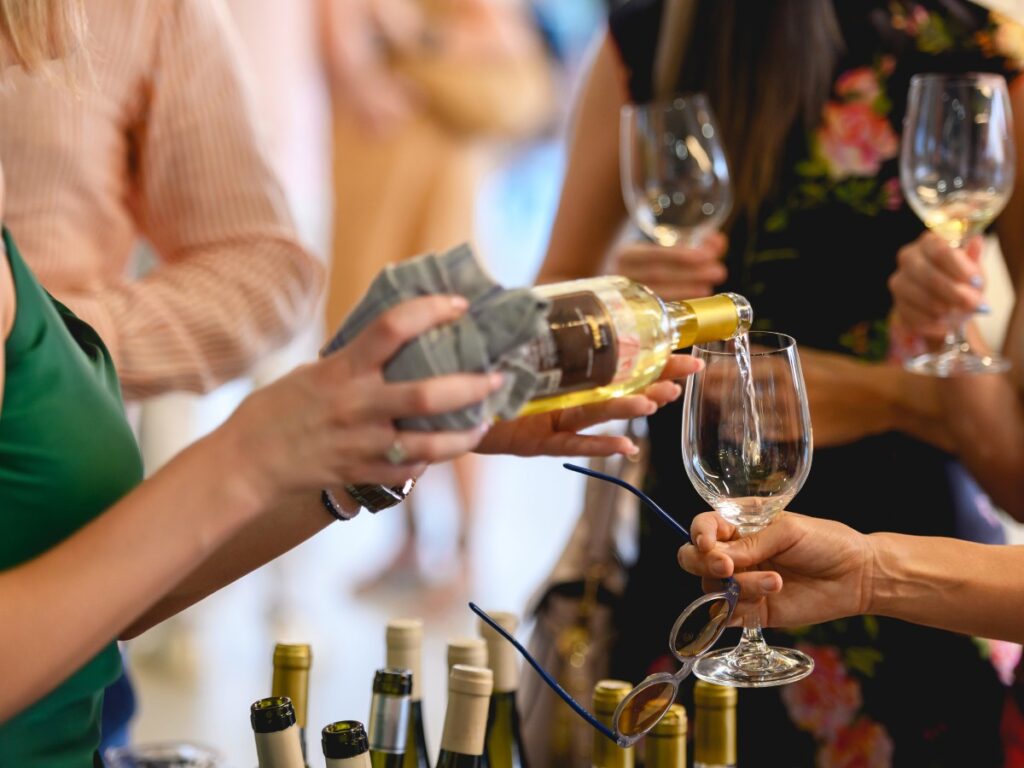
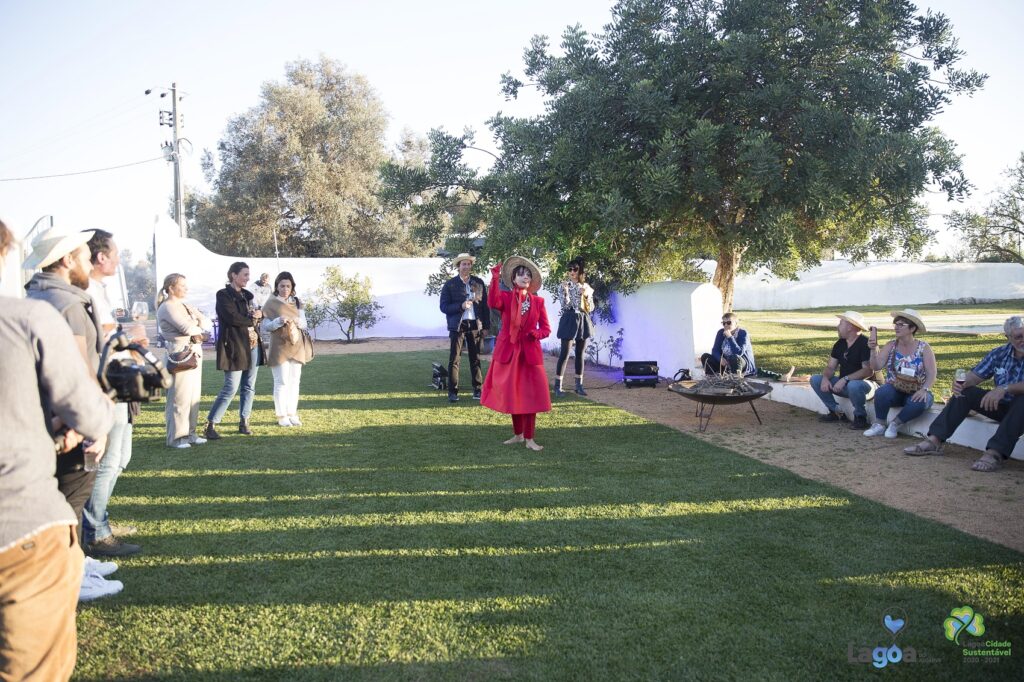
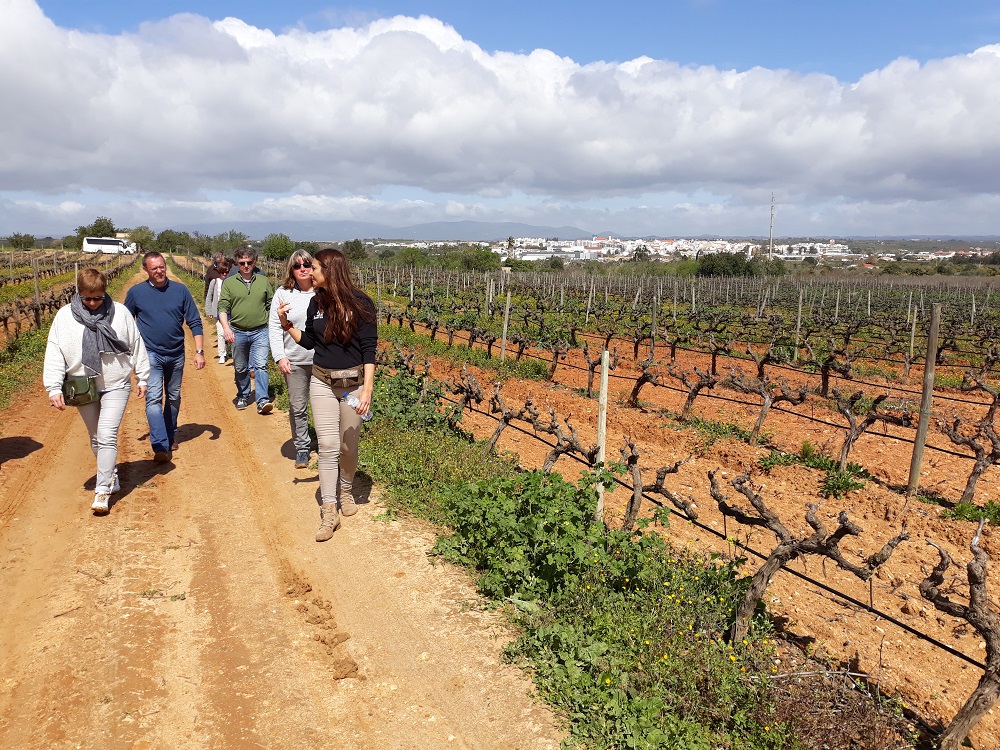
In celebration of World Wine Tourism Day, Lagoa will host a special event, the “Arade Wine Experience”, on Saturday, November 11.
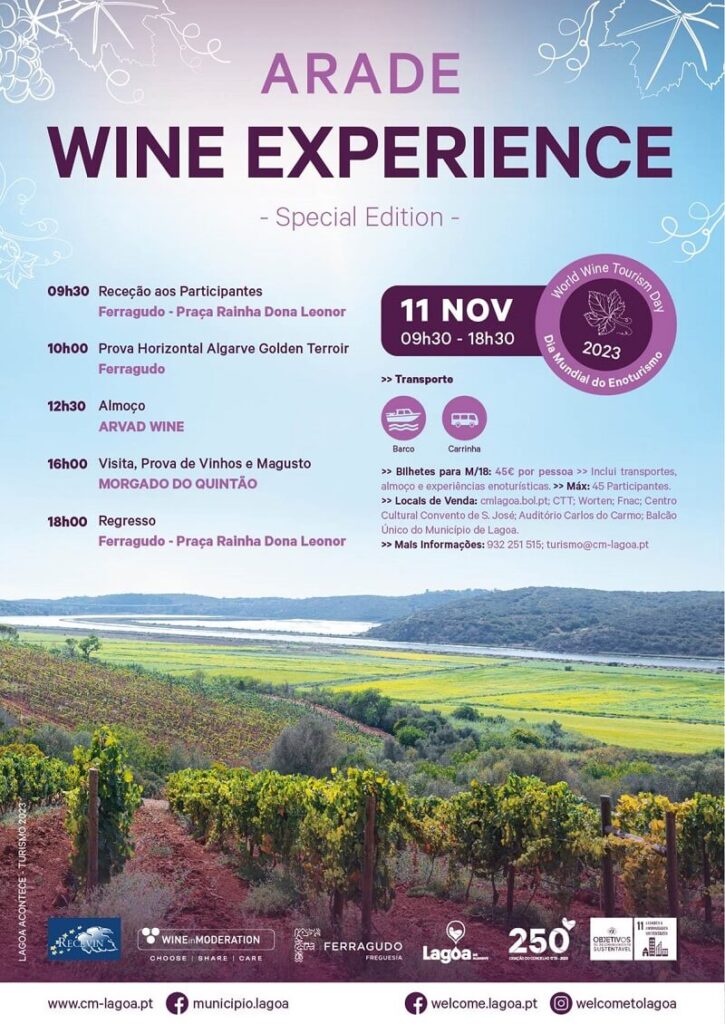
The event will take participants on a wine tour around the municipality, starting with a meet-up at Ferragudo’s Praça Rainha Dona Leonor at 9.30am.
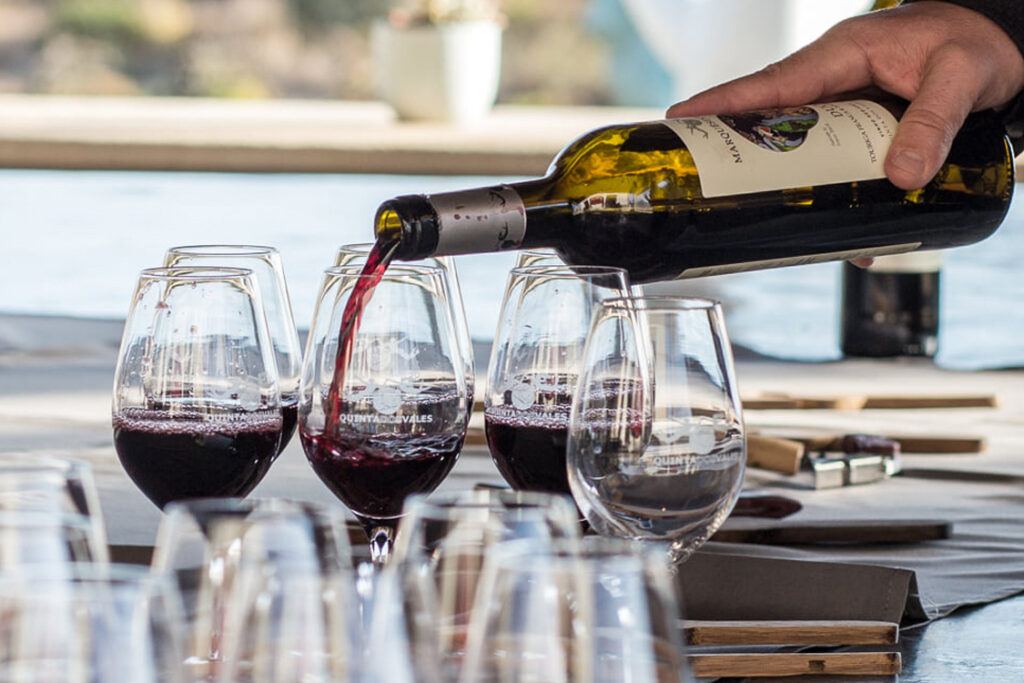
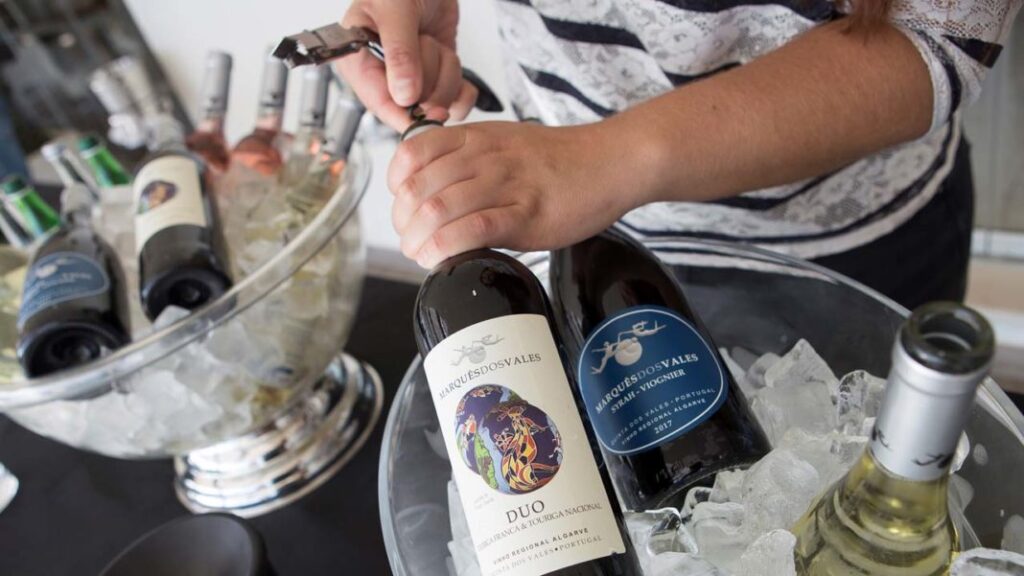
This will be followed at 10am by a tasting of wines from the Algarve Golden Terroir, the joint bid of Lagoa, Lagos and Silves for European Wine Capital of 2023, with a view of the Arade river.
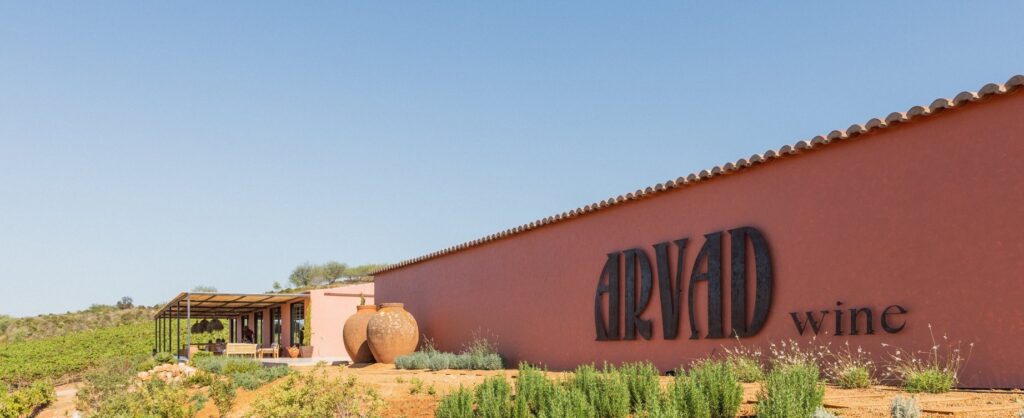
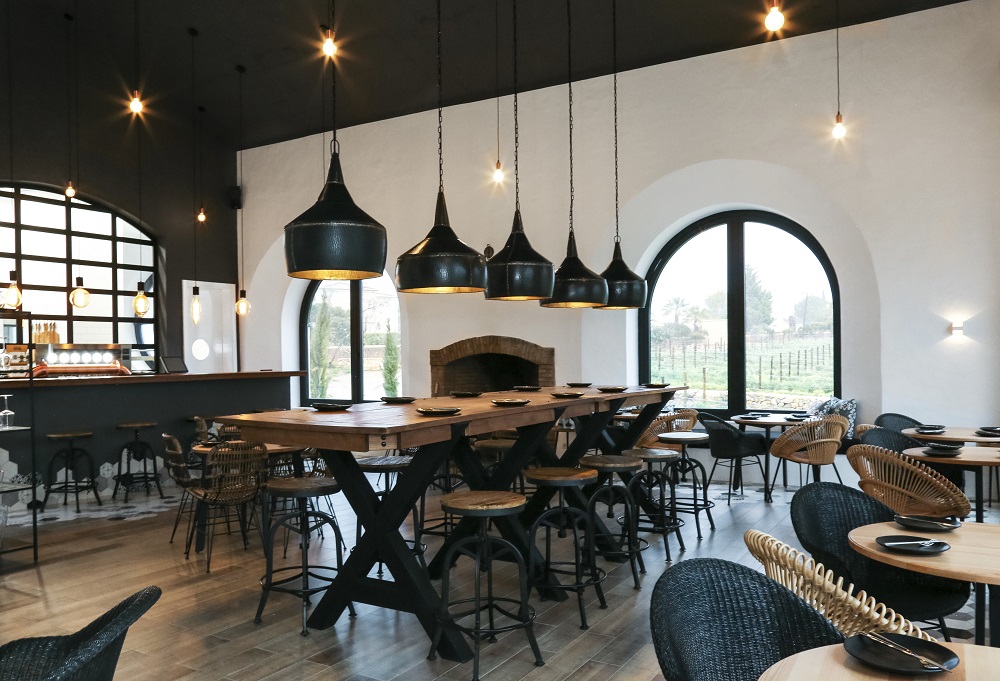
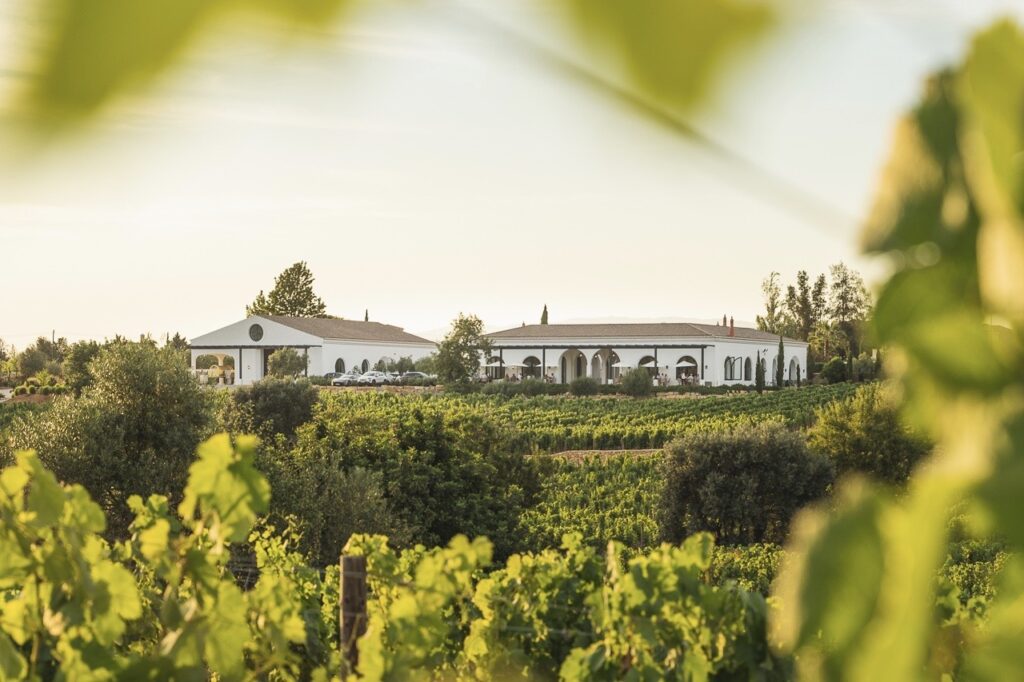
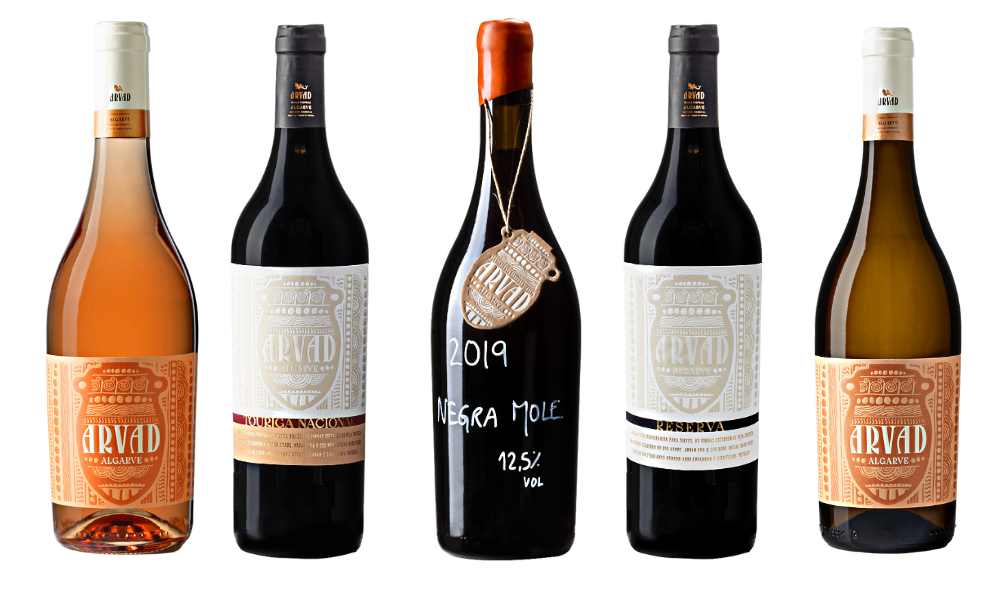
The event will continue at 12.30pm at Arvad Wine, one of the region’s newest winemakers, where participants will arrive by boat for “delicious lunch paired with the winemaker’s wines.”
Morgado do Quintão will be the last stop on the tour at 4pm, a family property which will provide a tasting of “authentic wines” originating from “sustainable and organic practices in which the native and traditional grape varieties of Lagoa and the Algarve take centre stage”.
Participants will then be taken back to Praça Rainha Dona Leonor at 6pm.
Tickets for Arade Wine Experience are already for sale.
Tickets cost €45 per person and can be purchased online or at the ticket offices of CTT, Fnac, Worten, Carlos do Carmo auditorium, São José convent, and the Balcão Único in Lagoa.
Staying relevant while preserving tradition can be a conundrum in the wine world. This ever-growing industry sees new producers, with creative projects attracting young and knowledgeable consumers, opening their winery doors faster than ever. Keeping up with new trends without losing your identity can be tricky for a winery.
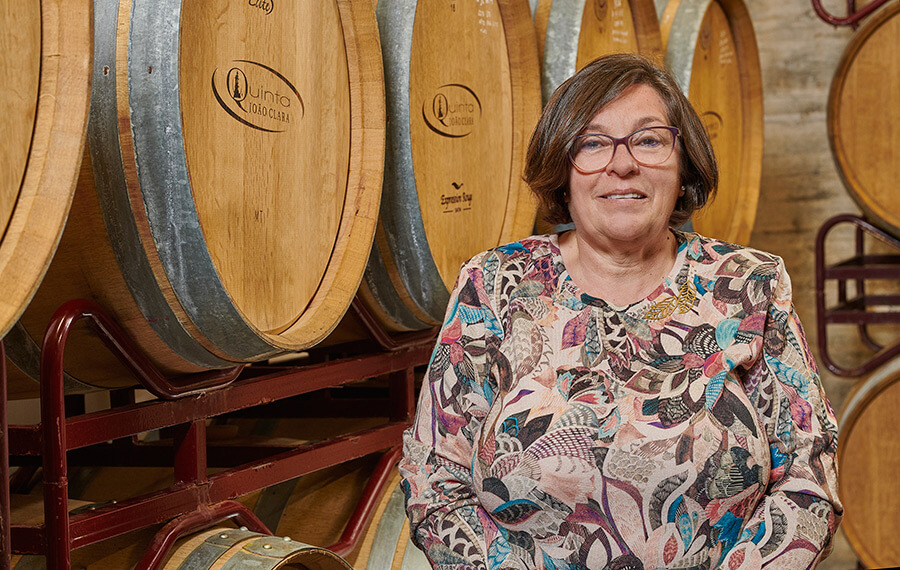
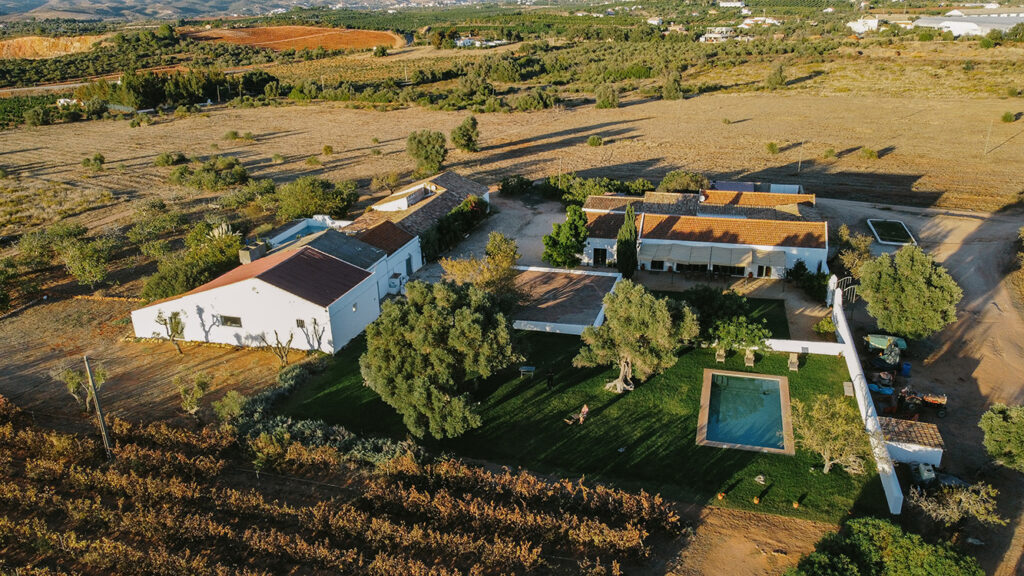
On the slopes of the Alcantarilha hills, Edite Alves appears to have found the right formula for João Clara. With her daughters and son-in-law’s support, she is perpetuating her husband and father-in-law’s work while making her dreams come true by further growing and innovating the business.
João Maria Alves, better known as João Clara, bought what was a fruit farm in 1975 and, like most farmers did in those days, planted the first vines for home consumption. His son, Joaquim João, was the one who decided to take this production to the next level. He added new varieties – Touriga Nacional, Syrah, Alicante Bouschet, Aragonês, and Trincadeira – to the existing Negra Moles vines to make their first commercial wine.
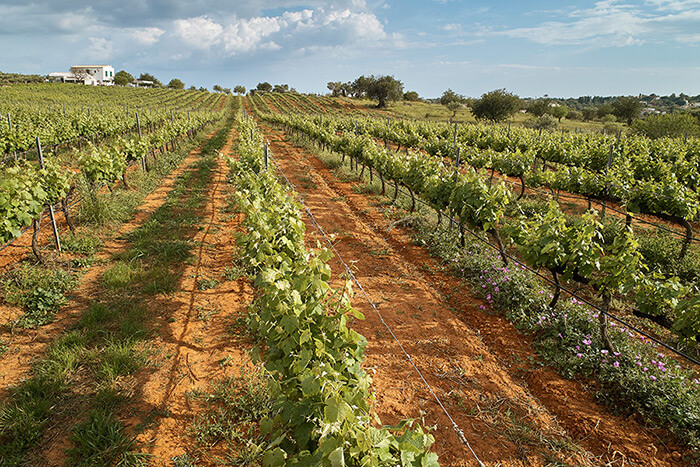
Named after its creator, João Clara soon grew into a reputable boutique winery. The 26-hectare farm now includes 14 hectares of vines, almond, fig and carob trees, and an olive grove, whose fruit will soon be used to make branded olive oil.
Following in her husband’s footsteps, Edite is taking the business even further. Having been dependent on another local producer for their vinification for so many years, two years ago, with the inauguration of their new state-of-the-art winery, the family was finally able to do their own vinification. “Now we can smell and taste the wine when we want. It’s completely different,” exclaims the matriarch. “We can give it our personal touch. And thanks to modern equipment, we have increased the quality of the wine.”
The pioneering nature of this producer is evident. Led by consultant winemaker Joana Maçanita, the team is constantly working on creating new wines using different types of vinification techniques. This innovative mindset has been present since the very beginning. Joaquim João hired Joana’s brother, the young and daring winemaker António Maçanita, to make João Clara’s first red. Then came Claúdia Favinha, who created the single varietal 2011 Negra Mole, marking the grape variety’s big comeback, having been shunned by the wine world for decades. And now, Joana Maçanita has unleashed João Clara’s full potential by creating the region’s first GI (Geographical Indication) sparkling wine, its first GI Late Harvest, and the winery’s greatest adventure yet, the “vinho de talha”, made in amphoras, a technique instilled in Portugal by the Romans over 2,000 years ago.
Negra Mole, the first vine planted on the farm, is not only Portugal’s second-oldest variety, but it is also the Algarve’s most emblematic grape. Similar to Pinot Noir, it results in light-bodied reds that are best served chilled.
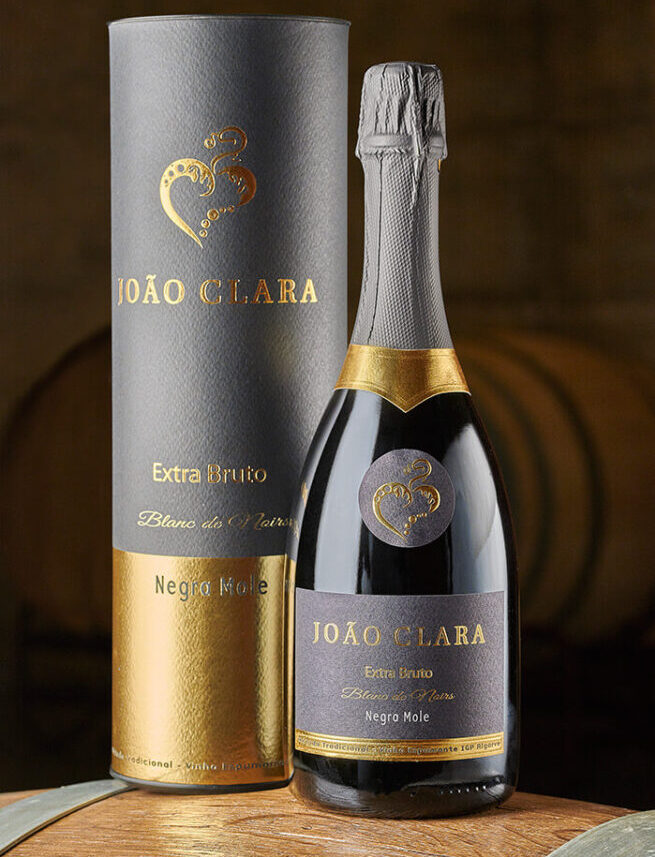
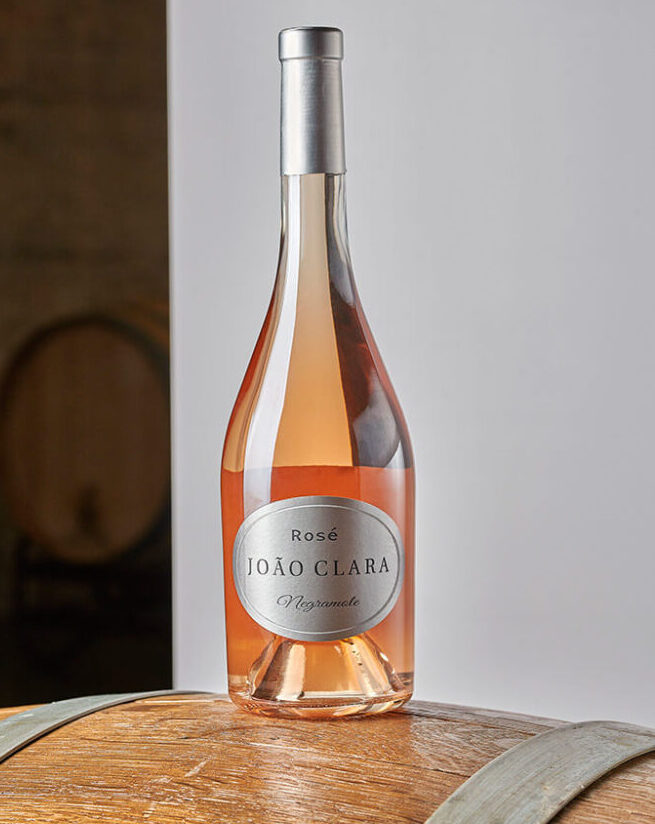
João Clara is proud to be elevating Negra Mole to new heights by vinifying it using different techniques, showcasing its versatility. They use it in their red blend and to make the Negra Mole Reserva, a light-bodied oak-aged wine with creamy and smoky notes and hints of almond and fig, revealing its terroir. They also used it to make their salmon-coloured rosé and newly released Blanc de Noir sparkling wine, made using the traditional method and bottle-aged for three years. And last but not least, the soon to be released amphora wine, which according to Edite, will be the complete opposite of the oak-aged Negra Mole.
But there is more to João Clara than Negra Mole. The winery’s portfolio includes wines for every taste and type ofpairing. It even has an entry-level range – Às Claras – created for restaurants to recommend as local wine at an affordable price.
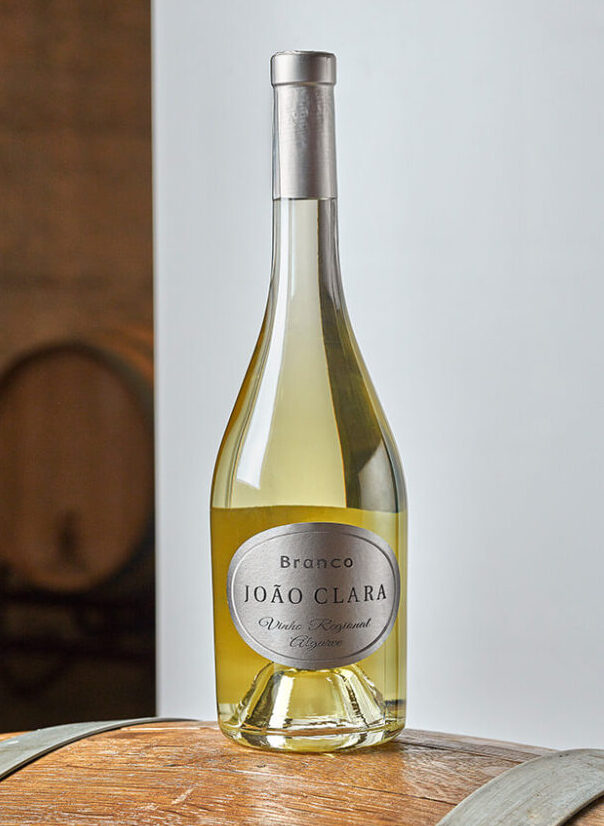
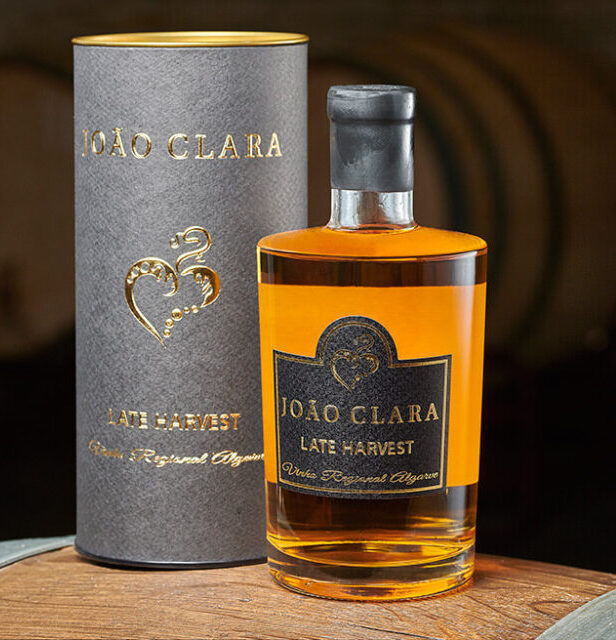
The whites are popular in this region, where seafood abounds. The João Clara white is a blend of Arinto, Alvarinho and Verdelho with a touch of Moscatel. Full of fruity aromas, it has notes of orange flower and lemon, ideal for seafood and salads. The Alvarinho, aged in oak for ten months, is creamy yet fresh and has a lot of fruit. As for the reds, the Syrah and the Reserva, both barrel-aged, have more body than the Negra Mole wines. They are made to accompany game and meat dishes. And, of course, the Late Harvest, a sweet wine that Edite is proud to say has won over many of the Algarve’s top chefs, some of whom have even included it as part of the pairing for their tasting menus.
With the growth of the wine industry also comes a boom in wine tourism. A growing number of visitors and wine enthusiasts look for experiences that will give them a taste of the Algarve’s new wines. “I never needed a diary to keep track of the bookings, but now I can’t do without one”, exclaims Edite. Although their infrastructures may have grown, she is still keen on hosting small groups of visitors, no more than twenty at a time. “We want them to have a VIP experience, to feel they have the producer’s complete attention. These clients come back, bring us other clients, and buy our wines in their country.”
Tours and tastings at João Clara, which must be booked in advance, range from a visit to the vineyard and winery followed by a three-wine tasting, to a premium tasting of the Reserva wines with a selection of snacks.
For the Alves family, winemaking is a labour of love: “There is a lot of passion and dedication in this project. We really want to build up what João Maria Alves and my husband left us.” João Clara’s legacy is sure to live on. Edite’s grandsons may only be helping to tread gra0pes for now, but as the saying goes, “as the twig is bent, so shall the tree grow”.
Enjoy a day’s programme full of wine tastings and friendly company
– September 21, 2022
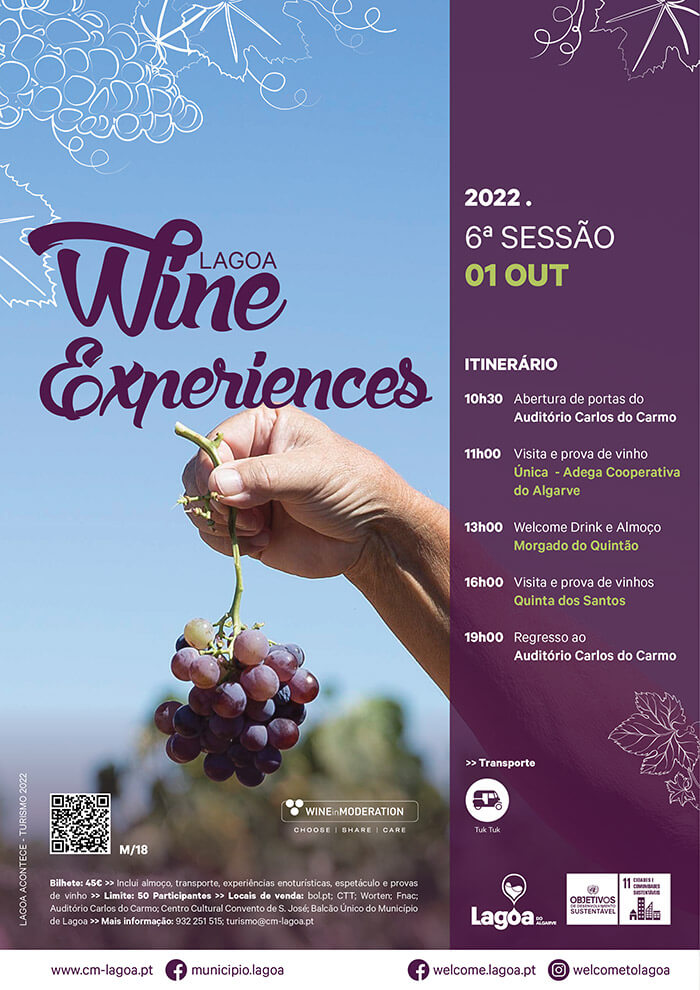
The 6th session of the Lagoa Wine Experiences happens next month with a set of unique initiatives.
Participants will meet at 10.30am at the Carlos do Carmo auditorium (Lagoa) from where they will be taken to Única – Adega Cooperativa do Algarve, a place with a rich history in the region’s wine sector.
Morgado do Quintão
A wine tasting session will be held at 11am, followed by a welcome drink and lunch at 1pm at the Morgado do Quintão winery, an established local winery located in a historical property integrated into a rural setting with exclusive Algarve grapes.
After lunch, participants will visit the Quinta dos Santos winery, between Ferragudo and Carvoeiro, a special place that seamlessly blends the contemporary with the traditional.
Quinta dos Santos
Tickets cost €45 and include the wine tasting experiences, lunch and transport. They can be purchased online at Bol.pt, CTT, Worten or Fnac, or at Lagoa’s usual outlets (Carlos do Carmo auditorium, São José convent and Balcão Único).
For more information contact +351 932 251 515 or turismo@cm-lagoa.pt
At the historical Quinta da Palmeirinha, producer João Mariano makes new vintages with some of the region’s oldest vines
– September 9, 2022
The Algarve may still be Portugal’s least-known winemaking region, but what many are not aware of is that its history goes back centuries. Its first vines were planted by the Phoenicians and the Greeks in the 8th century BC, and later Romans and Carthaginians developed this fruitful trade.
More recently, in the 1960s, the region’s wines were a vital part of the ration troops received during the Portuguese colonial war. “This was at the time when wine was produced in cooperatives. It was consumed as a food product, drunk by the working classes and sailors as a source of energy,” explains João Mariano, a local wine producer, storyteller and one of the guardians of the Algarve’s winemaking heritage.
He tells us the story of the Negra Mole variety and how it came to dominate the region. “Cooperatives used to pay according to the alcohol content of the grape variety; the higher the content, the higher the value. Soon producers planted the varieties with the highest alcohol content, such as Negra Mole”, which also produces significant quantities of large grape bunches that are very resistant to disease.
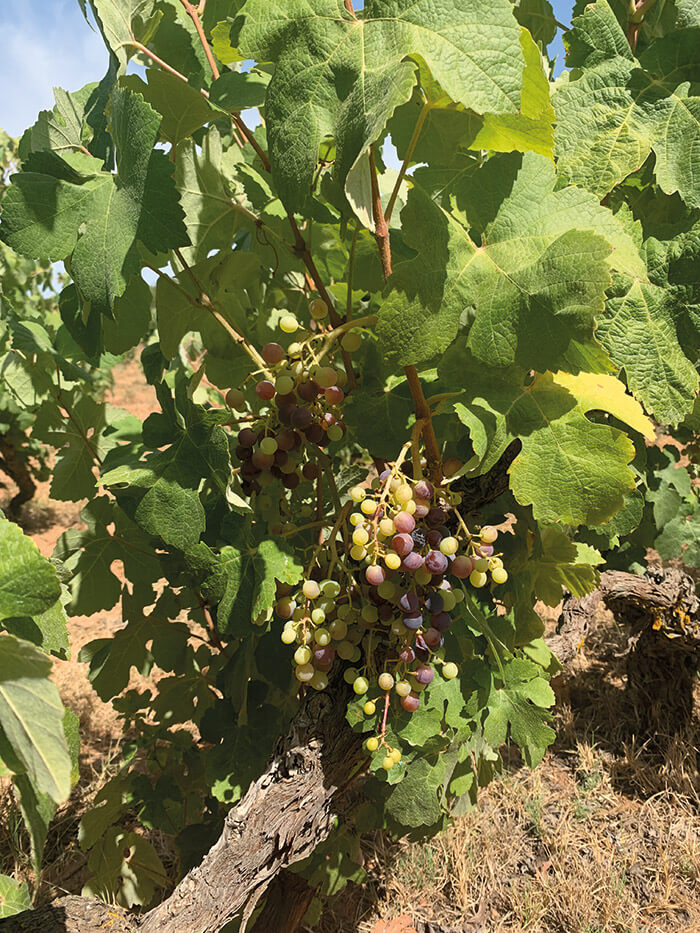
Discovered to be Portugal’s second oldest grape variety, it is different from other reds because it does not have uniformly coloured berries or dark skin. Today the variety is used to make red wines when blended with small amounts of a teinturière variety, such as Alicante Bouschet, Touriga Nacional or Petit Verdot. “But in the Algarve, locals liked lighter reds; it was the tradition,” insists João.
Sadly, with the arrival of tourism, many vineyards were ripped up for their sandy soils to be sold for construction, leaving the region destitute of its viticultural heritage. But some old vines remain and are now being resuscitatedby producers like João Mariano to recreate the Algarve’s unique brand.
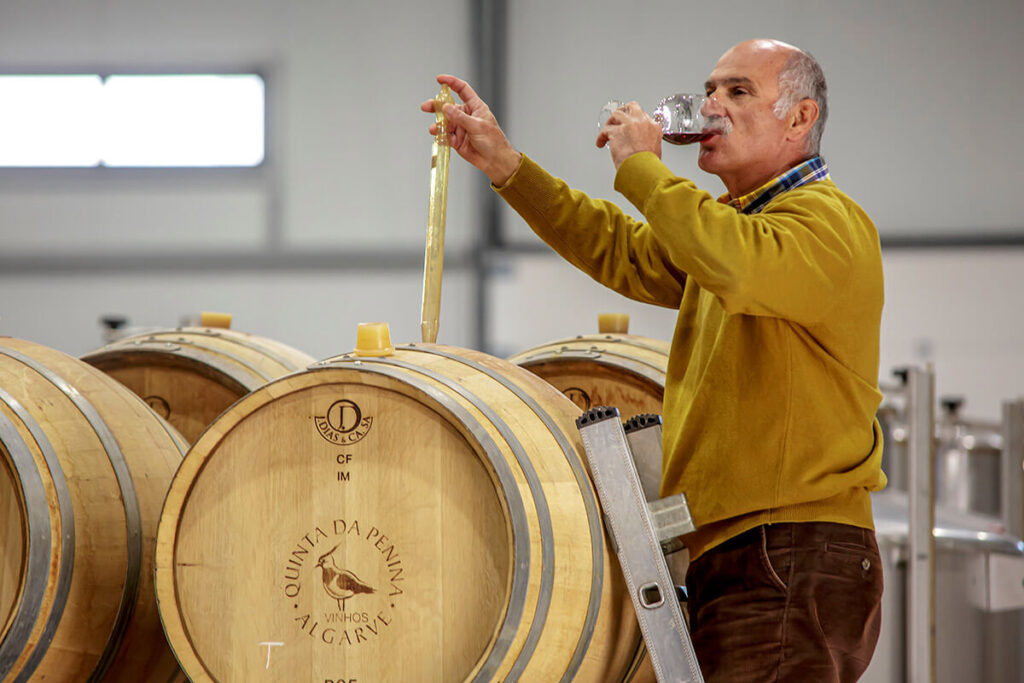
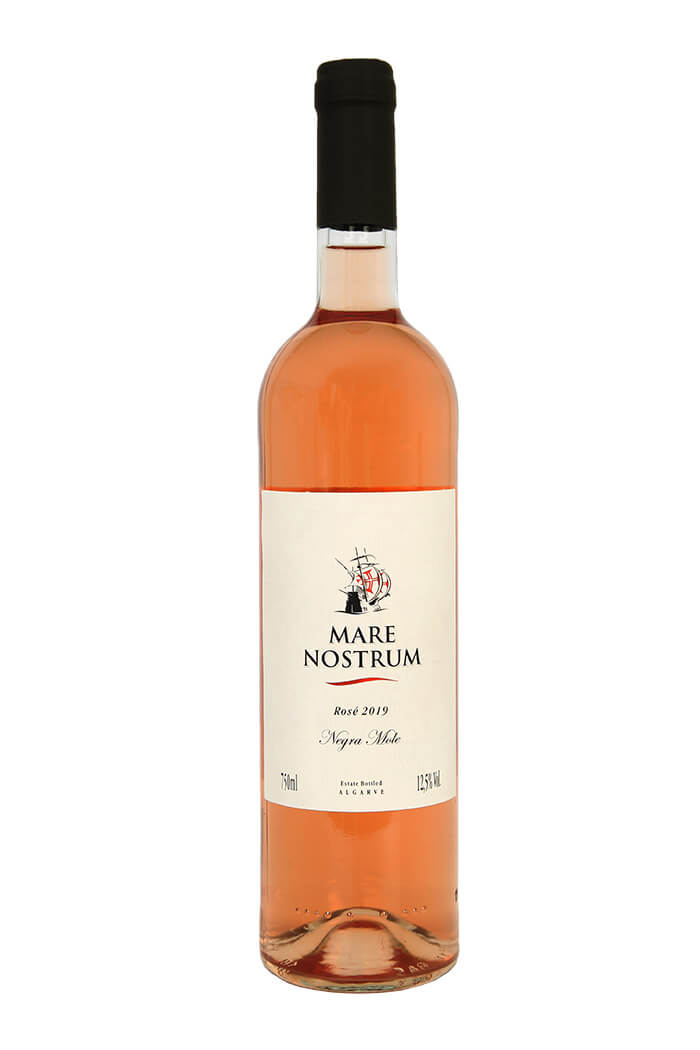
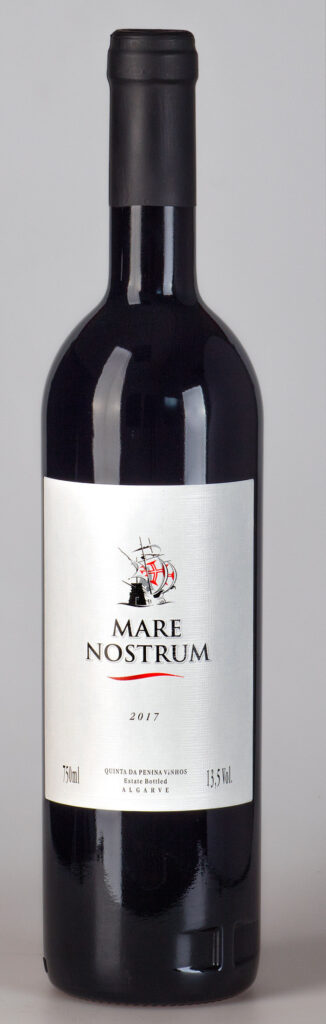
This local producer is passionate about viticulture and the region’s history. An agronomist by trade, he planted his first 10 hectares of vines in 2000 in the Portimão area. This is where he created the Quinta da Penina brand, followed by two more hectares of vines at Quinta dos Cabeços, in Lagoa. His goal was to obtain grapes from two distinct terroirs to produce wines with equally distinct qualities. His brands include Quinta da Penina, Foral de Portimão and Mare Nostrum, a brand he created for local restaurants.
In 2012, he started exploiting a vineyard that would turn him into the guardian of some of the region’s most historical vines. Planted in 1942, these are Negra Mole old vines. “They are still full of vigour. They produce beautiful bunches of multicoloured grapes and are believed to be some of the Algarve’s oldest Negra Mole vines still in economic production,” he points out.
Quinta da Palmeirinha
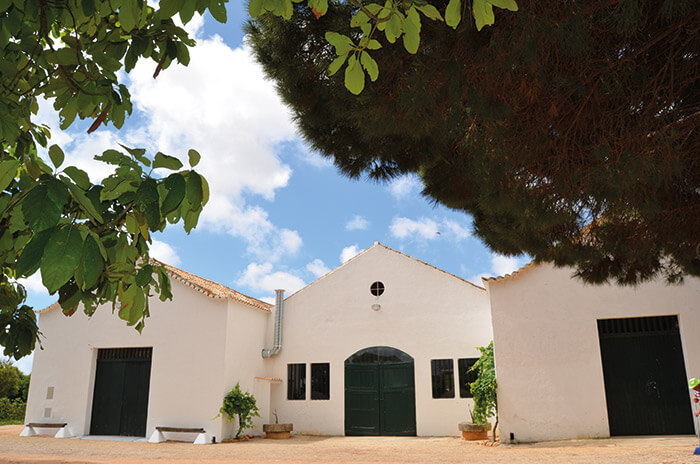
These old vines are part of a large historical wine-producing estate on the border between Lagoa and Silves: the Quinta da Palmeirinha. “It is located in an area called Lobito, where vineyards are reported to have existed since the Phoenicians and Carthaginians landed on the Algarve coast.”
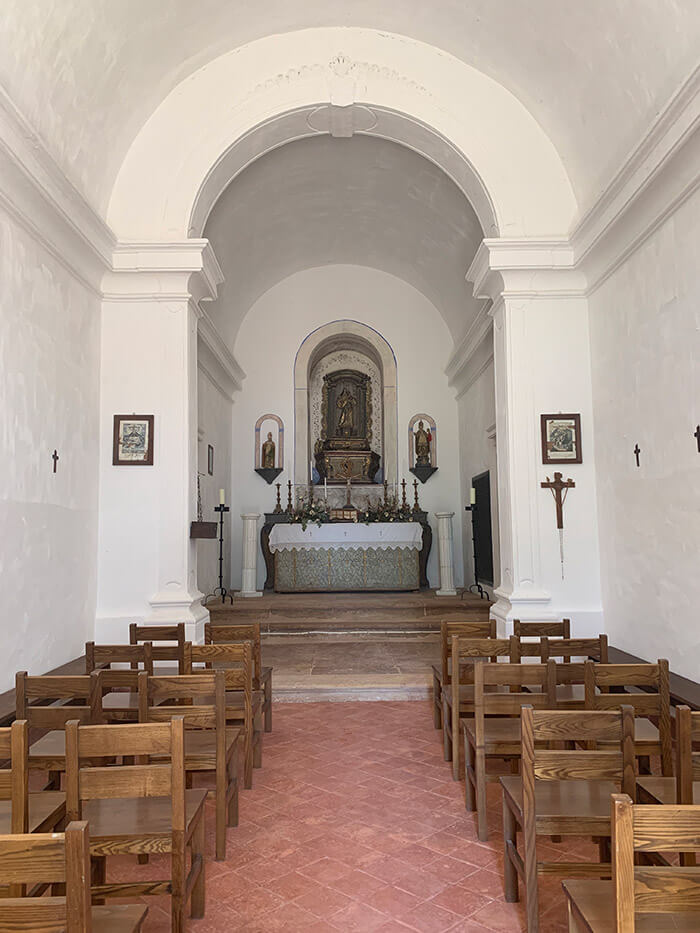
The vines were planted around a beautiful 18th-century Manor House, which was once a hermitage, and from where pilgrimages to give thanks for the good harvests once started. The estate has belonged to current owner Alexandra Pacheco’s family for several generations. Two generations back, Joaquim Valadares Pacheco, who was the Mayor of Portimão (1946-1950), boosted wine production in the region. Not only was this notable man a producer of award-winning wines (his famous Negra Mole vines won him an award for the best regional wine during World War II), but he also played an essential part in the creation of Lagoa’s cooperative winery.
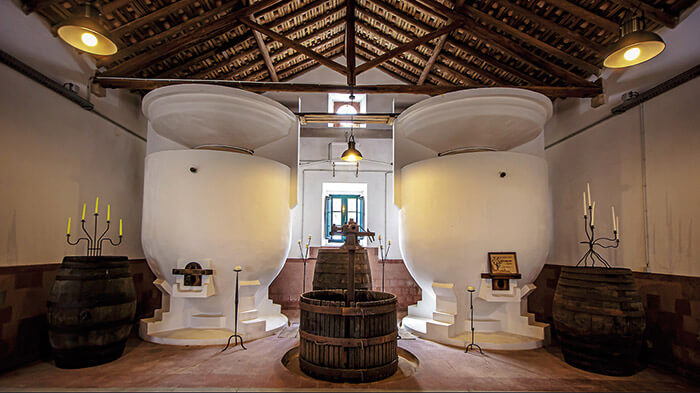
João explains that a group of farmers from the region got together to create the cooperative winery in Lagoa. “They applied for funds through the national wine board, which supported the construction of cooperatives throughout the country. Whilst they waited for the funds to build the new winery to arrive, they produced the first wines of the future cooperative at Palmeirinha.” Some of these were vinified in the farm’s biggest treasures: two imposing Algerian-style amphorae that still stand in the estate’s winery.
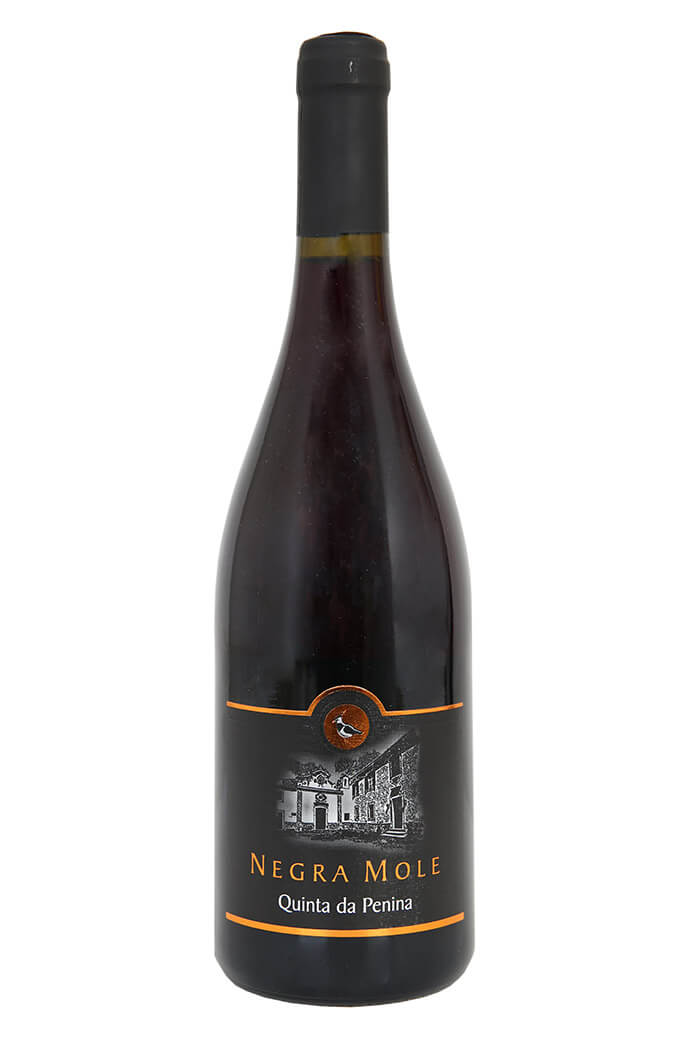
Negra Mole tinto 2019
Today, the 8.7-hectare vineyard is made up of red Portuguese varieties: Negra Mole, Castelão, Aragonez, Touriga Nacional and Alicante Bouschet; and the white Crato Branco – the Algarve’s emblematic white variety. “Here, you can see the resistance of the plant,” says João as he walks between the rows of 80-year-old Negra Mole vines. Most of the existing vines were uprooted and replaced by carob trees. Luckily, the Negra Mole vines remained. “The owners didn’t want agriculture here because it paid poorly, but they also didn’t want to let the farm’s winemaking tradition disappear.”
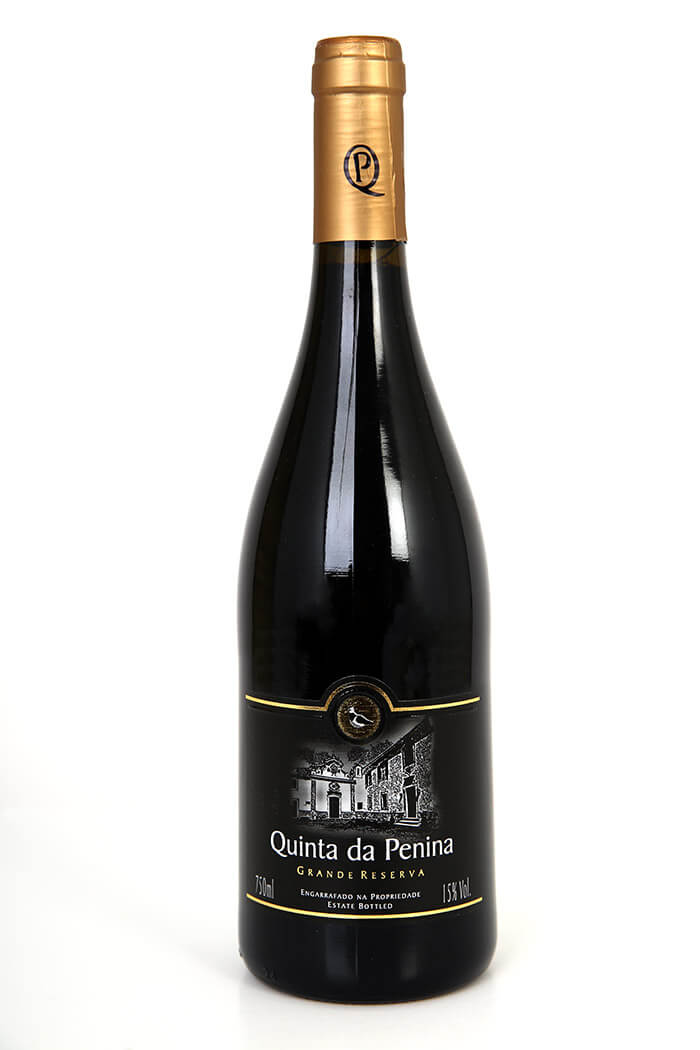
Quinta Penina Grande Reserva, tinto
The charming Manor House has been refurbished for tourism and events. The property offers two guesthouses, with rooms for four and six people, which can be rented separately or as one holiday property with two pools. The old winery was cleaned out and updated for events, but precious winemaking instruments, such as hand presses and the two magnificent amphorae, remain as part of the decoration. “I hope one day they will turn this space into a small museum,” admits João Mariano. “They still have ancient and unique viticultural instruments that can no longer be found.”
Mare Nostrum Rosé
João makes several wines with Quinta da Palmeirinha’s old Negra Mole vines, starting with the alluring salmon-coloured Foral de Portimão rosé (€6.50). “It’s the grape variety’s natural colour when pressed,” he states. Then there is the Quinta da Penina 2019 (€10), a Negra Mole to which he adds just 10% of Castelão to give it a ruby-red colour. With aromas of fresh black fruits, notes of pepper and orange blossom, it is fresh and fruity in the mouth, with smooth, velvety tannins.
Red Mare Nostrum
The Quinta da Penina Tradição (€6.50), a blend of equal parts of Negra Mole and Castelão, with ripe red fruits and vanilla aromas, is a full-bodied red, smooth in the mouth, with an elegant finish. As for white, the Quinta da Penina DOP (€5), made from 100% Crato Branco, has fruity notes of pear and pineapple. In the mouth, it is balanced and fresh, with good volume and a long and persistent finish.
João is also known for making top-class, single-varietal Petit Verdot wines. His Quinta da Penina Grande Reserva 2016 (€10), made with grapes produced in Portimão, won a gold medal at the International Berlin wine competition in 2020.
Since 2011, Monte de Salicos has produced 20,000 bottles of Red, White and Rosé wine annually, using tried and tested methods
– August 22, 2022
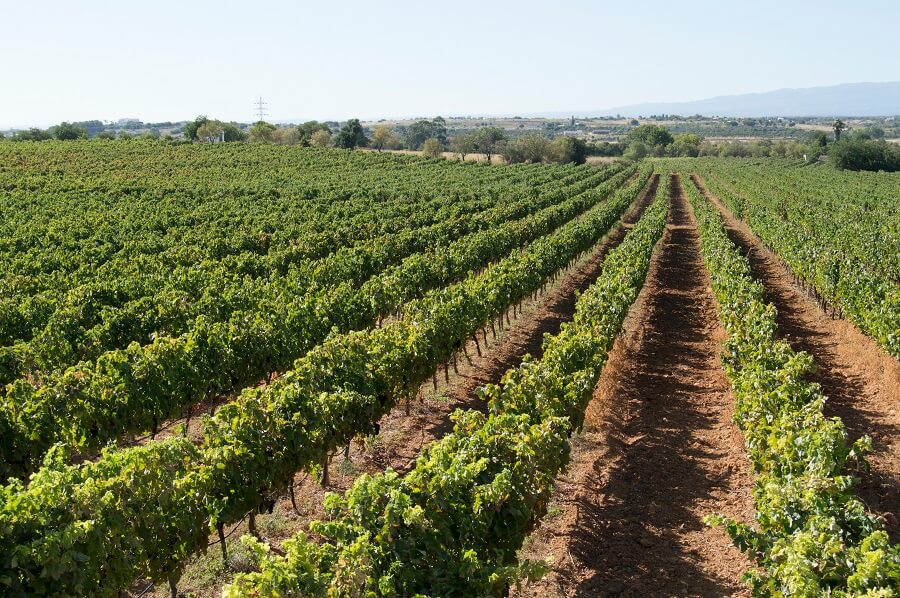
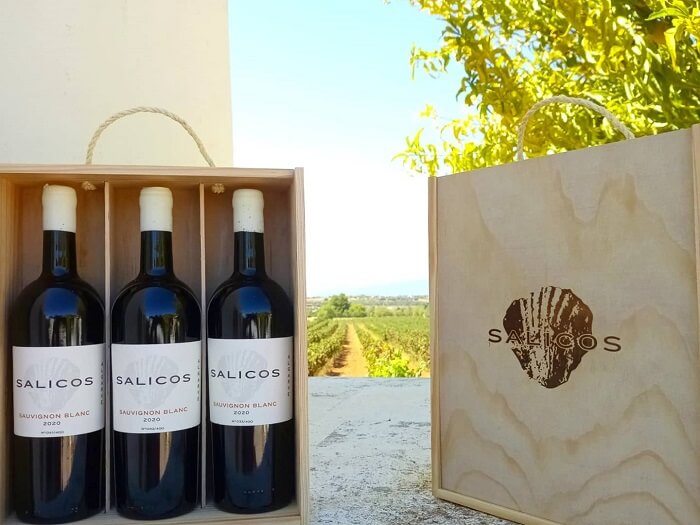
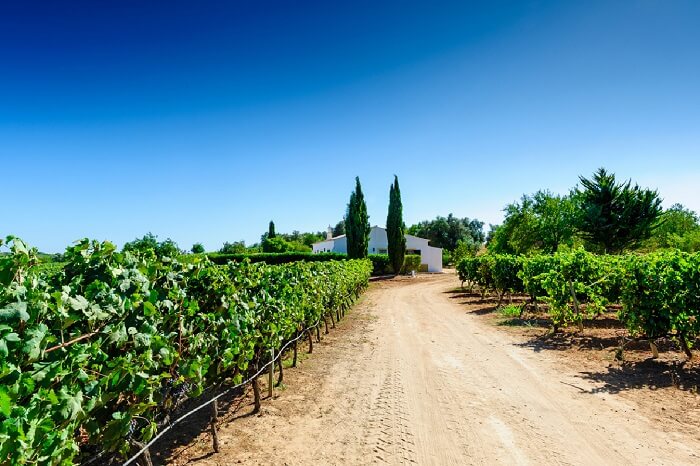
Between Carvoeiro beach and the town of Lagoa, Monte de Salicos (MDS), a 13-hectare property, has been cultivated since the 18th century. It has been in the hands of the Cabrita family for at least five generations and, in 1999, António Cabrita, a local doctor from and now co-owner, planted the first vineyards. Years later, in 2011, the winery was built, stainless steel vats were installed and so began the production of the first wines with the MDS. “Our red grape varieties are Aragonez, Syrah, Touriga Nacional and Cabernet Sauvignon. For the white ones, we have Moscatel Galego, Sauvignon Blanc, Verdelho, Pinot Gris and Viognier”, says Pedro Cabrita, who is also a doctor and co-owner of MDS with his father.
With the sea only about three kilometres away, the vineyard’s exposure to the sea breeze, with clay-limestone soils, provides the ideal conditions both for the development of grape varieties such as Cabernet Sauvignon or Syrah, and for Portuguese varieties, such as Touriga Nacional. “It’s a soil that has never had any additives, it’s natural to the area and typically Algarvian”, assures Pedro Cabrita, adding that the production is “almost biological, and almost totally non-industrial”. The doctor adds that they “use very few products in the vineyard and it’s a very different production from the industrialised kind you see everywhere. But otherwise it’s a typically regional wine”, from over eight hectares of vines. All the winemaking process is supervised by winemaker Mário Andrade.
Made from the Aragonez, Touriga Nacional, Syrah and Cabernet Sauvignon grape varieties, the MDS Tinto (which the Quinta describes as “elegant, young and wild”) presents an aroma of ripe red fruits and soft leather. This is a wine with balanced tannins and acidity, which goes well with meat dishes and exotic and spicy foods. On the other hand, perfect for pairing with Mediterranean or traditional Portuguese dishes, the MDS Tinto Touriga Nacional is a blend made from the Syrah grape variety and aged for six months in oak wood. It has aromas of plums, red fruits and a touch of spices.
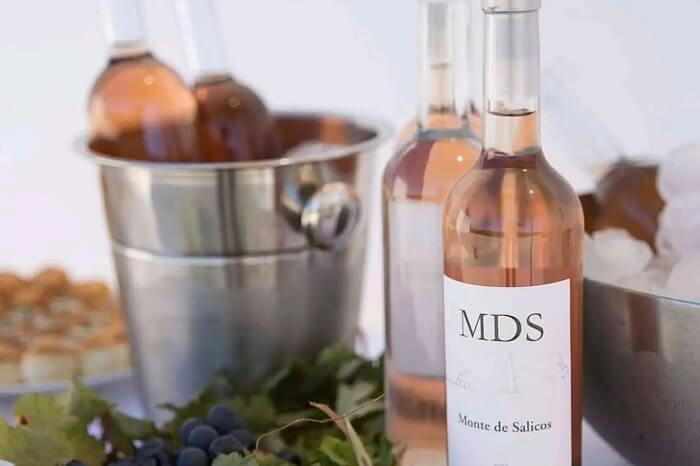
Meanwhile, the MDS White is ideal for fish and seafood dishes, with a persistent finish of balanced flavours and aromas of tropical fruits. It is made from the Verdelho, Moscatel Galego and Sauvignon Blanc grape varieties. Finally, the MDS Rosé is ideal for a late summer afternoon, to accompany sushi or even a salad. It has red fruit aromas, an excellent minerality and is made from Aragonez and Touriga Nacional.
With time, the winery’s producing capacity increased, and, today, they churn out around 20,000 bottles per year, which can be found in supermarkets as well as restaurants across the region. The estate also has a few awards to its name, displayed in the tasting room. “We have won the gold medal for wines from the Algarve and other medals in regional and national competitions. For the production that we have, with very few wines and after just 10 years in business, we are very proud of what we have already achieved, and we hope to achieve even more,” states Pedro Cabrita.
But MDS’s operations extend beyond wine production. “We sell carob, we have collaborated with the Town Council in various activities such as the Lagoa Wine Experiences, we hold events and wine tastings. The Quinta is pretty much always open,” says the co-owner.
They also provide local accommodation, in a house set very close to the vineyards, with two bedrooms, a private pool and barbecue, available to rent all year round. “We are full for this summer and there is already a lot of people interested in our wine-related activities. I have noticed differences in the tourist profile, with more and more foreigners,” he explains.
As for the future, although MDS has been part of the UNESCO heritage routes in the municipality of Lagoa since 2017, they have no plans to go global. “We want to expand both the winery and our production capacity. Our ambition is not to become a large company. The goal is always to maintain the genuineness that the Quinta has always had,” he points out. But, above all, is the legacy Pedro Cabrita would like to leave behind. “MDS has been in our family for at least five generations. Today it’s me, my father, my wife and my daughter. We are all heavily involved in this project, which I hope will stay in the family.”
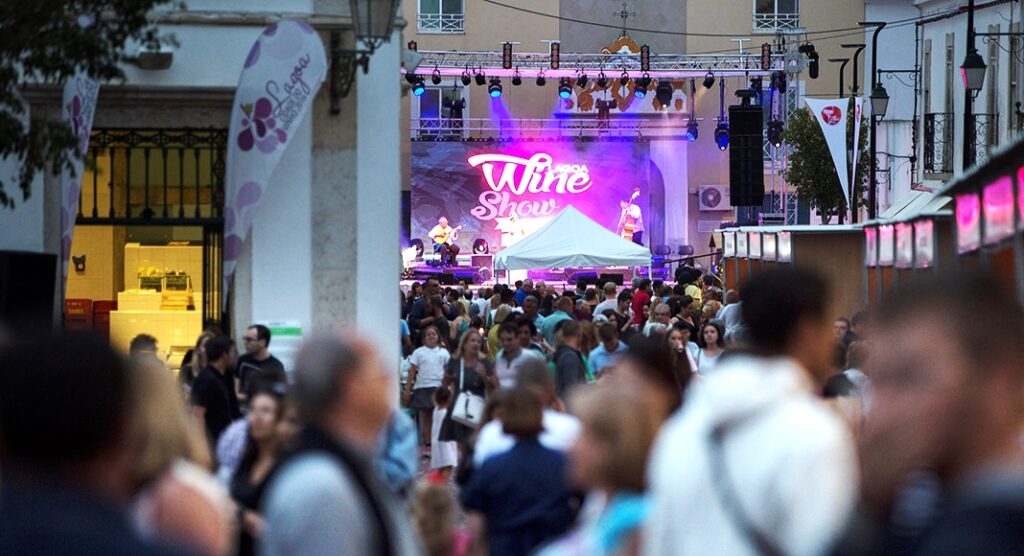
Lagoa Wine Show returns after a two-year break to bring four memorable nights of wine tastings, gastronomic shows and concerts to the Algarve region
– June 9, 2022
After a two year break, Lagoa Wine Show, “one of the most popular wine shows in the south of Portugal”, will return once again, between June 9 and 12, to celebrate the town’s winemaking history and showcase the high-quality wines currently produced in the Algarve.
As organisers say, the event is returning for four nights of “good wine, Algarve gastronomy and the best music”.
The event, free to attend, will take place in the “heart of Lagoa” at Rua Coronel Figueiredo, between 7pm and midnight, and will feature wine tastings, gastronomic events and a daily cooking show featuring a different chef using regional products to prepare mouth-watering dishes.
The Lagoa Wine Show attracts winemakers from all over Portugal, but places special focus on the wines produced in the Algarve.
“The Algarve region is in a phase of increasing notoriety in the wine world, garnering the attention of national and international critics and experts, and earning recognition through several accolades received in wine contests in Portugal and abroad,” says the local council.
The municipalities of Lagoa, Albufeira, Lagos and Silves have even launched a joint bid to be named European City of Wine in 2023. The bid, entitled ‘Algarve Golden Terroir’, will be promoted at the Lagoa Wine Show.
But the event is not just about wine as a line-up of talented musicians are due to perform, including Fado singers Sara Correia (June 9), Luís Trigacheiro (June 10), and Ana Moura (June 12), as well as Flamenco group Sangre Ibérico (June 11).
The wine show will also feature the return of ‘Fado à Janela’, an initiative which sees singers and musicians walking along the town’s streets, stopping to perform at restaurants and even at people’s balconies.
“The 2022 edition of the Lagoa Wine Show is truly special for the people of Lagoa,” says Lagoa Mayor Luís Encarnação.
“This is the first anchor event we organise after a two-year break, thus expectations are high,” added the mayor, inviting everyone to visit “this great show promoting the best wines of the region”.
The ‘Tchin Tchin’ gastronomic event promises wine, great dishes, fado and DJ music, performative showcooking, edible art and more
– June 7, 2022
This June 16, Arvad Winery, in Estômbar, Lagoa, is hosting the ‘Tchin Tchin!’ event , between 5pm and 9pm.
Described as a “celebration of life, pleasures and the senses through unique wines”, the event will shine the spotlight on local winemakers’ wines, regional food and art.
In fact, two chefs will be serving mouth-watering dishes made using exclusively regional products.
Also planned is a series of mini-lectures focusing on Arvad wines, as well as a “gastro-performance” called ‘With Sal’, described as a performative showcooking event focusing on edible art in which participants will be offered a delicacy created by chef/artistNuno Carrusca.
The programme also features a “harmonisation of Arvad wines with perfumes by internationally-awarded perfumer Miguel Matos”, a Fado recital featuring Tatiana Pinto, Tiago Valentim and Filipe Valentim, several live artistic performances and a DJ set.
The event is organised by cultural association Bóia. Tickets cost €50 per person (+351 919 289 380 | geral@arvad.pt).
Follow Arvad Wine on Instagram for more up to date information about the event.
First session of Lagoa Wine Experiences 2022 will happen this weekend
– May 27, 2022
Lagoa Wine Experiences, an event held for the first time in 2021 which opened the doors of local wine estates to wine lovers, is returning this year with its first session taking place on Saturday, May 28, between 10.30am and 6pm.
Tickets cost €45 per person and include the wine tasting experiences, lunch and transport. They can be purchased online at www.ticketline.sapo.pt or at Lagoa’s usual outlets (Carlos do Carmo auditorium, São José convent and Balcão Único).
Says the local council, which organises the event, the 2022 edition has been improved and includes “more winemakers, more sessions, and many novelties”.
Last year, the council said that public interest in the event was “massive with demand strongly outweighing availability”. A total of 223 people took part in the six sessions, which were held at Quinta dos Santos, Única – Adega Cooperativa do Algarve, Morgado do Quintão, Quinta da Palmeirinha, Dona Niza Wines, Arvad Wines, Monte de Salicos and Quinta dos Vales.
ARVAD Wines’ “Touriga Nacional” and Quinta dos Vales’ Marquês dos Vales Grande Escolha, both produced in Lagoa, were awarded the Grande Medalha de Ouro (Grand Gold Medal) and the Medalha de Ouro (Gold Medal) at the Wine Cities Competition (Concurso Cidades do Vinho)
– May 16, 2022
The event was held between May 5 and 8 at Setúbal’s Hotel and Tourism School and included a 30-strong jury of experts tasting 346 wines from 55 municipalities.
Once again, the Algave wines were in the spotlight, this time with ARVAD (Grand Gold Medal) and Quinta dos Vales (Gold Medal).
As Lagoa’s Mayor Luís Encarnação stated, “It is, without a doubt, another clear sign of the good quality of wines in the Algarve, and in particular Lagoa.”
Algarve Views has a simple goal: to showcase the Best the Region has to offer by bringing together Wine, Food, Nature and Culture
– April 7, 2022
To combat seasonality in the region, Algarve Views is the brainchild of visionary Andreia Ferreira, who worked at Lagoa’s Wine Cooperative. She witnessed the gradual growth of wine production in the region, at a time when there were few wineries here. With a degree in Marketing and a post-graduation in Wine Business, she recalls that, in those years, wine tourism was not a well-known concept, at least in the Algarve.
“Wine tourism is available year-round, and I noticed that many vineyard owners were beginning to show interest in producing their own wine. That is when I realised this market was an opportunity,” says Andreia, who brought Algarve Views to life in 2017.
A tourism company focusing mainly on winemaking, Algarve Views wants to showcase the region’s wineries from west to east, but it does not stop there. Besides the wine-tasting tours and visits to the producers, the company also enhances these experiences with different activities to suit all tastes, from boat tripsand visits to the Silves Museum and art galleries to nature walks. Although daily tours have a set itinerary, you may opt for a personalised event, with a choice of 13 wineries, 11 restaurants, and eight tours. Families with underage children can request babysitting services.
Available Mondayto Friday, the set tours cost €130 per person, and they are all different, sharing a common motto: “Unique activities that show the potential of each venue and the best they have to offer,” says Andreia.
To start off the week, the experience starts with a tour of Quinta da Vinha, a 14-hectare estate which has been operating since 1977 in Silves and where the famous Cabrita wines are produced. The tour ends with a tasting of their finest wines alongside tapas, in a room with a privileged view towards the vines.
Quinta da Vinha
Next is a walk along the Algarve coast, stopping at Praia da Marinha, widely regarded as one of the most beautiful beachesin the world. Lunch is later served at Morgado do Quintão, in Lagoa, where visitors are invited to discover the grape varieties used by this winery whose history dates back over 200 years.
Thursday is spent in Silves, with a tour of the Castle and the Museum, followed by a visit to the winery and cellar at Quinta do Francês, where you can taste the wines produced at this eighthectare estate. After lunch at Ponte Romana restaurant, it is time to discover the region’s first organic wine producer, Quinta Rosa, and taste their organic and clay-aged wines.
Quinta dos Vales
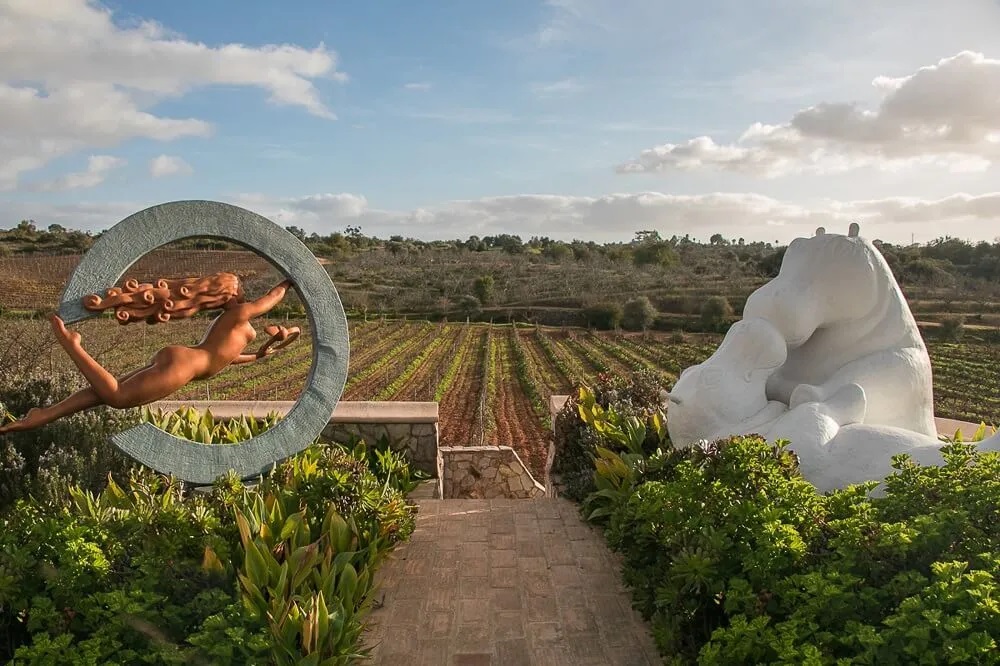
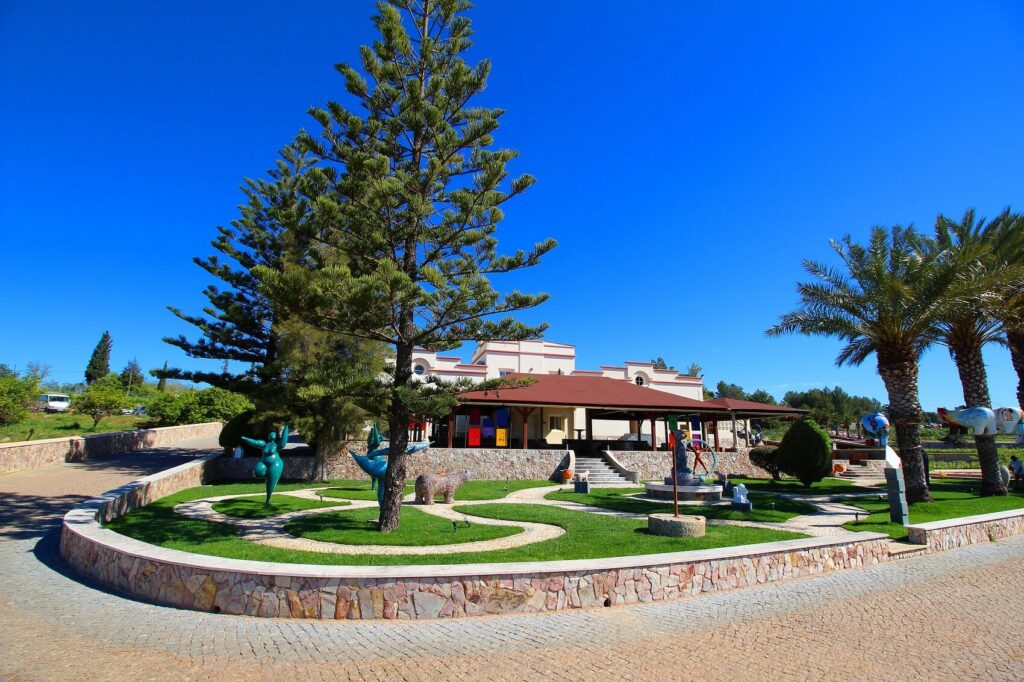
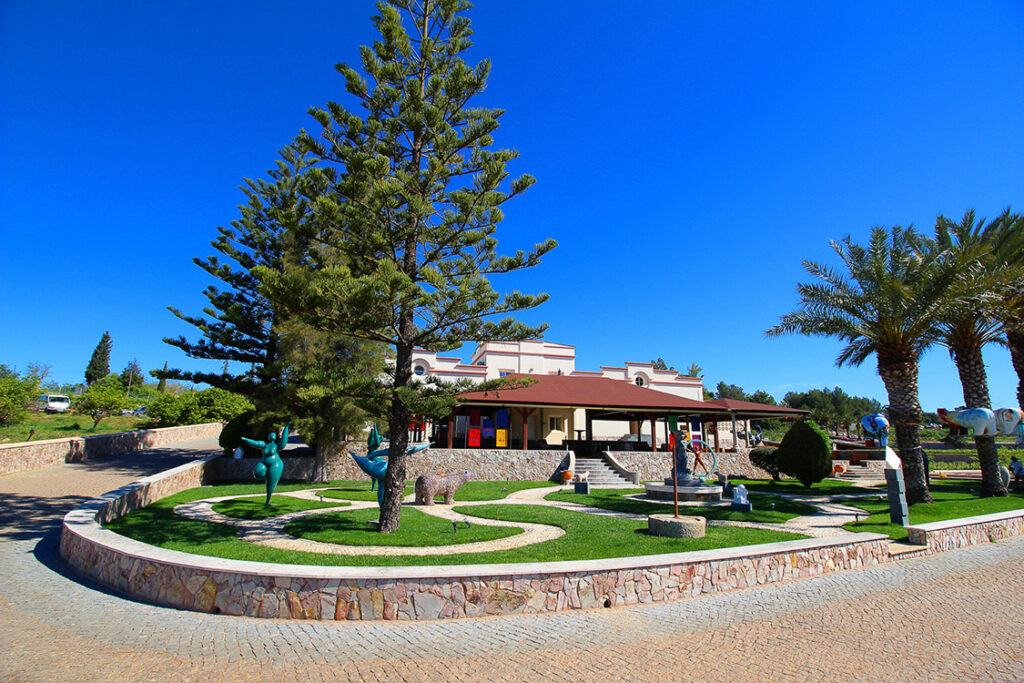
Closing the week, Friday starts bright and early with a 3km cliff walk along the Seven Hanging Valleys Trail, in Lagoa, between Praia da Marinha and Praia de Benagil. Also in the morning, Quinta dos Vales, in Estômbar, hosts guests for a visit and tasting of four wines, with a privileged view of the large sculptures in the winery’s gardens. Visitors will also have the opportunity to learn professional wine-tasting techniques. Lunch and the tour end at Quinta dos Santos.
Quinta dos Santos
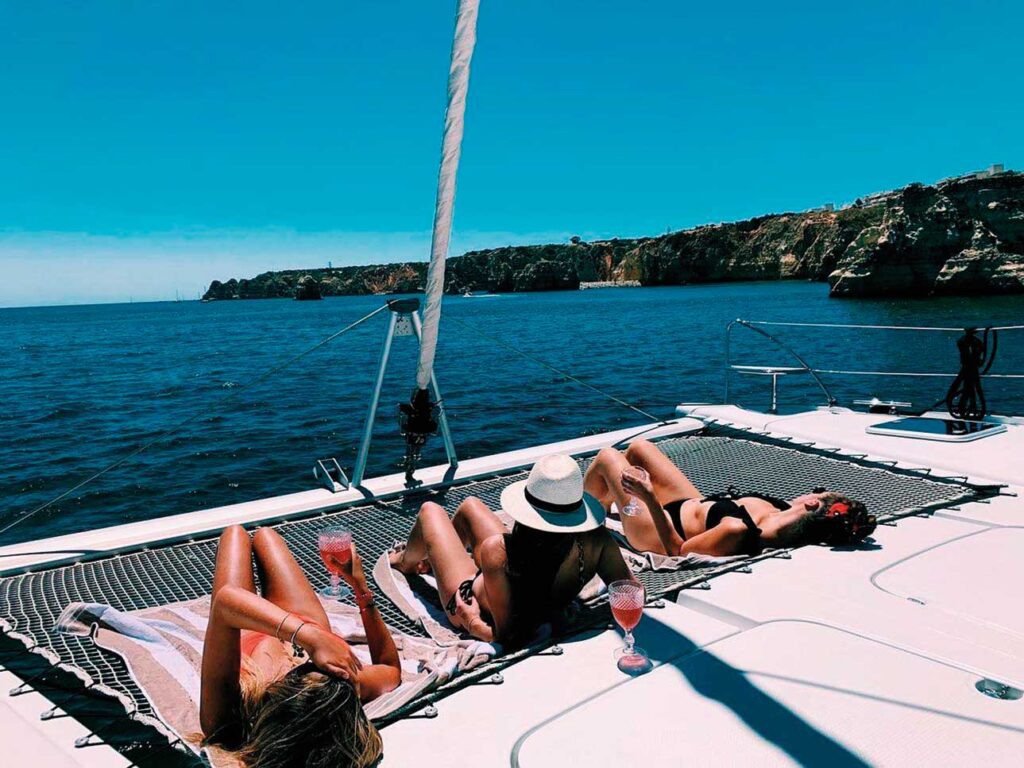
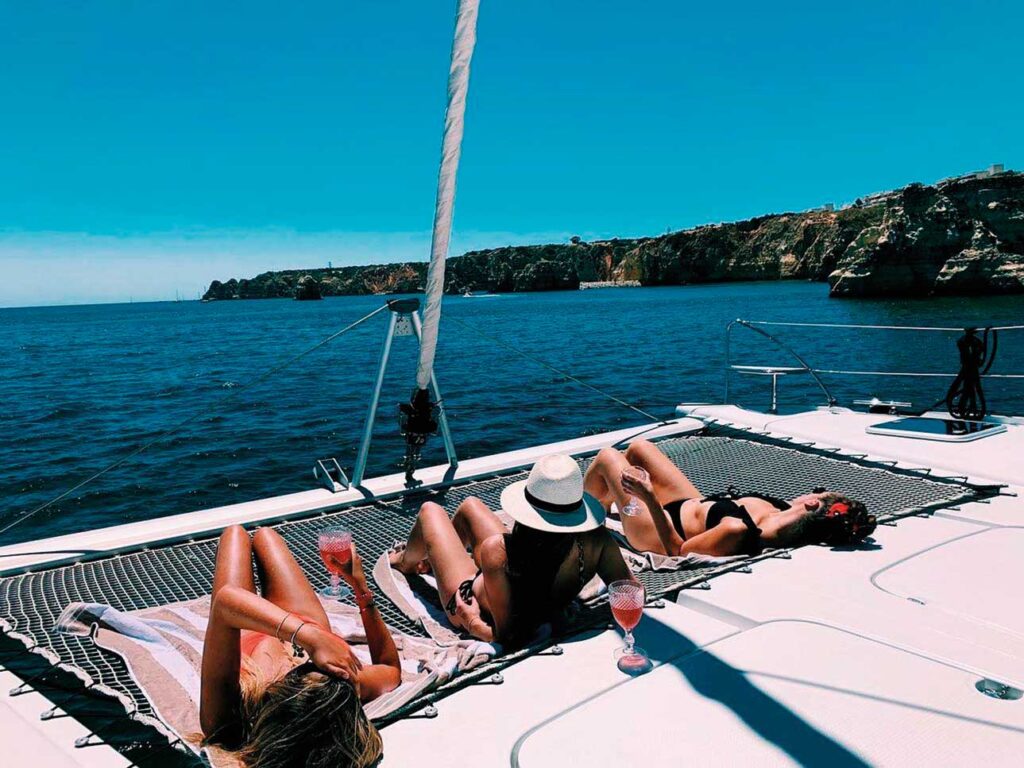
For 2022, Algarve Views will organise exclusive tours with partnering hotel chains (Vila Vita Parc, Epic Sana Algarve, and The Lake Spa Resort). Clients will also have the chance to be winemakers for a day at Quinta dos Vales with The Winemaker Experience, to discover, by boat, Arvad Wines on the banks of the Arade River, and to take a trip to Sagres. Another new addition to the programme is the yacht trips with white or rosé wine tastings, whilst enjoying the sunset or until dawn. Prices for the latter start at €890 for 4 people. The bespoke packages, where clients choose the activities they want, vary in price, starting at €130.
Aside from all this, Algarve Views also organises private events, represents Algarve wine producers at national events, and is currently preparing to open its first shop at Silves Market as soon as it reopens following renovations.
Inside Carvoeiro revisits Quinta dos Santos to Discover their New Flavours
– April 7, 2022
It was 2018 when the dos Santos family, originally from South Africa but with Portuguese roots, opened their stunning creation. Quinta dos Santos, an eight-hectare property located in Sesmarias, Lagoa, is better known for its artisanal beers, wines, and even olive oil. However, behind the gates of the whitewashed buildings, you’ll find treasures that do more than just stimulate your tastebuds. The symbiosis of quality and good taste is guaranteed at this family business focused solelyon national flavours.
“The cornerstone of our business is artisanal production, focusing on national products and quality. We’re a family business with a very unique and growing project,” states Ann dos Santos, all of whom, together with their dedicated staff, play an essential role at Quinta dos Santos.
At the estate, the three hectares of vines planted in 2017 are now bearing fruit. The family invested exclusively in Portuguese grape varieties, four reds (Touriga Nacional, Negra Mole, Sousão and Bastardo) and four whites (Malvasia Fina, Arinto, Verdelho and Esgana Cão). These varieties take centre stage on the aptly named Tesouro (Treasure) labels, the estate’s premium range. Quinta dos Santos has another range, also produced in-house, labelled Escolhido (Chosen) made with grapes from local producers but from harvests meticulously selected by the dos Santos family. The cellar, managed by oenologist Mário Andrade, has unique properties that allow for ideal conditions for the production, storage, and ageing of all their wines. This space, which is open to visits, boasts structured and planned production procedures with fermentation in concrete and clay vats as well as wooden barrels. “We like to use different methods, and this is something that makes us stand out as producers,” says Ann.
The secret behind the Tesouro range lies in the quality and care of the grapes. “We have learned so much since the inception of this project and apply this knowledge with care. We plant cover crops – a combination of seeds that include chamomile flowers, clover, and green herbs that benefit the soil, the environment, and, consequently, the vines. Our pruning technique ‘guyot’ also allows us maximum yields of high-quality grapes” she explains.
Quinta dos Vales beer
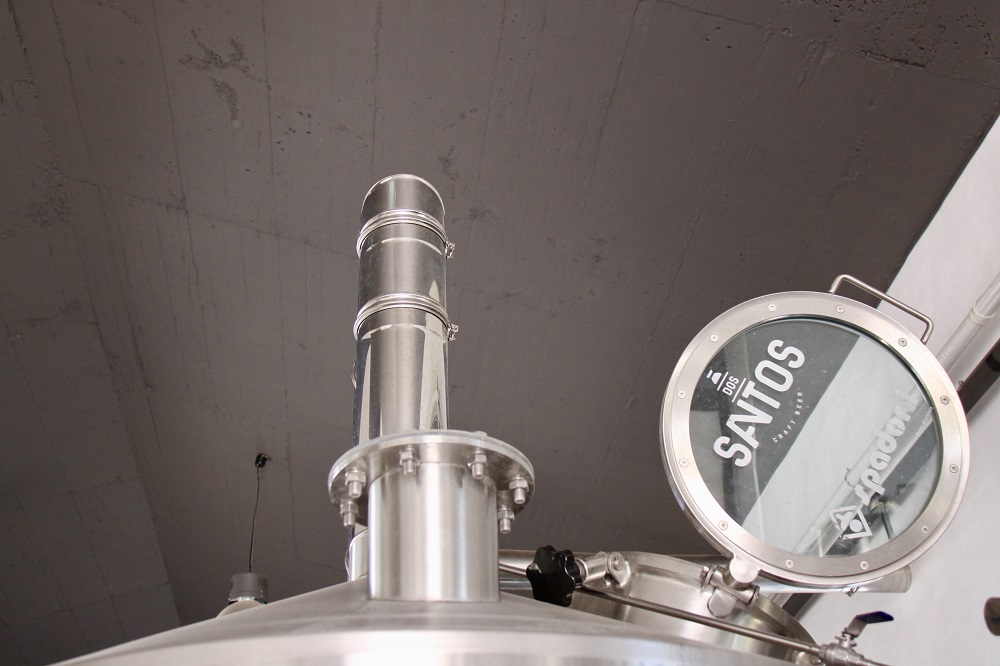
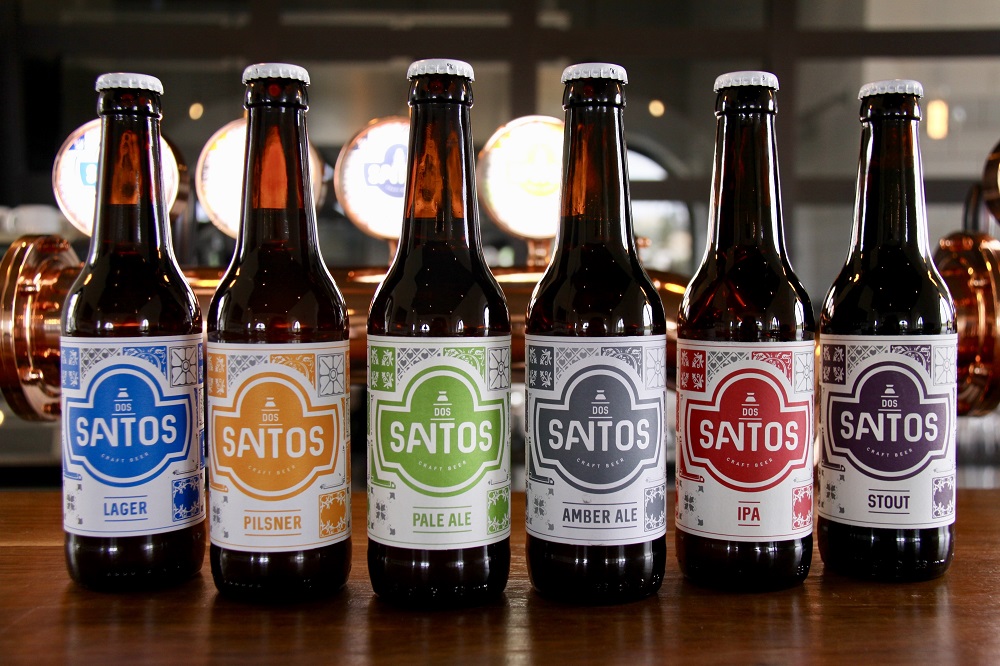
Under Greg’s watchful eye, the estate’s artisanal brewery has the capacity to produce up to 35,000 litres of Dos Santos beer every month. The German Reinheitsgebot production method is combined with state-of-the-art equipment to produce the brand’s six varieties — Lager, Pilsner, Amber Ale, Pale Ale, IPA, and Stout. They all share a simple production method, with no additives or preservatives, but with very distinct flavours. The Pale Ale, for example, has a lower alcohol content but fosters a tropical feel with aromatic American hops. On the other hand, the Stout is a black beer in which the roasted malt creates intense coffee and chocolate flavours.
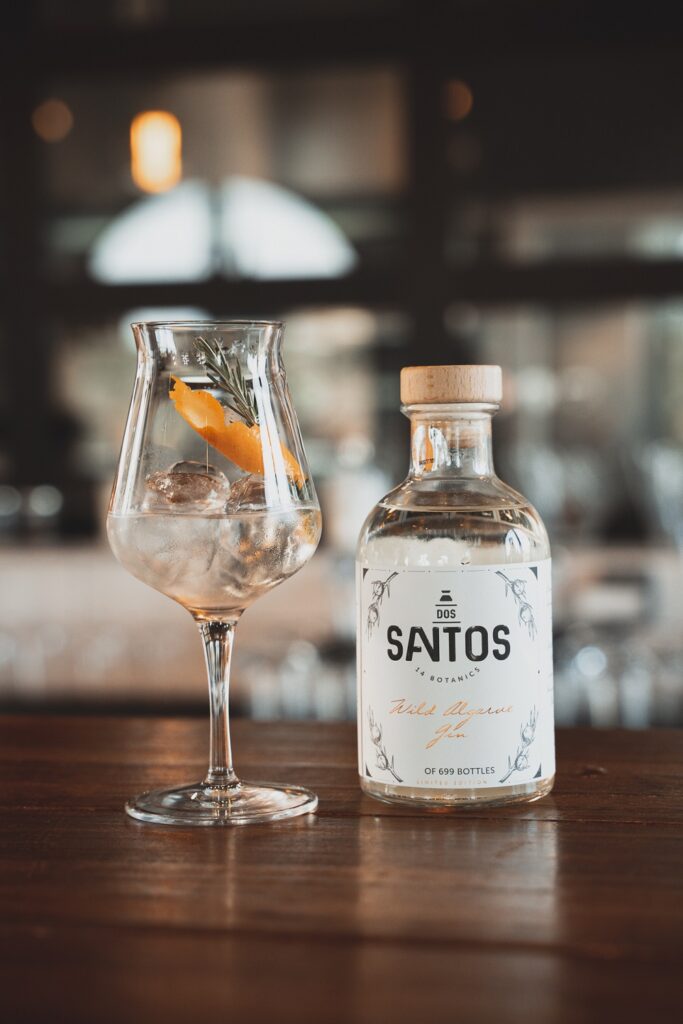
Having established their brands, the dos Santos family is now looking to develop a distillery so that they can produce their own spirits as well. And the first steps have already been taken. After launching the Escolhido Sparkling Wine in 2020, they released a very limited, 699-bottle edition of Dos Santos Gin.
However, the family assures there will be a second edition later this year. “Our gin is unique, produced with 14 local botanicals such as eucalyptus and rosemary, as well as hops” says Ann.
Quinta dos Santos Restaurant “A Esquina”
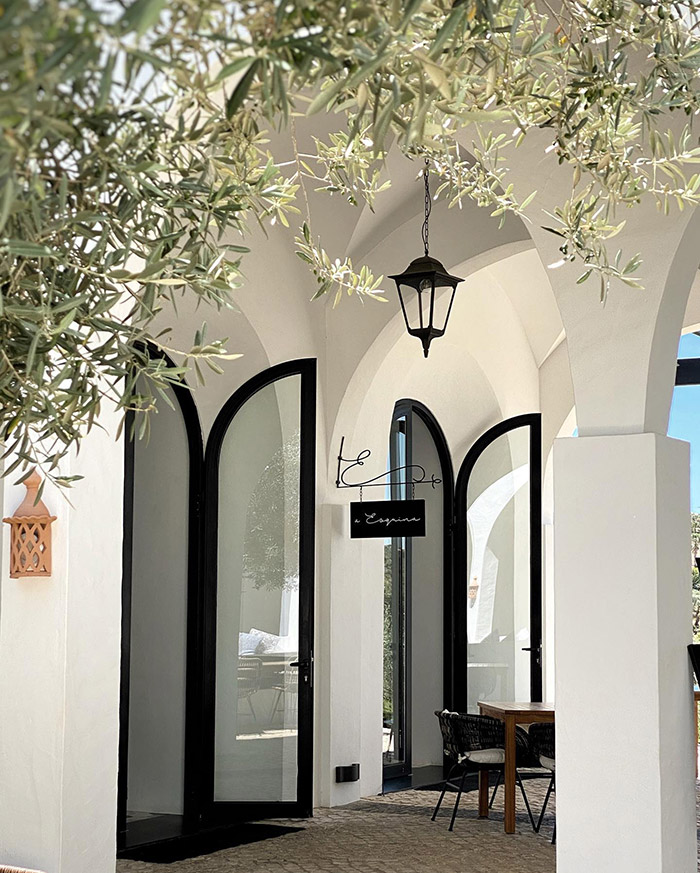
At the heart of the estate, and where all the flavours come together at the table, ‘A Esquina’ restaurant is spearheaded by Portuguese-Venezuelan chef René Santos and manager Mariana Silva, and it also hosts wine and beer tastings enjoyed after a guided tour of the Quinta with sommelier, David Ferreira-Jorge.
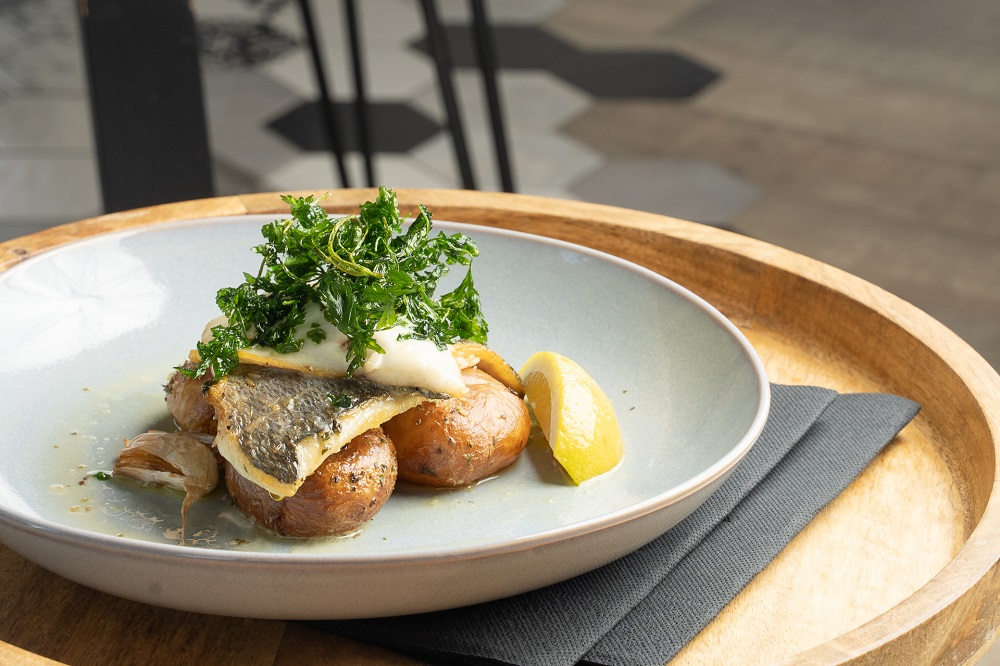
The menu changes twice a year according to seasonality and features creative contemporary re-interpretations of traditional dishes with local, seasonal ingredients. “We have fish, meat, seafood, and vegetarian dishes, highlighting our own production with dishes designed to pair well with our beers and wine,” Ann says. After a year of great demand, mainly for weddings, the family decided to open another private room which is ideal for small groups while exclusive use of the Quinta is given for large groups of up to a maximum of 60 guests.
Future plans for Quinta dos Santos
As for the future, Quinta dos Santos plans to increase its wine production capacity. To do so, the idea is to plant more vines with new grape varieties. For 2023, the estate plans to launch the Tesouro Sparkling Wine and a few red Tesouro labels. Until then, they are also considering producing artisanal honey, as well as boosting the production of olive oil, which is currently only for restaurant use.
Ann states: “We have so many ideas, all of which are inspired and begin at the Quinta. We are open-minded about what direction to follow in our business and there is continued room for expansion, but always with the philosophy of maintaining quality in all that we produce.”
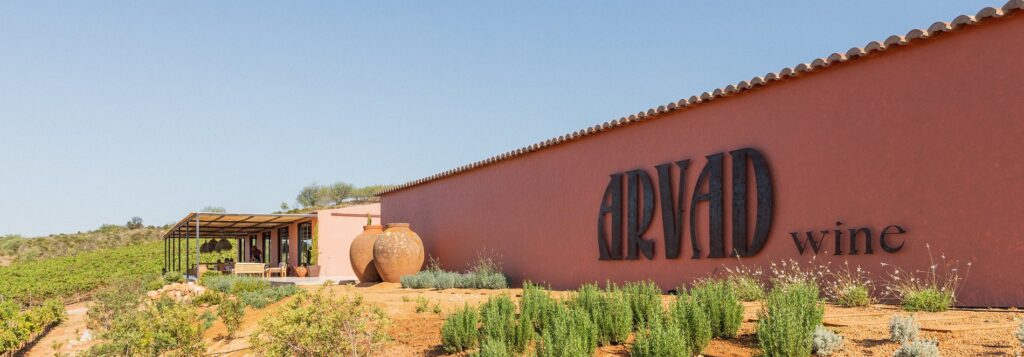
On a property by the Arade River, running along the riverbanks, Arvad is a winery made of history. Inaugurated in 2016, the winery rolls over 50 hectares of land, including nine hectares of vines, which are exposed to the winds from the north and the Algarve sun. “A Mediterranean climate with Atlantic influence”, the terroir consists of calcareous clay soil.
The Algarve wine culture has experienced many highs and lows. Its history dates back to early A.D. In fact, the region where Arvad is based, Lagoa, is precisely where wine was introduced into Portuguese territory. Brought from the east by Phoenician travellers who took root in the Silves area, and through the word of exchange and discovery, became a ritual and proof of civilization.
Back then, Arvad, was a word for “haven”, which appropriately named the new winery as it applies to the care and quality of their wines. This new vineyard is home to Portuguese red grape varieties such as AlicanteBouschet and Touriga Nacional, along with Cabernet Sauvignon, as well as white grape varieties, Alvarinho, Arinto, and Sauvignon Blanc.
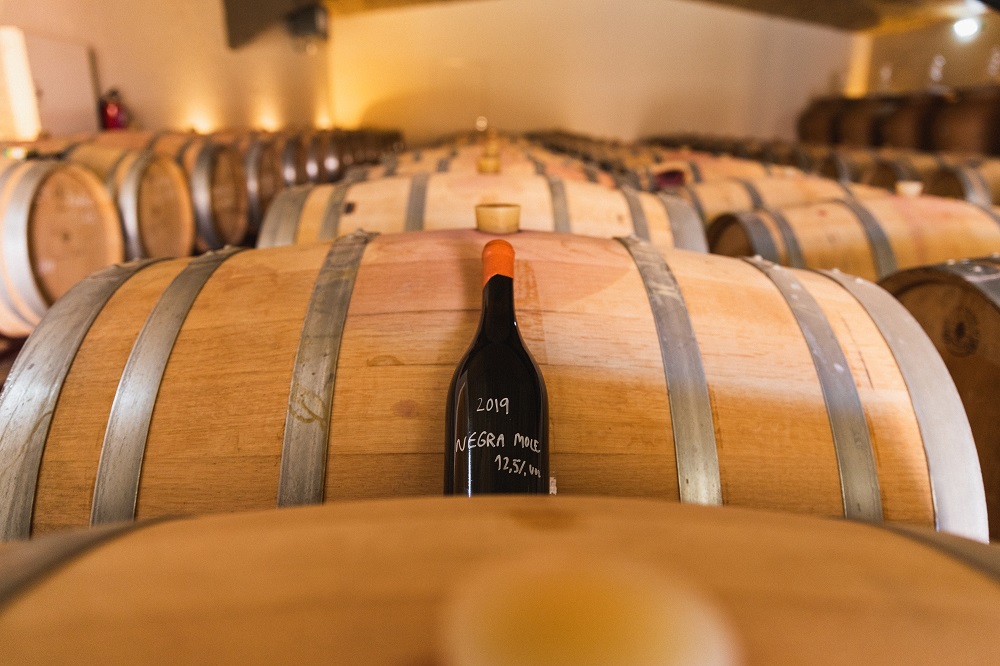
The grapes are picked at Arvad and are sent to a partner winery for the winemaking process, Cabrita. A well-known name for Algarve-wine lovers, Cabrita is located in the picturesque Quinta da Vinha, in Silves, and has 6.6 hectares of vineyards. The tradition of Cabrita wine dates back to 1977, when José André, a fruit merchant, acquired the farm, and it has since been passed down through the Cabrita family. “After the wine is processed, the raw product comes back to us and is then carefully aged in oak barrels or terracotta amphoras for approximately one year,” explains Arvad manager Mariana Canelas. “After the ageing process is completed, it goes back to Cabrita to be bottled.
The wine-making process is under the control of award-winning winemaker Bernardo Cabral. He explains the difference between ageing the bottles in the oak barrels compared to the terracotta amphoras: “When an oak barrel is produced, it is toasted on the inside in order for chemical reactions to take place with the wood compounds that enhance aromas and that will influence the wine. The family of these aromas is dependent on the temperature and time that the reaction takes place. In the case of Arvad, the barrels are standard size barrels at 225 litres.”
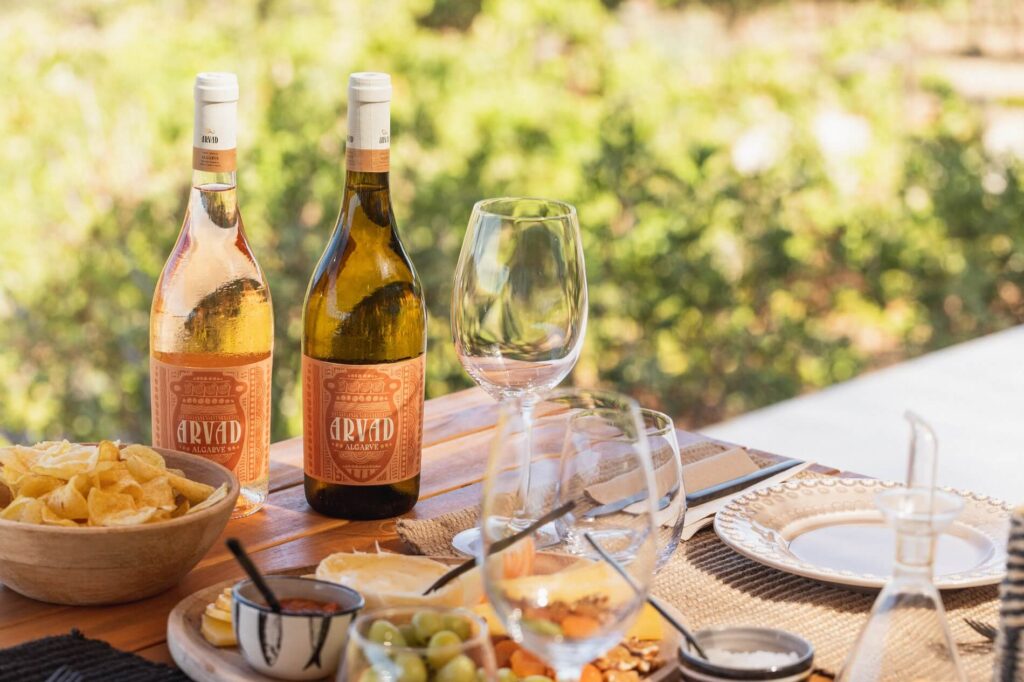
The winemaker goes on to explain that, when ageing with terracotta, “the wine acquires a discreet clay profile that is very reminiscent of the origins of the soil in which the vines are grown. Ageing tends to happen slower and more gradually, which allows the original fruit of the wine to be preserved very well”. Available to the public today is a selection of six different Arvad wines which can be purchased directly from the vineyard, or from selected distributors. The white wine has a lot of freshness. Aromatically, the fruit notes are involved in a discreet presence of the barrel, where it is partially fermented. In the mouth, it is smooth, enveloping, and with refreshing acidity. Meanwhile, the rosé is very light and fresh, with notes of fresh red fruits and light floral hints. It is smooth and has good acidity, ideal as an aperitif or accompanied by salads, seafood, or Asian food.
The red is an elegant combination of ripe red fruits and balsamic notes with subtle hints of spices and some vanilla suggestions. And finally, their most popular is the Negra Mole, which has notes of cherry and fresh raspberries delicately combined with some aromatic herbs. Each label of the Negra Mole is carefully handwritten for an authentic touch.
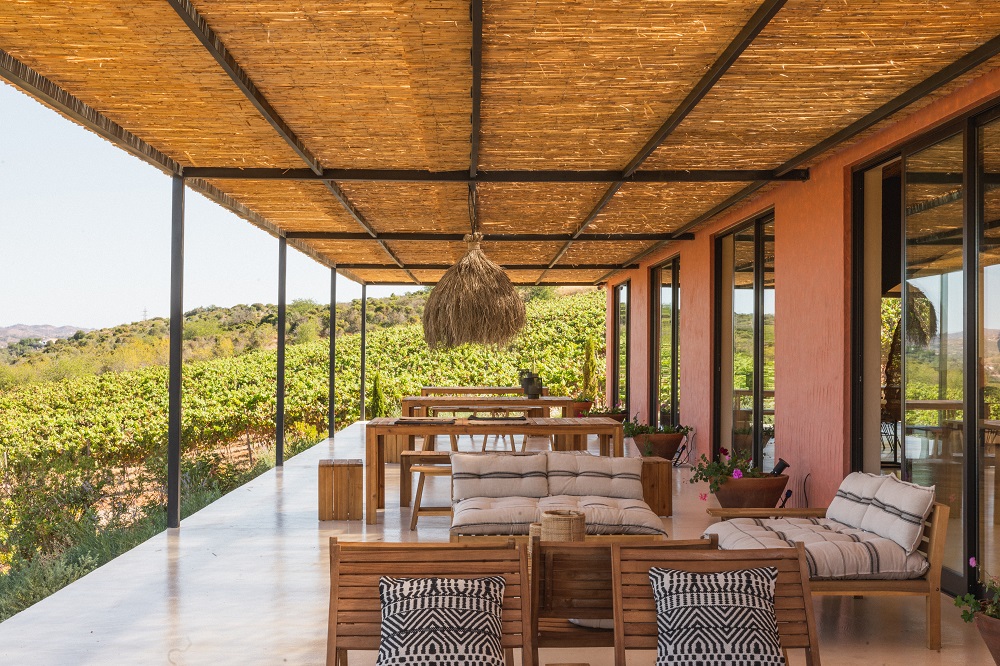
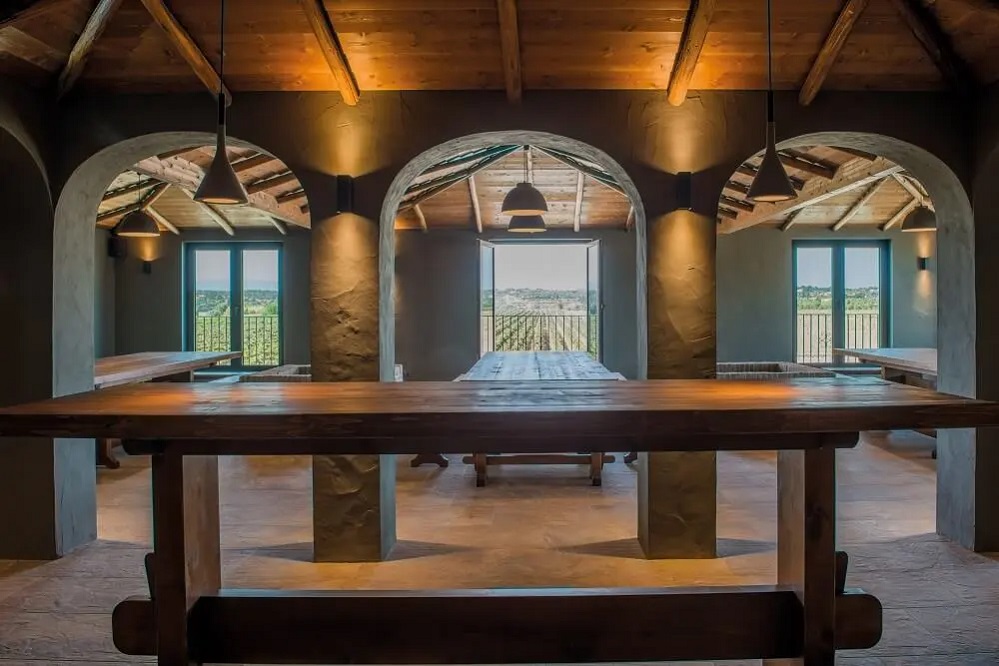
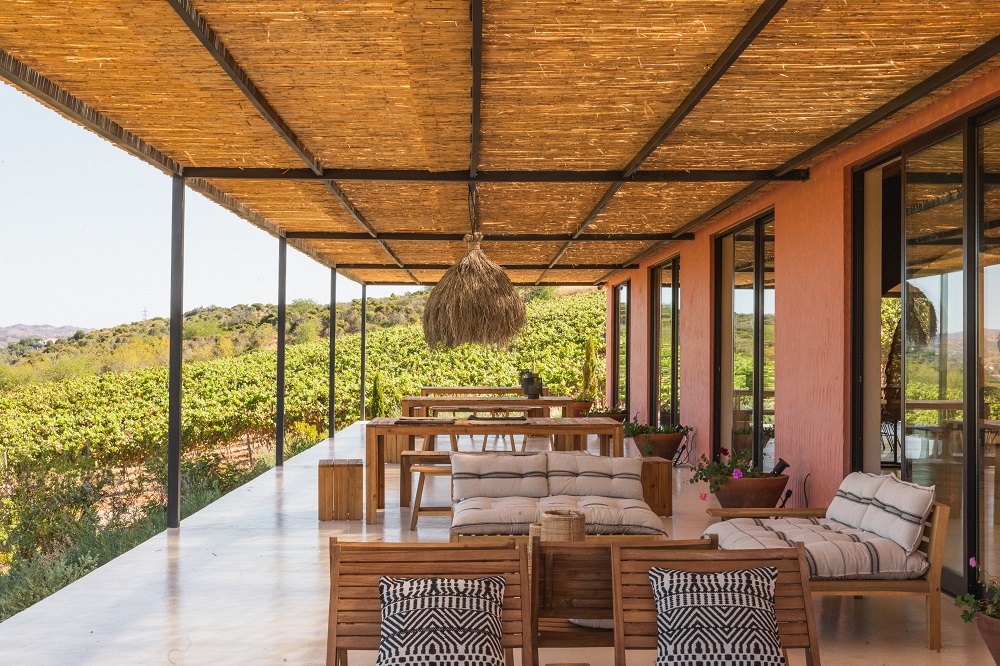
The winery overlooks the vines and has panoramic views of the stunning Portuguese countryside as well as the Arade River, and you can arrive at the vineyard by water or by land. The building boasts a stunning porch attached to the restaurant, which makes it the perfect setting for sunset-watching in summer.
In addition to being available for ceremonies and events, the winery also provides tours and tasting experiences. Enjoy regional delicacies and samples of each wine whilst being enlightened with local history. These experiences are available all year round from Tuesday to Sunday, from 10am to 6pm. The Algarve’s wine scene has taken a step up over the last few years, and Arvad seems to be one to watch.
With big plans for the future, including an Arvad Hotel and having been showcased at several wine events across Portugal in the past few years, it seems that this young, stylish vineyard is only at the beginning of its prosperous journey.
Lagoa Council will host a free course for anyone interested in learning about wine and how to identify their main characteristics
– March 16, 2022
Lagoa Council has teamed up with the Hotel and Tourism School of Portimão (EHTP) and the Algarve Wine Commission (CVA) to host a free course focusing on Algarve wines.
The course is part of the ‘Formação + Próxima’ programme and will begin at the Lagoa municipal library at 3pm on March 22. There will be four sessions taking place until the end of April.
The initiative is open to everyone, but prior registration is mandatory, and spaces are limited to just 25 participants.
Says Lagoa Council, “the course was carefully structured by CVA to give participants the ability to identify the main characteristics of Algarve wines as part of a training programme marked by different dynamics, rhythms and environments.”
Participants will be able to learn more about the region’s wines by taking part in masterclasses led by Lagoa wine producers, visiting local wineries and tasting several wines.
The council says that this is the second initiative of its kind that it is carrying out as part of a partnership signed with the national tourism board Turismo de Portugal to improve the skills of locals in the tourism sector.
Those interested in taking part must be registered on the Academia Digital website.
New winemakers are reaping the fruit of their investment at Quinta dos Vales thanks to a unique project
– December 7, 2021
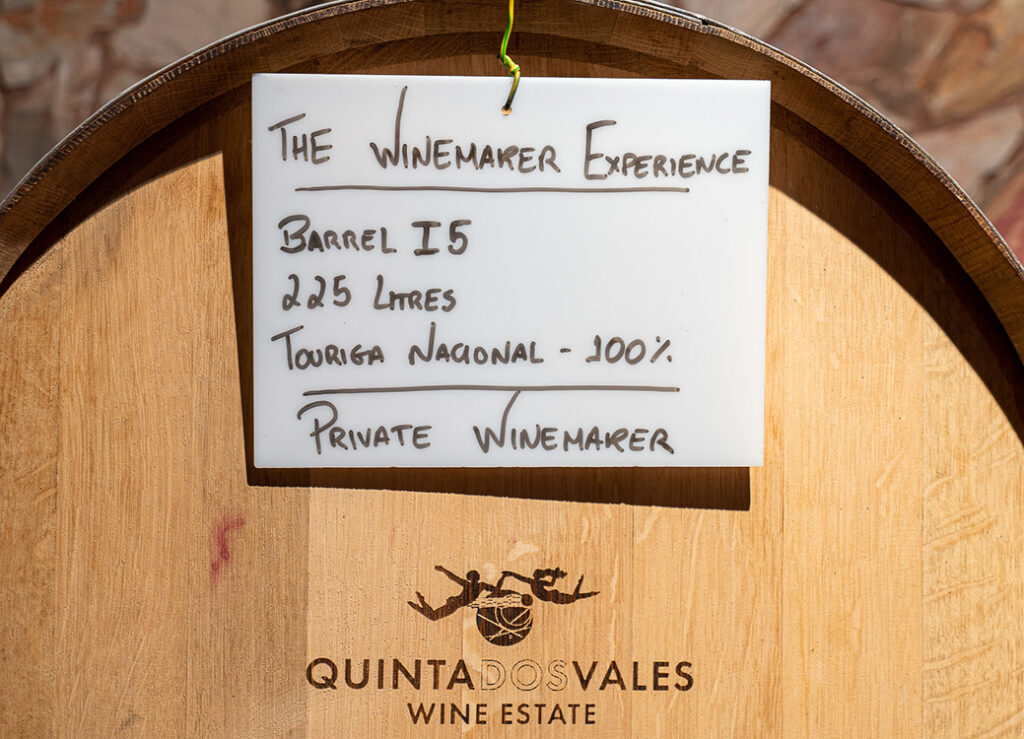
It has been a little over a year since Quinta dos Vales’ exclusive The Winemaker Experience project was officially launched. Since then, 13 wine-loving couples and individuals have embarked on an exceptional adventure, which sees them become winemakers, producing wine to their taste by either renting or buying a plot of vines at the Lagoa winery.
Although the pandemic put many activities on hold, this was yet another example of how technology brought everything closer during the lockdown. Thanks to a young and dynamic team led by Michael Stock — son of Quinta dos Vales owner, Karl Heinz Stock — these new wine-makers were able to stay up to date and participate in the production of their wine remotely. “We send out comprehensive reports every month and are in touch with them every two to three weeks, keeping them involved and emotionally connected with the project,” explains Michael.
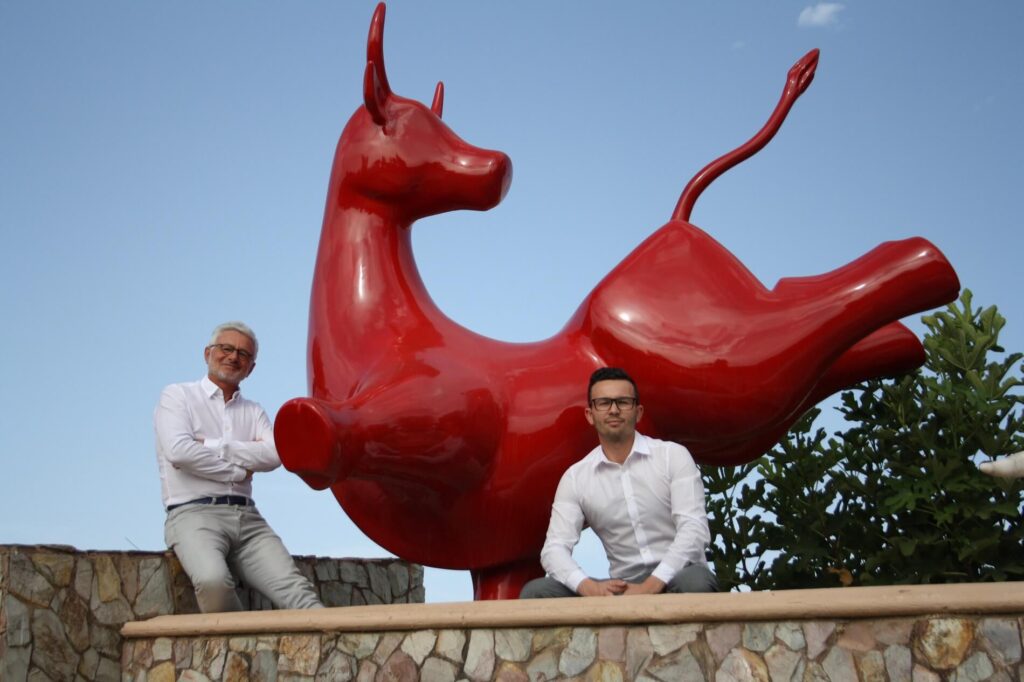
Mark and Michael Stock
This regular contact also helps the winemakers make important decisions, such as when to harvest depending on the type of wine they want to make. For example, with the heatwave last July, the build-up of sugar in the grapes accelerated, but the phenolic maturity (the astringency of the skin and seeds) did not, resulting in bitterness. To find the optimum balance, Michael recommends setting a goal for sugar concentration. When this is achieved, they taste the grapes and give the winemakers the chance to decide whether to harvest or wait until the bitterness mellows.
People from around the globe are discovering this exciting new project
For Peter and Brenda Folch, the pandemic meant they still would not be able to be at the vineyard for the 2021 harvest. Based in South Beach, Miami (USA), the pair fell in love with wine when they moved to Argentina in 2004. Since then, they have both become certified US sommeliers and now plan their holidays around wine tasting. “That’s how we discovered The Winemaker Experience,” says Brenda.
Huge fans of Portugal and its wine culture, they did some research and found their dream property at The Vines, Villa-Suites in the middle of the Quinta dos Vales vineyards. They had already purchased a small plot of vines in Mendoza, Argentina, as part of a project similar to The Winemaker Experience, and decided to do the same in the Algarve in August 2020, without ever having visited.
“Michael recommended we first start slow and rent a vineyard, but we decided to go ahead with the 99-year lease. We chose a plot of Touriga Nacional because we thought, in Argentina we have Malbec, so in Portugal, we’re going to go for one of the iconic varieties,” explains Peter. They are hoping to be more involved in the future, “but in the meantime, the experience has been amazing”. They add: “Michael and his team have been sending us information about every step of the process, sending pictures, even videos. We feel like we have actually been there.”
Once a dream, now a reality: Learn how to produce your own wine with the help of professionals from Quinta dos Vales
For local food and wine writer Patrick Stuart, The Winemaker Experience has been hands-on. He is one of the lucky few winemakers to live in the Algarve and have the chance to follow the project in person. Making his own wine is something Patrick had always dreamt of, something which, until now, was beyond his financial reach. For him, “The Winemaker Experience makes it affordable and practical”.
Last May, he bought 180 plants of Alicante Bouschet and since then, together with his daughter and Marta Rosa, Quinta dos Vales’ winemaker, he has been following the process very closely. “At the beginning of August, we did a final maturation test and were already estimating 11,7% of alcohol,” explains Patrick, who is looking to make a fairly low-alcohol wine. “Ideally, I don’t want to go above 12,5%. So, on that Friday, I took the decision, and Marta agreed with me, to harvest on the Monday, as the forecast for the weekend was hot weather.”
They harvested in the dark to avoid having to refrigerate the grapes. “We went at 6am, when it was still dark and finished just as the sun was coming up. The grapes were still really cool, and by 7.30am, we were pressing them.” Patrick was delighted with the quality of the fruit, “We hardly took out any grapes at all, the fruit was absolutely superb, and the grapes were delicious,” he says, confessing it was difficult not to eat them all.
Bottle Blending Workshop
Under Marta’s guidance, Patrick made an interesting last-minute decision. “Some of our vines didn’t bear as much fruit as they should have done. The quality was there, but not the quantity. So, Quinta dos Vales offered to make up the quantity at no extra cost. The wine I always wanted to make from the onset is a Palhete (a light-bodied red), in which a bit of white is added. So, we decided to add 15% of Arinto, which they were harvesting at the same time.”
Patrick’s wine will be bottled in March and be ready for drinking around June. Approximately 250 bottles of it, which he plans to give to friends and colleagues. Having visited wineries all over the world, he thought he knew a little bit about winemaking but admits it has been a huge learning curve. “Every single time, we come away with more knowledge. It’s absolutely fascinating.”
After a “sold-out first session” last month, the Lagoa Wine Experiences wine tasting tour is returning on Saturday (September 11) between 10.30am and 6pm.
Participants will yet again meet at Lagoa’s municipal pools before being taken to Dona Niza Wines in Carvoeiro, a “very recent project by a local who has an enormous passion for the land and wine” where a wine tasting event will be held.
A welcome drink and lunch will be served at Quinta dos Santos in Estômbar, a wine estate with “contemporary facilities which are integrated in perfect harmony with their surroundings.”
Monte dos Salicos will be the final stop of the tour in the afternoon, allowing guests to enjoy a wine tasting experience “very close to Carvoeiro”.
Tickets cost €40 per person and include lunch, transportation, wine tastings and any other activities on the day. They can be purchased online at www.ticketline.sapo.pt.
Quinta dos Vales opens its first residential wine resort in the Algarve
– July 6, 2021
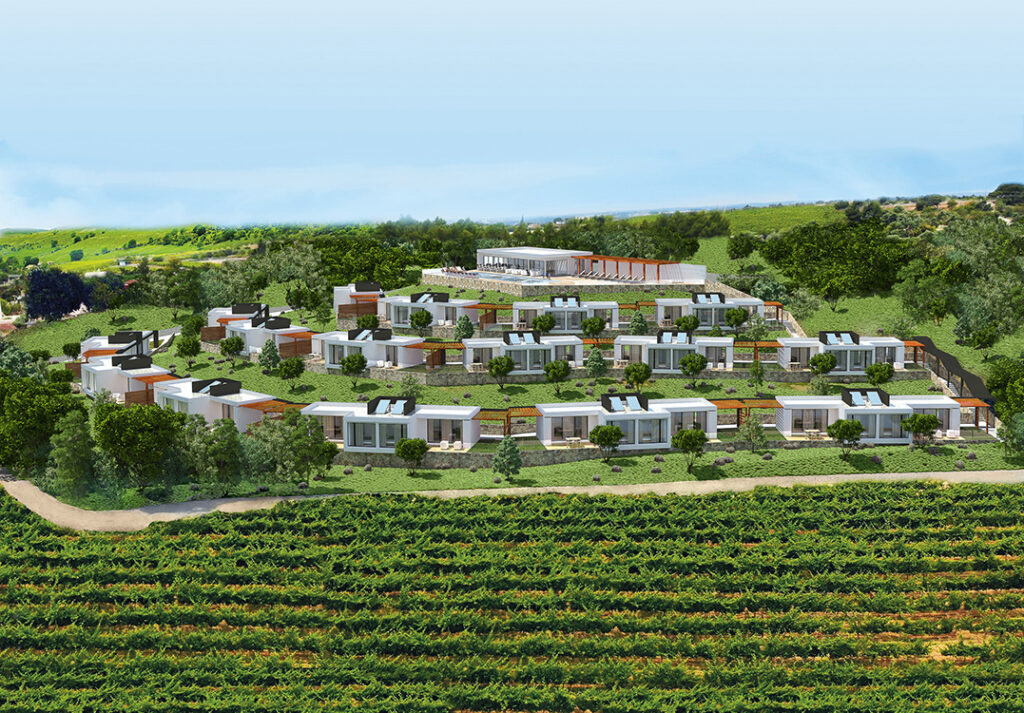
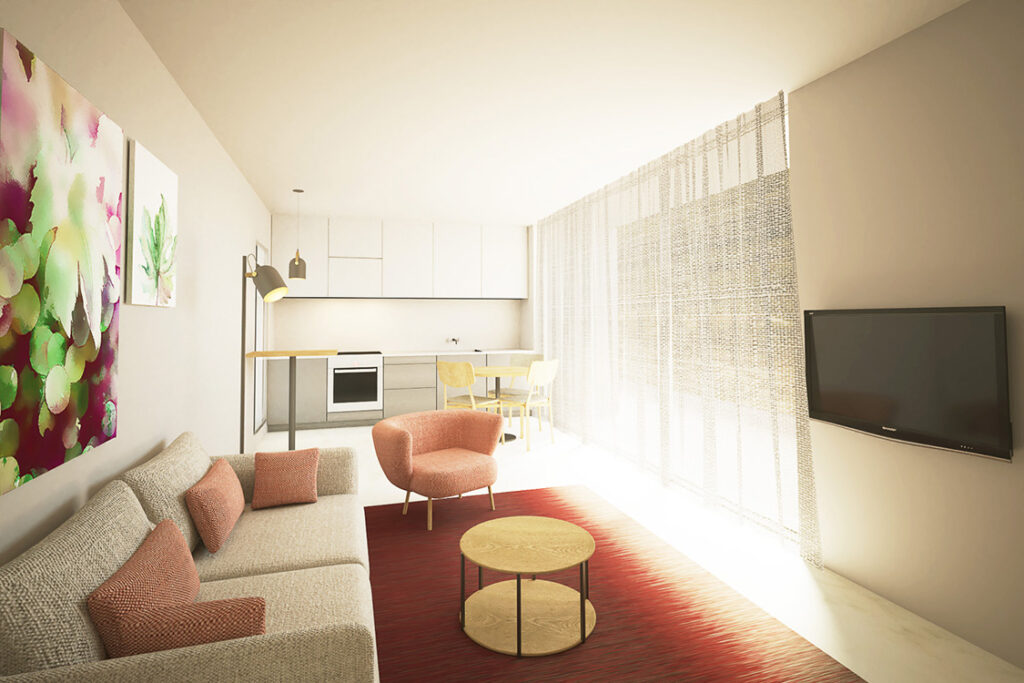
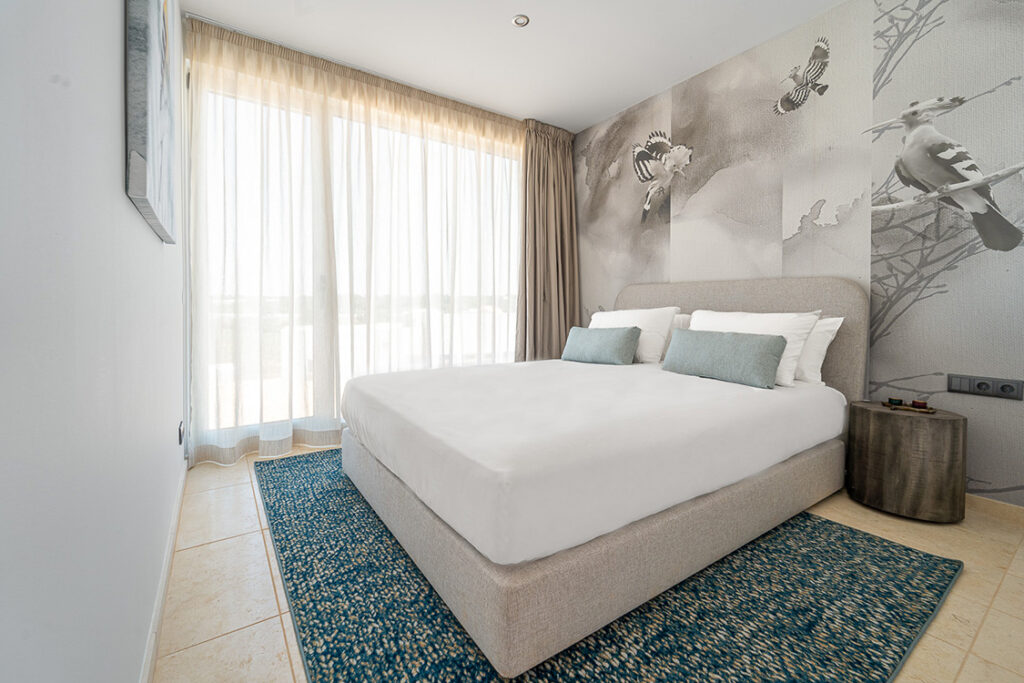
Algarve-based winery Quinta dos Vales has introduced The Vines, a brand-new resort of holiday homes, located in the heart of the renowned wine estate. The doors opened in June for the small resort with just 16 stand-alone houses, each comprising two independent villa suites. The balance of interior to exterior areas is ideally suited to the concept of vacation homes, as holiday-makers in the Algarve tend to spend the majority of their time outside. Each villa suite features one bedroom, a bathroom with walk-in shower, an open-plan kitchen and living room, as well as a private terrace, adjacent to a cosy private relaxation area. For the very first time, the estate offers private individuals the possibility to purchase property on its grounds.
The Vines offers a turnkey buy-to-let solution, which allows the owners to reap the benefits of owning a holiday home — even including a four-year rental guarantee — but with the operational management delegated to the estate’s team. But what truly makes this a unique proposition is that owners are given the option to combine a holiday home with a small, privately-owned vineyard. The Winemaker Experience, a unique project that sees wine-lovers become winemakers, each with their own vineyard plot, for a fraction of the investment normally needed to purchase a winery. Attracting clients all the way from the Swiss Alps to South Beach, Florida, the project, which can be managed remotely, allows wine-lovers to authentically be in control of their own production, without the stress and hassle of starting a commercial operation.
Usually owning a small vineyard would be considered a luxury pastime, a dream for any wine-lover which they would be happy to simply realise without excessive costs. Whereas this one-of-a-kind project even offers the possibility of realising the dream of one’s own wine production, whilst still making a profit. Most people know the saying “you can’t have your cake and eat it too”, but in this case, the winery created an opportunity where this is more than possible. By purchasing both a vineyard and a holiday home, wine- lovers can get the best of both worlds, as a luxury lifestyle investment is suddenly converted into a sensible return-generating asset-based investment, without fear of inflation and more profitable and more fun than any bank investment available these days.
The Winemaker Experience needed to fulfil three criteria: it needed to be 100% authentic, care-free, and affordable. Simple criteria but difficult to achieve as they contradict one another. In order not to be a marketing gig, but fully authentic, each participant had to have as much decision-making power as a winery owner would have, but without the need to invest years of work and millions into the project.
Volume was another crucial point of the project, as participants should not need to worry about having to sell their wine, just producing enough for self-consumption and the always-needed birthday and Christmas presents for friends. The final criteria set by the founders of the project was affordability, which has been achieved, as it is now possible to produce a wine with an upfront cost of only €30,000 to €60,000 for a vineyard parcel and running costs ranging from €8 to €11 per bottle.
The estate’s winemaking team educates and guides participants through the production process, providing use of the winery equipment and specialised personnel, who encourage each participant to make the important decisions themselves: which grape variety to choose, when to harvest, whether to age the wine in oak or not, which type of barrel to use, the type of bottle, cork, and so forth.
“We were adamant that before going live with the promotion of The Winemaker Experience it had to be perfectly fine-tuned,” Karl Stock, founder and owner of the wine estate, explains. As soon as the marketing activities started, the client reaction was immediate, the number of private winemakers has almost doubled already. Investing in both the vineyard and the buy-to-let solution, clients can sit on their own terrace overlooking their privately owned vineyard, drink their own wine which is more than paid for from their rental returns.
Meet the man behind some historic grapes at Morgado do Quintão
– May 11, 2021
Down a long, winding country road lined with wild flora and fauna is a large, family-owned, organic vineyard estate. Even with my Google map pin securely placed on the location, I was still not 100% sure I had arrived until reached the main house.
I was taken aback by the feeling of peace and grace that swept over me when I arrived. Morgado do Quintão exudes a refined country chic aura, is fantastically tranquil and so close to Carvoeiro. This fabulous, sprawling estate was founded in 1810 by the Count of Silves and is now in the careful hands of his descendant, Filipe Caldas de Vasconcellos who undertook the mammoth challenge of transforming the wild old vines and cottages into their current glory. “You never really own a place like this,” says Filipe. “I’m somewhat of a caretaker, looking after it for the future generations. It’s a wonderful legacy and we are incredibly grateful to be here.”
When you think about wine projects, it is so rare that wine is produced in such close proximity to the sea, and this has a huge effect on the flavour of the wines. Filipe says that he was walking around the vines recently and he came across some fossilised shells from the days when the land was under water. This link to the sea is of great importance and that not only comes through in the wine, but you can see it in the labels too. They have taken the colours of the Algarve, the sea, sky, buildings and created fabulously simple yet incredibly striking labels that convey an insight to what lays within the bottle.
The wines of Morgado do Quintão are to be savoured. Their production is somewhat on the boutique side and as such is even more special. “We were honoured to receive two Silvers at the Algarve Wine Contest for the Palhete and Clarete, and Best Wines in Portugal (Algarve) 2019 for our Branco Especial ’18,” Filipe proudly tells us.
Constantly innovating, they introduced a 150-year-old amphora, terracotta wine vessel to their processing methods in 2020, which will deliver a new level of complexity. Planting more vines, investing in alternative techniques, and working with some of the best in the business, the idea is to enhance what is organically there.
Although 2020 was a challenging year in many ways, including a sadly low yield for many of the Algarve’s vineyards, Filipe seems unfazed and tells us that he took this opportunity to build on the e-commerce and social aspects of the business and reaching out to local vendors to build his brand. “What sets us apart in a way is that we have very old vines of indigenous varieties and we have a really modern view on how the wine should be our connection to the arts, which is quite fundamental to how we think. When you’re able to do what you love, the way you love and you can share that story and that passion, it’s awesome!” he says.
Filipe’s late mother, Teresa Pereira Caldas de Vasconcellos was an art historian and professor of Fine Arts. Every year, one of Teresa’s works is selected along with an invited artist who designs a label to be placed on their old Crato Branco parcel harvest. These labels have a big part to play within the philosophy of the vineyard, with the objective of promoting art, culture and education.
Created to honour Teresa, the Morgado do Quintão Art/Innovation project offers a creative and inspiring environment in which visiting artists can express themselves through the artist residency programme. The project is funded by a percentage of the proceeds from the estate’s yearly activities along with grants and donations. You can find out more about this on their website.
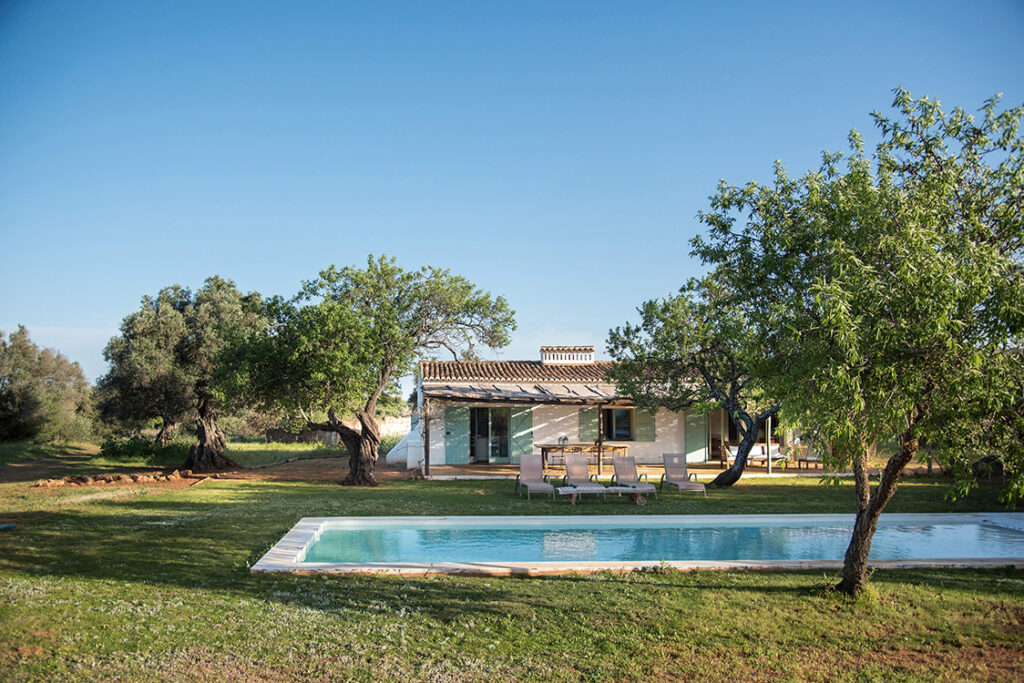
Complimenting the vines, there is the family estate which includes three charming country cottages. Each have their own identity and retain that rustic feeling discreetly complimented with all the mod-cons you need to enjoy a short break. The furnishings are a beautiful mixture of antique and modern pieces and each cottage has access to a private pool in its own grounds, surrounded by plum, olive, carob and fig trees.
The wine tours and tastings are, as you would imagine, rather special and there are a few to choose from. The Tour & Tasting pack includes a quick tour of the grounds and wine tasting experience that lasts for one hour and costs €17.50. At €25, Premium Tour & Tasting offers guests a premium wine tasting experience, exploring the history of the estate, its unique terroir, and, of course, sampling the fabulous wines along with some local cheese and charcuterie and Algarve delicacies by their in-house cook.
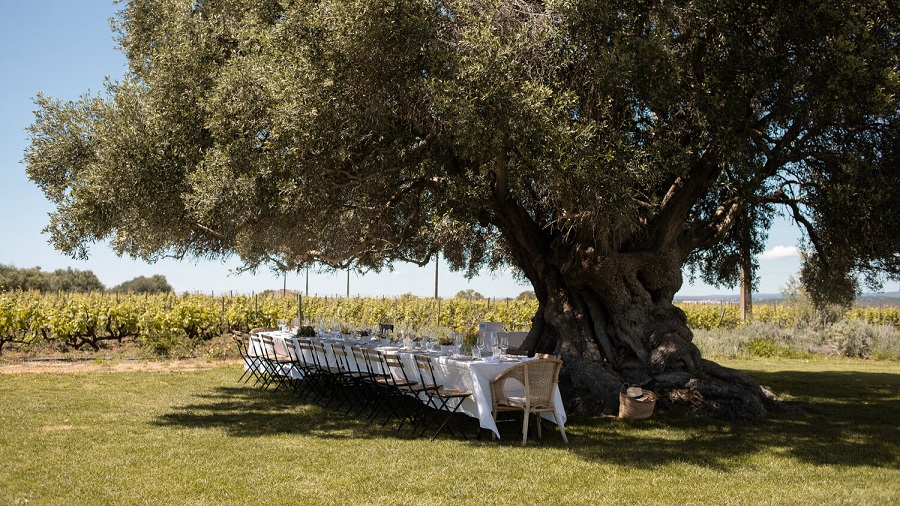
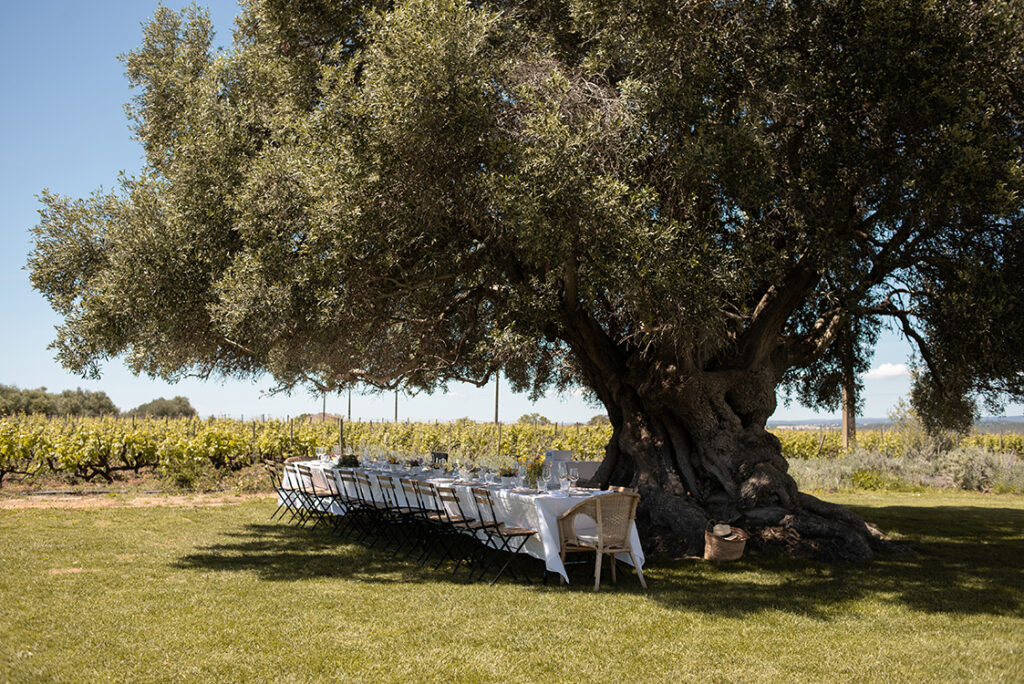
The Farmer’s Table experience leads visitors to a gathering under the 2.000-year-old olive tree overlooking old Negramole vines, and a casual lunch is prepared and enjoyed with a selection of wines from the estate. Next is a stroll through the vines with the resident manager. This lasts around two-and-a-half hours and is €55 with a minimum of four people.
It’s official – Lagoa has been selected to host Portugal’s first Wine Cities Competition, which will take place between November 26 and 29 at the town’s São José Convent.
Around 600 Portuguese wines are to be judged, all of which will automatically enter the European wine competition ‘Città del Vino’ to be held in Italy between May 20 and 23 next year.
From left: Sara Silva, president of the Algarve Wine Commission (CVA), José Calixto, president of the European Wine Cities Network, Lagoa Mayor Luís Encarnação and Pedro Ribeiro, president of the Association of Portuguese Wine Municipalities (AMPV) – Photo: MARIA SIMIRIS/OPEN MEDIA GROUP
“The Wine Cities Competition is the only such initiative in the world that associates wines and municipalities. Both here and in Italy, the municipality where the winning wine is produced will receive a prize as will the winemakers,” José Arruda, the secretary-general of the Association of Portuguese Wine Municipalities (AMPV), said at the presentation of the event at the Quinta dos Vales wine estate in Estômbar on Friday (October 16).
The competition will begin with a tasting of Algarvian wines on the first day, followed by eight visits to some of the region’s top wineries the following two days. Said Arruda, around 40 wine connoisseurs from all over Portugal as well as Spain and Italy will be travelling to the Algarve to discover local wines.
The competition has also been honoured with the ‘High Support of His Excellency the Presidency of the Portuguese Republic’. “It is the only wine contest so far to receive this honour,” said Arruda. Every participating wine will also compete for awards at the Italian ‘Città del Vino’, which could bring even more international attention to the national and regional winemaking sectors.
“Last year, 230 Portuguese wines took part in the contest. This year, 600 are expected to participate. The hosting country will enter 1,100 wines, which means we could be very close to the number of wines that Italy will be showcasing,” he said. Arruda also stressed that the Algarve is the “third region with the most wines signed up” for the competition. And Lagoa stands out as the Algarve municipality with the most locally-made wines (22) participating. “It is a very significant number,” Arruda said.
Meanwhile, Lagoa Mayor Luís Encarnação says he is delighted that the Wine Cities Competition will be taking place in the borough and that so many of its wines are participating. After stressing Lagoa’s “great winemaking tradition”, the mayor said that wine tourism could be a solution to the Algarve’s chronic seasonality – the word so often used to describe the region’s tourism activity, the bulk of which takes place during summer. “There’s a business opportunity here that we cannot ignore,” he said.
José Calixto, president of the European Wine Cities Network and a member of the competition’s Honorary Committee, agrees that there is untapped potential in the Algarve’s wine sector as the quality of local wines has been growing remarkably. At first, he said, there was some doubt about the wines produced in the Algarve. “The path they have treaded is remarkable, both in terms of quality and value,” he said.
António Ventura, a reputable oenologist and the president of the competition’s jury, also highlighted the “extremely laudable work” that has been done in order to improve the quality of Algarve wines. “And this is probably the Portuguese region with the most potential to explore wine tourism,” he said. “In the future, the region will be even more successful, and I believe this competition could be great for the Algarve,” he said.
Wine sector forced to “reinvent itself”
The Covid-19 pandemic has forced virtually every sector of society to adapt to these new strange times, and the wine sector is no exception. “All winemakers have reacted and reinvented themselves digitally with new consumer profiles, new markets and other distribution channels,” said Pedro Ribeiro, president of the Association of Portuguese Wine Municipalities (AMPV). He added that the Algarve has also “responded very well” to the challenge and that, despite the losses it has sustained, it is “on the right path” and will have “more to offer in future”.
Joint bid to become European Wine City
Lagoa Mayor Luís Encarnação also announced that Albufeira, Lagoa, Lagos and Silves are partnering in a joint bid to be named the European Wine City in 2022.
Original article written by Maria Simiris for Barlavento newspaper.
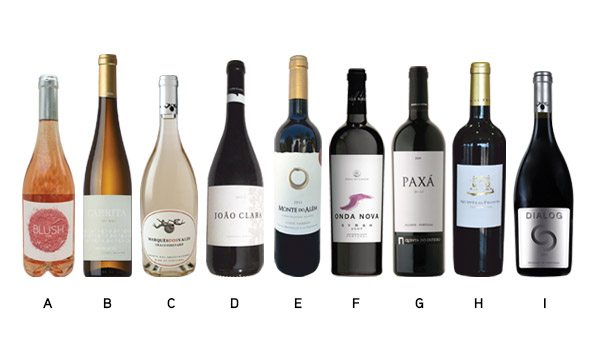
For the 10th anniversary of Inside Carvoeiro, Algarve-based wine writer, Patrick Stuart, shares his list of 10 favourite Algarve wines as prepared for the special 100th edition of our sister magazine Essential Algarve
A) Barranco Longo Blush Rosé
A difficult rosé to beat in the sub 10-euro price range, there are fresh and delicate red fruit notes on the nose and a slight creaminess in the mouth with good acidity with a dry yet fruity finish. A wine that looks and tastes like a Provence pink, but is actually 100% Portuguese, made from the indigenous Touriga Nacional variety right here in the Algarve. | www.quintadobarrancolongo.com
B) Cabrita Moscatel White
The Muscat (Moscatel) grape is mostly used in Portugal to produce fortified wines but there are a few exceptions, one of them being Cabrita here in the Algarve. On the nose there are floral and green fruit notes with great freshness in the mouth and just a touch of sweetness on the finish, pairs well with spicy Asian food. | josemanuelcabrita.wixsite.com/quintadavinha
C) Grace Vineyard White
The white wines of Quinta dos Vales are quite different from those of any other producer in the Algarve, or in the Alentejo for that matter. This producer has always had a strong focus on its whites, creating wines with a characteristic freshness and delicate structure. Top of the pile is this Grace Vineyard, the dominant grapes of which are Viognier and Arinto. | www.quintadosvales.eu
D) João Clara Negra Mole Red
Not easy to find but worth looking out for, this light bodied red made from the local Negra Mole variety will bring a smile to the face of any Pinot Noir lover. The winemaker, located in Alcantarilha, has nurtured this humble variety to give us a smooth and delightfully light wine in the Burgundy style, with typical leathery notes along with fresh berry fruits on the nose and a velvety smooth finish. | www.joaoclara.com
E) Monte do Além Petit Verdot Red
Monte do Além is a small Belgian-owned winery located near Odiáxere in the west Algarve, where a great deal of care goes into making wines as naturally as possible. This Petit Verdot varietal stands out as one of the best examples. On the nose, there are rich dark berry notes with very wellintegrated oak, firm and full bodied in the mouth, with present but nicely rounded tannins, and a very fresh finish. | www.monte-do-alem.com
F) Onda Nova Syrah Red
The Syrah grape is the foreign red variety to have had most success here in the Algarve and one of the first producers to make a varietal from the grape was Sir Cliff Richard’s Adega do Cantor (the winery of the singer). Many producers in the Algarve produce good quality Syrah but we singled this one as it represents very good value for money and is easy to find in the shops. | www.winesvidanova.com
G) Paxá Special Red
This premium label from Paxá near Silves is a big, bold and powerful red made from Syrah, Aragonês and Alicante Bouschet. Intense and jammy forest fruits on the nose with well-integrated oak. Rich and smooth in the mouth with a long finish this wine is an excellent companion to hearty winter dishes like a nice lamb stew. | www.paxawines.pt
H) Quinta do Francês Red
The winery produces various excellent wines and this main label blend made from of Cabernet Sauvignon, Syrah and Aragonês grapes is a full bodied and elegant wine with ripe dark and red fruit flavours. This producer allows the wines to mature in the bottle before releasing. | www.quintadofrances.com
I) Quinta dos Vales Dialog Red
The premium red wine from this multi-award-winning producer, Dialog 2011 (the vintage currently on the market) is a blend of 60% Cabernet Sauvignon and 40% Petit Verdot. This is a wine of great structure with spicy and chocolate notes marrying with dark berry fruits on the nose. Full bodied with well-rounded tannins in the mouth, good acidity and long dry finish. | www.quintadosvales.eu
To single out any one producer of Viognier as a varietal would be very difficult. Much like Syrah, the Viognier grape has adapted extremely well to the Algarve and many of the region’s producers make excellent examples, amongst the Quinta dos Vales, Quinta do Francês and Adega do Cantor.
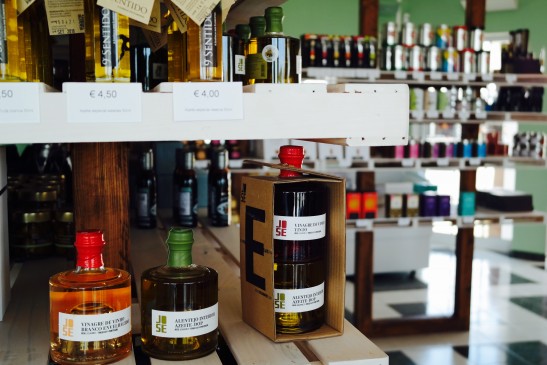
From the people who brought us Terroir comes a brand new and equally appealing concept in the form of Earth, a shop and café located on Rua das Flores, at the top of Estrada do Farol.
Officially opened on June 27, this bright and welcoming deli-style shop offers a unique selection of gourmet and organic products, gifts, spirits and artisan wines that can’t be found in large supermarkets. From gourmet products, such as olive oil, piri-piri, jams, preserves, cereals, teas, coffee and biscuits, all from small Portuguese producers and a handful of selected international brands, to gluten and lactose-free items, the shop also offers an extensive range of organic products, fresh produce and delicious freshly baked bread.
On the café side, the menu is equally mouth-watering. Alongside breakfast options that are very different to the usual offering and served until 5pm, such as yoghurt, granola and fresh fruits, smoked salmon and freshly baked croissants, there are also healthy salads, lovely sandwiches and freshly baked cakes – keep an eye out for the daily special.
While food is served until 5pm, the menu also features healthy smoothies, gourmet organic teas, Illy coffee and traditional Italian ice cream. Charcuterie and cheese boards, comprising hand-picked products from small producers, are ideal for an evening bite accompanied by a glass of wine.
Quirky and bright with friendly service, seating options include a bar with sea views and large tables with recycled handmade chairs.