Tag: Algarve News

  • Colourful Algarve

    Colourful Algarve

    Lagoa artist unveils mural showcasing Algarve life in vibrant shades

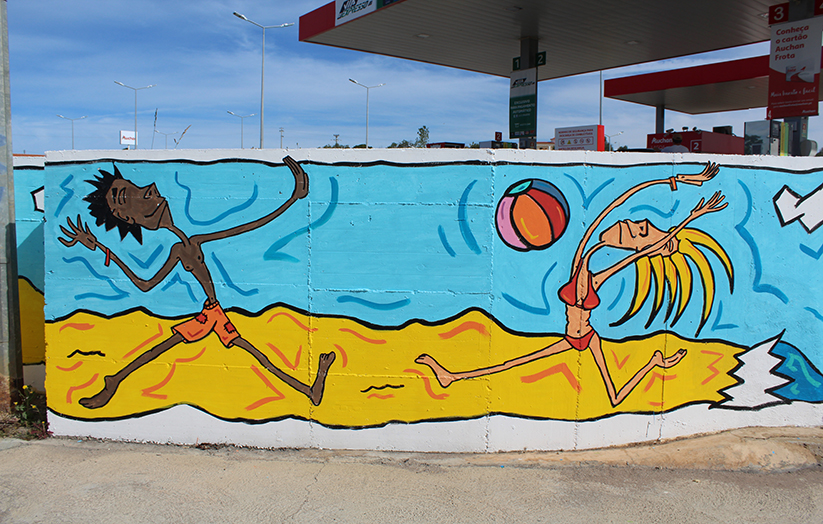
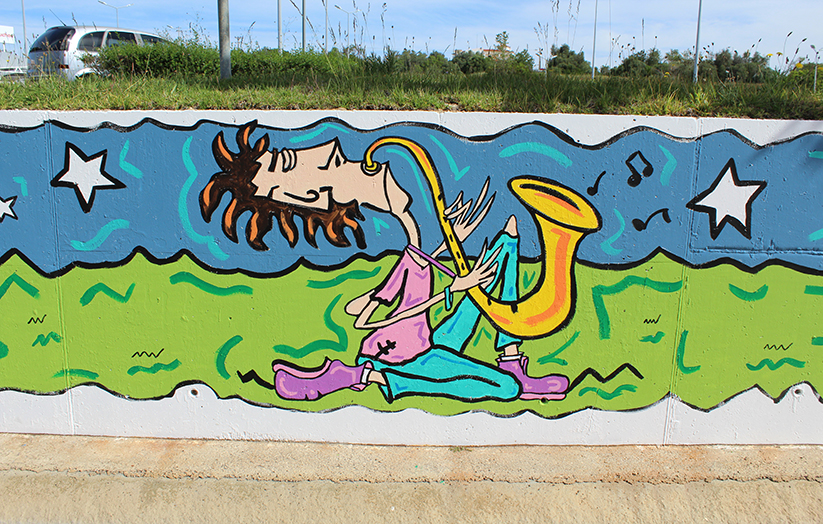
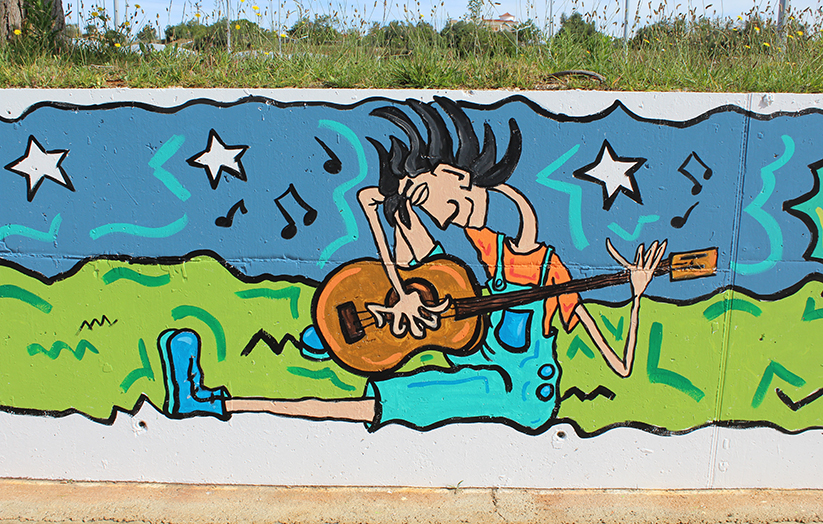
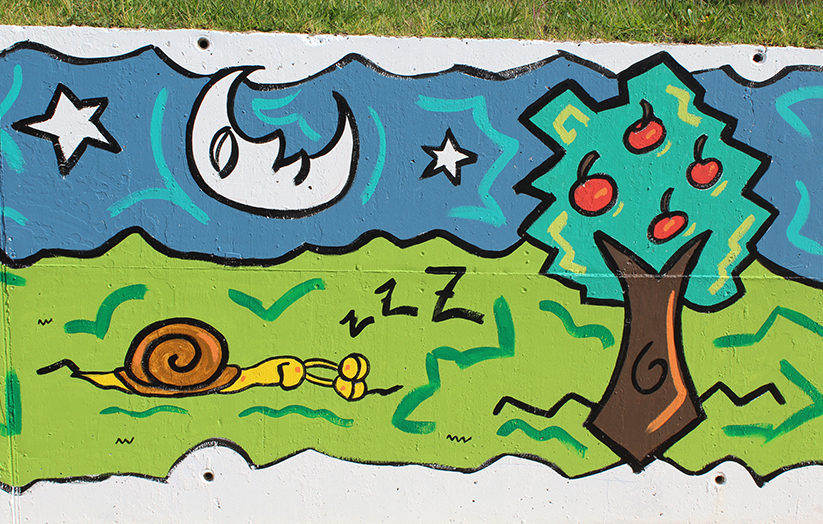
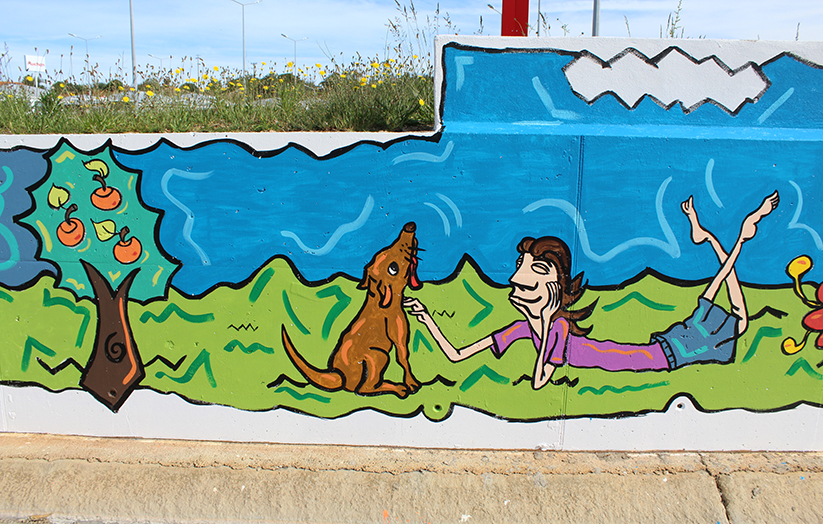
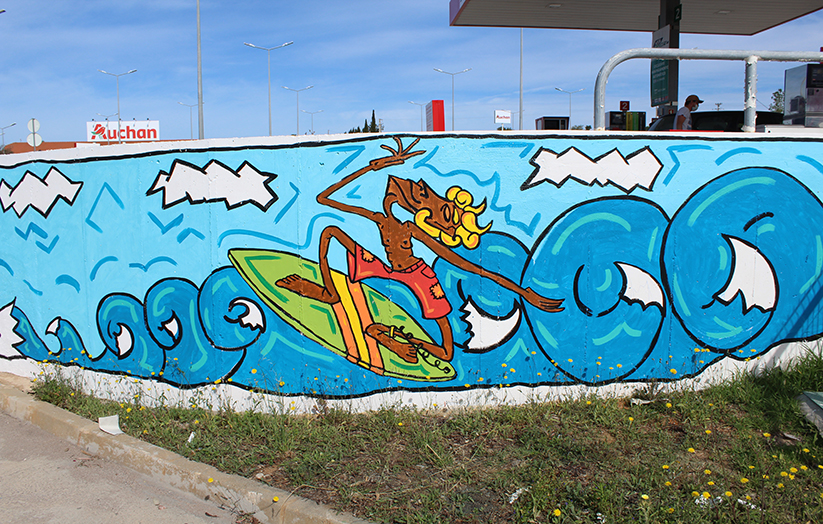
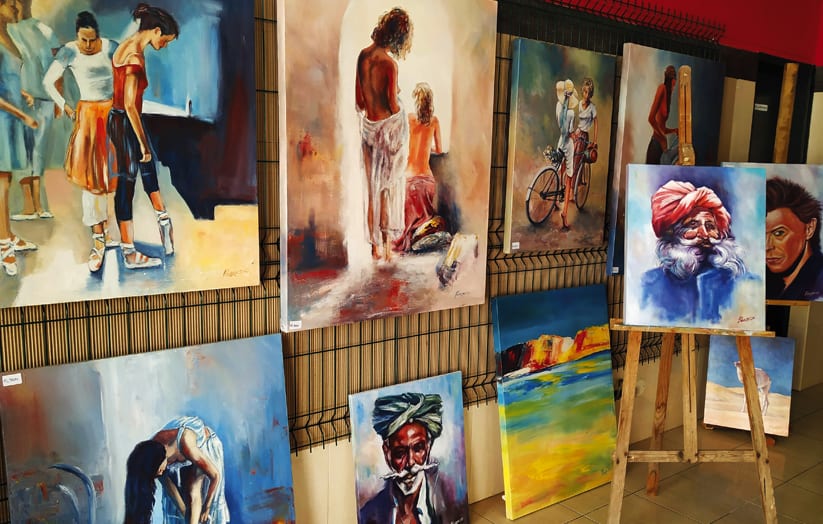
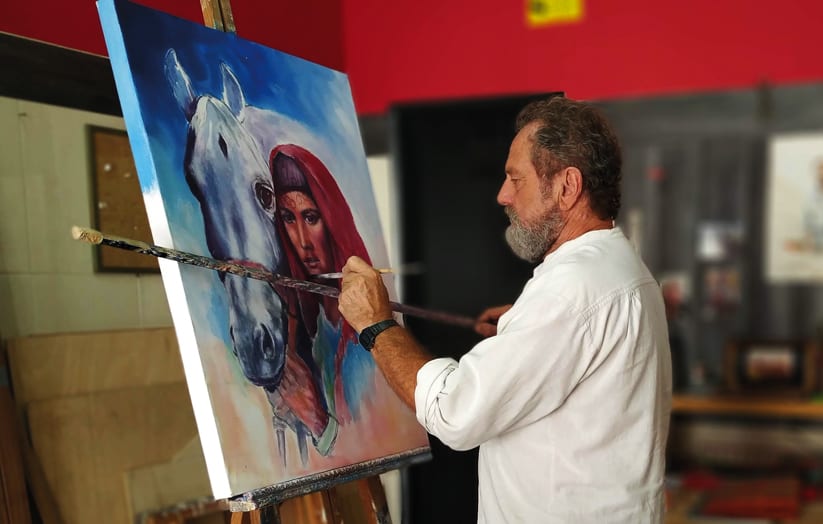
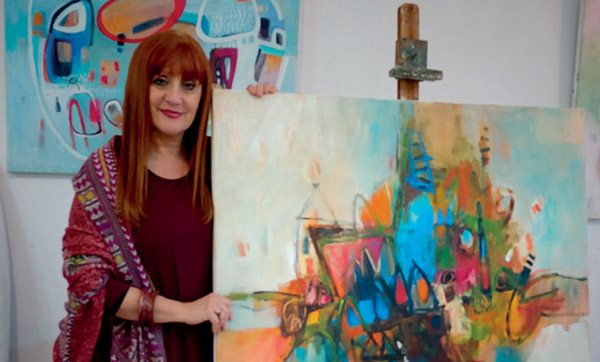
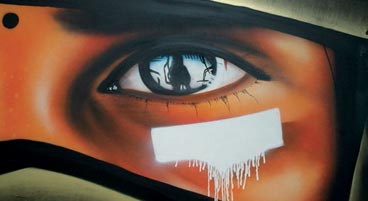
    A white wall near Lagoa’s Auchan supermarket has been transformed into a head-turning work of art by local artist and art teacher Ana Nobre, who has filled it with colourful illustrations of some of Algarve’s most iconic sceneries.

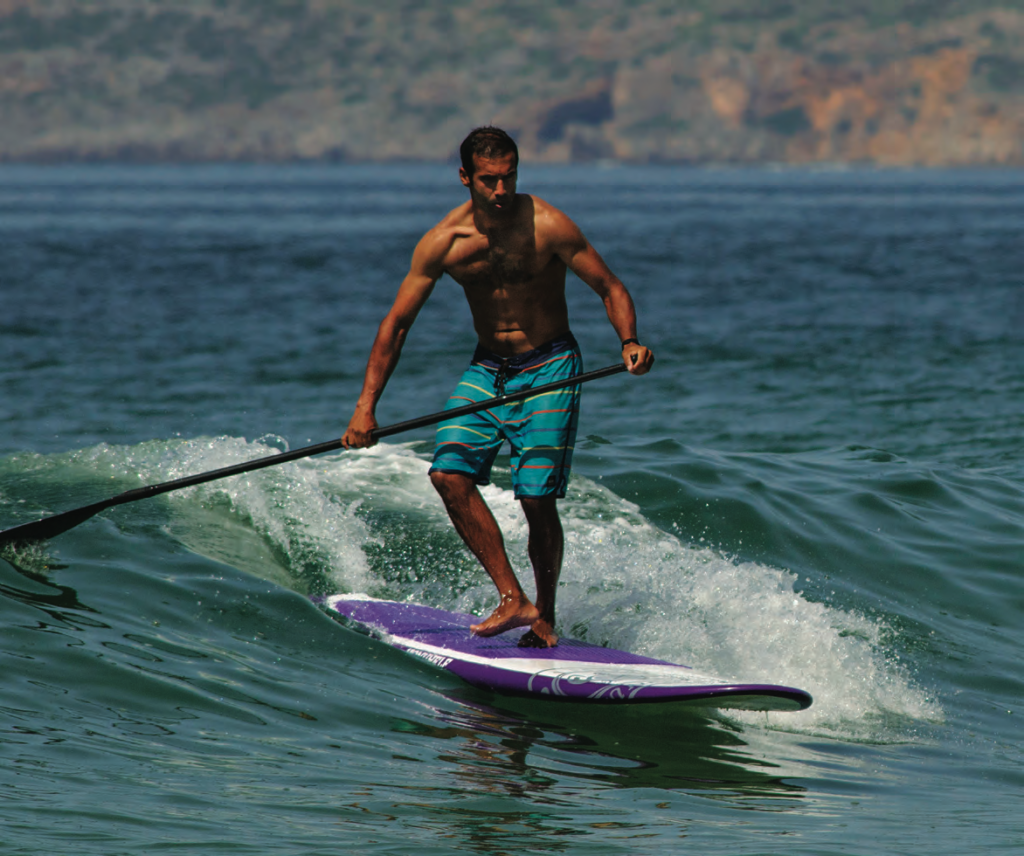
    From a surfer enjoying the Algarve’s waves to a couple dancing under the region’s starry sky, the mural showcases all the “wonderful things that the Algarve has to offer, such as its climate and landscapes”, said Ana. The mural was completed in May, after over a week of daily five-hour painting sessions. It’s the second mural that the artist has painted in Lagoa, around a year after she also gave a new vibrant life to a wall along the nearby Carlos Boto fitness circuit.

    Ana Nobre, who teaches painting at several local primary schools as well as Lagoa’s Escola de Artes, was approached on both occasions by the local parish union, which encouraged her to use her talents in favour of the community. The second invitation came recently, and, according to her, it came at the right time. “I’d been at home since the schools closed, so I was delighted to be able to get out and return to doing what I love.”

    Aside from being a teacher, Ana regularly exhibits her paintings both in Portugal and abroad. Whilst she hesitates to compare her work to any specific genre of art — although the one she says she comes closest to is Expressionism — Ana says that what she most likes to show through her paintings are “colour and movement”.

    Born and raised near Lisbon, the artist moved to the Algarve around six years ago. She studied and earned a degree in visual arts in Caldas da Rainha (ESAD.CR). After a few years of working as a teacher in Lisbon, she decided to try her luck in the South due to the “lack of opportunities” she found in and around the capital. Her first job was as an entertainer at a hotel before eventually becoming a teacher in Lagoa, as well as continuing to paint in her free time. “We’ve all worked jobs that we weren’t passionate about. However, I’ve known from an early age that art was what I loved to do,” she explains, adding that the Algarve has offered her more opportunities as an artist than those she found in Lisbon.

    Ana has also completed a graphic design course at the Etic Algarve school and is now dedicated to bringing her skills as an artist and as a graphic designer together. She has already worked on the cover of an album by Portuguese band Pura Cura as well as two educational books entitled ReciclArte. But like so many others, Ana is uncertain about the future due to the consequences of the COVID-19 pandemic. She had an “opportunity of a lifetime” to showcase her art at the Artifact art gallery in Manhattan, New York in 2021. “They saw my works online and invited me to exhibit there,” she reveals. While the pandemic has cast a dark cloud over her plans, Ana remains hopeful that the situation will improve until then.

    Text Michael Bruxo
    Photos Marta Vieira
    Facebook
  • 2020 vision

    2020 vision

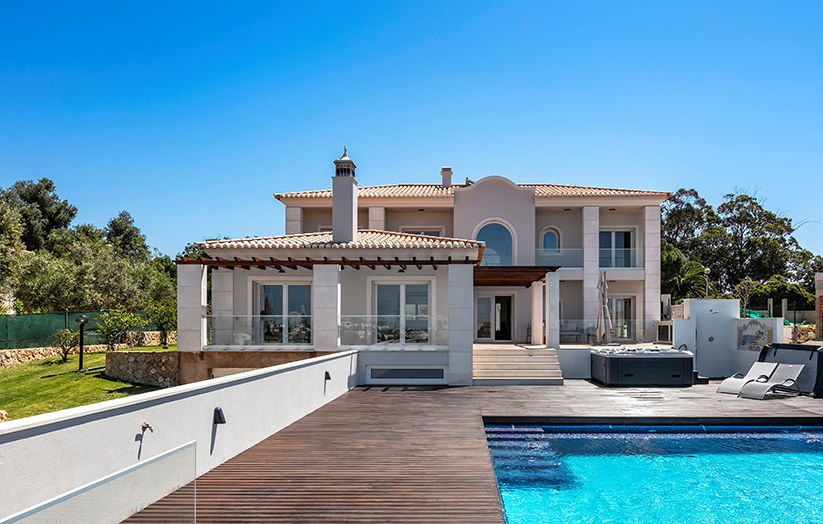
    Bespoke architecture, where dreams come true

    At the age of four, a young John Wilson came to live in Portugal with his Scottish father and Portuguese mother. He fit in immediately and adored the freedom and lifestyle here. Now, 40 years on, we meet with the local Architect and owner of Bespoke to find out a bit more about him and his practice.

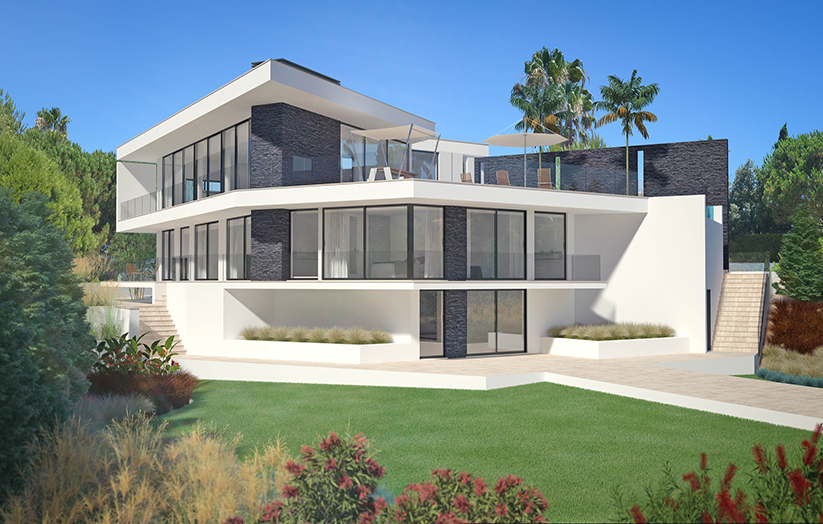
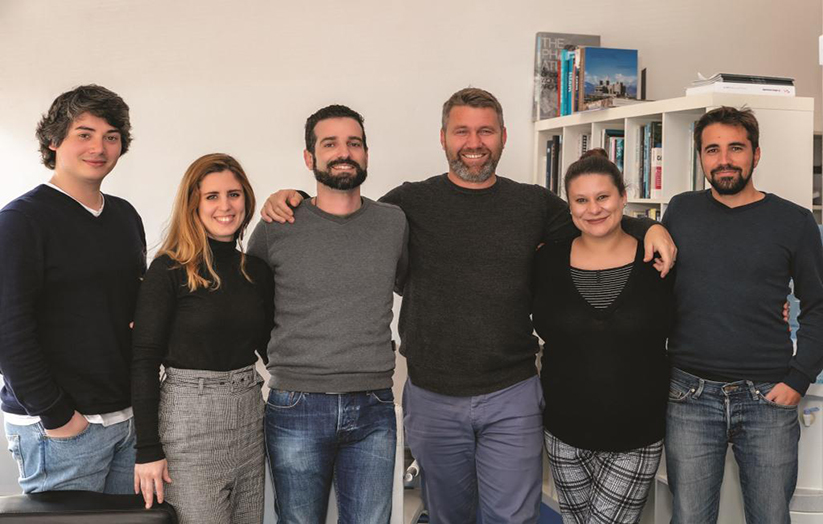
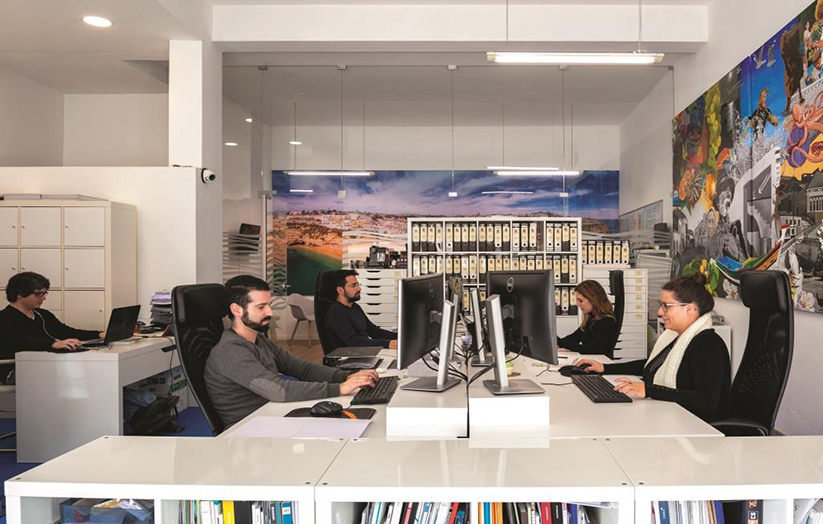
    In a bright, open-plan office at the end of Rua do Barranco, you’ll find a young team of architects busily working on their projects under John’s guidance. Having studied in London and attaining his degree in his early 20s, he is passionate about his chosen path and keen to show the ropes to his team. His formative years as a young architect were rather intense when he was head architect for the Oceânico group. This position was somewhat a baptism of fire as it was in the period that the group were designing Amendoeira & Belmar Spa. John worked closely with the team creating the Faldo and O’Connor courses, liaising with everyone involved from marketing, construction and even sales. All this whilst completing his Master’s degree, so as you can imagine, he was more than ready when he began to put plans in action to open his own business. In 2011, John opened his doors to the public, and within one year he had employed his first full-time architect.

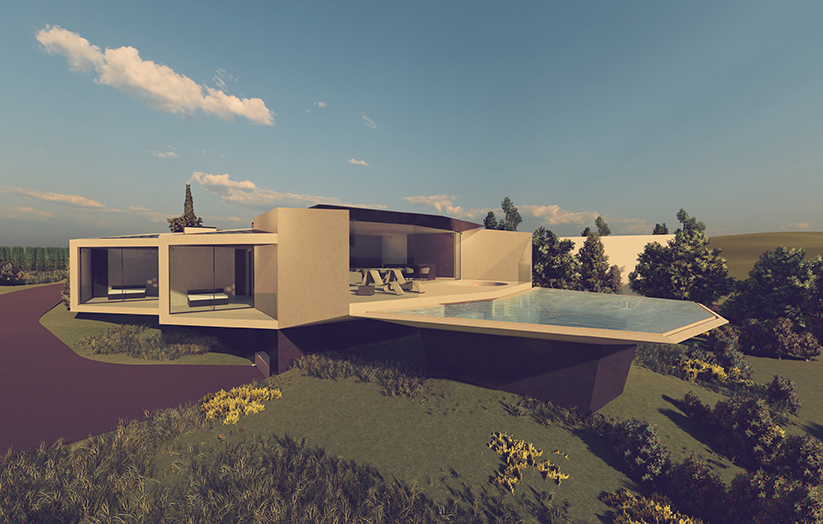
    With his portfolio steadily growing and word getting around, it wasn’t long before the office was full of young, eager talent who all brought with them their own creativity and unique styles to complement each other. Now with a team of six full-time architects, a group of engineers, civil engineers and landscape architects, Bespoke is taking on some inspiring projects. “We fully understand that we are often creating clients dream homes and always take their vision on-board when preparing our designs” says John. “We’ve implemented a wonderful programme that allows us to visualise the projects in 3D, so the clients get a real feel for every angle and aspect.” Exciting new technology and keeping up to date with sustainable trends are paramount to the company’s development. The portfolio is incredible, and they are repeatedly approached by clients with out-of-this-world ideas. Unlike many studios, Bespoke doesn’t have a particular style; what they have is the ability to sit with their clients and listen, visualising what they want but also what they need. “Our current portfolio is diverse, no one wants the same thing. We’ve got some ultra-contemporary homes, traditional classic Algarve style villas and holiday complexes and everything in between,” John explains. “What every project does have in common, though, is that when we are in the planning stages, we always apply functionality and take the sun orientation into account.”

    That’s why it’s essential to sit with an architect who listens but also has experience in their field. They need to be able to guide you to the best possible solution of your vision. Many people really want to be part of the process, and Bespoke welcomes that. It’s crucial to create their vision whilst being satisfied that everything has been done to a high standard and adhering to building regulations. “We can’t forget what the purpose of a building is. It must be comfortable, accessible and functional,” John says. “The windows have to be in the right position to maximise the location while ensuring privacy. We try to place the bedrooms in a south-facing direction wherever possible to utilise natural heating and light. Sustainability is a given, we have so much technology available to us now that it should always be applied.”

    John and his team are professional, innovative, hard-working, ethical and humble yet with drive and ambition. Bespoke means tailor-made, and that’s precisely what they do. As a parting comment, John told us: “Part of the ethos of our company is to provide a truly tailor-made solution, a bespoke service. So we seek to incorporate design features that go beyond conventional architectural vocabulary, transforming the ordinary into the extraordinary. We are a conscientious, professional and flexible team, capable of building the dreams of clients whilst working in harmony with the natural environment. Each project undertaken by Bespoke includes a detailed brief and budget, which is agreed by the client and set out at the design stage of the project.”

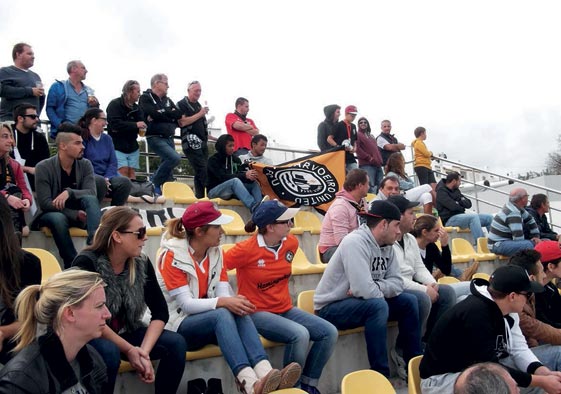
    Finding the right people to do a job is hard enough in your native country and language let alone when you’re in the Algarve. Being fully bilingual and an honorary Portuguese, John is a family man from Carvoeiro, who goes beyond job title and puts himself into everything he does. His support for the local football team, Carvoeiro United, is just another testament to the man behind the company.

    Bespoke Architects

  • Algarve’s F1 dreams come true

    Algarve’s F1 dreams come true

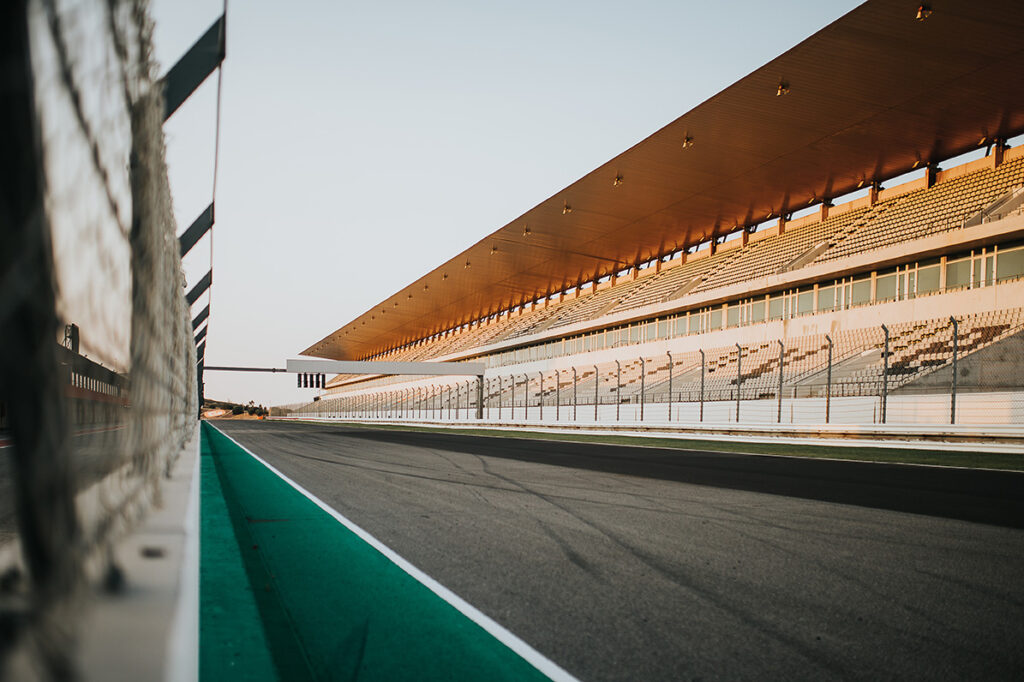
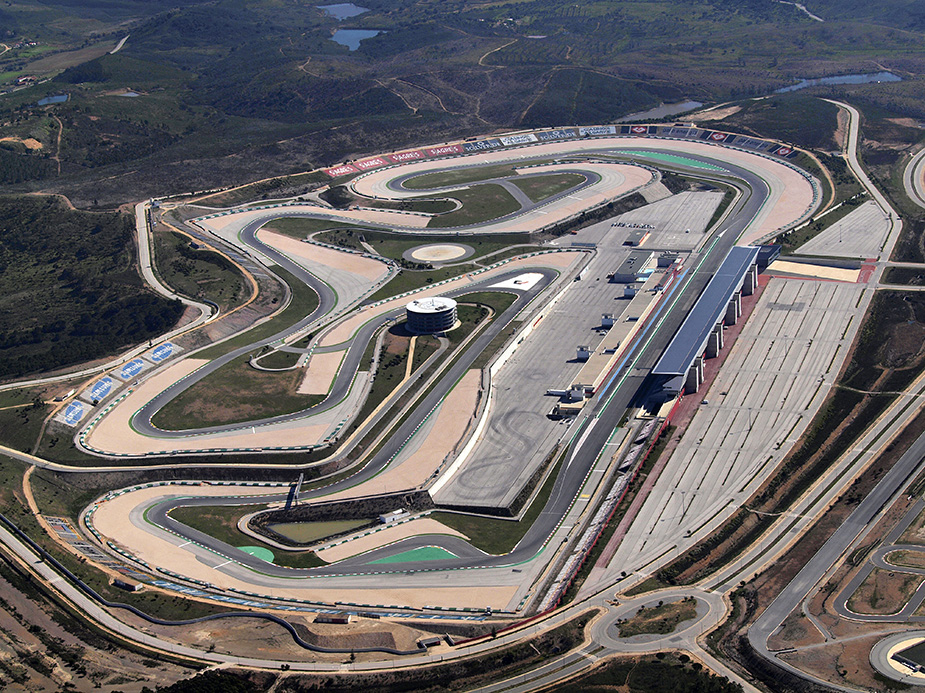
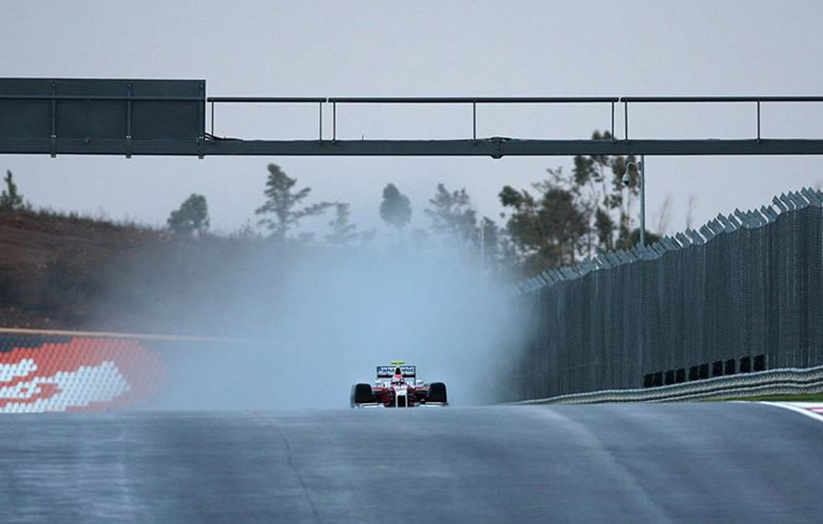
    Portimão’s Algarve International Racetrack has been officially confirmed as the venue for the F1 Heineken Grand Prix Portugal between October 23 and 25

    – July 30, 2020
    GP AUSTRIA F1/2020 – SABATO 04/07/2020
    ©Scuderia Ferrari Press Office

    The confirmation has been widely celebrated as the kind of good news the region has been desperately waiting to hear.

    Portimão Mayor Isilda Gomes said at a press conference to officially announce the long-awaited return of Formula 1 racing to Portugal after a 24-year absence that the event could be a life-saver for the regional economy. Estimates about how much money the event will generate have varied. At least €30 million seems to be the ‘worst-case scenario’, although some believe revenue could top €100 million.

    Spectator numbers are still being decided, but at least 5,000 people are expected to be in the stands, with the possibility of the number increasing to 50,000 (around half of the racetrack’s capacity). Tickets are already available on the racetrack’s website.

    What’s certain is that the announcement has brought a ray of hope to a region that has been bombarded by the negative effects of the pandemic. Indeed, local leaders are stressing that Portimão (and the Algarve) would not have been chosen as the venue for such a huge sports event if it weren’t a safe destination. They believe the event will actually play a huge role in convincing foreigners to come here.

    “We are expecting this month of October to compare to the month of July in 2019,” Isilda Gomes told reporters. “We are a tourism destination of excellence, which is why we have to show the world our potential. The Formula 1 race will give us unparalleled international exposure. I am certain we will host a great race in Portimão because the Algarve has known how to control the pandemic. That is why we are here today receiving this medal of honour, which is restoring self-esteem to the Portuguese and especially the people of the Algarve during these terrible times,” she said.

    But the dream doesn’t end in 2020. The mayor wants Portimão to become a regular venue for F1 racing. “We will work to keep this dream going and have this become an impactful event for those who visit us,” she said. The mayor also praised the role of the racetrack’s CEO Paulo Pinheiro, who she said worked tirelessly to bring this major event to the Algarve, and stressed that the region’s racetrack is finally receiving the recognition it deserves.

    Meantime, the racetrack’s CEO said that the goal of bringing an F1 race to the Algarve was a “life-long dream” which has come true. “The racetrack was built with the goal of hosting an F1 race, which happened during the most unthinkable year,” said Paulo Pinheiro. He also stressed how the racetrack was able to impose its own conditions. “We chose the date, the conditions we wanted, everything. It would have been easier to host a race with no spectators on a date that wouldn’t be ideal. But that wasn’t our goal. We felt we needed to use our arguments that Portugal is in a better sanitary situation than most of Europe, that we have a better racetrack than others, that the Algarve has unmatchable conditions,” Pinheiro said.

    Meanwhile, the Algarve’s tourism boss has celebrated the news as a “well-deserved prize for the region”.
    “We are clearly satisfied and proud of this decision. Bringing an international event of this size to the Algarve was something we have wanted for a long time,” João Fernandes, president of the Algarve tourism board (RTA) and tourism association (ATA), said this week. “This is, without a doubt, a very positive sign of confidence for the region.”

    President Marcelo Rebelo de Sousa celebrated the long-awaited return of Formula 1 racing to Portugal and stressed the “international attention” that the event will generate for the country and the region. He also commented on how the decision to bring an F1 race here proves that the Algarve is considered safe enough to host such a huge event. “Nobody makes a decision like this lightly,” he said.

    Read more Algarve News:

  • Familiar flavours at La Dolce Vita

    Familiar flavours at La Dolce Vita

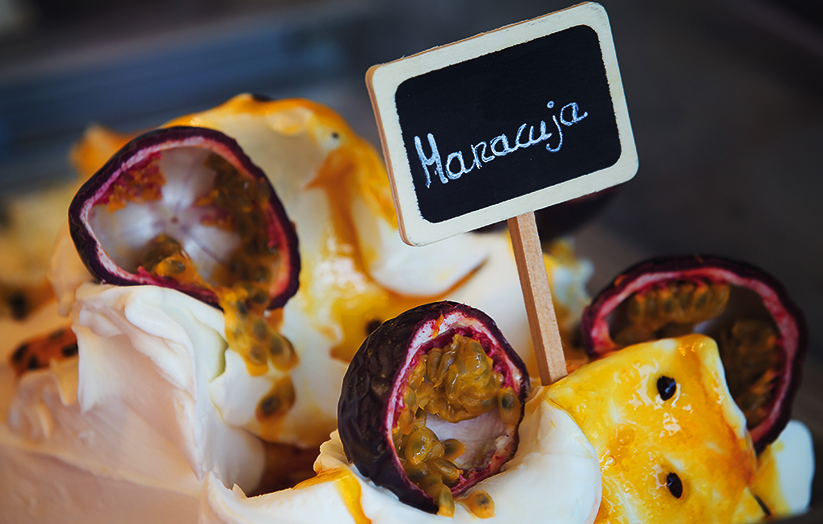
    A gourmet ice-cream brand sold exclusively in the Algarve makes use of a Portugues staple: Medronho

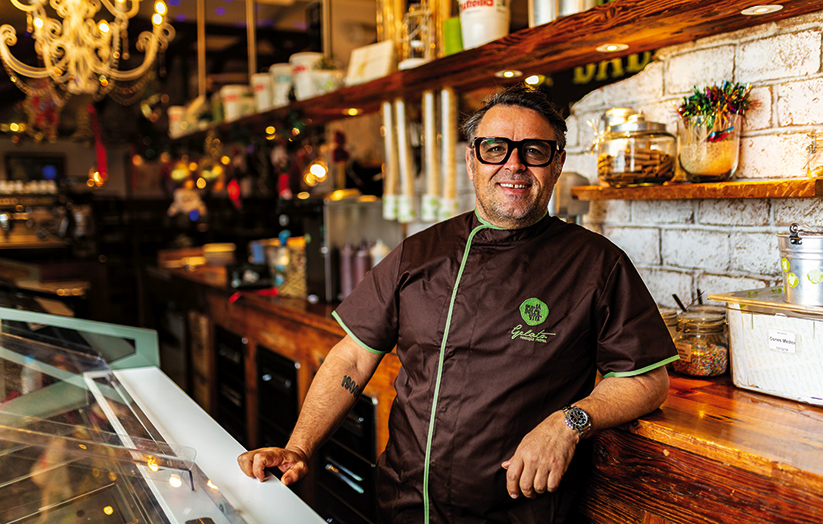
    Born in Italy, Roberto Balzer moved to the Algarve 30 years ago with the idea of creating his own brand: La Dolce Vita. He started with pizza and pasta restaurants, in 1987, and in 2014, his dream of making artisanal ice cream using his own recipes finally came to life.

    Roberto Balzer (©Emma Jervis)

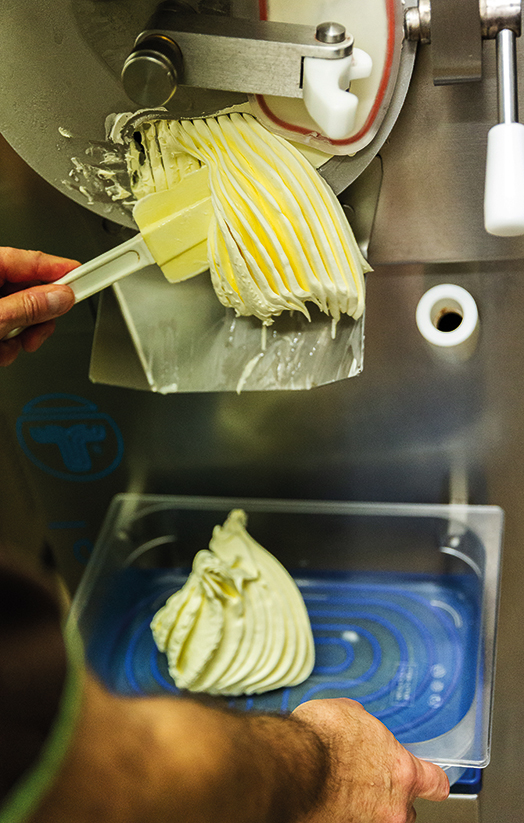
    Located in Praia da Rocha, Portimão, the frozen treats factory can ship out up to 800 litres of ice cream every day to wellknown hotels and restaurants throughout the region, such as Vila Vita Parc, in Porches. “I always dreamed of selling my own artisanal ice cream. I took a course with the third-best ice cream maker in the world, in Italy, and started developing my recipes for a few clients, family and friends. But the number of orders started growing and the business followed suit,” Roberto recalls.

    So what makes the brand so successful? “This ice cream is made with carefully selected produce and high-quality, raw materials. We have fruit from the Vicentine Coast and the Algarve, such as Silves oranges and lemons. The pistachio we use comes from Bronte, in Sicily, which is the world capital of this fruit. We use milk from that same day, the cream is fresh and both are national. We also have Madagascar vanilla and cacao from Ecuador,” he explains. “In addition to that, we make the orders on the spot and don’t add any flavouring, artificial colouring, genetically modified organisms, vegetable fats or preservatives. The recipe is 100% natural. I believe the key to success comes from the marriage between raw materials, the recipe, dedication, experience and freshness.”

    ©Jorge Santos

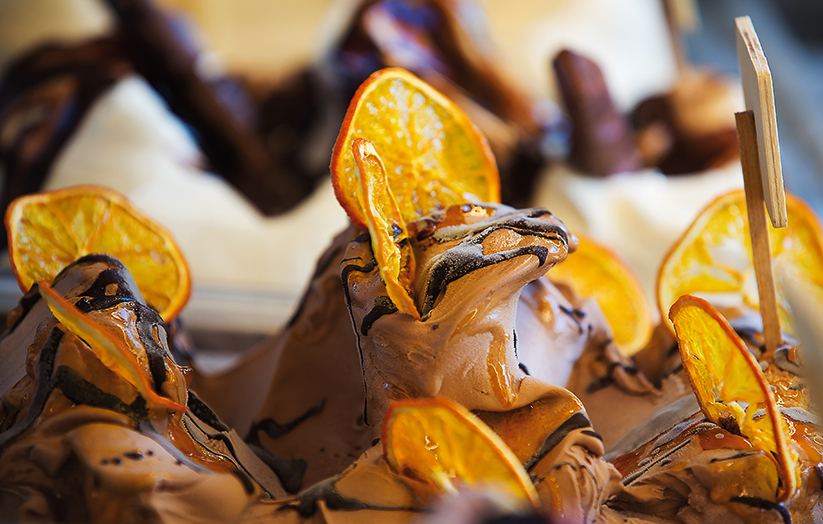
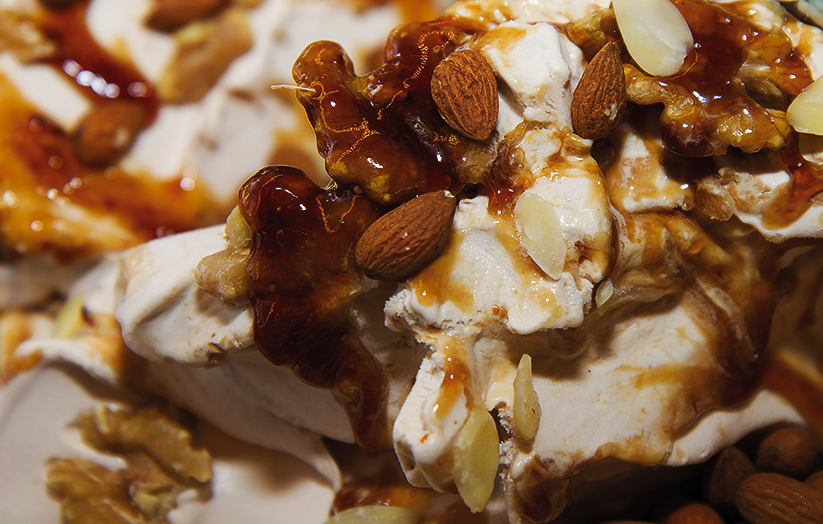
    Every day, from morning to night, through winter and summer, the factory puts together several orders of countless flavours. Traditional fruit sorbets are joined by recipes with different chocolates, gourmet tastings and even several alcoholic drinks. For this year, the ice cream maker has already decided the standout flavour — medronho, a traditional Algarve firewater made from the fruit of the strawberry tree. “I am the only one making this ice cream, that I know of. We are talking about a difficult recipe, because alcohol is an antifreeze agent. I had to a lot of perfecting and experimenting to achieve the result I wanted. The whole process took over a month,” Roberto reveals. The ice cream pairs wonderfully “with typical, regional desserts with figs, almond and carob. It is a good allusion to the Algarve, which can attract many connoisseurs and shows the best produce we have here”, he adds.

    ©Emma Jervis

    There are still recipes to be perfected and tested, but there is no shortage of peculiar flavours on the list: goat’s cheese; honey and rosemary; pastel de nata (traditional Portuguese egg-custard tart), complete with puff pastry and cinnamon; dark chocolate and ginger; and even Aperol Spritz, an alcoholic aperitif that complements an Italian drink with sparkling wine. Another unique and innovative variety in Portugal, according to Roberto, is the bread ice cream. All flavours are characterised by their rich creaminess and freshly made confection.

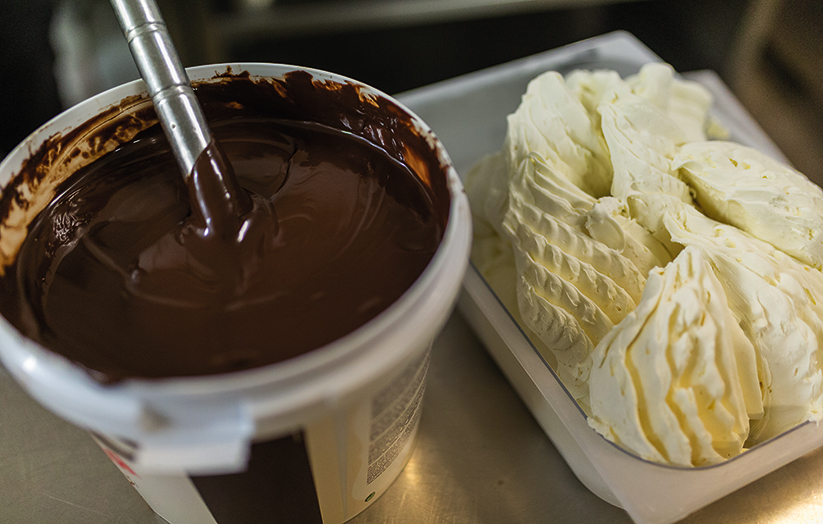
    There is no limit for the Italian’s imagination, with all recipes are created and catered to a customer s specific tastes. “Since I make the ice cream to order, I can create very specific flavours which people request for special occasions. I have made ice cream with chorizo, mushrooms, tomato and all kinds of beer,” Roberto says. Even with hundreds of varieties, his favourite is still Bronte pistachio — a flavour that holds the PDO (Protected Designation of Origin) certificate, which confirms the place of production for this nut.

    ©Jorge Santos

    “Over the last decade, the Portuguese have started to recognise good ice cream, and when you try a good product, you can tell the difference immediately,” says the ice-cream maker, who grew up in a family also established in the culinary world. “I already have a lot of Portuguese ordering tubs to take home. It’s a growing audience,” he says. Still, there is no comparison with the biggest consumers — the Germans or “the Italians, who prefer to buy tubs instead of ice cream on a stick. When they go to someone’s house for dinner, Italians don’t bring a bottle of wine like the Portuguese, but rather a tub of ice cream”.

    ©Emma Jervis

    Roberto has a piece of advice for true ice cream lovers: “The worldwide trick to know whether there’s a good-quality product is to try the chocolate or pistachio flavours.” With retirement already in sight and the Italian award certifying the quality of his ice cream, he has just one more aspiration: “That one of my children continues with the business.”

    Facebook

  • New faces at Lady in Red gallery

    New faces at Lady in Red gallery

    The Lagoa gallery introduces some of its new artists

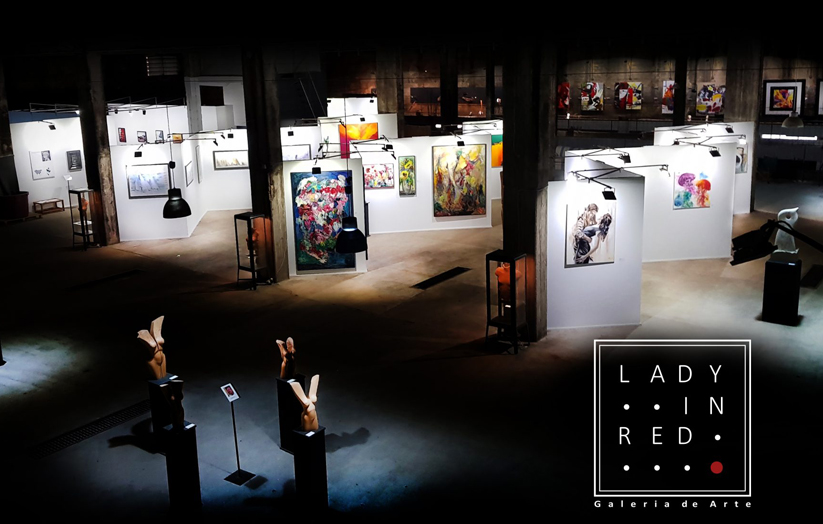
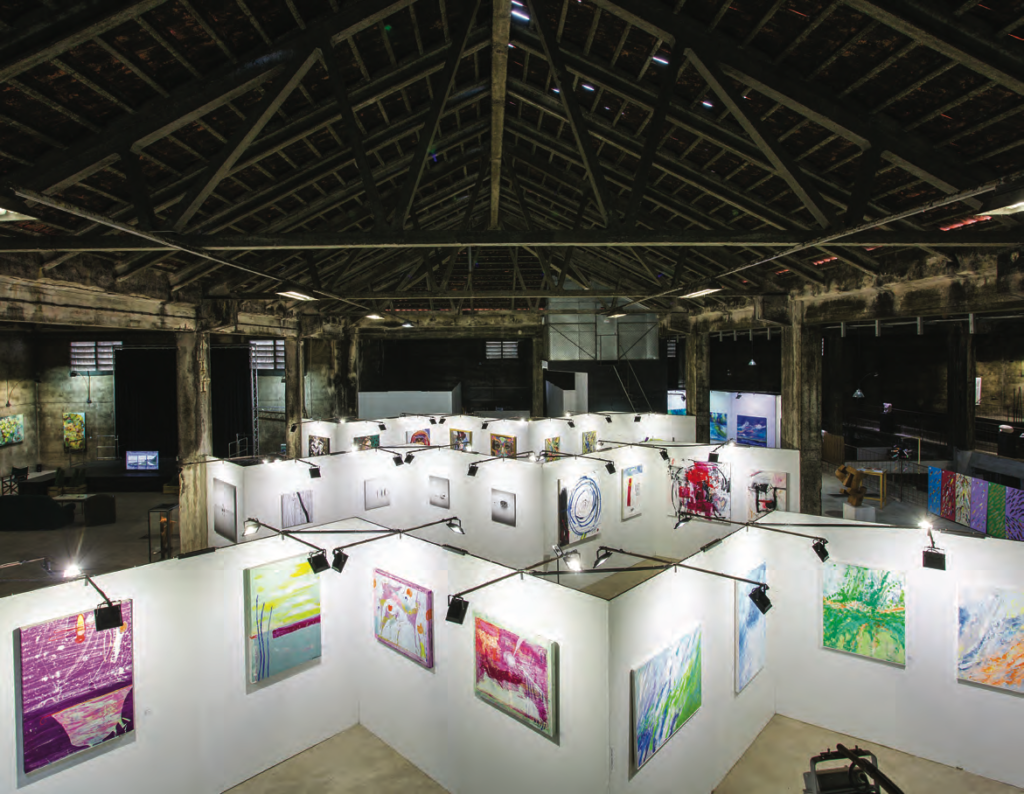
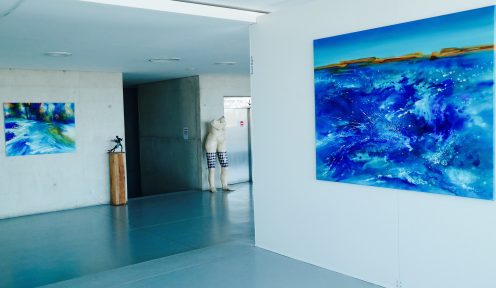
    When you pass the Adega Cooperativa de Lagoa, you could easily not realise that there’s a fascinating art gallery housed inside the working wine co-op. The space is vast, with an industrial-urban vibe that would be more common in a big city than opposite the bus station in Lagoa.

    The Lady in Red (LiR) gallery hosts a fabulous range of local, national and international artists, all year round, from large installations as well as smaller, take-home pieces (they can also arrange shipping and delivery). The exhibition centre is perched above the bottling and processing part of the co-op, its runways and corridors giving a bird’s-eye view of the action below, making for a unique ambience. There’s a mixture of sculptures, paintings and ceramics in spacious displays with excellent lighting to show everything at its very best.

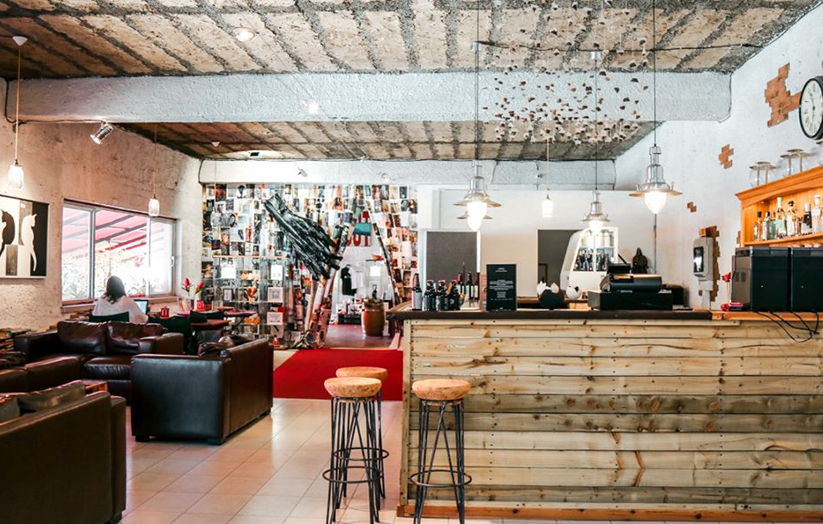
    The industrial and distressed walls give a dramatic background for the art, with some pieces almost appearing to float in mid-air. This is a venue that is well worth a visit, so allow yourself some time to take it all in, as there’s a lot to see. Entering the main gallery area, there’s a welcoming Lounge Bar area with comfy sofas to relax on, as well as a sunny terrace at the front. As you might have gathered, this is not your usual Lagoa hangout; here you can enjoy Teapigs teas, Caffe Praego or Surf Brewing craft beer — brands that exhibit sustainability, charity and flavour and match their ethos.

    As an events venue, LiR is quite different. The artwork mixed with the industrial surroundings of the co-op, which has a long tradition in the region, create a very distinct ambience, as unique as the art itself. This is a vast space with a stage and seating area for live or streamed performances and presentations. Live music and productions also take place throughout the year. For 2020, LiR has welcomed a series of new artists into their fold, with the most varied background and style.

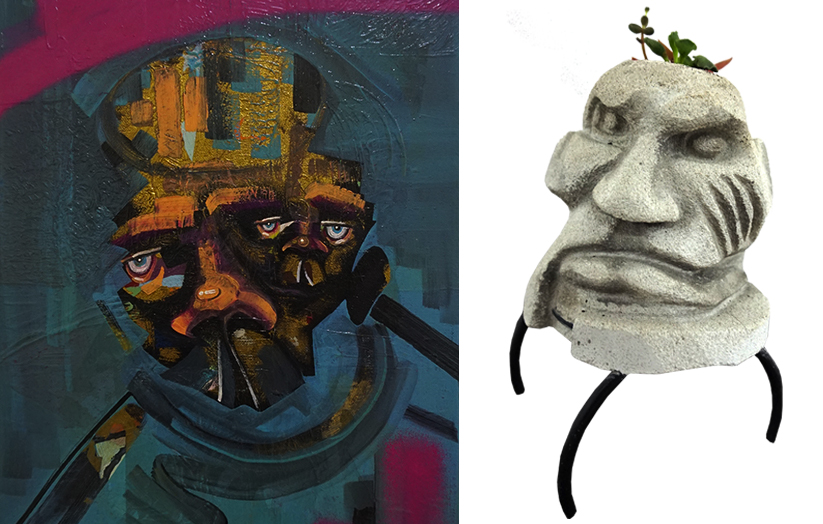
    Born and raised in the quiet fishing village of Olhão, painter and sculptor Pedro Águas has an academic background in Visual Arts from the University of the Algarve. His work seeks freedom from the demands of logic and dives beyond everyday consciousness. Águas attempts to overcome the contradiction between objectivity and subjectivity, providing a poetic hallucination, an expansion of consciousness. With his clay head sculptures, he explores our unconscious and dreams, where anything is possible.

    Pedro Águas

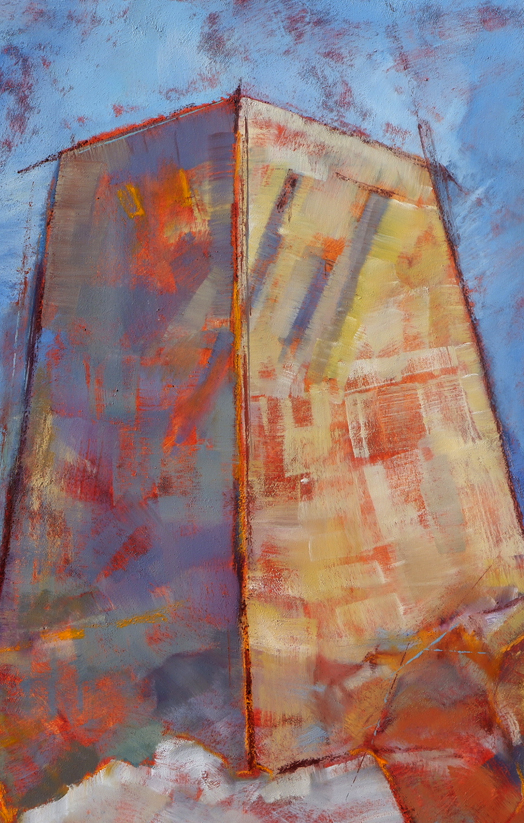
    British painter Jessica Dunn has lived and worked in the Algarve for over 20 years. Following her Art studies at Kingston Polytechnic, in London, she moved to southern Portugal, where she loves taking advantage of the ever-present sunlight. Through the layering of tones, colours and texture, our eyes are drawn into a world of reflection, tranquillity and timelessness featured in her work.

    Jessican Dunn

    With a degree in Painting from the College of Fine Arts of the University of Lisbon, Inês Barracha is a visual artist who combines her fine-arts skills with various fields of design and multimedia. After three years in England studying and working in the area of 3D digital animation, she was invited to teach several subjects in higher and technical courses in Design, Multimedia, Animated Image and Illustration, which brought her back to Portugal. She now works with the MODO project — a neo-rural space that promotes artistic experimentation and training in various creative areas. Barracha has been developing community projects, partnerships, collaborations and other works that have been expanding the MODO concept nationally and internationally.

    Inês Barracha

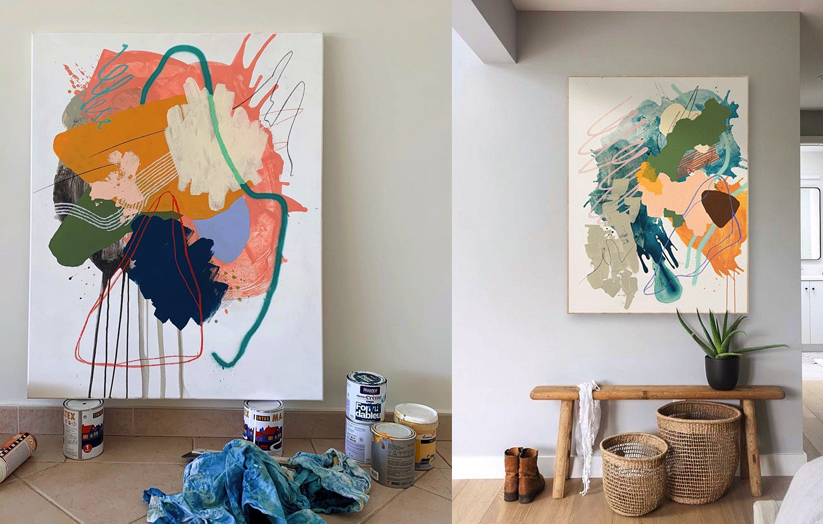
    Lisbon-based artist Bebeko is originally from Montreal, Canada. Born Kenya Saint-Lôt and of Portuguese and African descent, she moved to Portugal last year to pursue her dream to be a full-time artist. The self-taught painter decided to use the pseudonym Bebeko for her artwork as a tribute to the childhood nickname that her father gave her. Her abstract painting style reflects her compulsive energy — when she paints, she trusts the guidance of her intuition; it’s her way to listen to her own inner voice.

    Bebeko

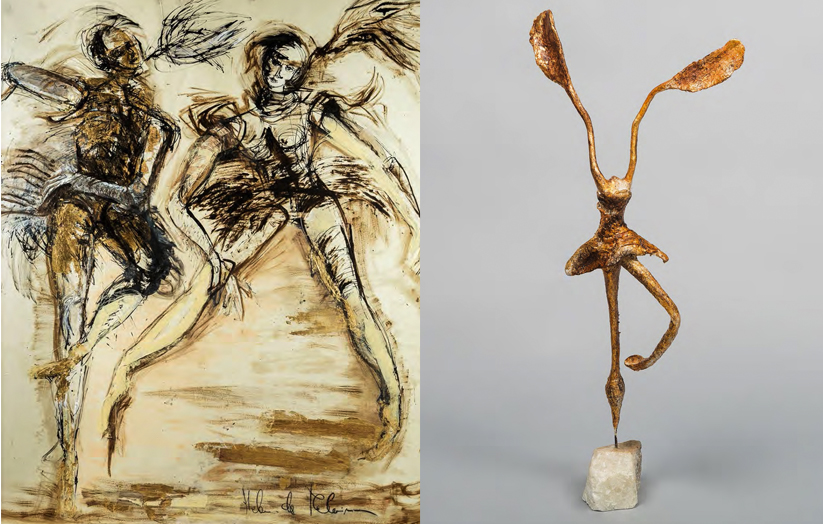
    Born in Porto, Helena de Medeiros graduated from London Fashion School and the ESAD School of Arts and Design, in Matosinhos. Her work as a costume designer is dedicated mainly to contemporary ballet but also cinema, theatre and opera. She has collaborated with great choreographers such as Gradimir Pankov, Iracity Cardoso, Mauro Bigonzetti, or Xin Peng Wang. She also has a parallel career as a painter, having displayed her work since 1990 in solo exhibitions around the world. Helena’s paintings establish an essential dialogue with her work as a costume designer.

    Helena de Medeiros

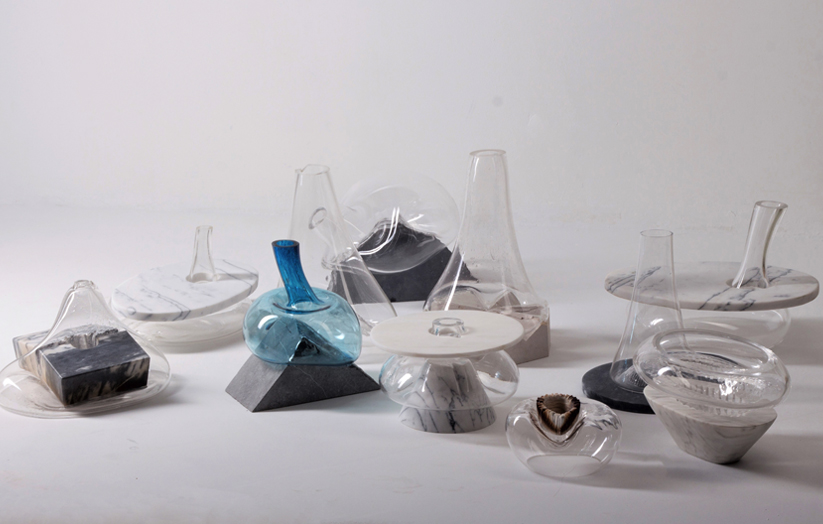
    Finally, Rita Pereira is a Portuguese artist based in Lagos, where she is a resident artist at Laboratório de Atividades Criativas (LAC). In 2009, she began her studies in Sculpture at Lisbon’s Fine Arts School and, in 2010, she also pursued Equipment Design, graduating in 2013, followed by a master’s degree in Product Design at the School of Arts and Design in Caldas da Rainha. The pieces on display in the Lady in Red Gallery are smaller than her usual large and often imposing works. Here, you’ll find a selection of small, one-of-a-kind stone carvings with blown glass decanters.

    Rita Pereira

    LiR is currently open Monday to Sunday from 12pm-5pm but times may vary (mask is mandatory). Entry is free.

    Lady in Red

  • Outdoor cultural events start this month in Lagoa

    Outdoor cultural events start this month in Lagoa

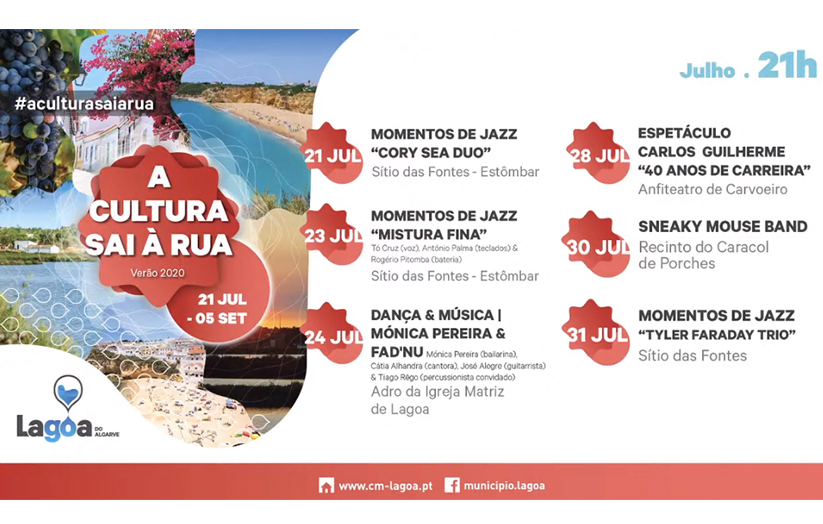
    A series of outdoor events entitled “A Cultura Sai à Rua” (Culture Out in the Street) has been launched by Lagoa council and will last until September 5, “following all health authority (DGS) recommendations”.

    On July 23, there will be jazz music by Mistura Fina at Fontes de Estombar; on July 24, Mónica Pereira and Fad’nu will perform a dance and music show outside Lagoa’s main church; and on July 28, Carlos Guilherme (tenor) will celebrate his 40-year singing career at the Carvoeiro amphitheatre.

    All performances start at 9pm. Tickets cost from €2 and can be bought from Ticketline or at the door.

  • Birdwatching festival returns to Sagres in October

    Birdwatching festival returns to Sagres in October

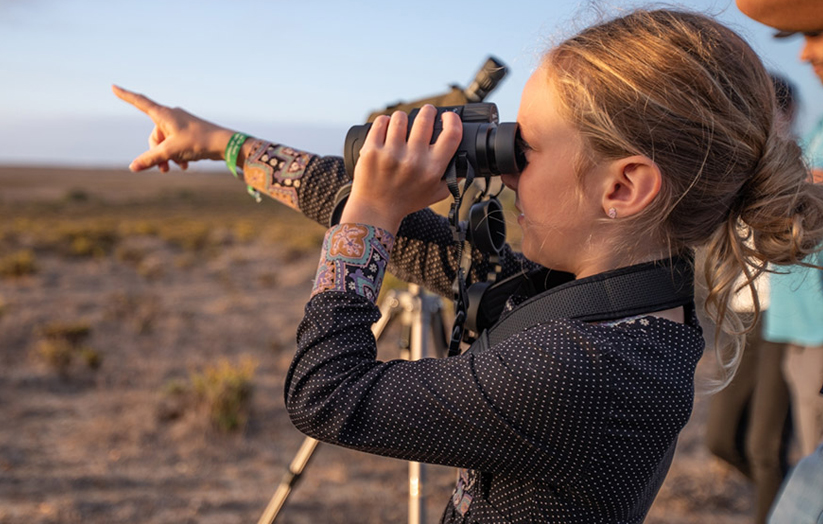
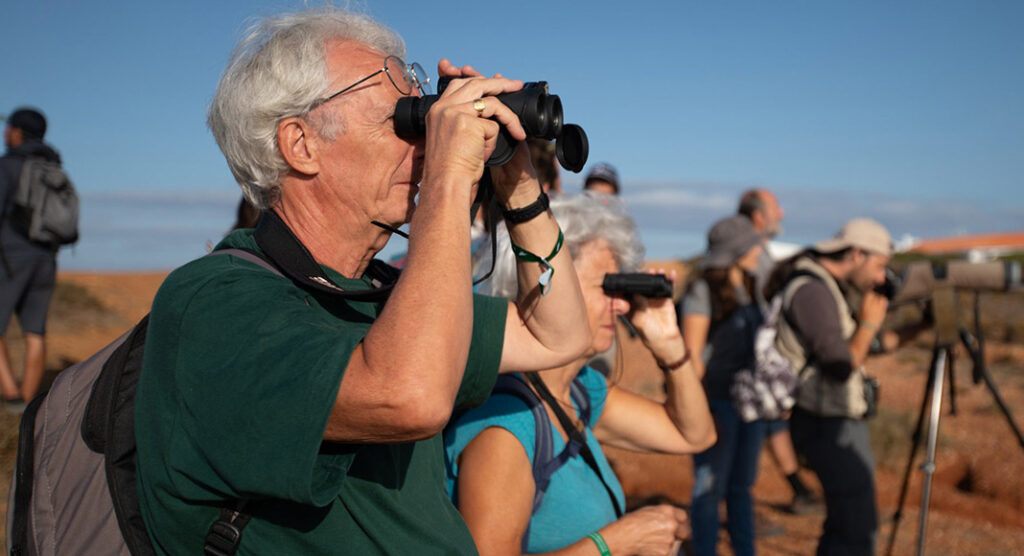
    The Sagres Birdwatching Festival, described as “Portugal’s largest nature event”, is returning to the Western Algarve between October 2 and 5.

    It has become an unmissable event for birdwatchers and nature lovers alike, who every year travel to Sagres to participate in the many birdwatching activities, boat trips and hikes.

    This year, the event will feature online activities for the first time, allowing people from all over the world to take part in virtual workshops or lectures.
    Due to the pandemic, organisers guarantee that all activities will be “adapted” in order to ensure social distancing.

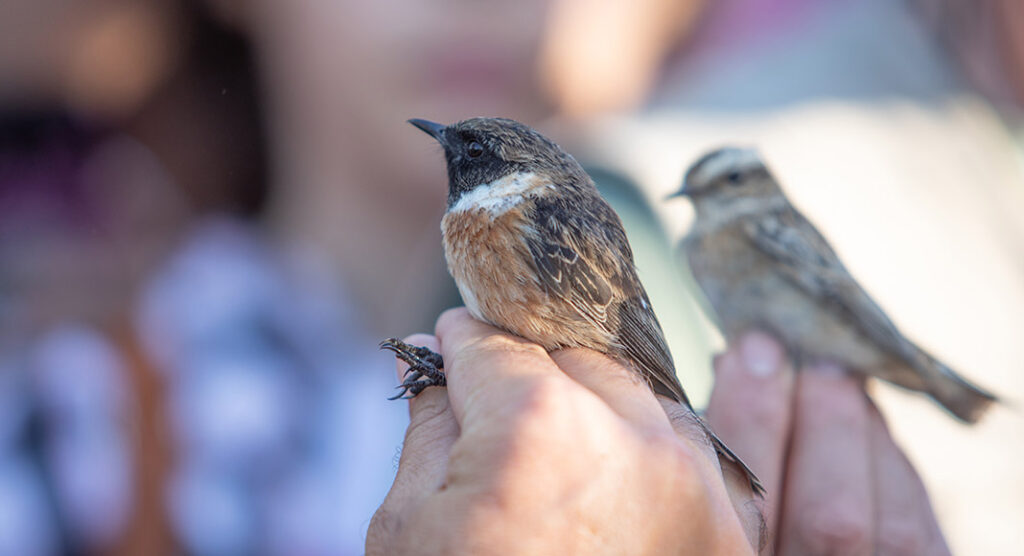
    The western yellow wagtail (Motacilla flava), a small bird that visits Sagres in the summer and autumn, has been chosen as the event’s mascot for this year.

    The event’s full programme will be revealed on July 28. For more information, visit www.birdwatchingsagres.com.

    Text Michael Bruxo for the Algarve Resident
  • Grand Prix finally confirmed for Algarve

    Grand Prix finally confirmed for Algarve

    Almost a month since A Bola sports newspaper broke the story that Portimão’s Algarve International Autodrome (AIA) would be hosting the first Formula One races in decades, the news has been ‘confirmed’, says the paper, with the 26th Portuguese Grand Prix set for October 4.

    An official announcement “will be made very soon”.

    Say reports, Portugal ‘won through’ after races were cancelled in Montreal, Canada, due to the pandemic.

    The last time Portugal hosted Formula 1 was in 1996, in Estoril.

    The AIA has been gunning for this opportunity for years. It will be a ‘dream come true’, the autodrome’s CEO Paulo Pinheiro has said.

    The 2020 season started in Austria last weekend. The Portuguese races promise to be the 11th in a long line of fixtures due to close in Abu Dhabi in December, writes Rádio Renasença.

    What it will mean in terms of ‘visitor attraction’ remains to be seen – but after the catastrophic start to the summer season, this looks like being very welcome news.

    Text Natasha Donn for the Algarve Resident
  • Music returns to Carvoeiro!

    Music returns to Carvoeiro!

    As the world continues to adapt to a ‘new normal’, the Lagoa-Carvoeiro parish union has announced a summer entertainment programme that will see local musicians, bands and DJs performing on “a mobile stage set up on a trailer”.

    These ‘mobile concerts’, which aim to avoid large gatherings, began on July 11 and will run until August 30, both in Carvoeiro and Lagoa.

    “The goal is to spread joy among the population, stimulate the local economy and help local musicians,” the parish union says.

    Organisers promise a variety of music, from Portugal’s iconic fado to rock covers and DJ sets.

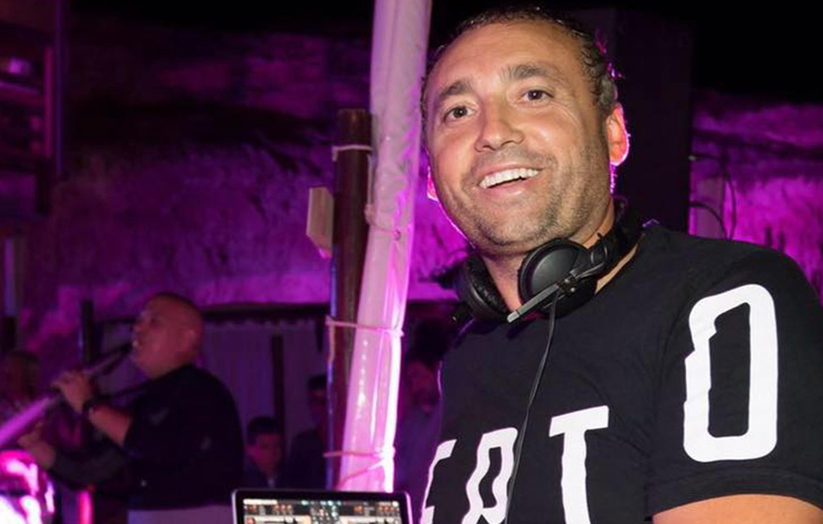
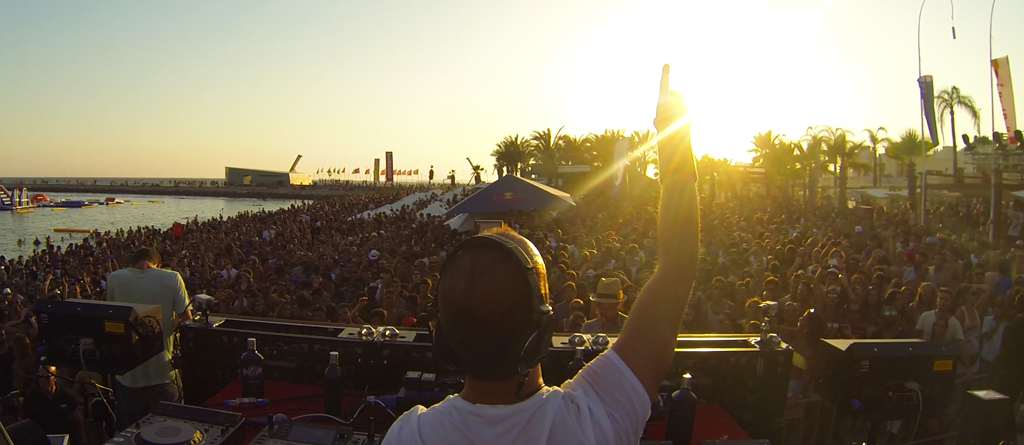
    DJ Alexandre Ramos
    DJ Alexandre Ramos

    Confirmed acts include DJ Xdupe, US2, Ricardo Sousa, 2EX, DJ Alexandre Ramos, Beto Kalulu, Sneaky Mouse Cover Band, Luana, Eurico and Bruno Cunha.

    The performances will take place in Lagoa on Friday and Saturdays from 9pm to 11pm and in Carvoeiro on Saturdays and Sundays from 7pm to 9pm and from 9pm to 11pm, respectively.

    They will be held in Lagoa at Largo 5 de Outubro, Rua 25 de Abril, Rua Coronel Figueiredo, Bairro Che Lagoense and Largo do Auditório, and in Carvoeiro at Estrada do Farol, Rua do Barranco, Rua dos Pescadores and Largo da Praia.

    The artists will be performing in Lagoa at Largo 5 de Outubro, Rua 25 de Abril, Rua Coronel Figueiredo, Bairro Che Lagoense and Largo do Auditório, and in Carvoeiro at Estrada do Farol, Rua do Barranco, Rua dos Pescadores and Largo da Praia.

  • Ocean restaurant’s new menu celebrates Portuguese cuisine

    Ocean restaurant’s new menu celebrates Portuguese cuisine

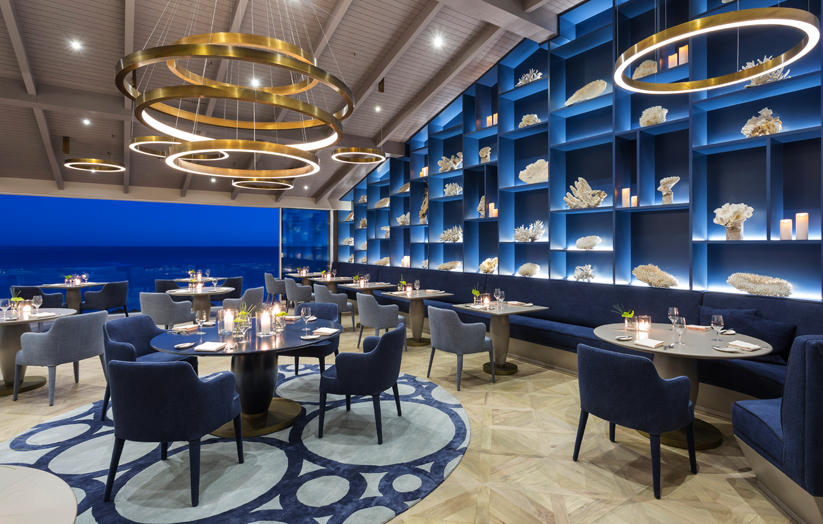
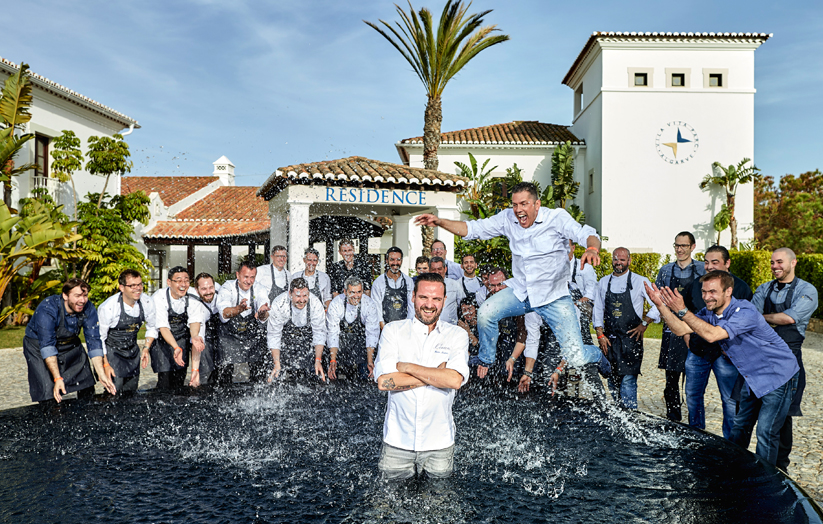
    Vila Vita Parc’s two-Michelin-star Ocean restaurant reopened on July 1 with a new menu that celebrates “typical Portuguese flavours, ingredients and recipes from all over the country” and highlights the “diverse richness of the Portuguese gastronomy.”

    Says the resort, the new menu will take diners on a “gastronomic journey through Portugal, discovering a colourful array of regional and national dishes”.

    It features seven dishes, each inspired by Chef Hans Neuner’s “research tour of the country’s many culinary corners”, which saw him meeting with many producers throughout the last few months, dining at their homes and swapping stories and culinary secrets.

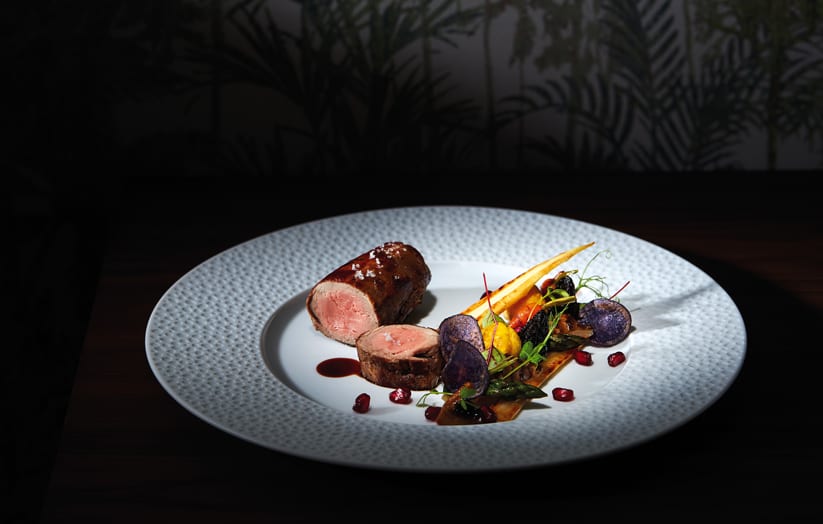
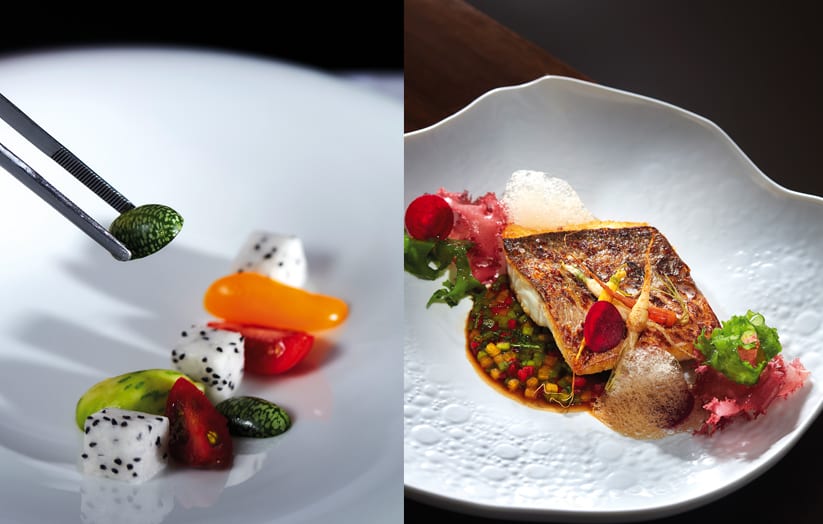
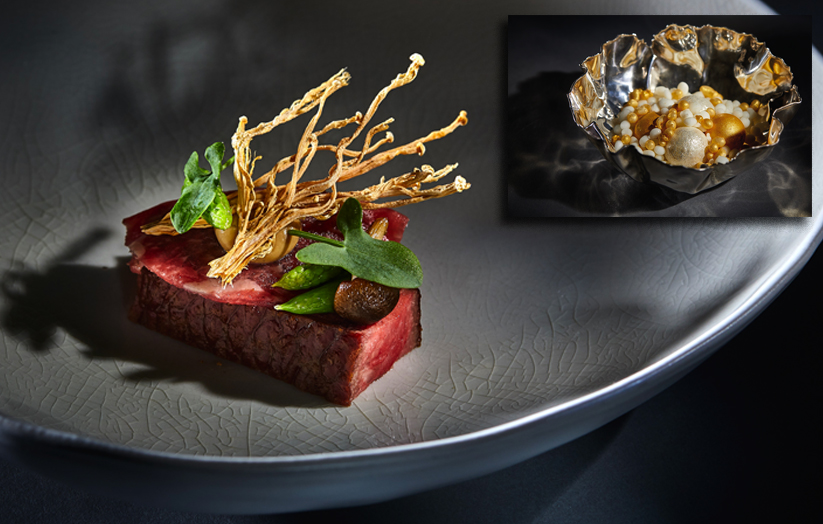
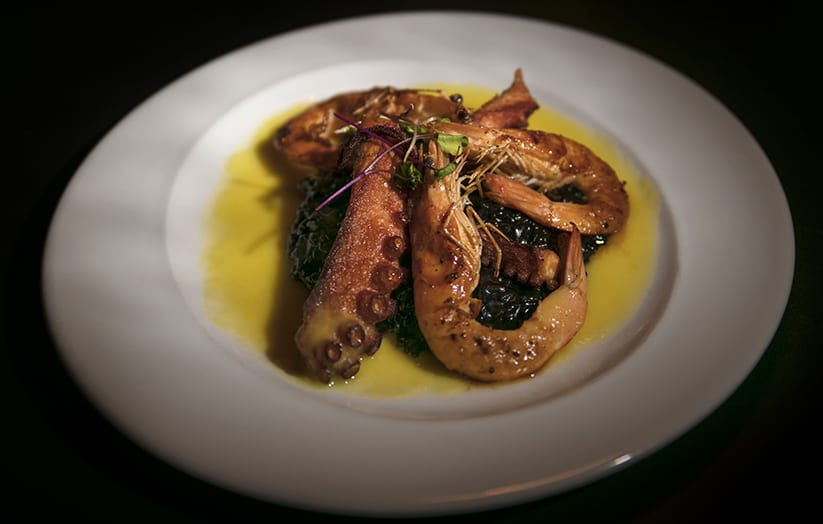
    Notable new additions to the menu include the typically Portuguese “Papas de Milho”, the “Vila Real de Santo António Tuna”, the “Fried Cuttlefish with Ronaldo Rice” from Setúbal, the “John Dory Bulhão Pato Style” from Lisbon, and the “Scarlet Atlantic Prawn with Squid and Bacon”.

    “Each dish is the result of extensive research and experimentation by a curious and dedicated team, always in direct and daily contact with local producers,” says the resort.

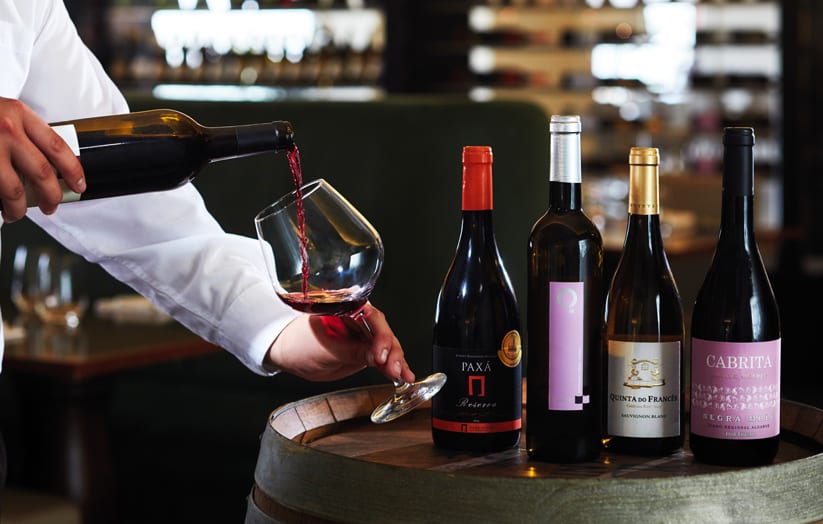
    The wine selection focuses on “unique and exclusive vintages made by small national and international producers”. Sommelier Ricardo Rodrigues is in charge of wine pairing.

    Chef Hans Neuner (©Paulo Barata)

    According to the resort, the new tasting menu “not only respects the seasonality of the products, but also highlights the sustainable philosophy at Vila Vita Parc, which is a guarantee of quality and freshness”.

    Many of its vegetables, meat and wines originate from Herdade dos Grous, the resort’s 780-hectare sister property, located just over an hour’s distance away in the Alentejo. The fish is caught along the Portuguese coast.

    The tasting menu costs €195 and offers a wine pairing option for €125. Bookings can be made through the restaurant’s website or by phone.

    Ocean is open Wednesdays to Sundays from 7pm to 10pm.

    +351 282 310 100
    www.restauranteocean.com

  • The Algarve looks good on you

    The Algarve looks good on you

    A new campaign to encourage national and international tourists to choose the Algarve as their summer holiday destination has been launched by the regional tourism board (RTA).

    Entitled ‘O Algarve fica-te bem’ (‘The Algarve looks good on you’), the campaign features influencer couple Raquel and Miguel, known on Instagram as ‘Explorerssaurus’ and who have over 753,000 followers.

    The reason for choosing the couple? They met and ‘fell in love’ in the Algarve.


    In just a few days, their page received 50,000 ‘likes’ and 600 comments thanks to pictures of the Algarve with descriptions in Portuguese and English. From pristine beaches and picturesque villages to hidden waterfalls and other natural wonders, Raquel and Miguel plan to share all their Algarve experiences with their followers.

    A video showcasing the Algarve’s stunning landscapes, beaches and towns is also due to be launched next week on Facebook, Instagram and YouTube.

    “We want to believe that everything that has happened in the last few months was just a pause in our lives,” says the region’s tourism chief João Fernandes.

    “We are inviting national and international tourists to visit the region and explore its diversity. Here, they will find sun and beaches, nature, sea activities, culture, gastronomy, wines and fantastic accommodation.”

    The campaign, which is described as “one of the largest social media advertising campaigns ever by the RTA”, is being promoted in Portugal as well as Spain, the UK, Germany, Ireland, France and The Netherlands.

    This latest initiative is a “follow up” to the ‘Remember Me’ campaign, which urged the Portuguese to stay home during confinement and to return later to enjoy an even better post-Covid-19 holiday in the Algarve.
    www.instagram.com/explorerssaurus_

    Text Michael Bruxo for the Algarve Resident
  • #TuPodes campaign offers 100,000 touristic experiences

    #TuPodes campaign offers 100,000 touristic experiences

    Already delighting cybernauts with its stunning images and presentation (see video below), Turismo de Portugal’s campaign #TuPodes (aimed at encouraging nationals to take their holidays ‘at home’) is gearing up for its next phase, on June 24, when some of the 100,000 touristic experiences available in this world-class destination are rolled out to help ‘reel visitors in’.

    PM António Costa kicked off the campaign earlier this week with an interview with CNN as the ‘Visita Portugal’ promo video was released.

    On July 10 a third phase is scheduled in which all the various activities and places to visit will have been uploaded on a digital platform, complete with various ‘special offers’ aimed at attracting Portuguese families.

    Explains Público, the whole focus of this campaign is to give companies in various regions extra visibility – and hopefully encourage more Portuguese tourists to use their services than would have during a normal ‘season’.

    As the prime minister has enthused: “If we have the privilege to live in the best destination in the world (Portugal has won this accolade at the World Travel Awards for the last three years running), we should enjoy it”.

    This year will actually offer a “very rare experience” for nationals, says Costa, as they’re getting the chance to visit places like the Algarve that haven’t been ‘this clear of foreign tourists’ since the 60s.

    The result is a world-beating touristic destination with space to breathe.

    “As a prime minister it’s not something I would have wanted”, he agreed. “But if I can think of myself for a moment, it is good to see the Algarve without the crowds and queues that it usually has”.

    You can watch the video here.

    Text Michael Bruxo for the Algarve Resident
  • The black cat of Silves

    The black cat of Silves

    A secret adults-only culinary escape in the countryside

    Take two passionate young Italians, a love of rural living, a taste for all things delicious, a valley of orange groves and cats, and you’ve got Gato Preto de Silves.

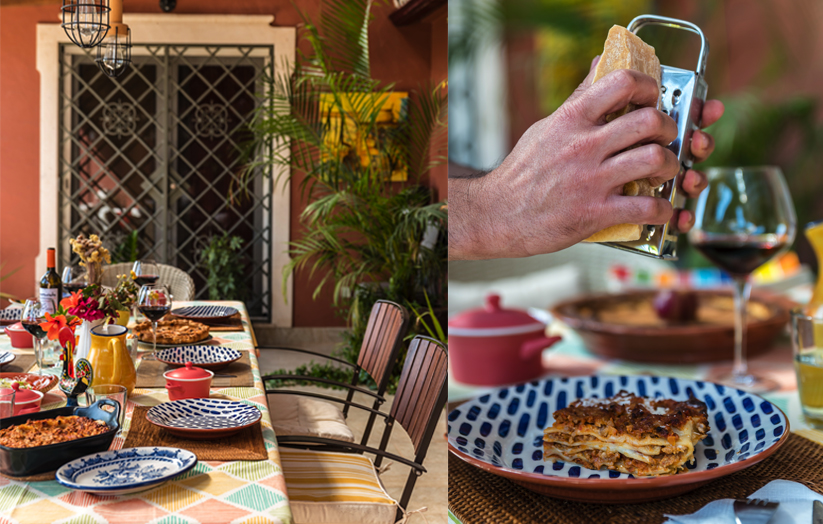
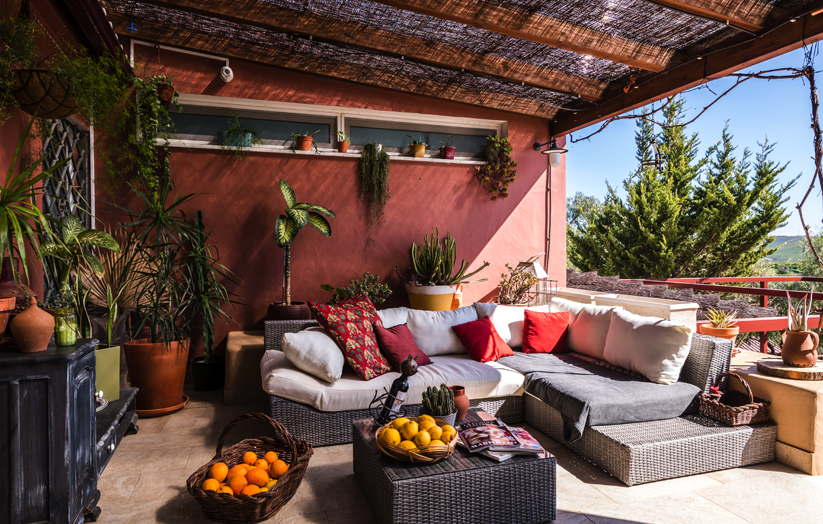
    Just a little inland from the stunning old Moorish capital of the Algarve, Silves, lays a secluded, luxurious and adults-only B&B with guest cabins occupying a tranquil spot in the heart of the countryside. Inside met with owners Gloria and Matteo for a beautiful home-cooked breakfast and tour around the property. The driveway gives you a sneak preview of what awaits you thanks to the mature and well-kept gardens with only the noise of the birds chirping, which instantly provide the feeling of relaxation. “Our B&B is a rural retreat made for long evenings and lazy mornings. Here, we have a pool and hammocks for relaxing,” Matteo explains. “Breakfast is a slow affair, showcasing regional cuisine and served either at the tables under the shade of the pergola or on the guests’ private terraces. The garden and verandas are the perfect places to while away the hours or even an entire day.”

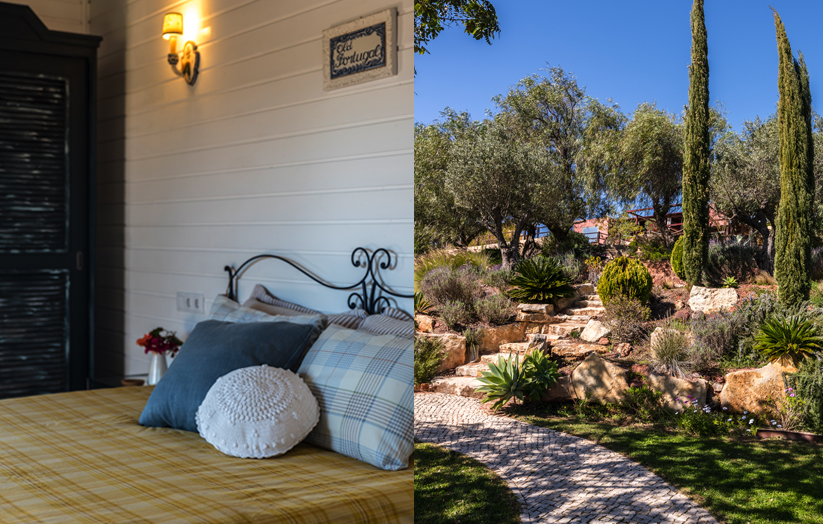
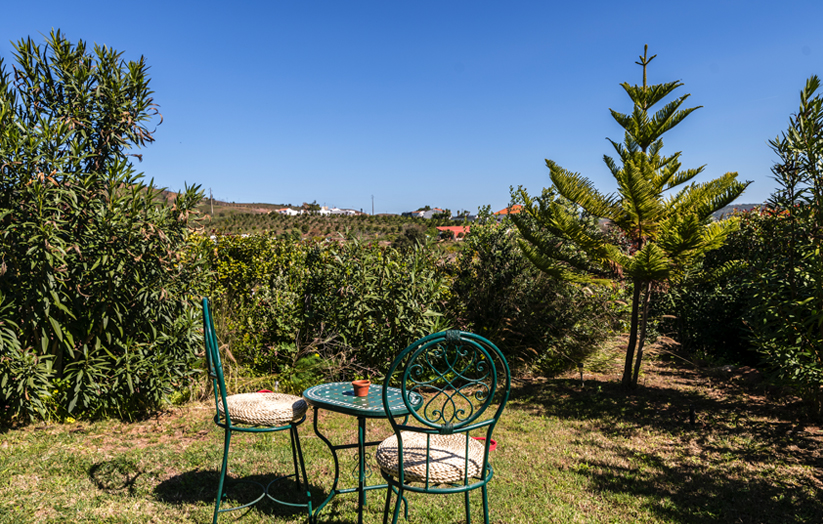
    The couple moved to Silves some 10 years ago and have been busy creating their vision of tranquillity and comfort away from the stresses of modern life. There are currently two luxurious cabins, with plans in place for a third. They are located in the garden in secluded positions to ensure privacy, with terraces, fully equipped kitchenette and a glorious view over the sprawling orange groves. Gloria and Matteo took great care when designing everything, and this is particularly evident in the cabins. They didn’t go for the easy options when choosing finishes, with details such as a very charming little window that’s been carved into the kitchenettes that gives the feeling of being at one with the countryside. Each guest accommodation has its own theme, with the two cabins picking local accents, incorporating Moorish and beach styles. Within the main villa, there are three guest suites, which are spacious and airy, all with private outdoor space and amenities. All rooms have been fitted with air-conditioning and have floor-to-ceiling windows to make sure guests are always connected to their environment.


    The heart of the property has to be the beautiful pool area, with big mature trees offering shade from the soaring summer temperatures and the communal outdoor dining spaces, where guests can enjoy chatting and stargazing in the evening. There’s a two-bedroom villa complete with its own pool adjacent to the B&B, but this is a self-catering option and is also adults only. All suites, cabins and the villa come with everything you could need to enjoy a peaceful stay.

    The couple also runs a variety of tailor-made gastronomic and tour-based activities that they’ve moulded together with a few hand-picked suppliers to ensure the best possible experiences and quality. The tours enable guests to set off into the hills on an electric bike and enjoy a delicious picnic in the wilderness or take a very Algarvean cataplana cookery course. Another popular experience includes a packed day to discover Silves and its local bounty, the humble orange, with lots of stops along the way to recharge and enjoy some local treats. There is also a “meet the farmer” tour, where guests can really get in touch with some local characters and see how the Algarvean way of life was in the not so distant past. It’s an ideal starting point for outdoor programmes such as hiking along the Via Algarviana trail, bike rides and off-road activities into the dams. Back at Gato Preto de Silves, on Thursdays, Gloria produces a homemade dinner with delicious and traditional food, creating an exclusive menu inspired by Algarvean cuisine with an Italian touch. All the ingredients are locally sourced and usually from the Silves market in the city. The couple recently acquired a ruin at the bottom of the property, where Gloria will work her magic with her authentic cookery and private dining workshop.

    Driven by their love for quality travel, adventure and cuisine, Gloria and Matteo bring their personal flair to their ever-growing piece of heaven in the Algarve. Silves is undergoing somewhat of a facelift recently, with people dedicating their energies to promoting rural tourism. Only a 15 minutes’ drive from Lagoa and touristy villages of Ferragudo and Carvoeiro, you will find yourself transported back in time, to a simpler and more authentic Portugal. Boasting a spectacular castle, winding river and beautiful old buildings, Silves is the perfect off-season destination.

    Text Mia Wallace
    Photos Chloe Ophelia

    O Gato Preto de Silves

  • A feast for the eyes

    A feast for the eyes

    Inside Carvoeiro took a tour around the area to find out what’s new on the dining scene

    We are blessed with an abundance of excellent eateries in this small part of the Algarve — with more than 100 just in Carvoeiro, we are already spoiled for choice. Inside ventured around over the winter to find some exciting new restaurants that are bound to become local favourites in no time. Here, you’ll find a brief overview from Carvoeiro to Silves for your to-do list.

    TOURIGA WINE & DINE
    CARVOEIRO


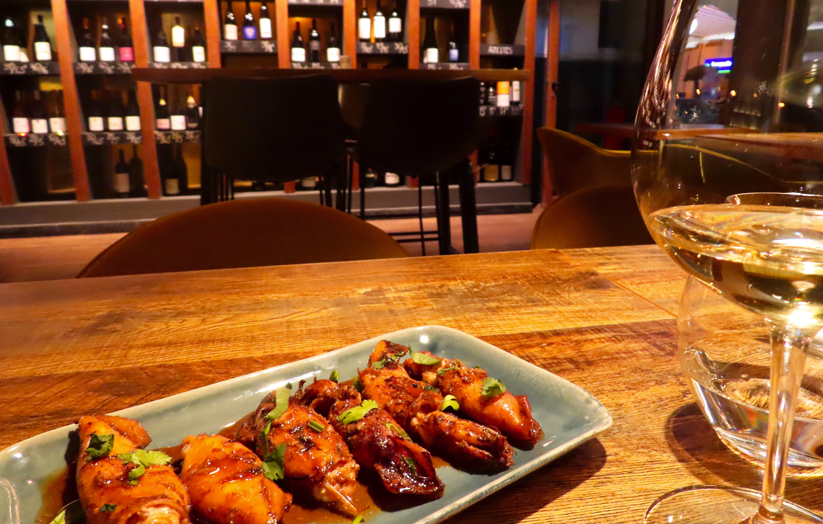
    A stunning, stylish new wine and dining venue at the top of restaurant hill, here you’ll find a very comfortable space with tasty, mostly tapas-style treats and a few main dishes. Owner Jorge has been collecting wines for years and has a magnificent selection of Portuguese wines. The front-of-house staff has been rigorously trained and is extremely professional and pleasant, always happy to share their knowledge. There is comfortable seating either inside at the bar, dining area or outside on the terrace.

    LEVELS
    CARVOEIRO


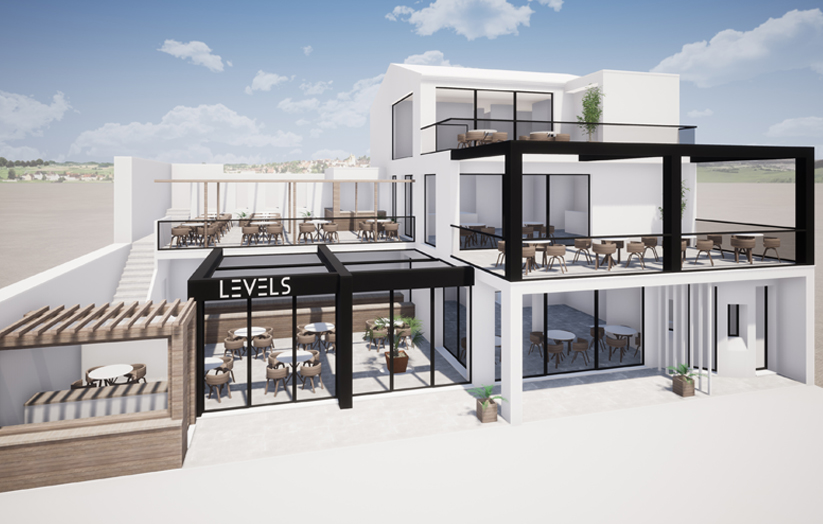
    Formally Piu Grand Cafe and Martins Grill on the main square, Levels will be a beach-side oasis with a mixture of Asian and European décor. A full renovation of the old 1980s building will see massive glass frontage to take total advantage of its highly privileged location. We had a sneak preview, and it looks incredible. The menu will focus on quality, and popular Portuguese grilled dishes will feature heavily. Trained barista staff will be on hand to prepare excellent coffees for visitors, and each of the three levels will offer different experiences. The cherry on the cake is the Sky Bar with cocktails and sharing platters during regular service and private dining for up to 20 guests for special occasions.

    BAUSHI SUSHI & BAR
    CARVOEIRO

    A brand new concept for Carvoeiro, Baushi Sushi & Bar is due to open in the summer in the old Ele & Ela on Rua do Barranco, serving the finest quality sushi and Japanese drinks with special lunch, evening and tasting menus. Patricia, a trained sushi chef, will be working her magic in the kitchen and Ivo, previously from Inside Cocktail bar, will be putting his years of mixology to good use, creating fabulous Japanese-inspired cocktails.

    GASPACHO & MIGAS
    LAGOA


    There’s a significant regeneration going on in Lagoa, and this city bistro-style eatery is creating quite the storm in the usually sleepy town. You’ll find this lovely place between the Council building and the healthcare centre (centro de saúde). With a bold and stylish décor with dark accents and bright lighting inside, there is also an airy covered terrace, perfect for watching the world go by. The menus are varied and bring a lot of older and sometimes forgotten Portuguese produce into their modern dishes. The restaurant boasts high-quality ingredients, friendly service and comfortable surrounding and lunchtime specials, a lighter menu and a full evening menu offer something for everyone. To top it all off, the wine list features mostly local labels and is well paired.

    O CAIS
    SILVES

    O Cais is run by owners Nuno and Zane, who returned from Ireland to create their dream restaurant by the river and the municipal market. Traditionally clad walls, stylish furnishings and fixtures with some modern touches blend in well in this ancient building, complete with an internal well. Nuno is passionate about meats, and the selection is good with a delicious venison steak to complement the otherwise beef-centric main courses. The starters are varied and rich with a good variety of fish and cheese dishes, and Zane makes great desserts.

    MOSAIKO
    SILVES


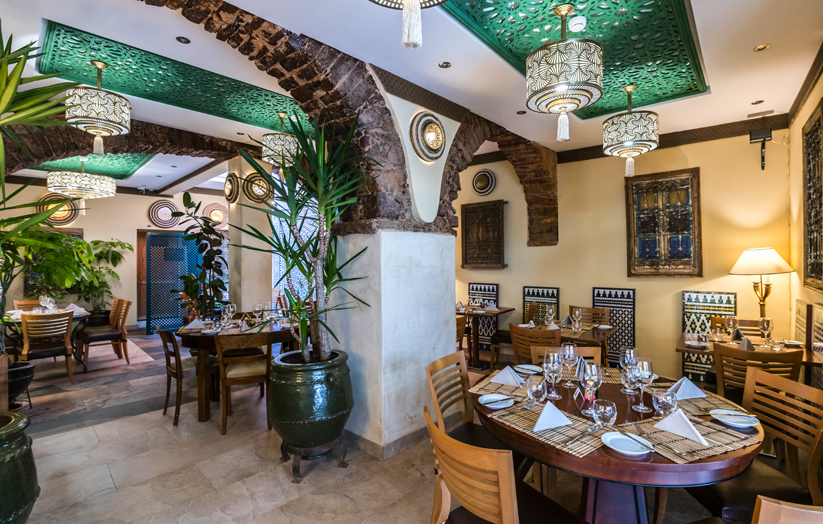
    On the main pedestrian street of Silves, you’ll find a gorgeous Moroccan patio, straight out of a riad. The menu features tagines, couscous dishes, moussaka, charcoal-grilled kebabs, koftas, falafels and hummus. The perfect place to enjoy some calm moments and eastern treats, the restaurant’s décor is bright and perfectly in keeping with the city’s Moorish past.

    COMPROMISSO
    SILVES


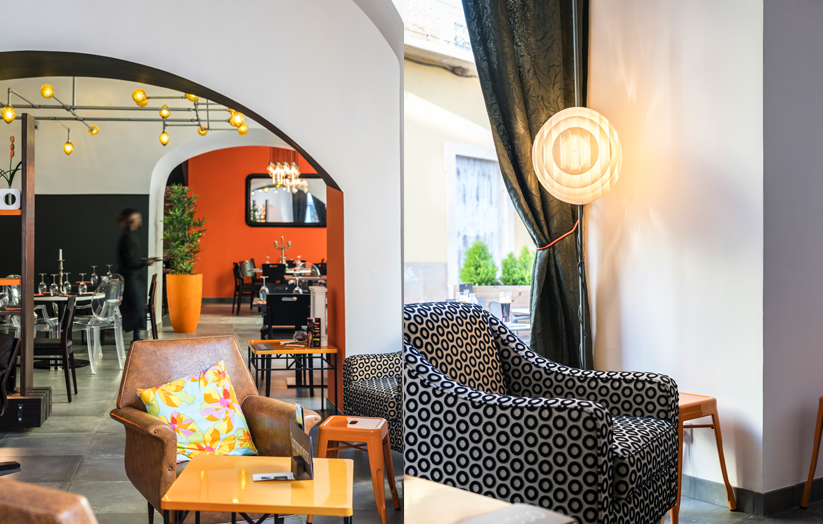
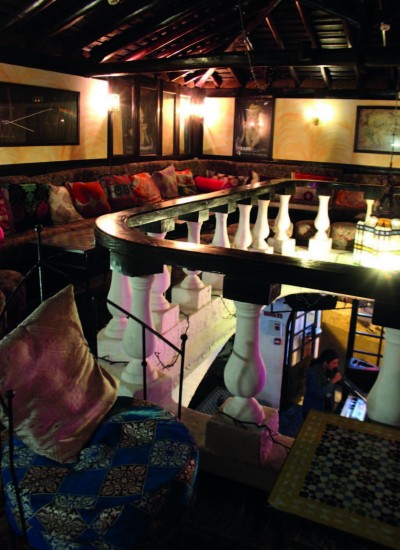
    Another surprise in the usually traditional and sleepy Silves is this Mediterranean-inspired café/restaurant/lounge bar. An industrial loft space meets a large dining venue, perhaps more something that you would expect to find in an urban city. The menu leans more towards the Italian side, with pasta, pizzas and grilled dishes, although they do have some Portuguese dishes. They offer a pleasant two-course lunch menu for €12.50, including a drink. Live music and events also take place during the season.

    AL-GOSTO
    SILVES


    Up a side street from the river heading to the pedestrian street lays this little vegan and vegetarian restaurant. Generally open during the day, Al-Gosto serves a vegan/veggie lunch buffet and an à la carte menu, with everything made on site. Homemade drinks and cakes are a big favourite here too, and there’s always find a fresh new creation coming out of the kitchen.

    O CANTO
    FERRAGUDO
    With Venezuelan chef Jimmy Cruz still at the pass, the changes here are more with a new menu and a facelift in the dining areas. The new menu features a great mixed tapas sharing platter, octopus carpaccio, big salads, a juicy surf and turf and fish dishes with the chef’s signature flair along with a selection of vegetarian options. They will be opening from 10am for coffee and pastries then serving food throughout the day. Watch out for their fun theme nights and lots of new additions along the way.

    At the time of going to print, there were more new places that, unfortunately, we couldn’t feature as they were in various stages of building work and/or finalising names. Watch out for Chef Antonio’s opening under new management, which promises be an exciting addition, according to the new owners. Ele & Ela are in the midst of finalising their new venue — keep an eye on Chef’s Kitchen Facebook page for information on that. Chef Raquel Marques left O Rafaiol restaurant and has opened The Square in Monte Carvoeiro. This fine-dining venue has modern décor, a large terrace and a great menu. O Rafaiol has reverted to the original management of the owners Osvaldo and Peggy, who have opened again and will return to their more traditional style of dining. Luisa’s Place in Sesmarias is changing management and will now be run by Harry who you may know from years ago in Happy’s and Carvoeiro Bar. In Ferragudo, Kitty and Ton of Amigos catering are opening a cool little spot serving breakfast, lunch, tapas and drinks next to O Canto.

    Bom apetite!

    Text Mia Wallace
    Photos ©Chloe Ophelia
  • Karma Skincare

    Karma Skincare

    It’s what’s on inside that counts

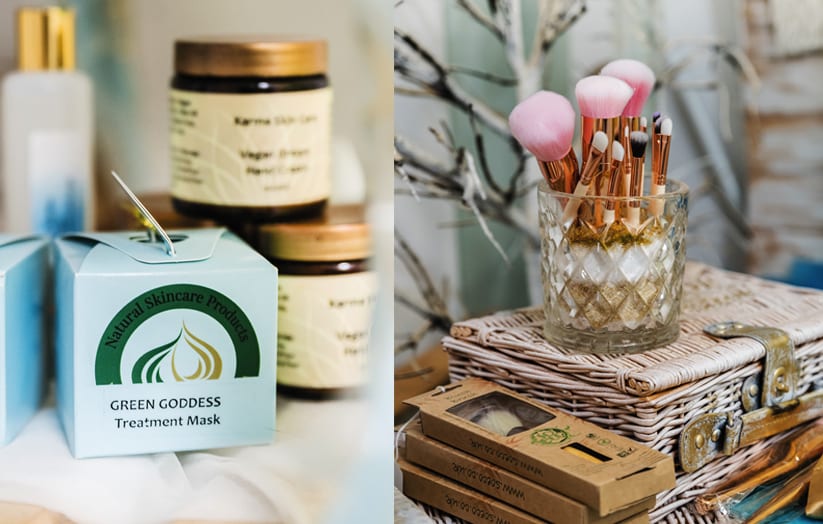
    At the age of 40 and still battling with her skin, Lesley decided to leave her life in finance and retrain in the beauty industry, where she began studying therapies and ingredients. She was shocked, as most of us are when we start to think about what we are actually being sold in the pretty packaged bottles. The inclusion of, more often than not, bovine, fish or porcine sources, preservatives and chemicals isn’t really what human skin needs. The multi-billion-euro beauty industry works tirelessly to convince us of the next must-have, miracle cream when we should be looking back to our friend, Mother Nature for help.

    The mainstream creams and lotions are mostly not vegan-friendly, kosher or halal, but more importantly, they can be damaging, as Lesley found out: “My skin was making a cry for help with the acne and fine lines. After some tests, I discovered I was allergic to many of the chemical components. Nearly all skincare products are made from the same ingredients, so that made me wonder if I could create skincare products without chemicals.”

    On completing her Aromatherapy and Advanced Aromatherapy exams, a journey of wholesome discovery and many years of research and development began. Soon after, Lesley came to the Algarve in 2010, in search of a better, more relaxed lifestyle where she continued building her boutique skincare manufacturing business, Karma Skincare.

    “Karma Skincare is a vegan, gluten-free range of products, which is created with only pure, natural ingredients. Everything that I use in my products is halal-compliant and very importantly, palm oil-free. I only use the power of plants and minerals to improve your skin. If you put something good on your skin, then it will respond and glow. If you use chemicals or animal-derived ingredients, your skin will complain and cause you problems.”

    Speaking to Inside at Sisters Hairdressing Salon, in Alvor, Lesley explained her process: “I source all of the ingredients myself and make countless batches before finding the right balance. After some field studies, I send new products to a UK laboratory for clinical testing and certification.” The Karma Skincare range is continuously growing, with a full-face range, highly acclaimed insect repellent and after-bite products, and one of her best-sellers, the Magnesium and Aloe rub — one client wrote that muscle and joint swelling went down in a day following using, whereas the hospital said it could take six months. Having heard so many good reviews, it was time to try Karma Skincare for ourselves. At the entrance of the salon, the full range is on display, with the facial products, Karma Cleanse, Karmatone, Karma Hydrating / Karma Renewal, the bestselling Karma Skin Tightening Intensive facial oils and Karma Night cream. Just to the side, the body range is on display with three very popular products, the Buzz Free and After Bug gels and the soothing rub.

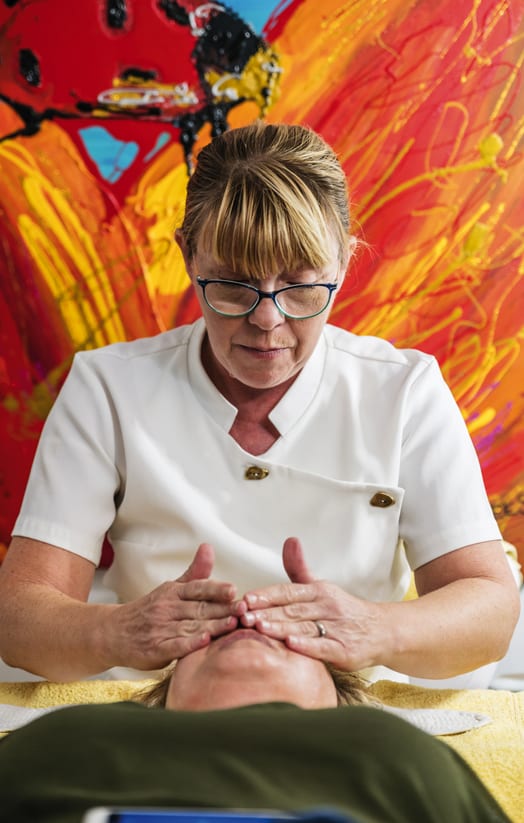
    Downstairs, in Lesley’s therapy room, there’s a selection of products and a treatment bed where I had an amazing Instant Boost Mini Facial, using the full day-care range along with a soothing chamomile oil and French clay mask. The facial was incredibly relaxing, and the products smelled fantastic. Lesley also used the Magnesium and Aloe rub on my shoulders and had the knots rubbed out in no time. Once all of the oils and mask had done their job, the treatment followed with a micro-current facial, using a high-frequency current and light to finish off.

    Ingredients like the pure rose water used in the Karmatone are one of the reasons that Lesley does everything herself. If she were to outsource her production, a manufacturer would likely not use such pure, high-quality ingredients, as they would be looking at the profit margins too closely.

    Having suffered from skin complaints in the past, Lesley knows only too well what an effect it can have on someone’s confidence. This is precisely why everything is done in-house. You can buy Karma Skincare online or pop into Sisters for a treatment.

    www.karmaskincare.co.uk

    Text Mia Wallace
    Photos Chloe Ophelia
  • The One

    The One

    Fine dining at Tivoli Carvoeiro

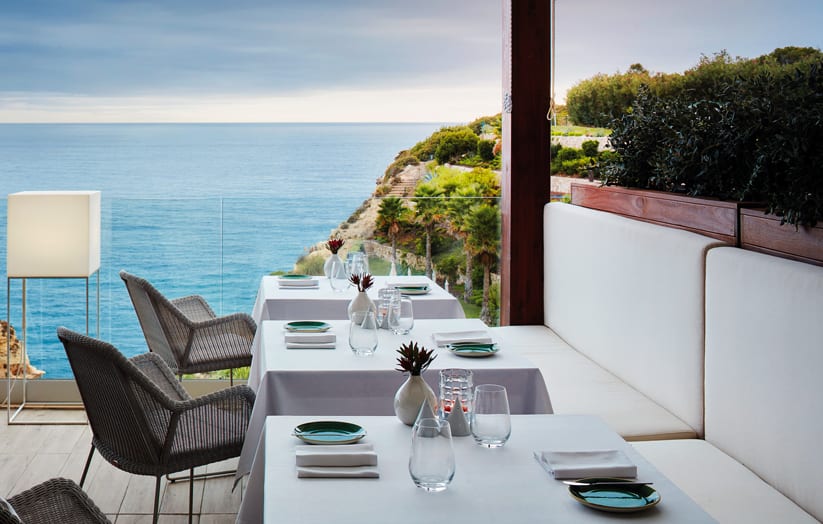
    With one foot firmly set in Portugal, The One Gourmet Restaurant of the Tivoli Carvoeiro Hotel & Resort enjoys a spectacular view out over the glistening Atlantic. Here, the chef and his team celebrate the abundantly available fruits of the nearby sea and countryside to the north.

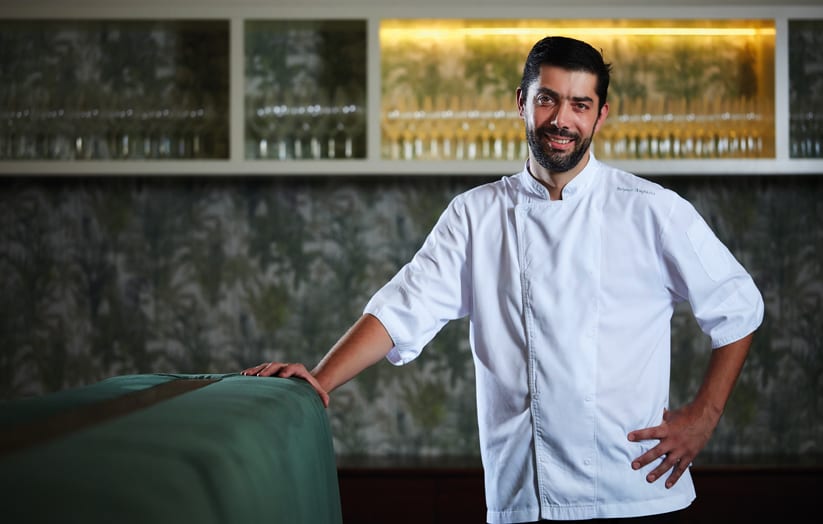
    Dining at The One is a journey through Portugal, with recipes full of considerable ethnic influences. Executive chef Bruno Augusto has an impressive pedigree, with experience both internationally and locally with Vila Vita, in Porches, The Ritz, Cascais Miragem, near Lisbon, and, more recently, Vale d’Oliveiras, right here in Carvoeiro. Now in place at the pass of Tivoli Carvoeiro, the young chef is full of enthusiasm and creativity.

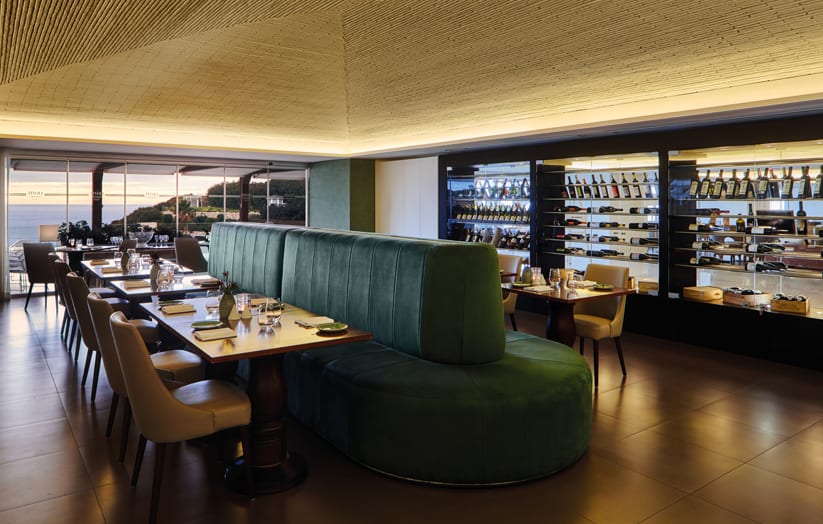
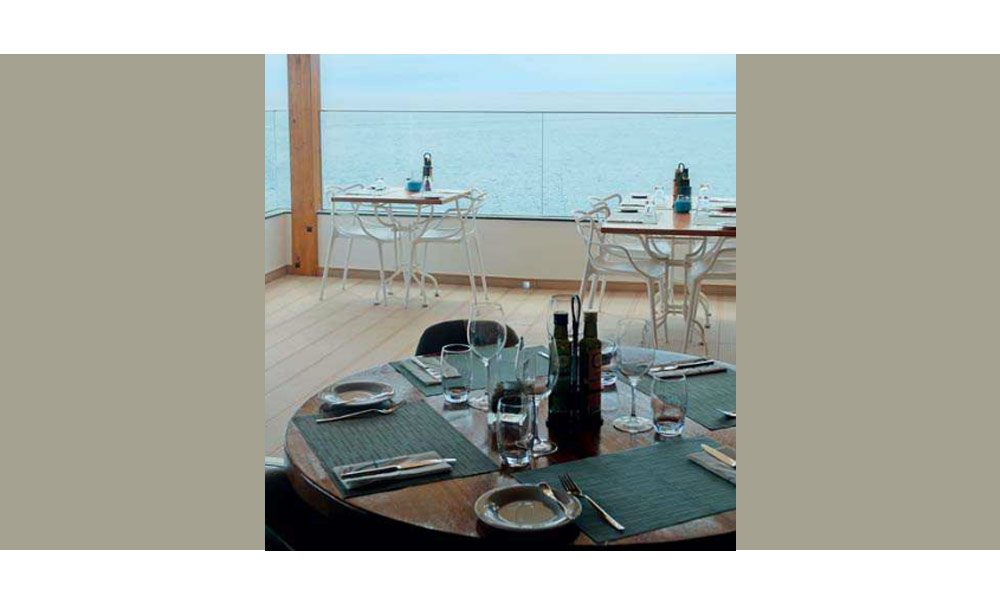
    Applying French technique and Asian minimalism, The One has a sophisticated style and presentation. The restaurant itself isn’t all about the view — but what a view it is. The décor has tonnes of natural fabrics in the wall coverings, and a central, curved green velvet bench takes centre stage, offering a variety of comfortable seating options. There is also a sprinkling of individual tables towards the terrace area leading onto the minimalistic dressed setting that soaks up the endless sea view in front of it. The ambience is perfect for sitting back and enjoying the dining experience ahead.

    The team are knowledgeable, and a wine pairing dinner is a fabulous option for guests who are happy to leave their fate in the capable hands of sommelier Francisco Meira, who takes great pleasure in delivering a bespoke pairing to suit the guests’ taste. Franciso is keen to showcase the best offerings from local winemakers and has a fabulous wine cellar at his disposal, taking the dining experience to another level.

    The menu is varied with fish, meat and vegetarian options. It also has a good range of balance with a vegetarian tasting menu, which is fairly unusual in the Algarve. The produce that chef Augusto is using is top class, with deep flavours of wild fish, organic vegetables and local meats featuring throughout the menus. Guests can enjoy an à la carte experience at The One, should they prefer something a little lighter with individual dishes or sharing options giving great flexibility. Diners will find the service to be attentive yet relaxed, which fits in well with the general vibe of the resort.

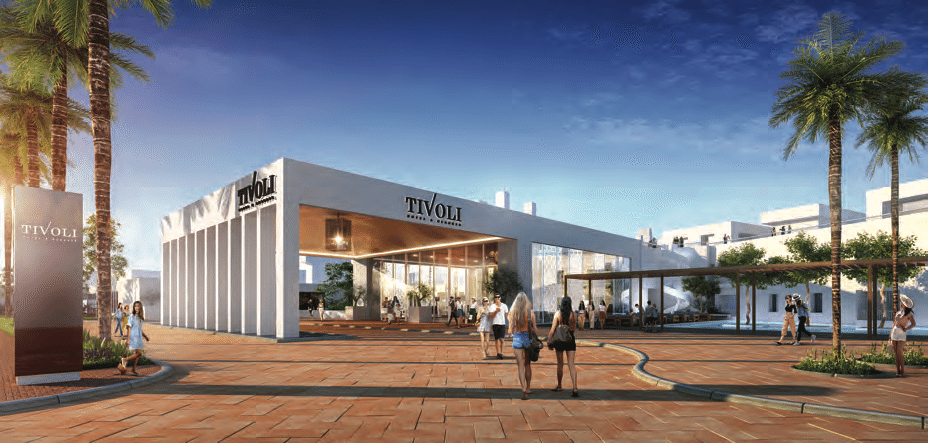
    The One is located next to the Azur Bar, where both resort guests and non-residents are welcome to enjoy a drink and lounge whilst enjoying piped music and a warm sea breeze. Overlooking the Atlantic Ocean on the Vale Covo cliffside, Tivoli Carvoeiro is a fully refurbished five-star hotel and resort, ensuring spectacular experiences in luxury surroundings. There are 248 suites and rooms with different capacities, including family suites and luxurious rooms with Jacuzzi tubs on the terrace. The gym is available for non-residents too, under a membership scheme, and has a sauna and steam room on the side of it, making it a perfect hang out for the winter months. An indoor pool and Jacuzzi can be found on a lower floor as can the large outdoor pool.

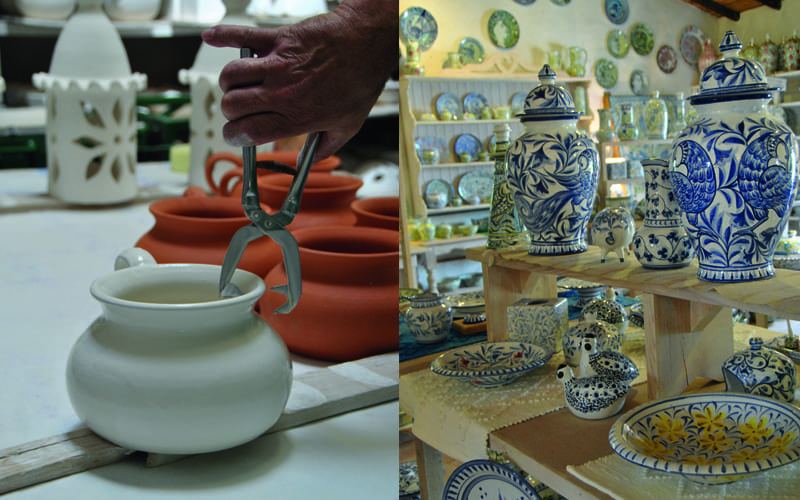
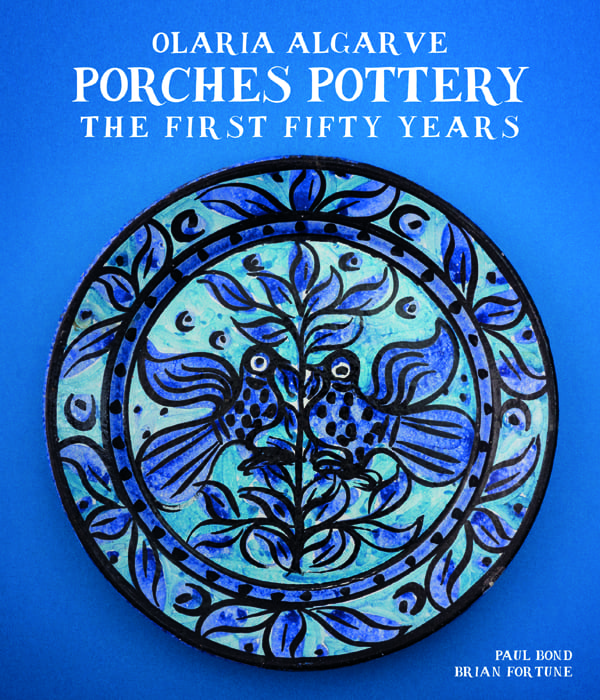
    The spa is also open to everyone. Once inside, guests are transported to a haven of tranquillity where the beauticians work their magic. Ceramics made especially for Tivoli by local icon Porches Pottery are dotted around, highlighting the company’s ethos of sustainability and involving the community. The décor is a fresh blend of Asian and Portuguese and creates an elegant and calming environment.

    www.tivolihotels.com

    Text Mia Wallace
    Photos Filipe Farinha/Stills
  • Lagoa to host final leg of Volta ao Algarve

    Lagoa to host final leg of Volta ao Algarve

    The 46th Volta ao Algarve will kick off from Portimão to Lagos on February 19

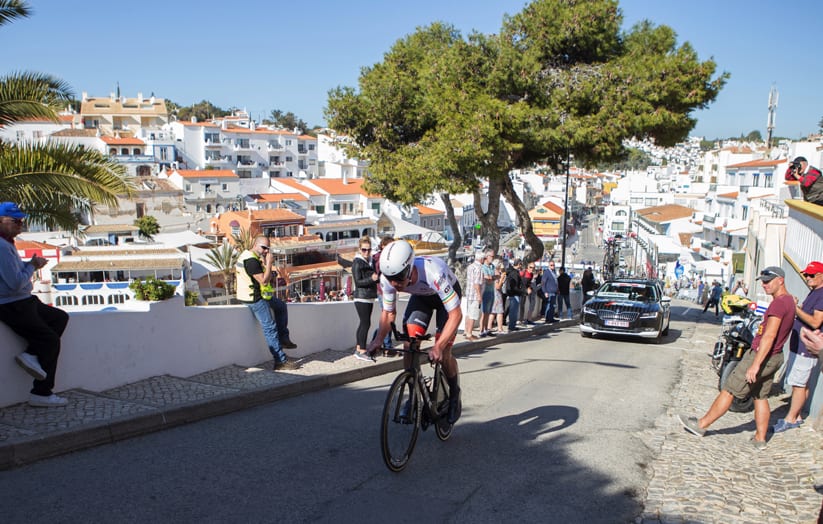
    The second day will see competitors travel from Sagres to Alto da Fóia, in what is billed as one of the most demanding stages ever — cyclists must first take on Pomba, a 3.9km uphill trail with 7.1% inclination, and reach Fóia through an 8km track with 6.3% inclination. On February 21, there is a 200km journey from Faro to Tavira, while the fourth leg will connect Albufeira to Malhão, with yet another challenging trail (2.5km and 9.9% inclination). The final stage will come to Lagoa with a 20.3km individual time trial. On that same day, the town will also host the Algarve Granfondo, a cycling challenge for participants in top physical condition, which is expect to receive around 1,000 contenders.

  • Artistic licence

    Artistic licence

    Long-time local resident and highly skilled craftsman David Pearce opens a portrait studio in Ferragudo

    Staying with the theme of the 50th edition of Inside Carvoeiro magazine, we stopped by Ferragudo to see our old friend David. Having presented his stunning handcrafted wooden boats in a previous edition, we were pleased to hear that he was doing something a little less physical now that he’s in his 70s.

    David now dedicates his time to painting portraits. Using watercolour, acrylic and oils, he’s always keen to find a medium to enhance the commissioning customers’ memory of the subject they want. “I work from photographs,” said the artist. “People come to me with a photo of their pets, people or places and I get to it.” With many of his commissions being of loved ones and pets, he takes great joy out of delivering the final pieces and seeing the emotion on the faces of the buyers.

    When asked about his formal training, David explained: “I studied art at Worthing College, in West Sussex, where I later went back to teach for a brief period. I then trained as an architect, which was probably a terrible thing to do as a free artist, everything began to be very linear. Although, saying that, it did give me discipline, which is always welcome,” he joked. As an internationally acclaimed portrait artist, previously with studios in California and London, the artist’s modest gallery in the Algarve is located on Rua da Hortinha, in Ferragudo, next to the coffee shops. He usually spends his mornings here working on commissions, and, if the door is closed, he’s never too far away.

    David is a man of many talents. He has sailed and lived around the world, is a highly skilled carpenter and even turned his hand to the restaurant business. People may remember him from the old Tasca David, where he was known to serve the best ribs in the Algarve for years. There aren’t many people around like him, a lovely, funny and fascinating character who has chosen to settle in this sleepy corner of the world. That is quite an endorsement considering that he has been to so many places.

    David welcomes a subject for portrait painting commissions that touches your heart: painted portraits of family, pets, landscapes or even your home. For an initial quotation, he requires a good quality photo of the subject for the portrait painting in person, by email or post. You can see some examples of his work on his website or pop into his studio and have a chat about what you would like to achieve. David is a master craftsman, and if you’re looking for something out of the ordinary, he would be more than happy to get creative.

    There’s the saying, “Jack of all trades, master of none”; and then there’s David, who’s a master of many.

    www.pearceportraits.com

  • Retreat in Alamos

    Retreat in Alamos

    The new adults-only B&B is perfect to recharge and enjoy some precious relaxation time

    When we heard that one of our favourite hotel managers was setting up a boutique retreat, we were very excited to see what Lourenço Ribeiro and his lovely wife Luisa had created. Positioned in between the Atlantic Ocean and Guia, Lourenço and Luisa have taken their extensive travel knowledge and experience and made great use of it. What they have achieved is a real haven away from the hustle and bustle of Algarve summer life.

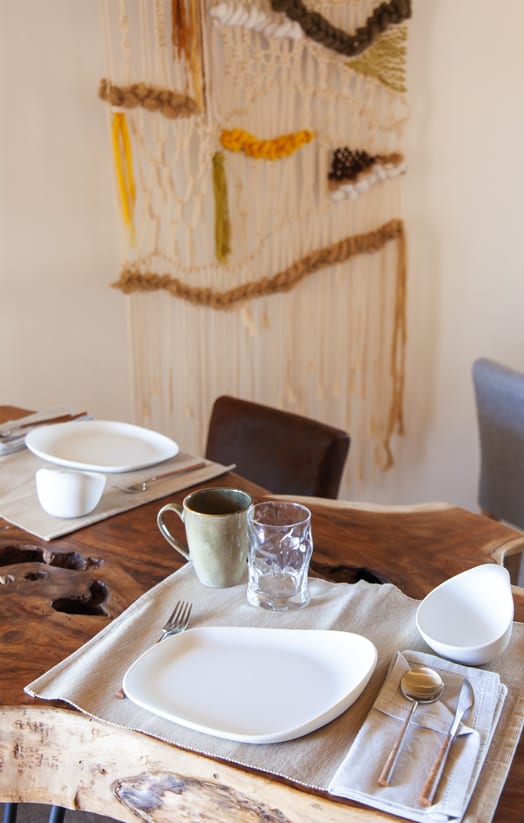
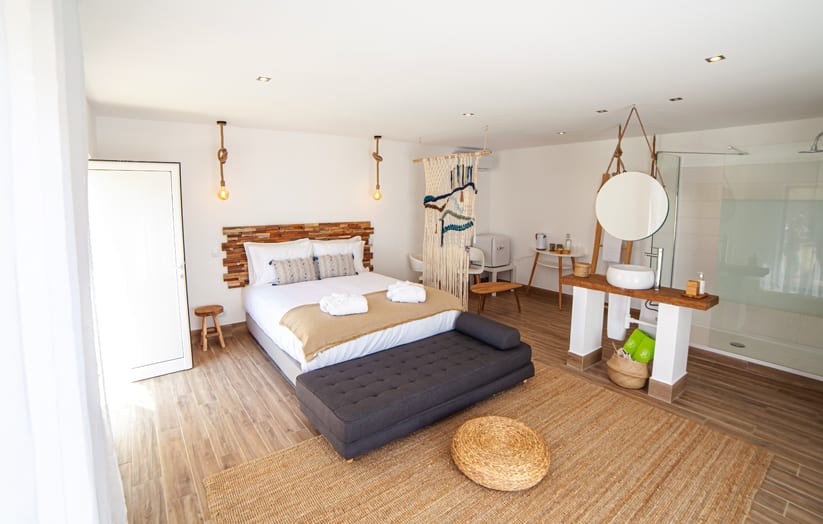
    This is a place to relax, listen to the birds gently chirping in the trees and take some time for yourself. There are eight country-chic, luxuriously boho-styled rooms from 19sqm to a whopping 30sqm, furnished with natural fabrics and linens with accents from local artisans. The size and sensation of natural flow and light that encapsulates these spaces will take you by surprise. Each room has an open-plan shower area with organic toiletries by French brand Damana and plush, cotton towels with big fluffy robes and slippers for that ultimate ‘hotel’ feel. Rooms have essence diffusers and a kettle with a selection of herbal infusions along with a pitcher of water and some fruit.

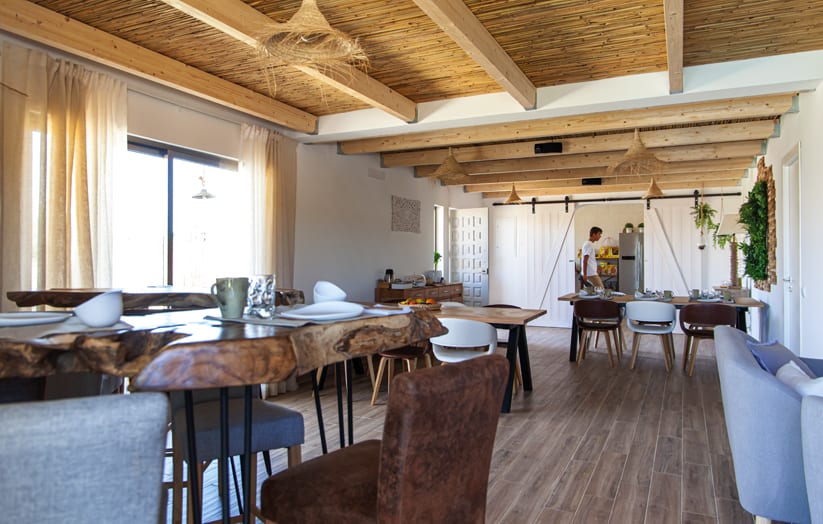
    Alamos Retreat is all about wellbeing, and that’s highly evident in the breakfast lounge, where guests are treated to a buffet of healthy and biological, homemade gluten-free pancakes, muffins, fruits, local cheeses — including lactose-free choices — freshly made juices and the best eggs around. The menu is mostly vegetarian, with gluten-free and vegan options aplenty. However, carnivores will not be made to feel uncomfortable at all and will leave feeling none the wiser that the retreat is predominantly vegetarian. Breakfast is a very leisurely affair, and they don’t adhere to a strict timetable, which is refreshing. Guests come and go throughout the morning, and nothing is too much trouble for the staff.

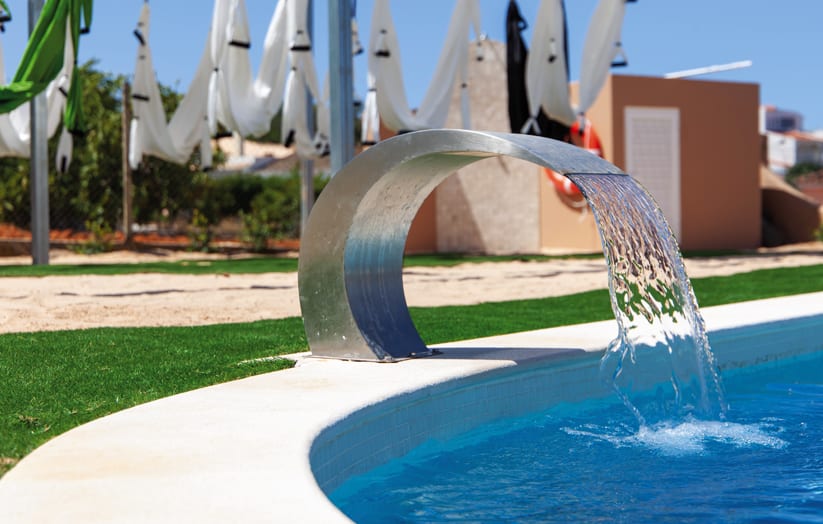
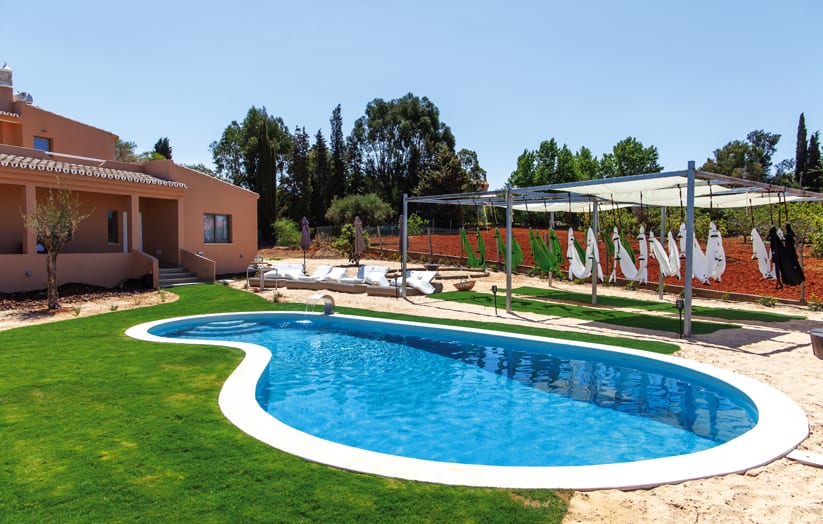
    Being adults-only was a welcome change, and as the guests are all there for the same reason, it is tranquil and very chilled out. In the central area of the retreat, you’ll find a refreshing kidney-shaped pool, rattan loungers and shade to enjoy lazy afternoons. Morning yoga is a part of the experience at Alamos, and after a perfect night’s sleep, there’s no better way to start the day than a gentle and invigorating yoga session, which is included as a part of the Bed & Breakfast package. By the pool, there’s something very unusual — an anti-gravity, aerial yoga pavilion. At first, you might feel intimidated by the sight of these silky hammocks hanging from the pergola structure and there is a lot of giggling to begin with, but once everyone finds their balance and realises that the fabric can hold somewhat substantial weigh, participants get into the swing of it, and it is actually highly enjoyable and rewarding. More mainstream yoga, meditation and Pilates are also available, depending on the day but guests can check the schedule on the website or on social media.

    The retreat also offers an antioxidant reading that measures your antioxidant level. This gives you an insight into your lifestyle: It shows if you are healthy, if your consumption of fruits and vegetables is enough, if you are too stressed and, most importantly, if you are protected against diseases. “At Alamos Retreat, everything was designed so that our clients can recover their full health potential,” says Lourenço. Having dedicated most of his adult life to the hospitality industry, we were keen to find out the drive behind this new project and discovered that Lourenço is certified in Holistic Nutrition by the Institute of Traditional Medicine and holds detox seminars throughout the year at local hotels. He is passionate about wellness, cancer prevention, fitness, weight-loss hospitality and luxury lifestyle.

    Wife Luisa loves baking the fabulous, sugar-free cakes that are on offer at the lounge and enjoys bibliotherapy, art and handicrafts. She has made many of the things that you can see at the property, such as the macramé, and has been instrumental in the interior design of the property. Son Guilherme is the young apprentice and is learning the ropes as he goes along. He’s a natural, so it looks like this is the perfect project for the family to work together and build something sustainable and meaningful for the future.

    The beds are intended to be “one of the most comfortable in the region”, as the linen is 100% cotton. Guests can also choose from three types of pillows (standard, memory foam with essences and feathers). Lourenço’s extensive hotel experience is very apparent and the attention to detail is something else.

    www.algarvewellnessretreat.com

    Text Mia Wallace
    Photos Daniel Clarke
  • Family tradition

    Family tradition

    Herdade Barranco do Vale is reviving an old family tradition

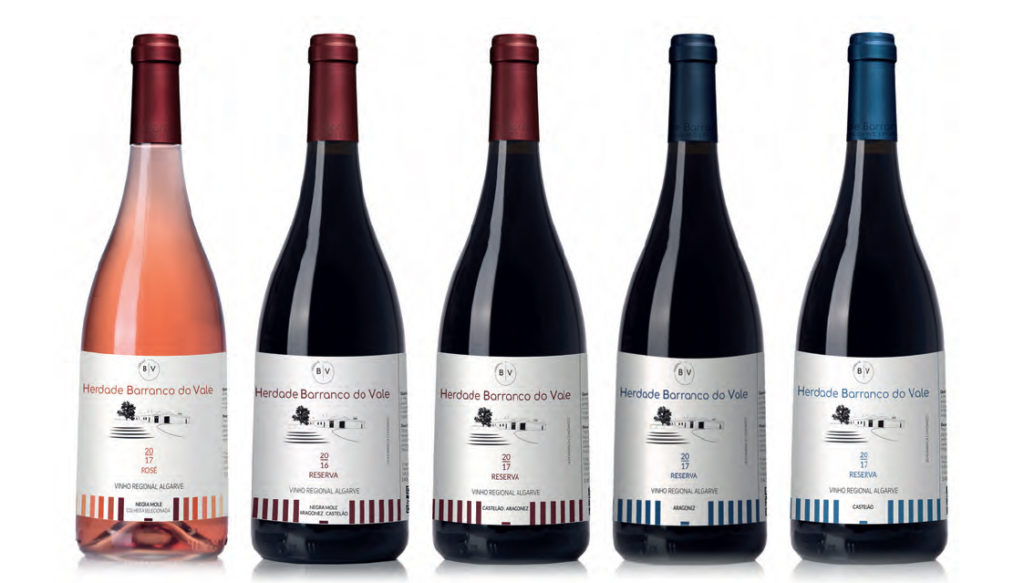
    Dear Grandfather, the farm is still beautiful. The cork oaks you have planted are strong and healthy, the olive trees large and firm and the “medronhos” are simply divine. The old vineyard was carefully cultivated, and the planted area expanded. The grapes from which this wine was made have been carefully handled and selected, and the production carried out to the highest standards. The wine matured 20 months before bottling. With love, Ana Luísa.

    This text appears on the label of the wines of the Herdade do Barranco do Vale, in the Sítio dos Campilhos near São Bartolomeu de Messines — a small tribute to Ana Matias Chaves’ grandfather, Ramiro Graça Cabrita, who bought the farm in the late 1960s and planted the first vines.
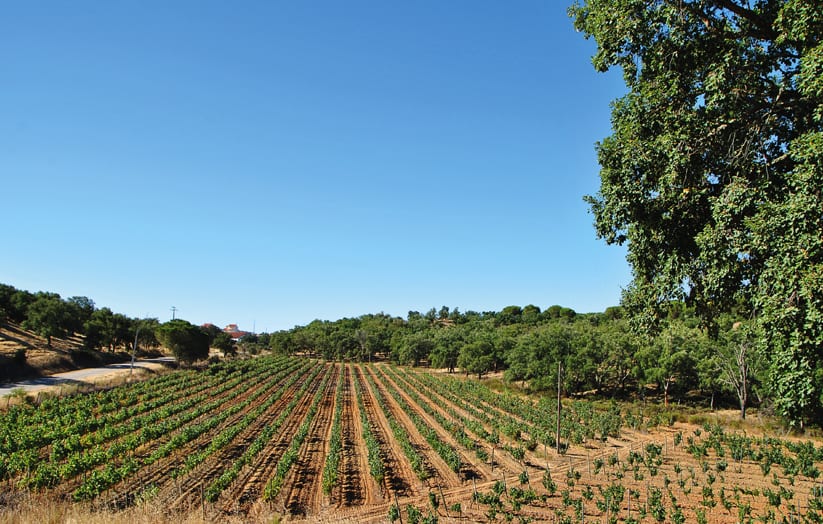
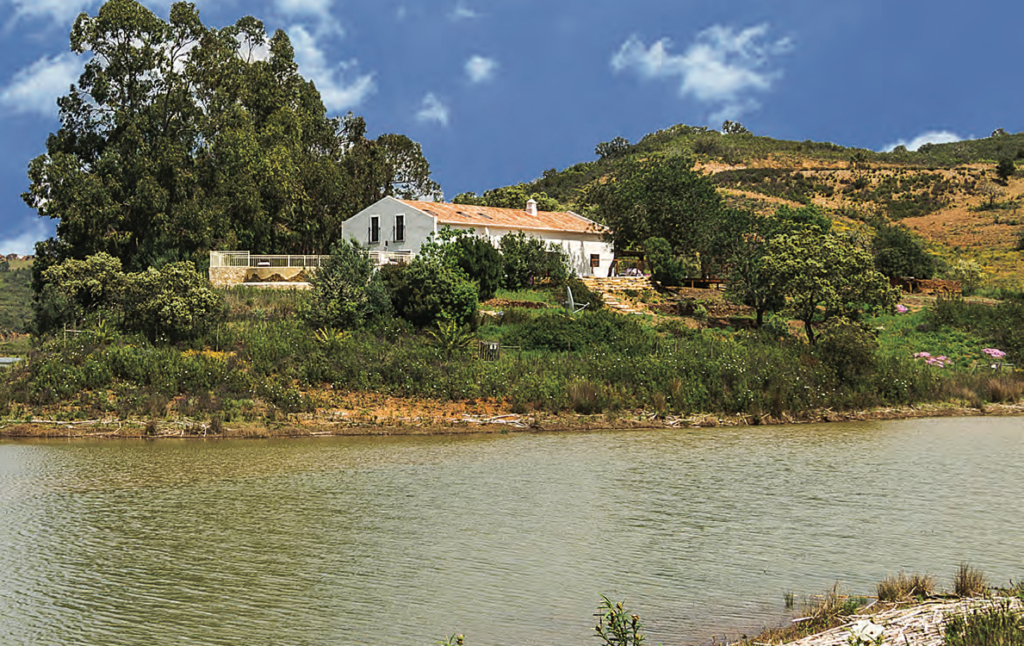
    When Ana talks about her grandfather, her eyes shine. She proudly reports that he was far ahead of his time and a true entrepreneur. On the 100-hectare property with carob, almond, olive and medronho trees as well as cork oaks, he had four reservoirs built and even underground pipes laid for the irrigation of the entire estate. “We are extremely grateful to him for this today,” Ana says. The buildings, which used to serve as stables for the animals and the storage of agricultural produce, give an idea of the size of the property. The greatest tribute to Ana’s grandfather, however, is that she and her family continued his life’s work and created the wine Herdade Barranco do Vale.

    After Ramiro Cabrita died in the early 1990s, his daughter and her husband took over the estate. Although they lived in Lisbon, they always looked after the rights and took care of the harvests and have now entered the family business. Both Ana and her parents can always rely on the support of Fernando, who was hired by Ramiro as a young man and has been working on the estate for over 40 years.
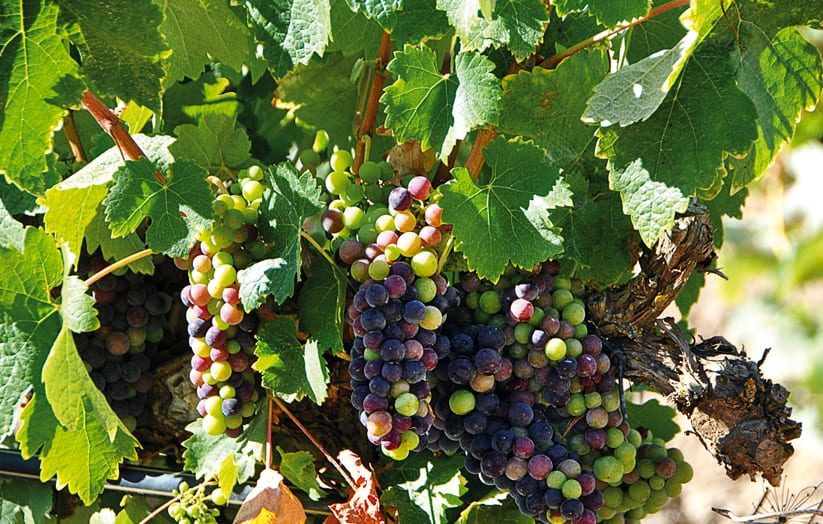
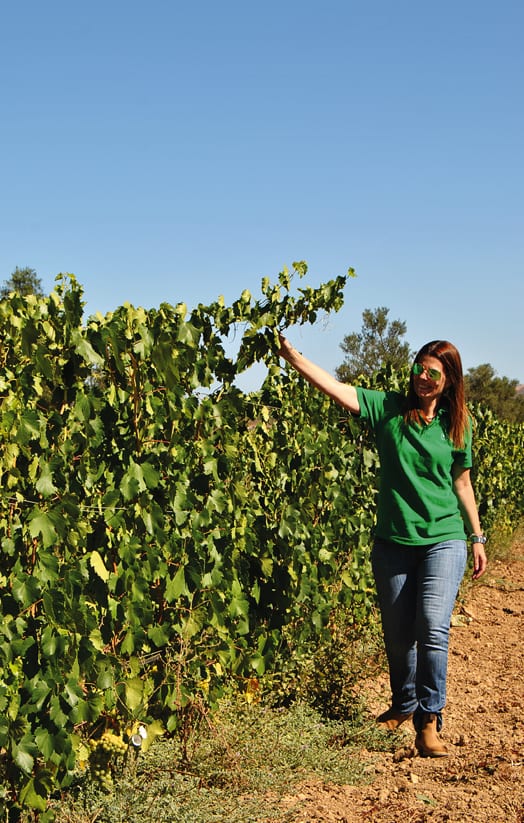
    Ana’s time is split, and she has to commute regularly between Lisbon and the Algarve, yet she is happier than ever. She doesn’t miss her job in the marketing department of a large company in Lisbon. “I loved my work, but I love this estate and wine production even more,” she says with a smile as we walk through the vines surrounded by cork oaks. In addition to Negra Mole, the Algarve’s most traditional grape variety, which was planted by her grandfather in the 1960s, Aragonez, Castelão and, more recently, Alvarinho, Antão Vaz, Arinto, Chardonnay, Sauvignon Blanc and Viognier also thrive in the vineyard. Apart from the Rosé and four red wines, two genuine and two Cuvées, soon they also want to produce white wine. Ana is very proud of the Barranco do Vale Rosé made from Negra Mole: “Fresh, floral and fruity, not too sweet, not too dry, with a long, elegant finish,” she says.

    The alchemist in charge is the oenologist João do Ó, from Adega Única (Unique Winery) in Lagoa. Ana is enthusiastic about him and the wine cooperative. “It is indeed unique, and João do Ó seems to be able to read our minds. Although he presses the wines from different wineries, they are all different and are exactly what we want,” she says. Ana herself attended a course with Mário Andrade, a renowned oenologist in the region, and learned a little bit of everything: from working in the vineyards to tasting. “Even if the oenologist can apparently read my mind, I should at least have the knowledge to communicate with him,” she explains with a wink. She describes the characteristics of her wines and talks about the terroir, which in São Bartolomeu de Messines is very different from that of the coast.
    The weather this year has been excellent for the vines, and Ana told us that they are protected by the surrounding hills, which give them a sort of microclimate. In 2018, the vineyard produced 25,000 bottles and if all goes well, 2019 should provide 30,000 to 35,000. Year on year, the volume is steadily increasing, and with plans for expansion, it’s only a matter of time before Herdade Barranco do Vale becomes a well-known name in Algarve wine production.
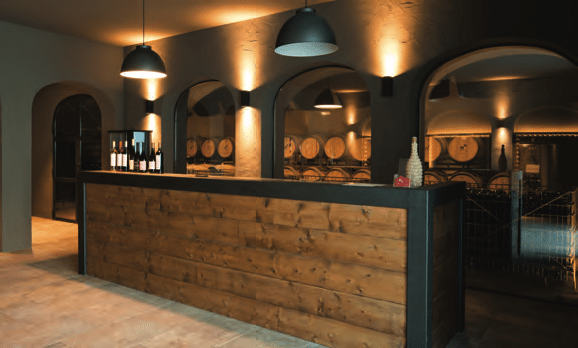
    The vineyard also has wine tasting in various locations. From the old winery where Ana’s grandfather used to press his grapes, into the orchards between the vines and at their little wine lounge outside, under the shade of the large tree featured on the label. Visitors are invited to try five wines for €10 and the tasting sessions can be booked by appointment only.

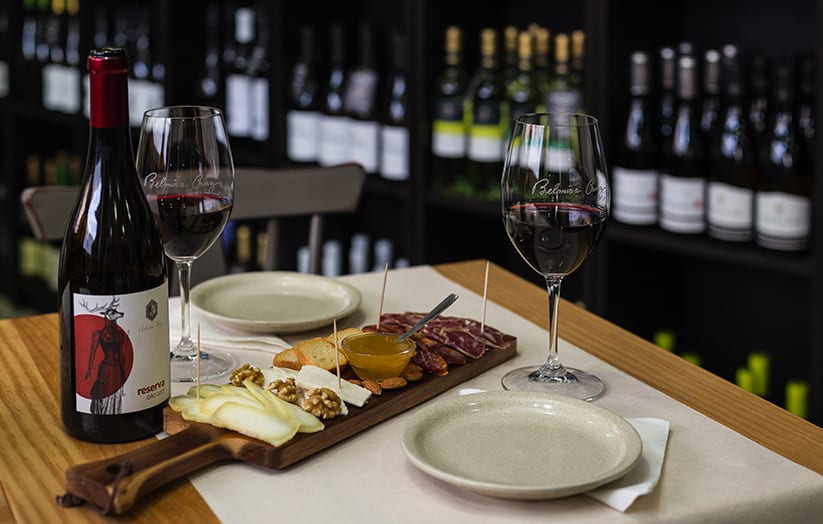
    By prior arrangement, Ana will prepare a cheese and ham board to enjoy along with the wines, and we would recommend asking for this as the wines are gastronomic and open up really well with food.
    Ana is passionate about her wines and welcomes visitors to tell the story of her family’s journey. Her grandfather’s former house has been renovated into the family’s residence and the tasting room. Further plans include reviving a wine tourism facility, accommodation, a wine cellar and possibly her grandfather’s old medronho distillery. Tour operators are starting to get in touch to bring groups, and the prospect of catering for weddings and events up to 100 people is something that Ana is beginning to look into now. The family welcomes volunteers to experience being a part of the harvesting team.
    “It’s a project for a lifetime that my son and hopefully his children will continue to lead in the future,” says the Lisbon woman, whose roots, like those of her vines, are deep in the Algarve.

    Text: Anabela Gaspar & Mia Wallace
  • FATACIL turns 40

    FATACIL turns 40

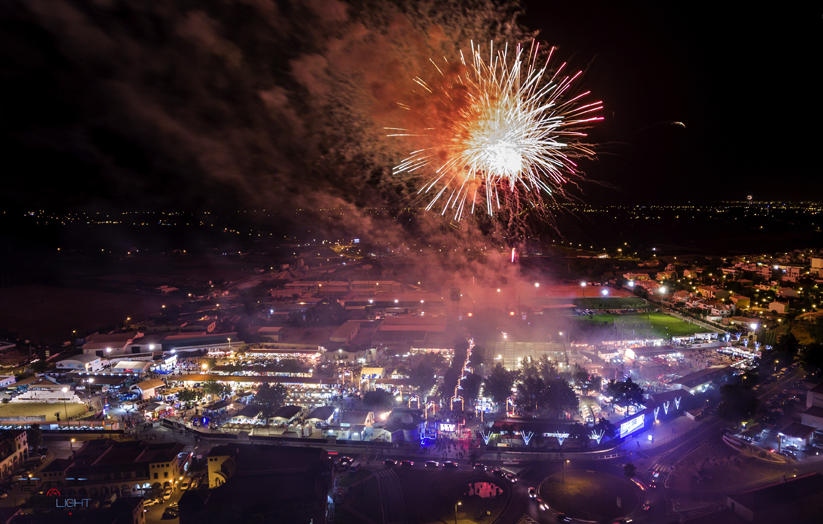
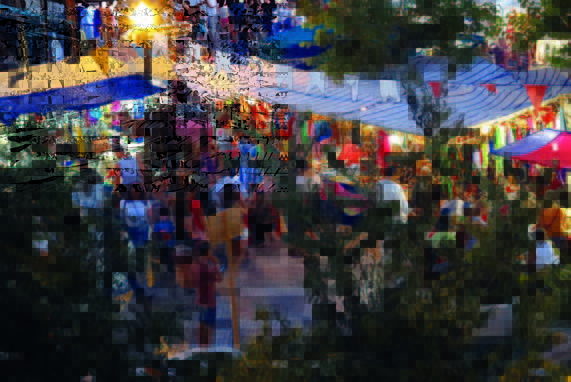
    The nationally acclaimed Fatacil Fair will take place between August 16 and 25 in its purpose-built venue in Lagoa, where people come from all over Portugal to enjoy an evening walking around the market stalls where local brands show and sell their products.

    There’s a big section dedicated to animals with live farm animals on display and beautiful horse shows every night. And then, there’s the music. Every evening a live band takes to the stage and performs a concert to entertain the visiting guests until around midnight. To celebrate the fair’s 40th anniversary, this year’s guests are some of Portugal’s most popular acts, with Xutos e Pontapés opening on the 16th, followed by Calema, Wet Bed Gang, João Pedro Pais, Matias Damásio, Quim Barreiros, Blaya, Jorge Palma, Mariza and closing with Richie Campbell. Open daily from 6pm to 1am with daily tickets costing €3.50 and under 12s free of charge, pop in and get a taste of Portugal.

    PHOTO Bruno Gonçalves
  • Welcome to SandCity

    Welcome to SandCity

    The new sand sculpture theme park opens in Lagoa.

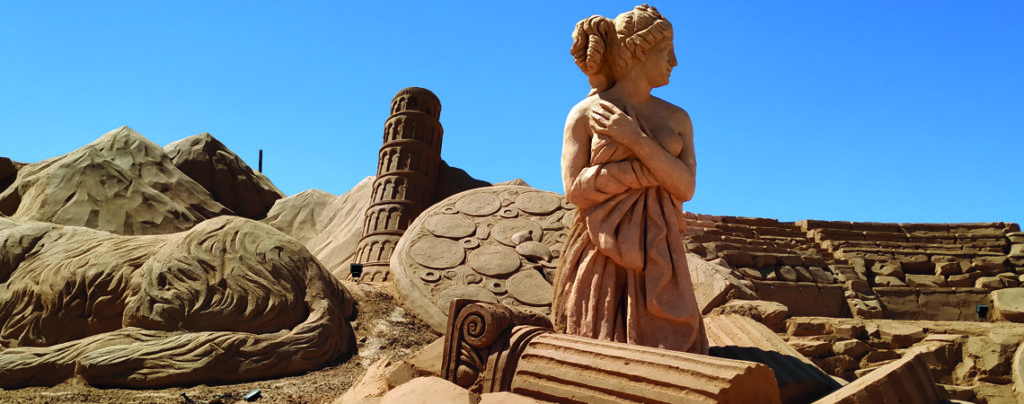
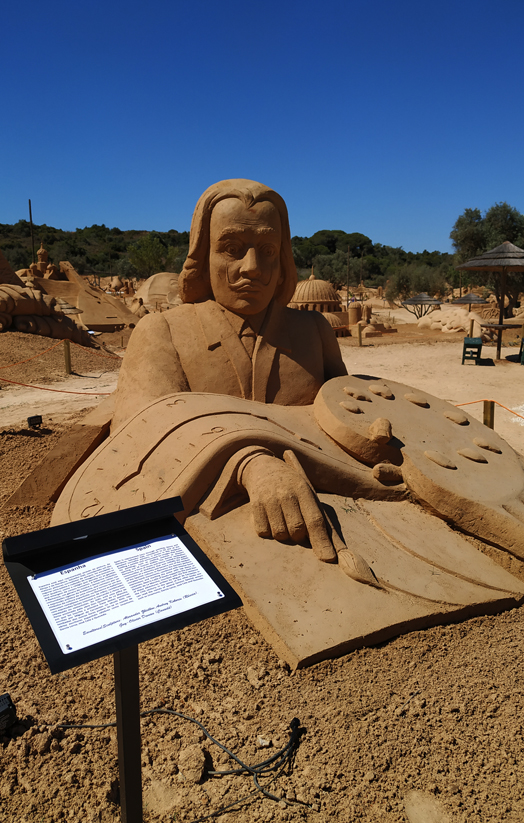
    SandCity opened its’ door in early June featuring the most extensive and most varied exhibition of sand sculptures ever made in Portugal. Replacing the previously named FIESA (International Festival of Sand Sculptures) in Algoz, SandCity is the new project of the company Prosandart, which over the past 17 years has produced what was considered to be the biggest exhibition of its kind around the world.

    There are 50,000 tonnes of golden sand sculpted under the theme “Around the World”, with sculptures representing the architecture, culture, fauna and flora of the five continents and imaginary scenes linked to travel and travellers. It’s a mixture of Phileas Fogg’s famous travels in Around the World in Eighty Days, by Jules Verne, with modern celebrities and historical figures all coming together.

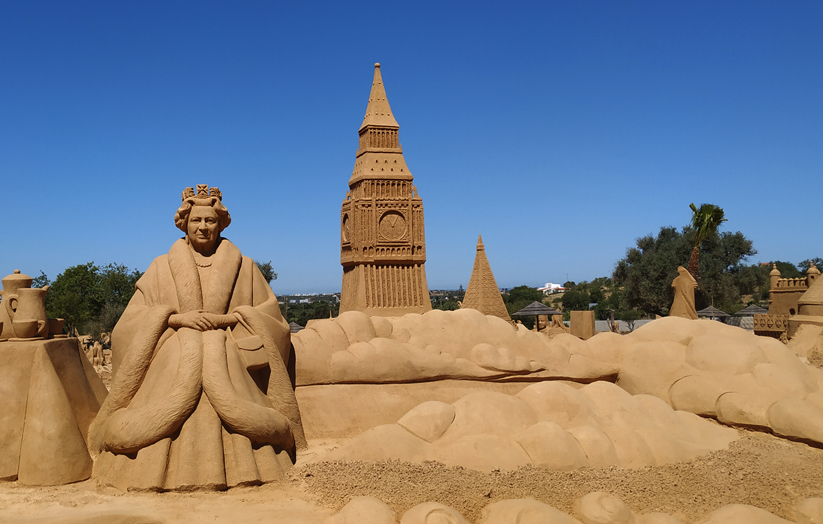
    This new “sand city” was carved by 57 artists from all over the world — from Europe, Turkey, Brazil and Canada to Australia — many of which are award-winning sand and ice sculptors and have already done remarkable work in these new forms of artistic expression. For three weeks, they shaped animals, monuments and people, creating around 80 different scenes. These include Cristiano Ronaldo next to Fernando Pessoa and the Tower of Belém, Pope Francis riding a Vespa, Nelson Mandela in South Africa, the Dalai Lama in Tibet and Queen Elizabeth II having tea next to Big Ben in a sculpture dedicated to England. And, of course, they could not possibly leave out Game of Thrones. There’s an area dedicated to the ocean, where visitors can see varied marine environments and an interpretation of the severe and worsening pollution problem in the oceans. Children also have a space for sculptures dedicated to them, with travel stories and various children’s imagination figures of many generations like the Little Prince, Dumbo, Paddington, Mowgli, Snow White and Spider-Man.

    The new sand sculpture themed park is situated between the main roundabout of Lagoa and the roundabout of Porches, directly opposite Nobel International School Algarve. Occupying an area of about six hectares, visitors can enjoy a snack or refreshment from the onsite restaurant with plenty of shade. Sand sculpture workshops and various artistic, cultural and environmental activities will be developed during the summer months and evolve over time.

    SandCity will be open to the public until November 30, from 10am to 10pm, and can be visited by day and night when the sculptures are illuminated by light sets. There’s nothing else like it and visitors can enjoy story cards at each scene to explain the history or idea behind it.

    www.sandcity.pt

    TEXT Mia Wallace
  • Natural wonders

    Natural wonders

    The unexpected beauty of the Algarve’s hidden wildlife.

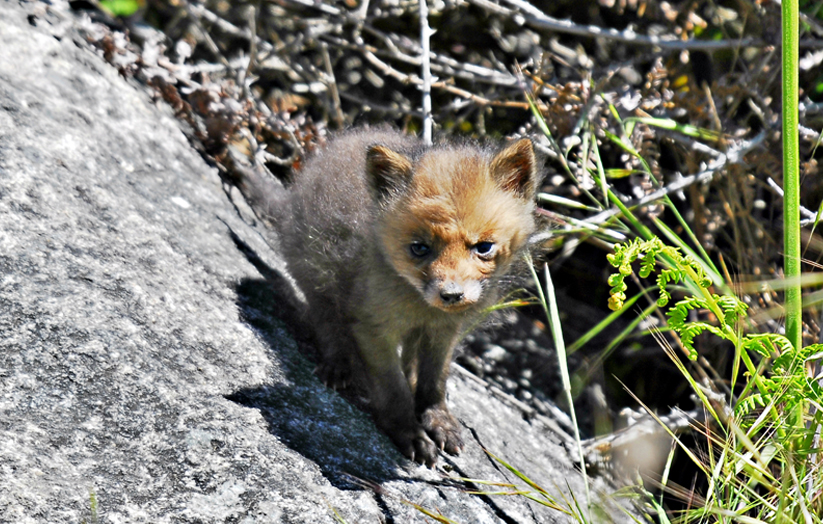
    Red Fox (Vulpes vulpes) cub – Foia, Monchique 01/05/2017

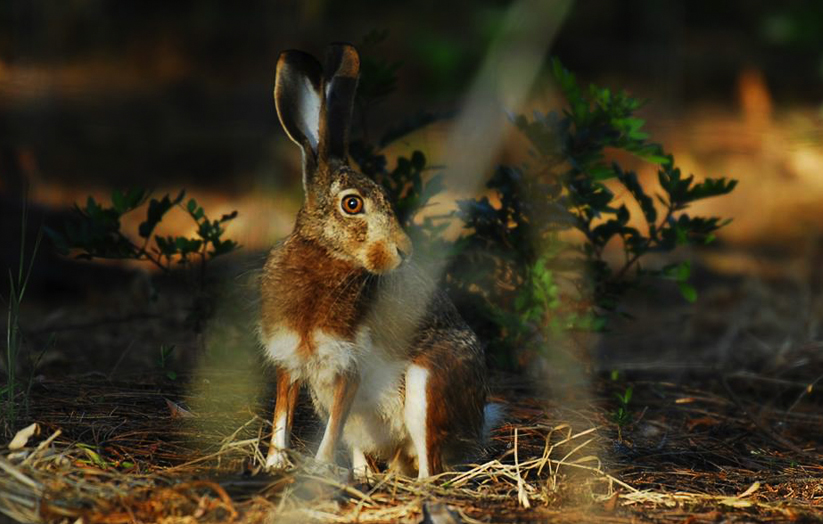
    They are not the most commonly spotted animals in the wild, but if you’re patient enough and enjoy birdwatching/photographing from a hide, you may be surprised by some truly amazing wildlife sightings. From red fox cubs exploring the Monchique hills to a black pig roaming freely around the countryside in Sagres, or even rarely seen rabbits hopping around just before sunrise in Beja (Alentejo), the list of animal species to be spotted — and photographed — is long.

    Hare (Lepus) – 29/05/2016

    This is exactly what has been happening to Carl Hawker, a nature enthusiast who spends most of his spare time pursuing his love of birdwatching and nature photography. For the past four years, Carl has travelled all over Portugal with his camera around his neck, capturing photos of hundreds of birds: “There are around 300 species of birds in Portugal. So far, I’ve been able to photograph 278, so I’m nearly there,” says Carl, who is also one of the leading voices in the campaign to protect Lagoa’s Alagoas Brancas wetland, a haven for many bird species.

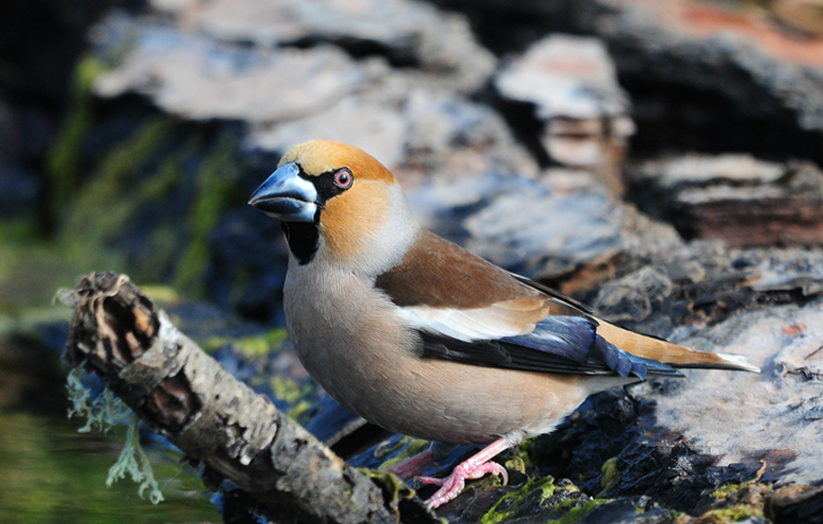
    Male hawfinch – Bico-grossudo (Coccothraustes coccothraustes), Sagres 04/05/2019

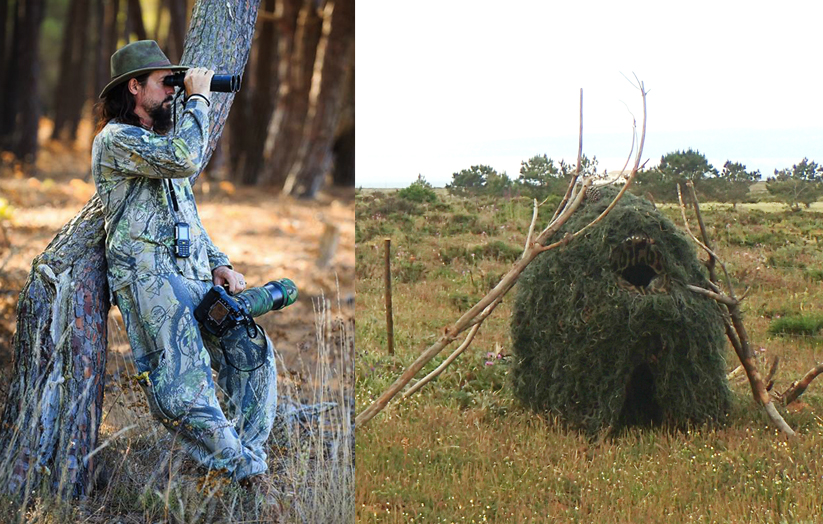
    His hobby took a more serious turn when he started using a photographic hide which he made himself to blend in with the surroundings when he is ‘out and about’ doing what he loves the most — photographing the region’s wildlife. His other passions include yoga and generally getting fit (he owns the Just Body gym in Lagoa and is known for his pursuit of the ‘healthy mind, healthy body’ way of life).

    Carl Hawker (photo: Vitor Correia) and his bird hide

    The hide helps him remain unnoticed while he snaps stunning photos of animals that are rarely spotted in the Algarve. But some animals aren’t so easily fooled. “The black pig that I photographed, which probably had escaped some farm, came sniffing around the hide. I had to throw some food out so that he’d go away, but he then came back for more!” Eventually, Carl was able to scare the pig away and take another photo for his collection. While his main goal continues to be photographing birds, the hide provides him with the perfect camouflage for other animals to unwittingly steal the spotlight. So, as well as loving and respecting nature, what else do you need if you want to start taking your own wildlife photos? “You’ll need a good lens,” Carl says. “To take good quality photos from a distance, you’ll need a lens of at least 400mm.” If you’re using a hide, however, a 200mm or 300mm lens can suffice.

    Black pig – Porco preto (Sus scrofa domesticus) Vale Santo, Vila do Bispo, Sagres 16/09/2017

    Plenty of patience is required, too. You’ll have to free up a lot of your time if you want to become serious about wildlife photography. “I usually spend around six hours inside my hide. I set up before the sun comes up so that the wildlife is not aware that I’m there.” Take plenty of water and, of course, some snacks as the wait could be long.

    Can Carl recommend an area for aspiring nature photographers to get started? “There’s a bird hide overlooking the lake at Quinta do Lago golf course which is open to anyone. There are dozens of bird species that people can photograph there.” Otherwise, a quick Google search on ‘Algarve birdwatching’ will take you to many good sites and guides on the subject.

    Header image: Ocellated lizard – Sardão (Timon lepidus), Herdade dos Grous, Beja 09/03/2019
    TEXT Michael Bruxo
    PHOTOS Carl Hawker
  • Take a walk on the wild side

    Take a walk on the wild side

    Algarve Selvagem explores the inner beauty of southern Portugal and beyond.

    Portugal is a stunningly beautiful and diverse country made up of a long, thin mainland and the archipelagos of the Azores and Madeira. The country’s staggering 1,794km of coastline provide a vast playground for aquatic adventures, and Inside Carvoeiro met with the owner’s of Algarve Selvagem, Paulo Martins and Sandra Silva, to discover some of the tours they have on offer.

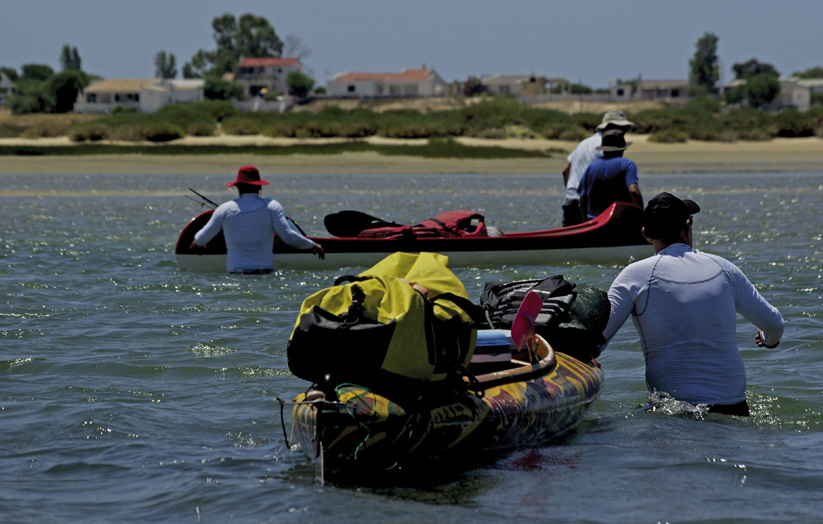
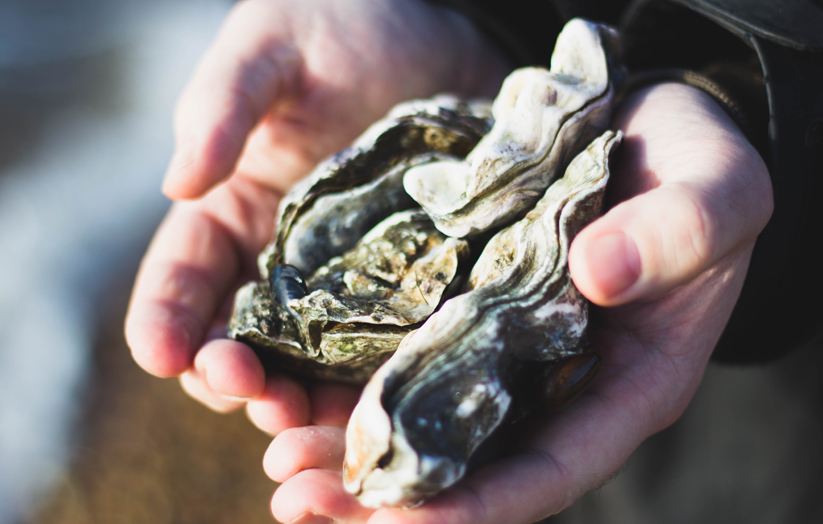
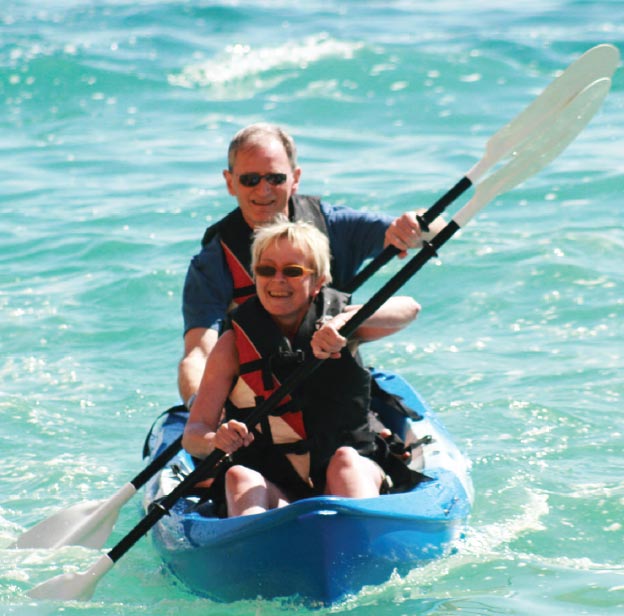
    The most local and accessible of the current tours is the Alvor Kayak and Oyster tour, consisting of morning activities in the coastal gardens of Alvor. Floating in our Kayak, we passed by an area where one of our expert guides asked us to get out and go wild oyster picking with them. They located them in no time and placed them in the bag for a snack later in the morning. Proceeding out by the sandbanks, we parked up and took a walk through the marshes before continuing into the canals of the Ria Formosa lagoon to visit the oyster and clam nurseries and learn about the secrets and work of the shellfish farmers who produce these delicacies that grace our tables. As we headed back to land, we stopped off for the incredible treat of our freshly picked oysters and a cool glass of Vinho Verde. This tour has an optional lunch included, which is served overlooking the Ria in one of Alvor’s most famous tascas.

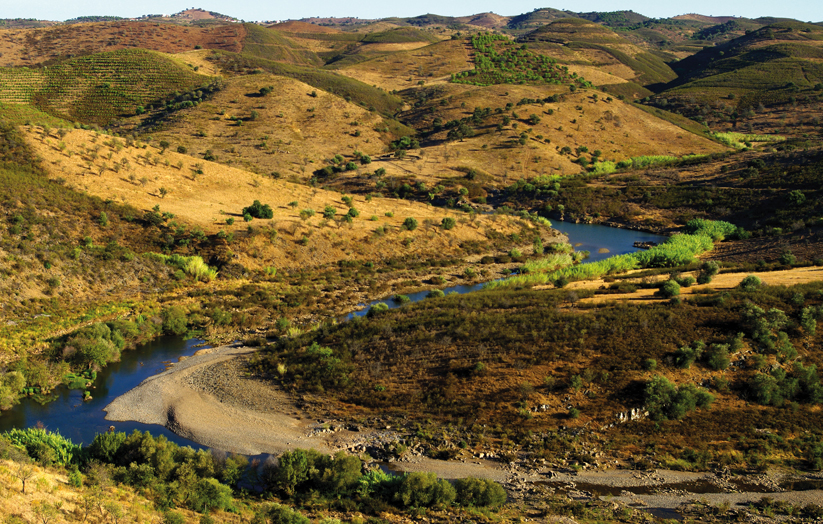
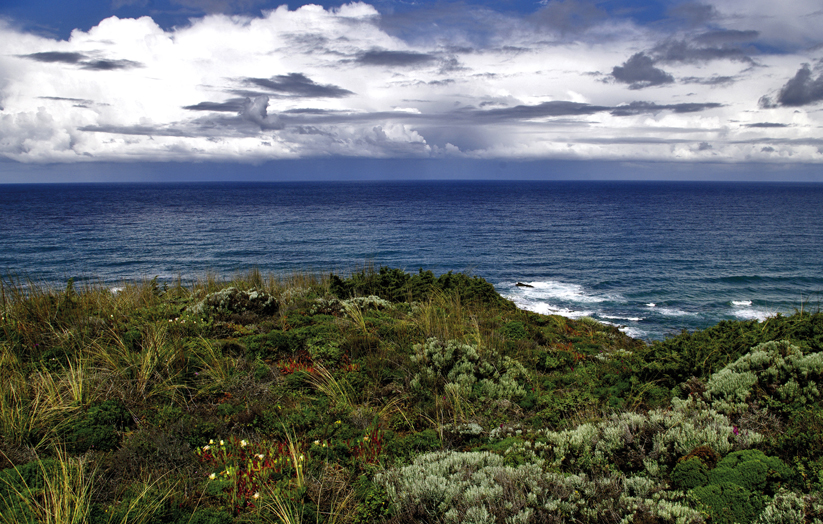
    Paulo Martins is a passionate sailor, surfer, diver, fisherman and all-round outdoorsman. He’s incredibly well-travelled and loves Portugal more and more as the years go on. His love for all-things nature has pushed him to create the tour company that he runs with partner Sandra Silva. They have taken a significant amount of time and consideration in planning their routes. Through the Algarve, you can enjoy tours such as the Seven Suspended Valleys, which begins at the Alfanzina lighthouse and extends to the Chapel of Nossa Senhora da Rocha. Between cliffs and valleys of wild vegetation and pines, deserted beaches and caves of fine white sand, green and blue seas and incredible rock formations, this tour shows some of the most beautiful landscapes of the Algarve coast. Then there’s the Hiking & Gastronomy tour on the Costa Vicentina, from Zambujeira do Mar to Odeceixe along the coastal tracks, passing the waterfalls in the woods, on the dune lines until arriving at Ponta Branca to be faced with the beautiful scenery of the beach and coast of Odeceixe. With everyone working up a good appetite, the tour finishes with a special lunch of traditional cuisine, cooked over a wood fire.

    Visitors can also walk through the Serra de Monchique and experience the freshness of its forests with its oaks, cork and chestnut trees among other species. The walk extends through the beautiful paths between the grove and terraces leading to waterfalls and the abandoned village of Barbelote. You can also spend a day in Kayak through one of the most beautiful and natural and wild beaches and the Algarve coast in the south Sagres area, from Martinhal beach, where the wild and pristine natural landscapes are fabulous. The gentle rowing allows you to enjoy the fantastic formations and colours, the wild and deserted beaches of green waters, as Costa Vicentina remains free of crowds and naturally beautiful.

    Not content with exploring the Algarve and with that wanderlust still burning inside him, Paulo has spent a few years exploring the tiny former Portuguese colony of Bijagós (the Bissagos Islands), wedged between Senegal and Guinea. The company now offers a one-week sailing expedition, the Biosphere Reserve and UNESCO Heritage sailing tour. Here participants can experience the enormous diversity of the Bijagós, enjoying a new beach every morning, surfing in the mangroves, visiting several tabancas (traditional villages), fishing in different places every day and exploring the archipelago’s biodiversity. According to Paulo, Bijagós is not a monetised society and so money is rarely used.

    This is a trip to the most remote places with authentic and wild islands where people can really get in touch with nature and enjoy a free way of life. Fish that are caught during the day will be served for dinner aboard or on one of the picnics on a secluded beach. Activities range from fishing, beach and forest walks, visiting canals, woods and savannahs, and the tabancas. Everything is programmed to ensure that you are always in contact with the exuberant nature of Bijagós. Travellers can observe turtles hatching in Poilão or take the optional excursion to watch the salt-water hippos on the island of Orango Grande. This tour is available from November 22 until May next year and guests will depart from the Port of Bissau, having been collected by the crew from the airport, with prices from €1,395 per person for a double cabin and single occupancy for an additional €470.

    Algarve Selvagem also has available a trip to the Azores. This year, the Açores Mágico tour is running between September 17-23, with a unique programme of hiking and leisure on one of the most beautiful islands of the Azores, São Miguel, which has been one of Paulo’s favourite paradises since the 1980s. The five days of trails through the wonderful island include visits to stunning waterfalls, hidden paths, unforgettable lagoons and places of unique beauty and historical importance. Rich gastronomy, natural spas and hot baths of thermal waters and much more are available besides the Hiking Programme. With prices starting at €595, guests can enjoy six days and five nights, accommodation with breakfast, lunch, activities, all transfers on the island, all the activities, excursions and trips with dinner and guides. All external trips do not include airfares.

    Facebook: algarvesselvagem

  • Soar above the ocean

    Soar above the ocean

    Fun-loving, activity fans will love this new addition to our coast.

    Seeing someone on a flyboard for the first time is quite a spectacular and mesmerising sight to behold. Out of nowhere, a big stream of water propels someone, usually vertically, from the sea, where they float mid-air and perform stunts. The seed is planted, and you’ll probably begin to wonder what it would feel like to shoot through the water, jump into the sky and dive through the waves.
    Local businessman and radical sports lover Beat Gobet fell in love with flyboarding the first time he tried it in 2015. There was a real shortage of places to flyboard in the Algarve at the time, so he bought his own equipment in 2016 and spent every available moment diving through the waves and perfecting his technique. The Swiss-born Carvoeiro restaurateur is never too far from the sea — whether he is in his restaurant Dom Carvoeiro that looks directly over Carvoeiro Bay or at his custom-made Flyboard Park in-between Praia Grande and Portimão Marina.

    Beat Gobet

    His love for the sport has seen him travel internationally and he even took part in the Flyboard World Championship in 2017, in France. As a novice, he loved the experience and was determined to return and make his mark the following year. At the 2018 championship, he made the qualifying and took 12th place overall, which was quite a feat. Being the only person from Portugal in the tournament, he was delighted with his result.

    Participants can either meet one of the team at their sales cabin on the Portimão Marina or even get picked up from the beach at Praia Grande if you prefer. Beat will welcome you on-board and go through a brief safety and technique chat before hooking you up to the equipment. With the flyboard securely attached to your ankles, you slide from the boat into the sea and head for the Flyboard Park, a restricted designated area reserved just for them.

    With gently controlled bursts of power coming from the attached Jet Ski, one of the trained crewmembers will begin to send the stream of water through the connecting pipe into the platform attached to your boots. Once they are happy that you can stay upright, they will then start to pump up the power. Although experienced users can jump up to 15 meters out of the water, this won’t happen on your first visit as the crew need to be assured that users safety is well taken care of.

    The sensation of floating above the sea and jumping through the waves is really something that you need to experience for yourself. Once people have grasped the basics, you can often see them skimming along the surface and swimming like a dolphin, it’s a magical feeling. It’s not so difficult to do, but people with a strong core generally take to it faster than others. Adrenaline junkies, skiers, surfers and overall sporty people are usually up and in the air within a minute, performing stunts and dives that look impossible to spectators.

    With prices ranging from €60 to around €200, depending on time, group size and frequency, many people get hooked and visit on multiple occasions during their holiday, so discounted rates can be applied for situations such as this. Groups of three, for example, would pay €150 for a full hour and take a couple of spectators along for the boat ride. Or for the more diehard amongst us, there’s a full day including transportation, food, drinks, flyboarding, jet-skiing, and aquatic fun at the Montargil Dam, in the Alentejo, where you have full access to all the toys.

    Flyboard Algarve operates all year round but is generally at the dam between November and March due to the winds.

    www.flyboardalgarve.com

    TEXT Mia Wallace
    PHOTOS Chloe Ophelia
  • Views to dine for

    Views to dine for

    Our favourite restaurants with sea views in the Carvoeiro area.

    With hundreds of restaurants in the local area, finding the right one can be quite a daunting task. There are many factors to consider — location, whether you’re in the mood for fish or meat and perhaps you’re celebrating a special occasion so you need somewhere a bit special. We took the task of locating some new and old restaurants that filled our criteria of offering a good selection of quality dishes with a beautiful view out to sea or over the Arade River.

    Borda do Cais

    You’ll find this lovely, traditionally decorated, tasca-style restaurant overlooking the estuary of Ferragudo. Surrounded by fishermen bringing in their haul and tending to their nets, this is a real taste of the Algarve. With two storeys offering fabulous views out towards Portimão, this is an incredible spot where you can enjoy fresh fish, straight from the chilled display with a bottle of wine from their excellent and diverse wine list while sitting back and savour the surroundings. The grill master is busy working with his large, charcoal BBQ just outside the restaurant, giving a new twist to the term open kitchen.

    The downstairs area has both inside and outside dining areas, but they’re divided only by retracting glass panels, so in the heat of the summer the two often become one. Upstairs, there’s a charming terrace that offers much sought-after, uninterrupted views and a little more privacy due to its elevation. The fish is mostly by the kilo, and you’ll be invited to have a look in the display area to select your lunch or dinner. They also have a good selection of quality meats, cataplanas and a few fixed-price fish dishes, including the famous local sardines.

    Open every day from 12pm to 10pm in July and August, this is an excellent place for a date or to hang out with friends.
    Facebook: bordadocais

    Casa do Rio

    With its stylish and luxurious décor and the magnificent backdrop of the ‘new’ Portimão bridge, this restaurant is tremendously grown-up compared to its neighbours and has a bit of a chic-city vibe to boot. The elegant dining room is host to the open kitchen where you can see the chefs preparing the Portuguese dishes right in front of you.

    Serving a selection of tapas-style dishes along with a good range of meat and fish main courses, the style here is a modern presentation using traditional recipes. Vegans are well catered for too, just ask the waiter when you arrive, and they will take care of dietary and lifestyle requests. The smaller dishes are good for sharing, and the main courses have some small sides included with the option of adding more from the menu. The wine and drinks list have a good variation that can be enjoyed either in the sophisticated dining room or outside on the riverfront terrace, where you can enjoy the summer breeze and attractive surroundings.

    Casa do Rio is open every day except Monday from 12.30pm to 10.30pm.
    Facebook: Casa do Rio – Mexilhoeira da Carregação

    O Algar

    A family-run restaurant tucked up on the cliff, overlooking Benagil beach, O Algar prides itself on its locally caught wild fish, seasonal selection of side dishes and homemade desserts. A firm fish lovers’ favourite for over a quarter-century, the inside of the restaurant is cosy yet spacious and is continuously being updated by the owners. This is where you’ll see the beautiful selection of fresh fish on display alongside the great variety of Portuguese wines on show.

    Outside, there’s a long terrace that follows the boundary walls and has individual tables spread out, looking out to sea. The setting is simple, yet inviting, and there are a few traditional Algarvean homes at the end, so you get a real local feeling sitting here, away from the crowds yet enjoying the best of the summer evenings.

    Open from Tuesday to Sunday for dinner only, O Algar is a wonderful, elevated little corner of the now world-famous Benagil.
    Tel: 282 358 951

    Pani

    This lovely restaurant is perched on the right side of the cliff, overlooking Carvoeiro beach. Built over three levels with the road entrance lounge that houses two small tables and the wine cellar, the main entrance is just a little further up the hill and around the back of the building with a beautiful carved wooden door frame that sets the mood for the interior.

    Carefully and tastefully designed to make the most of the panoramic views, with touches of Indian objets d’art strategically placed to add to the ambience and compliment the extensive menu and varied wine list. The dishes are a good size and subtly spiced and paired with a breathtaking view.

    Open every day from 11am until 11pm, there’s nowhere quite like it around.
    Tel: 282 185 525

    Club Nau

    If you’re looking for a chilled-out beach lounge, look no further than Club Nau on Praia Grande in Ferragudo. Sit back and enjoy the sound of the sea blended with a carefully crafted cocktail and enjoy the moment.
    The new menu features great big salads, pasta and risotto, vegetarian dishes, matured beef, cataplana, catch of the day and artisanal burgers to list a few items. Then there’s the fabulous sushi bar inside, where they use top-class ingredients to make some of the best sushi in the Algarve. The addition of a robata grill gives a great charcoal flavour to the menu, including scallops, kebabs and asparagus. The wine list has been well considered and offers a fabulous selection of beautiful, Portuguese wines, and the cocktail list is packed with summer favourites.

    Live music is a big part of the vibe here with a varied selection of artists. They also host the BeachFest on Praia Grande, where a stage is constructed on the beach in front of the cub for three days of live music between July 19-21.
    Open from 10am until 2am during summer, Club Nau is very popular among locals and gets very busy on Sundays, so reservations are highly recommended.
    www.club-nau.com

    Header image: Borda do Cais
    TEXT Mia Wallace
    PHOTOS (except Club Nau) ©Chloe Ophelia
  • Algarve Jazz meets the King

    Algarve Jazz meets the King

    The Algarve Jazz Orchestra presents its now iconic summer concert with synchronised fireworks performed in the magnificent setting of Praia do Carvoeiro square on August 15.

    This year the theme of the concert is “Burning Love” as a tribute to one of the world’s greatest artists: Elvis Presley. Expect to be blown away by the orchestra’s versions of some of the greatest hits by the iconic singer, such as Jailhouse Rock, Don’t Be Cruel, CC Rider, I Got a Woman, Always on My Mind, Suspicious Minds and many more. The concert will see more than 20 musicians on stage and is a real tribute to King of Rock & Roll. The event is free of charge and is sure to be a night to remember.

    PHOTOS Idalete Madeira
  • Austrian delights

    Austrian delights

    Traditional food, BBQs and plenty of beer this summer at Vila Vita Biergarten.

    Vila Vita Biergarten in Porches has announced special summer events to give visitors the opportunity to enjoy traditional Austrian food and summer barbecues with live music. Every day until July 15, the authentic Bavarian-style beer garden will be serving mouthwatering Austrian specialties at lunch and dinner such as veal consommé with pancake strips, Vienna-style goulasch with knödel (a boiled dumpling made with bread dough), cheese spätzle with cabbage and bacon salad and the traditional kaiserschmarrn pancakes. To help wash it all down, diners will be able to enjoy the exclusive Samichlaus beer. The beer garden will also be hosting summer barbecues every Friday until September 13, between 7pm and 10pm. Aside from the barbecued food and beer, there will also be live music by the Dixie Kings Jazz Band.

  • Holy sweetness

    Holy sweetness

    Lagoa will be hosting its popular sweets fair, Mostra do Doce Conventual, from July 17 to 21 at the town’s São José convent.

    The event gives visitors a chance to taste a variety of traditional sweets inspired by nuns’ century-old recipes. There will be jams, sweets, honey, cakes made with traditional Algarve ingredients such as almonds, figs and carobs, and a selection of delicious liqueurs as well as Monchique’s famous medronho firewater. The event also features shows and entertainment and cultural and musical performances each day at 10pm. Doors open at 7pm and admission is free.

  • Greener pastures

    Greener pastures

    Inside Carvoeiro visits Convent’Bio

    We have patiently been watching the renovation of the old convent, just off the EN125 road that runs through the centre of Lagoa, and wondered what it might be — another hotel or maybe a private residence? When the sign went up saying Convent’Bio, we were thrilled to find that there would be a working biological and entirely organic farm right on our doorstep.

    Our first visit was in early February, and we were pleasantly surprised that we recognised the face of the operation, Fátima Baiona, who is an Agronomic Engineer that we met a few years ago as one of the founders of the organic farm Pé de Salsa in Monchique. Following the recent fires in Monchique and business complications, Fátima was approached by Engineer Pina, of the local agricultural and gardening company, Sani Pina, to create something at the old convent site in Lagoa. The initial idea was vague, and Fátima insisted that the site must be fully organic, as that is where her passion and beliefs lie. She even told Pina, “This can only work on my terms”. The pair agreed and bounced ideas back and forth to create a plan of action. The first stage of operation took place in January 2018 and the land has been turned and is producing a bounty of beautiful crops on some of the 3.5-hectare plot around the main building.

    The building itself has been very sympathetically restored and has a lovely feeling to it, it’s almost as if the new parts have always been there. There’s a central café and shop area as you go through the courtyard packed with a fabulous array of produce from the farm and carefully selected suppliers whom they deal with directly. “We are trying to bring back the roots and heritage of the old Algarve. Our crops include asparagus, pumpkin, courgette, aubergine, fennel, cabbage, carrots, green beans, beetroot, spinach and herbs,” Fátima said. “We are just beginning to plant 2ha of avocados on another site, near Sesmarias, and will soon plant rows of fruit trees along the borders of our property.”

    In the shop, you will find a great selection of vegan, biological and organic products such as many varieties of pasta, pâtés, juices, honey, sauces and pulses, which you might expect, but they also carry ranges of home and personal cleaning products, suntan lotions, and even reusable nappies and sanitary products that are free from harmful chemicals. There’s a frozen section that ensures the freshness and quality of the meats on sale along with a refrigerated area for more perishable items. The central focus is the vibrant vegetables that come in all shapes and sizes. There will be an area where you can buy a vast selection of both wet and dry products by weight, which is a fantastic idea, especially for people who live alone or only want a small quantity of something. Teas, spices, flowers, beans, grains and pulses will also be available in this section along with oils and honey.

    By the entrance, you’ll find the café that is open every day (except Sunday), from 10am to 6pm in the winter and until 7pm in the summer. There’s a cosy seating area inside where you can enjoy a healthy meal or snack from the freshly prepared seasonal menu and a delicious selection of homemade cakes, including vegan options. Everything is organic, and they don’t use refined sugars. On the drinks front, they have BioCoffee by Delta, fresh juices, organic wines and teas to choose from that can be enjoyed either inside or outside on the courtyard. On Saturdays, they plan to host brunch by the wood stove, where they will be baking homemade loaves of bread and pizzas, and you can enjoy the view out over the crops. This has been inspired by the local tradition of breaking hot bread (tibornas), which reminds Fátima of sitting around the table with her grandmother at the weekend. Convent’Bio will also introduce workshops soon and the owners want to get children involved by introducing them to the fields, where they can understand the importance of organic farming principles and where their food comes from. The top floor of the main building houses a large room that has been earmarked for show cooking, workshops, yoga and other complementary activities. They also plan to host concerts, exhibitions and the occasional gallery.

    Convent’Bio work with small producers and they have a field-to-plate ethos, taking pride in knowing the source of everything in the shop. Prior to opening, they were already in full swing with their home-delivery service — you can shop online for all of their lines and either have it delivered straight to your door in the Algarve for only €3.95 or collect your box from one of the many pick-up points from Tavira to Aljezur.


    The project has been a labour of love, and you can tell there has been considerable attention to detail in the renovation. There is a feeling of tranquillity and calmness as soon as you enter the grounds and as you approach the building, you might be surprised to find that a lot of it is under one year old as it looks as if it’s been there forever.
    It’s a great collaboration between two unlikely business partners that is bound to set the ball rolling as far as organic farming in the area is concerned.

    www.conventbio.com

    Text Mia Wallace
    Photos Daniel James Clarke

  • Fine Wines & Food Fair returns

    Fine Wines & Food Fair returns

    The event on every foodie’s calendar is back at Vila Vita Parc

    Held every two years, the Fine Wines & Food Fair, currently the biggest gastronomic event in the Algarve, will return to Vila Vita Parc, in Porches, from May 5 to 13 for the fourth time.

    Living up to its name,  the fair pairs the finest culinary creations from renowned national and international chefs with the best wines and producers, all under the same roof. For visitors, this is a chance to come face to face with countless chefs and oenologists during the event, which will end, as is now tradition, with the extraordinary Kitchen Party. This year, the party will be on May 11, for over 500 people, with chefs invited from all over the world along with international wine producers.

    The event begins on May 5 with a fun lunch — a traditional Portuguese assado (barbecue) — at Herdade dos Grous, in the Alentejo (owned by the same group as Vila Vita Parc) and, on May 7, Atlântico restaurant will host the Vila Vita All-Stars Night.

    This year’s list of guest chefs includes Ljubomir Stanisic, from 100 Maneiras, in Lisbon; Rui Prado, from Herdade dos Grous restaurant; Jan Hartwig (Atelier, Munich, three stars); Christian Bau (Victor’s Fine Dining, Perl, three stars); Jacob Jan Boerma (De Leest, Vaassen, three stars); Konstantin Filippou (Konstantin Filippou, Austria, two stars); Óscar Velasco (Santceloni, Spain, one star); Karlheinz Hauser (Seven Seas, Hamburg, two stars); Nigel Haworth (Northcote, Lancashire, one star); Fritz Helfesrieder (Gasthof zum Storchen, Bad Bellingen, one star); Roberto Carturan (Ristorante Alfredo, Cologne, one star); Thomas Allan (The Modern, New York, two stars); Dieter Koschina  (Vila Joya, Albufeira, two stars), João Oliveira (Vista, Portimão, one star), and Daniele Perillo (Gusto by Heinz Beck, Almancil, one star).

    As for wine producers and sommeliers, the fair will welcome Luís Duarte representing the home teams of Herdade dos Grous and Quinta do Valbom; the master sommelier from Dinner by Heston Blumenthal, Stefan Neumann; Vincent Gerardin, who produces his namesake wines in Burgundy, France; Sandra Tavares da Silva from Quinta da Chocapalha; and Hans Reisetbauer from the Austrian distillery bearing his last name; among many other well-known names in the wine world.

    Over the years, the event has received more than 60 award-winning chefs from the Michelin Guide, The World’s 50 Best Restaurants by San Pellegrino, the Gault et Millau Guide and the survey lists from Opinionated About Dining, as well as the best oenologists and high-end suppliers of wine, spirits, champagnes, cocktails and cigars.

    www.finewinesfoodfair.com

    Text: Ana Tavares
    Photos: VASCO CÉLIO / STILLS

  • Escaping the Laboratory

    Escaping the Laboratory

    Escape One bring us the first of their mystery rooms

    Some people will not have heard of an escape room and must think that it’s some strange kind of pastime, but in fact, it’s actually a great way to spend an hour as a group of friends or family. It’s essentially a team game, and, ideally, you should bring different types of people with you — someone with strong problem-solving skills, someone who is good with mathematical equations, someone who is curious and, most importantly, people that you can spend an hour with in a room.

    Based in Portimão, Escape One opened last July and The Laboratory is the first room from a husband-and-wife team who already have their second room, Atlantis, in production and should be open for Easter. There’s also a third and slightly more spooky Zombie room on the drawing board for later this year. We drove up to the door where we were welcomed by owner Katie Bodsworth, and escorted to the room. Like most escape rooms, it’s located in a shop lot, and you could easily miss it unless you knew it was there. Katie’s husband and gamesmaster David was waiting for us, and soon the induction meeting began. Those who have never been will welcome Katie’s insight on the purpose of this activity: “In an escape room, it’s all about achievement — getting rewarded for the work you do and nothing if you don’t do anything! It’s about technique and patience,” she explains. “You have to organise yourselves, go through all the steps and wait a bit to see your results. The focus in an escape game is on teamwork, real communication between real people.”

    Escape rooms can often seem like perfectly straightforward spaces at first glance, but they hide many secrets. “It might be an office, an apartment entryway, a prison cell, a bank vault or even a rabbit hole. It will depend on the story you’re starring in,” Katie says. “But wait, there’s something not quite right about that drawer — it has a false bottom! There’s a folded piece of paper in it! It has what looks like a cypher written on it, and in the corner, a page reference? You look around. There are some books on a shelf…” And so the story begins to unravel. Hidden in the room are puzzles, enigmas, mysteries and secrets the group must put together and solve “until you have played out your script. The aim is to escape the room within the hour”.

    After our briefing, we entered our room and the door locked behind us. Game on. Each room is unique, and you can only solve it once, which is why we won’t give too much away. All we’ll say is that the theme here is of a laboratory and we got out just in time with a few hints from the games-masters who were watching our every move on the cameras.

    The Laboratory is a mystery room suitable for all ages since it’s not dark or scary. There are chairs for people with reduced mobility to sit while exercising their brains and it’s wheelchair accessible.

    According to the founders of Escape One, the demographics in the escape-rooms business is mostly comprised of millennials, but that didn’t stop them: “We are among the oldest games-masters that we have come across. Maybe that’s why  our room is frequently hailed to be a bit different,” says Katie. “Escape rooms have arrived, and they’re here to stay. But what makes them so addictive? Why do we want to be locked in a room?” she wonders. “Watching all the lovely millennials (and occasionally their parents) playing our escape room has made me realise why escaping in any way is so important in our culture today.”

    Katie also points out how different people react in different ways to the challenges: “If I’ve learned anything from watching people play escape games, it’s that everyone sees the world differently. Age and experience make you focus on different things, and I guess this shows through in your work.” Katie and David are very enthusiastic and their energy is contagious. They don’t limit the hints but don’t give them out haphazardly either. Everyone gets out, and getting out within the hour gives you a great sense of achievement.

    We were all very excitable when we got out of the room, taking great pleasure in patting each other on the back and can’t wait for the next rooms to open!

    www.escapeonealgarve.com

    Text: Mia Wallace
    Photos: byophelia.com

  • Award-winning hikes

    Award-winning hikes

    Lagoa’s Seven Hanging Valleys Trail is best hike in Europe

    Lagoa’s Seven Hanging Valleys Trail (Sete Vales Suspensos) has been named the Best Hiking Destination in Europe by online portal European Best Destinations.

    The ranking, based on votes from over 28,000 travellers from 153 countries, is led by Lagoa’s stunning coastal trail, which is described as “breathtaking, unforgettable and one of the most beautiful hikes in Europe”. The portal went on to list some of the trail’s best features: “This little corner of paradise brings together exceptional sites such as the Chapel of Senhora da Rocha, the beach of Cova Redonda and the beach of Carvoeiro, elected most beautiful beach in Europe, the fishing town of Ferragudo, the lighthouse of Alfanzina, the cliffs from Marinha, the Albandeira beach and the caves of Benagil.”

    The 5.7km trail links Praia de Vale Centeanes to Praia da Marinha and gives hikers a chance to walk along paths and beaches that are “very clean” and “observe the fauna and flora, beautiful birds and even little rabbits”, added the site. The Algarve’s tourism chief João Fernandes has said: “It is an honour to see the region’s natural beauty acknowledged by thousands of tourists from all over the world”. Hikers can begin their walk at the chapel Senhora da Rocha in Porches and end in Carvoeiro or, for occasional walkers, begin at Praia da Marinha and end in Carvoeiro.

    Text: Michael Bruxo

  • Portimão is the 2019 European City of Sport

    Portimão is the 2019 European City of Sport

    Sports fans can enjoy a vast array of events this year

     Windsurfing World Championships©Rafal Czepulkowski

    Our neighbouring city Portimão has found its place on the map and will be hosting hundreds of sporting events to honour their European City of Sport status. Earlier this year, the opening event attracted over 4,000 people along with several of Portugal’s most iconic athletes, including former Olympic champion Rosa Mota, who is one of the ambassadors of the project; world champion motorcyclist Miguel Praia; and windsurfer Miguel Martinho. Paralympic athlete Jorge Pina, sailors Luís Brito and Beatriz Gago, surfers Frederico Magalhães, Francisco Canelas, João Bracourt and Gustavo Gouveia and taekwondo fighter Rafaela Araújo were also in attendance.

    One of the highlights of the event was the “biggest video-mapping event that has ever been held in Portugal”. For those who might not know, video mapping is a way of projecting imagery onto a surface, making virtually any object into a screen. “We want the people of Portimão to see regular physical activity as a benefit to their health and wellbeing so that they will be happier in the town they live in,” said mayoress, Isilda Gomes. “Portimão is synonymous with sports and has every chance to be so even more.”

    This year, Portimão will be hosting over 600 sports event and welcoming around 40,000 athletes. The first big event took place on February 20, when the town hosted a stage of the ‘Volta ao Algarve’ cycling competition, which also passed through Carvoeiro on February 22. Between April 20 and May 5, the town will be hosting the Windsurfing World Championships, and the European Ultimate Frisbee Championship will be held from May 6 to 11 around the same time as the Open de Portugal golf tournament (May 9-12) at Morgado. A few days later, the town will host the UIM F1H2O World Championship, the world’s most important powerboat competition (May 17-19).

    There are free sporting events all year long in the Algarve, where fun runs are becoming popular, and the local councils are creating recreational parks for people to go outside and get fit. You will find a good example of one of these in Lagoa, where they have constructed a running track around an exercise course beside the roundabout, next to Jumbo supermarket. The Fontes in Estômbar also has an open-air fitness course that is open and free to use all year long.

    For more information visit www.cm-portimao.pt

    Text Michael Bruxo

  • More fun in the sun

    More fun in the sun

    Zoomarine has new attractions and improved facilities

    Way back in 1991, Portuguese-Argentinean businessman, Pedro Lavia, opened the doors to his dream park, Zoomarine Algarve. Anyone who went when it opened probably wouldn’t recognise it now as it keeps evolving and growing into its 26-hectare plot, making it the biggest theme park of its kind in Portugal. The team was the first to introduce dolphins to the country and, in 2002, opened the first marine species rehabilitation centre in Portugal, Porto d’Abrigo.

    Things were going swimmingly but Pedro wanted to keep on going and the park expanded in 2008 to include the very popular water park. Around six years later, the big push came, and Zoomarine Beach was born, complete with a wave pool, sandy beach area with loungers and surrounding slides to keep everyone entertained. In 2015 the top-rated pirate show called Pirate Bay came into the fold. Here, revellers can witness extraordinary acrobatic performances played out by the sword-wielding, eye-patch wearing pirates who act out a new show every year, full of hazardous stunts and merriment.

    In 2017 the children’s play area, Treasure Island, was added to the ever-growing list of attractions and the most recent addition was being completed as we went to print, Jurassic River. Inspired by the popular Jurassic Park movie franchise, this attraction spans over half a kilometre of small rapids and bending  rivers with fantastic scenery along the way, including dense jungle-like banks, a crashed plane and the jeep from the original film and lots of surprises around each corner. Massive dinosaurs are placed around the edge of the river and up in the surrounding hills. Expertly designed, you can’t really see too far ahead as you twist your way through the trail, which adds to the excitement when you suddenly find yourself under a waterfall or faced with a dinosaur who has a few tricks up its sleeve. With some of the dinosaurs moving and spraying water and others strategically placed as props, the element of surprise is maintained throughout.

    The sea lion and seal enclosure is undergoing a massive facelift and will incorporate elements from these animals’ habitat, enriching the experience. Spectators will be able to witness the mammals in their natural environment around the time of the shows.

    Visitors can take to the sky on the giant wheel near the middle of the park, and enjoy a bird’s eye view over all of the attractions. There’s also 4D cinema, a lovely carousel, a small but fast roller coaster, a swinging pirate ship, the very cute Zoomarine express and many water-themed attractions with three swimming pools and the famous beach. The park also offers fun and educational shows, such as the birds of prey and tropical birds performances, where the handlers explain a bit about each of the species and show them to the crowd.

    But, of course, Zoomarine is most famous for their dolphins. The park offers stunning dolphin shows where spectators can sit in the auditorium and enjoy the trainers explaining a bit about these beautiful creatures before the stars swim in and take their position. Lasting around 30 minutes, they are quite a spectacle with lots of interaction and solo performances. Zoomarine is also one of only two places in Europe where you can actually swim with these wonderful mammals. You can have a small interaction with a dolphin and a photoshoot, a full-on interactive swimming experience that sees people travelling from all over the world to participate, or even an underwater scuba experience.

    The team at Zoomarine are animal lovers, marine biologists and conservationists and, as such, they take great pride in making sure that all of the mammals, reptiles and birds are cared for and treated with respect.  The development of the park and team is built around education, and they welcome school groups, nearly every day, to tell them about the various species that live there. Currently, 50% of the park is water-themed, which is great to battle the midday heat of the Algarve’s sunny weather.

    On the food front, Zoomarine has the traditional selection of water-park treats, such as burgers and hotdogs, along with healthier options like the eco food outlet, Captain’s Kitchen — where even the utensils are environmentally friendly — or the main food hall, where visitors can have a healthy salad and local dishes. A little insider tip to avoid the crowds — go on the weekend. It may sound strange, but it’s true. Historically, the park is busier during the week. You can also buy a second-day pass for only €8 to visit the park again within 10 days, just in case you couldn’t squeeze everything in.

    Text: Mia Wallace

    Header image: Zoomarine

    Photos: byophelia.com

  • Urban regeneration

    Urban regeneration

    The future looks bright for Atrium Lagoa

    As we all know, the Algarve is a trendy destination for foreign visitors and investors, and thankfully, Dutch entrepreneur Erik de Vlieger fell in love with the region of Lagoa many years ago. Better known for his partnership with Carvoeiro Clube, where alongside his Swiss friend and business partner, Andreas Stocker, they have been rejuvenating many older properties along the coast and even developing two new resorts in Carvoeiro, Quinta do Algarvio and Vale de Milho Village.
    We met with Erik to talk about his new project Atrium Lagoa that will see the long-abandoned shell of a building, at the entrance to the town, transformed into a bright, light, stylish housing solution. “I love urban developments, they get my creativity flowing and that’s actually where I started out, back in Amsterdam,” Erik told us.
    With 52 apartments ranging from one to five bedrooms, including three palatial penthouses with air conditioning and semi-equipped kitchens and prices initially starting at €105,000, it’s no surprise that at the time of going to print, they had already sold 25% of the apartments and only have units from €120,000 to €230,000 in stock at this early, pre-build stage. There will also be 71 underground car parking spaces over two levels, 54 storage rooms along with 13 retail areas, that are, again, selling straight off plan.

    Centrally located both for local transport links via the nearby bus station and straight onto the national roads, connecting residents to everywhere else in Algarve, Lisbon, Seville and more in no time at all. The design of Atrium Lagoa will blend efficiency and an urban-chic style, incorporating energy-efficient solutions, innovative outdoor features with more than 2,100sqm of gardens, balconies and terraces that benefit from its south-facing exposure. The prices are very attractive for both local and foreign residents and are refreshingly realistic and accessible in the buoyant property bubble that Portugal has been experiencing for the past couple of years. That’s what urban regeneration should be all about, not pushing out young and local people but instead offering them a place to build their lives.
    “This is a new approach to urban life, with open living spaces and natural light. Atrium Lagoa should be ready to welcome its first residents in early 2020,” Erik told us. “The project is expected to start being built late 2018. The estimated period will vary between 18 and 24 months and the total area will cover almost 12,000sqm.”
    He joked that this abandoned structure had “irritated” him for the past 12 years; whenever he drove past it, he thought it was like an ugly set of front teeth in an otherwise pretty smile. Finally, enough was enough, and he went to Banco Montepio in 2010 to see how much they wanted for it. Unfortunately, because the construction company was crippled by the recession, the asking price was very high. In 2017, however, the bank came to him and the deal was done. A self-described urban developer, the Dutch entrepreneur says he has never worked so hard in his life: “The bureaucracy in Portugal really is out of this world.”
    Similarly to the works he is carrying out on the waterfront area in Portimão, he wants Atrium to set an example, leave a mark and boost the local economy. He believes that it’s important to employ local people, and has therefore chosen local company Simão & Martins to complete the construction of the building. Bearing in mind that the existing structure had been abandoned for many years, it was vitally important to run a variety of quality and safety inspections to ensure that everything meets the current standards, and the result came back positive.
    Architect João Carriço, of Studio Arte, in Portimão, was responsible for the design, which was based on sustainability, simplicity, transparency and open spaces. “On the top floor, the apartments will have very generous dimensions,” he said. “The five-bedroom units will have about 250sqm, the four-bedrooms around 200sqm and the three-bedrooms close to 190sqm.” According to the architect, the underground parking spaces will feature electric chargers for cars of the future, and the roof will be created as an urban garden and a lounge area, with an accessible terrace with a play area, accessible by all residents. “The entire building has been designed with the intention of promoting fluid circulation between spaces.”

    Arnold Aarsen, head of Studio Arte, stated that the entire Atrium Lagoa is characterised by a concept that involves elements of nature and natural light: “We realise that Portuguese homes have many blinds or curtains to protect them from the sun, but we like a more transparent building so we will use different solutions.” The goal, he says, is for residents to always have natural light in their home, and the balcony will be integrated into the living room. The rear area will also boast a mini-garden, with water, natural light and a vertical wall with plants. “We’ve also studied the position of the air conditioner and machinery to try and keep the building as clean as possible,” he explains. “Within this complex, we will have a communal laundry room as well as a condominium room and a small gym.”

    Considering the issue of sustainability, care will be taken to install solar panels and a heat pump along with both thermal and acoustic elements being addressed. Perforated panels will be placed to break up the facade of the building with some ornamental notes, but at the same time creating filters that allow the balconies to have more shadows. The main focus here is light, sustainability and quality. Studio Arte believes these combinations will ultimately lead to a healthy living environment.
    The project promises to give Lagoa her smile back, and Erik de Vlieger is excited about the future: “I see a bright future in the Algarve, I’m happy here. However, as an urban developer, my speciality is to improve the look of cities, even though I’m a businessman and not a philanthropist,” he joked.

    Text Mia Wallace

  • Five stars for Monte Santo

    Five stars for Monte Santo

    Europe’s Most Romantic Resort of 2018 has a fresh new look

    When Monte Santo Resort opened its doors in August 2008, there was a lot of curiosity about the all-suite development behind the gates. Sprawling over a vast eight hectares of manicured and now mature gardens, the salmon-coloured collection of 113 suites and luxury townhouses have set themselves into the landscape and look as if they’ve always been there. In early 2018, the resort’s restaurant and spa underwent some exciting new changes.
    The newly refurbished restaurant has been thoughtfully named Aroma, a word conveniently used in several languages with the same meaning, fitting for a resort with an international clientele. The à la carte menu has been put together by executive chef Miguel Lourenço and features a selection of emotive dishes that tell a story of his culinary journey and highlight his Alentejo roots and a big sprinkle of inspiration from the other key figures in the Monte Santo team, including a dish that was developed from a special codfish dish by the general manager’s mother. Then there’s Ms Goretti, who handpicks the herbs from the herb gardens spread throughout the grounds.

    Chef Miguel Lourenço has a selection of à la carte menus that change twice annually along with some special wine pairing options. You can even opt for a romantic dinner by the love bridge in the centre of the main lagoon area of the central pool, or if you’re staying at the resort, he will personally provide private catering in the suites. Chef Miguel told us that he has been at the resort from since early 2018 and aims to use “local influences and ingredients to create dishes that guests will find interesting and ultimately, delicious”.
    Aroma has been decorated in a light, yet warm colour scheme and features a large glass terrace that overlooks the beautiful main pool area. It’s a great venue for outside guests and is suitable for couples, families or groups of friends alike.
    In addition to the new restaurant, Monte Santo Resort also added a stand-alone spa called Alma, in July. The new spa is located next to the sauna and indoor pool area, which is perfect for those looking to enjoy a thoroughly relaxing morning or afternoon. The décor is calming, soothing and elegant. They have a great variety of Thalgo skin-care products that are inspired by the ancient practices of using marine and natural elements and extracting their therapeutic benefits.

    The spa menu has all the usual massages, nail treatments, cosmetic, therapeutic and holist treatments along with excellent little touches like the hot-water pillows used in the 90-minute Spirit of Polynesia ritual that will leave you feeling relaxed, pampered, soft and overall very zen. The space is small and therefore each spa visitor gets the full attention of the therapist, making it a memorable experience.
    As for accommodation, the suites are all fitted out with a fully equipped kitchen, full-sized lounge, bathrooms and bedrooms with either a private balcony or a large terrace, depending on the location. You’ll find an ample supply of Rituals toiletries in the bathroom and some charming, romantic gestures on arrival.
    Monte Santo was named Europe’s Most Romantic Resort for the fourth consecutive year at the 2018 World Travel Awards, and although it is a family resort, they do go out of their way to make sure that special occasions are given extra attention. The new management took over earlier in 2018 and have been pushing full steam ahead with programmes to attract and please old and new guests alike. Chef Miguel is always working on new menus and theme nights to keep Aroma working all year.

    You will be surprised by the prices, and outside guests are welcome, so you could easily add it to your Carvoeiro restaurant list. The facilities are primarily for the residents of the resort although they are putting together some great packages for winter, where anyone can use the spa and enjoy a healthy meal. Events like their wonderful New Year’s Eve parties are quite spectacular with a fully catered, themed party including fireworks, live acts, a DJ set and buffet. This year’s theme is the mystical Alice in Wonderland. Be prepared for some special guests and magical memories.
    The resort is just outside Carvoeiro, and also has a lounge bar that offers a selection of 30 original cocktails. With the glazed terrace, it’s a fantastic spot to enjoy a meal during the winter months when you’ll have a five-star experience without breaking the bank.

    www.montesantoalgarve.com

    Text Mia Wallace

  • Local rider qualifies for Special Olympics

    Local rider qualifies for Special Olympics

    Lucélia Glória will be representing Portugal in Abu Dhabi in 2019

    When Quinta do Paraíso Alto (QPA) Riding Centre and the Bensafrim non-profit association Riding for the Disabled Barlavento began hosting therapeutic riding sessions for local disabled people in 2007, little did they know that this charitable adventure would eventually take them to the Special Olympics World Games. But the credit for such an incredible accomplishment goes not only to both entities, but especially to Lucélia Glória, the 30-year old rider from NECI (Núcleo de Educação da Criança Inadaptada) who will be representing Portugal in Abu Dhabi in March 2019.
    Lucélia is one of the 20 riders from local associations, such as NECI, Casa de Santo Amaro and Algoz school, who enjoy the opportunity to take part in therapeutic horse riding sessions three times a week at the QPA premises in Bensafrim. Initially afraid of horses when she began riding eight years ago, Lucélia has blossomed into a confident rider who went on to conquer the gold medal in the national championships in her level in 2017 and 2018. Now, along with QPA’s manager and instructor Sue Wilson and physiotherapist Ângela Mesquita, she was chosen by the Portuguese Olympic Committee to represent Portugal. “We’ve been training with the national team once a month in Setúbal and we’re also hoping to do a estágio [traineeship] in the Algarve with them in February before we go to Abu Dhabi,” said Sue Wilson. Asked about her expectations for the competition, she is adamant: “In our eyes, she will always do well. It’s hard work, but it’s so worth it to make that little bit of difference in their lives.”

    Text Ana Tavares

  • Retreat in style

    Retreat in style

    Casa Xyza is a contemporary wellness retreat in Ferragudo

    Driving along the coastal road from Carvoeiro to Ferragudo, you could easily drive past the beautiful Casa Xyza, perched on the right side of the road, just before the entrance to Praia Grande beach. Architecturally, the façade is hugely sympathetic to the neighbouring properties and seaside location, and from the street view, you wouldn’t really imagine what is contained within.

    Casa Xyza’s atmosphere exudes calmness, and the layout lends itself well to social living while offering privacy within each of the spacious five en-suite bedrooms. The rehabilitation of the original villa was finished in September 2017, under the watchful eye of the conceptual design team of Studio Arte, in Portimão, who have incorporated their signature style with lots of flowing, natural light and use of local materials. The interior design has been a labour of love for the Dutch owners and Georgia de Vlieger, of Georgia Interior Design, with all items throughout the villa having been handpicked to create perfect harmony between the modern, new image of the building and the surrounding, natural elements.

    “This is a modern house, boasting incredible sea views and Ibiza-style elegance with sandy colours and neutral tones throughout,” said Marta Nobre, from Pipol Agency. “It’s equipped with a spacious living and dining area, a modern open kitchen and five bedrooms, which can accommodate a maximum of 10 guests, and offers many places to relax and enjoy or sunbathe to energise your body and mind.”
    This autumn, Casa Xyza hosted its first Wellness Retreat from November 5-9. The event combined many forms of relaxation and wellness activities while guests soaked up the ambience and enjoyed the tranquil connection with the surrounding nature and soothing sensation of being by the sea. The array of activities had something for all tastes, ranging from Yoga classes to aromatherapy massages, deep meditation with Tibetan bowls or long walks on the beach, which is only a couple of minutes from the house.

    According to Marta, the goal of this villa is simple: “We are a small, service-orientated and flexible retreat and guests are welcome to book extra Yoga classes or massages and enjoy the sunset with a glass or two of local, biological wines.”
    For accommodation during the retreat, there are various options within the en-suite rooms, double rooms with two single beds (€800) and double rooms with a double bed are €1,000 for solo occupancy or €700 for double occupancy. Guests can opt for a return airport transfer for an additional €100.
    Throughout the year, you can rent Casa Xyza independently and enjoy this contemporary, seaside villa with friends or family, as it is a child-friendly space that lends itself well to groups.

    www.casaxyza.com

    Photos: Luís da Cruz

  • Cooking up a storm

    Cooking up a storm

    Inside Carvoeiro visits some of the new restaurants in town

    This year has seen the biggest rush of new openings in Carvoeiro for as long as we can remember, and it’s not just restaurants – global brand Ale Hop also opened a shop in the old newsagents on Rua do Barranco, along with a couple of new wine shops. With around 100 restaurants in and around Carvoeiro, you would think that there were enough already, but it would appear that there’s indeed plenty of room for some more.


    The Wine House

    The latest wine shop in town is The Wine House, a tasting store and tapas bar just across the road from the taxi rank. This is a bit special because they mostly stock wines that you will not find in most other places. Belmira Cruz is the house wine and is named after the owners’ beloved grandmother, with varieties from all over Portugal and free international delivery. Just above The Wine House, there’s a new day spa called Prana Bali Spa where you’ll find the very talented masseuse Made, from Bali.
    Upstairs from The Wine House and Força Portugal, opposite the taxi rank, O Albatroz opened earlier this year and has seen its following growing steadily. A spacious restaurant with an outside terrace, it’s sympathetically decorated with a decent menu featuring fresh fish and meat dishes. Some of the dishes have a touch of Brazilian inspiration, courtesy of the owners, and there’s a good selection of wines along with a fully stocked bar.


    Chef’s Kitchen
    Photo: Dave Sheldrake

    Chef ’s Kitchen has probably made the biggest splash as the building underwent a total renovation and now has an extra roof terrace and cocktail lounge. It’s unrecognisable with ultra cool décor, fixtures and fittings. Set over three floors, the large, open-plan layout is filled with cool touches. The menu is very different from the other restaurants in the area, with items like Lebanese meatballs, a Buddha Bowl, veal and foie gras, Wagyu Beef Burgers and a Tomahawk. There’s a kids menu and a yummy dessert section for those with a sweet tooth. As for drinks, they serve local Dos Santos craft beer and special Super Bock lagers on draft, a comprehensive but compact wine list and of course a good choice of gins from the big, central bar.
    Joining them is Pani. Looking to the main Carvoeiro beach, you’ll see a road going up to the left, along the cliff side; walk up this road for about 100m and you’ll find this stunning Indian restaurant on the right-hand side that boasts unparalleled views out to the ocean. The décor is beautiful with some ornate Indian pieces, and the furnishings are top quality. The menu features all the classics along with a few of house specials, and strong wine list with some unusual listings. With a small terrace and dining area featuring a wine cellar, a bar and lovely dining room on the first floor and a superb roof terrace, they’ve kept their prices in the mid-range and will no doubt become a very popular establishment.


    Gum Tree
    Photo: Dave Sheldrake

    Hidden behind Brady’s bar on Estrada do Farol, Gum Tree is an absolute oasis with beautiful terraces, a mature garden, indoor and outdoor dining areas, bars and a swimming pool. Serving a vast range of Portuguese and international dishes in generous quantities and their unique house wine, Belmira Cruz, Gumtree is already attracting lots of returning customers. Previously called ‘Flamingo’, a local businessman with years of experience in the industry took on this big, old and somewhat previously unloved restaurant, and it paid off. At the time of going to press, they were serving dinner only, but next year they will be looking at changing their schedule.
    Previously in Senhora da Rocha, Gurkha Kitchen has taken just two months to hit the top spot on Tripadvisor since opening and has brought Nepalese food to Carvoeiro. The chef has a somewhat regal background, having worked as a chef for royalty in the past, and son Robin is out front taking care of the day-to-day running of things. Subtle spices and fragrant herbs are blended together to create a selection of unique and delicious dishes. You’ll find them on the road between O Cantinho and The Wolf. The interior dining room has lovely little touches from Nepal, and there’s a spacious terrace at road level.


    Taste

    Not new, but worth a mention, Taste have moved to the end of Rua do Barranco, on the left. They’ve totally refurbished a building that was empty for as long as we can remember. The bright new interior has lovely touches, there’s a little lounge downstairs for pre/post dinner drinks and a large terrace in the garden. The menu is as good as ever, and they have a fulltime mixologist who serves great cocktails.
    Bon appétit!

  • Art with history

    Art with history

    Porches Pottery celebrates 50th anniversary.

    There is a long tradition of pottery in the Algarve. The Phoenicians, the Romans and the Moors, all of whom occupied the region at one point, were masters of the earthenware. There are ceramics shops all over southern Portugal, but the small village of Porches is considered the Algarve’s pottery centre. It’s precisely here that you can find one of the most renowned potteries in the region, which is featured in every tourist guide: Olaria Algarve, better known as Porches Pottery.
    But the village wasn’t always the ‘capital’ of this ancient art. Even though master potters went to Porches to find the clay they required, their factories were in Lagoa. The first pottery shop in Porches was only founded in 1968, by Irishman Patrick Swift, who, as the president of the local parish council says, “put Porches on the map”.


    Patrick Swift

    Swift discovered the region in the 1960s and fell in love with it, moving here with his wife and two daughters. At the time, the art of pottery was in decline. Intricate earthenware was being replaced by plastic and metal jars, which were mass-produced and cheap. Swift decided he wanted to save this traditional art and, coincidentally, met artist Lima de Freitas, who shared his passions for regional pottery. Together they researched the peoples who had inhabited the area in ancient times and had left their mark in pottery; they visited ceramics museums in Portugal and abroad, including the Victoria and Albert Museum, in London, which houses the largest collection of decorative arts and design in the world. The pair eventually opted to use the majolica technique, an ancient practice which is believed to have originated in Persia and was introduced in Europe by the Moors. It consists of coating the clay pieces in a tin-based glaze, after the first baking, which covers them in an opaque, white base onto which the decoration is applied after another glaze and second baking. This way, the colours and glaze melt together and form a shiny coat, which is also waterproof and resistant. The motifs created by Swift and Freitas were also inspired in ancient civilisations: the long-tailed bird features in Phoenician mythology; the hound dog and the hare were popular with the Moors; the tree of life, flanked by two birds with open wings, hails from Iberia; and fish were a recurring motif used during the Roman occupation. Both the majolica technique and these themes are still today used at Olaria Algarve, and the regional flora also serves as inspiration in many plates, platters, bowls, serving bowls and countless other pieces produced by the renowned shop.

    Each piece is decorated by hand – a practice that Swift’s daughters, Stella and Juliet, were committed to preserving when they took over their father’s work after his passing, in the early 1980s. Swift started them off in the family business as teenagers, and they went on to study Art and Art History. Today, they are in charge of not only the management of the company but also its artistic direction. The sisters develop new motifs and create their own pieces, mainly panels and azulejos (hand-painted tiles). Around two years ago, Brian Fortune, Juliet’s son, also joined the team.
    For Juliet and Stella, “it’s an honour to continue [their] father’s work”. And the number of clients that come through the shop’s doors, looking around in wonder at the works in display and whispering as if they were in a museum, proves they have done just that. Hand-painted ceramics lovers also have the chance to observe as the pair brings motifs to life with light but assertive brushes.
    The ‘Marias’ have also been a part of the Porches Pottery team for many years: Maria Rosa has been there for 42 years; Maria do Carmo and Maria Manuela for 36; Maria Eulália for 28; and Maria José for 27. Two to three times a week, guests can also find in the shop artisan Ana Boto, who has been working there since its creation.
    The shop’s building, which Patrick Swift had built in the style of a traditional Algarve home, is a piece of art in and of itself, decorated with stunning embossments and walls covered in traditional hand-painted tiles. Adjoining the shop, the family added a small café, Bar Bacchus. The intimate space, with a cosy log fire lit during winter, is named for the Roman god of wine, whose story is depicted across the tiles designed by Swift, which cover the walls.

    To celebrate the Pottery’s 50th anniversary, the family is publishing a book on the history of Olaria Algarve, in September. Paul Bond pens the work but Brian, Swift’s grandson, handled the research. According to him, Paul, who lives in Bath, England, is “a historian and writer with an interest in the history of art and design and a keen collector of Porches Pottery”, which made for the ideal partnership.

    “The book features a thoroughly researched and detailed biography of the pottery from its inception to the present day, supported by interviews with all the present painters and many past staff members, collectors, and friends of the pottery,” Brian explains. “It’s illustrated throughout with archival photography, and an extensive collection of remarkable pots and tiles from the last 50 years, that includes numerous previously unseen pieces from private collections. Furthermore, it also includes sections which cover the Porches Pottery style, an in-depth discussion of the azulejos that have been produced at the pottery, as well as information for collectors.” According to Swift’s grandson, the book is “an essential resource for anyone interested, not only in Porches Pottery, but in the contemporary history of Portuguese ceramic art and tiles”.
    There is also an exhibition in the works at Convento de S. José in Lagoa, which will feature ceramic pieces and paintings by Patrick Swift, who studied at the National College of Art in Dublin and was a renowned figure in the artistic world during the 1950s in England and Ireland.

    Text & photos: Anabela Gaspar

  • Hikes with a view

    Hikes with a view

    New coastal hiking trail highlights Lagoa’s stunning cliffs and caves.

    A new coastal walking route named ‘Caminho dos Promontórios’ (headlands trail) will take hikers on a journey to discover the beautiful cliffs and caves of Lagoa. The trail was inaugurated earlier this summer, on the same day the local council unveiled the revamp of the borough’s iconic Torre da Lapa tower. The seven-kilometre route links Praia do Molhe, in Ferragudo, to Praia do Paraíso, in Carvoeiro, and cost €118,500 to set up, aiming to be a new calling card for the borough. “Nature tourism in the Algarve is one of the sectors that has grown the most in recent years,” the local council said in a statement sent to the press.
    The route includes two other trails that already existed: ‘Caminho do Algarve’, located near Carvoeiro and accessible to people with physical disabilities; and ‘Percurso dos 7 Vales Suspensos’, located between Praia de Vale Centeanes and Praia da Marinha. Altogether, it covers around half of the municipality’s coastal territory, the council says.

    Several information panels have been set up along the trails, which will help walkers “interpret the coastal environment”. There are also several signs warning walkers of dangerous areas as well as a number of resting areas. Apart from the beautiful natural scenery, Lagoa’s iconic Torre da Lapa is another major attraction after being restored to its former glory following a €51,000 revamp.
    The tower, believed to be around 400 years old, is considered one of the most important and historic structures in Lagoa and served as a key lookout. It was used to send smoke signals and warn populations about pirates and other looters and is one of the few left standing in the Algarve. The tower’s revamp was celebrated with the burial of a “time capsule” containing a number of mementos as well as a pen drive that contains a documentary about the works. The plan is for future generations to open the time capsule in 100 years and witness the work that was accomplished.
    Algarve culture boss Alexandra Gonçalves described the renovation of the tower as a great achievement for the region and praised the local council for investing in it.

    Text: Michael Bruxo
    Photos: CML

  • Summer vibes

    Summer vibes

    Your must-have guide to live music, DJ parties and festivals during July and August

    We love to party in Portugal, and although Carvoeiro might look like a sleepy seaside resort during the day, you’ll be spoiled for choice for things to do when the sun goes down.
    There’s live music every night on the main square in front of the beach with the Arte Viva Duo on Mondays and DJ João Sousa on Tuesdays; Ricardo Sousa is on rotation with a new, not yet confirmed artist on Wednesdays; DJ Mike or Alexandre Ramos on Thursdays; Jorge Rodrigues on Fridays; DJ Alexandre Ramos or Mike on Saturday nights and Ricardo Sousa on Sundays. These performances are sponsored by the restaurants on the main square and will take place for most of the summer period with a brief break between August 11t and 15, when the Sons do Atlântico World Music Festival will take place with a spectacular fireworks show on the 15th to mark the end of the festival.
    During Summer, Tivoli Carvoeiro’s Sky Bar will host a fantastic programme of weekly themed parties and Sunsets, with live music performances and exclusive signature cocktails.
    Kicking off the festivities, July 20 welcomes the ‘70s, ‘80s & ‘90s Weekend, while the 27th and 28th will be a Fado & Chill Out Weekend; August 1 and 2 will see the New York House Weekend while The Best of Brazil Weekend will take place on August 10 and 11. The next weekend (17 & 18) hosts the Classic Ibiza Lounge Weekend, followed by the London Funk Time Weekend on 24 and 25, while the weekend of August 31 and September 1 will see the Paris Chic Weekend.
    Many bars host live music evenings, with Brady’s Irish Bar playing live music six days a week (Tuesday to Sunday) and the Round-Up Saloon alternating between live music and karaoke on a nightly basis. Relative newcomers Kula Bar have the South Kick Acoustic duo every Tuesday night. Manoel’s Jazz Club Carvoeiro, in Monte Carvoeiro, has live music with Tuniko Goulart every Thursday from 10pm. The Jailhouse has live music every night and an open mic session in the beer garden on Sundays from 4pm, while the five-star Monte Santo Resort has DJ Sunset sessions on Fridays with Kevin Sky. Restaurant Taste has a live singer every Thursday night and Pimenta Preta has ambient music every Wednesday with Carlos Pontes.


    Sons do Atlântico (Photo by CMLagoa)

    Slightly further afield you’ll find the very popular beach bar and live music venue, Club Nau on Praia Grande beach in Ferragudo. The Magic Sundays are host to a variety of cover bands who perform to a packed house every Sunday, all year, however, in the summer it’s a non-stop party venue with live music every night from the middle of July when their fabulous summer festival takes place. On the July 15, the free festival opens with Ben and the Pirates, 5EX Band and DJ Alex, followed by The Presidents, Os Compotas and The Flashback Brothers on the 16th and closing with Daddy Jack, Le Plante Mutante and Zé Black. Check their Facebook page for full listings as they have music on practically every night in July and August. The artists are on rotation and include DJ Just, Mad Cats, Martin the Flying Dutchman, Jig Saw Gig, The Links, Stereo Jumble, Nicole Silver Band and BB Kween.
    Rei das Praias will be hosting regular sunset/DJ parties throughout the summer on Fridays from 8pm until late, with special themed nights like Rose Caneiros Sunset, dress code pink, on July 13, a vintage Hendricks party on August 3, White Party on the 10th and the green, Mojito party on the 17th to mention a few.
    Just over the bridge into Portimão Marina, you’ll find NoSoloÁgua. It’s an absolute haven for club music lovers and beach festival fans. They have live music on in the pool bar and too many parties to mention in the beach bar. Check out their Facebook page to keep up to date with their jam-packed schedule.


    NoSoloÁgua

    The Lota Cool Market, in Portimão, takes place between the July 18 and 22. This is a five-day event packed with entertainment, art, design, gourmet and street food just at the entrance to Portimão’s riverbank, from the old bridge.


    Lota Cool Market (Photo by Município de Portimão)

    The Portimão Sardine Festival from August 1-5 is the most famous sardine festival in the Algarve. The once vibrant fishing port used to make its living from these tasty and nutritious fish and celebrates them with a traditional festival of music and entertainment and lots of char-grilled sardines of course.


    Portimão Sardine Festival (Photo by Município de Portimão)

    Between August 17 and 18, visit the Summer Sound Portimão. This Electro-Music Festival at NosoloÁgua is a day and night event over two days featuring a selection of international DJs, in collaboration with MTV Summer Sessions.
    There are also plenty of events for the little ones. Kids of all ages love a pirate, and there are two chances to get into costume and interact with some pirates in the seaside resorts of Senhora da Rocha, between July 20 and 24, and in Alvor between August 24 and 28. Bring your eyepatch along and practice your ‘Ahoy, matey’ call during Pirate Week.
    And last, but certainly not least, the Silves Medieval Fair, which usually takes place in mid-August. Probably the biggest and most popular summer festival in the region, this event should definitely be on your list of things to do in the Algarve. The old Moorish capital of the region turns off its lights, hits the switch on all things neon, dresses in medieval garb and celebrates the town’s rich history in a lively and fun fair.
    The choice of venues and acts is getting better and better every year, and with a variety ranging from acoustic guitar to full-on electronic music beach festivals, the Algarve is the place to be this summer!

    Text: Mia Wallace

  • A family affair

    A family affair

    Inside visits the beautiful Quinta Dos Santos

    Originally from Cape Town, the dos Santos family spent many summer holidays in the Algarve. Three years ago, they began putting into action their plan of living in Portugal, on a farm surrounded by a vineyard, and are now the proud owners of their stunning creation – Quinta Dos Santos, in Sesmarias,
    Carvoeiro. The family consists of mother and father Ann and Eugene, two sons, Kyle and Greg, and Kyle’s wife Elayna. Every member of the family is vitally important to the smooth running of their farm, which currently boasts a craft beer brewery, vineyard, tapas bar, art & interiors gallery and accommodation. Eugene’s father was born in Lisbon, and the family feel a strong connection with Portugal.
    The property is understated and beautifully designed, without feeling ‘designed’. It looks as if it has been there forever, which is quite an achievement. Ann is a keen designer and a firm believer in good and bad energies. Having used the feng shui principles in all of her design projects, she consulted with a professional, classical feng shui consultant from Lisbon – Sofia Lobo Cera, who assisted her with the project from the very beginning. As a family-owned business serving the community, it was essential to Ann that the work environment be a harmonious, creative, positive and a profitable space.

    As you enter the gated driveway, you are immediately struck by a feeling of peace and tranquillity, with the vast yet unobtrusive whitewashed buildings making a perfect border for the growing vines in the vineyard. It is immaculate but feels lived-in at the same time, and the attention to detail is excellent. Entering the main building, there is a welcoming courtyard that acts as the heart of the area, with the Craft Brewery that is encased in glass, enabling visitors to sit and watch head brewer Greg hard at work on his next batch of
    Dos Santos Craft Beer, while enjoying a refreshing beer or glass of wine under the sun. To the right, there is the A Esquina (the corner) tapas bar, which has a privileged corner setting, allowing guests to enjoy the lovely view out over the vineyard and garden. Across from A Esquina is the gallery space, O Espaço, where local artists will be invited to display and sell their works alongside an array of delicious, local gourmet and luxury items that will be for sale.
    The plot is eight hectares in total, with three hectares of vines and one of olive trees. The wines that will be produced, on site, will be from the Portuguese varietals: Tinto Negra Mole, Touriga Nacional and Sousão reds, along with Malvasia Fina, Arinto, Verdelho, Esgana Cão whites. With an expected 35,000 litres of wine from the fully matured crop, the boutique vineyard should be well stocked in no time. As newbies to the winemaking world, guidance from their Agricultural Engineer/Viticulturist, Aníbal Neto, and Oenologist Mário Andrade was crucial and they have entrusted them in all stages from the preparation and planting of the land and vineyards to the selection and creation of the wines themselves. Both Mário and Aníbal came highly recommended, and after tasting the initial results of the maiden production, the family was pleased with their selection.

    The wines from Quinta dos Santos will have two different labels: Escolhido and Tesouro. “As we only planted in May of last year and we do not yet have grapes available for production, a decision was made to establish the brand Escolhido, which means ‘chosen’ in Portuguese,” explained Elayna. “Wines from the local region of the Algarve which were not produced on our farm but that we have personally selected due to their high quality will fall under this label.”
    The family is also “producing wine in the Adega Cooperativa de Lagoa from selected grapes harvested from local vineyards under the Escolhido wine label. This will change once our winery is operational. Once we are able to harvest the grapes from our vineyard, we will produce the wine for Tesouro, which means ‘treasure’ in Portuguese”, she revealed. “Tesouro’s production will begin in approximately two years’ time.”
    The brewery takes pride of place, on the left side of the courtyard, and you can see the fabulous, shining Italian vats, hard at work producing the craft beer that proudly bears the family name – Dos Santos Craft Beer.
    As Greg’s interest in craft beer grew during his apprenticeship three years ago, it was decided that Craft Beer should play an important role in the business. “We will have three commercial beers available, which will be distributed to the market,” he told us. “These will be our Lager, Pilsner and Amber Ale. The same three beers will be on tap in our tapas bar and tasting room, as well as three additional rotating taps for experimental and seasonal beers.”
    To make these beers, Greg uses “the German method of production, with no additives or chemicals”. Using a combination of English, German, Czech and American hops, he can brew “up to 9,000 litres per month, depending on demand. Presently myself and my brother work in the brewery, however, in time and with growth, I will be adding people to my team.”

    Greg also explained what drew him to become a brewer: “I have always been a more hands-on type of person and not someone who can sit behind a desk from 9 to 5 and do the same thing every day. Living in Cape Town, there was a boom in the craft beer industry, and little craft breweries were opening up all over town. The creativity and science behind the beer were what interested me and how someone can produce such different and amazing flavours in a beer. And last, but not least, the satisfaction that it brings when you see people enjoying the beer you created.”
    As for his personal tastes, he says he has “never been one for outrageous beers. I have always enjoyed a clean and simple but different beer. So far the one beer I have tasted which impressed me most was from a brewery in Cape Town called Drifter Brewing Company. The beer was an Ocean Aged Tripel, meaning it was a Belgian-style beer with 10% alcohol which the brewer aged in 75cl bottles. These were placed on the bottom of the ocean floor off the coast of Cape Town for one year. I thought it was a cool thing to do and the flavour the beer offered was fantastic”. His favourite, however, is “the one which brings people together”.
    The tapas bar opened in February and has been a big hit so far with front of house manager José Cabrita – who previously worked at Vila Joya and Vila Vita – being an integral member in the preparation phase and taking care of the day to day management of A Esquina. Heading the kitchen, chef Miguel
    Lima is passionate and professional, dedicated to creating and re-interpreting traditional dishes in a contemporary way using seasonal ingredients. “I made a decision and accepted the challenge of being a part of a Portuguese-focused project at Quinta dos Santos, to be a team leader and create an amazing experience for all that visit A Esquina,” he says. “Our aim is for our food to represent Portugal in taste and choice, served as petiscos (tapas-style dishes, meant for sharing), to bring fresh, ‘farm to table’ style food to the Algarve to be tasted and enjoyed by our clients.” As for its designation, “it was given this name because it forms the corner of our main building leading from the interior courtyard and overlooking the vineyards”, Elayna explained. “Symbolically it is the cornerstone of our project as it serves to introduce our beer and our wine to the public, accompanied by simple and seasonal dishes. A Esquina is currently dedicated to serving only our beer and eventually our wine, olives and olive oil that we produce on our farm.”

    Then there is Casa Terra, a quaint three-bedroom, two-bathroom, self-catering cottage, with a pool overlooking the vineyards. Originally a ‘ruin’ discovered on the property, the casinha (little house) has been sensitively restored to maintain its traditional character. In phase two, the family will introduce some smaller accommodation, suitable for couples and an elegant dining area in the wine cellar.
    Quinta dos Santo expect to do both wine and brewery tour s and tastings starting in the summer and is closed on Mondays.

    www.quintadossantos.com
    www.dossantoscraftbeer.com

    Text: Mia Wallace
    Photos: Elayna Bartolacci

  • Magnificent mammals

    Magnificent mammals

    Exciting new sightings of whales off the Algarve coast

    Historically, whale sightings have not been widespread in the Algarve, and you would typically have to travel to the Azores or Madeira for the opportunity to see the spectacular mammals in Portuguese waters. That is why we were so excited when we received the sightings report from local Marine Biologist, tour operators Wildwatch, in Ferragudo, stating that not only did they have a fantastic result with a 98.4% success rate on their cetacean (dolphins, whales and porpoises) trips but they also spotted a record number of whales in the Algarvean waters. In 2017, Wildwatch reported 23 minke whale sightings, of one or two individuals, three fin whale sightings, all with two individuals, and one humpback whale.
    With varying diets of microscopic plankton and krill to a significant diversity of fish species, this class of baleen whales does not have teeth but rather a row of filtering plates inside their mouths. They take in a mouthful of water and then push the tongue forward to force it all out through their baleen, catching any prey on the inside of the plates. “Minke whale is the more common whale that can be seen all year. They are resident in the area and up to 10 metres long, making this also the smallest whale spotted in the zone. They are occasionally moved by curiosity and approach the boats, offering excellent opportunities to admire them,” explained the founding partners of Wildwatch, Lucia and André. “When they show up, you can distinguish them by a white band on each pectoral.” They also have a small, low blow, as they start exhaling before they reach the surface, which makes spotting them more difficult.
    The fin whale is the second largest whale and second largest animal in the world, and Wildwatch have spotted them passing in migration. They can grow up to 25m long and weigh an enormous 120 tonnes. When spotting them, “we look for asymmetrical colouration on their lower jaw to distinguish them, the right side is white and the left is dark grey or black,” Lucia told us. Unlike the minke, this species’ blow is very tall and can be seen from far. On one occasion, Wildwatch encountered fin whales alongside bottlenose dolphins, which must be quite a treat to watch them swim together and to see how small a 4m dolphin looks beside this peaceful giant.


    Minke whale

    Orcas are the biggest dolphin on the planet and pass the Algarve coast at least twice a year, following tuna migration routes in and out of the Mediterranean. There was a rare and fairly unusual sighting of orcas and common dolphins that looked very curious with each other. “It is actually quite unusual to see different species together,” Lucia explained. “Moreover, orcas are known as a predator of other dolphins or whales, like the common dolphins, so you can imagine how our clients reacted once we realised what we were witnessing. Thankfully, it was a friendly meeting, as the population of orcas we can see passing by our waters have a refined taste for bluefin tuna.” These massive mammals are better known as killer whales, so called not because they harm humans but because some populations in the world feed on other types of cetacea.
    The company also spotted a group of pilot whales for the first time in 2017. Returning from a trip, André saw something in the distance on the surface of the water that looked like birds floating. When he went to investigate, he was surprised by a calm pod of around 30 pilot whales, including a female with a very young calf. It was a beautiful and moving experience for those lucky enough to be there.
    Pilot whales, who are also among the largest members of the dolphin family, have one of the longest birth intervals of all cetaceans, between 3 to 5 years. “We do not have enough data and experience to be certain of the species ID, between short-finned or long-finned pilot whales, so we hope to see them more frequently around here,” said André.
    From the selection of whales seen, last but certainly not least, a massive, solitary humpback whale was spotted around three nautical miles from the coast. This species can grow up to 17m and they have long, white pectoral fins, up to 5m in length. Famous for their complex and beautiful vocalisations, they are also known as the singing whales. They are also very acrobatic and are frequently seen breaching.


    Risso’s dolphin

    With sightings of dolphins becoming more and more talked about, we asked Lucia which species are these and why are they here: “Common bottlenose dolphins are often spotted from land and cause mixed emotions with spectators,” she said. “Many people think that the dolphins must be hungry to have come so close to the shore, but these are not offshore, oceanic bottlenose dolphins, they are in fact a coastal ecotype who is more than happy near land.” The only danger they pose to themselves is that their curious nature will get them tangled up in the busy boating lane. “Maybe due to this, the oceanic ecotype appears to be more interested in approaching our boat, and sometimes they spot us and join us before we spot them,” she explained.
    The largest families in the toothed cetacean group are the dolphins. Mysterious creatures like the Risso’s dolphin, the acrobatic striped dolphin, and of course the two star species – common bottlenose dolphins, made famous by the movie Flipper, and the sociable short-beaked common dolphins – would be the obvious ones but what might surprise you is that orcas and pilot whales, which we could assume to be whales, are actually a part of this dolphin family.
    Recently, there have been more sightings of the almost white-coloured Risso’s dolphins, slow swimmers feeding on octopus, cuttlefish and squid. Unfortunately, striped dolphins sightings were less frequent. In fact, Wildwatch expects to see this acrobatic, oceanic dolphin three, four, or five times a year, but last year they only saw them once.
    Having a team of Marine biologists in the company is one of the reasons Wildwatch stand out, and you can book a trip with them or find out more via www.wildwatch.pt


    Common dolphins

    Text: Mia Wallace
    Photos: Wildwatch

  • New chef at Bon Bon

    New chef at Bon Bon

    Chef Louis Anjos takes the reins at Carvoeiro’s Michelin-starred Bon Bon restaurant

    The only restaurant in the Carvoeiro area with a Michelin star, awarded in 2016, Bon Bon has placed the town firmly on the gastronomic map, and owner Nuno Diogo has plans to build on the reputation with important changes taking place this year. Exit chef Rui Silvestre, who has moved on to pursue his own projects, and enter one of Portugal’s most promising up-and-coming chefs, Louis Anjos.

    Anjos, who until recently was executive chef at the Macdonald Monchique Resort & Spa, already has some impressive awards to his name, to which he plans to add retaining the star at Bon Bon in next year’s Michelin guide. After starting his Algarve career in the kitchens of Vila Vita Parc, he moved on to Suites Alba Resort & Spa, where his creative cooking saw him win the national Chef of the Year award (Chefe Cozinheiro do Ano) in 2012. Whilst at Macdonald Monchique, he gained recognition for the hotel’s Mon-Chic restaurant last year, winning the Revelation of the Year award from one Portugal’s most important gastronomic guides – Boa Cama Boa Mesa , published by Expresso newspaper.
    Alongside him at Bon Bon is sous-chef Ricardo Silva Luz who, before working with Anjos in Monchique, already had Vila Vita Parc, the Penha Longa Resort and a spell at the old Tavares Rico restaurant in Lisbon, under Portugal’s most famous chef José Avillez, on his résumé.
    Bon Bon’s kitchen is in very good hands and the team is making some changes that should be well received by customers. Most importantly, the restaurant has introduced an à la carte menu to operate alongside the tasting menu options. The restaurant is now also open on Saturdays and Sundays for lunch.

    Text: Patrick Stuart

  • Facelift for Ferragudo

    Facelift for Ferragudo

    Algarve’s riverside gem to get total makeover

    Ferragudo, known as one of the Algarve’s most beautiful and traditional riverside villages, is due to undergo a total makeover. Lagoa council has announced plans to remove all parking and most traffic from the village’s riverside, plant more trees, and transform the rundown and mostly dry canal that separates both parts of the village into a steady stream. The project is estimated to cost up to €8 million and will be brought to life in phases. A tender for the work is due to be launched at the end of 2018.
    “What we want is to think of downtown Ferragudo as a whole, and not as a space broken up into sections. We want to create an impressive ‘entrance hall’ that is welcoming, with more green spaces for people to enjoy,” said Lagoa mayor Francisco Martins. In other words, make the main square and adjacent streets more appealing for people to enjoy a leisure walk along the riverside and admire the natural beauty the village has to offer.


    Artist’s impression of a traffic-free downtown, showing a uniform pavement throughout

    The Rua Infante Santo that runs parallel with the main D. Leonor square as well as the Ponte dos Arquinhos bridge (the first that you see when you drive into the village from Parchal) are going to become totally pedestrianised, and the pavement will be uniform throughout. The riverside esplanades and grills will remain, as “visitors like to watch the show” of food being grilled against a riverside backdrop.
    The area where fishermen tend to their fishing gear is also going to be reorganised and “blended in” with the urban landscape. The water channel, which is often dried up, is going to be “demolished, widened and renaturalised”, to make sure it always has water flowing. The banks are going to be “embellished” with grasses and trees to blend harmoniously into the surrounding area.


    Image showing the area that is due for a facelift

    The road that enters Ferragudo from Parchal will become a one-way street, and all parking spaces will be removed to make way for wooden boardwalks. To exit the village towards Parchal, drivers will have to use Rua Zeca Afonso, on which the ACD cultural and sports centre is located, which will also become a one-way street.

    Text: Michael Bruxo

  • Cruising to Silves

    Cruising to Silves

    With the heated buzz of summer a distant memory and the beaches and roads back to their normal pace, the Algarve still has a lot to offer in the winter months. Ferragudo and Silves are at their prime in this time of year, with lower temperatures and the children back at school, it’s the perfect
    time to do a bit of sightseeing and relax from the hubbub of the high season.

    We were greeted at Ferragudo harbour by Fiona, who explained the itinerary and told us that her husband Luis, our captain and tour guide for the day, has been operating his tours with his converted, traditional wooden fishing boat on the Arade to Silves and the Sítio das Fontes in Estômbar since 2013. Born and raised in Ferragudo and a fisherman for 35 years, there are few people better qualified to guide you on an Arade boat trip. Right on time, Luis pulled up at the harbour wall and welcomed our group of nine – the maximum capacity – aboard his vessel where we settled into our spots
    ready for the trip to begin.

    Our skipper began to pull away from Ferragudo, navigating the river across the tides to cause the least buoyancy on the small boat, and he began to explain some very interesting facts about the history of the river. According to him, it has changed almost beyond recognition in his lifetime, with the introduction of large canals to allow vessels to move without hindrance and avoid the series of sandbanks on the outer limits of the river.

    As we continued up the river, under the bridge, Luis told us about the importance of the old sardine factories, of which there were 10 in Portimão and 13 in Ferragudo. “The factories were one of the main employers in the area, with the men working sea-based jobs like fishing and loading or unloading, while the women were factory-based, cleaning and sorting the fish on the production line,” he explained. “You can imagine that when these factories closed, there was a bit of an economic depression here. You can see all the chimneys in the area, now with stork nests on them. They were the chimneys from the fish factories, they represent a big part of our history in Ferragudo.”

    Luis passed by the Portimão Museum to show us the baskets and hauling cranes on display at the pier, which put things into perspective.

    Sailing under the rail and road bridges, he told us many tales of how life used to be for a Ferragudo fisherman and the changes in regulations and economy that lead him to convert his traditional fishing vessel into an excursion boat.

    Wildly knowledgeable about his surroundings, Luis talked about the local wildlife, flora and fauna and was happy to answer the guests’ questions and provide a rounded commentary on the areas that we sailed through, stopping at various points of interest along the way to give us little gems of information from the past and present.

    He spoke about the Moors invading the area and how the Portuguese people joined together and used the various access points to finally fight them off, back to North Africa, and explained the importance of these canals to the local farmers, salt harvesters, rice paddy’s and the ecosystem in general.

    The scenery is incredibly lush and at certain points you could imagine yourself sailing in South Louisiana with a pair of eyes peering out of the water. Of course there is nothing even remotely dangerous in the river, it’s mostly home to some bass and other small fish that provide sustenance for the Heron and Stork population.

    Sailing through the bamboo-lined canal, Silves appeared in the horizon and we docked just by the old Roman bridge, where we disembarked for break of an hour and a half to explore the old town and grab some lunch before heading back to Ferragudo where the tour ends.

    The Silves tour costs €30 and lasts around four and a half hours, and Luis even provides some soft drinks and beers.The couple also offers a trip to the caves and to the Sítio das Fontes natural reserve in Estombar.

    To book your trip call +351 916 846 425 or pop down to the harbour in person. | www.ferragudoboattrips.com

    Text & Photos: Mia Wallace

  • Sleeping beautifully

    Sleeping beautifully

    Inside looks at the increase of luxury and lifestyle accommodation on offer in the area

    Hitting the top of the “Best place to retire in the world” list for the fourth year in a row and topping several travellers’ bucket lists, the Algarve is definitely in the spotlight at the moment. Those in the know have been enjoying the best this region has to offer, along with investors who are canny enough to be ahead of the game and strike gold. In the light of the new wave of tourism with a more discerning palette, Inside found a few fabulous boutique type B&B, lifestyle lodgings and renovated hotels to bring the quality up a notch or two.


    THE TIVOLI HOTEL

    When Minor Hotel group took over the struggling Tivoli group, no one knew what to expect but based on their grand presence in Asia, hopes were high. The former Almansor underwent a total renovation and now has five-star status, a massive SkyBar, beautifully decorated lush rooms, a spa, gourmet restaurant, public bar and fabulous, bright, minimalist façade. Boasting family rooms, suites and stunning sea view rooms, the hotel is now able to offer something for everyone. All facilities are open to the public and the SkyBar will soon be accessible from the street, along with disabled access. It is well worth popping in and enjoying the view.

    www.minorhotels.com/pt/tivoli/tivoli-carvoeiro


    THE GRAND

    This old bakery has been taking form in the centre of Carvoeiro for a few years now and it was worth the wait. With a wonderfully sympathetic restoration, it boasts a reception area and ground floor with original tiles and wall decorations, where possible. A sweeping staircase takes the guests up to the five colour-themed rooms that are decorated in a blend of modern and classical styles. Due to the structure of the building, each room has its own shower and bathroom facilities at the end of the corridor. Comfortable communal areas, including a terrace, make it a great place to sleep in the heart of Carvoeiro. The Decadente degustaria/concept store is on the bottom floor and is an absolute treat for wine lovers, where everything, including the tables and ashtrays, is available for sale. It does however close before 11pm, so as not to disturb the residents of The Grand.

    www.airbnb.pt/rooms/20162761


    CASA DE LUZ DITE LA “MAISON VIRVAIRE”

    A designer’s haven set in a villa in Solfeiras, Carvoeiro, created by the creative and colourful Interior Designer host, Thierry Virvaire. It offers three very unique rooms, all based on his travels, designer’s eye and Parisian style. You get a wonderfully welcoming reception and instantly feel at home in the gardens, pool and communal areas. Each room has its own private outdoor space and Thierry can be as involved or removed from your holiday as you like by catering for you, showing you his favourite spots, introducing you to local gems and information that you could otherwise miss on a short break.

    Alternatively, he will leave you to your own devices to enjoy this beautiful home. The rooms are all very well priced and have their own facilities, with an Indian/Bollywood inspired room, complete with the obligatory disco bulb. The Azul room is dedicated to Rajasthan while the Terra Cotta junior Suite is all about lighting and the Suite being inspired by the traditional Ochre colour of Algarve. The focus here is really on design, lifestyle and enjoying the wonderful and generous hosting skills of Thierry, who will happily pick you up from the airport at no extra cost.

    www.thierryvirvaire.com


    ONE2SEVEN

    This is a true lifestyle destination venue, with four large and spacious three-bedroom townhouses with private front facing and roof terraces. In addition to this, there is also a selection of independent bedrooms, suites and a fabulous penthouse apartment, all built around an infinity pool with a very cool viewing window in the onsite music studio/bar area. Belgium owner Miguel is a very creative, outdoor loving guy, and has thought of everything here, offering use of his kayaks, sauna, hot tub, wine kitchen, poolroom and all communal areas, while providing private accommodation with all the facilities you might need to have a completely independent holiday.

    One2Seven is a very dynamic place that can cater for lone travellers, families and groups all at the same time.

    www.one2seven.org


    THE LAGOA HOTEL AND THE CARVOEIRO HOTEL

    These two properties were very badly neglected over the years but thanks to Glamour Futur Hotels, the old Lagoa Hotel and Aparthotel Solfeiras are now bright and comfortable, modern, well-equipped hotels that offer value for money accommodation and good onsite facilities including restaurants, conference and meeting rooms.

    Both hotels have self-catering options in all units and communal swimming pools, with 44 rooms in Lagoa and 68 in Carvoeiro. The Lagoa hotel also has a great, little hairdressers tucked in the back.

    www.lagoahotel.pt/en

    www.carvoeirohotel.pt


    These are just a few of the accommodation options on offer around Lagoa, but we feel that they are of a high-standard and represent a good price/quality comparison in the area while giving the guests a unique, knowledgeable, safe and comfortable base from where to enjoy their time here.

    People play a huge role in a holiday experience and we believe that the guesthouses and hotels listed here feature great personal touches that make their guests feel appreciated. Those opening guesthouses and rental properties are generally people who have fallen in love with this part of the Algarve and want to share their experiences and local knowledge with their guests.

    Text: Mia Wallace

  • East meets west

    East meets west

    Introducing the new menu and cuisine at one of Carvoeiro´s favourite restaurants

    Earlier this year, Chef Valdemar Guerreiro joined the team of the Pimenta Preta restaurant, at Palm Gardens, and brought his lifetime of world travels and experience with him to create a bright, vibrant and delicious fusion menu to the resort restaurant, formally famed for its white gloves and fine dining.

    The changes see the introduction of numerous mildly spicy dishes, with Thai, Indian and South American cuisine adding to the restaurant’s Mediterranean offerings.

    Chef Guerreiro spent some 20 years of his career working around the world both on luxury cruise liners and on land, which is evident in all the flavours packed into the dishes.

    Having spent all these years working as a chef between the USA, Mexico, Australia, Alaska, Argentina, the UK and Central America, the Portuguese-born chef decided it was time to return to his roots and be with his family again, back in the Algarve, bringing a wealth of global gastronomic tricks of the trade with him.

    During his travels, he took a few trips to Thailand, India and Japan to further improve his skillset. In Japan, he began to learn the craft of sushi-making and even dabbled in preparing the highly toxic pufferfish. Whilst in Chiang Mai, Thailand, and Goa, India, Chef Valdemar really got to grips with the oftencomplex techniques involved in preparing and blending spices.

    Valdemar has a true world cuisine approach, using simple but authentic techniques. He grinds all of his own spices and makes everything from scratch for dishes such as the Thai green curry of sole, red curry monkfish and chicken tikka masala. Anyone who appreciates a well-made curry will recognise the care and attention that goes into making his sauces. When trying out the dishes, it’s always advisable to discuss the level of intensity that you prefer, as most dishes are very fragrant but not too spicy. It’s really a matter of asking the waiter or waitress to let the chef know that you would like the dish to be spiced up a bit.

    Whilst the menu features numerous authentic Asian dishes, others such as wild salmon fillets with honey, mustard and ginger sauce, offer just a slight influence in the Pacific Rim fusion style.

    We asked Chef Valdemar to choose his favourite 3-course meal from the current menu, and, as a great fish lover, he told us he has access to “some of the best fish around here. The sea is literally on our doorstep so I would go for the beautiful mixed fresh fish ceviche as a starter, a ‘meaty’ monkfish in red curry with lychees as a main course and the sticky rice with mango for dessert.”

    “The fresh flavours in this menu are perfect for the long summer here in the Algarve. I’ve created somewhat of a fusion menu, which is effectively the essence of my personal voyage and culinary experiences over the past 20 or so years.”

    The restaurant, of course, still has a few western classics on the evening menu, including Caprese Salad, veal loin “Rossini”, Chocolate Fondant and the fabulous, theatrical Flambéed Crepe station, which is prepared tableside.

    There really is something for everyone, at very reasonable prices considering the quality and, as always is the case at Pimenta Preta, an excellent and well-priced wine selection, which is generally something that is sorely missing when enjoying Asian flavours. With a new, bright paint job and a few small decorative touches, the restaurant is more relaxed in style now, creating the perfect harmony between venue and menu. Pimenta Preta is open daily for lunch and dinner but the full menu is only available in the evening.


  • Musical versatility

    Musical versatility

    There’s more to the Portuguese guitar than fado, says master player and teacher José Alegre

    José Alegre says he never planned to become a musician: “It just happened. Music chose and surrounded me,” he said, smiling. But it was José who chose the Portuguese guitar and made it into his instrument of choice. “It is the most important thing in my life, my partner, the box where I keep my dreams.”

    There were no music schools in his hometown of Alcácer do Sal, so José had to learn to play the guitar by himself. He moved to Faro to study marine biology and also enrolled in classical guitar lessons at the regional music conservatory. Between his music lessons and performances, there wasn’t much time left for marine biology, so he dropped out of university a year later and dedicated himself to music.

    His innate talent made it easy for him to learn not only the Portuguese guitar but also other traditional string-instruments like the cavaquinho (a small guitar, similar to the ukulele) or the viola braguesa (a guitar with 10 strings in five courses, popular in the Portuguese northwest).

    “Back then, I already had a Portuguese guitar, but I didn’t dare play such a special instrument,” recalls the musician. He was always curious about the Portuguese cittern, but also very respectful of it. “You have to be authentic when playing it,” José states.

    “The great turning point”, as he puts it, happened in 2002. Miguel Drago, a renowned Portuguese guitar player, who was originally from Vila Real de Santo António, returned to the region. “When I was offered the opportunity to learn from such a virtuous and authentic musician, I didn’t have to think twice,” explains José, adding that he owes Miguel, who sadly passed away in 2015, everything he knows.

    In 2005, José took lessons from guitarist and composer Pedro Caldeira Cabral, one of the great masters of the Portuguese guitar. Three years later, he enrolled in the first nationwide degree on the Portuguese guitar at the Superior School for Applied Arts in Castelo Branco. He proudly adds that he was the first student to complete the course.

    Now he passes down his knowledge to young talents in the music academies of Loulé, Portimão, Lagoa and Lagos. When asked what makes the Portuguese guitar so special, he answers with another question: “What makes it so special for people who have never seen the instrument before?”

    He has played in countries where this 12-string instrument isn’t known and “as soon as I take it out of the case, it catches everybody’s attention”. And there’s also its incomparable sound. “The Portuguese guitar has enormous power and its sound touches your heart.”

    When asked to describe his style, José says: “My roots lie in fado, my heart belongs to rock, but I am open to all sounds of the world.” Fado is his foundation, but his passion is to incorporate the Portuguese guitar into other genres, especially international music. As part of the group TerraXama, José Alegre, Rui Afonso (percussion) and Cátia Alhandra (vocals) mix sounds from the Christian, Jewish and Muslim cultures. “Music from the melting pot of cultures that was the Iberian Peninsula in the Middle Ages,” explains José. Another of his projects is the Fad´Nu group, which is now working on its first album, dedicated to a new interpretation of fado.

    José also performs as a soloist, which brings him great joy because while in fado the Portuguese guitar is used alongside classical guitar and “remains in the shadow” compared to the vocals, in solo concerts the instrument takes the spotlight. “It’s at the heart of the concert, where it belongs, and the audience has the opportunity to discover its unique sound,” José explains enthusiastically.

    Traditionally, the Portuguese guitar is an instrument played by men, but more and more women are developing an interest in it. Half of José’s teenage students are girls. Some of them chose this instrument because they’re interested in fado, but most of them had their first contact with the Portuguese guitar at the music school’s Open Day, where students can try every instrument. “Each student has 15 minutes to try each instrument, and many are immediately impressed by the sound of the Portuguese guitar and fall in love with it,” he explains. According to the musician, if there were more teachers, there would also be more students, but there’s a limited number of vacancies.

    José will take to the stage with TerraXama at the Algarve (In)temporal festival, in Silves, on October 13.

    Facebook: Jose Alegre Guitarra Portuguesa

    Text & Photos: Anabela Gaspar

  • Hungry for history

    Hungry for history

    Discovering the historical and gastronomic treasures of Silves

    When friends Joana Cabrita and António Guerreiro left University to travel to far away lands and follow their professional careers in international television production, arts and branding, they never imagined being back in Faro in 2017 and operating Eating Algarve Tours. Both passionate about culture, tradition and gastronomy, they decided to return to their homeland and follow their hearts.

    “We love Portugal and missed so many things when we were abroad,” Joana told us. “While chatting one day, I came up with the idea to introduce the real taste of Portugal to other cultures and thought that as we are both such passionate foodies and history geeks, a food and culture tour could be the perfect thing for us to do, and from his LA base, António was very quick to agree”.

    The pair headed back to Portugal and began putting their company together. They met with local historians, visited many establishments and handpicked authentic producers, service providers and locations for their tours.

    We opted for the Arade Food Tour and met the lovely Joana at the foot of the Roman bridge in Silves, where the tour began with a brief introduction to the itinerary and we were presented with a lovely little souvenir, an Eating Algarve Tours book, with blank pages for taking notes, local recipes on the back and the company’s business card. Joana took this chance to inform us that there would be no Port Wine or pastéis de nata on this tour, as lovely as they both are, since they’re not indigenous products of the Algarve and therefore she feels that they would have no place in this tour.

    Our tour started at 11am and began with a spot of something very Algarvean, orange picking. We harvested our oranges and headed inside to prepare our fresh orange juice, which is very hard to beat when it comes to a taste of the Algarve. After a refreshing start, we headed over to the market, where we got to grips with some of the local produce, sampled an excellent variety of liqueurs, met the people who make it all happen and hung out in a local bar, feasting on a bifana (pork sandwich). Fuelled and ready to take on the steep cobbled streets of Silves, we visited some fascinating historical monuments, museums and the castle, where Joana impressed us with her incredibly well-researched facts.

    Silves can be considerably warmer than the coast and difficult to navigate, but fortunately, part of the tour takes you into a stunning, air-conditioned, traditional café where you can sample some delicious teas and native sweets, while chatting about the experience thus far. The café is beautifully decorated  with traditional tiles, pottery and furnishings, and serves some of the best ice tea, cakes and homemade popsicles around.

    We found this spot gave us a great opportunity to pick Joana’s brain about the area and the cuisine in general, and you’ll find that she is only too happy to share her wealth of knowledge with you in her very eloquent way.

    With our sugar levels back in the right place, we carried on for a little bit more culture and a leisurely walk around Silves, appreciating the ancient capital and enjoying the energy of the old town, before heading for lunch in a tavern specialised in all things Algarvean or, at the very least, Portuguese, including a good selection of craft beers.

    Our menu, complements of the tour, consisted of a selection of petiscos (tapas), a glass of good quality, crisp, Algarve white wine and the pièce de résistance, an octopus and sweet potato Cataplana. Over lunch we chatted with Joana, who continued to deliver factual and informative anecdotes throughout the lunch, including a virtual tour of the vineyard where the wine was produced, along with some technical information about the grapes and a description of each ingredient used in the dishes that we enjoyed at the tavern. With the local dessert, coffee and digestive taken care of, the 5-hour tour came to an end.

    Eating Algarve Tours is based in Faro and currently offers three different tours, with more in the pipeline. Groups of up to 12 people work best for the food tours and the price is €69 per person without transport. If you’d like to arrange something special to get you to Silves and back, try Algarve Classic Tours VW Camper van.

    To find out more visit:  www.eatingalgarvetours.com  and  www.algarveclassictours.com

    Text & Photos: Mia Wallace

  • The Way it was… A personal account

    The Way it was… A personal account

    Photographer Tim Motion documented the Algarve during the ´60s and ´70s


    London-based photographer Tim Motion documented the Algarve, where he lived, in the ‘60s and ‘70s. A fascinating exhibition of his photographs, entitled ‘ALGARVE 63’, is on display at the Parque Municipal das Fontes de Estômbar (Lagoa), until September 16. In addition to this, a photobook featuring his works will be on sale at the exhibition (€30) and is due to be available online too. Here he reflects on his time in an Algarve that has since changed so dramatically.

    I arrived to stay in Carvoeiro on a stormy night in December 1962. The rainwater was rushing like a river down the steep street, past the green house overlooking the beach. This was my new home and I was very happy.

    The house consisted of five rooms on the first floor including the kitchen, with bare boards and almost no furniture except two beds with mattresses stuffed with dried maize leaves – a haven for various forms of wildlife. There was a ‘bathroom’ with a cement floor, a non-flushing loo, a washbasin with a tiny mirror hooked to the wall, and a bucket. The bucket, attached to a rope, was for drawing water from the cisterna in the small yard outside, a dampening chore in rainy weather. The village did not have mains water. For hot water there was a large aluminium saucepan on the Calor gas stove. ‘What more do you need,’ I said, besides which the month’s rent was less than that for a week in one grimy room in London with a shared bathroom.

    The day after my arrival I looked out of the window to see the entire village square from the beach to the main street under six feet of blown spume from the stormy sea. This was real weather!

    There were only six foreigners in the village. The Irish painter Patrick Swift, his wife Oonagh and two daughters Kate and Julie, Claude Bourgier, a French collector of gemstones and budding poet, and his wife Marie, a French-Canadian painter. David Wight, the South African poet, was visiting. He and Swift were later to propose the idea of a book on the Algarve to a publisher in London.

    With such a limited pool for social life, any new arrival, even if staying only for a day or two, was invited to dinner, welcomed with quantities of Lagoa wine, Portuguese brandy and Irish whiskey, interrogated, argued with, examined, and entertained with Gaelic songs and recordings of Amália Rodrigues and Alfredo Marceneiro.

    The test, which is what it was, a kind of social initiation, was carried out with stringent debate, great wit and good humour. Superficial modishness and pretension were swept aside. For me, a rather naïve lad with a very English upbringing, it was a revelation. Some passed the test, some did not; I am glad to say that with my hard head we drank each other under the table. I was welcomed into the fold.

    Fish were auctioned most days on the beach, a short walk from my charcoal grill. Days were spent painting, walking in the landscape, visiting other villages and vineyards. Wine tasting was an integral part of daily life. There was no shortage of bars in Carvoeiro, as the saying was: “Taberna sim, taberna não” meaning every other door was a fisherman’s bar.

    The locals welcomed us with curiosity and friendship, and tales of hard times in the past. These were places we frequented often and, with my desire to learn Portuguese, resulted in my acquiring a marked ‘Algarvian’ accent. This caused great amusement on my visits to Lisbon, especially as most Lisbonese dismissed Algarve as being part of North Africa!

    There was also the ‘Sociedade’, which was a community hall and bar where Saturday night dances were held. These were formal affairs overseen by mothers and aunts in black at one  end, monitoring their daughters in new dresses and the testosterone – filled youths at the other end in their best suits.

    The accordionist played tangos and quicksteps, and the swishing sound of shoes across the sawdust-sprinkled floor was a prelude to the mating game. This was not too far removed from the society balls at Grosvenor House in London during

    The Debutante Season where eligible young men were listed and assessed.

    David Wright returned the next year and work began on the book Algarvea portrait and a guide. Naturally, as I had a car and a camera, I had a part to play.

    The truth is, if I had not been encouraged by Patrick Swift, the selection of photographs for “ALGARVE 63” would not  exist as they do. We embarked on this opportunity to observe and record life in Algarve with avid enthusiasm, visiting every church, chapel, taberna, restaurant, fishing port, pottery and local market we could find, communicating with local people.

    For me the most exciting and rewarding events, photographically, were the big annual animal fairs at Tavira, Faro and Castro Verde (Alentejo). Oxen, mules, horses, donkeys and cattle were bartered, dominated by the large and picturesque gipsy community. After a long hot day in the dust, we would sit in the semi darkness at a small candle-lit table behind the stalls, demolishing a bottle of medronho, the lethal liquor distilled from arbutus berries.

    Life continued in similar vein, with house building and marriage, children and occasional trips back to London and Dublin, until April 1967 when, after a two-year preparation,

    I opened a jazz bar or, as the operating licence stated, ‘taberna with music’. There was some difficulty in categorising my establishment as it did not fall within the three basic categories then existent in Portugal – tabernas, Casinos, or what were euphemistically referred to as ‘Dancings’. To describe the whole process of its formation would require another article and the subsequent lifestyle and events, a book.

    Suffice it to say that ‘Sobe-e-Desce’ was born and flourished as a disco and jazz club, with barely controlled chaos, fame and excitement for eight years. It was visited by international and local musicians, denizens of the night and high society from Lisbon and Porto, British pop stars, a Duke or two, crazy Brazilians, with after-hours dawn or moonlit swimming on Centianes beach. It was a life far removed from the tranquillity of painting and walking in the landscape.

    Text & Photos: Tim Motion

  • Dye is cast for another World Class Course in Portugal

    With increasing numbers of Algarve residents and visitors making trips to other areas of Portugal for golf the opening of The West Cliffs Golf Links on the Silver Golf Coast has been met with widespread approval. Located near Obidos, a one hour drive from Lisbon, West Cliffs has been hailed as one of the new stars of European golf. Designed by Cynthia Dye (pictured here teeing off on the 18th hole) from the world-renowned golf architecture company Dye Designs Group, it is the continent’s most talked-about new golf course design project.
    The first Dye golf course in Portugal – and only the fourth in Europe – the spectacular par-72 clifftop links has been created over 200 hectares of natural landscape, rolling sand dunes and coastal vegetation and offers sweeping views of the Atlantic Ocean from each hole. Cynthia Dye flew in from her home in Colorado, USA, to officially open the layout to a select audience of key European tour operators, media and local dignitaries who delivered a unanimous verdict after accepting the invitation to be one of the first players on the course.
    Adam Lawrence, editor of Golf Course Architecture magazine and principal of Oxford Golf Consulting, said: “West Cliffs occupies possibly the best piece of golfing ground I have seen in mainland Europe.”
    Andy Newmarch, editor of the respected Top 100 Golf Courses website, also applauded the new course: “West Cliffs is one of the very best European openings in recent years, if not the best. It’s exciting and dramatic, with quality holes from start to finish, and is simply exhilarating to play. There is no doubt in my mind that it is set to become a big hitter on the European golf scene over the coming years.”
    Construction work on West Cliffs began last year as Dye and her team worked in close collaboration with local government to ensure minimum disruption to the environment while creating a harmonious and sustainable links in such an enviable location. Fitting seamlessly into its natural surroundings, West Cliffs measures a testing 7,003 yards in length but, thanks its modern design and a choice of several sets of tees, it guarantees accessibility to golfers of all abilities.
    Christine Dye’s recently conveyed her excitement and enthusiasm for the project: “This has been an incredible project to be involved in, right from the moment when I first visited the site and saw what was possible 14 years ago. With its amazing location and terrain, West Cliffs is the most fantastic natural golf course site imaginable. The course was really already there for us and it was our job to shape the holes to create an incredible, dramatic experience for everyone that plays it.”
    West Cliffs is being managed by Praia D’El Rey – one of Europe’s leading resorts – which is celebrating its 20th anniversary this summer and complementing the course is the golf academy for players to warm-up, learn and improve. Also, a stylish and eco-friendly clubhouse offers guests exclusive panoramic views of the course and the Atlantic Ocean from three sides of the glass-fronted building. Francisco Cadete, director of golf at West Cliffs Golf Links, is supremely confident that all golfers will relish the course: “West Cliffs is a truly wonderful golfing experience that can be enjoyed by players of all levels. We’ve already received a lot of interest and bookings from all over Europe, and the combination of playing the new links with the championship course on offer at Praia D’El Rey makes the resort a very attractive proposition for players seeking a five-star golfing break.”
    Portugal is an established international golfing location and this latest innovation further reinforces the country’s status as a world class venue which is great news for residents and visitors in search of a top quality golfing experience.

    For further details about West Cliffs Golf Links visit www.westcliffs.com

  • Free as a bird

    Free as a bird

    A new wave of camper van tourists arrives in the Algarve

    The freedom of touring around and finding the perfect spot to spend the night has always been very attractive to me, so I was thrilled to come across a company called Soul Campers, here in the Algarve, who offered exactly what I was looking for. Not being a fan of being caught short or camping in general, popping a tent in the back of the car has never had much appeal but having a fully self-contained mobile home sounded like my idea of heaven.

    I booked a campervan that can accommodate four for my husband and I via the company’s website and was really pleased to find that they also hire out a number of useful items such as heaters, collapsible tables and chairs, surfboards and full sets of linen (ideal for people coming straight from the airport).

    We set off to São Brás de Alportel to pick up our home for the weekend and have a chat with Tânia and Pedro about their fun, new venture.

    Soul Campers started in 2015, and is run by husband and wife Pedro and Tânia Guerreiro. The couple started with four purpose built vans and, due to popular demand, they are now converting vans into campers onsite and will be doubling their fleet this year to have eight.

    Tânia told us “Pedro and I used to live in Lisbon and the idea of starting the company came after a long trip along the coast of Spain and Portugal with our old Mercedes wagon from 1991, equipped with only a mattress in the back and some camping material. Both of our childhoods were linked to nature and the sea and for some time we longed to live and to have an activity that would allow us this connection. Our grandparents are from the Algarve where we have always been vacationing, hence also the choice of location.”

    The campervans on offer are a long way off from the old Mercedes that the couple had their road trip in, all those years ago. They are fully equipped with a fitted double bed, a shower room with a chemical toilet, a little kitchenette with a fridge, stove, crockery and everything you might need to prepare and eat a small meal aboard. There is electricity, running water, power sockets, USB chargers, a comfortable seating/dining space for four people and all of the windows are fitted with retractable mosquito nets and black-out curtains. They really have thought of everything to ensure comfort and have even gone as far as to insulate the campers with one of Portugal’s biggest resources: cork.

    We set off on our road trip and were very pleased to find that the campervan was actually very easy to drive with light steering and it was not too big so we didn’t feel like a menace on the road.

    Heading inland, the landscape changes so much that you could imagine you were in Central America. The sleepy villages and wildlife are a real treat to observe and a total contrast to the coastal areas.

    We decided to partake in a spot of “Wild Camping” which is actually still legal in Portugal. The most important thing to be aware of is that just like any other vehicle on the road, we must read the signs and abide by them. There are a few spots dotted around that have a no campervans sign and be sure to take heed, as not doing so will result in fines and potentially an unwelcome knock on your door at 2am or thereabouts to tell you to move on.

    Our trip took us up to Vila Nova de Milfontes and we stopped at every beach along the stunningly beautiful west coast on the way back down to our beachfront spot in Sagres, where we spent the night. On the second day, we continued to Lagos for lunch, with a leisurely drive back towards Carvoeiro and back inland to enjoy some time around Silves and the Dam.

    There are plenty of campsites for people who prefer to use them and on longer trips they would be very helpful to refill the water tank and meet some likeminded people but for us, the beauty of this trip was that we had no real plan when we started off. We just followed the coast and were blown away by the outstanding beauty that was bountiful.

    Tânia concluded “We believe that more than campervan rental, we offer the possibility to live unique and genuine experiences with total freedom, allowing exploration of the different landscapes and cultures. The new vans will have solar power, but for now we can only dream of the future vans that worked on renewable energy and not oil.”

    www.soulcampers.com.pt

    Text: Mia Wallace
    Photos: Mia Wallace & Soul Campers


  • Eating with your eyes

    Eating with your eyes

    Ana Remígio´s wonderful edible art

    An artist from Lagoa, practically unknown in her hometown, is steadily making a name for herself in the world of cake art. Ana Remígio, a housewife with two children of 9 and 11, only practices this craft as an artistic occupation, since from a commercial standpoint “people only see a cake. They are not prepared to pay for the many hours spent studying and building the structure, confectioning and decorating it,” she says. “This type of cake can sell from €150 to €300 in England and Spain. Here, if I ask for €50 people think it’s too expensive. I don’t make cakes, I make edible artworks,” she explains, surrounded by the innumerous pieces decorating her house, all different and all wonderful.

    It all began by chance, when a friend asked her to make a cake for her son. Passionate about confectionary since childhood thanks to her mother and grandmother, who used to make doce fino (a traditional marzipan cake, usually moulded into different shapes like animals or fruits), Ana started practising her craft for family and friends.

    The cakes for sale “are usually made with a dry and hard sponge cake, to support the sugar paste sculpture added on top. The bases of mine can be diverse, like fruitcakes, chocolate or carrot cakes, and many other possibilities,” she says. “When people slice into my cakes, they are often surprised to find that they are actually very appetising, contrary to what they expected.”

    Ana says the three-dimensional cake can reach considerable weight and height. “Sometimes it can weigh as much as 15 kilos. I need to consider every variable so it won’t fall apart. First I study where and how to place all the partitions so that they support the whole piece and allow for safe transportation. Only then do I start building the cake, and finally, the last step is decorating”. Between the second and third stage, the cake is frosted with a layer of sugar paste, which seals in the filling, preserving it without losing its gastronomic qualities.

    Ana only started competing last year, because she wanted to know how much her art was worth, when compared to the other offers in the market. Her other motivation was, of course, learning. She started in a small and very old contest in Ireland. The organization informed her that winning a
    bronze medal there would be like winning gold in other competitions of the sort, due to the high demanding criteria. She participated and earned that exact distinction, which made her want to
    go even further.

    The Cake International competition organizes three annual events in the United Kingdom. In August 2016, Ana Remígio went to London and won two gold medals, one silver and one bronze. In Birmingham, in November, during what is considered to be the biggest and most important contest, she won five gold medals and one silver. The bakers compete in 20 different categories and Ana won the silver medal in the cupcake category, one of the most complicated, along with wedding cakes.

    “Later, after the awards were handed, the judge told me the only reason I didn’t win the gold was because the figures were slightly bigger that they should be,” making it only a matter of detail.

    After her success in the competition, Ana created a new set of goals for herself: to upgrade her silver medal in the cupcake category to a gold one and to be Best in Show.

    This year she achieved both those goals at the Cake International in London, in April. Over 500 bakers from all over the world competed and Ana Remígio proved her talents once again, entering three cakes and bringing home two gold medals, and a silver. The golden prize was won in the coveted cupcake category, and her piece was also considered Best in Show. In fact, the judges told her she had elevated cupcakes to a new level, as it was the first time a piece from this category achieved such a merit. Ana was also nominated for the 1st Annual Golden Tier Awards, a ceremony celebrating the best of the best in the industry. She competed for Collaboration of the Year, along with the Caketastics (an international group of cake artists) and for the American Cake Decorating People’s Choice Award.

    Dared by her husband, Ana is thinking of immortalizing some of her works in clay, as the moulding technique is similar. This would keep them from spoiling and could inspire the imagination and creativity of new generations who want to follow in her footsteps. Ana’s main goals now are to continue her work, which she loves, to keep competing internationally and to give workshops and master classes.

    Cakes & Dreams Portugal: www.facebook.com/byAnaRemigio

    Text: José Garrancho
    Photos: Ana Remígio


  • Jazz with Hugo Alves

    Jazz with Hugo Alves

    Meet one of Portugal´s most famous jazz musicians

    On August 15, at around 10pm, the Algarve Jazz Orchestra (OJA) will present the Great Summer Concert at Carvoeiro Beach, worthy of the most prestigious concert halls in the world. This year’s theme is “Pop & Funk Summer Beats” and guest artist Ana Rita Inácio will be joining them on stage. Much like in previous years, the concert will feature synchronized fireworks, combining visual beauty and musical quality. Conducting the orchestra will be Hugo Alves, one of the most famous names in Portuguese jazz, and synonymous with the genre in the Algarve.

    The story of Hugo Alves began in 1980, when he joined the Lagos philharmonic band at age 7. Only in 1991 did the musician find the genre that would change his life, after joining a group of young jazz musicians in Faro. Ever since then, Hugo Alves has made a career for himself as a jazz trumpet player and is one of the genre’s most popular artists in Portugal. Aside from the trumpet, Hugo also plays the flugelhorn. He usually performs as the lead trumpet player or as a soloist, composes and teaches, in addition to organizing Jazz festivals and conducting the Algarve Jazz Orchestra.

    Throughout his career Hugo has played in the most famous jazz orchestras in the country, such as the Matosinhos Jazz Orchestra, the Jorge Costa Pinto Orchestra and the Big Band at Hot Club Portugal. In addition, he also collaborated on international projects, such as the Louis Armstrong homage Big Band, in Porto in 2001, conducted by Filipe Laurent. Hugo had the opportunity to work with big names from jazz such as Peter King, Kirk Lightsey, Wayne Dockey, Bob Berg, Conrad Herwig, Ingrid Jensen, Bernardo Sassetti, Mário Laginha or Jorge Costa Pinto. Simultaneously, he has taught jazz at many schools, including renowned ones such as Porto’s Superior School of Music and Performing Arts (ESMAE) and Lisbon’s Superior School of Music (ESML).

    In the Algarve he created the Algarve School of Jazz and Modern Music (EJMMA) in 2006 and in that same year he joined forces with the education ministry to create the Jazz at School project. “The project did actually contribute to educating new audiences and, in some cases, even new musicians,” Hugo says, proudly. Most of his time is taken up by the OJA, which he created in 2004 in Lagos and has since moved to Lagoa. The Big Band, comprising 18 musicians, has a repertoire of around 300 themes, which range from swing classics to more contemporary jazz. Inside the OJA there are other formations that can perform separately, like the OJA Redux, which plays mainly Be Bop or Hard Bop; The Messy Band, which plays traditional jazz; the OJA Quintet, which favours more acoustics performances; the OJA’s saxophone quartet, also known as EJMMA All Stars, made up by the EJMMA teachers. In addition to all these groups, the OJA also regularly invites renowned jazz musicians.

    Despite always having a full schedule, Hugo Alves wants to release his new album, Magic Stars, soon. His first album, Estranha Natureza, featuring Bruno Santos (guitar), Nuno Correia (double bass) and Jorge Moniz (drums), was released in 2003. It was followed by Taksi Trio, in 2015, featuring Jorge Moniz (drums) and Zé Eduardo (double bass); Given Soul, in 2007, with Pablo Romero (piano), Rodrigo Monteiro (double bass) and Michael Lauren (drums); and lastly, Double Dose, in 2010, featuring pianist and composer Greg Burk. All of Hugo’s works are critically acclaimed jazz albums in Portugal, a testament to his talent.

    Leaving the Algarve is out of the question. Hugo has lived in Lisbon and in Porto, been to Italy, Spain and South Africa and received several invitations to work abroad. But “I feel best in the Algarve, my family is here, and, as long as I have projects in the area with OJA, I will stay here”, he concluded.

    www.hugoalvesmusic.pt.vu | www.orquestradejazzdoalgarve.com

    Text: Anabela Gaspar
    Photos: Kátia Viola

  • Oceans of vision

    Oceans of vision

    A look at the history of Zoomarine with its founder

    In 1991 Portuguese-Argentinean businessman, Pedro Lavia, opened the doors to what has been his lifelong dream and an absolutely innovative project in Portugal and a defining element in the Algarve: Zoomarine.
    Boasting a haul of tourism and scientific awards, the team was the first to introduce dolphins to the country and, in 2002, opened the first marine species rehabilitation centre in Portugal, Porto d’Abrigo.
    Pedro Lavia has worked with dolphins for 45 years, still retains his South American accent, and talks in detail about what happens behind the scenes at the park. He is an entrepreneur who is quick to laugh and a much-loved man among his employees. We managed to find out why.

    When you opened Zoomarine’s doors in 1991, was this where you hoped you would be down the line?
    Yes, and I can only thank God and my family and all my employees that brought us to this point. I think that we have greatly exceeded expectations, especially as there was no other project like it. The original idea was to create a park like SeaWorld [in the USA], but we found ourselves adding mechanical attractions and, because of the intense heat of summer, we had to add swimming pools, because the tourists who come here are looking for sun and beach holidays. This ended up changing the format of the project. I am very happy with what we have achieved, but it was thanks to the human capital we have here, our highly dedicated and professional staff, in addition to the magic of our animals and respective shows.

    Tell us a little about your working life. You have been involved in theme parks for 45 years.
    I am Argentinean by birth, Italian by blood – through my grandparents – and I am Portuguese out of conviction. I have Portuguese nationality and I came here in 1988 from Brazil with my wife and children, two of which are Brazilian. I am an engineer and, in 1969, there was an international sea exhibition in Buenos Aires, with the first presentation of dolphins in the country. It was extraordinary because nobody there had ever seen dolphins before. I became a partner of the Americans from this project and I started this life: I worked throughout Latin America, initially only with dolphins, always with the satisfaction that I was introducing them to people for the first time. Back then, many people still thought that dolphins were fish. We were responsible for changing public opinion of dolphins. Educating people is very important and I am proud of the fact that the first dolphins people ever saw in Latin America were mine. The same thing happened in
    Portugal, when I arrived here to present dolphins from Miami.

    How can a park such as Zoomarine educate the public?
    Introducing them to animals, ecosystems. We do it in a fun way, which is more effective, because people learn through the shows. We have an education department, which not only provides training to schools, but also to the public. We are also committed to research; we work with some universities, developing scientific projects and master’s degrees, such as, for example, in the area of reproduction, which is very important, and more. Every animal we have has come to us from other zoos or was born here and we are very proud of this. Just as we take great pride in our close ties with the University of the Algarve, with which we signed our first cooperation agreement back in 1990, before the park had opened to the public.

    In your opinion, what impact has Zoomarine had in Portugal?
    We’re proud of being pioneers, but we didn’t invent a thing.
    We followed many of the models of Disney and of SeaWorld: this project was created while watching others, but while developing our own identity. We are proud to be the tenth best theme park in Europe [in TripAdvisor’s rankings], but we’re really small. The park in first place has 15 million annual visitors, while we only have 500 thousand. We have given the public what they would have liked to have when visiting a park.
    We have great food, sun, staff members that speak an unrivalled number of languages. The feedback we hope tourists give in their home countries is that they had an enjoyable day, in an excellent country, where they were treated well by everyone, in a happy, secure and friendly manner.

    You say that you are Portuguese out of conviction.
    What do you still love about the Algarve?

    It’s my home, my friends, my house, my dream. This park is my dream; it is the land of my children. The Algarve is a paradise. There is no other place with so many nationalities in which I have wanted to live other than the Algarve, for its quality of life, for its climate, its food, security and environmental quality. This place gave me the opportunity to make my dream come true and I am also proud to be recognised. We were awarded the PME Excelência 2015 prize, by IAPMEI and the Portuguese Tourist Board, which was a great accolade.

    Zoomarine is open from 10am until 7.30pm, 7 days a week. www.zoomarine.pt

    Text: Ana Tavares
    Cover photo: Hélio Ramos

  • The Inside story

    The Inside story

    The Inside story

    Inside Magazine is 10 years young

    Back in April 2007, when the first edition of this magazine was published, Carvoeiro was buzzing. After the slump that followed, it’s only recently that the “Village” (see overleaf) has regained its upbeat vibe. By 2010 many businesses had closed down, but this magazine carried on through the lean times.
    Inside Carvoeiro was launched with the aim of creating a local magazine that would appeal to English-speaking residents and tourists alike. We are part of Lagoa-based Open Media, the Algarve’s main publishing group, which produces numerous magazines and newspapers. Most of the team either lives in or around Carvoeiro, so it seemed logical to create a local publication on our own doorstep, written and produced by members of the local community.
    We toyed with the idea of publishing monthly or bimonthly, but decided that four editions per year would better suit the advertising budgets of local businesses. It would also allow us to pick and choose the best editorial content over the course of a year to fill four magazines with interesting articles. Later that year we launched another edition of Inside Magazine, this time in Lagos and covering western Algarve where some of our team also live, enabling us to replicate the same concept.
    Today our print edition is complemented by our website inside-carvoeiro.com and a busy Facebook pages.
    From all of us here at Open Media and Inside Magazine a big thank you to all who have supported us over the last 10 years.
    We look forward to the next 10 years: Obrigado Carvoeiro!

  • Moving in the Right Direction

    Moving in the Right Direction

    A family Business

    With Portugal high up there on investors’ radars, property sales are rocketing in the Algarve and Algarve Removals are successfully

    helping relocation a smooth and pain-free experience. From partial to full loads, including the transportation of

    vehicles, the professional team has more than 15 years in the UK-Portugal removal business and even offers long or shortterm

    warehouse facilities, both here in the Algarve and at its main depot in Essex. Major investments over the past couple

    of years have seen new depots in the UK and Malaga along with additional vehicles and collection points in the Algarve.

    Online shoppers can have their deliveries sent to the UK depot and Algarve Removals will deliver the goods to its depot the

    same week and can even arrange a door to door service. A family business that prides itself on giving a truly professional

    and personalised service to its ever-growing customer base.

  • Top 10 Algarve wines

    Top 10 Algarve wines

    For the 10th anniversary of Inside Carvoeiro, Algarve-based wine writer, Patrick Stuart, shares his list of 10 favourite Algarve wines as prepared for the special 100th edition of our sister magazine Essential Algarve

    A) Barranco Longo Blush Rosé

    A difficult rosé to beat in the sub 10-euro price range, there are fresh and delicate red fruit notes on the nose and a slight creaminess in the mouth with good acidity with a dry yet fruity finish. A wine that looks and tastes like a Provence pink, but is actually 100% Portuguese, made from the indigenous Touriga Nacional variety right here in the Algarve. | www.quintadobarrancolongo.com

    B) Cabrita Moscatel White

    The Muscat (Moscatel) grape is mostly used in Portugal to produce fortified wines but there are a few exceptions, one of them being Cabrita here in the Algarve. On the nose there are floral and green fruit notes with great freshness in the mouth and just a touch of sweetness on the finish, pairs well with spicy Asian food. | josemanuelcabrita.wixsite.com/quintadavinha

    C) Grace Vineyard White

    The white wines of Quinta dos Vales are quite different from those of any other producer in the Algarve, or in the Alentejo for that matter. This producer has always had a strong focus on its whites, creating wines with a characteristic freshness and delicate structure. Top of the pile is this Grace Vineyard, the dominant grapes of which are Viognier and Arinto. | www.quintadosvales.eu

    D) João Clara Negra Mole Red

    Not easy to find but worth looking out for, this light bodied red made from the local Negra Mole variety will bring a smile to the face of any Pinot Noir lover. The winemaker, located in Alcantarilha, has nurtured this humble variety to give us a smooth and delightfully light wine in the Burgundy style, with typical leathery notes along with fresh berry fruits on the nose and a velvety smooth finish. | www.joaoclara.com

    E) Monte do Além Petit Verdot Red

    Monte do Além is a small Belgian-owned winery located near Odiáxere in the west Algarve, where a great deal of care goes into making wines as naturally as possible. This Petit Verdot varietal stands out as one of the best examples. On the nose, there are rich dark berry notes with very wellintegrated oak, firm and full bodied in the mouth, with present but nicely rounded tannins, and a very fresh finish. | www.monte-do-alem.com

    F) Onda Nova Syrah Red

    The Syrah grape is the foreign red variety to have had most success here in the Algarve and one of the first producers to make a varietal from the grape was Sir Cliff Richard’s Adega do Cantor (the winery of the singer). Many producers in the Algarve produce good quality Syrah but we singled this one as it represents very good value for money and is easy to find in the shops. | www.winesvidanova.com

    G) Paxá Special Red

    This premium label from Paxá near Silves is a big, bold and powerful red made from Syrah, Aragonês and Alicante Bouschet. Intense and jammy forest fruits on the nose with well-integrated oak. Rich and smooth in the mouth with a long finish this wine is an excellent companion to hearty winter dishes like a nice lamb stew. | www.paxawines.pt

    H) Quinta do Francês Red

    The winery produces various excellent wines and this main label blend made from of Cabernet Sauvignon, Syrah and Aragonês grapes is a full bodied and elegant wine with ripe dark and red fruit flavours. This producer allows the wines to mature in the bottle before releasing. | www.quintadofrances.com

    I) Quinta dos Vales Dialog Red

    The premium red wine from this multi-award-winning producer, Dialog 2011 (the vintage currently on the market) is a blend of 60% Cabernet Sauvignon and 40% Petit Verdot. This is a wine of great structure with spicy and chocolate notes marrying with dark berry fruits on the nose. Full bodied with well-rounded tannins in the mouth, good  acidity and long dry finish. | www.quintadosvales.eu

    Viognier (varietals) Whites | www.essential100.info

    To single out any one producer of Viognier as a varietal would be very difficult. Much like Syrah, the Viognier grape has adapted extremely well to the Algarve and many of the region’s producers make excellent examples, amongst the Quinta dos Vales, Quinta do Francês and Adega do Cantor.

  • Perfectly Stela

    Perfectly Stela

    Abstract art for all

    Well-known in the Algarve art scene, Stela Barreto is a colourful, friendly, authentically creative artist and teacher preparing for a

    solo exhibition at the Galeria de Arte in the Lagoa Adega (winery) from April 2017. As she prepared for the exhibition at her Portimão studio, Atelier 34, she described the long journey, via classical training, which has lead to her love of expressionism and abstract art.

    Aged seven, Stela began painting portraits, progressing in her teens to oils and more complex methods. Her father was not keen on her pursuing her dream of becoming an artist, but at 16, a persistent Stela saved up for a Spanish art correspondence

    course. She attended Lisbon’s António Arroio Art School and after graduating began painting professionally and teaching art.

    Comfortable with her academic techniques, Stela began to explore abstract methods: “The fabulous Carlos Lança saw my work and really liked it: I was thrilled, it was a real honour! However, he told me that I wasn’t expressing myself. I took his advice on board and began to explore inwards, learning how to use my right brain as it controls three-dimensional sense, creativity, and artistic senses. I started to draw freestyle and found my path,” she explained.

    The first drawings were a little dark, but they finally evolved into something that Stela could work with. As her style began to take shape, this evoked new, fresh ideas and a lust for new mediums: “I don’t want to be dependent on one method. I’m experimental – I need to discover what’s inside of me! I go through phases: it can be two or three at a time,” Stela continued. “I have to be myself. I must paint in solitude. It’s a dialogue between the painting and me: it’s my work.”

    The works that Stela has prepared for the Galeria de Arte exhibition are slightly darker than last year’s collection and include portraits and architectural/landscape pieces. That’s how she works: ever changing and creating her art from within. Atelier 34 is a studio, teaching space and creative hub where Stela holds musical ‘happenings’, with talented musicians playing concerts for an audience of artists and art lovers. Donations of €5 are taken at the door and the attendees are entered into a draw where one of the lucky entrants will win a painting by Stela. You can keep up to date with events at Atelier 34 via Facebook.

    Stela’s new love is her baby grand piano, which she is learning to play: “Art and music go hand in hand,” she said. “If you can compare a classical music composition to a canvas, the piece of music will often have long, purposeful silences, spaces in time, and these can be more powerful than the main chorus of the song. The canvas can have big blocks of space and they contribute to the overall impression of the piece.” Stela continues to dedicate herself to art classes and running workshops. As a founding member of the INICIARTE group, she founded the School of Art at the Casa das Artes in Portimão. Twice a week, a mixture of young people preparing for university, and older students, gather to learn techniques and improve their skills.

    MONTRADARTEKIDS is a joint project with her artist daughter Sofia Barreto teaching young children to promote their creativity, development, self-esteem and to express themselves via art. Stela told us: “It’s so very important for these children to have the opportunity to learn about art and use it for their brain development. Learning how to use the right brain through art has changed my life for the better and I love to share that.”

    www.iniciarteartista.blogspot.pt | facebook.com/iniciarte.associacao
    www.montradartekids.blogspot.pt | facebook.com/vanessa.barreto.5070
    Text: Mia Wallace
  • Setting the wheels in motion

    Setting the wheels in motion

    Getting around the parish of Lagoa has never been easier

    The comfortable, flexible hop-on, hop-off Rota das Falésias (cliffs’ route) minibus service is a great way to see the sights of Carvoeiro, Ferragudo and Lagoa. The 20-seater, air-conditioned Mercedes Benz minibus runs every half hour, seven days a week, with passengers able to hop on and off as many times as they like, buying either a 24- or 48-hour ticket.

    So, for an interesting day out, you could catch the morning bus from Clube Atlântico, have breakfast by the beach in Carvoeiro or Centianes, then head inland to Lagoa. Perhaps pop into the Convento de São José and check out an exhibition or visit the fabulous art gallery, Galeria de Arte, in the old winery beside the EN125, enjoying some fair trade coffee with your art or maybe a spot of people-watching at one of the many roadside cafes. Hop back on and take the coastal road to beautiful Caneiros beach, home of the stylish fish restaurant, Rei das Praias. Near Canerios bus stop you will also find Saluki, a brilliant Moroccan-inspired restaurant, with lounge bar, roof terrace and swimming pool open to patrons.

    If you head to Praia Grande beach, you’ll find four very different beach bars and a Kayak/Stand-up Paddleboarding kiosk; Club Nau has a delicious new sushi menu, live music several days a week and an outstanding wine/cocktail selection. Back on the bus, you could pop into the sleepy fishing village of Ferragudo, walk through the tiny cobbled streets, browse the shops and lunch at one of the many decent restaurants, such as Borda do Cais on the harbour front – a real treat for fish lovers. Nearby is a great marine biologist-run excursion company, Wildwatch, which has an excellent success rate finding wild dolphins.

    This fabulous service has stops at Clube Atlântico, Rocha Brava, Palm Gardens, Tivoli Carvoeiro, Algar Seco, Carvoeiro square, Monte Carvoeiro, Sesmarias, Caneiros, Vila Castelo, Ferragudo centre and Lagoa library.The Spring/Summer schedule is 9am until 11pm. Tickets cost €10 for 24 hours and €15 for 48 hours. In a first for Portugal, electric bikes can now be rented in Carvoeiro’s

    main square. The network includes 20 state-of-the-art e-bikes, all equipped with GPS and 3G communications, as well as alarms and other anti-theft and anti-vandalism devices. With bikes and charging points based in Carvoeiro, Ferragudo and Senhora da Rocha (Porches), the bikes can be rented automatically with a membership card or by downloading the Bewegen Lagoa app on iPhone and Android smart phones. Membership cards or occasional user passes can be bought at docking station, with prices ranging from €5 to €80. Residents can buy six-monthly or annual subscriptions for €72 and €108 respectively (a Portuguese tax number and address are needed for the residents’ subscription). Smart bikes are exactly that: they know where they are, and where they’ve been. Using the website and mobile app, you can track your previous bike routes, see how far you have travelled, check the time of your trips, and much more. The great news is that they can be ridden for a full day and still have battery life remaining.

    Created by the Portuguese company bikeemotion, the bikes are yet another great, home-grown product designed to make the most of this beautiful country. The bike network was a top-voted idea in Lagoa’s 2014 citizens’ budget, which allows locals to suggest and vote for their own projects. It cost €125,000 to bring to life, €65,000 of which was funded by Lagoa council and the rest by Wegoshare Lda, one of the project’s partners.

    Council president Francisco Martins thanked the project’s partners for “the idea and the fact that they contributed a functional, alternative option that should help combat the difficultly of traffic congestion in the summer months”. Thanks to these two new local transport options, visitors and locals alike can enjoy a safe and stress-free summer.

    www.turistrem.com/rotadasfalesias | bewegen.pt

    Text: Mia Wallace

  • Floating fun, a first in Portugal

    Floating fun, a first in Portugal

    Hovertrack Portugal brings three fabulous hovercrafts to Portimão

    Some people take the expression “New Year, new beginnings” to a whole new level and it’s safe to say that for Nuno and Fernanda Mourão, opening their dream, Hovertrack Portugal, on December 31, 2016 fits that phrase perfectly.

    The first of its kind in Portugal, with three hovercrafts on site and an ever- changing track, the hovertrack has been purposebuilt and the business has taken over three years of bureaucratic blood, sweat and tears to finally come to fruition. Inside Magazine took the opportunity to visit Hovertrack Portugal a few weeks after opening to meet the people who made it happen and try out the hovercrafts for ourselves. We set off from Carvoeiro taking the pretty, scenic drive up towards the Autódromo do Algarve (Algarve Racetrack) and around 20 minutes later we came across the large sign for Hovertrack Portugal on the right-hand side. Glad that we decided to drive there by car rather than bike, we went offroad, down the dirt track towards the reception cabin where we met the lovely Nuno and Fernanda.

    They showed us around the three, 300m tracks, which consist of both dry and wet areas with varying degrees of elevation and levels of difficulty to suit both novice and experienced pilots (drivers). Nuno told us: “It is different to anything anyone has ever driven or tried to drive.”

    We headed back to the reception where we watched an informative orientation/instruction video to acquaint ourselves with the machines, along with basic operating techniques and a quick safety briefing. We were then ready to put on our protective overalls

    and helmets and walked back to the track where the three, bright red and yellow hovercrafts were sitting.

    Nuno explained: “The machines have 600cc, 17kw, four-stroke petrol engines that power the fans, lifting them off the ground and use pressurised air to keep them afloat.”

    It’s pretty strange, but a lot of fun, when you start up the craft and the “tyre” fills with air – it’s a bit like riding a floating

    quad bike, if you can imagine that … Steering is not as straight forward as you might imagine and the hovercrafts can pick up some speed as they glide over land and water, but they are actually very safe as the moment you take your hand off the throttle the skirt (tyre) deflates and the craft stops.

    There are members of staff at various points on the track to guide and assist the pilot as and when they may need it. You can navigate the track at a leisurely pace if that’s your preference or, for the more adrenalineminded speed lovers out there, you can accelerate around the course and pick up some real momentum.

    We asked Nuno and Fernanda how they came up with this unique idea and an animated Fernanda explained that this is in fact her husband’s childhood dream come true: “Nuno always loved engines, ever since he was a child. When he was young, he saw a hovercraft championship on TV – it must have been around 1994 – and he never forgot it.”

    Nuno grew up working in mechincal engineering and spent a few years as a manager at the neighbouring Kartódromo do Algarve (Algarve Go-kart Track) where he could combine his love of engines and enjoy racing on the track.

    When we asked the couple how they came up with the idea, they both smiled and Nuno told us that they were sitting at home thinking about track racing and what they could do in that area, they looked at each other and in unison said “hovercraft”.

    The original project was pitched to a scheme called Portugal 2020, a partnership between the Portuguese and the European Commissions, with huge investment funding for the future. Unfortunately, the application wasn’t successful, but by this point they had invested so much time and energy into the business plan and could visualise Nuno’s childhood dream, that they took the brave decision to proceed alone.

    The investment so far, has been considerable: finding the land, attaining the appropriate planning permissions and licences, creating the tracks, buying the hovercrafts and putting themselves on the map. Of course, as the business develops there will be a need to purchase more hovercrafts, change the track and the couple has some new and exciting ideas and they are involved in discussions to reactivate the championship races again with the help of local councils.

    We did a 30-minute session, which was thoroughly enjoyable and plan on going back with a group. Prices are inclusive of

    safety/instruction briefing, protective clothing and equipment, tuition and time in the hovercraft.

    The couple has kindly extended a 10% discount to Inside Magazine readers with the regular prices being €45 for 20 minutes,

    €60 for half an hour, €90 for 45 minutes and €115 for an hour | www.hovertrackportugal.com
    Text & Photo: Mia Wallace
  • Júlia´s jams

    Júlia´s jams

    The best ingredients and traditional recipes make the jams from Doces da Julinha absolutely unforgettable. They´re also the perfect gift

    They say that every cloud has a silver lining. This could well apply to the story of Júlia Inácio: born and bred in Monchique, she worked in the hotel industry on the Algarve coast, and later in the Alentejo, until some years ago. However, the ill-fated financial

    crisis led to sackings everywhere, and Júlia was one of the victims. Back in Monchique, she thought about what she could do, but the outlook was bleak. One day, her brother, who was also unemployed, joked that they could make marmalade. “It was just a joke, but I thought ‘why not?’” Half-jokingly, Júlia answered that she was going to sell marmalade on the side of the road. And that’s how the hotel world lost an employee and the gourmet world gained an admirable jam producer. That was at the beginning of 2010.

    Since then, Júlia founded a small business called Doces da Julinha, whose catalogue comprises delicious jams made from selected fruits – each jam is made up of 60% fruit.

    When it comes to the contents, there is no limit to the imagination. Anything that can be picked in Monchique is blended in: oranges with dried figs or carobs, pumpkin with almonds, quince with walnuts, melon with strawberries…

    Other flavours include wild blackberry, kiwi, plum and fig. Of course, one of the flavours had to be the Monchique speciality of medronho (arbutus berry), as well as tomato jam, which is one of the most traditional jams in Portugal. Some jars, such as the ‘Lovers’ Jam’, have a bit of piri-piri added too, meaning there is something for all tastes. All the jams are made following old family recipes, just how Júlia’s Tel: 966 173 015 | docesdajulinha@hotmail.com mother and grandmother used to make them. There is no such thing as secret ingredients; rather the know-how begins right at the picking – Júlia only picks the ripest fruit. Besides

    sugar, fruit and water, one also needs patience and passion for what one does. “When we do something with love, the result is much better. That’s why when I’m in a bad mood or I quite simply don’t feel like it, I don’t touch anything,” smiles Júlia, who ensures that food additives, such as preservatives and colourings, can’t be found in her kitchen. The result is a range of refined and delicious jams, packaged with love and which bring colour to the breakfast table for a sunny start to the day.

    The journey has not been easy: European Union directives and regulations imposed by the Portuguese food safety authority ASAE have put plenty of obstacles in her way. “Without the support of the local Câmara, I would have given up a long time ago,” admits the producer, who recalls that, when she started, “anyone could sell their homemade goods at fairs and markets”. Then came the first regulations that led production costs to rise: she had to find a separate location for production, licences, abide by labelling

    requirements and much more. Without the local council, Júlia would never have beaten the bureaucracy.

    Doces da Julinha can be found at Loja do Medronho in Monchique’s main square, as well as at Loja das Tradições, or at Delicious Sabores (Silves) and Da Nossa Terra (Alvor).

    Tel: 966 173 015 | docesdajulinha@hotmail.com
    Text & Photo: Anabela Gaspar
  • Mizu at Vila Vita Parc

    Mizu at Vila Vita Parc

    Japanese fine dining arrives in the Algarve, including authentic robata-grilled food

    The new Japanese restaurant, Mizu, at Vila Vita Parc opened in February, following a brief closure for some fine-tuning after a soft opening in December. And, if the initial reaction from hotel guests and outside visitors is anything to go by, this is set to become another top spot at Vila Vita Parc for serious foodies.

    Having sampled a few of the dishes during the soft opening, I met up with restaurant manager Catarina Borges, a local Algarvean who has spent the last seven years working on the cutting edge of the London food scene. One of her positions was assistant manager at Roka, the award-winning Robatayaki restaurant on Canary Wharf, providing her with a good idea of what today’s customers expect from a premium Japanese restaurant.

    Skilled chefs have been recruited and no expense has been spared on kitting the restaurant out with a state-of-the-art Teppan bar and a Josper Robata grill in the kitchen, fired with Japanese white charcoal. Sushi and sashimi are, of course, an important part of the menu, as are tempura dishes, a variety of Japanese salads and other staples such as a seriously good white Miso soup with Shimeji mushrooms, but it is the Algarve’s first Robata grill that is expected to win over customers the most.

    Here, prime cuts such as wild salmon or black cod fillets and Wagyu beef are quickly grilled to perfection, sealing in the flavours. Fish and meat dishes are complemented with others from the Robata grill such as Konasu (baby aubergine with miso and soy) or Shitaki mushroom skewers with citrus and chilli.

    The menu is intentionally not extensive, focusing on a relatively small selection of prime fresh ingredients, backed up with a small but carefully chosen selection of 12 Sakes, including a sweet and a sparkling option.

    For details of opening times and reservations, call Vila Vita Parc on 282 310 100
    Text: Patrick Stuart
  • One night in Casa do Serro

    One night in Casa do Serro

    Inside magazine visited the magnificent, centennial, palatial guesthouse in Silves for an unforgettable getaway

    For many years, I’ve driven past the beautiful old building and thought how wonderful it would be to have a look inside the imposing house on the hill. I finally got the chance following the charming owners’, Jorge and Manuela Craveirinha, decision in August 2015 to turn a selection of the rooms into four en-suite bedrooms and open their home as a guest house. Both hosts were at home and offered a very warm welcome. Manuela told Inside Magazine: “I bought the house around 30 years ago and it had been lying empty for some 40 years prior to that. You can imagine how it was when I got the keys. I’d been in love with the building for some years prior to buying it and was very excited to get started on the renovation.”

    Being empty for so long and tradesmen being scarce in the Algarve brought all kinds of additional problems to the renovation, but Manuela took a very pragmatic approach to the project and allowed herself the time to find the right people and materials required to bring the house back to its original glory. It’s her eye for detail, personal touches and abundant taste that have made the guest house so very special. The house is actually even more impressive on the inside than I expected. The first thing you see is a glittering, 300kg, Iranian crystal chandelier hanging splendidly in the middle of the library over a handmade Tapete de Arraiolos (Arrraiolos rug). Walking through the large corridors was a joy as Manuela’s lifetime collection of original antiques and her portraits are tastefully displayed. The four rooms are stunning and all unique, with an excellent assortment of toiletries. With a constant temperature throughout the house, it is incredibly comfortable along with being spotlessly clean.

    The terraced gardens and patios offer amazing views over Silves and to the castle and the covered Jacuzzi/plunge pool by the fishpond is a great addition. The breakfast is something else and is served in the communal dining room which has the most beautifully restored ceiling with another gorgeous chandelier that shines over the traditional and delicious feast, including homemade preserves and enough fresh food to feed a small army.

    www.casa-do-serro-pt | Tel: 918 026 583
    Text: Mia Wallace
  • Cave kayaking for everyone

    Cave kayaking for everyone

    A seascape of grottoes, there´s more to see from the sea

    It’s a common human pastime to sit by water and enjoy its peaceful motion and the calming reflections. Inside Carvoeiro thought it was about time to get out of our comfort zone and join one of the local, beautiful seacave kayak tours. Egged on by images of the now world-famous cave in Benagil, we set ourselves the challenge of finding other less known secret spots.

    The first trip we took in this series was the two-hour kayak trip with Wildwatch in Ferragudo. We embarked the RIB at Ferragudo harbour with our marine biologist guides for a lovely, mini-coastal cruise west past Portimão, Praia da Rocha and Praia do Vau, stopping at Praia de João de Arens, where we placed our kayaks into the sea and took off in group formation.

    It was lovely to see families, couples and friends of all ages enjoying the low- impact, sightseeing activity together. Owner André Dias told us: “This kayak tour is perfect for anyone really, as we are always close by with the boat and you have a guide in the tour with you, so if people get tired, it’s not a problem. We can stop for a while and just float through the rock formations or even return to the boat where you can enjoy sunbathing, refresh yourself with a dip in the crystal blue sea and a cool drink.”

    The rock formations around Praia de João de Arens are stunning and easy to navigate. It’s a special sensation to actually go inside the caves and be able to reach otherwise inaccessible beaches. André explained: “It’s a pretty unique experience in which you can admire, up close, the beauty of the coast and unravel the mysteries of caves and beaches inaccessible by land. This is our beginners’ level – not too demanding so that all the family can enjoy the beautiful landscapes and have lots of fun!”

    Wildwatch also has a three-hour kayak tour that is a little more challenging and leaves around 8.30am, passing the famous beaches of Praia Grande, Caneiros, Paraiso, Carvoeiro, Centianes and then into the very popular Benagil Cave to enjoy the calm before the storm when the boat loads of visitors start to arrive after 9am.

    With Benagil ticked off the to-do list early, the group heads east and can cover as many as two nautical miles as far as Senhora da Rocha, depending on the group’s pace and strength; this is definitely for the more experienced kayaker. Cliff and rock formations are spectacular across the whole of the Algarve coast, but particularly so in this zone, with so many variations and small, secret beaches you would never have known existed. As with the two-hour tour, the boat is never far away and your knowledgeable guide will keep with your pace to ensure you have an enjoyable, informed and safe adventure. The kayak tours end with a coastal boat trip back to base at Ferragudo where the team offers some quick refreshment before waving you off to enjoy the rest of your day. There are a few things that make Wildwatch stand out in their field including taking videos of the experience and later emailing them to clients – a lovely keepsake and something to look forward to in your inbox when your holiday is a distant memory.

    Wildwatch also offers a one-hour cave trip that, for the less active, doesn’t require leaving the comfort of the boat; wonderful dolphin-spotting trips; coastal cruises; snorkeling trips and full-day sailing trips.

    Wildwatch charges €35 for the two-hour tour and €55 for the three-hour tour | www.wildwatch.pt
    Text: Mia Wallace | Photo: Anabela Gaspar & Wildwatch (Benagil cave)
  • A picture perfect passage

    A picture perfect passage

    Strolling through the picturesque Algarve on a photography tour with Dave Sheldrake

    When Dave and Alyson Sheldrake retired to Portugal in 2011, the artistic couple couldn’t have foreseen how their lives would pan out or know the extent to which they would become such well-known and loved local artists. Based in the Algarve for six years now, being a professional photographer has been a dream come true for Dave. Having learnt the art of photography at college in the old days of 35mm film and dark rooms, he now enjoys the freedom that digital photography brings.

    He has become pretty famous for his seascape photography, events, sunsets and product shoots, we often bump into Dave at functions and exhibitions where he is happily snapping away for the event organisers.

    Exhibiting alongside wife Alyson’s paintings at their pop-up events across the Algarve and through his website, Dave has been selling his images for a few years now and has gained a loyal following for his work on social media. He loves to photograph older people, where he can imagine their life stories, and trying to capture something of that in a single shot is a challenge that the photographer really enjoys.

    Being a friendly chap, many people felt comfortable to ask for his help when they were trying their hand at photography. He was always happy to help, which led him to the idea, back in January 2017, of organising an informal group to help people become better photographers. The idea is not to offer formal teaching, just to create events advertised via a Facebook group page, where people can meet up at different locations across the Algarve, walking, talking and taking photographs. Dave is on hand and glad to offer help to individuals during the walks, while sharing some of his favourite places in the Algarve along the way.

    The setting for the first walk and talk session was the beautiful Sítio das Fontes near Estombar, Lagoa, and generated a great turnout of 16 keen photographers: “The friendly groups were all keen to join in, offering advice and making new friends. The walks are designed to last around two hours and are a combination of quick demonstrations with lots of chances to try things out and get advice and help along the way,” Dave told us.

    The Sítio das Fontes was a great location as a pilot session and the groups were quickly off exploring the beautiful landscape and river walk together. During the afternoon they took the opportunity to come ‘off auto’ and discover what all the buttons and settings on their cameras were for.

    Alyson explained: “There was a lovely mix of people and abilities and cameras across the group. The idea is simply to encourage everyone and get them enjoying their photography – whatever their ability or experience – and regardless of what type of camera they have.”

    There is no charge for the walk, but instead Dave will be asking people to make a donation at the end of each walk (if they can). All of the money collected will be donated to Dave’s charity of choice – Madrugada – at the end of the year, before selecting a new charity next year.

    The aim is that each walk will cover different aspects of photography in a relaxed way while enjoying the outdoors, meeting new people and sharing experiences together. The walks are designed to be practical, informative and enjoyable with the focus on improving the individual’s skills with their cameras, while exchanging opinions on how to get the best out of their hobby. The intention is to keep the group under 25 participants so as not to dilute the experience and ensure that everyone receives enough guidance and assistance.

    Dave told us: “I love to walk the cliffs and coastal paths and soak in the amazing views, bright blue seas and skies and stunning landscapes. I also enjoy wandering around little villages meeting local people and enjoying the simple way of life that the Algarve can provide and these are some things that have inspired me to start Algarve Photography Walks.” The group is encouraged to post their photos and work after each walk onto the Facebook group’s page where Dave will also be offering tips and advice along with sharing his work.

    With a wide portfolio and a life of lessons under his belt, Dave has a great eye for detail and is more than happy to share his knowledge with those who are interested in learning.

    Facebook: Algarve Photography Walks | It’s necessary to ask to join, as it’s a member’s only page
    Text: Mia Wallace | Photo: Algarve Blog – Alyson Sheldrake


  • Carvoeiro the village

    Carvoeiro the village

    From quintessential fishing village to flourishing resort town

    Standing on the cliff top above Carvoeiro beach, it’s surprisingly difficult to pinpoint the changes that have taken place over the last three decades. The white houses that dot the hillsides still look the same – but there are more of them. The view of the beach below me has changed even less, except for the disappearance of the old fishing boats and the addition of the huge boulders to the east of the bay where part of the cliff collapsed – thankfully when the beach was empty – in 1995. The difference between Carvoeiro and most other coastal towns is that development has been outwards rather than upwards. There are no high rises and most of the development has been sympathetic to the landscape. While the population, both resident and tourist, has spiraled, the “village”, as it is affectionately known to most expats, has managed to retain a good deal of its aesthetic charm.

    I moved to Carvoeiro at 11 years of age in 1978 with my parents joining the handful of villa owners from Britain, Holland, Germany and elsewhere who had all discovered their perfect unspoilt seaside village in the sun. Needless to say, change was fast to come and by the mid-80s Carvoeiro was riding the crest of the Algarve’s real estate boom. Fortunes were made and lost, property prices soared and Carvoeiro rapidly grew from a sleepy fishing village into a full-blown resort town.

    Anyone who has known Carvoeiro since those early days cannot help but feel the occasional pang of nostalgia. But in some ways, the “village” of today is a better place to live and, not surprisingly, continues to exercise its charm over both tourists and prospective residents alike. One of the most positive aspects of today’s Carvoeiro is precisely the fact that there are more people around. Thirty or so years ago, the last days of September would see the village turn almost overnight into a ghost town for the autumn and winter months only coming back alive at Easter. These days, thanks to a permanent population of over 5,000 and the off-season tourists drawn by golf courses and other facilities, many establishments stay open year round. Another important improvement is in the basic infrastructure: roads have been surfaced, mains drains extended to outlying areas, there is a medical centre, decent supermarkets and a whole range of upgraded facilities in nearby Lagoa.

    Carvoeiro has come a long way since it was “discovered” by the first visiting foreigners in the 1960s. The local Carvoeirenses can be proud that their village has moved forward with the times and taken growth in its stride without succumbing to the unsightly development that has blighted so many of southern Europe’s coastal resort towns.

    While Carvoeiro has fallen victim to a few cases of tasteless development, namely the area immediately to the east of the town centre which is lined with bars, restaurants and apartment buildings, they are fortunately obscured from view when looking at Carvoeiro from its best vantage points – up on the cliff tops at either side of the bay.

    Text & Photo: Patrick Stuart
  • Old vines, new wines

    Old vines, new wines

    Red, white, rosé… and yellow… a wine tour with a twist

    With the summer months a distant memory, Inside Magazine joined forces with Vasco Chaveca, jumped into his bright yellow, electric Tuk Tuk and headed off into the countryside between Lagoa and Silves on a leisurely wine tour, tailored-made for us. Vasco will often customise a tour, taking in to account time constraints or a interest in a par- ticular producer for example.

    Vasco picked us up in the centre of Carvoeiro and we rode out to our first stop, Quinta do Outeiro, the home of Paxa wines, where we were welcomed by the young wine producer and son of the owner, Tiago Lopes.

    The family bought the property in 1991 when it was a citrus plantation and began to cultivate the land. In 2002 the virgin vines were planted and the waiting game began, a full six years, in fact, until the inaugural grapes were ready to be processed but the young winemakers didn’t have a facility on site so they took their harvest to the local wine co-op in Lagoa where the first Paxa red wine was born.

    Enthused by the initial batches, they went on to plant more vines and expand their grape varieties and the vineyard currently boasts the native Touriga Nacional, Trincadeira and Arinto grapes along with now commonly used Portuguese vines that originate from Spain and France; Alvarinho, Aragonez, Alicante Bouschet, Syrah, Viognier and Sauvignon Blanc.

    The family continued to expand the vines and removed the final large citrus crop in 2015, which is now home to beautiful, small white vines that should be ready for harvest in 2021.

    In 2013 Paxa received European Commission project funding and were able to build the viniculture production facility that houses a selection of equipment, stainless steel fermenting vats ranging from 500ltrs to a massive 10,000ltrs and a selection of beautiful French oak barrels.

    Tiago gave us a guided tour of the production facility where they receive, select, process, crush and ferment the grapes and then we took a stroll through the vineyard to the tasting room where we were introduced to the full selection of Quinta Outeiro (entry level) and Paxa red, white, rosé, Reserva and Special wines; in total, around 80,000 bottles are produced annually.

    With our taste buds well and truly whetted and a couple of “samples” bought from the shop, we thanked Tiago and jumped back aboard the Tuk Tuk where we headed deeper inland towards Silves to the Cabrita Winery.

    Making visitors feel part of the winery is the aim of José Manuel Cabrita at Quinta da Vinha, the Silves producer of Cabrita wines.

    On entering the storage facility, we were shown the climate- controlled storage room where the oak barrels, late harvest vat and sparkling wines were resting, fermenting and waiting to be bottled.

    Winemaker Dinis explained the processes stage by stage before taking us upstairs to the room with the view. A contemporary reception room dedicated to providing wine tasting is on the top floor of the winery where guests have a wonderful view towards both the fermentation and bottling area and the vineyards themselves. We tried the Cabrita wines while Dinis explained how they were reintroducing some old vines that are generally not used and then we tried the Negro Mole, which, he told us, is the Portuguese equivalent of Pinot Nero. Like most old Algarve wines, Negro Mole was never really produced with much knowledge or care and that’s something that Cabrita wines intend to change. The winery is producing small quantities of Cabrita red, white, rosé, Arinto, Moscatel, Negra Mole and a red and white Reserva with a total production of just fewer than 58,000ltrs. The tour wrapped up and we headed back to Carvoeiro.

    Both vineyards started out life using the Adega do Lagoa and have grown enough to bring the production back on site and now offer their facilities to small private local producers like João Clara, Malaca, Edds and Barradas, to name just a few.

    Text: Mia Wallace

  • Makeover for Tivoli Almansor Hotel

    Makeover for Tivoli Almansor Hotel

    Makeover for Tivoli Almansor Hotel

    The Tivoli Almansor hotel is undergoing major refurbishment this winter and aims to be open at the beginning of April 2017.

    Having been open for 25 years, the four-star hotel was showing signs of aging when the new owners, Minor International, closed its doors in November 2016. The new and improved plans will no doubt boost the hotel’s status to five stars, which are certainly more fitting to its frontline location.

    A totally new, bold façade will change the entrance, which will open up to a whole new outlook. The number of rooms will be reduced, from 293 to 246, in a bid to offer more spacious and comfortable accommodation, including family rooms and a presidential suite. Three restaurants will be available: a Portuguese gourmet eatery, an Italian trattoria and one other offering international cuisine.

    The new Grotto bar will offer a modern and relaxed setting with amazing views where visitors will be able to enjoy cocktails designed by the hotel’s mixologists, whilst the Sky Bar, located on the top of the hotel, will bring a luxurious and cosmopolitan meeting place to Carvoeiro, boasting lounge areas, a comprehensive drinks menu and best of all, uninterrupted sea views.

    The hotel will also have a new spa, a fitness training centre, seven meeting rooms and a special venue for wedding receptions plus a range of activities designed for the younger guests.

  • Connecting People

    Connecting People

    Connecting People

    This autumn we saw a welcome addition of a fleet of Mercedes Benz minibuses (20 seats) whizzing around with Rota das Falesias adorning the side. The buses are the first of their kind in the Carvoeiro area and offer a transportation link between Carvoeiro, Lagoa, and Ferragudo with convenient stops at points of interest in between. The “hop on-hop off ” service offers users the flexibility to, say, catch the morning bus from Rocha Brava, have breakfast in Carvoeiro, hop on and spend some time at Praia dos Caneiros, have lunch and then hop on again to take a leisurely stroll in Ferragudo to be back in Carvoeiro in time for dinner.

    The buses operate during the winter between 10am and 6pm and the company plans to run them from 10am until midnight during the high season. Off season tickets cost €6 for 24 hours and €9 for 48 hours. With stops at Clube Atlantico, Rocha Brava, Palm Gardens, Tivoli Almansor, Algar Seco, Carvoeiro square, Monte Carvoeiro, Sesmarias, Praia dos Caneiros, Vila Castello, Ferragudo centre and the library in Lagoa, it’s a fabulous service with very comfortable, heated/air conditioned mini buses running every 30 minutes. The service runs seven days a week.

    www.turistrem.com/rotadasfalesias

  • A Portuguese Hideaway

    A Portuguese Hideaway

    River House meets river retreat, a holiday haven for foodies and nature lovers

    Heading inland from Silves, you might get the impression that you’re venturing into no man’s land but that is far from the case. There are many rural retreats hidden in wonderfully peaceful and stunningly beautiful locations dotted around the Algarve, so Inside Magazine took a drive out to meet Cheryl and Graham Smith and find out what makes their place special.

    They bought a traditional Portuguese farmhouse with stables and a barn, which was converted into Figs on the Funcho, and there are now two main buildings within the property boundaries, River House and River Lodge.

    The River House is now a modern, stylish and spacious villa with five roomy double bedrooms, an  infinity pool overlooking the Funcho River, and decking areas designed for dining, entertaining and, most importantly, relaxing under the Carob trees enjoying a gorgeous uninterrupted view over the idyllic countryside. It’s a place of privacy and undisturbed tranquility, ideal for guests who appreciate the splendid location and its air of sophistication.

    The River Lodge is currently a barn and stables with big plans for the future and will be converted over the coming years into individual double rooms with social areas and more fabulous outdoor spaces. Figs on the Funcho is a destination venue where the Smiths pride themselves on giving their guests the very best of what’s on offer in the local area. With specialty welcome baskets, private arrangements with local suppliers, your own SUP trips on the river, the Via Algarviana walking route directly past the driveway and a “can do attitude” from the owners, just about anything is possible here.

    A real foodie, Cheryl told us about the various experiences that are on offer at Figs on the Funcho. “We offer various cookery classes and retreats from a four-hour Portuguese Holiday Cooking Master Class to a five-day Culinary Extravaganza. Under the guidance of a local chef, guests get to create a bespoke menu using ingredients of their choice to suit their preferences and we also offer a three-hour Indian cookery class, which is proving very popular. The five-day extravaganza combines a discovery tour of the local culinary dishes with a holiday cooking course where guests will discover the passion of Portuguese cooking, how to create local specialties and which seasonal ingredients will add that extra something to your dish.”

    Cooking together is a great way to understand Portuguese ingredients and methods and even more so in their highly sociable and bright kitchen which is ideal for cookery classes. Portugal is rich in fabulous, seasonal produce and cuisine which is becoming a tourist attraction in itself while some of the country’s biggest gastronomic events are now taking place here in the Algarve.

    Guests can enjoy early morning yoga sessions on the Waterfront Deck and Cheryl works closely with a number of yoga and detox experts who host their own workshops at Figs on the Funcho every year. Through the workshops, guests find out how to increase their energy and cleanse their system, leaving them feeling renewed by the end of their stay. For example, The Raw Truth, including yoga by popular regular visitor Stephanie Jeffs, is a detox retreat that will take place in the first two weeks of August 2017.

    Individuals can join detox expert Stephanie for a week-long break in the Algarve whilst gaining an understanding of how super foods can reinvigorate your body and mind. The retreat includes demonstrations on how to prepare healthy, detoxifying meals and raw food dishes while also offering rest and the prospect of losing some weight.

    The layout of the River House is just lovely and suitable for families, friends, and groups and has enough space to accommodate up to 70 people for weddings or other events such as family holiday or organized retreats.

    Cheryl told us: “I’m passionate about Portugal; holidaying, exploring, enjoying good food and wine and sharing my discoveries with others so that they can experience the luxurious offerings of the Algarve. Our dream for the future is to settle in the south of Portugal which we chose as our ‘living the dream destination’. I love to explore the area, find new beaches, restaurants, and activities, sample new wines and visit nearby towns and villages. And so, you can trust that all recommendations on our blog and in our resources have been tried, tested and given the Cheryl stamp of approval.”

    www.figsonthefuncho.com

    TEXT MIA WALLACE

  • Stand Up Portugal

    Stand Up Portugal

    [inpost_galleria thumb_width=”175″ thumb_height=”715″ post_id=”1733″ thumb_margin_left=”3″ thumb_margin_bottom=”2″ thumb_border_radius=”2″ thumb_shadow=”0 1px 4px rgba(0, 0, 0, 0.2)” id=”” random=”0″ group=”0″ border=”” show_in_popup=”0″ album_cover=”” album_cover_width=”200″ album_cover_height=”200″ popup_width=”800″ popup_max_height=”600″ popup_title=”Gallery” type=”yoxview” sc_id=”sc1473255409487″]

    Honuhele SUP boards, bringing manufacturing back to Portugal

    indsurfer Guilherme Martins welcomed Inside Magazine to his surf shop, overlooking the sprawling beach of Praia da Rocha, to find out more about his stand up paddle- boards business. Born in northern Portugal, Guilherme came back to his parents’ hometown, Portimão, and began to search for a beach concession where he could rent Stand Up Paddle- boards (SUP). In 2012 he found a spot in Alvor and after a wonderful year hanging out on the beach and renting the boards to tourists, it was time to replace the boards.

    If you’ve never bought a SUP board before you may be surprised to know how much a good one costs and, with this in mind, he began to think about branching out and making his own boards. Being a former teacher with no technical background whatsoever didn’t really help but this was something that Guilherme was passionate about. He decided to investigate what was involved in making a board and find out if it would be practicable. His cousin Tiago was in the mannequin production business and had some manufacturing connections in China, so the cousins went off to China to get the ball rolling. Guilherme told us: “We were so excited and began brainstorming on the plane for a brand name. I was sure that it needed to have something to do with SUPs origins.”

    And so Honuhele was born, a name derived from combining Hawaiian names that are related to the sea and movement, Honu meaning Turtle, and Hele meaning move, go and travel. With Hawaii being the birthplace of windsurfing and SUP the cousins decided this was a fitting tribute.

    Although the first shipment of boards that arrived in Portugal soon sold out, Guilherme was not fully comfortable with the idea that the boards were being produced in China and thus had a big carbon footprint. “Something was always niggling inside me because I want these boards to be 100% Portuguese,” he told us. “I went to a trade show in Madrid and met someone who could help to bring the production back to Europe but it wasn’t until 2015, when I met a surfboard manufacturer in Munich, that the last piece of the puzzle was in place and I could proceed.”

    The cousins found a factory with perfect conditions in Guilherme’s birth town of Figueira da Foz, as well as a skilled board maker and more eco-friendly materials for construction. “The current factory is great as it’s centrally located for supplies and also by the sea which is perfect for sea trials and quality control. I would, of course, love to bring everything down to the Algarve in time but, for now, this is the best solution,” explained Guilherme.

    Many of the components that are used to make the boards are not particularly eco-friendly and Honuhele are working on ways to develop much more environmentally-friendly options, including cork.

    “We have made a few cork boards with the help of Amorim who are the biggest manufacturer of cork products in Portugal and often run campaigns for designers who are involved in sustainable projects using cork. The cork boards are amazing; I love them and we are working on the technology and hope to be able to create more and more affordable boards with cork. This is my new goal, to eradicate the plastic components and make a SUP that is at one with its home, the sea.” Guilherme smiled. “I am very keen to explore new techniques and take the brand to the next level.”

    Production costs in Portugal are around 15% higher than in China but Honuhele are happy to absorb this for the peace of mind of having everything made in Portugal and the environmental impact of production and shipping far outweigh the cost.

    For now, you can’t buy the boards online so you will have to go to the surf shop and see them in person.

    www.honuhele.com | www.rochasurfshop.com

    TEXT MIA WALLACE

  • Unique felt pieces

    Unique felt pieces

    Water, soap and the pressure of Maria Custódio’s hands compress the wool to felt. A simple, ancient technique that, coupled with Maria’s imagination, allows for an infinite number of design possibilities.

    Unlike in Germany or France, the art of felting is not well known in Portugal where only a handful of artisans practise the art of wet or dry felt. Maria Custódio is one of these artists. Although she lived for the first 22 years of her life in Paris, and then another 22 in Hamburg, she first discovered this technique in the Algarve, settling here in 2005. “When I looked through a German magazine I noticed a bag whose shape and colours were extraordinary. Just different from what you are used to in the fashion industry,” she recalls.

    Maria’s curiosity was aroused. She did some research and discovered different felting techniques, finding that this natural material offers infinite possibilities. She soon tried wet felting and has never looked back. Initially, it was a hobby but, after enthusiastic friends kept buying her pieces, she decided to see if her creations would trigger interest in others, and so she offered some pieces to place on sale at a boutique in Monchique. “Customers were fascinated and always looked for new designs,” says Maria. “That gave me the courage to continue and open my own studio.” The focus, she soon decided, should not be on sales, but on her workplace. Maria is naturally sociable and this, coupled with a desire to make her work more widely known, led her to open up her studio to the outside world. “When you enter my studio, you have the opportunity to watch me felting, to feel the sheep wool and try it out yourself,” explains Maria.

    Maria has now been felting for five years. She uses wool from Merino sheep, which is particularly soft and does not smell or scratch; it heats when it’s cold and cools when it’s warm. The wool which Maria processes is also dyed according to guidelines that mean it is pollutant-tested and poses no health risk.

    To make felt Maria pulls off tufts of wool and lays them on top of the other. Then she sprinkles water over the wool and gently rubs it with soap-soaked hands. The individual fibers of the wool are thereby matted and the wool forms a solid, textile surface structure.

    “What fascinates me when it comes to felting is that you start your pieces practically at zero,” explains Maria. “The raw material can be designed according to our imagination. I choose the colours, the nuances, the patterns and the shape. It is a pure creative work.”

    Whether it’s a dress, a jacket, a hat, a shawl, a bag or a bedspread, all her creations are easily distinguished by their fascinating colours and original design. The combination of Merino wool with silk, cotton or linen – in technical language referred to as Nuno-felting – lends her pieces even more originality. The fusion – colour, texture and design – is a feast for the senses and each of Maria’s creations is unique.

    Maria also creates decorative objects such as pictures, fairy lights or mobiles, as well as brooches and coasters. When Maria talks about the art of felting and the material, you sense she has discovered her passion. “Wool is a living natural product that also lives on when it is a finished piece hanging in the studio,” she says. “Wool changes and you have to feel it and get to know how it will change after it has been matted.” As one of the few felt artisans, Maria also feels a responsibility to pass on her knowledge so that the craft is not forgotten. Therefore she regularly offers workshops. In December the workshops will offer visitors the opportunity to make Christmas presents for family and friends.

    She also plans to launch a network in which felt artisans can share their knowledge and experience, because “together we are stronger,” she says, smiling. She has already found 12 other felt artisans in Portugal. She would also like to organise a felt festival to introduce the craft in Portugal to wider audiences. Until then you can find Maria in her studio right on the main square in Monchique where she warmly welcomes everyone interested in the ancient technique of wool processing.

    www.mariacustodio.com

    TEXT ANABELA GASPAR PHOTOS ANABELA GASPAR AND MARIA CUSTÓDIO

  • Lady in red – New and exciting beginnings for the art gallery in Lagoa

    Lady in red – New and exciting beginnings for the art gallery in Lagoa

    A new multi-functional events venue is rising from the shadows of the old Adega building in Lagoa. The massive venue, spanning about 3000sqm on top of the bottling and warehouse space of the wine cellar, and complemented by a huge parking area that’s ripe for development, has now been taken over by Liz and Peter Roberts who have injected a new lease of life into the previously underused space and also created some distinguished enclaves.

    When you enter the aging building you’ll find a spacious and bright coffee lounge that serves a selection of wines, made in the Adega, and local craft beer, Marafada plus soft drinks, along with fabulous teas and coffees that you won’t find elsewhere along the Algarve coast.

    Liz explained: “Teapigs and Caffe Praego are great companies with ethical morals and beliefs and we are happy to be associated with them and introduce them to the local market on our big comfy sofas. Coffee and the arts have always been historically linked and, in line with our orphanage and community projects, we also support a 22-year-old art student, Frank Xavier Setto, who grew up in the Noel Orphanage. Frank is in his second year of university in Kigali, on the only art and graphic design course available in Rwanda. He is sponsored through the Point Foundation and artwork commissions from Caffe Praego who are supporting him to feed his brothers and sisters and we hope to have Frank’s art on display during 2017.”

    The lounge is a perfect place to hook up with friends and a great meeting point for art lovers to engage with like-minded people in an area that would also lend itself very well to book clubs and other casual social groups.

    Where the lounge is a mixture of modern, shabby chic styles and reminiscent of an American loft, the entrance into the main art gallery – “The Red Room” – is strategically lit to showcase the new art exhibits at their very best.

    Art curator Pablo Malter told us about some of the new artists that we can expect in coming months. “We are very excited to be welcoming the highly acclaimed Antonio Franchini, Por- tuguese painter, sculptor and administrator of Ap’arte Galería in Porto, who will be joining us on the third leg of his tour which will culminate in a national exhibition in the Algarve. We also have local artists, including painter Gervásio from Monchique, multi-award winning photographer Alexandre Manuel and popular Swiss sculptor Sylvain Bongard and, cur- rently, we have the fabulous Marie Sulac’s paintings that have just arrived from her exhibition in Le Louvre.”

    Pablo explained: “Here, we are really blessed to have the opportunity to allow ourselves a luxury that smaller galleries cannot. We can place an undiscovered artist next to someone who has just returned from an exhibition in Le Louvre in Paris, and it really doesn’t look out of place while, in the main gallery, we have black and white photography alongside huge, colourful abstract oil paintings and sculpture. This space is organic and lends itself to anything.”

    It’s in the main Art Gallery where you feel the real scale of this project with its massive central hall that can easily accommodate 200 people for a sit-down event with the main stage and all of the art still in situ.

    The couple has ambitious ideas for the whole space, exciting developments for the local community that include an indoor and outdoor cinema in 2017. “We are planning to have events and cinema indoors in the cooler months and outdoor screenings the rest of the year, showing classic films such as Casablanca, Pulp Fiction, Grease, The Shawshank Redemption and Breakfast at Tiffany’s etc. We are really open to suggestions from the locals on titles that they would like us to show and we can get most titles three months after they’ve been released,” Liz told us.

    The future plans are nearly as big as the venue itself, embracing fashion shows, product launches, trade events, private art viewings and parties, street food events, bazaars, markets, Christmas fairs and many more weird and wonderful things.

    What many people would treat as a handicap, Liz and Peter see as an adventure and are excited about the endless oppor- tunities that this fabulous building and outside space offer.

    The Roberts have invested heavily, both financially and professionally, to get the gallery to its present state and if their plans and enthusiasm are anything to go by, the Galeria de Arte is somewhere that truly fits the idiom “watch this space”.

    www.galeria-de-arte.net

    TEXT MIA WALLACE

  • The life of the song thrush – A regular winter guest to the Algarve

    The life of the song thrush – A regular winter guest to the Algarve

    A Regular winter guest to the Algarve

    The male, which apart from the singing, can hardly be distinguished from the female, helps with feeding the young with insects, worms, caterpillars and smashed snails.

    The song thrush (Turdus philomelos or Tordo pinto in Portuguese) is closely related to the common black- bird, but it is a bit smaller. With its striking and beautiful, flute-like song in the spring, the song thrush is familiar to many people in Central Europe, or at least to their ears. The very varied song of the song thrush mainly contains pure melodious flute notes, which are repeated two to four times, interspersed with grating notes and mimicry. In reference books it is described as “filip filip filip codidio co- didio quitquiquit tittit tittit ter- eret tereret tereret”. Its body posture is more erect than that of other related thrushes and when the song thrush turns its chest to the onlooker, it is quite noticeable due to the many dark spots, but when it turns its back, it easily disappears in the foliage because of its incon- spicuous brownish colour.

    The song thrush was originally a purely woodland bird, but its habitat diversified at the beginning of the 20th century, with the onset of urbanisation. Today it is found in larger gardens, on rooftops and in smaller wooded areas. It breeds in all of Central Europe, up to the northern edge of the Pyrenees and Western Siberia. The northern populations are migratory birds, which winter in the southern part of the Iberian Penin- sula and in North Africa. The song thrushes appear in the Algarve in the last week of September, and leave our southern Portuguese province again around the beginning of March.

    Thus numerous song thrushes are to be found here in the winter months. But they would be hardly noticed without their characteristic song at this time of the year and are not easy to find with their otherwise in- conspicuous behaviour.

    Shortly before dark however, Dr. Manfred Temme it is possible to see several song thrushes, especially when they are heading towards a shared space for sleeping in dense trees. On occasions I have counted up to 60 individuals. During this, their flight call, a short, high “zip”, serves to keep the bird group together, while also helping humans to find the birds.

    TEXT DR MANFRED TEMME PHOTOS JUDE, CC BY-SA 2.0


  • Endangered Feline

    Endangered Feline

    ON THE TRAIL OF THE IBERIAN LYNX

    The national breeding station of the Iberian lynx at the Herdade das Santinhas, close to Vale Fuzeiros near Silves, was set up in May 2009, as a compen- satory measure for damages to the environment during the construction of the Odelouca dam. Eighty five lynxes have been born there since then; 62 have survived. 44 cats were successfully released into the wild, most of them in Spain, but also in the Vale do Guadiana Nature Park, in the Eastern Algarve. There are currently 32 animals living in the breeding station, whose director Rodrigo Serra is very proud of the results. “Our project for the protection of one of the most endangered animals in the world is an enormous success, which is recognised on an international level and is considered to be exemplary.” The 41-year-old vet counts the arrival at the centre of the female Azahar, in 2009, amongst the most mem- orable moments. “It was the return of the Iberian lynx to Portugal, decades after this small cat had last been seen here,” says Serra. Further happy moments included the release of the first Iberian lynx in Portugal, near Mértola; the births of the first litters in the breeding station; and the first birth in the wild, in the Vale do Guadiana in May this year.

    Khan made the headlines too. The male, born in the Silves centre and released into the wild in Castilla–La Mancha, in Spain, in November 2014, found its way back to Portugal and the Algarve and was finally recorded in Silves in September 2015. Unfortunately there was also something negative: in March 2015 – just one month after her release into the wild – Kayakweru was found dead near Mértola; she had been poisoned.

    The location of the breeding station, in between two dams, is rather ironic, since their flooding added to the destruction of the habitat of the Iberian lynx. Further causes resulting in the Iberian lynx being one of the most endangered wild cats in the world today included the construction of motorways, which cut through their habitat, intensive farming, and the transformation of cork oak groves into eucalyptus plantations.

    The loss of terrain also leads to the different lynx populations being unable to mix. This has led to interbreeding and thus genetic defects. In addition, this wild cat has also lost its main prey, the wild rabbit, the population of which has been strongly depleted by epidemics, among other factors. In recent years the Portuguese and Spanish governments have been collaborating to save the Iberian Lynx from extinction. The lynxes bred in the three Spanish centres and in Silves are primarily released in nature reserves in Spain. With a lack of wild rabbits, or extensive habitat areas, the Algarve still lacks the necessary conditions. Possible refuge areas have however already been identified in the Algarve and in the Alentejo.

    The breeding station in Silves cannot be visited. The animals should have as little contact with humans as possible, so that they can be successfully released into the wild later on. However, in the context of the No Caminho do Lince Ibérico (On the Path of the Iberian Lynx) route, a project by nature conservation institute ICNF in collaboration with Monchique and Silves town councils and water supply company Águas do Algarve, an observation post has been built to the west of the breeding station, which is our destination today. The trip leads through the verdant, rolling hills of Silves, partly by car and partly on foot. We set off from Silves, the ancient capital of al-Gharb, as the Algarve was known during Moorish rule, towards São Bartolomeu de Messines on the EN 124, before turning left towards the dam (Barragem) and Vale Fuzeiros. After one kilometre, there is a fork leading to the hamlets of Gregórios and Canhestros to the right. We keep left, following the main road for a further two kilometres, before we drive up the hill to the Arade dam, on the left. A big stone column serves as a reminder that the Barragem do Arade was completed in 1955, during the Salazar dictatorship. Compared to the Odelouca or Odelete dams, this dam is fairly small, yet still a remarkable construction. We drive over the dam and follow the narrow road alongside the water reservoir. After 500 metres we come to a fork, without signposts. A glance at the map reveals that the right fork leads back to the dam, while the left leads to Vale Fuzeiros. We reach the hamlet after a further 2.5 kilometres, where we turn left following the signpost reading “Barragem”. Shortly afterwards passers-by are welcomed onto the Caminho do Lince Ibérico by a sign next to the road picturing an Iberian Lynx. The route is barely used and time and again opens up to beautiful views over the surrounding hills. The only disturbance is the high-voltage cables that cut through the blue sky, here and there. Approximately five kilometres after Vale Fuzeiros there is a right turn to the Barragem do Funcho, a 200-square-kilometre dam, which was completed in 1993 mainly to serve agricultural irrigation. In amidst pine trees and strawberry trees, the just-under-one-kilometre no-through road offers some nice views onto the expanse of water.

    Back on the main road we drive on for a further 550 metres and discover a further lynx route sign on the left side of the road. We take the narrow gravel road and park the car shortly afterwards. From here, it’s on foot to the observation post, which was inaugurated in December 2014, as part of a larger project. This also includes a 45-kilometre circular route from Silves castle to the lynx observation post and back, as well as an interpretation centre about the lynx in Silves. There are also plans for a zoo, in which wild cats that cannot be released into the wild for health or other reasons and also can’t be used for reproduction purposes, will find a new home and can be visited. Part of the information that will later be housed in the information centre, can be seen Back on the main road we drive on for a further 550 metres and discover a further lynx route sign on the left side of the road. We take the narrow gravel road and park the car shortly afterwards. From here, it’s on foot to the observation post, which was inaugurated in December 2014, as part of a larger project. This also includes a 45-kilometre circular route from Silves castle to the lynx observation post and back, as well as an interpretation centre about the lynx in Silves. There are also plans for a zoo, in which wild cats that cannot be released into the wild for health or other reasons and also can’t be used for reproduction purposes, will find a new home and can be visited. Part of the information that will later be housed in the information centre, can be seen in the No Caminho do Lince Ibérico exhibition in Silves castle until the end of 2016 (daily from 9.00 am-5.00 pm). Wooden boards reveal information about the animal numbers, their habitat and the food of the lynxes on the few metres to the observation post, painted in blue-green. Nature lovers can watch the wild cats in the centre from afar by means of a telescope. A little patience is certainly needed, but it’s definitely worth it once you spot the sleek wild cats.

    Finally we follow the gravel path behind the observation post, leading along the gum cistus-covered slope. Young eucalyptus trees shoot up into the sky on the roadside. Their intense scent blends with the resinous gum cistus aroma. We are now on the north side of the Barragem do Arade and soon spot the dam on the other shore, over which we had driven at the beginning of the trip.

    We didn’t encounter an Iberian Lynx in the wild on our trip. It will be a few more decades before the wild cat succeeds in re-conquering this part of the world nontheless efforts made by the governments of the Iberian neighbours, above all by the vets and carers in both countries’ breeding stations, is laudable.

  • Facelift for Ferragudo

    Facelift for Ferragudo

    The picture postcard village of Ferragudo is becoming increasingly popular and their forward thinking local council have unveiled some very ambitious plans that will breathe a new lease of life into the traditional village. A multi-million euro plan includes the renovation of the main northern entrance to the village, as well as the construction of a three-storey car park (with a capacity for 120 vehicles) that will also boast a viewpoint overlooking the village on its top storey plus a boardwalk linking Angrinha and Praia Grande beaches. The council estimates the initiative will cost around €5 million and the main focus will be on planting more trees and creating more ‘green spaces’ along the riverside, making the area more appealing.

  • Stronger together

    Stronger together

    Following last summer’s devastating forest fires, a group of around 40 volunteers gathered in Silves in November to plant nearly 6000 new trees as part of a reforestation initiative entitled Operação Montanha Verde, promoted and funded by Zoomarine and Silves council.

    The young trees were planted in Herdade do São Bom Homem and should go some way to replenishing the area.

    With special thanks going to the volunteers who included Zoomarine workers, Sapadores firefighters, and members of the Silves council civil protection services.

  • Winter Entertainment-Carvoeiro

    Winter Entertainment-Carvoeiro

    Portimão has announced a new entertainment programme to keep the town buzzing throughout winter to May 2017. It includes three initiatives, one linking the “artistic and gastronomic aspects of fish” and the others bringing top-notch dancers and musicians to the town. The agenda is part of the wider Algarve 365 programme, designed to promote the region as a “year-round” desti- nation with over 1,000 events taking place in the Algarve during the so-called low season. Portimão’s first initiative, entitled Fazer Render o Peixe (Make the Most of Fish), will try to link “contemporary art and gastronomy”.

    The initiative will see reputed artists and chefs joining forces to shine the spotlight on fish, one of the Algarve’s most treasured natural resources. Portimão council says it will reveal the remaining agenda of the Fazer Render o Peixe initiative in December, so be sure to keep your eyes peeled for events as they are announced. Between January and May Portimão will also host a series of classical concerts at the TEMPO theatre. These cultural and artistic performances will help to bring life back into Portimão with the aim to put the city back on the map. For more information visit Facebook pages

    museudeportimao and TEMPOportimao

  • Just Coasting

    Just Coasting

    Rediscover life’s natural pleasures by exploring the heady high roads and cool coastal routes of the algarve on two wheels

    Portugal is perfectly placed to meet the needs of a fair-weather cyclist. The Algarve’s long, rolling roads satisfy a hunger for adventure and discovery; the terrain is an undulating rollercoaster that challenges the most experienced of cyclists, with its deep dips and steep climbs laid out in an open, sprawling landscape. Pepper with some wind-whipped coastal routes and breath- taking views and you have all the ingredients for a perfect week of cycling.

    June is a good time for a cycling holiday, beating the mass exodus of families, who head south for the summer, but the cooler months of September and October are also great options. My base is the sleepy fishing village of Salema, between Lagos and Vila do Bispo, the epitome of an unruffled, sleepy backwater, lost somewhere in Europe. Out of the high season, it can feel like the clocks have stopped, with fishing boats launched from the beach by tractor, the old-style whitewashed and tiled cottages nestling close together along cobbled streets.

    Day one is a short 13-mile warm-up cycle; a circular route in early low cloud with a sea breeze that offers an opportunity to master gear changes on unforgiving steep roads that kiss the twin beaches of Zavial and Ingrina before climbing high to the plateau of the national park. The coast is at its gothic best – wild, whiplashed and brooding, with the early morning clouds having dumped their barrage of rain. Only the heat of high summer could be more challenging.
    Day two sees me wind my way west towards Vila do Bispo on the old road that once provided the main spine, east to west, through the Algarve, the N125, before the motorway and tolls took over. From this busy municipal town, I take the road to Aljezur. The gentle sedative-like whooshing of the wind turbines, standing tall like near-silent giants, accompanies me, occasionally joined by the sound of cowbells and cattle herd. The simple law of cycling physics is that where there’s a descent, there follows an ascent – and never more is it evident than here as I run parallel to the breathtaking west coast. I reach 17 miles and turn back, just completing a 34-mile trip in readiness for the big climb.
    Finally, I square up to Fóia (via Monchique), its pinnacle some 905 metres above sea level. The gradient of much of the climb is steep – 12-16%, though mostly manageable – and I complete this climb, with only 20-odd miles on the clock, starting in Aljezur, to the west of the range. Mad splashes of vibrant pinks, reds and purples of bougainvillea, wild herbs and arbutus (strawberry) trees daub my journey. The heady mix of aromas spur me on – the eucalyptus and pine blending with wild rosemary and the occasional whiff of grilling sardines.
    I get to Marmelete after many miles of constant uphill and enjoy an espresso and fresh orange juice, the contents of which are plucked from the groves alongside the café that overlooks a landscape that grows ever smaller as I climb. Revitalised, I push on, with many plateaus to enjoy before the next ascent, passing mountainside gardens that fall away from the road as lizards dart across my path and the familiar call of cicadas breaks the silence.
    I finally reach the cobbled town of Monchique and am giddy with excitement and emotion, having completed the climb this far. Giving my legs time out from the cycle, I refuel in one of the cafés on the square before heading up towards the highest point in the Algarve – Fóia – a 400-metre climb from where
    I’m sitting. I have a bigger challenge ahead of me. I plough on, replenished, but with heavy legs and a mindset not to be beaten. It’s worth it. The panoramic view is fantastic – from Cape St Vincent, in the west, to Faro, in the east, and the Serra da Arrábida, near Lisbon, to the north. I exchange experiences with a fellow cyclist and we sit in companionable silence, taking in the view and sampling the mountain’s natural spring water, which is said to have healing and restorative properties. Parting company, I head back for the journey downhill, strangely not without its climbs, too, and I am thankful for having supped the mountain’s ‘youth dew’.
    Whether beside the sea or up high, overlooking a spectacular landscape that exposes the curvature of the Earth, cycling has never offered up so much of life’s simple pleasures.

    TIPS
    · Get an early start, it can get hot in the summer and the roads are quieter
    · Stop for the freshly-squeezed orange juice
    · Take a repair kit – there are no bike shops along the route

    TEXT & PHOTOS JULIE BISSETT

  • From the life of the Flamingo

    From the life of the Flamingo

    [inpost_galleria thumb_width=”175″ thumb_height=”175″ post_id=”1737″ thumb_margin_left=”3″ thumb_margin_bottom=”2″ thumb_border_radius=”2″ thumb_shadow=”0 1px 4px rgba(0, 0, 0, 0.2)” id=”” random=”0″ group=”0″ border=”” show_in_popup=”0″ album_cover=”” album_cover_width=”200″ album_cover_height=”200″ popup_width=”800″ popup_max_height=”600″ popup_title=”Gallery” type=”yoxview” sc_id=”sc1473255889791″]


    Next to the bee-eater and hoopoe, the flamingo, also referred to as the greater flamingo, is one of the exotic birds visitors to the Algarve would most like to see

    Until the 1980s, there were hardly any flamingos in the western part of the Algarve. Nowadays, this somewhat grotesque, but also elegant-looking large bird, can be observed at various locations.

    Since this species prefers brackish water or salt water, larger groups are most likely to be found in the saltwater lagoons or salt production fields of the Ria Formosa Nature Park. Yet, for much of the year, flamingos can also be seen in the large Lagoa dos Salgados lagoon, with numbers sometimes reaching up to three hundred birds. Sometimes you can spot flamingos resting in the Arade estuary, when you cross the large bridge over the River Arade.

    The Camargue, in the South of France, the Coto Doñana Nature Park, in Southern Spain, and the Po Delta, in Northern Italy, are home to the best-known breeding colonies in Southern Europe. Flamingos mostly breed in dense colonies, building thirty-centimetre-high nests out of mud, with room for one to two eggs.

    The greater flamingo’s special filter bill is of particular interest, which is equipped with lamellae, which, together with the tongue, form a filter apparatus. The bill is moved, with the top facing down, over the ground, filtering plankton and small crustaceans, mosquito larvae, molluscs and annelids from the water.

    The pink colouring of the plumage is due to the carotenoids contained in their food. These create pigments which accumulate in the skin and feathers of adult flamingos. These large birds provide a great show when flying, but their courtship behaviour is also worth mentioning. Their back feathers bristle up demonstratively as they make threatening gestures. Flamingos often crane their necks up and jerkily lift their wings, with the intense red on shoulders and under-wings showing.

    Text and photos: Dr Manfred Temme.


  • The new Bond boat

    The new Bond boat

    [inpost_galleria thumb_width=”175″ thumb_height=”715″ post_id=”1733″ thumb_margin_left=”3″ thumb_margin_bottom=”2″ thumb_border_radius=”2″ thumb_shadow=”0 1px 4px rgba(0, 0, 0, 0.2)” id=”” random=”0″ group=”0″ border=”” show_in_popup=”0″ album_cover=”” album_cover_width=”200″ album_cover_height=”200″ popup_width=”800″ popup_max_height=”600″ popup_title=”Gallery” type=”yoxview” sc_id=”sc1473255409487″]

    Recreating the Riva in the Docks of Portimão

    David Pearce is a well-known artist, restaurateur and boat builder in the quaint fishing village of Ferragudo. He has lived in the area since the mid 1980s, following a 10-year stint of sailing around the world, exploring his two passions: sailing and painting.

    Originally from Sussex, where his father was a partner in a shipyard and would thrust sandpaper into his young hands every day after school, David grew up with some very useful skill sets that have navigated him towards his current project.

    Last summer, a Swiss doctor was passing by his waterfront workshop. The small wooden Portuguese fishing boat for sale outside piqued his interest. He popped his head in the doorway and casually asked if David would be capable of building his “dream boat” for him.

    Never one to shy away from a challenge, David’s immediate reaction was: “why not?”

    David and the doctor began to draw up plans for the 7-metre mahogany replica of the Italian classic, the Riva. This elegant wooden launch first leapt to fame when it appeared in the James Bond movies of the mid 1960s, remaining an object of desire ever since. With an arrangement that suited them both, the doctor headed back to Switzerland and David began the mammoth task of building a handcrafted boat.

    It quickly became apparent that his little boat yard in Ferragudo wouldn’t be able to cope with a hull of such dimensions, so he packed up and moved into larger premises, in Portimão dockyard.

    With the plans finalised and the mahogany ordered, David began to find local artisans and boat fitters, who could help him achieve the high quality of upholstery, steering wheel, instruments, windscreen and hood needed to complement his client’s Italian replica. Lady Luck was on his side as Portimão docks are brimming with master craftsmen and women, who were able to facilitate his bespoke requirements.

    Construction began in September 2015. With his new workshop full of mahogany, David laid out the plans and the hull started to take shape after countless man-hours of sanding and varnishing.

    The impressive hull fills the central area of the workshop. Its sheer size meant that David had to call upon some help from his fellow dockland workers. “Although I normally work alone, this was just impossible. The great thing about being located at the docks is that I had able volunteers to hand, who could help. It took ten of us to perform the mammoth task of flipping the boat. The dockyard director was even hanging from a beam, hoisting the structure,” David explained, laughing.

    “All of the materials are top quality and I have sourced everything I could locally, although there are always specialty varnishes and such like that have to be imported. It’s imperative that the finish is exceptional, just like the original,” David explained.

    With everything going along swimmingly, the 250-horsepower Mercruiser engine was delivered. The engine will propel the boat at around 40 knots, which is a very decent speed, in anyone’s book.

    The shape of the boat is magnificent and iconic. The woodwork and finishes are of a fantastically high quality and astoundingly beautiful.

    The boat will be tested around Portimão soon, before being shipped off to meet her very lucky owner on the Swiss Riveira, on Lake Lausanne, where she is sure to turn a few heads!

    When we visited the workshop the boat was nearly finished. As such, the build took just under a year, from start to finish. David will soon be ready to take on new projects, after a short and very well-deserved break in the lovely Algarve. Visitors are very welcome at his workshop, located just after Angel Pilot at Portimão docks.

    https://www.facebook.com/boatmaker2016/

    Text Mia Wallace

    Photos Mia Wallace

  • Art Attack

    Art Attack

    [inpost_galleria thumb_width=”175″ thumb_height=”175″ post_id=”1731″ thumb_margin_left=”3″ thumb_margin_bottom=”2″ thumb_border_radius=”2″ thumb_shadow=”0 1px 4px rgba(0, 0, 0, 0.2)” id=”” random=”0″ group=”0″ border=”” show_in_popup=”0″ album_cover=”” album_cover_width=”200″ album_cover_height=”200″ popup_width=”800″ popup_max_height=”600″ popup_title=”Gallery” type=”yoxview” sc_id=”sc1473254588105″]

    Exploring the vast array of art in Ferragudo

    Just a few years ago, you’d be hard pushed to find much in the way of an art scene in Ferragudo. Now we’re spoilt for choice with a variety of venues to choose from.

    The first and by far the largest is Galerio, in the Arade Congress Centre, overlooking Portimão’s old bridge.

    The building is semi-industrial in appearance and has a slightly unfinished feel that lends itself very well as the backdrop for a contemporary art venue. You may remember Rolf Osang from the old ArtAlgarve venue, in Lagoa’s wine cooperative. Rolf moved about a year ago to look for new premises. He has since secured an arrangement with the local council to create a large art instalment in the mostly-unused congress centre, where he promotes local artists. The current exhibition includes pieces from popular artists, such as painter Kerstin Wagner, from Germany, Portuguese/French photographer Alexandre Manuel, English painter Cliff Martin Tuson, in addition to works by often-provocative sculptor Willem Sneijers. Alongside the ongoing group exhibitions, Rolf will hold concerts and art fairs. The first major international art fair, featuring the work of some 40 artists, is being held October 14-16. It’s been Rolf’s aim for a number of years to create a hub for cultural projects and artists and he could have found the right spot in the congress centre.

    Centro de Congressos do Arade, Parchal. Open Tuesday-Saturday 10.30 am – 9.00 pm, by appointment, call 968 067 607

    Heading back into Ferragudo, along the coastal road, we pass by Studio Bongard. The studio and gallery has been open since 1998 and has an interesting collection of clay sculptures and drawings on display and for sale. Created by husband-and-wife team Sylvain and Tara, the pieces are dotted around the many rooms, courtyards and ponds that make up the studio. “We truly believe this is more than any gallery or shop in the world; it is an immersive experience, to open your imagination and inspire, to pass and enjoy your time calmingly,” Tara explains.

    Sylvain’s style is pretty distinctive, featuring many aquatic scenes and elements, while Tara seems to be focusing on flora and fauna, wildlife and human sculpture at the moment. You’ll find many of their pieces around the Algarve, including a fabulous installation in Carvoeiro’s Michelin-starred restaurant, Bon Bon.

    Rua Infante D Henrique,62 Ferragudo. Tel.968362930

    Open Mon-Fri 10.00 am until 5.30 pm   Sat 10.00 am until 2:00 pm

    As you arrive in the main square of Ferragudo, you’ll see a tiny jewellery shop in the left hand corner, called Lipscani.

    Don’t be fooled into thinking that Lipscani is just a little tourist shop; owner Gina Pires is a very talented jeweller, with art in her genes.

    Together with husband Martin, they have opened a quaint little gallery next door, simply called ‘Galeria’.

    The gallery is tiny but every corner is brought to life with drawings and paintings.

    Wisely, Gina is trying to limit the number of artists on display. The collection works well, with some items starting at around €20 and others going for €4000. There is something here for every taste and budget.

    Current artists include the very talented Lígia Maria Pires Fernandes, from Setubal, who has been exhibiting throughout the Algarve and is currently working in Montenegro.

    Local English artist, R Bishop, who is famous for his seascapes and life-like paintings of waves, is joined by the fabulous works of famous Portuguese artist, Pedro Buisel.

    Pedro’s paintings, all inspired by the Alentejo, are vibrantly colourful and instantly recognisable.

    The Galeria is open seven days a week. Evenings in the summer and during the day for the rest of the year. Tel. 911501397

    Rua 25 de Abril, Ferragudo.

    Continuing down the small street, you’ll come across Déjà Vu – Art Shop. Along with a choice of large works by local artists Meinke Flesseman and Eric de Bruijn, you’ll find a wonderful array of vintage beauties in this eclectic space, ranging from a star scooter with a sidecar or handbags made out of inner tubes to photos of Portuguese doors and even an old barbershop chair. Owner and artist Jerome has packed this wonderful space full of local treasures, making it an absolute must for retro fans.

    Open 10.00 am until 7.00 pm until end of October, Rua 25 de Abril, Ferragudo.

    Tel. 965049722

    Running behind the Rua 25 de Abril, the Rua Primeiro de Maio takes you up to the church. Here, near the top of Ferragudo, you’ll find A Casa do Real Compromisso Marítimo de Ferragudo Art Gallery. Run by the local council, its aim is to host exhibitions throughout the year, enriching the cultural diversity of the village. As we went to press, the next confirmed exhibition is by a group of returning artists and friends. The exhibition will feature: ‘The Elements’, a collection of abstract pieces by Di Della Pace; as well as pieces by French contemporary painter Pascale Cfey and fellow Frenchwoman, Sylviana Loubatieres. Sylviana uses a range of media, one of the most interesting being mirrors, applying paint and gold or copper leaf. Other media include oil on canvas, ceramic tiles and period dress costumes.

    This exhibition runs from October 12 to November 10, daily from 10.00 am until 6.00 pm. Call the council office for more information on 282 461 369

    Text Mia Wallace

    Photos Mia Wallace

  • Macdonald Monchique

    Macdonald Monchique

    [inpost_galleria thumb_width=”175″ thumb_height=”175″ post_id=”1686″ thumb_margin_left=”3″ thumb_margin_bottom=”2″ thumb_border_radius=”2″ thumb_shadow=”0 1px 4px rgba(0, 0, 0, 0.2)” id=”” random=”0″ group=”0″ border=”” show_in_popup=”0″ album_cover=”” album_cover_width=”200″ album_cover_height=”200″ popup_width=”800″ popup_max_height=”600″ popup_title=”Gallery” type=”yoxview” sc_id=”sc1473251956509″]

    Inside visited the new Macdonald Monchique Resort & Spa, a luxury haven away from the busy coastline


    Anyone hoping to escape the scorching Algarve heat and its bustling beaches can now enjoy a luxurious holiday in the foothills of the beautiful Monchique Mountains. The former Longevity Wellness Resort, which had been closed for several months, has been taken over by leading UK hotel group MacDonald Hotels & Resorts and converted into the brand new MacDonald Monchique Resort & Spa.

    Opened on June 1, the five-star resort has 185 suites, a stunning 900-sqm spa and four restaurants, all in keeping with the resort’s slogan of “Pure Algarve”. According to Magdalena Osmola, the development’s sales and marketing director, “the location of the property is fantastic and fits very well with MacDonald Hotels & Resorts ethos”. She added: “The property is distinctive, original and by all means simply exceptional. It forms a perfect, idyllic spot for a holiday retreat.”

    While the resort’s elegant suites offer impressive mountain and coastal views and include a king-size bed and a living room with kitchenette, as well as two bathrooms, one of Macdonald Monchique’s highlights is undoubtedly its state-of-the-art spa. Dubbed by Magdalena Osmola as “the best in the Algarve”, it comprises a high-tech thermal area equipped with an aromatherapy cabin, ice chamber, indoor pool with hydro massage, foot spa, a Himalayan pink salt sauna and eight treatment rooms, including a VIP Spa Suite with private sauna and Jacuzzi. Offering a range of individually-tailored treatments from the international luxury spa brand ESPA – MacDonald Monchique’s is ESPA’s sixth spa in Portugal -, this pampering haven also uses products from local brand Monchique Cosmetics, which makes the most of the benefits of Monchique water to create a glowing, radiant-looking skin.

    Another strong point for the resort is its great choice of food options: with four restaurants (Mon-Chic, A Petiscaria, O Mercado Culinário and Pizzaria da Serra), an elegant cocktail bar and two pool bars, there is something for everybody, ranging from a fine-dining restaurant and informal tapas bar to a gourmet food market and pizzeria. Holding the reins as executive chef is the highly-regarded Louis Anjos, who left his mark at Lagoa’s Suites Alba Resort and Lisbon’s fine-dining restaurant Largo.

    Located in an idyllic setting and with a wide range of activities, not only at the resort (yoga, pilates), but also in its surrounding area (cycling, hiking), MacDonald Monchique has been attracting Portuguese guests for shorter breaks, as well as visitors from the UK, Germany and Scandinavia. “We have a lot of actions planned in these key markets over the next months and are hoping to attract international interest,” Magdalena Osmola assured us.


    www.macdonaldmonchique.com

  • It’s all about the beer

    It’s all about the beer

    [inpost_galleria thumb_width=”175″ thumb_height=”175″ post_id=”1683″ thumb_margin_left=”3″ thumb_margin_bottom=”2″ thumb_border_radius=”2″ thumb_shadow=”0 1px 4px rgba(0, 0, 0, 0.2)” id=”” random=”0″ group=”0″ border=”” show_in_popup=”0″ album_cover=”” album_cover_width=”200″ album_cover_height=”200″ popup_width=”800″ popup_max_height=”600″ popup_title=”Gallery” type=”yoxview” sc_id=”sc1473251716084″]

    Liquid gold is probably the most important thing at Oktoberfest, but there’s much more to it than that.

    In Rio de Janeiro, Brazil, they live for Carnival, in Munich, Germany, for the Oktoberfest. When one is over, it’s time to look forward to the next. But what exactly is the Oktoberfest?

    The Oktoberfest tradition started in 1810, to celebrate the marriage of Bavarian Crown Prince Ludwig to the Saxon-Hildburghausen Princess Therese. The citizens of Munich were invited to join in the festivities, which were held over five days in the fields in front of the city gates, since known as the Theresienwiese gardens, in honour of the Princess. The main event of the original Oktoberfest was a horse race. The event was so successful that they decided to hold the horse race the following year and then every year after that, before the celebration eventually evolved into the massive festival we know today, with 568,000 visitors in 2015. But if you live in the Algarve you don’t need to travel to Munich to enjoy the genuine Oktoberfest-feeling.

    Since 2012, Vila Vita Biergarten, in Porches, has been holding its own annual Oktoberfest celebrations. This year they will be held between September 29 and October 5. The authentic Munich-style beer garden is located just off the EN 125, off the Porches roundabout, and features staff in Dirndls and Lederhosen, the traditional Bavarian costumes, as well as vivid murals portraying scenes from Bavarian life. Open all year, the restaurant will be particularly lively during Oktoberfest, with music every evening provided by the famous Münchner Gaudiblosn band, special menus with German delicacies throughout the week, and of course plenty of Erdinger beer, made by one of Germany’s most celebrated breweries.

    Highlights on the menu prepared by executive chef Manfred Kickmaier include traditional Bavarian appetisers and sausages, authentic and delicious side dishes and the bestseller, crispy knuckle of pork (Schweinehaxe). The meat melts with every bite, while the crispy touch makes your mouth water. A dish to die for!

    Start with a Brezel, the traditional German bread, in the shape of a loose knot, salted on the outside, together with Bavarian Obatzda, a cheese spread, the rich and exquisite flavour of which results from the perfect combination of three kinds of cheese. Try the Spätzle, one of the Biergarten’s specialities. This is made with dough, cooked in boiling water, before being sautéed with lots of onion, garlic and two types of cheese. Finally, it’s topped off with a crispy touch of pan-fried onions. When it comes to sausages, take your pick from Weißwurst, Currywurst, Thüringer, Nürnberger, Wiener or Merguez. Boasting an array of authentic flavours and a variety of herbs and spices, these sausages are prepared with the best organic pork and beef from Vila Vita Parc’s on-site butcher’s. The butcher’s works to the “Farm to Table” concept: the meat comes from Vila Vita Parc’s Herdade dos Grous estate, near Beja in the Alentejo and is prepared into delicious cold cuts and sausages at the on-site butcher’s. This way, Vila Vita Parc can control the quality of its meat from its origins, right up to the final product. The estate rears regional and local breeds, in the open, feeding them on the best pasture. This is reflected in the high-quality meat joined by side dishes such as potato salad, Sauerkraut, red cabbage, bread dumplings, sautéed potatoes or herb Spätzle, to make a perfect meal. You’ll be spoiled for choice! And of course, to end the meal in the best possible way, homemade Apple Strudel, served with whipped cream.

    Ensuring the theme of the festival, Erdinger beer, in its Kristall, Weiß or Dunkel versions. The latter is even used at Vila Vita Parc Biergarten as an ingredient in its delicious freshly-baked bread, and to make ice cream and sauces.

    Joining fine Bavarian beer, there is another, new drink, currently enjoying huge success at Vila Vita Parc, which will also be available at the Biergarten during the Oktoberfest – sangria made with beer and apple juice.

    With its relaxed atmosphere and children’s play area in the gardens, the festival is a great treat for the whole family. During the Oktoberfest, the Vila Vita Biergarten will be open from 1pm to 10pm, with the band playing from 7pm onwards.

    Tel 282 381 177


    www.vilavitaparc.com

    Text Anabela Gaspar


  • EXPLOSIVE SPIRIT

    EXPLOSIVE SPIRIT

    [inpost_galleria thumb_width=”175″ thumb_height=”175″ post_id=”1610″ thumb_margin_left=”3″ thumb_margin_bottom=”2″ thumb_border_radius=”2″ thumb_shadow=”0 1px 4px rgba(0, 0, 0, 0.2)” id=”” random=”0″ group=”0″ border=”” show_in_popup=”0″ album_cover=”” album_cover_width=”200″ album_cover_height=”200″ popup_width=”800″ popup_max_height=”600″ popup_title=”Gallery” type=”yoxview” sc_id=”sc1467804210132″]FROM VOLCANIC PEAKS TO THE END OF THE WORLD

    
    The Algarve is a wonderful melting pot of nationalities and very often a new-found home for free spirits from all over the globe. This motto can easily be extended to both the latest super premium vodka to be launched on the market, VOLCANIC, and its front man in Portugal, Arni Elliot.
    Inside magazine met up with Ferragudo resident and Icelander Arni, to discover the connection between the two.
    “In 2010 my partners were brainstorming for a name. They wanted it to be something powerful, something very ‘Icelandic’, and had been toying with the idea of using something to do with volcanoes, but weren’t completely convinced. It was then that Eyjafjallökull famously began to erupt and became a huge, worldwide event, reaching and affecting millions of people overseas, despite being a relatively small eruption. With the eruption, the deal was sealed. It reflected just what we wanted to do: we are small but want to go far! It seemed only right to honour our country and the enormous power of its nature by naming the brand Volcanic,” Arni explains.
    “The company was distilling and producing spirits and coolers for the Icelandic market when, in 2013, I joined them and we began experimenting with new, high-quality materials, a new image and a foot in the southern European market, where I’ve been living for some time,” Arni adds.
    This vodka is truly an international product. The grains come from the Champagne region, in France. The spirit is distilled in Iceland, and packaged in a designer bottle, from France again, before being sealed with a high-quality wooden bottle top, from Italy. “We wanted to use cork stoppers to add a little bit of Portugal into the blend, but during the testing process, we found that cork and pure vodka were not compatible as the cork can taint the colour and taste, which obviously wouldn’t work out. It’s a shame, but the Italian wooden option is incredibly stylish and was the sensible choice,” Arni continues, adding, “The branding has been a lot of fun, thanks to the creative input of fantastic Scottish artist, Beau McClellan.” Beau is famous for his spectacular light installations. With his passion for lighting design, Arni tells us how, “the glass that we chose was a perfect background for Beau to work with, as it absorbs light, and obviously vodka is a clear spirit, so the bottle quickly adapts to its surroundings, which has a really dramatic effect on the shelf”.
    VOLCANIC is to vodka what Remy Martin XO is to cognac and Icelandic water is considered to be amongst the best and purest in the world. Compare the qualities associated with Scotch whisky, which are due to the water and you’ll soon get the picture.
    Arni has been busy discussing events with luxury resorts all along the Algarve. The response has been amazingly warm and positive with some of the big players already on board and local distributers Wine Emotions, from Parchal, signed up to take care of things. We can see a very bright future for this icy cool, cosmopolitan newcomer, emerging onto the premium market with the ultra smooth, VOLCANIC VODKA following three years of development. The vodka is now ready to launch, with the first bottles already being sampled and considered for bar lists in some of the top resorts along the coast.
    40% proof, with a warm, smooth finish, this vodka is best served super chilled and neat. Volcanic Vodka is distilled seven times and filtered through rock and lava in the distillery in Reykjavik, Iceland by a young, independent team, with its driving force in Ferragudo. We wish them every success.

    www.volcanic.is

    TEXT MIA WALLACE
    PHOTOS CHLOE OPHELIA

  • A BLAST FROM THE PAST

    A BLAST FROM THE PAST

    [inpost_galleria thumb_width=”175″ thumb_height=”175″ post_id=”1604″ thumb_margin_left=”3″ thumb_margin_bottom=”2″ thumb_border_radius=”2″ thumb_shadow=”0 1px 4px rgba(0, 0, 0, 0.2)” id=”” random=”0″ group=”0″ border=”” show_in_popup=”0″ album_cover=”” album_cover_width=”200″ album_cover_height=”200″ popup_width=”800″ popup_max_height=”600″ popup_title=”Gallery” type=”yoxview” sc_id=”sc1467805123202″]

    CONTEMPORARY ARTIST BRINGS HISTORY BACK TO LIFE

    Artist Rosário O’Neill was born in Portimão and has now returned to her hometown, where she has since opened an atelier, interior design studio and shop, in the heart of the city centre shopping area, with good friend and colleague, Maurícia Patrício. Having gained a degree in economics and entered the professional world, Rosário began to find a little spare time and was able to join a painting group with friends, in 2008. Her natural instincts and love of restoration pushed her towards finding a creative style, experimenting with materials and techniques, which are now clear to see in both the ‘Rosário O’Neill’ and ‘Eastlondon’ collections.
    Back in 2010, Rosário felt strongly motivated to start exhibiting her works, and decided to dedicate most of her time creating exclusive and original pieces.
    Painting on canvas was the original focus, depicting her very distinctive style where history and modern day combine to tell a story. Rosário explains: “I like the parody of old and new creating a unity and bringing historic moments in line with the present day. I feel a real connection with the past.” Many of the pieces on display in the Portimão studio are created with fabulous old clothes trunks, which have been lovingly restored, before Rosário’s paintings are placed inside them and various finishing touches are applied, ranging from lamps and display cabinets to bars. The trunks are sourced
    from antique fairs, bric-a-brac shops and online. “Imagine where these trunks have been. What they have ‘seen’. This is what attracted me to them in the first place. They fit perfectly with my artistic ethos. I’ve found some absolutely amazing trunks that still have their original packaging labels on them, which are a real find and add to the authenticity of the final piece,” Rosário explains
    Rosário spends a lot of time finding and restoring the wonderful antique items that become a part of her art.
    “I’m always buying things on my travels and have a habit of picking up used common objects and putting them into storage. I know I will use them someday. They are subsequently transformed through painting and other mixed techniques, thus allowing them to have a new soul and enhance their characteristics. The aim is to create a special reference, with a bold personality and enable constant interaction with their surroundings,” Rosário reveals.
    In 2014, Rosário was invited to exhibit in Milan, showing her work in an international exhibition, which was attended by several art curators and critics. Her works were well received and considered amongst the latest contemporary trends in mixed media art.
    Progressing on her artistic journey, as the only Portuguese artist at the event, Rosário was invited to exhibit at one of the world’s most important contemporary art events – the London Art Biennale, in January 2015. In October 2015, Rosário showed her collection at the Florence Biennale, while in April 2016, invited by a prestigious New York gallery, her works were present at ArtExpo 2016, in New York City.
    Rosário’s works are now starting to be recognised abroad, through several commissioned exhibits and international contemporary events.
    ArtExpo, in New York City, was the backdrop for a series of six paintings, “Light Shadow” and “Post-modern State I, II, III, IV e V”. “Light Shadow” is a dark piece, which is based on a blend of the legend of Romulus and Remus and Christianity in Roman times, contrasted with a young modern-day lady, capturing the view on her mobile phone. The five pieces making up “Post-modern State” are of a much lighter subject matter and jovial nature, depicting a young, modern man dressed as Charlie Chaplin, going about his modern-day life, and featuring references to Apple, McDonald’s and the obligatory modern accessory, a smart phone. While these paintings are classic Rosário O’Neill,
    “Light Shadow” sees her style evolving. Eastlondon is a new project, which, ultimately, complements the artist’s technique, but which takes her passion to another level.
    “You will notice that the east side of major cities are usually the creative hubs, a place where things usually progress a little later, by their geographical nature and where the sun rises. I think this is why artists congregate in the east side. Eastlondon, for me, is the essence of what I love, combining old and new and creating a functional, bespoke piece that will improve in its surroundings and ultimately make an impression on whoever views it.
    My latest creations include a vintage clarinet, which I restored and created an acrylic lamp base to cradle it, which is topped by a modern lampshade; a distressed goatskin fireplace chair, wrapped in gold leaf; a huge ornate chandelier and an acrylic case, containing a suspended painting,” Rosário tells us.
    Her work is bound for a solo exhibition in New York in 2018, but for now, you can find it at MP “Interior Concept”, at Rua Vicente Vaz das Vacas 41A, Portimão.
    www.rosariooneill.com

    Text MIA WALLACE
    Photos MIA WALLACE & ROSARIO O’NEILL

  • JUMPING FOR JOY

    JUMPING FOR JOY

    [inpost_galleria thumb_width=”175″ thumb_height=”175″ post_id=”1598″ thumb_margin_left=”3″ thumb_margin_bottom=”2″ thumb_border_radius=”2″ thumb_shadow=”0 1px 4px rgba(0, 0, 0, 0.2)” id=”” random=”0″ group=”0″ border=”” show_in_popup=”0″ album_cover=”” album_cover_width=”200″ album_cover_height=”200″ popup_width=”800″ popup_max_height=”600″ popup_title=”Gallery” type=”yoxview” sc_id=”sc1467805021853″]

    ALGAR SECO CLIFF JUMPERS ARE MAKING A BIG SPLASH

    Cliff jumping may seem like a crazy new adrenaline activity, but it’s actually been around for a very long time. It was first documented in 1770, when Kahek- ili II, king of Maui, engaged in a practice called “lele kawa”, which in English means to leap into the ocean, feet first, without splashing.
    The king’s warriors were challenged to participate, proving in the process that they were courageous and loyal to the king. The practice later developed into a competition, under King Kamehameha I, where jumpers were judged on their style and amount of splash upon entering the water.
    As with most things, they evolve and take on their modern- day form, making them more accessible.
    Young, local entrepreneur, Sebastien Kock, founded Algar Seco Cliff Jumpers in 2015.
    “I’ve been cliff jumping at Algar Seco for years, and it’s something that is quite a tradition here in Carvoeiro. My passions are videography and adrenaline sports, so this was a fantastic outlet for me,” Sebastien explains.
    Algar Seco Cliff Jumpers held its first event in the summer of 2015, attracting around 80 people. “The people who came were a really mixed bunch of many different nationalities, ages and fitness levels. Some people just do it for fun but there are quite a few who are fitter and more gymnastic; they take it much more seriously,” Sebastien reveals. The event incorporates two main stages. The first and lowest jumping
    point is around a 10-metre drop into a depth of seven metres, while in the second, there is a jaw-dropping 30 metres of nothingness between the jumper and the sea below.
    Algar Seco is a very popular area because of its cliff formations and the area is relatively safe for jumpers, without many underwater rocks, and the excellent bonus of “smugglers steps”, enabling the participants to climb back up into the cliffs with ease.
    Jumping from this famous local landmark is nothing new and has been taking place for as long as people can remember. What is new is that Sebastien saw an opportunity
    to unite likeminded people in a social gathering and create an official event.
    Algar Seco Cliff Jumpers has been attracting commercial interest across the globe, from Indonesia to Poland. The people behind ‘Big Swings’, the cliff jumping app, have been in touch with a proposal, and most recently, Portuguese TV channel TVI.
    The success of Red Bull Cliff Diving is something to bear in mind. Starting in 2009, it now has a highly respected world series, with a huge following and a stop in São Miguel, in the Azores. Sebastien is in discussions to bring the event to the Algarve, which will hopefully become an extreme sports destination in the near future.
    One can only imagine why it’s becoming so popular. Voices of mothers, shouting: “If someone told you to jump off a cliff, would you?” spring to mind. Perhaps it’s because cliff jumping is probably the least complicated extreme sport, with no equipment, special clothing or provider services to pay for. It’s just your body, falling through the air from dizzying heights and plunging into a body of water below – “man against the sea”. The highest jump would be the equivalent to jumping off an eight-storey building.
    The 2016 Algar Seco Cliff Jumping event is scheduled for August 7 and has attracted huge interest, both locally and internationally, with around 400 people expected to turn up on the day. The event is free of charge and open to everyone. You can keep up to date with events and progress via the Facebook page Algar Seco – cliff jumpers

    TEXT MIA WALLACE

  • LAGOA’S GOLDEN COAST

    LAGOA’S GOLDEN COAST

    [inpost_galleria thumb_width=”175″ thumb_height=”175″ post_id=”1602″ thumb_margin_left=”3″ thumb_margin_bottom=”2″ thumb_border_radius=”2″ thumb_shadow=”0 1px 4px rgba(0, 0, 0, 0.2)” id=”” random=”0″ group=”0″ border=”” show_in_popup=”0″ album_cover=”” album_cover_width=”200″ album_cover_height=”200″ popup_width=”800″ popup_max_height=”600″ popup_title=”Gallery” type=”yoxview” sc_id=”sc1467804768196″]

    JOURNALIST ANABELA GASPAR TAKES US ON A GUIDED WALK ALONG ONE OF THE MOST SPECTACULAR STRETCHES OF COASTLINE IN THE AREA

    Awalk along Lagoa’s coastline is a thrill, no matter how many times you do it. For this issue, we discovered the stretch between Praia do Paraíso and Praia do Vale da Lapa – an un-signposted section.
    No matter how many times I walk above Lagoa’s cliffs, I am always left speechless by its stunning scenery. The entire coastline is shaped by an array of rugged golden cliffs, dotted with sinkholes, arches, caves, evergreen pine trees and mastic shrubs, and washed by the shimmering vast Atlantic Ocean. And yet, along the coast’s various sections nature offers ever-new perspectives, and always appears different to the viewer. When we took these photos in early spring, the cliffs were at their greenest with Bermuda buttercup blossoms here and there. Our starting point is Praia do Paraíso (paradise beach) west of the well-known beach of Carvoeiro. This small, sheltered bay, boasting fine sand and clear water, more than deserves its name. As the beach is only accessible via a long, steep staircase there will always be a little spot for your towel here, even in the height of summer. But the beach is not our destination today, despite clear skies and sunshine. In the car park we take some pictures of the bay, and down the white cobblestone stairs nestling in the slope, before passing the restaurant, and joining the trail above the cliffs. From here the white houses above the bay shine in the spring sunlight and you can spot a small cave on the beach’s eastern side. Soon Vale Currais beach extends before us, to the west. Fine sand is nowhere to be seen. Instead black rocks protrude from the water. Red cliffs protrude skyward, in a distant nod to America’s magnificent Grand Canyon. This isn’t the work of the sea’s erosive powers, surely, rather that of a talented sculptor? These natural sculptures also remind us that these rocks won’t be here forever. So be careful, especially where the path passes close to the edge and also when descending into the valley to the west of this beach.
    The fence along the path is a great support in this respect, preventing walkers from slipping. The path heading up the other side of the valley proves just as steep. This stretch of coastline doesn’t require the height of fitness, we just managed it after all, but it isn’t suitable for people with walking difficulties or children. A magnificent view from the headland at Praia Salgadeira will reward you for your efforts shortly after, stretching to Lagos and Ponta da Piedade in the west and on a clear day you can even make out Sagres on the horizon. The sandy Padre Vicente beach extends west of the headland. Girdled by a group of caves, this bay is one of Lagoa’s many wild beaches that can only be reached by boat. Even though there’s a ladder at the western end, down which you can climb to the beach, the fence above the rocks blocks any access to driveable tracks. The path leads slightly below the cliff line at this point, around the cleft in the valley and then along a property fence back to the edge. Here we find one of the largest sinkholes along Lagoa’s coastline. We had been looking forward to peering down into the depths, onto the turquoise water below, but soon realise that the land is private and therefore fenced in. Slightly disappointed, we continue down into the valley of Cama da Vaca beach. At this point we lose our bearings and end up on a tennis court far from the cliffs. It is best to stay as close as you can to the edge, we learn. The path bends round the rock and then descends steeply. The Cama da Vaca beach, the strange name of which (cow bed) I will make no comment, is allegedly one of Lagoa’s best kept secrets. It is a small space – where you could only fit a cow, hence the name, perhaps – below a cliff, of which not a single centimetre remains dry at high tide. Like most beaches in this coastal section, it is only accessible by boat.
    Then we head up the steep track, onto the cliffs again. Half way up my slightly out of breath walking partner remarks: “This is almost like on Kilimanjaro!” A slight exaggeration of course, but I must admit that the ascent is quite a challenge and I reach the top in a sweat. The last part however is pretty simple and flat. To the east we can see the whitewashed houses of our starting point (Carvoeiro) in the distance and not far away to the west lies our destination, Vale da Lapa beach. Shortly before Vale da Lapa I find myself standing on a rock jutting out into the sea, from which the view over the coast is incredibly beautiful. I take a deep breath of the fresh salty air,
    enjoying the views in all directions. In my mind I see the scene in which Leonardo Di Caprio stands with open arms at the bow of the Titanic and I’m tempted to scream out “I’m the King of the World”. But the dizzy height I find myself at stops me. After all, I am standing on a rock just a metre and a half wide, about twenty metres above the shimmering waters below. Shortly after this quick little detour we reach our destination, one and a half hours after setting off. This beach is also very small and entirely flooded at high tide, but it is accessible by land, over a wide, driveable dirt road at first, followed by a rocky track.
    The return trip is a little quicker, not least because we’ve already taken so many amazing pictures on the way there. But we still come to a halt now and then, in contemplative admiration. There are always new things to see, even the way the light falls makes the rocks seem different now.
    

    PHOTOS ANABELA GASPAR & SUSANNE RÖHL

  • AN EVERGREEN WORLD

    AN EVERGREEN WORLD

    [inpost_galleria thumb_width=”175″ thumb_height=”175″ post_id=”1606″ thumb_margin_left=”3″ thumb_margin_bottom=”2″ thumb_border_radius=”2″ thumb_shadow=”0 1px 4px rgba(0, 0, 0, 0.2)” id=”” random=”0″ group=”0″ border=”” show_in_popup=”0″ album_cover=”” album_cover_width=”200″ album_cover_height=”200″ popup_width=”800″ popup_max_height=”600″ popup_title=”Gallery” type=”yoxview” sc_id=”sc1467804609237″]THE LITTLE PICTURESQUE SPA TOWN OF CALDAS DE MONCHIQUE IS THE ANTITHESIS OF THE ALGARVE’S SEASIDE RESORTS

    In Caldas de Monchique, it is easy to think that you are in a different region of Portugal, or even in another country. It is hard to believe that the beach and the sea are a mere 30 kilometres away. Thanks to the humid and mild, sub- tropical maritime mountain climate, the fertile granite soil and the many springs and watercourses, the flora of this town sit- uated at 350 metres above sea level is very different to that of the rest of the Algarve. Besides typical Mediterranean plants, such as oaks and strawberry trees, the specific microclimate also allows for trees and plants that normally grow in more humid climates, such as pine, chestnut and plane trees, or camellias. Many of the lush, densely-packed trees grow to a height of about ten metres and the trunks reach up to two me- ters in diameter. But it’s not only the flora that is different; the buildings in Caldas are not typical for the Algarve and hint at a grand and noble past. All this and much more can be dis- covered on a two-kilometre round tour of Caldas.
    We leave the car at the entrance road and walk the few metres to the main square. From there we follow the road to the right and soon reach the Chapel of Santa Teresa, built in 1940,
    which is made entirely of syenite, an igneous rock that is very common here and therefore perfectly integrated into the landscape. Inside the single-nave chapel there are several tile panels dating from the 18th century, depicting the life of Santa Teresa. The main façade is decorated with a round window, a doorway with a stone frame and a portico supported by pillars. A small park with wooden bridges spanning the stream has been created around the chapel.
    After going round the chapel, we follow the trail directly below the slowly-decaying building to the right of the chapel, and then under the many-century-old, crooked-grown oak, up to the other park of Caldas de Monchique. There are two to three paths leading to this artificially created, exuberantly- growing park. The path to the far right is not suitable for people with reduced mobility.
    The paths lead past watercourses, pools and springs. Aquatic plants similar to water lilies, creepers, herbs, cacti, and colourful flowers and moss on the walls grow in the shade of plane trees, chestnut trees, acacias and eucalyptus trees. Among the plant life there are natural stone steps, granite pool surrounds, tables and benches, inviting you to stay and have a picnic, a labyrinth of narrow and wide channels, as well as large and small pools guiding the water down the gentle slope, and wooden bridges – in short: orderly wilderness.
    Around a dozen springs feed the streams, whose origin may lie high up in the Serra de Monchique. Practically each one of these springs is connected to a popular belief. Such as, for example, the Lovers’ Spring, which flows out of a small pipe on a stone wall in the northern part of the park, below an unsightly green metal door. The lover should return several times to say the name of their beloved and drink from the water, so that the love will be heard or will remain. I’m considering whether I should fill my water bottle with this water, but a few metres further south the Spring of Youth is flowing into a small natural pool. Its water is meant to rejuvenate regular drinkers by six years each year. I’m already in love and married, but I’m certainly not getting any younger. So perhaps I better bottle some of this water, instead?
    Lost in these thoughts, I soon reach the main square. Coins and other items, which were found at the site of the spa, where the modern spa is now located, prove that the Romans already used the local springs, the sulphur-rich, 32oC-warm water of which is said to have therapeutic properties, especially beneficial for sufferers of respiratory diseases and rheumatism. After the Romans left, the place became somewhat forgotten. The Moors were apparently not that interested in the springs. The history of the spa town is only reprised in 1495, when King João II tried to cure his ailments here. Unfortunately, without success. He died in October 1495, in Alvor. Four years later Vasco da Gama opened up the sea route to India, in accordance with the late king’s plans. Shortly afterwards Pedro Álvares Cabral discovered Brazil. The discoveries were in full swing and from Caldas it was a mere three-day trip to Sagres, from where Henry the Navigator sent the explorers into the wide unknown world. Caldas thus became an increasingly popular destination for secular and spiritual nobility.
    After the great earthquake, in November 1755, Bishop Dom Francisco Gomes de Avelar ordered some improvements in the town. In 1773 Caldas de Monchique received the status of small town (Vila). In 1789 the medical properties of the water were examined professionally for the first time and the positive results led to the construction of a hospital. From 1833, the management of the hospital was also responsible for the welfare of the poor population. Seven years later it was nationalised; in 1869 a decree followed, which required a doctor’s visit, before and after bathing in the springs. In 1899 the scientist Professor Charles Lepierre examined the spring water with the result: “This has the highest mineral content of any water I’ve experienced!”
    During the Salazar dictatorship the place lost its charisma. With the Carnation Revolution, in 1974, the town was handed over to state-run Pousada owner Enatour. The houses and the spa were increasingly deteriorating in condition. In 1993 Enatour put the majority of the site up for sale. One year later the Fundação Oriente, a development company of a Macau- born Chinese, bought it. After nearly four years of construction work, the Termas de Monchique hot springs were reopened, in May 2000. Not only did the thermal springs become the best known in the country, but Caldas de Monchique has since developed into one of the region’s most popular attractions. Hardly surprising, since the small town is a haven of peace and the park is an idyllic retreat.
    Most of the buildings in the village centre are owned by the foundation, which operates the thermal baths and serve as accommodation for guests. There are also restaurants, a café and a handicrafts shop, as well as manicured gardens with lush green lawns. It’s not just the former aristocratic residences resembling small palaces that attract our attention. The small details are just as fascinating, such as the retro street lighting, stone-framed windows or even the cute dwellings of Pernalta (“longleg”) the tom-cat.
    The walk then continues behind the building with the Arab windows, under the arcades and then along the slope below the EN 266. We now look onto the pool of the thermal spas hotel and the three-storey building that doesn’t fit within the landscape and the small village at all. Following the cobbled street in front of the hotel’s entrance, we soon pass the filling facility for Monchique’s famed mineral water. The large halls, in which the sulphur flavour is extracted from the water, are even more unsightly than the hotel and would better suit an industrial area. One must, however, try to see the positive side, as the filling facility provides jobs for the local population and the nationwide distribution of its water further shines the spotlight on Monchique. Finally we take the wide path right back to the centre and shortly afterwards relax in front of the Taberna with a glass of wine, looking onto the traditional oven.
    You don’t need to visit the thermal spa in order to feel good and recharge your batteries, a walk through the park and the town is more than enough to achieve this. Especially if you stop in one of the many restaurants along the road on your way home and try something tasty from the mountains, such as cured ham, sausages or ‘migas’ with pork, just as my grandmother used to make!

    TEXT & PHOTOS ANABELA GASPAR

  • CANINE LUXURY

    CANINE LUXURY

    OPENED IN 2011 AND EXPANDED IN 2016, HOTEL DO CÃO IS SETTING TAILS WAGGING

    [inpost_galleria thumb_width=”175″ thumb_height=”175″ post_id=”1608″ thumb_margin_left=”3″ thumb_margin_bottom=”2″ thumb_border_radius=”2″ thumb_shadow=”0 1px 4px rgba(0, 0, 0, 0.2)” id=”” random=”0″ group=”0″ border=”” show_in_popup=”0″ album_cover=”” album_cover_width=”200″ album_cover_height=”200″ popup_width=”800″ popup_max_height=”600″ popup_title=”Gallery” type=”yoxview” sc_id=”sc1467804338521″]

    Browsing the Facebook page of Hotel do Cão, a pet hotel nestled in the countryside in Vale da Rainha, on the road from Portimão to Monchique, we find hundred of pho- tographs of happy pooches of all breeds and sizes playfully stretching their paws in an idyllic fenced area. Looking at the sheer number of photo albums, it’s no surprise that 48-year- old Miguel Maia Costa, a former agronomist engineer, has had to ex- pand his dog hotel, which was opened in 2011, from eight pens to the current 50. While leaving their beloved pets at a hotel can be an unsettling experience, both for dogs and their owners, at Hotel do Cão the proof is in the pudding: dogs are relaxed when their owners come to pick them up, and tails are set wagging as soon as they approach the gates for another stay. “Some dogs enjoy staying with us so much that some owners often leave them here for a weekend as a reward, simply because they love it,” he says. And figuring out why dogs are eager to return to Hotel do Cão is not that difficult: covering 30,000 sqm, the hotel is a true haven for our four-legged companions, with its two lakes, comfortable and spacious boxes (with underfloor heating and a water mist system to keep dogs cool in the scorching summer heat), and a number of outdoor grass areas, where the pooches are walked or left to sunbathe for a couple of hours every day. Furthermore, to make pets feel truly at home, there is TV ambient sound throughout, with smaller dogs being kept in wood and glass enclosures, which replicate house windows.
    The success of Hotel do Cão is not only a product of its facilities, but also of its completely personalised approach. As Miguel explains, the hotel’s loving team tries to keep the animal’s routine as normal as possible: owners are encouraged to bring their pet’s food and treats (to avoid undesired stomach disorders from adjusting to a different kibble), dogs are walked on their own leads, preferably, and are fed the same number of times they would be at home. Twenty-minute walks take place at least twice a day, and the pooches are also left outside for two hours a day to enjoy the Algarve sunshine and safely socialise with other dogs. For added peace of mind for owners, the pens and walk areas are divided according to the pet’s size – small, medium and large – and dogs never share accommodation, unless they belong to the same person. Such care and dedication have made the hotel’s clientele grow by leaps and bounds since its inception in 2011, ranging from visitors who flock to the Algarve on holiday and want to be close to their pets, expats who have to temporarily return to their native country, and local residents out on holiday or work trips. “Demand has been growing ever since we opened,” says the businessman and German Shepherd breeder, who initially built the hotel to accommodate his dogs. “People in the Algarve have changed their lifestyle and have begun to include dogs in their lives. There’s what we call a ‘dog culture’, they now care about training their dogs and including them in their social life,” he adds.
    To meet the needs of these clients, Hotel do Cão was expanded in June to accommodate more animals (there are 50 dog pens), a large reception area, a veterinary consultation room and grooming services suited to the most pampered pooches, provided by an experienced local groomer.
    Also home to a training centre, the hotel now has an in-house dog behaviourist and trainer, who only uses positive reinforcement methods. There are group sessions available for both puppies and adult dogs, as well as individual sessions for animals with behaviour problems or specific training for sports competition dogs.
    Another new addition, which will open in the summer, is accommodation facilities for cats, which Miguel says have been in high demand from clients. “We will have wooden facilities built upwards, with several ‘floors’, because, while dogs feel safe in dens, cats feel more comfortable if they have a place to climb to. There will also be a sun room,” he explains.
    For now, the price for a basic daily stay for dogs is €14, excluding food. Grooming and training services can be added as part of the package, as well as extra walks. All dogs staying at Hotel do Cão must have their vaccinations up to date (including kennel cough), and owners can bring their pets’ personal objects, such as toys or bed.
    For a closer look at the hotel’s facilities – or a general cuteness overload -, the Hotel do Cão also has a promotional video on its Facebook page, a canine love story, which stars many of the hotel’s four-legged clients, the sequel of which will be released soon. Much like the hotel, the video is a hit, boasting nearly 190,000 views on Facebook – no wonder pups keep lining up for check-in.

    Text – ANA TAVARES

  • CULTURAL HERITAGE

    CULTURAL HERITAGE

    [inpost_galleria thumb_width=”175″ thumb_height=”175″ post_id=”1600″ thumb_margin_left=”3″ thumb_margin_bottom=”2″ thumb_border_radius=”2″ thumb_shadow=”0 1px 4px rgba(0, 0, 0, 0.2)” id=”” random=”0″ group=”0″ border=”” show_in_popup=”0″ album_cover=”” album_cover_width=”200″ album_cover_height=”200″ popup_width=”800″ popup_max_height=”600″ popup_title=”Gallery” type=”yoxview” sc_id=”sc1467804916125″]

    FOR THOSE WHO LIKE TO LISTEN TO THE YEARNING SOUND OF FADO, THERE IS A NEW LOCALE IN LAGOA

    Lagoa de Fado is the brainchild of Ondina Santos and Carlos Tapadinhas. Ondina worked as an art teacher and is known for her poetry books and music CDs for children, as well as for her voice. Carlos studied business management in Coimbra, where he discovered the Portuguese guitar, but the 45-year-old only started accompanying Fado singers
    five years ago. “It’s never too late to dis-cover Fado,” he says cheerfully. They have
    been performing together for several years in various venues. During their performances they were repeatedly approached by guests, who felt disturbed by the clattering of dishes, waiters rushing past or louder diners. That set them thinking about given small-scale, intimate Fado concerts, away from the hustle and bustle. “In addition to the concerts we also wanted to tell our guests about the history of Fado, as well as offering a stage to other Fado singers and aficionados,” explains multi-talented Ondina, who not only her show-cases her voice, but also her acting abilities at Lagoa de Fado. The one-hour “History of Fado” show tells, as the name suggests, the story of the Portuguese music style, which was declared an Intangible Cultural Heritage by UNESCO, in 2011. It reveals the roots of Fado, its development, its composers, its most-sung subject matter, as well as the first famous singer and esteemed Fado Divas, who followed her and took Fado out into the wider world. Ondina not only sings the respective fadistas’ most popular songs, but also imitates their voices and gestures. In a room with 30 seats, decorated with paintings by local artists, including Patico and Clara Andrade, she sings with the same melancholy as Maria Severa, a prostitute from Lisbon, who is considered Portugal’s first well-known Fado singer. Using actress and singer Hermínia Silva, who was popular in the 1930s and 40s, as an example, Ondina shows that Fado can also be very cheerful. She also reinterprets the the dramatic gestures of Fado queen Amália Rodrigues, who died in 1999 and who contributed undeniably to the
    international fame of Fado. A talent to have contributed to the worldwide fame of Fado in more recent times is Mariza, who is undoubtedly the most famous representative of contemporary Fado. Between each interpretation, Ondina disappears behind a screen, changing clothes and wig, while guests listen to the sounds of Carlos Tapadinhas’ Portuguese guitar. There are translations into English wherever necessary. Those who aren’t shy and feel like having a go at Fado themselves after the concert can do so at “Fado Vadio”, where spectators provide the vocals. “Just like Fado, which orginally was sung in taverns and on the streets of Lisbon’s slums,” Ondina explains. Everyone, who would like to express their feelings, can sing. “Not everyone can really sing,” Ondina says, smiling, “you will hear one or the other note out of tune, but often you also get goose bumps, when all of a sudden an inconspicuous-looking lady expresses her feelings with a mournful, pervasive voice.” A cook, a lawyer, a street sweeper and a businessman might share the stage, as virtually every Portuguese person considers themselves to be a Fado talent and in fact many of Portugal’s most celebrated fadistas have been discovered in Lisbon’s taverns at such “Fado Vadio” nights.
    Every Wednesday there are also themed Fado concerts. “Sometimes it’s all about love and passion, sometimes about yearning, wine or bullfights or about certain fadistas and authors,” says Ondina. On every third Sunday of the month the stage belongs to known fadistas and new Fado talents from the region.
    This month Ondina and Carlos will also perform at the Centro de Congressos do Arade, in Parchal. The Fado concert on July 08 features singers Isa Brito, César Matoso, Sérgio Gonçalves and ten-year-old Luana Velasques. Carlos Tapadinhas (Portuguese guitar), João Aroube (guitar) and Tó Correia (bass), will accompany the fadistas.


    LAGOA DE FADO
    Rua Município de São Domingos, Lote 2, R/C Esq, Lagoa (behind the Health Centre)
    Reservation needed (24 hours in advance)
    919 887 265 / 966 720 909 | lagoadefado@gmail.com
    Every Wednesday
    Themed Fado concerts, 4.00 pm – 5.00 pm
    Every Thursday
    The history of Fado, 2.30 pm – 3.30 pm, 4.00 pm – 5.00 pm Every second Saturday
    Fado Vadio, 4.00 pm – 6.00 pm
    3rd Sunday of the month
    Lagoa de Fado invites …, 4.00 pm – 6.00 pm
    Concerts will depend on the number of reservations. For groups of 10 people and above,
    concert dates can be booked on request.
    08/07 Fado night
    Centro de Congressos do Arade, 7.30 pm, €15 (€12 when bought in advance)
    Tickets at the GaleRio art gallery
    (in the Centro de Congressos do Arade) Mob. 968 067 607 | galerio.arade@gmail.com

    TEXT & PHOTOS ANABELA GASPAR

  • Southern delights in Ferragudo

    Southern delights in Ferragudo

    O Canto in Ferragudo opened just before Easter this year and is a welcome new addition to the Ferragudo restaurant scene.

    A joint collaboration between Jimmy Cruz (formally the head chef at Taste, in Carvoeiro) and Tony Laginha (a local restaurateur), O Canto has put together a small and balanced menu that incorporates rustic Mediterranean flavours and specialties including delicious tapas, fresh fish and Argentinean ribeye steaks.

    The duo intends to reflect their Southern American and Portuguese roots in the eatery and to create a relaxed and cheerful ambience with an appetising and varying menu.

  • Local photographer exhibits in Lisbon

    Local photographer exhibits in Lisbon

    [inpost_galleria thumb_width=”175″ thumb_height=”175″ post_id=”1493″ thumb_margin_left=”3″ thumb_margin_bottom=”2″ thumb_border_radius=”2″ thumb_shadow=”0 1px 4px rgba(0, 0, 0, 0.2)” id=”” random=”0″ group=”0″ border=”” show_in_popup=”0″ album_cover=”” album_cover_width=”200″ album_cover_height=”200″ popup_width=”800″ popup_max_height=”600″ popup_title=”Gallery” type=”yoxview” sc_id=”sc1459774681359″]

    Well-known Aljezur photographer João Mariano, whose work often depicts the Algarve’s ancient traditions and livelihoods, is exhibiting his work in Lisbon until April 16.  The exhibition, entitled O Conhecido Desconhecido (The Known Unknown), is dedicated to Lagoa’s beautiful coastline.

    The photographic works of João Mariano, who has also published books about Alvor’s shellfish catchers and Monchique’s distilleries, will be on display at the capital’s municipal archive from Monday to Saturday, between 10.00 am and 7.00 pm. Lisbon’s municipal archive is located on the Rua da Palma, in Martim Moniz. Entrance is free.

    Following the Lisbon display, the photos will be part of a permanent exhibition at the lobby of Lagoa’s Municipal Auditorium.


  • Sítio das Fontes

    Sítio das Fontes

    [inpost_galleria thumb_width=”175″ thumb_height=”175″ post_id=”1515″ thumb_margin_left=”3″ thumb_margin_bottom=”2″ thumb_border_radius=”2″ thumb_shadow=”0 1px 4px rgba(0, 0, 0, 0.2)” id=”” random=”0″ group=”0″ border=”” show_in_popup=”0″ album_cover=”” album_cover_width=”200″ album_cover_height=”200″ popup_width=”800″ popup_max_height=”600″ popup_title=”Gallery” type=”yoxview” sc_id=”sc1459778426444″]

    The Sítio das Fontes is the perfect setting for some fine-weather exercise, to lose unwanted pounds, or simply for a relaxing walk.

    The Sítio das Fontes Muncipal Park, 1.5 km outside Estômbar, in the municipality of Lagoa, covers an area of 18 hectares, at the start and along the banks of a creek on the left bank of the River Arade. It owes its name, translating to “Place of the Springs”, to the presence of many springs that bubble up here and which boast the heaviest flow of the Algarve’s largest aquifer, known as Lias-Dodger or Querença-Silves.

    Since the land in which the park is located was acquired, in 1989, Lagoa Municipal Council has restored some of the existing buildings, such as the tide mill, the miller’s house and old irrigation system, while others, such as the reception building, the warden’s house, the toilets, the amphitheatre, the picnic area, the fitness circuit, the Nature Interpretation Centre and a small wharf were built from scratch. As a whole, the park offers visitors a choice of activities to spend the day surrounded by nature, soaking up stunning views over the River Arade.

    The sign-posted walking trail inside the park is only 1.7 km long, but it takes you through a range of landscapes, including salt marsh, Mediterranean scrubland, a temporary pond, pools and waterways and abandoned farmland. For the more active, there is an extensive fitness circuit, while following the trail’s yellow signs affords you a pleasant stroll. The trail starts at the park entrance, on the right side of which stands a wheel-operated well, which was used to irrigate the farmland once here. The Nature Interpretation Centre stands behind this, in a fully renovated traditional Algarve house. The centre organises workshops and walks throughout the year, including dragonfly watching, and can be visited by appointment (Tel 282 432 784/282 380 400, sitio.fontes@cm-lagoa.pt). Passing through the picnic area, furnished with wooden benches and tables, and barbecues, and behind the park’s reception building, you are treated to a first impressive view over the park and over the creek, in which, depending on the time of year, you can see hundreds of water bird species.

    The biodiversity of the habitats found here and the seasonality of plant and animal species, reflect the typically Mediterranean climate, with scarce and irregular rainfall in winter months and summers mellowed by offshore winds from the Atlantic. Formerly, the areas surrounding the park were thick with carob, almond and fig trees, as well as olive groves. But farming has long been forgotten in these parts and nature has taken over. Nature’s revival has led to the arrival of other species, including the pepper tree, the dwarf palm, the kermes oak, cistus gums and, depending on the time of year, you can also see wild orchids and squills.

    The trail then leads to the bank of the creek and a few metres later you reach, on the left side of the path, a white column, with a sign revealing the end of the park and of the trail. Nevertheless, anyone choosing to continue along the trail beside the water won’t regret it. The scenery is of breathtaking beauty. Surrounded by nature at its purest, only birdsong interrupts the silence. After about 700 metres, you come to the River Arade. It’s almost impossible to imagine just how important this river, the source of which lies in the hills of the Serra do Caldeirão and which reaches the Atlantic between Ferragudo and Praia da Rocha, once was. For hundreds of years it was the communications route that enabled Silves to become the capital of the Al-Gharb kingdom under Moorish rule. Products from the Silves region were exported to the world via the river and Phoenicians, Carthaginians, Greeks and Romans reached the city along it. The subsequent silting of the river means that only small leisure craft are able to navigate upstream now. A river trip, which locals and visitors to the region should make at least once in their life.

    Returning on the same path to the park, the trail now takes you to the old tide mill. There are about 20 mills of this kind between Portimão and Silves. Unfortunately most of them have been abandoned and are now nothing more than ruins. Records of this mill date back to the 15th century, when it is mentioned in the “Book of Silves Warehouse”, as a “(…) place of springs in which Vicente Pirez has a mill (…)”. The miller’s house, which has also been renovated, stands next to the mill. The municipal council has also built an open-air amphitheatre nearby, which in the summer stages concerts and other events, such as the international Didgeridoo festival, or the “Obrigado Portugal” festival, organised by the resident foreign community. The final section of the trail takes you over the wooden bridge, across the mill’s tanks and next to a small pond at the end of one of the tanks, back to the start of the trail. Prior to the summer bathing season the two tanks, of varying depths, are cleaned so as to remove any algae and provide refreshing pools for visitors.

    The fact that the trail has come to an end doesn’t mean that you need leave the park. You can take a break in the picnic area, while your children enjoy the playground, or take a refreshing dip.

    Insider’s tip: the park is very busy at the weekend. If it’s peace you’re looking for, visit the park during the week.

    How to get there:

    In Estômbar, take the road towards Silves, passing the school and football pitch. After 800 metres you pass under the A22 motorway and then 200 metres later the Sítio das Fontes is signposted. Following the sign, to the left, a few metres later you reach the car park.

    Text & photos Anabela Gaspar

  • A dream come true

    A dream come true

    The recently-renovated mezzanine extension of A Vela provides a fitting venue for a magnificent baby grand piano.

    The piano has long been a dream of owner Antónia Cobrinha, who is thrilled to finally be able to turn her dream into reality. A pianist will perform several times a week throughout the season, accompanied by a saxophonist on Wednesdays and a singer on Friday evenings, to elevate the dining experience. The plan is to have a live pianist as often as possible, while feedback thus far has been highly positive. Follow “Restaurante A Vela” on Facebook for updates.

  • Under the Spotlight

    Under the Spotlight

    [inpost_galleria thumb_width=”175″ thumb_height=”175″ post_id=”1520″ thumb_margin_left=”3″ thumb_margin_bottom=”2″ thumb_border_radius=”2″ thumb_shadow=”0 1px 4px rgba(0, 0, 0, 0.2)” id=”” random=”0″ group=”0″ border=”” show_in_popup=”0″ album_cover=”” album_cover_width=”200″ album_cover_height=”200″ popup_width=”800″ popup_max_height=”600″ popup_title=”Gallery” type=”yoxview” sc_id=”sc1459874832622″]

    Dutch entrepreneur Erik de Vlieger talks about his real estate ventures.

    Famous back in his native Holland for being the number one radio chat show host and television personality, 56 year old Erik de Vlieger is set to become one of the Algarve’s biggest entrepreneurs. His lively, energetic and inquisitive nature, not only make him a great entrepreneur, but also the ideal candidate to inject some much-needed innovation into Carvoeiro’s real estate scene.

    He has acquired a wealth of experience throughout his diverse career, which he initiated in the family’s sewing machine business. He then went on to conquer the Dutch media and invested in real estate in several European countries. A natural extrovert, he talks with great ease, but also expresses himself through art, his favourite hobby being painting on large canvases.

    As soon as we meet him it’s easy to understand why he is the most famous and controversial radio host in Holland. Not afraid of voicing his opinions, he has almost been suspended from the show on several occasions. But, although he describes himself as a clown, he is a serious businessman. “I’m a Dutch businessman, we are known for our tough negotiation skills,” he says. He’s an entrepreneurial chameleon, adapting his skills and know-how to every new business opportunity.

    Investing in Portugal was a good choice for him, “It’s so much cheaper than the rest of Europe,” he insists. And, to top it all, he fell in love with the Algarve, “with its people and their friendliness.” According to Erik, “life in Holland is so hard, here everything feels much lighter”. He first came to Portugal in 1996, to view a piece of land close to Lagos, part of the “Match Algarve” project, a large sporting facility, where professional football teams would come to train. In addition to football pitches, facilities for other sports, such as rugby, tennis and footgolf had also been planned.

    Sadly the project never took off, due to trouble in obtaining licences. This year, 20 years on, the paperwork has finally been approved and the project may soon see the light of day, becoming a great asset for the Algarve. “This will not only attract professional football teams during the high season but also amateurs off peak, helping with the region’s seasonality,” he claims.

    Erik doesn’t like to waste time and needs to keep himself busy, ensuring that his businesses are profitable. The first person in the office every morning, he sets an example for his hard-working staff. At the moment he seems to have a finger in every pie. Besides “Match Algarve” he is also involved in the rehabilitation of the Mabor building, in the centre of Portimão. But his biggest project is the Carvoeiro Club Group, which he is rapidly expanding, together with his partner and friend Andreas Stocker, whom he met 10 years ago, when de Vlieger bought Stocker’s house in Carvoeiro. “I don’t believe in working with friends, it can be dangerous and ruin a relationship, but with Andy it’s different,” says de Vlieger.

    Last November they bought the Quinta do Paraíso resort, adding it to their already impressive portfolio of Carvoeiro Clube, Monte Carvoeiro, Algarve Clube Atlantico, Presa de Moura, Monte Dourado resorts and the real estate company Quinta da Palmeira. And when the time came to choose the right managing director for the group, they didn’t have to look far. Having managed Quinta do Paraíso for more than 20 years, Swiss-born Patricia Bürer was the obvious choice.

    Carvoeiro Club already offers a great choice of services, ranging from property administration to gardening and even tax and rental assistance. With almost 200 employees and more than 300 managed properties in six different holiday resorts and three large servicing agreements in resorts in the area of Carvoeiro, the Carvoeiro Clube Group is the largest tourism enterprise in the Carvoeiro-Lagoa area.

    But that’s not enough for de Vlieger, who is always one step ahead, planning the next expansion. “The plan is to take over and manage more tourist developments,” he says. Not only in the Carvoeiro area, but also towards Armação de Pêra, Ferragudo, Portimão and even Lagos. “We want to become the biggest resort in the Algarve!”

    Text Alexandra Stilwell


  • Moving in the right direction

    Moving in the right direction

    Algarve Removals has been successfully relocating its clients’ belongings and online shopping orders with its weekly service between the UK and the Algarve for 15 years.  Increase in demand has seen some major expansion developments.   In addition to the present Alcantarilha warehouse, where you can arrange pick-ups and long-term storage, two convenient new collection points have opened in Almancil and Tavira, to serve the Eastern Algarve.   Major investments also include two new depots secured in the UK and Malaga, to assist with the new UK – Costa del Sol branch of the operation, along with two new vans to complement the fleet.

  • Prized berry

    Prized berry

    [inpost_galleria thumb_width=”175″ thumb_height=”175″ post_id=”1518″ thumb_margin_left=”3″ thumb_margin_bottom=”2″ thumb_border_radius=”2″ thumb_shadow=”0 1px 4px rgba(0, 0, 0, 0.2)” id=”” random=”0″ group=”0″ border=”” show_in_popup=”0″ album_cover=”” album_cover_width=”200″ album_cover_height=”200″ popup_width=”800″ popup_max_height=”600″ popup_title=”Gallery” type=”yoxview” sc_id=”sc1459778646250″]

    The strawberry tree is the star of two new projects being developed in the Western Algarve.

    An iconic calling card for Monchique, medronho brandy is known far beyond the hills that witness its distillation. Medronho is made from the fuzzy, yellowish-red berries of the strawberry tree, Arbutus unedo, which, despite the name, is actually a bush, indigenous to Portugal and commonly found in the centre of the country, as well as in the Algarve. Medronho manufacture was once a family affair, with small distilleries all across the Monchique area producing this powerful, clear firewater. However, due to strict government regulations and the small dimension of the distilleries, there has never been a fully-fledged medronho industry. Until now, that is: located in the secluded rural landscape of Bensafrim and covering a whopping 271 hectares, Corte Velada is a large-scale project focused on producing and selling high-quality strawberry trees and berries, not only for the production of brandy, but mainly as a fruit and ornamental plant.

    With €6mn invested thus far, this innovative project began back in 2009, the brainchild of a Norwegian family, who wanted to give something back to the Algarve, a region they have been visiting for years. Besides medronho production, plans for Corte Velada include a four-star hotel, which will join the eight dams and 14 kilometres of nature trails already constructed.

    But for now, Ricardo Jacinto, the project’s director and head researcher, has his eyes set on the medronho berries. The first step involved improving the quality of the strawberry trees, to ensure the project’s sustainability. How was this achieved? By cloning only the best trees, to maximise production. With the help of a state-of-the-art greenhouse, a unique prototype with the flashy price tag of €500,000, the team at Corte Velada is creating cloned medronho bushes, which start producing fruit in a shorter period of time and are able to adapt to different climates. “This development process has been done for years to other fruit trees, but somehow nobody’s ever done it with the strawberry tree,” says Ricardo Jacinto. These new and improved strawberry trees can be sold to farmers worldwide, who wish to establish their own plantations, whilst the berries can be sold directly to other industries, such as the beauty, pharmaceutical and food industries, which will make the most of their antioxidant and anti-inflammatory properties to create cosmetic products, medicines or healthy snacks. The surplus berries will be used to make brandy and the construction of an on-site distillery is set to take place in the next months. “We’ve always set our sights on being self-sufficient, and the distillery is part of that vision,” explains the director.

    A very different entity that is also committed to promoting these small berries is the parish council of Marmelete, a small village with about 600 inhabitants, located close to Monchique. “We wanted to attract visitors to our municipality but we didn’t have many tourist attractions, and the ones we had were unfortunately under-promoted,” says young parish president Marta Martins. Her solution was simple: to create a place where medronho and its rich history would take centre stage. The result was the opening of the Casa do Medronho de Marmelete (Marmelete House of Medronho) last October, following the conversion of the parish’s old garage into a fully working distillery. Whilst the works took less than a year to complete, the president said she had to cut through a lot of red tape to see the project come to life, as it’s rather unusual for a parish council to have a working community distillery.

    “There was a lot of field work involved and we visited many distilleries and old cellars,” she explains. The purpose of such visits was to collect information and ideas, making the Casa do Medronho a faithful replica of a traditional distillery, from its taipa (rammed earth) walls to its vital caldeira (boiler).

    At the Casa, visitors can learn more about the production process, view a collection of traditional utensils, taste local products such as sausages, sweets and, of course, medronho or melosa (which combines medronho brandy and honey), or even distil their own medronho (by appointment only). The local council parish has also created a Medronho Roadmap, which includes nine local licensed distilleries open for visits, which work in partnership with the Casa to offer a few workshops, such as the medronho berry picking workshop. As part of the activity, visitors help pick the fruit and then enjoy a relaxed lunch in the countryside. The daughter of a medronho distiller, Marta Martins stresses that much of the appeal of medronho making lies exactly in its social side, as people use it as an excuse to gather around the table and drink. “We aim to turn these distilleries into local tourist attractions, as the landscape around them is beautiful and the whole process couldn’t be more authentic.”

    The Casa do Medronho de Marmelete is open Monday to Friday, from 9am – 12.30pm and 2pm – 5pm. Group visits take place at weekends by appointment (Tel: 282 955 121 info@casadomedronho.com). Ticket prices start at €1.

    Text Ana Tavares

    Photos 1000olhos.pt & Ana Varela

  • New outside catering service

    New outside catering service

    Galo d’Ouro branches out.

    Near the beginning of the “in road” of Carvoeiro,

    Ricardo Teodoro has run his very popular take away food shop for 15 years.

    Specialising in succulent chargrilled chicken along with a large selection of meat, fish, vegetarian and side dishes, Galo d’Ouro also offer a delivery service for larger orders and can deliver wine or other beverages with your take away.

    Having worked in catering for too many years to mention, Ricardo has now decided to branch out and offer a catering service to compliment his existing business. With the help of his partner Melissa (a trained chef from London), the couple have created an impressively diverse array of national and international menu options to suit anything from an intimate dinner to a wedding. Galo d’Ouro is open all year.

    [inpost_galleria thumb_width=”150″ thumb_height=”150″ post_id=”1286″ thumb_margin_left=”3″ thumb_margin_bottom=”2″ thumb_border_radius=”2″ thumb_shadow=”0 1px 4px rgba(0, 0, 0, 0.2)” id=”” random=”0″ group=”0″ border=”” show_in_popup=”0″ album_cover=”” album_cover_width=”200″ album_cover_height=”200″ popup_width=”800″ popup_max_height=”600″ popup_title=”Gallery” type=”yoxview” sc_id=”sc1459856072175″]

  • An insider’s tour around the taverns of Portimão

    An insider’s tour around the taverns of Portimão

    [inpost_galleria thumb_width=”175″ thumb_height=”175″ post_id=”1499″ thumb_margin_left=”3″ thumb_margin_bottom=”2″ thumb_border_radius=”2″ thumb_shadow=”0 1px 4px rgba(0, 0, 0, 0.2)” id=”” random=”0″ group=”0″ border=”” show_in_popup=”0″ album_cover=”” album_cover_width=”200″ album_cover_height=”200″ popup_width=”800″ popup_max_height=”600″ popup_title=”Gallery” type=”yoxview” sc_id=”sc1459775609280″]Tasty Taverns

    Portimão was once a vibrant city, full of energy and the hustle and bustle that you’d expect from a town with a fishing port. Thankfully, with the hard work and foresight of a few, there are definitely signs that things are heading back in that direction.

    A new wave of taverns is popping up all over Portimão city centre and luckily all within walking distance of each other. Although based on the old-style taverns of days gone by, the new taverns are sympathetically designed to incorporate the best from both new and old-world materials and ambience.

    We took this opportunity to sample what they have to offer over a few visits.

    Walking from the old bridge that takes you over Portimão harbour, the first tavern that you come across is the very popular, family-run Taberna da Maré. The downstairs area is actually more a restaurant than a tavern, but upstairs you’ll find Tasca Almaredo, a great bar setting, where you can kick back, enjoy the atmosphere and some live music.

    Heading towards Portimão, Tasca Chique Dona Benta is just a stone’s throw away. Occupying a street corner, this small, modest eatery boasts a tasty homemade tapas menu, which includes a version of Oporto’s famous snack, the “Francesinha”.

    Next along the route, we come to Velocity Café, located on a side street next to the new waterfront development. Very humble and discreet from the outside, inside is a treasure trove of historical artefacts, joined by an art gallery, an internal terrace, a steakhouse restaurant and bicycles galore.

    Lovingly restored by Manuel Matos, who opened the doors in June 2014, Velocity Café is a fitting tribute to its previous tenant, English artist Michael Tannock, who still exhibits and maintains a small studio on site. History lovers will appreciate the attention to detail Manuel has employed when restoring this very important building. He even has the key to the original safe, which contains agricultural logbooks from the 1800s.

    Our next stop is the more fashionable and most-recently opened “taberna” on our route – Casa da Tocha. Old and new are harmoniously paired in this grand old bar. The owners have painstakingly renovated the original tiles and every inch of the venue they could, to create a very welcoming atmosphere, which is complemented by a hand-crafted bar area (made by Alambre), retro seating and a great pop-up shop area, stocking Portuguese-made items ranging from lightshades to artisan beers. The house drink is vermouth, but they also have some excellent wines etc., and the tapas menu constantly changes, depending on the season.

    The next stop is Taberna Cool 33, located on a side street between Rua Direita and the Praça da República. Adorned with a large bougainvillea, at the entrance, once inside you find an inner courtyard, surrounded by small, cosy rooms, with a bar area and a wine bar. Tiago has been running the bar for some time now and has a regular clientele, who enjoy his hospitality and varied menu, which now includes lunch. The famous Wednesday “after-work” DJ session is complemented by drink and food promotions to break up the week.

    Just around the corner is Tasca Porta Velha. Owner Luís Coelho is always around, in fact he lives here. Originally meant to be his home, and nothing more, after friends insisted that the space would make a wonderful bar, he decided to take their advice and began collecting bric-a-brac and upcycling unwanted items to create this special, eclectic setting. Serving homemade Portuguese dishes, bear in mind that this “tasca” only opens at 10.00 pm.

    Selling canned fish and much more besides, Maria do Mar, on the Rua Direita, has reintroduced canned fish to Portimão, once a hub of the canning industry. Benefitting from the recent image overhaul enjoyed by canned fish, Maria do Mar uses sardines etc. as a great tapas topping, serving them with liquid refreshment, or selling them in their delightful retro packaging.

    The area around the Rua Dr. José Joaquim Nunes has witnessed the arrival of a number of new taverns, including Taberna de Portimão, Tasc’alado and TasCa, all adhering to the same winning formula, using local material to transform old buildings and local produce to whet our appetites.

    Restaurante Lusana has been around for years, but has now opened a lovely little “wine bar” area at the end of the restaurant, where you can enjoy the specialities of the house with some beautiful Portuguese wines.

    Our last stop on this very enjoyable trip around Portimão takes us back to the riverside and to a large, stone-clad tavern known as Tapa Latina. With a large central bar, tapas on display and a sunny terrace, it’s the perfect place to end our tour. There’s no better way to discover the city than sampling the tasty titbits it has to offer.

    1 – Taberna da Maré (13h00-15h00; 19h00-23h00 – Closed on Monday) – Travessa da Barca, 9

    2 – Tasca Almareado (20h00-02h00 – Closed on Monday) – Travessa da Barca, 18

    3 – Tasca Chique Dona Benta (12h00-24h00) – Rua da Barca, 1

    4 – Velocity Café (18h00-24h00 – Closed on Monday – Rua Stª Isabel, 5

    5 – Casa da Tocha (12h00-24h00 – Closed on Sunday) – Rua Sr.ª da Tocha, 24

    6– Taberna Cool 33 (Monday – Saturday 12-3 & 6-late) – Rua João Anes, 33

    7– Tasca Porta Velha (Monday – Saturday 22 til 04) Travessa Manuel Dias Barão, 3

    8– Maria do Mar (11h00-21h00 – Closed on Sunday) – Rua Direita, 89

    9– Taberna de Portimão (12h00-02h00) – Rua Damião Faria e Castro, 6

    10 – Tasc’alado (16h00-01h00 Closed on Monday) – Rua Dr. José Joaquim Nunes, 13

    11- Lusana – Rua Dr. José Joaquim Nunes, n.º 6 (11.30 – 23.00 – Closed on Sunday)

    12– TasCá (12h00-01h00) – Rua Júdice Biker, 24

    13 – Tapa Latina (12h00-22h00 – Closed on Wednesday) – Largo do Dique, 16

    Text Mia Wallace

    Photos Sara Alves

  • High Voltage Street Art

    High Voltage Street Art

    [inpost_galleria thumb_width=”175″ thumb_height=”175″ post_id=”1495″ thumb_margin_left=”3″ thumb_margin_bottom=”2″ thumb_border_radius=”2″ thumb_shadow=”0 1px 4px rgba(0, 0, 0, 0.2)” id=”” random=”0″ group=”0″ border=”” show_in_popup=”0″ album_cover=”” album_cover_width=”200″ album_cover_height=”200″ popup_width=”800″ popup_max_height=”600″ popup_title=”Gallery” type=”yoxview” sc_id=”sc1459774779536″]

    As you enter the outer limits of Praia do Carvoeiro, you may notice a brightly painted electricity box to your left, depicting a typical Algarve chimney, with the obligatory bright blue sky as a background. This is the first of 55 electricity boxes (phase one) found along Rua do Barranco and Rua dos Pescadores and the brainchild of local artists Phil Francis and Hélder José.

    Phil, who is affectionately known as “Phil da Bife”, has lived in Carvoeiro for 27 years and is currently training to become a tattoo artist in a local parlour. Phil stumbled across a similar project when visiting the city of Oporto, in 2014, where he was impressed by how the brightly-coloured boxes provided a stark contrast to the old buildings. Upon his return, he suggested to his friend Hélder José that they could do something similar in Carvoeiro. Instantly sold on the idea, Hélder, aka Bamby, runs his own company specialising in art décor and graphic design and was also involved in creating the colourful mural near the Casa Manuel Teixeira Gomes, in Portimão. The two artists approached Carvoeiro parish council at the end of 2014. The mayor was so enthusiastic about their idea that it was practically given the go-ahead on the spot, with funds provided by the parish and Lagoa Municipal Council.

    The last hurdle they faced was obtaining permission from the owner of the boxes – the local electricity authority. Permission was eventually granted in 2015, when Phil and Hélder could finally get to work on transforming the boxes. Originally grey and often vandalised or neglected, the electricity boxes are now adorned with pictures of the local area and people who have left their mark here.

    The theme of the project is ‘Vida Algarvia’ (Algarve Life) and encompasses a range of subjects, including views, architecture, flora and fauna, religious artefacts, decorative pieces and local characters. Some of the paintings are also based on stunning photos of Carvoeiro taken from ‘Ainda, e Sempre, o Mar’ (Now, and Always, the Sea), a book by local researcher João Vasco Reis.

    Portraits of fishermen, such as “João Peludo” (Hairy João), or other charismatic locals, such as “Aunt Olympia”, also sourced from the book, can be admired on the boxes as you walk around the village. Phil and Hélder would love to know who these old characters are.

    “I was a bit concerned that some of the older locals might not like the idea, but the feedback has been very positive,” Phil tells us. Bamby is also delighted by the success of the initiative. “Better than being plastered with political posters, the boxes become works of art for everyone to admire,” he enthuses.

    The artists also chose some nostalgic images of the town. “The Nivea balloon was an old meeting point on Carvoeiro beach; it brings back lots of memories,” Phil recalls.

    Phil tells us how they made a stencil of the Portuguese Scouts logo and customised a tile design, which they then embellished with sea horses, beside the beach. This is one of Phil’s favourites and a fitting tribute to João Vasco Reis, the leader of the local scout troop, of which his daughters are members.

    Phase 2 was approved early 2016 and involves the remaining 37 electricity boxes within the parish limits.

    Photos of the artwork can also be found on social networks under the hashtag #carvoeiroboxes.

    Text Mia Wallace

    Photos Dave Sheldrake

  • Vital energy

    Vital energy

    [inpost_galleria thumb_width=”175″ thumb_height=”175″ post_id=”1513″ thumb_margin_left=”3″ thumb_margin_bottom=”2″ thumb_border_radius=”2″ thumb_shadow=”0 1px 4px rgba(0, 0, 0, 0.2)” id=”” random=”0″ group=”0″ border=”” show_in_popup=”0″ album_cover=”” album_cover_width=”200″ album_cover_height=”200″ popup_width=”800″ popup_max_height=”600″ popup_title=”Gallery” type=”yoxview” sc_id=”sc1459778253168″]

    A haven of wellness in Portimão, Villa Prana combines a guesthouse, yoga and Pilates classes, and several other therapies in a truly holistic project.

    Sílvia Duarte and David Coelho are tired but happy. Like most new parents, they are sleep-deprived and have been working long hours looking after their new arrival. But in their case, the baby is a huge villa in Portimão. The couple have been busy with their new guesthouse and therapy centre, fittingly called Villa Prana – Guesthouse & Therapies. Prana is a Sanskrit word meaning “life force”, and it would fair to say that the couple have been investing much of their own vital energy into this project.

    So far, it seems to have paid off. Opened in late January, Villa Prana had to expand its timetable after only one month in operation, as some of its classes were getting crowded. This is well-deserved recognition for the couple, but especially for Sílvia, who has earned somewhat of a reputation as a yoga and Pilates teacher at the CLCC in Portimão. “I was comfortable and loved my job, but if it weren’t for David, I would never have left it,” admits the petite hazel-eyed teacher, who married David, now her business partner, two years ago, in India.

    Making the most of her extensive background in fitness and yoga instruction, but also of the couple’s previous experience in hospitality (both worked in large hotel groups), Villa Prana is a project that combines two separate, yet complementary businesses: a guesthouse, which opened in March and is located on the building’s first floor; and a fully-fledged therapy centre, offering yoga and Pilates classes, various therapies (with a focus on Ayurveda) and workshops. When the two sides join forces, the result is a wide range of wellness retreats.

    A truly relaxing haven amidst the hustle and bustle of Portimão’s centre, Villa Prana’s guesthouse comprises five bedrooms, with a total of 18 beds. The rooms are comfy and bright, with spacious lockers and plenty of outdoor space for sunbathing, creating a cosy and welcoming atmosphere. Operating as an independent guesthouse, the accommodation will be used primarily for retreats in the low season, with regular guests having the option to book a therapy or attend a class downstairs on request.

    The therapy centre, on the other hand, “aims to promote health and well-being within the community”, explains Sílvia. With an experienced team of therapists offering everything from meditation, acupuncture and macrobiotic consultations to Ayurveda, Bowen Technique, Feng Shui, body psychotherapy and a selection of massage styles, the centre also hosts workshops most Saturdays, which are available on a donation basis, or at affordable prices. “We’ve had Ayurveda and meditation lectures, macrobiotic workshops, gestational well-being master classes and yoga for parents and children, amongst others,” lists David, who is also close to completing his oriental therapies course. “This way our therapists can explain to people what they do, and if clients are interested, they can book an appointment,” adds Sílvia.

    Besides her busy schedule of yoga and Pilates classes (including clinical Pilates) from Monday to Friday at the centre, in the summer Sílvia will once again partner with Kalu Beach Bar, at Praia Grande beach, in Ferragudo, to teach ‘Yoga Paddle’ lessons, which combine yoga and stand-up paddle.

    In harmony with their philosophy, Sílvia and David also hope to host community yoga lessons every Friday, which will be open to local disadvantaged people. In the future, their goal is to provide training to other people, making Villa Prana a true holistic hub. With their classes and workshops full, and consultations piling up quickly, these new parents may be tired, but they certainly have a very healthy baby.

    Prices per room start at €20 in the low season (including breakfast). Class membership available from €25 per month.

    www.villaprana.pt

    Text AnaTtavares

  • Orange is the new wine

    Orange is the new wine

    [inpost_galleria thumb_width=”175″ thumb_height=”175″ post_id=”1497″ thumb_margin_left=”3″ thumb_margin_bottom=”2″ thumb_border_radius=”2″ thumb_shadow=”0 1px 4px rgba(0, 0, 0, 0.2)” id=”” random=”0″ group=”0″ border=”” show_in_popup=”0″ album_cover=”” album_cover_width=”200″ album_cover_height=”200″ popup_width=”800″ popup_max_height=”600″ popup_title=”Gallery” type=”yoxview” sc_id=”sc1459775068950″]

    Inside meets the driving force behind The Algarve Fruit Wine Company Husband and wife team, Nick and Stella Downs, have taken a prized regional product, Silves oranges, and incorporated them in a new product, which not only puts surplus oranges to good use, but also creates jobs and puts a smile on peoples’ faces.

    Their invention, Portuguese Orange Wine, is a “full-strength product”, in Nick’s words, as well as authentic, organic and original.  We visited Nick and Stella at their wine-experimenting homestead in the Odelouca valley, to learn more about this rural activity and try it for ourselves. “This is something we want to leave behind for Portugal,” Nick, formerly one of the UK’s leading fruit wine producers, explains. “We want to see this idea blossom, and it will!” Back in the 80s, Nick produced English Apple Country wines in Devon. The wines proved to be very successful and were snapped up by tourists, locals, shops and hotels and offered endless opportunities for part-time employment in and around his hometown area of Honiton.

    When he retired to Portugal with wife Stella, 15 years ago, he was stunned by the sight of endless orange orchards littered with fruit left to rot on the ground. His professional brain went into overdrive, and it wasn’t long before he started experimenting with a way of using the oranges to create something wonderful, popular and ultimately delicious. “We have spent the past five years, or so, experimenting with turning oranges into fruit wines, researching the technical difficulties and developing a suitable method of production. The result is a beautiful, low-acid wine, golden-orange in colour and around 18% in alcoholic volume. In its raw state it is suitable as an aperitif or digestif, however, if diluted with one third purified still or sparkling water, it can be transformed into a very palatable table wine,” the couple explain.

    “Globalisation is killing this country,” Nick considers, as he pours us a tiny glass of his most successful experiment so far, the 2011 hand-pressed variety of his orange wine. “I think more and more, people will realise that ‘small is beautiful’ and, as such, the best way of bringing employment to rural areas.” Packing nearly 18%, the proffered wine raises the eyebrows long before it has even touched the lips. But it is exceedingly good, smells wonderful and is very gentle on the stomach. “Stella is actually my most sophisticated form of equipment,” Nick confides. “If there is anything wrong with a product, Stella’s stomach will tell us.”

    Nick explains further. “Orange wine has to be made from only the juice of the oranges. Trial and error has taught us to steer clear of mechanical squeezing, as this releases the essential oils from the skins, pith, etc. When these oils come into contact with the juice, it does not result in a good quality wine. This is another reason why we have to keep production small.”

    Intriguingly, the couple has found that the dried orange skins, left over from the squeezing process, make for excellent firelighters – so there could eventually be an environmentally-friendly spin-off from their cottage industry. Nick and Stella also believe there are definite health benefits in well-made orange wines – still to be proven by science, but definitely worth investigating.

    The past five years have seen the couple attracting business partners. A prestigious chain of hotels, here in the Algarve, has indicated its interest, while the wine has already been approved by importers to the UK, Dubai and India.

    Expansion plans didn’t run as smoothly as the Downs had initially hoped. Starting off as an experimental exercise and a bit of a hobby, they soon realised that living in Portugal comes with a new set of bureaucratic rules and regulations. When they originally tried to convert their outbuilding into an “adega”, they were faced with very restrictive laws, such as the need for male and female toilets, which of course made no sense to them, as they live on the land and are husband and wife. The costs involved were just too prohibitive and slowed their progress.  Some time passed, but their perseverance eventually paid off. They now have a professional team and intend to go commercial in the near future – setting up a local fruit winery/tourist attraction. The team includes local growers, a well-qualified young Portuguese graduate in Food Science, currently completing a master’s degree thesis on different types of fruit wine yeasts, a young Portuguese graduate, with a degree in biology and environmental studies, and of course, Nick and Stella. They are particularly keen that the project should stay and grow in the local economy, and not be exported overseas or cynically exploited into a mass-produced, low-quality product. Developing Orange Wine is the primary goal of The Algarve Fruit Wine Company, but the team is keen to begin experimenting with other fruit-based wines to take advantage of the varied bounty of delicious fruit that grows here, but which is often not marketed or even harvested.

    Photos Sara Alves

  • Eco Triumph

    Eco Triumph

    When Vasco and Filipa Chaveca started their electric Tuk Tuk business in 2013, the future was uncertain, given the negative response they felt in Portimão.  They made the wise move of crossing the bridge and adapting their original plan to incorporate unique private tours, while forging great partnerships with local vineyards and businesses.

    We are proud to have supported them from the outset and to share the wonderful news that they have been awarded Tour Operator of The Year 2016 by Luxury Travel Guide, a British online publication dedicated to travel and lifestyle.

  • Best in the world

    Best in the world

    [inpost_galleria thumb_width=”175″ thumb_height=”175″ post_id=”1480″ thumb_margin_left=”3″ thumb_margin_bottom=”2″ thumb_border_radius=”2″ thumb_shadow=”0 1px 4px rgba(0, 0, 0, 0.2)” id=”” random=”0″ group=”0″ border=”” show_in_popup=”0″ album_cover=”” album_cover_width=”200″ album_cover_height=”200″ popup_width=”800″ popup_max_height=”600″ popup_title=”Gallery” type=”yoxview” sc_id=”sc1459771926429″]Who would have thought that this small coastal area in Portugal could attract so many prestigious awards?

    Rei das Praias, on Caneros beach, has made it onto the Condé Nast Traveller Gold List 2016: Best restaurants in the world. One of only 18 restaurants around the globe to make it onto the list, comments about Rei das Praias included: “Come once and it will start a habit of a lifetime”. Located on the coastal road between Carvoeiro and Ferragudo, reservations are recommended.


  • A star is born

    A star is born

    First Michelin Star for Carvoeiro.

    In late November, restaurateur Nuno Diogo and chef Rui Silvestre received the news that they had been dreaming of for most of their professional lives: restaurant Bon Bon, in Sesmarias, was awarded a Michelin star.

    The news broke just as Bon Bon was closing for its winter break, which was probably just as well, as Nuno had some major renovations planned and what better way to open in 2016 than with a stunning new look and a prestigious Michelin star under their belt?  Chef Rui Silvestre spent most of the winter basking in the glory of his spectacular new achievement, travelling around Europe developing new ideas and appearing as a guest chef.  Full of new ideas, an extended kitchen that is tooled to deliver some serious gourmet delights and an impressive new aquatic-design dining room, complete with a temperature-controlled wine room that houses some spectacular wines, the team at Bon Bon is proud to welcome you to its Michelin-starred restaurant.

    Already a firm favourite with local foodies and on the radar of Michelin stargazers, it looks like they are in for a very busy year. Advance reservations are recommended. 282 341 496 | 962 441 493

    Photos Hélio Ramos

    [inpost_galleria thumb_width=”150″ thumb_height=”150″ post_id=”1383″ thumb_margin_left=”3″ thumb_margin_bottom=”2″ thumb_border_radius=”2″ thumb_shadow=”0 1px 4px rgba(0, 0, 0, 0.2)” id=”” random=”0″ group=”0″ border=”” show_in_popup=”0″ album_cover=”” album_cover_width=”200″ album_cover_height=”200″ popup_width=”800″ popup_max_height=”600″ popup_title=”Gallery” type=”yoxview” sc_id=”sc1459854470196″]

  • A Chip Off the Old Block

    A Chip Off the Old Block

    [inpost_galleria thumb_width=”175″ thumb_height=”175″ post_id=”1298″ thumb_margin_left=”3″ thumb_margin_bottom=”2″ thumb_border_radius=”2″ thumb_shadow=”0 1px 4px rgba(0, 0, 0, 0.2)” id=”” random=”0″ group=”0″ border=”” show_in_popup=”0″ album_cover=”” album_cover_width=”200″ album_cover_height=”200″ popup_width=”800″ popup_max_height=”600″ popup_title=”Gallery” type=”yoxview” sc_id=”sc1449000181932″]

    A Chip Off the Old Block

    Inside spoke to the Flessemans, a family of female artists inspired by the Algarve’s unique Light

    We all inherit something from our parents, be it our temperament, the colour of our eyes or an aptitude for a certain sport. For the Flesseman girls, it was their mother Bettine’s artistic vein. Both Meinke (a well-established painter) and her sister Pauline (a naturally gifted photographer) inherited Bettine’s sensitivity and artistic flair.

    Born in Amsterdam in 1943, Bettine Flesseman’s career was strongly influenced by her grandfather and aunt, who were both well-known painters in Holland. In 1969, she moved to Portugal with her husband and two young girls, where she went on to develop her painting skills and had yearly individual exhibitions in various galleries in Lisbon and throughout the Algarve. While her husband got involved in several real estate projects, such as the Quinta Paraíso in Carvoeiro, Meinke and Pauline enjoyed growing up in their new environment, discovering nature and becoming aware of their surroundings.

    We met Pauline on Alvor beach, one of her favourite spots, close to her home. The old fishing village, with its long stretch of beach and lagoon, is a great source of inspiration for the self-taught photographer. “I still find myself absorbed by the Algarve’s special luminosity, which is hard to find anywhere else,” remarks Pauline, looking around us as the sun sets in the distance over Lagos. “I come from a family of successful artists, my mother Bettine and my sister Meinke are both painters, which I acknowledge is both a factor for some insecurity and, at the same time, my inspiration for developing my creativity,” she admits.

    The eldest of the two, Meinke started painting at the age of 17 and spread her wings by travelling to Moscow, where she studied fine art at the Lorenzo di Medici academy, and then at the Ruud Wackers academy in Amsterdam, where she flourished as an artist.

    Just like her sister Pauline, she is greatly influenced by her natural surroundings and her relationship with the land. Describing her style as “figurative with an eclectic edge”, she explains: “My inspiration comes from my direct environment. Often a subconscious response to what is going on for me. I’m currently working on portraits incorporating other elements, fish and dogs seem to be showing up lately.”

    Constantly developing her art, Meinke explores new avenues: “In the last couple of years I’ve experimented a lot with different themes and media. I’ve done a large carpet painting project for a hotel in Spain and I’m exploring tile painting for a design hotel in Holland.”

    As for Pauline, although she has been involved in all sorts of different projects throughout her life, she is no exception when it comes to the women in the family, having chosen to reveal her artistic gift through photography. Whether with bold colours or in black and white, her captivating images reflect everyday life in the Algarve, but also in distant lands she has travelled in.

    She has many skills up her sleeve, she’s a certified yoga teacher and also helps her mother-in-law with her small hotel, Casa Três Palmeiras, in Praia do Vau. It’s no secret, Pauline loves creating and involving herself in new projects. “I just want to do it all,” she says laughing. Her latest project is a gourmet shop in Carvoeiro created in partnership with Terroir shop & kitchen in Carvoeiro and Club Nau in Ferragudo, – Earth Shop & Café – where you can either taste or buy unique Portuguese products, from wine to olive oil and cheese to crockery.

    However, her true passion is photography. It was Richard Schlingensiepen, her long-term partner, who encouraged her to pursue what was just a hobby. “We both enjoyed photography, but it didn’t make sense for both of us to be constantly taking pictures. One day he just stopped and let me carry on,” she said. And she hasn’t stopped since: “Still today I can lose track of time, shooting away at some detail in the sand.” It’s a sort of meditation for her.

    Pauline and Richard love to travel to different parts of the world, and regularly go to Thailand where they had previously run a dive shop and a beach bar with friends. The colourful landscapes, indigenous species and joyful inhabitants are also featured in Pauline’s vibrant shots, which transmit strong emotions and a multitude of textures.

    Thanks to Meinke’s 18-year-old daughter Sancha, the family’s long line of artistic females will endure. Having also inherited the artistic vein, and obviously influenced by the women in her family, she is currently developing her sculpting skills.

    Discover Meinke’s work at her studio in Olhão (by appointment only), at Alquatro and Gosto in Almancil, as well as the Côrte-Real Gallery in Paderne. Pauline’s work is on show at Restinga Ria in Alvor and at the Earth Shop & Café in Carvoeiro.

    www.meinke-art.co.uk

    www.paulineflesseman.com

    www.fineartamerica.com

    Text Alexandra Stilwell


  • HQ – Celebrating new beginnings

    HQ – Celebrating new beginnings

    Time has flown for HQ Furnishings in Lagoa (in front of Fatacil) as they are now celebrating their 2 year anniversary. The showroom opened without fanfare and has proved to be a welcome new start for Paul and Cindy Goodchild, who lost their original business due to a flood in 2011.

    The couple have created a virtual treasure trove of decor, furniture and fabric samples for all soft furnishings. With a great selection of smaller items and impressive art pieces, there is something to suit everyone’s taste along with plenty of catalogues to order special items from and the prices are very reasonable.

    With Cindy’s keen eye and experience to assist with advice on matching items and colour schemes and Paul’s family history in the furniture business, the Goodchild’s are looking forward to many successful years ahead furnishing homes in the Algarve.

    [inpost_galleria thumb_width=”150″ thumb_height=”150″ post_id=”1270″ thumb_margin_left=”3″ thumb_margin_bottom=”2″ thumb_border_radius=”2″ thumb_shadow=”0 1px 4px rgba(0, 0, 0, 0.2)” id=”” random=”0″ group=”0″ border=”” show_in_popup=”0″ album_cover=”” album_cover_width=”200″ album_cover_height=”200″ popup_width=”800″ popup_max_height=”600″ popup_title=”Gallery” type=”yoxview” sc_id=”sc1459855495973″]

  • Peddle power

    Peddle power

    Bringing us closer together.

    The joint collaboration between Lagoa town council and a Portuguese “start-up”, backed by a Canadian multinational, promises to bring 21 electric bicycles and a network of charging points to the borough by the end of November 2015. The brainchild of businessman Luís Cortes, it involves a global investment of €137,000 – 40% of which has been financed by the council. The plan focuses on the areas of Ferragudo, Carvoeiro and Nossa Senhora da Rocha – and is aimed at residents and tourists alike. Thus far, it appears to be the only scheme of its kind in Europe.

    Luis Cortes explained there is a similar one in the U.S. and something along the same lines for Volkswagen employees, in Germany. But until now, electric bicycles are not loaned out in an open system.

    Lagoa’s cycles will be powered by a system known as “pedalece” (a clever play on words that sounds like pedal-less) and means you hardly need to break a sweat to reach the top of any hill.

    Watch for our updates on rental terms www.inside-carvoeiro.com

    [inpost_galleria thumb_width=”150″ thumb_height=”150″ post_id=”1266″ thumb_margin_left=”3″ thumb_margin_bottom=”2″ thumb_border_radius=”2″ thumb_shadow=”0 1px 4px rgba(0, 0, 0, 0.2)” id=”” random=”0″ group=”0″ border=”” show_in_popup=”0″ album_cover=”” album_cover_width=”200″ album_cover_height=”200″ popup_width=”800″ popup_max_height=”600″ popup_title=”Gallery” type=”yoxview” sc_id=”sc1459855555088″]


  • Carvoeiro Clube Expansion

    Carvoeiro Clube Expansion

    On November 12th 2015, Quinta do Paraiso resort, was sold to Erik de Vlieger and Andreas Stocker, the owners of the Carvoeiro Clube Group.

    [inpost_galleria thumb_width=”175″ thumb_height=”175″ post_id=”1275″ thumb_margin_left=”3″ thumb_margin_bottom=”2″ thumb_border_radius=”2″ thumb_shadow=”0 1px 4px rgba(0, 0, 0, 0.2)” id=”” random=”0″ group=”0″ border=”” show_in_popup=”0″ album_cover=”” album_cover_width=”200″ album_cover_height=”200″ popup_width=”800″ popup_max_height=”600″ popup_title=”Gallery” type=”yoxview” sc_id=”sc1448994001988″]

    Caroveiro Clube will add Quinta do Paraiso to their already impressive portfolio of Carvoeiro Clube, Monte Carvoeiro, Algarve Clube Atlantico, Presa de Moura, Monte Dourado resorts and the real estate company Quinta da Palmeira.

    With almost 200 employees and over 300 managed properties in 6 different holiday resorts and 3 large servicing agreements in resorts in the area of Carvoeiro, the Carvoeiro Clube Group is the largest touristic enterprise in the Carvoeiro-Lagoa area.

    Having previously managed Quinta do Paraiso for over 20 years, Patricia Buerer is the new managing director and was the obvious choice to enhance the future development and management of the group.

    Quoting Andreas Stocker: “The timing is perfect, as the markets have turned positively in favour of the Algarve and the future will bring many good opportunities”.

  • Happy Birthday Charly’s

    Happy Birthday Charly’s

    Charly’s Gin & Cocktail bar sits in the privileged position overlooking the main square and beach in Carvoeiro and is home to some of the best sunsets around!

    [inpost_galleria thumb_width=”175″ thumb_height=”175″ post_id=”1289″ thumb_margin_left=”3″ thumb_margin_bottom=”2″ thumb_border_radius=”2″ thumb_shadow=”0 1px 4px rgba(0, 0, 0, 0.2)” id=”” random=”0″ group=”0″ border=”” show_in_popup=”0″ album_cover=”” album_cover_width=”200″ album_cover_height=”200″ popup_width=”800″ popup_max_height=”600″ popup_title=”Gallery” type=”yoxview” sc_id=”sc1448996394009″]

    Run by Kenny and Sophia from Belgium, the couple took over the bar 2 years ago and have never looked back. Kenny is a keen DJ and Mixologist so he’s perfectly at home behind the bar, creating amazing cocktails, using premium spirits and playing his vast selection of music to create just the right mood. Although the cocktails are sensational, it’s the gins that steal the show here with an impressive array of premium gins from around the globe that would test the finest connoisseurs knowledge. The perfect Gin and Tonic takes skill and with a large choice of Tonic waters and spices to consider, it’s reassuring that knowledgeable Sophia is always happy to help with a smile.


  • Naughty but nice

    Naughty but nice

    [inpost_galleria thumb_width=”175″ thumb_height=”175″ post_id=”1300″ thumb_margin_left=”3″ thumb_margin_bottom=”2″ thumb_border_radius=”2″ thumb_shadow=”0 1px 4px rgba(0, 0, 0, 0.2)” id=”” random=”0″ group=”0″ border=”” show_in_popup=”0″ album_cover=”” album_cover_width=”200″ album_cover_height=”200″ popup_width=”800″ popup_max_height=”600″ popup_title=”Gallery” type=”yoxview” sc_id=”sc1448999830939″]

    Back to basics brewing

    The Algarve has so much more to offer than its dramatic coastline. From autumn to spring, visitors become acquainted with the region’s relaxed way of life and traditions that often escape holidaymakers in the busier summer months.

    We took a trip inland and discovered the delightful Quinta do Avo (grandad’s farm) in the sleepy village of Algoz.

    The farmhouse has remained in the same family for generations and has been transformed from a dairy farm into a quintessential Portuguese Tea House and Nano Brewery. Retaining much of its rustic charm with thoughtful design touches, it’s like stepping back in time.

    Encarnaçao Gonçalves wakes at the crack of dawn to make jams, liqueurs and bake cakes – all made from locally sourced, seasonal produce. The family firmly believes in the benefits of organic ingredients and traditional methods.

    Son Andre Gonçalves met his friend Ruben Pires at University in 2012. Like most young students, they enjoyed drinking and socialsing with their friends. As a result, the dynamic duo began to dabble in home brewing with the intention of producing beer for their consumption.

    The first batches were a combination of trial and error as the pair sampled various hops. Andre explained: “Hops are the main ingredient in beer and the difference between them is remarkable. We had to try many variations, mixing the levels and eventually we arrived at the current blend – which is a combination of British and American hops with a tiny amount of rare Portuguese hops – to get the right balance between the spicy, fruitiness, dryness and bitter textures.”

    Ruben’s fellow students were impressed: “Everyone loved our beer, and it was great to see their reaction. They kept on telling us, you should seriously do something with this.” Indeed, the demand was so much that Ruben and Andre began back-to-back brews in a bid to take their hobby to the next level.

    On graduating with degrees in landscape architecture, both friends decided to follow their hearts, and with encouragement from their friends and family, they built their Nano Brewery at Quinta do Avos.

    Having grown up in the farmhouse, Andre was used to helping his grandparents with the dairy farming at the property. As a result, he felt at home working with natural elements and handling organic produce and put these skills into practice to create their first brewing vat.

    Andre explained: “I grew up here and knew that this was the perfect place to start our project. We are surrounded by the beautiful Algarve countryside and that’s important to me. This is where we will hopefully be able to collaborate with others and develop a new grade of hops that will give the true flavour of the Algarve to our customers.”

    Ruben was responsible for creating the brand and logo, while they both dealt with the bureaucratic issues and hygiene requirements, and Marafada beer was born.

    Marafada is an Algarvean word that loosely translates as a naughty or mischievous character full of spirit. The word not only suits the beer but also the lively and fun-loving producers. Ruben told us: “The inspiration for the logo came from the character of the beer and it was important for us to show the mountains, barley, lady dressed in an Algarve costume with our beer and of course, the sun. I think it really captures the essence of our product.”

    The beer currently in production is an IPA (India Pale Ale). They both agreed that this was the perfect brew to launch their business. Andre added: “The hops vary from each harvest, so every batch will be slightly different. That’s the beauty of organic brewing. We are developing other blends all the time and are looking into producing a special Christmas beer. We are constantly developing different brews. The batches usually take around one month to produce and require a further two to three weeks of fermentation in the bottle before they are ready for consumption. Each batch produces around 300 bottles, which are sanitized then labeled by hand and delivered to a few select outlets across the Algarve.”

    Andre concluded: “You’ve got to do more than just make great beer. It’s really about innovation, creativity—stepping outside the box of traditional beer marketing.”

    Both Andre and Ruben agree that “heart and soul” is the essence of their operation, and their aim for the future is to maintain the quality and integrity of their boutique and organic beer.

    For more information on Marafada beer visit the Facebook page: cervejaartesanalmarafada

    Text Mia Wallace

    photos ©Type Photos – NâPhotos Type Photos-Nanci Pires


  • Wooden wonders

    Wooden wonders

    [inpost_galleria thumb_width=”175″ thumb_height=”175″ post_id=”1296″ thumb_margin_left=”3″ thumb_margin_bottom=”2″ thumb_border_radius=”2″ thumb_shadow=”0 1px 4px rgba(0, 0, 0, 0.2)” id=”” random=”0″ group=”0″ border=”” show_in_popup=”0″ album_cover=”” album_cover_width=”200″ album_cover_height=”200″ popup_width=”800″ popup_max_height=”600″ popup_title=”Gallery” type=”yoxview” sc_id=”sc1449000626912″]

    Upcycling has arrived in the Algarve, courtesy of Algarve Paletes

    José Luís Neves and Bruno Capela turned crisis into opportunity: after being laid-off from a well-known home improvement company which saw many of its stores closing, the two friends launched a business that not only follows the popular trend of upcycling – transforming by-products or unwanted items into new products -, but that has also earned them many customers across the Algarve.

    The concept of Algarve Paletes (Algarve Pallets) couldn’t be simpler: having acquired extensive knowledge in building materials and DIY, the two childhood friends began recycling wood pallets into original designs, building a wide range of furniture pieces, from beds, sofas and tables to dressers, chests and chairs. The project was officially launched a year and a half ago, with Zé Luís and Bruno sourcing pallets from local suppliers, but also relying on the kindness of those who don’t have any better use for the wooden frames. “We do all sorts of work,” said Zé Luís. “We sometimes use them whole, others we disassemble to build something entirely new. We sand the pallets, paint them, everything.”

    What began as a small-scale project for the two unemployed men, quickly turned into a fully-fledged company thanks to their friends and family’s word of mouth and mostly to their Facebook page: “People go to our page, they see our work and they leave us suggestions or pictures of things they would like us to do,” he said. With their very own workshop in Lagoa, in Fatacil, the pair can take up to two days to complete a single piece, but the amount of hours they put in normally depends on the complexity of the job. Some of their most original work includes flower pots, gates, kennels, wine storage units and even kitchen cabinets, but Zé Luís highlights two particular jobs: the Gato de Rua project, in which the duo was commissioned by the Lagoa and Carvoeiro municipalities to build wooden shelters for stray cats; and a bar and restaurant in Portimão, whose shelving units, tables, chairs and bar counter were entirely made of pallets. “We would also like to do more kitchen cabinets, that is something we look forward to,” said Zé Luís.

    So far, such creativity has earned the company an array of clients across the region, from Praia da Luz to Olhão, and they have been particularly busy in the western Algarve area, namely in Lagos and Vale da Telha, near Aljezur. The majority of clients, up to 60 to 70% of their clientele, are foreigners, but the pair also hopes to attract more Portuguese customers. With prices usually ranging from €60 to €200 (depending on the size of the project and including transportation), the best way to custom build your project is to contact the pair through their Facebook page and send them a brief description or visual of what you want. With Zé Luís admitting that the company already has a waiting list, all you have to do then is wait until your project comes skillfully to life.

    For more information, search for Algarve Paletes on Facebook.

    Text Ana Tavares

  • Live like a local

    Live like a local

    [inpost_galleria thumb_width=”175″ thumb_height=”175″ post_id=”1292″ thumb_margin_left=”3″ thumb_margin_bottom=”2″ thumb_border_radius=”2″ thumb_shadow=”0 1px 4px rgba(0, 0, 0, 0.2)” id=”” random=”0″ group=”0″ border=”” show_in_popup=”0″ album_cover=”” album_cover_width=”200″ album_cover_height=”200″ popup_width=”800″ popup_max_height=”600″ popup_title=”Gallery” type=”yoxview” sc_id=”sc1448996618168″]

    Enjoying the best for less

    The staple ingredients in the Portuguese diet are chicken, pork, fish, vegetables, salad and wine, which are thankfully still easily accessible to everyone at a good price. Many restaurants prepare a special lunchtime menu called “Prato do Dia” (Dish of the Day) and offer a decent variety of meat or fish dishes as part of an all inclusive menu for as little as €7.

    The “Prato do Dia” was originally introduced for the country’s workers to ensure that they had a hearty meal to get them through the day. Thankfully, it also made economic sense, so the tradition continues to this day and has evolved to meet the demands of the mainstream market. Most establishments serving the Dish of the Day follow the same format: bread, butter, pate and olives, accompanied by a main course, dessert, a drink (some venues include a bottle of wine for 2 people) and coffee for surprisingly good value, from €7 to €10 for everything.

    In Carvoeiro there are a number of eateries to enjoy the Dish of the Day. Vimar is the most central restaurant with a €9.50 lunch including a starter. They also offer an all-inclusive evening menu at a slightly higher price that is available every day. On the outskirts of the village, A Tasquinha features a pleasant menu with a fresh salad or starter and liqueur thrown in from Tuesday to Friday. Escondidinho, Ponto de Encontro, O Branco and Jophil are all located just outside of the village yet are still easily accessible. Further afield, there are excellent options in and around Porches with A Rampa and Tia Teresa proving very popular with the locals, while in Ferragudo you will find Portarade in the main square.

    The aforementioned restaurants cook the traditional menu where everything is included. However, some diners may find a three course meal too filling at lunch time. For lighter dining alternatives, Café Fino have a meal deal which includes a drink, soup and a meal for €7.50. Tony’s offer a burger or bifana meal deal as another option at €4, or €5 for a main meal. The Wolf has a 2 course lunch with a drink and coffee for €15, Pimenta Preta in Palm Gardens have a 2 course freshly prepared menu for €13 (no drinks included) and even the Carvoeiro Tandoori have a main meal with rice and a drink for €9.99.

    So, enjoy the beautiful winter days sitting in the sun and soaking up the atmosphere. Savour an appetising lunch with a glass of wine and live like a local.

  • Made with love

    Made with love

    [inpost_galleria thumb_width=”175″ thumb_height=”175″ post_id=”1294″ thumb_margin_left=”3″ thumb_margin_bottom=”2″ thumb_border_radius=”2″ thumb_shadow=”0 1px 4px rgba(0, 0, 0, 0.2)” id=”” random=”0″ group=”0″ border=”” show_in_popup=”0″ album_cover=”” album_cover_width=”200″ album_cover_height=”200″ popup_width=”800″ popup_max_height=”600″ popup_title=”Gallery” type=”yoxview” sc_id=”sc1448996921457″]

    Bespoke, natural and Portuguese

    In 2009, master craftsman Jose Manuel “Alambre” Bailhote sat with his two sons, Marco and Paulo, thinking about ways to move their furniture production business forward. Eldest son Marco proposed the novel idea of using cork.

    Under their father’s watchful eye, Marco and Paulo started to experiment with different bonding aids and techniques. Jose continued to make his bespoke furniture pieces, while his sons began to put the cork coating side of their business into practice from their workshop in downtown Portimao.

    When Jose unveiled the first piece to his sons, they were astonished with the result. Paulo told us, “My father had been working on an old chair, which he completely coated with cork sheeting. He presented the chair to us and we were stunned. The quality and beauty of the finish was breathtaking. We were really excited and started to think of items that we could coat with cork, soon realizing that the list was more or less endless.”

    Cork is one of Portugal’s provincial treasures. Elegant, classic, luxurious and impermeable, this valuable natural resource was the perfect material to launch the new brand.

    As they began to get to grips with the limitations of cork coating, they realized that cork’s durable and impermeable qualities would be perfect for the handlebars on bicycles. Luckily, the brothers had connections in the cycling industry and contacted their friend Sergio at Metro Bikes in Ferragudo. Sergio saw the potential in a collaborative effort and instantly agreed to a joint venture, where he would supply bicycle parts and the newly formed Cork Coating division of Alambre would coat the pieces in cork. The successful joint venture has resulted in more and more people ordering cork finishing to their custom bikes.

    Paulo explained: “We tried so many different objects. With the aid of a 3D printer, we started to make small nautical themed anchors, fish key rings and fish bone trinkets to sell at the Lota Cool Market in Portimao, where we were exhibiting our new range of cork-coated items. The small pieces where more for people to be able to feel the texture and offer something cute and portable to take away from the market. This isn’t really our main production line, they were just for fun.”

    Their presence at the market was proving popular and people were enthusiastic about the cork-coated telephone, typewriter, briefcase, chairs, helmet, lamps, USB pens, bottle openers and star of the show, the cork-coated bicycle.

    Then, tragedy befell the family. While Marco was exhibiting the bicycle at the market, he fell unconscious and subsequently died from a heart attack at the tender age of 36. Following Marco’s death, Jose and Paulo picked up their tools again, and in a touching tribute to Marco, turned their focus to pushing forward with the brand using cork wherever possible.

    Speaking to Paulo about their future plans, he told us, “Our primary focus is to build on the cork coating side of our business. We are constantly experimenting with new objects and are really happy with the results. We can make anything from a key ring to a house,” he laughed. “Seriously, it would be a very expensive house but we could do it if someone commissioned it.”

    With recent projects including a large counter and table set in the funky hangout Casa da Tocha in Portimao, and beautiful bespoke personal projects, Alambre is going from strength to strength, building solid foundations for what will no doubt be a very popular design brand. Watch this space.

    Find Alambre on Facebook alambrefurniture

    Text Mia Wallace

  • Porches’ hidden treasures

    Porches’ hidden treasures

    [inpost_galleria thumb_width=”175″ thumb_height=”175″ post_id=”1302″ thumb_margin_left=”3″ thumb_margin_bottom=”2″ thumb_border_radius=”2″ thumb_shadow=”0 1px 4px rgba(0, 0, 0, 0.2)” id=”” random=”0″ group=”0″ border=”” show_in_popup=”0″ album_cover=”” album_cover_width=”200″ album_cover_height=”200″ popup_width=”800″ popup_max_height=”600″ popup_title=”Gallery” type=”yoxview” sc_id=”sc1448999667457″]

    From traditional chimneys to unknown medieval castles, Inside visits Porches’ rich cultural heritage.

    This unassuming town, alongside the EN 125, might go unnoticed by some, but there are few places that can lay claim to so many treasures, legends, traditions and such beautiful scenery. Over the years, Porches has proved highly skilled, not only at respecting tradition and authenticity, but also at combining them with the modern world. Its 16.5 square kilometres and its 2,725 inhabitants hold an endless supply of tales to be told.

    The fort of Nossa Senhora da Rocha (Our Lady of the Rock), and its small whitewashed chapel overlooking the Atlantic, constitute one of the Algarve’s greatest attractions. Stood on a promontory, the old fort commissioned by King João III protected against pillaging marauders. Old stories say that there was once a kind of “crane” here, with a counterweight, which was used to lift goods out of boats and onto land. Another interesting fact which few are aware of is that inside the chapel, under the altar, there is a hole through which you could hear and see the sea; a kind of passage that connects the chapel over dozens of metres to the sea. This has always been closed, but the hole has been sealed for safety reasons.

    The chapel exudes an aura of mystery and its construction date remains unknown to this day. And because legends are part of the intangible heritage, of the memory and identity of the community, legend has it that, “when work first began on building the chapel, the workmen making the initial excavations would leave their tools at the end of each day, only to find they had been moved, further down, to the point of the rock, when they returned following morning. They came to the conclusion that Our Lady didn’t want the chapel there and so they started to build it on the site where their tools appeared every morning. From then on, the tools never disappeared or moved about” (Portuguese Archive of Legends).

    The chapel and fort were seriously damaged in the 1755 earthquake, but the chapel was partially restored. Listed as a “building of public interest” since 1963, a research project is still pending to this day.

    Few people are aware that there was once a medieval castle in Porches, given the lack of visible remains. José Bentes, the local mayor, laments the lack of interest in exploring such important heritage: “There is still much to study and discover,” he said. In 1911, Ataíde Oliveira wrote in Monografia de Porches: “As the government doesn’t want to spend a penny on prehistoric research, there is no choice but to wait for the property owner to work and turn his lands. And it wouldn’t cost much to find a great abundance of remains of civilisations in the entire area of Porches Velho, Senhora da Rocha, Crastos and Quinta dos Alporchinhos.” More than a century later, such treasures are still waiting to be unearthed.

    Another highlight is Porches Parish Church, whose bell tower rises high above the town’s rooftops. Built in the 16th century, it was badly damaged in the 1755 earthquake. However, in 1882, António Joaquim Cabrita donated “4,000 réis”, enabling its reconstruction.

    The art of pottery has been practiced since time immemorial. After falling into decline, the tradition was picked up again in the late 1960s by Irish artist Patrick Swift and Lima de Freitas, who founded Olaria Algarvia. As Luís Bentes stressed, “Swift put Porches on the world map”. Today there are several pottery workshops along the EN125, but there are few that still paint the earthenware by hand. One Saturday morning, we met up with Juliet Swift, 56, as she was dealing with the many customers entering the Olaria Algarvia. She and her sister Estella, 46, are the daughters of the Irish artist. Having trained as artists themselves, the two sisters decided to continue the work their father started. And the next generation of potters is secured too, with Juliet’s son now working in the field. On another workbench, Maria Eulália, 58, is painting a piece of earthenware, prior to being glazed. “I’ve been working here for 25 years and I love it. I paint, I deal with customers, I do everything.” While they take in the incredible diversity of pieces of all shapes and colours, the people entering the workshop are a picture of admiration and amazement.

    Nearby, under the guiding hand of Scotsman Ian Fitzpatrick, 60, stands the Olaria Pequena, located in an old farmhouse. Ian arrived in the Algarve 34 years ago. A trained artist, he decided to dedicate himself to the pottery tradition of Porches. He and Marco Correia are the mentors behind every item on display. “Every piece is crafted and painted by hand. No two pieces are the same,” reads a sign, as you enter.

    Finally, it is impossible to visit Porches without noticing its typical chimneys: original, colourful and very old. Talking about the chimneys, Luís Bentes reveals that the parish council will shortly launch a ‘Porches chimney route’, which will explain their history. “It’s well worth taking a stroll around the town’s streets to admire the old roofs and chimneys. Each one reflects how wealthy the family was,” he explained. One of the most mythical and mysterious can be found above the Casa Museu, in the Rua da Chaminé street. It features a castle keep, a spoked wheel and a human figure, and dates from 1793. In the Travessa do Correio there is another, dating from the 18th century, with four sides. Another highlight is the chimney of the charming Leão de Porches restaurant, located within an impressive restored building, dating from the 18th century. Here we find a lion, crowned with vine leaves. Legend has it that a baby lion appeared in the town many years ago and that it was looked after by the family of this house.

    Text & photos Sara Alves

  • Coworking heaven

    Coworking heaven

    If your office is where the wifi is, then this could be the perfect winter escape for you!

    [inpost_galleria thumb_width=”175″ thumb_height=”175″ post_id=”1256″ thumb_margin_left=”3″ thumb_margin_bottom=”2″ thumb_border_radius=”2″ thumb_shadow=”0 1px 4px rgba(0, 0, 0, 0.2)” id=”” random=”0″ group=”0″ border=”” show_in_popup=”0″ album_cover=”” album_cover_width=”200″ album_cover_height=”200″ popup_width=”800″ popup_max_height=”600″ popup_title=”Gallery” type=”yoxview” sc_id=”sc1448991946944″]


    Work in Paradise

    Carvoeiro based company CoWorkAlgarve has secured One2Seven for the 1st co-working / co-living project in the Algarve that will take place throughout February 2016.

    One2Seven in Ferragudo is a luxurious venue with private bedrooms and bathrooms built around impressive onsite facilities. There’s a heated infinity pool, hot tub, numerous terraces (private and communal), a sauna, a gym, a fully kitted out music room, a billiard room, a great selection of communal spaces including lounges, kitchens and the all-important self-catering honesty bar. Bicycles and scooters are included along with unlimited refreshments and a very impressive welcome pack.

    Co-working has become hugely popular over the past couple of years. People who work from home can pick up their laptops and work in a very relaxed environment with others from all over the world, sharing their skill sets and inspiring creativity.

    CoWorkAlgarve combines luxury accommodation, networking events within great co-working spaces for the guests to gather and brainstorm. Visit www.coworkalgarve.com for more information.

  • Scissor chairs

    Scissor chairs

    [inpost_galleria thumb_width=”175″ thumb_height=”175″ post_id=”1072″ thumb_margin_left=”3″ thumb_margin_bottom=”2″ thumb_border_radius=”2″ thumb_shadow=”0 1px 4px rgba(0, 0, 0, 0.2)” id=”” random=”0″ group=”0″ border=”” show_in_popup=”0″ album_cover=”” album_cover_width=”200″ album_cover_height=”200″ popup_width=”800″ popup_max_height=”600″ popup_title=”Gallery” type=”yoxview” sc_id=”sc1441281020944″]

    The master chairman

    Inside met a seasoned artisan who makes one of Monchique’s biggest symbols: the scissor chair

    One of José Leonardo Salvador’s favourite things to do when he was a child was to take a planer and smooth out wood planks until the floor was covered in curly shavings. At that time, scissor chairs were not yet called scissor chairs – they were simply known as Monchique chairs –, and many Portuguese children were forced to leave school to work at a young age. José was one of those children; after completing primary school, he began working with his father and grandfather, both sawyers, when he was 13. Now, at 72 years old, José is one of the few remaining master carpenters who grasp the complex art of scissor chairs, one of the most iconic symbols of Monchique and part of the region’s Roman heritage. He is also one of the best known, as his innovative ways led him to develop the traditional chair into around 30 models, from benches to tables and even rocking chairs.

    Following his family’s tradition in the wood industry, José worked as a carpenter for most of his life. In the ’60s, when the Brits “discovered” the Algarve as a tourist destination and became avid buyers of such craftsmanship, José found himself flooded with orders. “My work, which I described as a carpenter’s work, was now called an artisan’s job,” he jokes, adding that it was also due to the tourists that the Monchique chairs became known as scissor chairs.

    Actually more a stool than a chair, these pieces were the most common type of seating in the Roman period, mainly due to their portability, as they folded in a scissor style. A democratic chair – it was used by both emperors and slaves –, it is one of the strongest symbols of the Roman presence in the area, along with Monchique’s extremely popular water springs.

    Making the most of this wave of interest in an old regional classic, José opened a small family-run shop in 1977 on Monchique’s Rua Calouste Gulbenkian, where his workshop is still based. Located in what at the time was one of Monchique’s busiest streets, José’s business blossomed, and he eventually felt the need to separate the shop from his workshop. That is why Casa dos Arcos moved a few steps away from his workshop to Estrada Velha around 20 years ago. A great display space for José’s work, the shop is literally filled with pieces – all inspired by the traditional scissor stool model. There are tables, long benches, chairs with embellished arms and backs and even eating chairs, with a purpose-built support for dishes and cups. According to José, he created his first new model in 1978 and has since expanded his range of creations. Many have tried to copy him, he added, but making these pieces requires such an intricate process that few had the patience to carry on.

    The shop’s walls, covered in memorabilia, also tell the story of this proud artisan: pictures sent by clients of his pieces in countries such as the US, Germany, Scotland and Denmark; newspaper cut-outs of the many articles written about him, and even images of the three churches in Belgium that were completely furnished with his pieces can all be found hanging from the walls. In a garage next door, clients can also see one of José’s most popular pieces: a giant scissor chair that he made back in 2002 and which helped attract huge media attention to his work. “It is not for sale though,” he says, adding proudly that he’s had quite a few requests.

    Each basic chair José makes takes around four to five hours of work to complete. Whilst everything was done by hand in the past, he now relies on the help of a few machines, but the process is still very much artisanal and time-consuming, depending on the chosen finishes. The most complex pieces have wooden finishes throughout and display José’s carved signature.

    His wood of choice is alderwood, which grows near water courses and which he buys locally. “We have good quality wood in the area,” notes the carpenter. “The best quality wood is the one that is chopped off in the autumn.” To showcase such quality, the craftsman chooses to sell his pieces in natural wood, without any varnish or finishing product. Clients can then apply teak wax or the product of their choice to protect their pieces.

    Whilst before, most of his customers were British, José’s chairs are now bought mainly by Swiss and German tourists, who can rely on the help of his friendly daughter Célia. Having helped her dad sell his pieces since she was seven – “I spoke to tourists by using gestures!” she recalls, smiling – Célia has extensive knowledge of her father’s work and is also in charge of shipping his pieces abroad if requested by clients.

    As the owner of what he calls a “true family business”, José admits he would like to have an apprentice to pass on his know-how. He shows us a little wood sculpture carved by his son Paulo, who is currently living abroad, and says: “I still hope it will be him.” Prices for a basic stool start at €25 but they can go up to €200 for the more intricate models. The shop is open Monday to Saturday from 10.30am to 7pm.

    Casa dos Arcos – Estrada Velha, Monchique | Tel: 282 911 071

    Text Ana Tavares – Photos Sara Alves

  • Art in Ferragudo

    Art in Ferragudo

    This autumn/winter the Real Compromisso Marítimo exhibition centre showcases five new installations. The range of exhibitions includes photography, painting, stained glass, sculpture, masks and videos.

    A permanent exhibition, Vida e Obra (Life and Work) by Jose Cortes, a local, self-taught sculptor, will be on show throughout autumn with temporary exhibitions running alongside.

    September 12-29, Compromisso Marítimo “Uma imagem atual” (A Current View) focuses on the development of the local area.

    September 28-October 24, Um Outro Olhar (Another Look) exhibition by three artists featuring painting, stained glass, sculpture and masks.

    November 1-30 Passado, Presente e Futuro (Ferragudo Village – Past, Present and Future) images and projects depicting the theme.

    The exhibitions are free and the centre is located at the top of Ferragudo, 117 Rua 1º de Maio. Opening hours are from 10am-1pm and 3pm-7pm.


    www.f-ferragudo.pt

  • New Doctor in town

    New Doctor in town

    Handing over the reins

    After 36 years practicing general medicine, Dr Kenneth Vieira plans to retire in the coming year. Dr Ken, as he is affectionately known, built his practice, located just behind the kiosk at the end of the taxi rank in the centre of Praia do Carvoeiro, in 2003. He opened to the public in 2004 with the help of his wife Henriette. A chance meeting with a Dutch doctor, Ronald Bakker, couldn’t have happened at a more opportune time for both doctors with Dr Bakker looking to relocate to the Lagoa area with his Portuguese wife.

    Dr Vieira will continue with the morning clinics, allowing him to introduce Dr Bakker to his existing patients, whilst Dr Bakker will be available in the afternoon clinic along with “out of hour” emergency calls.

  • Borda do Cais

    Borda do Cais

    Ferragudo’s newest restaurant

    [inpost_galleria thumb_width=”175″ thumb_height=”175″ post_id=”1063″ thumb_margin_left=”3″ thumb_margin_bottom=”2″ thumb_border_radius=”2″ thumb_shadow=”0 1px 4px rgba(0, 0, 0, 0.2)” id=”” random=”0″ group=”0″ border=”” show_in_popup=”0″ album_cover=”” album_cover_width=”200″ album_cover_height=”200″ popup_width=”800″ popup_max_height=”600″ popup_title=”Gallery” type=”yoxview” sc_id=”sc1441280637821″]

    Located on the bay of Ferragudo, you’ll find Borda do Cais restaurant. Renovated in a traditional style with modern touches, the building is designed to make the most of the wonderful vista over the estuary of the River Arade, where you can watch the fishermen go about their daily tasks.

    The menu offers fresh, locally caught seafood specialties with the addition of juicy Mirandesa and Black Angus steaks to satisfy carnivores.

    Upstairs boasts a stunning roof terrace to enjoy the magnificent sunsets towards Portimao and Monchique.

    The wine cellar offers several lesser-known labels carefully selected to complement the menu.

    Open for lunch & dinner, closed on Tuesday.

    Call (+351) 916 613 001 for reservations.

  • Built to a tee

    Built to a tee

    [inpost_galleria thumb_width=”175″ thumb_height=”175″ post_id=”1079″ thumb_margin_left=”3″ thumb_margin_bottom=”2″ thumb_border_radius=”2″ thumb_shadow=”0 1px 4px rgba(0, 0, 0, 0.2)” id=”” random=”0″ group=”0″ border=”” show_in_popup=”0″ album_cover=”” album_cover_width=”200″ album_cover_height=”200″ popup_width=”800″ popup_max_height=”600″ popup_title=”Gallery” type=”yoxview” sc_id=”sc1441290292495″]

    Inside looks at the golf property market in the western Algarve

    The Algarve is traditionally a region of sun, sand and sport, or to be more precise, golf. With more than 40 courses (some designed by true golf legends), mild temperatures all year round and little rain, it’s no surprise that the Algarve boasts the highest number of golf courses in Portugal and is often considered one of the best golf destinations in the world.

    Such accolades have had an impact, with local real estate agents and golf resorts’ sales managers stating that golf property remained popular (even if prices decreased) throughout the recession. Now that the market is on the road to recovery, they all agree on one thing: golf property is a good investment.

    “This is a safe investment away from the financials. That may sound strange, but if you take away the financial investment and look purely on the lifestyle investment, you get a safe, well-maintained environment with all the facilities on your doorstep,” said owner of B&P Real Estate Agency in Lagos, David Westmoreland. Adding that golf properties are now 50% cheaper within a resort and 30% off resort, the real estate agent assured that the main reason for the price drop was that the properties “increased higher than the market for a number of years”.

    A good example is the former Parque da Floresta in Budens, home to an 18-hole course and which is now known as Santo Antonio Villas, Golf & Spa. Whilst the resort was riding “the crest of a wave in the noughties”, it was declared bankrupt in 2012, making properties “almost unsalable for a few years”. Now under new management, things are finally looking up, with B&P (which also has properties in Penina and Boavista) selling around 12 properties last year. “Prices are not increasing yet, hence it is a great time to buy. The resort looks great and it is getting back its buzz,” said the real estate agent and former Parque da Floresta’s sales and marketing manager.

    The profile of buyers is also changing, with Russian, French, German and Swedish clients now in full force, and mostly purchasing for their own use. ”The rental periods really fall into the peak periods of August and July when a lot of owners prefer not to be there, as the resort is too busy.” With prices ranging from €150,000 in the golf village for a two-bedroom townhouse to €550,000 for a four-bedroom villa, owners at Santo Antonio benefit from preferred tee times and discounted green fees, as well as the use of a golf academy, health & beauty spa and gym.

    In fact, given the added benefits and facilities available, it’s not just golfers who are buying golf property, as Oceânico’s sales and marketing executive Filipa Glória explained: “The properties are much higher quality than the market average and are proving popular with clients. Golf resort buyers are often looking for more than just golf.”

    A renowned golf operator and property developer, Oceânico owns the luxurious Amendoeira Golf Resort in Alcantarilha, a modern development with 242 properties and three golf courses – the stunning Oceânico Faldo Course and Oceânico O’Connor Jnr., and the beginner-friendly Oceânico Academy. The first phase, comprising 80 houses (two-bedroom apartments, and three-, four- and five-bedroom villas), was launched at the end of May, with more than 30 properties already reserved and property owners enjoying an array of discounted services. Prices range from almost €261,000 for a two-bedroom apartment to €942,000 for a luxury four-bedroom villa. According to Filipa Glória, clients are mostly golfers, pensioners and families from the UK, France, Scandinavia and Benelux countries, and like at Santo Antonio, some rent out their properties to cover costs. “Generally younger buyers look to rent more than retirement buyers,” she noted.

    Home to three courses, including the first 18-hole golf course in the Algarve – the Sir Henry Cotton Championship Course – Penina Hotel & Golf Resort is a symbol of golf excellence in the Algarve. Whilst the resort, which is located in Portimão and encompasses a 5-star hotel, does not have new property for sale, it is a sought-after spot for resale opportunities. With a number of homes at Penina in her portfolio, managing partner of Fine & Country Carvoeiro, Zoie Hawker, says that Penina, “the Algarve’s oldest golf resort, is always popular”. “Buyers are especially attracted by the facilities of the 5-star hotel, the three gold golf courses and attractive membership fees. Plus, the plots are all large (at least 2,000sqm) and there is no condominium charge,” she added. Here, prices for a five-bedroom villa can reach €875,000 and, like in any other golf resort, “views over the fairways are always popular”.

    Further east, in Carvoeiro, we find Vale de Milho, a nine-hole course affording gorgeous views over the Atlantic. Co-owner and developer Mark Stilwell has built 10 luxury townhouses on-site: “Five of the owners rent. The English play

    golf, the Swiss and Dutch a bit and the Portuguese do not play,” he said. Real estate agency Fine & Country also has a number of houses for sale within walking distance of the Carvoeiro course, including a three-bedroom townhouse for €290,000.

    Commenting on the current state of the Algarve market, Mark noted, “property sales are improving, but buyers are careful about running costs and expect discounts”. That seems to be the case in the well-established Boavista Golf Resort & Spa, just outside Lagos. “Clients are becoming more discerning and often ask about the resort support and ongoing costs, as well as the social activities and security,” said Jayne Stanley, sales manager at Boavista. With an 18-hole course offering views over the beautiful Lagos bay, the resort has 12 golf frontage properties on sale, with a further four under construction and six more in planning. These range from two-bedroom townhouses to five-bedroom detached villas with pool and come with resort privileges. Clients can also opt for resale properties, from apartments to detached villas. Highlights include a brand new, fully-furnished two-bedroom townhouse for €270,000, a great opportunity to put your hands on a new golf product, which Fine & Country’s Zoie Hawker says “is scarce in the Algarve”. With a lovely clubhouse and quality spa facilities, Boavista also provides (if requested) a full property service, as well as the advantage of no resort fees, making the job of real estate agents a lot easier. One such agencies is the Lagos-based ToGoFor-Homes, part of a chain with offices in Tavira and Vilamoura, which offers a complete portfolio of golf properties not only at Boavista, but also at Santo Antonio.

    Still in the Lagos area, but this time at Meia Praia, Onyria Palmares Beach & Golf Resort is a good option for those who wish to plan their home from the ground up. With a spectacular 27-hole course designed by Robert Trent Jones Jr. and plans to build a 5-star hotel on-site, the resort has several plots of land for sale. A more established option in the western Algarve is Pestana Golf, with courses in Silves (Silves Golf) and Carvoeiro (Gramacho and Vale da Pinta), and an array of real estate options – mostly resale – to back it up.

    With manicured courses providing great views even for those who don’t play the game, excellent build quality and a wide range of facilities, golf property is set to continue in high demand. “Clients look for security, exclusiveness, quality, one stop shop holidays and holidaying with like-minded people,” noted David Westmoreland. In the western Algarve, all you have to do is take your pick.

    Text Ana Tavares

    Photos

    Top, Boa Vista

    Left to right – Santo Antonio Villas, Boa Vista, Vale de Milho.

  • Salicornia

    Salicornia

    [inpost_galleria thumb_width=”175″ thumb_height=”175″ post_id=”1081″ thumb_margin_left=”3″ thumb_margin_bottom=”2″ thumb_border_radius=”2″ thumb_shadow=”0 1px 4px rgba(0, 0, 0, 0.2)” id=”” random=”0″ group=”0″ border=”” show_in_popup=”0″ album_cover=”” album_cover_width=”200″ album_cover_height=”200″ popup_width=”800″ popup_max_height=”600″ popup_title=”Gallery” type=”yoxview” sc_id=”sc1441290049164″]

    Introducing a little-known Ria Formosa culinary delicacy

    The first samples of a little known, yet deliciously salty plant are currently being harvested in Ria Formosa. Salicornia (whose common names range from marsh samphire to glasswort and pickleweed) is tickling the tastebuds of many of Algarve’s chefs.

    Miguel Salazar, the CEO of start-up company ‘RiaFresh’, is not surprised. No stranger to the Portuguese gourmet scene himself, Salazar – a Spaniard living in the Algarve for 13 years – believes Ria Formosa’s variety is in a class of its own.

    Although Salicornia grows naturally from Wales to the Algarve coast, it is “a very complex plant,” the head of RiaFresh told us, “with a taste that varies “immensely” from area to area.

    “Even botanists have difficulty identifying the many varieties that exist,” the 43-year-old with a PhD in agronomic engineering admitted.

    “Historically, we were told there were four basic taste receptors: sweet, sour, bitter and salty,” he explained. “But some years ago in Japan, a fifth was identified, in the central part of the tongue. It involves the reaction of chemical components that increase the palate.”

    One of the characteristics of salicornia is a savoury taste known as “umami” – a Japanese word meaning “delicious”. It is the “umami” of salicornia that acts as a natural flavour booster. “Its texture, structure and morphology make it a very special finishing touch to many dishes. It is also a natural and healthy salt substitute.”

    RiaFresh developed as a result of research work conducted by mother-company Agro-On between 2011 and 2014 at Castro Marim’s Reserva Natural do Sapal.

    The research was designed to sustainably produce halophytes – plants that grow in or near salty water. Based in Faro, Agro-On has worked on many quality control food projects around the world.

    The start-up company is growing its first plants in a controlled environment, echoing the “natural conditions of Ria Formosa”, not far from Faro’s University of the Algarve in Gambelas.

    These custom-grown yet fragile plants are better protected from “extreme temperature changes, as well as other external factors” that could threaten quality standards, according to Salazar.

    “In our case, we’re producing an indigenous eco-type known as Salicornia da Ria Formosa, which involves a ‘thorough selection’ of the plant’s tiny seeds.”

    RiaFresh’s first seeds were planted last December and by the end of March, the plants were ready for harvesting, just short of maturity – and in their prime.

    Salazar’s initial goal is to produce 300 to 500 kilos of Salicornia de Ria Formosa – enough to introduce this new Algarve delicacy to the region’s gourmet market and fine dining restaurants.

    “For now, all we need is a small group of chefs to get creative,” Salazar declared, adding: “this far, we’ve had great feedback.”

    The first batch is available in 30, 60 and 100-gram packages and can remain fresh for up to two weeks “if kept cool” – but the likelihood is that people will gobble it up in a blink of the eye.

    Salazar is aiming to sell the delicacy at gourmet stores and selected outlets, “But for now, we run an online store where people can order it.”

    RiaFresh isn’t content to limit itself to salicornia. It’s also planning to cultivate other vegetable species naturally found along the Ria.

    “This is just the beginning”, revealed Salazar.

    www.riafresh.com

    Text Bruno Filipe Pires

  • Mar d’Fora

    Mar d’Fora

    A piece of paradise in Carvoeiro

    [inpost_galleria thumb_width=”175″ thumb_height=”175″ post_id=”1056″ thumb_margin_left=”3″ thumb_margin_bottom=”2″ thumb_border_radius=”2″ thumb_shadow=”0 1px 4px rgba(0, 0, 0, 0.2)” id=”” random=”0″ group=”0″ border=”” show_in_popup=”0″ album_cover=”” album_cover_width=”200″ album_cover_height=”200″ popup_width=”800″ popup_max_height=”600″ popup_title=”Gallery” type=”yoxview” sc_id=”sc1441280151766″]

    Mar d’Fora restaurant occupies a highly privileged position, perched among the cliffs above Praia do Paraiso in Carvoeiro.

    Featuring thoughtful design touches, including stylish yet comfortable seating and retractable glass doors that create a feeling of harmony with the breathtaking panoramic ocean view, it’s a noteworthy addition to Carvoeiro dining scene.

    The menu is based on Mediterranean classics with fresh fish, meat and risotto dishes already gainring praise, while the drinks menu features special gin and tonics alongside an excellent wine list.

    The tables tend to be held all night, so reservations are recommended.

    Open for lunch and Dinner. Closed Mondays.

    Tel.(+351) 282 180 735

  • French connection

    French connection

    [inpost_galleria thumb_width=”175″ thumb_height=”175″ post_id=”1008″ thumb_margin_left=”3″ thumb_margin_bottom=”2″ thumb_border_radius=”2″ thumb_shadow=”0 1px 4px rgba(0, 0, 0, 0.2)” id=”” random=”0″ group=”0″ border=”” show_in_popup=”0″ album_cover=”” album_cover_width=”200″ album_cover_height=”200″ popup_width=”800″ popup_max_height=”600″ popup_title=”Gallery” type=”yoxview” sc_id=”sc1441268581437″]

    Contemporary artist Pascale C. Fey creates a world of self-discovery

    There are two things that Pascale Chaleyssin-Fey must do before she brings to life her appealing works of art: the first is to turn on some music or perhaps an audio book, and the second is to paint her canvas black before layering on blocks of colour.

    It seemed fitting that, as we walked into her studio – a bright room filled with paints and canvasses at her home in Vale d’El Rei – on one August morning, the romantic sound of the accordion could be heard playing from the radio, evoking images of a bohemian French riverside café.

    Born in La Rochelle, France, Pascale, a graphic designer by profession, moved to Portugal with her family two years ago. It’s a country she has always loved, having spent family holidays here since the age of 8, and the quiet surroundings of Caramujeira provide the ideal setting for the soft-spoken artist to create her incredibly successful paintings. But nature is not what inspires her: “The city inspires me. Things I see on websites, or even advertisements on a bus. I see a picture and start to transform it in my mind. I don’t paint nature; I paint people, situations…”

    With acrylic as her medium of choice, Pascale’s dream-like paintings have become larger over the years, as has the amount of colour she uses in her work. “At the beginning I just used grey, black and red. Now I want to use more colours, because I’m happy to live here!”

    A sort of therapy for the contemporary artist, one thing that hasn’t changed is Pascale’s companion, Georges, a mysterious character that appears in many of her paintings and has proved to be extremely sought-after by gallerists and art-buyers. Always shown from the back, donning a large grey overcoat and hat, Pascale explains: “He is anonymous; I want him to be everyone. At the same time he is me, my father, everybody. He can say everything I can’t, he is a reflection of my soul.”

    The artist’s “avatar” is depicted walking in the rain, riding a bicycle, touching the stars or on a zebra crossing as he explores the world, with elements of colour and whimsy added in the form of a single balloon or a sea of umbrellas, for example. The only painting showing Georges’ face is particularly special to Pascale, who points to a picture hanging on the wall behind us. “That is my father. I will never sell that one.”

    While Georges is very much in demand by galleries, the petite French painter has also developed other popular series, including the angel-inspired La part des anges, the imposing La Dérive des Continents, the shadowy Jeux d’Ombre, Montée des Eaux, which features a series of buildings standing on stilts above rising water, and the introspective Quis suis-je?, which sold out in a single day.

    Now represented by the prestigious ArtCatto gallery in Loulé, Pascale has exhibited her work at the Tivoli Carvoeiro hotel, the S. José Convent and Arte Algarve, both in Lagoa, alongside several exhibits in her native France. Upcoming exhibits include shows at the Real Compromisso Marítimo in Ferragudo in September and Casa Manuel Teixeira Gomes in Portimão in November. In the meantime, the artist’s work can also be purchased in a much smaller form: working with her son Antoine, Pascale creates house name plaques which feature her quirky and very appealing designs.


    www.cfeypascale.wix.com/fey

    Text Cristina Alcock

    Photos Joana Alcock


  • Le Crô

    Le Crô

    Pure and Simple, it’s Le Crô

    [inpost_galleria thumb_width=”175″ thumb_height=”175″ post_id=”1070″ thumb_margin_left=”3″ thumb_margin_bottom=”2″ thumb_border_radius=”2″ thumb_shadow=”0 1px 4px rgba(0, 0, 0, 0.2)” id=”” random=”0″ group=”0″ border=”” show_in_popup=”0″ album_cover=”” album_cover_width=”200″ album_cover_height=”200″ popup_width=”800″ popup_max_height=”600″ popup_title=”Gallery” type=”yoxview” sc_id=”sc1441292928724″]

    The offerings of Le Crô can be summed up in a few words, tasty and healthy comfort food.

    In a small cafe across from The Wolf Bar & Grill, husband and wife team Hugo and Marina have created a wonderfully decadent yet healthy menu. Savory and sweet homemade croissants are available with fillings, such as salmon and cream cheese or lashings of Nutella, depending on your mood.

    Juices are freshly squeezed with no added water. Pancakes are gluten-free (made from a mixture of flours without the addition of wheat) and served with fresh fruits, organic yogurt and homemade granola. Salads are a light and healthy option and “take aways” are available in practical packaging that keeps the dressing separate from the mix of greens.

    Ask winemaker Hugo about the “World wine tour” and don’t worry about the calories, you only live once. Open from 9am – 9pm, closed on Wednesday.

    Find them on Facebook – https://www.facebook.com/lecro.portugal?fref=ts


  • Tearoom

    Tearoom

    [inpost_galleria thumb_width=”175″ thumb_height=”175″ post_id=”1068″ thumb_margin_left=”3″ thumb_margin_bottom=”2″ thumb_border_radius=”2″ thumb_shadow=”0 1px 4px rgba(0, 0, 0, 0.2)” id=”” random=”0″ group=”0″ border=”” show_in_popup=”0″ album_cover=”” album_cover_width=”200″ album_cover_height=”200″ popup_width=”800″ popup_max_height=”600″ popup_title=”Gallery” type=”yoxview” sc_id=”sc1441792683634″]

    Anyone for Tea? New Tea Room opens in Silves

    Val Walton has poured her energy into a traditional old building in the heart of medieval Silves and transformed it into Caffé Duetto. The tea room opened early in July and offers a diverse range of quality leaf teas from around the world along with speciality fruit teas and tisanes. Even the iced teas are homemade and a welcome respite from the hotter inland temperatures.

    Val prides herself on her baking skills, making scones and cakes every day, which are served in the cosy lounge. Great care has been taken to select comfortable seating and ambient music enabling customers to enjoy their freshly brewed tea in a relaxing environment. For non-tea drinkers, there are alternative drinks and additional snacks on offer.

    Caffé Duetto is located opposite the post office and open from 9am until 6pm Monday to Friday and 9am until 1pm on Saturday.

    Facebook: Caffé-Duetto-Casa-de-Chá

  • Talking Heads

    Talking Heads

    Talking Heads: A New Departure

    The Algarveans Theatre Group are bringing four of the Talking Heads original monologues to life on stage this autumn at the Teatro Gregório Mascarenhas in Silves for three nights between October 27-29, 2015.

    Written by English playwright Alan Bennett, the monologues are fondly remembered by many and are proving to be “great fun in the production stages” according to Chris Winstanley, the director of this adaptation.

    The chosen monologues are A Lady of Letters, A Cream Cracker Under the Settee, A Chip in the Sugar and Bed Among The Lentils.

    Tickets cost €12 and are available via algarveansboxoffice@gmail.com Please be sure to book early, as the reduced capacity of the Teatro Gregório Mascarenhas mean seats will be at a premium.

  • Beauty Angels

    Beauty Angels

    Exclusive new beauty salon in Ferragudo

    Beauty Angels is a unique and tranquil haven where clients can get away from it all and pamper themselves in a relaxing environment. With a Zen Garden and beautifully designed reception setting the standards high, you won’t be disappointed when you see the spa menu and enjoy a treatment.

    This charming new salon provides an extensive range of non-surgical advanced aesthetics using organic beauty products. Cavitation, Radio Frequency, Micro-Current and Photon Light Therapy help clients to tone and tighten skin and reduce the signs of ageing and sun-damage.

    Hair & Nails are also enhanced with exquisite products to heal, replenish and condition.

    Beauty Angels uses only formaldehyde-free varnish and gel varnish, the Vital Nailskin System (providing 100% protection for nails) and ammonia-free hair colouring products with organic ingredients.

    www.beautyangels.pt

  • Taste for Salsa

    Taste for Salsa

    [inpost_galleria thumb_width=”175″ thumb_height=”175″ post_id=”1075″ thumb_margin_left=”3″ thumb_margin_bottom=”2″ thumb_border_radius=”2″ thumb_shadow=”0 1px 4px rgba(0, 0, 0, 0.2)” id=”” random=”0″ group=”0″ border=”” show_in_popup=”0″ album_cover=”” album_cover_width=”200″ album_cover_height=”200″ popup_width=”800″ popup_max_height=”600″ popup_title=”Gallery” type=”yoxview” sc_id=”sc1441281276658″]

    Classic Cuban cocktails & Salsa with Italian hospitality

    There’s nothing quite like the sound of Salsa music to lift your spirit and transport you back in time to the bustling streets of Havana, Cuba in the mid-twentieth century.

    Aramis Reyes, a native Cuban and professional dance instructor met his wife Verena Musanti in her hometown of Turin in Italy. The couple shared a passion for dancing and made the decision to move back to Havana where Verena could take an intensive dance instructors course and gain the necessary qualification to become a teacher.

    Upon arriving in Havana, Verena found that she became captivated by the city’s vibrant atmosphere and felt a particular bond with Salsa.

    With her course completed, the couple began to think about where they would be best suited for the future. Due to a family connection, they chose Ferragudo and formed their dance group, Salsa & Sapori in 2001 in the Centre for Languages, Culture and Communication (CLCC) in Portimão to promote Cuban Salsa (and other Latin rhythms) in the Algarve. They were astounded when more than 50 students turned up for the first class.

    Verena joked, “I honestly think the fact that Aramis didn’t speak the language was a hit with the ladies. On a serious note though, it encouraged the students to absorb the music and not be distracted by verbal instruction, which gave great results. We soon felt that the dance group was not so much a class but a meeting of friends”.

    The dance group grew across the Algarve, with weekly classes from east to west becoming more and more popular.

    The couple began to perform shows, attend events in the summer season in front of large groups of tourists and even started travelling further afield to other regions of Portugal and abroad. Such was the demand for Salsa and Latino music, Aramis morphed into DJ Aramis, playing in many of the Algarve hotspots of the time, including Manoel’s Jazz Club and The Bote in Carvoeiro.

    Their Mediterranean and Cuban characters, and professional and personal relationship make them the perfect hosts for their new project, Salsa & Sapori – Cuban Music Bar. It was a natural choice, which originated from the couple’s roots and young family commitments. They have brought their love of Salsa dancing, entertaining, eating and drinking together in an intimate corner property, owned by Jose Mourinho’s father, just off Ferragudo harbour.

    Salsa & Sapori opened it’s doors in April 2015, revealing a brightly painted bar area with large Cuban images decorating the walls and hand-distressed furniture giving a classic Cuban feel.

    Salsa and Latin music pour out onto the street enticing people inside, where a warm welcome awaits and the drinks keep flowing until the early hours. Smiling, Verena explained, “We offer everyone a small tapas with each drink. We really want people to feel welcome and enjoy our little slice of Havana”.

    “We never know when the dancing will start. More often than not, the tables and chairs end up outside on the terrace and the bar area turns into a dance floor where we usually end up choreographing a routine with willing participants. Most people do end up joining in but we certainly would not force anyone to dance. Some people are more than happy in their seats, tapping their feet”.

    With big plans for the future they are already taking reservations for private dance classes in the bar with one-to-one, group and even couples coming for pre-wedding dance lessons. The plans also include an extended menu to showcase several Italian favourites, daytime opening, parties and events.


    Tel: 282 483 214

  • Freestyling in Ferragudo

    Freestyling in Ferragudo

    [inpost_galleria thumb_width=”175″ thumb_height=”175″ post_id=”1077″ thumb_margin_left=”3″ thumb_margin_bottom=”2″ thumb_border_radius=”2″ thumb_shadow=”0 1px 4px rgba(0, 0, 0, 0.2)” id=”” random=”0″ group=”0″ border=”” show_in_popup=”0″ album_cover=”” album_cover_width=”200″ album_cover_height=”200″ popup_width=”800″ popup_max_height=”600″ popup_title=”Gallery” type=”yoxview” sc_id=”sc1441289306523″]

    Metro Bikes adds a twist to bespoke bicycles

    Moving down from the hills of Monchique to Portimão at the age of 12, Sérgio “Monchique” Gonçalves began to notice that he was spending most of his pocket money on bicycle repairs. He realised that it would be prudent to learn how to fix his own equipment and save his money to upgrade his bike. His dedication paid off and he soon started to fix his friends’ bikes, which stood him in great stead in the future.

    It was soon evident that he was dedicated to his BMX and loved spending hours perfecting stunts on his bike, as many young boys did, but he felt a real affinity with his bicycle and refused to give up. The bumps and scratches from the many falls only gave fuel to his determination and made him follow his dream.

    People began to realise that he was very serious about his hobby and, with support from his friends and family, he went on to become a world champion in BMX flatland categories (flatland is a freestyle BMX riding style performed on smooth flat surfaces and is sometimes described as a form of artistic cycling with a blend of breakdancing). With BMX titles including world champion (Flatland Master) in 2000 in Cologne, Germany, and three times national champion (also in the Flatland Master category), it was clear to see that this young man from Monchique had a great talent and a real understanding of his chosen sport. But with his university days coming to an end, it was time to leave these glorious times behind and join the rat race. After 10 years conforming to the 9-to-5, Monday-to-Friday working week, he realised life wasn’t filling him with joy, so he took the bold move to leave his steady job, listen to his heart and create his own company. And so, Metro Bikes was born of a combined passion for bicycles and his homeland of Portugal.

    Predominately an online store which sells custom bikes and accessories, it has the added bonus of having a showroom located in the garage of Sérgio’s home in the picturesque village of Ferragudo, allowing clients to arrange an appointment to see some of the fantastic options available first-hand and discuss their specific requirements in person.

    Building a large variety of bespoke projects that vary massively in price and, of course, appearance, Sérgio loves the diversity of his chosen profession – the core elements of the business are BMX and retro design, renovation and accessory sales – and complete customer satisfaction is his main objective. With a huge amount of options including cork coatings, various hub brake systems, leather seats, hand-painted finishes, coloured spokes, trims, handles and chains in every colour of the spectrum to choose from, having your very own bike made is actually quite accessible. Prices start from €300 for the vintage styles, but of course, depending on the clients’ requirements and imagination, costs can climb up into the thousands.

    “The use of hub brakes is becoming very fashionable,” notes Ségio. “They have two main advantages: one being aesthetic, in that there is no need for brake handles on the bikes frame, making it more slimline, and the other being cost. Brakes and gears are the most expensive core element in cycling and the things that tend to go wrong most often, which will incur additional maintenance.”

    A recent collaboration between Portimão-based Alambre Exclusive Furniture and Metro Bikes also allowed a few clients to have a really unique finish using the wonderful, natural, local resource that is cork. One Dutch client requested the whole frame of his custom bike be covered in cork, and Sérgio had the handles of one of his showroom bikes wrapped in it. He often displays the model with the cork-wrapped handles in one of the stores of Repto, a Portuguese clothing brand, in Portimão or Vilamoura. This synergy between urban fashion and Portuguese tradition seems to work very well and is becoming more and more popular with the online market boosting its reach.

    Other recent projects have included a 1950s bicycle that was passed down the generations and made its way into the workshop. “The current owner wanted the cycle restored to its former glory with a few subtle, modern twists,” notes the former BMX world champion, and hopes that this example of the sleek 1950s style will be handed down through future generations for a long time to come.

    Keeping the retro theme going, Sérgio is currently restoring an American 1980s Honda CB650 from scratch in his spare time, which will take pride of place in his two-wheeled collection.

    Always happy to jump on his bike to show off his skills, the Ferragudo resident loves to reminisce about his old BMX days and takes every opportunity to help organise events and pass on his skills to upcoming enthusiasts.


    www.metro-bikes.com

  • Made in Portugal

    Made in Portugal

    [inpost_galleria thumb_width=”175″ thumb_height=”175″ post_id=”1023″ thumb_margin_left=”3″ thumb_margin_bottom=”2″ thumb_border_radius=”2″ thumb_shadow=”0 1px 4px rgba(0, 0, 0, 0.2)” id=”” random=”0″ group=”0″ border=”” show_in_popup=”0″ album_cover=”” album_cover_width=”200″ album_cover_height=”200″ popup_width=”800″ popup_max_height=”600″ popup_title=”Gallery” type=”yoxview” sc_id=”sc1441268163768″]

    Local producers take canned fish to a new level

    Canned fish became fashionable a few years ago with gourmet cafés and shops popping up all over Portugal, with some only supplying canned fish products and creating inventive ways of serving them.

    To reflect its rising popularity, an artisanal “canned fish” production facility opened in July of this year. Saboreal is the brainchild of three entrepreneurs with the collective vision of keeping everything as fresh, sustainable, handmade and local as possible.

    Vincent Jonckheere, 34, a Belgian professor of hospitality economy, Manuel Mendes, 30, a pharmacist and André Teixeira, 28 a fishing vessel owner, both Portuguese, formed their company and began looking for suitable premises. After much deliberation, they found the ideal site in Parchal, not far from the old Portimão bridge. It was a logical choice, as sardines and mackerel arrive directly from the fishermen’s boats into the production facility, guaranteeing the freshest possible product.

    The majority of the ingredients used in production are sourced within a 20-30 kilometer radius of the Parchal factory. Garlic, carrots, lemons, onions, olives, almonds, coriander, dried tomatoes and sea salt are prepared on site ready for “canning day” and stored in the refrigeration area until required.

    Vincent explained “We are effectively a three-man operation. We select the fish ourselves, clean and prepare them in our purpose-built facility – where we ensure that each fish passes our quality control a second time – before preparing them in a special Portuguese-built oven, which rapidly cooks the fish while maintaining the flavour, colour and texture. Then we fillet each fish by hand to make a batch of Tapas.”

    The recipes were conceived after months of testing, experimentation and market research. The results are natural and flavoursome – the very essence of the Algarve.

    The trio decided to use glass containers, Manuel Mendes told us “the jars lend themselves to a handmade image, which is vital to convey. Cans also need much greater industrialisation and a higher volume of fish, which is not our goal. Our line handles less than 100 kilograms of fish a day and that just wouldn’t warrant acquiring the machinery to make the cans”.

    Andre adds, “it’s important to the consumer to be able to see the quality of the product that they are buying”.

    The glass jars are sterilised in a large cleaning vat in the preparation zone where there is a small window of time to fill each of the jars by hand with the fresh fish mixture. The sterilisation process, called “autoclaving”, creates a vacuum seal inside the glass jars, enabling the contents to have a shelf life of around three years. Once the caps have been fitted, the labels are affixed to the jars by hand, packed and ready for distribution.

    Saboreal currently produce three varieties of fish tapas, sardines with sun-dried tomatoes, mackerel with almonds and green olives, and horse mackerel with carrot and coriander, which are available in small jars. Whole fillets of sardines, mackerel or horse mackerel preserved in extra virgin olive oil are on sale in larger jars.

    An animated Vincent exclaimed, “We believe in handmade products. Working with our hands enables us to produce a product with a unique flavour and quality. We place great value in using the skills of man rather than heavy machinery. We are firm advocates of local and sustainable products. To make good products we need good ingredients, so we use local producers to get them.”

    The operation runs like a well-oiled machine with the drive and determination of each of the three owners evident at every stage of the process. They are passionate and focused on pushing their venture onwards and upwards with talk of expanding into tuna part of their plans for the future.

    Saboreal Tapas are available from carefully selected retailers in the local area, Earth Shop & Cafe in Carvoeiro, Da Nossa Terra em Alvor Casa Grande in Ferragudo and Maria do Mar in Portimao.


    Find them on Facebook: ConserveiraSaboreal


  • Tangerine Gin

    Tangerine Gin

    [inpost_galleria thumb_width=”175″ thumb_height=”175″ post_id=”947″ thumb_margin_left=”3″ thumb_margin_bottom=”2″ thumb_border_radius=”2″ thumb_shadow=”0 1px 4px rgba(0, 0, 0, 0.2)” id=”” random=”0″ group=”0″ border=”” show_in_popup=”0″ album_cover=”” album_cover_width=”200″ album_cover_height=”200″ popup_width=”800″ popup_max_height=”600″ popup_title=”Gallery” type=”yoxview” sc_id=”sc1436290151415″]

    Introducing the only gin made in the Algarve, by Algarveans

    There is no drink quite as fashionable as gin right now.

    A Dutch invention that’s quintessentially English at heart, the spirit once associated to middle-aged, middle-class drinkers in the form of the classic gin & tonic has exploded to become Portugal’s drink du jour.

    In the last couple of years, gin bars have been popping up across the country, with an increasing number of gin experts serving carefully prepared concoctions in balloon glasses to various generations of Portuguese and international drinkers alike. But “the perfect serve” is more than a fleeting trend and Portuguese businesses have taken notice. Today, there are a number of gins produced here in Portugal, but only one of them is made right here in the Algarve with products that best represent the region: Tangerine Gin.
    Presented in a distinctive orange bottle bearing the words ‘Premium Citrus Reticulata Gin’, Tangerine Gin is the result of two years of development, the brainchild of Portimão native Eduardo Peixinho Reis. It was when he joined forces with local producer Luís Sequeira, the man behind the Talurdinha aguardente firewaters and liqueurs in the village that has been distilling as far back as 1747, that the Algarve’s first and only gin was born.
    It’s in a distillery between Lagoa and Silves that Luís Sequeira produces this citrusy gin, first launched in late 2014. London dry in style, it is triple distilled in copper steam boilers, with nine different dehydrated botanicals added to the spirit: juniper, tangerine, orange, lemon, almond, black pepper

    (the only botanical not from Portugal), liquorice, angelica and coriander seed. Still in its early days as a gin-maker, the distillery can produce 30,000 litres, a figure that can increase depending on market demands.
    “The gin trend isn’t a global thing, but it has become huge in some countries including Portugal, so producing a gin was inevitable,” explains Eduardo, a food engineer who also teaches at the Hospitality School in Portimão. “We had to set it apart from London gin; we can’t compete with all the English gins so we had to create a different product that also promotes the Algarve and its own products. From the start, the idea was to produce an aromatic product with a different look.”
    With 42% alcohol, the gin is extraordinarily versatile, according to the producers, and there are many debates as to the best way to serve it. Eduardo recommends serving it with tonic and a slice of orange – or just the zest if it’s sweet enough – or freshly squeezed orange juice (“using Silves oranges, of course!”), coriander, lemon or basil. “It can also be drunk straight as it’s very easy to drink, and it’s amazing in cocktails,” adds the Algarvean.
    Speaking from the distillery’s tasting room, which is open to visitors, the team explains: “We have two big advantages here. First, that our distilling tradition dates back to the 18th century – in fact the Algarve is the region that has been distilling the longest, a tradition that comes from the Moors –, and second, our microclimate and temperature, which gives us everything, aromatic plants and other ingredients.” They note, however, that the Algarve has one handicap when it comes to gin production: it doesn’t have juniper, which only grows at high altitudes. To produce Tangerine Gin, the junipers are brought in from the Serra da Estrela mountain range.
    Bearing the stamp ‘Product of Portugal’, which reflects Eduardo’s belief that we should promote the country and the Algarve through its unique products and experiences, the gin was also created in collaboration with some of the region’s beverage professionals, whose feedback helped perfect the final recipe. “Their input is in the genesis of the product today, they all left their stamp. So you could say it really is a product of the Algarve through and through.”
    As well as in bars and restaurants, Tangerine Gin is available at supermarkets and wine shops across the Algarve, including Intermarché in Carvoeiro and Rei das Praias Boutique in Ferragudo (RRP around €25).

  • CA Porches

    CA Porches

    Casa Algarve Porches opens as eatery

    [inpost_galleria thumb_width=”175″ thumb_height=”175″ post_id=”968″ thumb_margin_left=”3″ thumb_margin_bottom=”2″ thumb_border_radius=”2″ thumb_shadow=”0 1px 4px rgba(0, 0, 0, 0.2)” id=”” random=”0″ group=”0″ border=”” show_in_popup=”0″ album_cover=”” album_cover_width=”200″ album_cover_height=”200″ popup_width=”800″ popup_max_height=”600″ popup_title=”Gallery” type=”yoxview” sc_id=”sc1436355483560″]
    In the same family for more than 130 years, Casa Algarve Porches has reopened as a restaurant and café.
    A little oasis just off the EN125, this historical building is now run by fourth-generation Silvia and features a garden terrace that accommodates around 100 people, who can enjoy a drink or a meal sitting on one of the many seats handcrafted by husband Hugo.

    Serving snacks as well as lunch and dinner, the menus have been created to showcase the region’s selection of fresh ingredients, complemented by a good wine list.­
    The interior dining room is rustic but bright and features an open kitchen where clients can see their meal being prepared.
    The pottery side of the business still produces tiles in the old-fashioned way but is happy to accommodate new designs.
    For more information, find Casa Algarve Porches on Facebook or call 282 352 682

  • Cocktail Terrace

    Cocktail Terrace

    [inpost_galleria thumb_width=”175″ thumb_height=”175″ post_id=”965″ thumb_margin_left=”3″ thumb_margin_bottom=”2″ thumb_border_radius=”2″ thumb_shadow=”0 1px 4px rgba(0, 0, 0, 0.2)” id=”” random=”0″ group=”0″ border=”” show_in_popup=”0″ album_cover=”” album_cover_width=”200″ album_cover_height=”200″ popup_width=”800″ popup_max_height=”600″ popup_title=”Gallery” type=”yoxview” sc_id=”sc1436354516181″]

    Summer lounge at The Wolf

    Having already established itself as one of Carvoeiro’s finest eateries, The Wolf Bar & Grill now has another feather in its cap with its beautiful terrace and lounge bar.

    Launched for the summer, the restaurant’s upstairs terrace is the ideal setting for a sunset drink or light bite. With a full bar and a selection of cocktails, there is also a lounge bar menu featuring lighter food options such as prawn and vegetable tempura and pata negra ham.

    Enhanced by chilled out music and ambient lighting, the outdoor terrace has also been designed for diners waiting for their table or for a relaxing after-dinner drink.

    The terrace is open from midday until late.

    www.thewolfbarandgrill.com

  • Cheers Bar in Carvoeiro launches wine tasting

    Cheers Bar in Carvoeiro launches wine tasting

    Named after the iconic TV show, Cheers Wine & Cocktail Bar in Carvoeiro is the destination for real drink-lovers, where the adage “everybody knows your name” is just as true.

    [inpost_galleria thumb_width=”175″ thumb_height=”175″ post_id=”962″ thumb_margin_left=”3″ thumb_margin_bottom=”2″ thumb_border_radius=”2″ thumb_shadow=”0 1px 4px rgba(0, 0, 0, 0.2)” id=”” random=”0″ group=”0″ border=”” show_in_popup=”0″ album_cover=”” album_cover_width=”200″ album_cover_height=”200″ popup_width=”800″ popup_max_height=”600″ popup_title=”Gallery” type=”yoxview” sc_id=”sc1436354260723″]

    Located on Rua dos Pescadores, this welcoming bar recently introduced a wine tasting concept, in which visitors can sample three wines from Portugal’s different winemaking regions for €5.
    Offering daily drink specials, authentic handmade cocktails and cold tapas, such as the traditional enchido sausages and cheeses, Cheers also serves French Champagne and aged Port wine by the glass, alongside a selection of special Tanqueray gins, among others.
    Run for 16 years by Monica and Kurt, this old-fashioned bar is decorated with quirky memorabilia, which can be purchased by customers, and has a cosy atmosphere enhanced by the friendly hosts.

    Open from 6pm until late.  Tel: 282 354 155

  • Casa Tuia

    Casa Tuia


    [inpost_galleria thumb_width=”175″ thumb_height=”175″ post_id=”926″ thumb_margin_left=”3″ thumb_margin_bottom=”2″ thumb_border_radius=”2″ thumb_shadow=”0 1px 4px rgba(0, 0, 0, 0.2)” id=”” random=”0″ group=”0″ border=”” show_in_popup=”0″ album_cover=”” album_cover_width=”200″ album_cover_height=”200″ popup_width=”800″ popup_max_height=”600″ popup_title=”Gallery” type=”yoxview” sc_id=”sc1436289888033″]


    Glamping has never been more luxurious, as Inside discovered.
    In peaceful surroundings, standing high above the ground on wooden stilts and appointed with authentic Balinese furniture, four charming glamping tents ensure that being closer to nature has never been more luxurious. You would be forgiven to think that we’re talking about an exotic, far-flung destination, but thanks to the vision and ingenuity of one Belgian couple, a new definition of rustic luxury can be found right here in the Algarve, just outside Carvoeiro.
    The brainchild of Olivier Beliën and Kim Sterckx, Casa Tuia has redefined the concept of glamping, in what previous guests have described as “Out of Africa meets Bali in the Algarve”. The safari-like tents, which cater for four to six guests, sit within a 3.5-hectare plot that overlooks vineyards close to Intermarché supermarket, but the tranquil setting allied with clever interior design and welcoming hosts, adds soul to a location that feels like it’s a million miles away.

    Opened earlier this year, the idea, according to the founders, is to provide an experience of being closer to nature and enjoying the outdoors but with luxury at its core – picturesque canvas tents hold real, comfy beds, a kitchen (with fridge-freezer and microwave) and a bathroom, with lavastone sinks and even a luxury hydromassage shower complete with music and lights.  Outside, the terrace features outdoor cooking facilities, a dining table and sumptuous bean bags that embody the very definition of al fresco living.
    While the glamping concept had always been in the couple’s plans, it was only after they found a unique plot on the outskirts of Carvoeiro that the rest of the project developed. “Initially we wanted to make houses in the ground, but when we found this plot, everything changed.

    We had this big building and we had to do something with it,” explains Kim, whose background in decoration and interiors was key in designing Casa Tuia. In fact, the project really is the result of the couple’s blood, sweat and tears, as Olivier, who ran a construction company for 10 years in their native Belgium, built much of what can be seen here, from the large container that is home to the communal bar, to the beds, doors and wardrobes made from authentic Balinese wood.
    The result was three beautifully furnished apartments (two with double bed and bunk-bed and one with a double bed and two singles, with the possibility of adding a further two single beds to cater for six people), each comprising a fully equipped kitchen with dishwasher and coffee machine, a lounge area, an elegant bathroom with large walk-in rainfall shower and a private terrace.

    Guests staying at Casa Tuia also benefit from a large outdoor swimming pool and sun loungers, while the lounge bar is the perfect meeting point should they choose to mingle with their fellow guests, whether it’s a relaxed drink or an informal barbecue or pizza night.


    While it only opened its doors in the spring (August is now fully booked), Casa Tuia has already welcomed countless nationalities, with guests aged between 25 and 60, including young families and older couples who are well catered for in the winter months for long-term rentals.
    But while the couple’s passion for Bali, where they have spent many family holidays, can be seen in every piece of furniture and decorative item at Casa Tuia, from the Balinese umbrellas right down to the bath and bed linen, their relationship with Portugal was an altogether more fortuitous affair. “Kim always wanted to move abroad and had had enough of the hectic lifestyle, while I was happy to stay in Belgium,” explains Olivier, who soon changed his mind when they discovered Portugal three years ago. Within one year, they had sold their house and moved to the Algarve with their two young children, and after narrowing down their search on the back of a motorcycle, they chose Carvoeiro as their home.
    With a complementary car rental business – Retrorent offers two Meharis and two 2CVs, at the disposal of guests and the perfect way to travel during the summer –, Kim and Olivier have plenty of plans in store for Casa Tuia, including a children’s playground, further relaxation areas, an oriental-inspired wellness area with massage and sauna, and eventually three or four more apartments.
    For now, at least, they are concentrating on what makes this ‘Out of Africa meets Bali in the Algarve’ experience so sumptuously special: nature, luxury and nothing but good vibes.

    www.casatuia.com

  • ALL THAT JAZZ

    ALL THAT JAZZ

    [inpost_galleria thumb_width=”175″ thumb_height=”175″ post_id=”897″ thumb_margin_left=”3″ thumb_margin_bottom=”2″ thumb_border_radius=”2″ thumb_shadow=”0 1px 4px rgba(0, 0, 0, 0.2)” id=”” random=”0″ group=”0″ border=”” show_in_popup=”0″ album_cover=”” album_cover_width=”200″ album_cover_height=”200″ popup_width=”800″ popup_max_height=”600″ popup_title=”Gallery” type=”yoxview” sc_id=”sc1436290731181″]


    THE ALGARVE JAZZ ORCHESTRA MAKES LAGOA ITS NEW HOME

    W hen the PS party took power of Lagoa Câmara, one of their promises was to place more importance on culture, not least because president Francisco Martins was once the city hall’s councillor of culture and sports. True to its word, the local government has been promoting various cultural events and providing much-needed support for a number of cultural entities.

    The OJA – Orquestra de Jazz do Algarve (the Algarve Jazz Orchestra) is one such entity, and now, with the backing of the local Câmara, Lagoa has become its new home. While it has always had a regional character, the orchestra has its roots in Lagos, the hometown of founder and acclaimed musician Hugo Alves who produced the Lagos Jazz Fest for nine years. But it was the 2004 edition of the event, which received more funding from the Ministry of Culture, that sowed the seed of what was to become the region’s first jazz orchestra. “It was the biggest workshop to date and I managed to put together an orchestra of pupils, within what was possible in four or five days, but it was enough to give a taster that caught the attention of Lagos Câmara.” Just a few months later, the orchestra was born with the name Orquestra de Jazz de Lagos, later becoming Associação Músicas no Sul.

    Celebrating its 10th anniversary last year, the OJA, as it is now known, comprises around 17 musicians – four trumpets, four trombones, five saxophones and a rhythm section of piano, guitar, contrabass and drums, with two singers on hand should they be needed – with mostly Portuguese members aged 17 to 81.  The orchestra has a vast and versatile selection of repertoires, including Big Band numbers (interpreting the likes of Glenn Miller and Duke Ellington), the classics of Ella Fitzgerald and Louis Armstrong, the improvisation style of New Orleans, golden Hollywood hits and even Latin jazz and bossa nova, as well as special Christmas concerts.

    Performing across the region, OJA also travels countrywide, with notable concerts including the Assembly of the Republic in 2008, A Arte de Big Band in Lisbon and Douro Jazz 2014. But although logistical issues limit their reach, they are nothing if not flexible. The orchestra also has smaller formations with different repertoires to suit each occasion, a versatility that was showcased in Lagoa to mark the International Jazz Day on April 30 and at the Carvoeiro Black & White Night in June: OJA Redux, a reduced version of the orchestra comprising between six and eight musicians; The Messy Band, a more traditional jazz band with more improv; a saxophone quartet called 4tet; and a quintet that’s more linked to the teaching side of the organisation.

    Another branch of OJA is of course the music school, which is currently based at the São José Convent. With 25 to 30 pupils of all ages and between five and seven teachers, the school is aimed at all levels, from those who wish to learn an instrument because they never got the chance, to those who are serious about becoming professional musicians and go on to Higher Education.  This year, the courses are part of the official programme at ETIC, the image and communication school based in Faro, although lessons and workshops will continue as usual in Lagoa. In fact, this educational side of music is of a huge importance to Hugo Alves, who also teaches at the Superior School of Music in Oporto. “Besides our music school, we also have an educational programme that takes jazz to schools, in partnership with the Ministry of Education. At the time [2006], it was very innovative and it had a huge impact. Today, the music being taught in schools is well-thought-out and far more interesting,” notes the musical director, who began studying music aged seven, developed his studies further aged 12 and is now an internationally acclaimed trumpet player with 25 years of experience, four albums under his belt and another on the way. “Improvisation in particular is more appealing to children and it’s amazing for their development.

    Traditional classes don’t work for everyone.” Introduced to jazz at a young age, thanks to the strong jazz community in Lagos at that time, Hugo sings the praises of this genre, whose “languages are never lost and which is always renewing itself ”, but emphasises the funding and support needed to keep orchestras like this one alive. “We can only exist if there is funding, and Lagoa Câmara believed we should be and deserved to be here. We also need people to support us; there is plenty of culture around, they just need to come find it!”

    For upcoming performances and further information, please find OJA Orquestra de Jazz do Algarve on Facebook.

  • Happy Birthday Gelados & Companhia

    Happy Birthday Gelados & Companhia

    One of Carvoeiro’s most successful businesses, the family-run Gelados & Companhia is celebrating its 10th anniversary on July 26.

    Having first opened its doors in a small shop across the road, today, the ice-cream shop between Rua dos Pescadores and Rua do Barranco is famous with tourists and locals alike for its delicious homemade ice-cream – with 80 different recipes developed in-house, depending on the season and the fruit available, favourites include the Kinder Bueno and the traditional Arroz Doce (sweet rice).

    Innovation is key for this family[inpost_galleria thumb_width=”175″ thumb_height=”175″ post_id=”892″ thumb_margin_left=”3″ thumb_margin_bottom=”2″ thumb_border_radius=”2″ thumb_shadow=”0 1px 4px rgba(0, 0, 0, 0.2)” id=”” random=”0″ group=”0″ border=”” show_in_popup=”0″ album_cover=”” album_cover_width=”200″ album_cover_height=”200″ popup_width=”800″ popup_max_height=”600″ popup_title=”Gallery” type=”yoxview” sc_id=”sc1436290604598″], and after introducing frozen yoghurt to Carvoeiro, this year they can proudly say that everything is 100% homemade, including the shop’s crepes and now the waffles.         “We made hundreds of waffles to make sure the recipe was just right,” said daughter Ana Conduto, whose parents travel to Italy every year for inspiration.

    www.geladosecompanhia.com

  • BIRD’S  EYE VIEW

    BIRD’S EYE VIEW

    [inpost_galleria thumb_width=”175″ thumb_height=”175″ post_id=”907″ thumb_margin_left=”3″ thumb_margin_bottom=”2″ thumb_border_radius=”2″ thumb_shadow=”0 1px 4px rgba(0, 0, 0, 0.2)” id=”” random=”0″ group=”0″ border=”” show_in_popup=”0″ album_cover=”” album_cover_width=”200″ album_cover_height=”200″ popup_width=”800″ popup_max_height=”600″ popup_title=”Gallery” type=”yoxview” sc_id=”sc1436290269907″]SIT BACK AND ENJOY THE RIDE AS FLYALVOR TAKES TO THE SKIES

    When he was a child, Eduardo Ferreira would dream of flying through the mountains like a bird, which explains why, today, there is nowhere he feels safer or more at home than high above the buildings and beaches of the Algarve. He may have achieved his dream, but the 46-year-old’s wings rely on the power of an engine as well as the wind.

    Born in the mountainous area of Serra da Estrela, Eduardo is the only licensed and certified paramotor instructor in the region. Initially a paraglider, he was introduced to the paramotor – essentially a paraglider propelled by a motor – in 2000 and the advantages were clear from the start: “With paragliding you have to go to the top of a mountain, take your partner or whoever, do the flight, and then they have to come get you wherever you have landed.   And if they can’t find you, there are quarrels… It’s all very complicated!” says Eduardo, half-jokingly.

    “With the paramotor you have complete autonomy, you don’t have to rely on anyone and you can arrive right back to where you set off.”

    After qualifying as an instructor, he now provides paramotoring courses through his company, FlyAlvor, in association with the Lagos Aerodrome. A member of the Portuguese Paramotor Commission and an instructor of the Portuguese Aeronautical Federation and the Portuguese Free Flying Federation, Eduardo’s courses not only teach pupils how to fly, but also vital elements such as aerodynamics, meteorology and flight effects, before they get their licence, with exams much like a driving licence. “There is a lot of theory, because you have to know what you’re doing, and there are rules in place to ensure your safety and the safety of others,” notes the instructor, adding that the length of the course depends on each individual, who must be at least 16 (with parental consent).

    But aside from teaching others how to safely enjoy this activity, Eduardo can often be seen taking to the skies doing aerial stunts and entertainment for events, working with aerial photographers, carrying special messages for celebrations and weddings, and, on one occasion, even taking the groom to the altar.

    His longest role to date, however, has been that of Father Christmas, donning a Santa costume and flying over Portimão and Ferragudo every year since 2001 – in 2011, Santa even came complete with two flying reindeer –, while he also organises annual Father Christmas paramotor gatherings.

    With four paramotors and two trikes, specially developed for disabled passengers, a service that Eduardo introduced this year, the flyer admits there is nothing more fulfilling than taking people up in the paramotor and seeing their reaction as they take in the region from a bird’s eye view. For this, FlyAlvor offers flight baptisms, which take clients (mostly foreign tourists) over Portimão, Alvor, Armação de Pêra or Tavira and last between 15 to 20 minutes. Passengers, who are strapped into a seat in front of Eduardo, are given a helmet and mufflers and are in constant communication for total peace of mind. “I always explain that the engine will cut out once we’re gliding – and we won’t fall! It’s like paragliding; the motor is just there as a propeller for taking off.” That’s one of the beauties of paragliding, notes the Portimão resident: “You don’t need a mountain. You can take off from anywhere, as long as you have 50sqm.” Once up in the sky, the paramotor can travel up to 72km/h, depending on the wing and the wind (if wind conditions are too strong then Eduardo chooses not to fly for the comfort of his passengers, while those with diabetes are not allowed to fly). He is also quick to dispel any fears people may have. “Even if the engine breaks down, it’s just like normal paragliding. In fact paramotoring is much safer than a car!” But what makes the paramotor experience so special that clients and even his own mother  comes back again and again.

    Searching for words, Eduardo’s eyes sparkle as he tries to describe the activity that has seen him rack up more than 2,000 flight hours. “It’s just spectacular, and totally different to anything from the ground. I’ve covered the length of the Algarve, from Sagres to Spain, I’ve flown in the north of Portugal, but the best flight has to be between Portimão and Armação de Pêra. It’s an hour’s flight but it’s marvellous. The sea contrasts with the ochre cliffs, and in the springtime the greenery is just astounding.” Along with spring, the paramatorist believes autumn is another great time for flying, or the height of summer if people want to see the beaches in all their high-season glory.

    Having also provided his services for television reports, anniversary events and celebrations, and even search and rescue operations, Eduardo spends much of his time where he always dreamed: soaring high above the madding crowds.

    Prices for flights start at €60 (booking required).
    Contact 965 475 385 or find FlyAlvor on Facebook for more information.

  • THE JAILHOUSE IS RETURNING TO ITS ROOTS

    THE JAILHOUSE IS RETURNING TO ITS ROOTS

    [inpost_galleria thumb_width=”175″ thumb_height=”175″ post_id=”862″ thumb_margin_left=”3″ thumb_margin_bottom=”2″ thumb_border_radius=”2″ thumb_shadow=”0 1px 4px rgba(0, 0, 0, 0.2)” id=”” random=”0″ group=”0″ border=”” show_in_popup=”0″ album_cover=”” album_cover_width=”200″ album_cover_height=”200″ popup_width=”800″ popup_max_height=”600″ popup_title=”Gallery” type=”yoxview” sc_id=”sc1436288761176″]

    THE JAILHOUSE AN ICONIC MUSIC VENUE SINCE THE 1960s, IS RETURNING TO ITS ROOTS

    The story goes that, after months of sitting on a melody with the working title Scrambled Eggs, Sir Paul McCartney wrote the lyrics to the Beatles’ classic hit Yesterday while on holiday in the Algarve.     Whether it was in Albufeira, as sources suggest, or on the cliffs of Algar Seco, as business-owner and musician Roger Bernou believes, the fact of the matter is that, during the late ’60s, the legendary Beatle often came to Carvoeiro.

    It was a golden age of musical legends, with the likes of Cat Stevens, Tom Jones, Cliff Richard and of course Paul McCartney himself gracing this relatively unknown seaside village in the south of Portugal. And their venue of choice? A former grain mill called Sobe e Desce, which now goes under the name Jailhouse.

    Today it’s a name that everyone will recognise, but perhaps few know that this bar – one of Portugal’s first nightclubs – holds a rich musical legacy that led it to become a famous Algarvean landmark and a hub of creativity and musical genius.

    Under new ownership since last year, the new managers Roger and wife Lynne have taken it upon themselves to take the Jailhouse back to its roots as a live music venue of excellence.

    From Sobe e Desce to the Jailhouse In 1967, a few years after foreign tourists first began discovering Carvoeiro, Irish music producer and photographer Tim Motion opened a nightclub on the road just past the post office, and called it Sobe e Desce (meaning ‘to go up and down’). He soundproofed the entire venue with cork and, before long, it became the in-place for performers and music-lovers everywhere.   In those days, the club could lay claim to having welcomed some of the biggest names in the music industry, such as Cat Stevens, Lulu, Barry Gibb, Donovan and Ronnie Scott. “They wanted to go somewhere exclusive where nobody knew who they were, where they could just sit down and play their music without any pressure,” says current owner Roger Bernou.

    In the 1970s, Carvoeiro native Carlos Lopes took over Sobe e Desce to become one of the few proper nightclubs in the Algarve, welcoming Portuguese and foreign party-goers alike.  Still, Carlos, a DJ who also managed the door at the time and who now owns Casa Tilinha just down the road with his wife Domitília (known to all as Tilinha), recalls Brian Ferry coming in with his backing dancers as well as many other big names of the music and film industries – “far too many to remember”, in fact. “We never made a big deal about the celebrities who used to walk through the door at the time,” he said. “We just left them to enjoy themselves.” It was also the first time that a 17-year-old Roger, on holiday with his parents, was introduced to the bar that he would one day run.

    In the early ’80s it became Whispers, an English-run pub-style music venue, but it was when the resident musician, Dave Hedges, bought the bar that it became the Jailhouse. Dubbed “Portugal’s beacon of swing” by the Guardian newspaper in 1995, this is the era that most visitors will remember, not least because of the main man himself, ‘Jailhouse Dave’, whose music, jokes and friendly banter earned him a huge following over the 15 years that he run the bar and who, despite handing over the reins last year, still plays at the Jailhouse twice a week.

    New era for Jailhouse With extensive background in music, from performing and writing to record-producing and engineering, Roger Benou was no doubt the perfect candidate to take the reins of this iconic venue. Working with big names in genres as vast as hip hop, dance, soul, R&B, pop, and African and Brazilian music at his four recording studios in London, the Brazilian-born musician moved to the Algarve to bring up his young family around seven years ago. He founded the band Mad Cats and played gigs across the region, but soon an opportunity arose that he couldn’t refuse: to take over the Jailhouse and transform it into the live music venue it once was. Pooling his enviable network of artists and performers when he took over last summer, the Jailhouse now has an incredibly varied programme of live music every night, including blues, rock, fusion, afro-funky and disco nights, as well as ladies’ nights and the twice-weekly gigs of ex landlord Jailhouse Dave.

    Its jazz nights, in association with Cultugarve, are a particular highlight. “We have some top jazz people; the quality is absolutely astounding,” says Roger, who also takes to the stage on occasion. Praising his great staff, including manager Mark Richardson, he emphasises: “It’s a complete turnaround. We want to get it back to its roots as a great live music venue, with different styles of music and a good energy.”

    Re-equipped with a new music system, the décor has also received a make-over, with a Moroccan lounge theme featuring authentic cushions, lamps, shishas and other details complementing the music-themed wall art.  Besides the main room that’s home to the stage, there is a further mezzanine lounge area, a covered outdoor terrace with a pool table and an outside terrace with added seating. And like the venue and the music programme, the clientele itself is equally varied. Open from 9.30pm (with happy hour until 10.30pm) and closing at 5am, the Jailhouse caters for young and old alike, including families, teenagers, tourists and locals, from live music-lovers to party-goers, until the early hours of the morning.

    Also planning to serve Portuguese petiscos and welcoming various events, the new management’s goal is clear: to return!

  • EARTH OPENS ITS DOORS

    EARTH OPENS ITS DOORS

    CARVOEIRO’S LATEST OFFERING IS A TRIBUTE  TO THE FINER THINGS IN LIFE

    [inpost_galleria thumb_width=”175″ thumb_height=”175″ post_id=”884″ thumb_margin_left=”3″ thumb_margin_bottom=”2″ thumb_border_radius=”2″ thumb_shadow=”0 1px 4px rgba(0, 0, 0, 0.2)” id=”” random=”0″ group=”0″ border=”” show_in_popup=”0″ album_cover=”” album_cover_width=”200″ album_cover_height=”200″ popup_width=”800″ popup_max_height=”600″ popup_title=”Gallery” type=”yoxview” sc_id=”sc1436288523482″]


    From the people who brought us Terroir comes a brand new and equally appealing concept in the form of Earth, a shop and café located on Rua das Flores, at the top of Estrada do Farol.

    Officially opened on June 27, this bright and welcoming deli-style shop offers a unique selection of gourmet and organic products, gifts, spirits and artisan wines that can’t be found in large supermarkets.      From gourmet products, such as olive oil, piri-piri, jams, preserves, cereals, teas, coffee and biscuits, all from small Portuguese producers and a handful of selected international brands, to gluten and lactose-free items, the shop also offers an extensive range of organic products, fresh produce and delicious freshly baked bread.

    On the café side, the menu is equally mouth-watering.                                                                             Alongside breakfast options that are very different to the usual offering and served until 5pm, such as yoghurt, granola and fresh fruits, smoked salmon and freshly baked croissants, there are also healthy salads, lovely sandwiches and freshly baked cakes – keep an eye out for the daily special.

    While food is served until 5pm, the menu also features healthy smoothies, gourmet organic teas, Illy coffee and traditional Italian ice cream.                                                                                                     Charcuterie and cheese boards, comprising hand-picked products from small producers, are ideal for an evening bite accompanied by a glass of wine.

    Quirky and bright with friendly service, seating options include a bar with sea views and large tables with recycled handmade chairs.

    A welcome addition!

    Find Earth Shop & Café on Facebook

  • SUMMER FAIRS

    SUMMER FAIRS

    DATES FOR YOUR DIARY AS THE SEASON’S BIGGEST EVENTS RETURN

    [inpost_galleria thumb_width=”175″ thumb_height=”175″ post_id=”875″ thumb_margin_left=”3″ thumb_margin_bottom=”2″ thumb_border_radius=”2″ thumb_shadow=”0 1px 4px rgba(0, 0, 0, 0.2)” id=”” random=”0″ group=”0″ border=”” show_in_popup=”0″ album_cover=”” album_cover_width=”200″ album_cover_height=”200″ popup_width=”800″ popup_max_height=”600″ popup_title=”Gallery” type=”yoxview” sc_id=”sc1436288113091″]

    August in the Algarve brings crowds, heat and of course two of the region’s biggest and most popular events: the Fatacil in Lagoa and the Silves Medieval Fair.

    The longest-running and best-known fair in the Algarve, the 36th Fatacil takes place in Lagoa between August 21 and 30. With expected figures in the region of 600 stands and more than 150,000 visitors, the handicraft, tourism, agriculture, commerce and tourism fair welcomes businesses looking to promote their products or services, showcasing everything from handcrafted furniture and jewellery to traditional produce, top-of-the-range cars and award-winning cattle.

    There is also the usual entertainment, with dressage shows and some of the biggest names on the Portuguese music scene.
    Open late afternoon, entrance costs €3.50 per person (free for children up to the age of 12) or €12.50 for a family of four.


    A very different but equally popular festival is the Silves Medieval Fair, which this year runs from August 7 to 15. A true throwback to a medieval Silves, which was once the Moorish capital of the Algarve, the event sees the city’s cobbled streets filled with stalls selling all kinds of unusual items and the food concessions are like going back in time as you sit on a bale of hay and enjoy a suckling pig sandwich.

    Only clay crockery is used and the currency is the xelb.

    Visitors are encouraged to dress up in authentic costumes (available to hire), with veiled dancers, musicians, snake charmers, jugglers, knights and activities completing the scene.

    Certainly not to be missed, the festival begins at 6pm and tickets cost €2.

    www.fatacil.com.pt | Find Feira Medieval de Silves on Facebook

  • Algarve Accommodation Guide

    Algarve Accommodation Guide

    Hotels

    Casabela Hotel ****
    Ferragudo
    The Casabela Hotel’s favourable location at the estuary of the Arade River affords panoramic views across the water to Portimão and along the coast. The picturesque fishing town of Ferragudo and a number of beaches are within easy reach. Facilities include a heated open-air pool, large gardens, tennis court, snack bar, bar and restaurant.
    www.hotel-casabela.com | Tel: 282 490 650

    Vale d’Oliveiras Quinta Resort & Spa *****
    Estômbar
    Opened in 2010, Vale d’Oliveiras is an integrated resort complex located to the west of Carvoeiro, close to the Pestana golf Courses. The 5-star hotel operation of the resort offers 22 well-equipped rooms plus 80 self-catering apartments. Facilities include a health club with a heated indoor pool, a spa and an impressive outdoor pool area alongside an artificial lake, and the Olive Tree restaurant is certainly worthy of mention.
    www.valedoliveirasresort.com | Tel: 282 380 560

    Água Hotels Vale da Lapa *****
    Carvoeiro
    Located close to Carvoeiro, this five-star resort features modern Mediterranean architecture and exclusive facilities such as a spa, restaurant, padel and tennis courts, putting green, an Astroturf multi-games area, a running track and indoor and outdoor pebble pools. The fully equipped 85 suites and villas are surrounded by lush gardens, several ponds and a running creek that complement the resort’s ocean views.
    www.aguahotels.pt | Tel: 282 380 222

    Monte Santo *****
    Carvoeiro
    Within walking distance of central Carvoeiro, Monte Santo enjoys a peaceful location amongst lush landscaped gardens. The self-catering resort offers spacious and beautifully furnished apartments and townhouses with large terraces, alongside six outdoor swimming pools, an indoor heated pool with Jacuzzis, Turkish bath, sauna and gym, and its own Spa Suite Express offering monthly spa promotions and relaxing massages. The main clubhouse offers a restaurant and lounge bar.
    www.montesantoalgarve.com | Tel: 282 321 000

    Mirachoro Praia ****
    Carvoeiro
    This hotel enjoys a central position in Carvoeiro, 600 metres from the beach and near to Vale Centianes beach. Facilities include a restaurant, cocktail bar, outdoor pool, heated indoor pool, sauna, Jacuzzi and a garden with palm and coconut trees. The accommodation comprises 110 rooms, 20 junior suites and two senior suites, all equipped with mini-bar, air-conditioning, telephone, satellite TV, safe and balcony.
    www.mirachorohotels.com | Tel: 282 350 160

    Tivoli Carvoeiro *****
    Carvoeiro
    Located within easy walking distance of Carvoeiro town centre and with various beaches nearby. Facilities include the Tivoli Spa for massage and beauty treatments, a massive SkyBar, where you can enjoy a refreshing drink along with the stunning sea-view, and a fitness centre.
    www.tivolihotels.com | Tel: 282 351 100

    Hotel Baía Cristal ****
    Carvoeiro
    This 121-bedroom hotel enjoys a clifftop location just 300 metres from the beach. Most of the rooms have ocean views and are equipped with direct telephone, air-conditioning, kitchenettes, satellite TV and have a terrace or balcony. Facilities include a restaurant, bar with live entertainment, pool bar, gym, sauna, Jacuzzi, Turkish bath and games room. There is a courtesy bus service to Carvoeiro 1,500 metres away.
    www.hotelbaiacristal.com | Tel: 282 358 601

    Vale d’El Rei Suite & Village Resort ****
    Vale del Rei
    In a peaceful country setting just a few minutes’ drive from Lagoa and within easy reach of the beautiful Praia da Marinha beach, the resort offers a choice of suites in the main hotel building and self-catering townhouses set in clusters in the gardens. Facilities include a tennis court and a well-equipped beauty spa featuring massage rooms, sauna, steam room and Jacuzzi. There are two outdoor pools (one heated) and a restaurant on site.
    Facebook: Vale d’El Rei
    Tel: 282 380 120

    Colina dos Mouros ***
    Silves
    Located on the outskirts of Silves, just a few minutes’ walking distance from the town centre, this 57-room hotel is set in attractive gardens with fine views to Silves’ famous castle. Facilities include pools for adults and children, and two restaurants. The rooms are air-conditioned with satellite TV.
    www.colinahotels.com | Tel: 282 440 420

    Casa Bela Moura ****
    Armação de Pêra
    With just 14 individually decorated rooms across two traditional buildings, this boutique hotel, located between Porches and Armação de Pêra, combines comfort, charm and tradition. Featuring all mod-cons alongside personal touches, such as free use of bicycles, use of local produce and weekly wine tastings, the hotel has a lounge, bar, an outdoor swimming pool and Jacuzzi heated all year round, and various sun terraces.
    www.casabelamoura.com | Tel: 282 313 422

    Blue & GreenVilalara Resort *****
    Armação de Pêra
    Vilalara features one of the world’s finest thalassotherapy centres and an extensive range of complementary facilities and treatments for health, beauty and wellbeing. There are diet and gastronomic restaurants, three tennis courts and one for padel, four outdoor seawater swimming pools (one heated in winter) and one freshwater pool. Accommodation is in suites or apartments.
    www.vilalararesort.com | Tel: 282 320 000

    Vila Vita Parc *****
    Armação de Pêra
    Vila Vita Parc is an exclusive clifftop resort. Facilities include watersports on the beach, créche, kids and teen club, indoor and outdoor pools, floodlit tennis courts, a 9-hole pitch & putt golf course with driving range and the Vila Vita Vital centre for health, beauty and natural medicinal therapies. There is an impressive selection of bars and restaurants, including the two Michelin-star Ocean restaurant. Guests can also make use of the resort’s own yacht.
    www.vilavitaparc.com | Tel: 282 310 100

    Holiday Inn Algarve ****
    Armação de Pêra
    Formerly the Hotel Garbe, this seafront 4-star hotel is located just a few steps from the beach in Armação de Pêra. With 185 rooms, including executive rooms and suites with sea or promenade views, an outdoor pool (heated when necessary) and an on-site gym and beauty salon, the Holiday Inn Algarve also has a number of bars, a cocktail lounge and two restaurants, the Pôr do Sol and the popular Indian restaurant Raj.
    www.crimsonhotels.com | Tel: 282 320 260

    Self-catering resorts

    The resorts listed below offer villas and apartments for holiday rentals and, in some cases, also have properties available for sale.

    Amendoeira Golf Resort
    Alcantarilha
    Aimed at both golfers and families, this 4-star resort provides a central base for exploring the Algarve, with modern one and two-bedroom apartments, three, four and five-bedroom villas with private pools. The clubhouse restaurant overlooks the two championship golf courses and the Amendoeira Sports Club offers a wide range of recreational sports, including football, beach volleyball, tennis and a gymnasium.
    www.amendoeiraresort.com | Tel: 289 320 820

    Suites Alba Resort & Spa
    Praia de Albandeira
    This upmarket resort enjoys a peaceful and spectacular clifftop setting close to the beautiful Albandeira beach, just a short drive from Carvoeiro, and comprises 47 luxury two bedroom family suites and three premium one bedroom suites. Facilities include a sophisticated health spa offering various treatments, two restaurants with stunning ocean views and a wide range of sporting and leisure activities on site and nearby. The resort also has its own wine cellar.
    www.suitesalbaresort.com | Tel: 282 380 700

    Algarve Clube Atlântico
    Carvoeiro
    Algarve Clube Atlântico enjoys a peaceful clifftop location beyond the Alfanzina lighthouse about 4.5km east of Carvoeiro and comprises 65 luxury villas and 25 townhouses, a selection of which are available for holiday rental and most commanding exhilarating views of the coastline. Facilities include reception, restaurant, swimming pool, children’s playground, mini-golf and two tennis courts a 5-minute walk away. The resort overlooks Praia do Carvalho, one of the Algarve’s most beautiful and secluded beaches.
    www.carvoeirovillas.com | Tel: 282 358 850

    Rocha Brava
    Carvoeiro
    Located on the clifftops 3km east of Carvoeiro, this well-established resort nestles within pleasant gardens and offers a wide selection of well-furnished and equipped apartments and villas for rental, many with magnificent ocean views. There is a wide range of sporting and leisure facilities on site including four tennis courts, three swimming pools, children’s playground, restaurants and bars, a supermarket, fitness centre, beauty salon and 24-hour reception area. Free transport to Carvoeiro.
    www.rochabrava.com | Tel: 282 350 370

    Pestana Palm Gardens
    Carvoeiro
    Palm Gardens is located on a rocky plateau overlooking the ocean just 2km east of the village and offers wonderful scenery and walks. There are 79 well-appointed apartments and townhouses, many with ocean views, ranging from studios, suites, one and two bedrooms, set in lush gardens with an abundance of palm trees. Facilities include a restaurant and pool bar, a large heated pool and children’s pool and tennis court. Golf discounts are available at the nearby two courses of Pestana Golf & Resort.
    www.pestana.com | Tel: 282 350 200

    Colina Village
    Carvoeiro
    Colina Village is located between Carvoeiro and Lagoa within easy reach of beaches and all other attractions. The resort comprises 73 traditional style apartments with 1, 2 or 3 bedrooms all featuring satellite TV, telephone, fireplace and safe. The kitchens are totally equipped with microwaves, fridge, cooker and oven. On-site facilities include 24-hour reception, bars, restaurant, indoor and outdoor pools, mini-market, playground, tennis and table tennis.
    www.colinahotels.com | Tel: 282 342 483

    Algar Seco Parque
    Carvoeiro
    Set right on the cliffs of Algar Seco and affording stunning views over the Atlantic, this small resort in Carvoeiro offers bungalows, apartments and villas with sea views, decorated in a traditional style to offer guests a taste of Portugal. With a large pool, a heated pool and children’s pool surrounded by a large terrace, the resort also has a poolside and restaurant.
    www.algarseco.com | Tel: 282 350 400

    Monte Dourado
    Carvoeiro
    Monte Dourado enjoys a privileged position overlooking Carvoeiro beach and is strolling distance from the village. The resort consists of 109 self-catering apartments all equipped with satellite TV, telephone, radio, washing machine, kitchen facilities and daily maid service. There is a choice of five swimming pools and two tennis courts, with three fine golf courses a 10-minute drive away.
    www.carvoeirovillas.com | Tel: 282 351 600

    Monte Carvoeiro
    Carvoeiro
    Designed in the style of a typical southern Portuguese village, Monte Carvoeiro enjoys a picturesque location with panoramic sea views a short walk from Carvoeiro village. The focal point of the development is a peaceful square with a fountain surrounded by a choice of restaurants. Accommodation consists of 66 apartments, townhouses and villas, many of which are available for rental. Resort facilities include swimming pools, corner shop and medical clinic, and guests can enjoy discounts at the two local golf courses.
    www.carvoeirovillas.com | Tel: 282 350 800

    Quinta do Paraiso
    Carvoeiro
    A well-established villa resort set in beautiful mature gardens ideal for families. On-site facilities include three swimming pools, restaurants and a supermarket. There is a comprehensive range of activities for adults and children, such as scuba diving, tennis and volleyball, and evening entertainment ranges from dinner shows to live music. There is a free bus shuttle service to Carvoeiro, just one km away.
    www.carvoeirovillas.com | Tel: 282 350 120

    Carvoeiro Clube
    Carvoeiro
    One of the Algarve’s most celebrated tourist resorts, Carvoeiro Clube was established in the early 1970s and consists of 120 luxury villas set in cultivated gardens and all with private pools. The club enjoys an idyllic clifftop location a short drive from Carvoeiro, and some of the villas have breathtaking ocean views. The beaches of Praia do Paraiso and Carvoeiro are a 15-minute stroll away. The resort boasts an excellent tennis club and fitness centre and nearby is the Pestana Golf & Resort.
    www.carvoeirovillas.com | Tel: 282 350 800

    Presa da Moura
    Sesmarias
    Presa de Moura is a luxury resort of villas, townhouses and penthouse apartments located between Carvoeiro and Ferragudo on an elevated site with exhilarating ocean views. The resort offers a high standard of rental accommodation. Facilities include swimming pools for adults and children, a children’s play area, gym, steam room and Jacuzzi. On site is a fine-dining restaurant serving Belgian/French cuisine and is situated in the reception area.
    www.carvoeirovillas.com | Tel: 282 380 000

    Colina da Lapa
    Sesmarias
    Colina da Lapa is conveniently located between Carvoeiro and Ferragudo. The Vale da Pinta and Gramacho golf courses are just a few minutes away, as are excellent beaches such as Caneiros and Pintadinho. The resort comprises 70 apartments with one or two bedrooms featuring satellite TV, telephone, fireplace, air-conditioning, a safe, and fully equipped kitchens. On-site facilities include 24-hour reception, bars, restaurant, pools for adults and children, mini-market, playground, tennis and table tennis.
    www.colinahotels.com | Tel: 282 340 470

    Pestana Golf & Resort
    Estômbar
    The resort boasts two excellent courses, Gramacho and Vale da Pinta, set in undulating terrain and located about 4km west of Carvoeiro in the direction of Sesmarias. The resort comprises a total of 216 luxury villas and apartments, some of them overlooking the greens. A wide selection of villas, townhouses and apartments along with the Residences are available for rental.  Facilities for guests include two clubhouses, reception, pro shops, bars and restaurants. The Carvoeiro Clube de Ténis and fitness centre are a short distance away.
    www.pestanagolf.com | Tel: 282 340 900

    Quinta dos Vales
    Estômbar
    Located in Estombar and nestled within the well-known Quinta dos Vales winery, the estate is also home to a total of 44 bedrooms spread throughout five accommodation units. Three swimming pools plus a smaller plunge pool are available to guests, as well as animal and sculpture parks, a barbecue area and lunch and dinner for groups of eight or more is available on request.
    www.quintadosvales.eu | Tel: 282 431 036

    Caneiros Luxury House and Suites
    Praia dos Caneiros
    Formerly known as Casa Rei das Praias, the newly refurbished hotel can be found just a short walk from Caneiros beach. Now comprising 18 rooms and suites, the hotel’s new design is modern and chic, with cool tones and an increased focus on guest comfort. There is also a small spa with a couples’ massage room, indoor active pool and sauna, as well as a new rooftop bar.
    www.caneiroslhs.com | Tel: 282 491 416
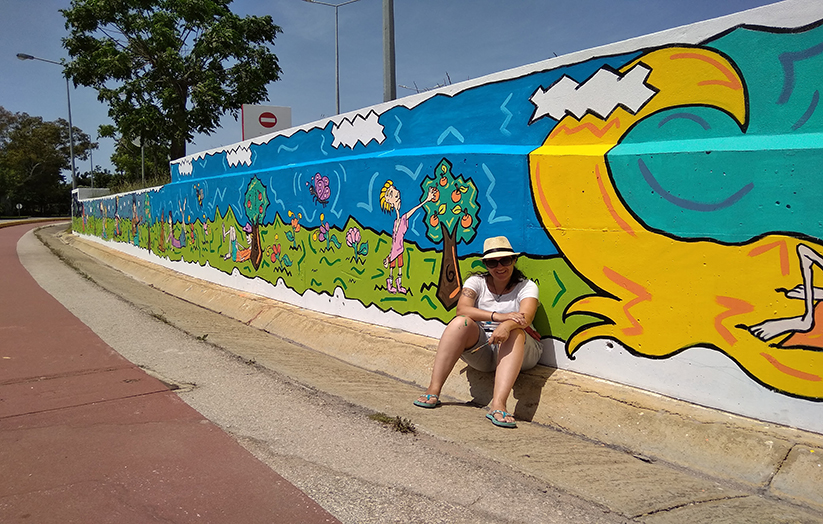
  • LAGOA WELCOMES APOLÓNIA SUPERMARKET

    LAGOA WELCOMES APOLÓNIA SUPERMARKET

    Apolónia Supermarkets, one of the Algarve’s most successful supermarket chains, plans to open the “biggest and most modern” outlet yet in Lagoa this summer. With building work currently taking place between the main roads into Carvoeiro and Sesmarias, the project represents a 9 million investment and promises to create 100 new jobs in the municipality. The move to Lagoa was “an obvious choice”, thanks to “a stable resident and non-resident population which appreciates a variety of products, quality and service”, according to founder Avelino Apolónia. The new supermarket will have its usual products and sections, including the popular fish counter and wine section, alongside some new ranges. Opened in 1983 as a family business, Apolónia Supermarkets has shops in Almancil and Galé (Albufeira), with plans to open a fourth store in Lagos once a suitable location is found. www.apolonia.com

  • CRUNCH TIME

    CRUNCH TIME

    [inpost_galleria thumb_width=”175″ thumb_height=”175″ post_id=”712″ thumb_margin_left=”3″ thumb_margin_bottom=”0″ thumb_border_radius=”2″ thumb_shadow=”0 1px 4px rgba(0, 0, 0, 0.2)” id=”” random=”0″ group=”0″ border=”” show_in_popup=”0″ album_cover=”” album_cover_width=”200″ album_cover_height=”200″ popup_width=”800″ popup_max_height=”600″ popup_title=”Gallery” type=”yoxview” sc_id=”sc1428367144714″]

    THE GRUPO DESPORTIVO DE LAGOA NOW HAS ITS OWN BASKETBALL TEAM

    In September 2014, they didn’t even have a ball, let alone a kit. By mid-season, they were 5th in the league. This may only be its first official season as GD Lagoa, but the basketball team now wearing Lagoa’s municipal colours has actually been around for much longer. Already veterans on the country’s basketball scene, the players once formed the ACD Ferragudo team, and took the club the furthest it had ever been in the national tables. However, when internal restructuring saw the team paying increasing costs, the members had to rethink their position and, just 10 days before the registration cut-off point, the GD Lagoa senior I men’s basketball team was born. With many of the players having represented the Ferragudo team for years ­ some since childhood ­, it was no doubt a difficult decision, and one that hasn’t come cheaply. But with the commitment and hard work of the players, vital financial aid from a number of sponsors, and the support of Lagoa Câmara (who “never expected to have their own basketball team this year”, noted player and board member Sérgio Pastrana), the club is only just beginning its journey. Granted the use of the pavilion in Parchal and now headed up by Dário Valentim (sports director), Sérgio Pastrana 18 SPORT (responsible for the financial side/sponsorships) and Pedro Castanheiro (design and marketing), all of whom are also players, GD Lagoa Basquetebol already boasts more than 40 members, split between the senior team, Baby Basket and Mini Basket (both coordinated by Dário Lopes). Every Saturday from 10.30am, coaches Rita Martins, Pedro Castanheiro, Sergio Dumanskyy, André Marzagão and José Mendes teach the sport to children aged 3 to 6 in the Baby Basket and 6 to 12 in the Mini Basket, who play in gatherings with other clubs to also help nurture social development in a fun yet organised atmosphere. “We live in a very football-focused society and basketball is such a different sport,” says Sérgio Pastrana, whose son is taught by team-mate Pedro in the Baby Basket. “Boys and girls play together and the parents come to cheer them on. The kids love it when they try it for the first time!” But perhaps the most visible side of the club is the senior men’s team, coached by Dário Valentim and which comprises players aged 18 to late 30s, most of which are Portuguese but also of English, Cape Verdean, Ukrainian and even Spanish/Norwegian nationality. The colours may have changed but the team has remained, and their performance 19 2 SPORT is no less impressive. Now playing in the 1st division ­ the third tier of the sport in Portugal ­ and placed 5th of the 12 teams playing in the Zona Sul – Grupo B division, the team brandishing the hornet as its logo trains three times a week at the pavilion, and plays weekly during the season that runs from October to June. What the club has achieved so far is no small feat, not least because, as Sérgio is keen to emphasise, these are amateur players who receive no monetary compensation. “We are an amateur team. We pay to play while other teams in the division are paid to play. One of us is a bank manager, another a nurse, another a swimming teacher, we have families, personal lives… Everything we do is pro bono.”

    As Pedro Castanheiro explains: “For us it’s a passion more than anything. We usually say we are a group of friends, each with their own lives, who come together to play basketball.” For this reason, the sponsors have been vital in securing a future for the club that started, quite literally, with nothing. Officially named GD Lagoa/CLUB NAU, other important local sponsors include Primavera restaurant, Slide & Splash and Podosaúde, but ongoing costs mean the club is constantly looking for more sponsors and those all-important donations. “This year has been about organising and establishing ourselves. The important thing now is to promote the club and create its own identity,” notes Sérgio who, at 1.98m, is the team’s tallest player. Having already hosted the first International GD Lagoa Basketball Championship last September with teams from Portugal and Spain ­ which they hope will become an annual event ­, the team’s main goal has been to promote the sport as a whole, with training sessions open to anyone who wants to join in. “It’s all in the name of camaraderie and friendship,” said the team-members. “We want to do everything we can to play and create a club for future generations.” For more information, please find G.d. Lagoa Basquetebol on Facebook.

    PHOTOS: JOANA ALCOCK

  • THE ITALIAN JOB

    THE ITALIAN JOB

    [inpost_galleria thumb_width=”175″ thumb_height=”175″ post_id=”711″ thumb_margin_left=”3″ thumb_margin_bottom=”0″ thumb_border_radius=”2″ thumb_shadow=”0 1px 4px rgba(0, 0, 0, 0.2)” id=”” random=”0″ group=”0″ border=”” show_in_popup=”0″ album_cover=”” album_cover_width=”200″ album_cover_height=”200″ popup_width=”800″ popup_max_height=”600″ popup_title=”Gallery” type=”yoxview” sc_id=”sc1428349418493″]

    FROM ITALY TO THE ALGARVE ­ INSIDE LOOKS AT THE METEORIC RISE OF THE NOSOLO GROUP

    From its humble beginnings as a small ice cream parlour that opened on Portimão’s riverside in the early ’80s, today, you can’t visit the Algarve ­ and now Lisbon, for that matter ­ without seeing the Nosolo logo somewhere on your travels. It’s a name that’s on everyone’s lips, and one that has become synonymous with delicious pizzas, poolside cocktails and summer parties with the sand beneath your feet. With at least a dozen establishments specialising in everything from artisanal ice cream and authentic Italian pizzas to sophisticated settings with the best national and international DJs, the Nosolo Group is easily one of the most successful businesses in the country. But its roots, just like those of the three Italian brothers who created it, are right here in the Algarve. It all started when Marco Lorenzi, the middle brother of the three, left his home of Bergamo in Italy to open an ice cream parlour in his Portuguese mother’s hometown of Portimão in 1982. He called it Bella Italia, which prided itself on selling ice cream using artisanal methods and local ingredients.

    As it became more successful, Marco built further infrastructures, including the Nosolo Gelato artisanal ice cream factory in Parchal, a defining move for the group that truly propelled the expansion of the brand and consolidated the market position of the Nosolo Group. It wasn’t long before his two brothers, Franco and Filippo, had joined him.

    “They are something of a triumvirate, in that their strengths and personalities are very different but also complementary,” says Raphaël Jerónimo, franchising coordinator and Filippo’s right-hand man at the group’s headquarters in Lagoa. “Marco was the pioneer; he is the one with the vision and he usually has the final say in any decisions regarding changes in the brand (…). Franco, perhaps because he is the youngest, is more linked to the image, he has a bolder approach to advertising and social media, and is always looking to renew the image. He isn’t afraid to experiment. Filippo worked for many years and helped develop his father’s metalwork company in Bergamo and so has a more industrialised approach. He was the driving force behind the group’s reorganisation, the franchising and the professionalisation of all the different branches.”

    It is this united front that has taken the group ­ formed officially in 2004 ­ to where it is today. Alongside Cletonina, the restaurant and wine cellar in Praia da Rocha which opened in 1985 and whose name is a combination of the Lorenzi brothers’ parents’ ­ Anacleto and Adelina ­, the original ice cream parlour grew to become Nosolo Italia Portimão.

    The Nosolo Italia name soon expanded beyond the municipality, with locations in Albufeira Montechoro and Vilamoura Marina, and later at Portimão Marina and Albufeira Marina. A winning formula since its inception, the restaurant concept serves authentic Italian pizzas and pastas and other specialities, as well as snacks and the now-famous ice cream made using traditional Italian recipes from fresh, local produce and which, according to Raphaël, is the “base of the Nosolo pyramid”.

    In the group’s mission to constantly innovate, the first NoSoloÁgua space opened on Falésia beach in Vilamoura in 2001 and became one of the hottest spots on the region’s summer party calendar. However, it was the opening of NoSoloÁgua Portimão five years later that placed the brand well and truly on the map. Considered the jewel in the Nosolo crown, the poolside setting of this restaurant and bar added a touch of glamour and sophistication to Portimão Marina. A location like few others in this part of the Algarve, with an oriental-inspired décor featuring furniture and decorative pieces imported from Southeast Asia, the restaurant offers an international à la carte menu, including Portuguese, French, Mexican and Japanese cuisine, as well as an extensive snack menu. With the private beach opened two years later, flaunting a beach-chic décor, loungers on the sand and the iconic Sunset Parties, both venues offer bright cocktails and laid-back vibes by day and flashy parties filled with famous faces by night. With the glamorous Água Moments in Vilamoura and a further two Nosolo Italia franchises in Lisbon, the future is still shining brightly for the Nosolo Group. But there is more than meets the eye, notes Raphaël, and there’s a whole other world “behind the curtain” that ensures the Nosolo machine runs smoothly. The nerve centre of the whole operation, the No Solo Lda headquarters in Lagoa deals with all the company’s logistics, from IT, accountancy and marketing to international purchasing and catering, and even has an industrial kitchen for some food preparation and recipetesting. “Logistically it means we can deal with all the front lines so that each unit can focus solely on the service and the clients,” explains the coordinator. All fresh produce comes from local and regional producers, and most of the furniture and tableware is Portuguese. However, in keeping with their philosophy that “you can’t fake authenticity”, products like real mozzarella, porcini mushrooms, pancetta and flour are all imported from Italy. And while the recipe is the same, each restaurant makes its own pizza base, with the group’s pizzaiolos having even received training at Italy’s pizza academy. But beside the strict quality control, the company also takes its social responsibility seriously and values its human capital.

    According to Raphaël, Nosolo is a truly multicultural company and one that takes care of its own, with the opportunity of career progression a real prospect, providing job satisfaction and security in an industry that is notoriously seasonal. Looking to grow even further ­ although definite plans are yet to be confirmed ­, the Nosolo Group is a force to be reckoned with, driven in no uncertain terms by three brothers who have brought a taste of Italy to their mother’s homeland. “They might have fiery debates if they don’t agree on something, but to the rest of the world they are a common and united front,” sums up Raphaël. “Not many people can boast about working with family, especially for almost 33 years, and continue to grow. It’s a real achievement. There may be disagreements but the unit always prevails, and that has been true for 33 years.”

    www.nosoloitalia.com | www.nosoloagua.com

  • LIVING THE GOOD LIFE

    LIVING THE GOOD LIFE

    [inpost_galleria thumb_width=”175″ thumb_height=”175″ post_id=”708″ thumb_margin_left=”3″ thumb_margin_bottom=”0″ thumb_border_radius=”2″ thumb_shadow=”0 1px 4px rgba(0, 0, 0, 0.2)” id=”” random=”0″ group=”0″ border=”” show_in_popup=”0″ album_cover=”” album_cover_width=”200″ album_cover_height=”200″ popup_width=”800″ popup_max_height=”600″ popup_title=”Gallery” type=”yoxview” sc_id=”sc1428348460208″]

    COLOURFUL AND LARGER THAN LIFE ­ THE FUN ARTWORK OF MADELEINE VAN KLEEF

    When Madeleine van Kleef decides to do something, she does it. That much was clear when she gave up working as a secretary in her native Holland to become a beautician relatively late in life, just as it was clear when she suddenly decided to learn how to paint. Fast-forward nine years, during which time she moved to Portugal to be closer to her son’s young family, and Madeleine’s work has certainly made an impression. “I saw a nice, happy picture one day, full of colour, and I thought, ‘maybe I could do that’. I started taking lessons and looked on the internet for inspiration from different artists, and I just started painting.” W After selling her beauty farm in Holland and downsizing her business, it was her move to the Algarve that allowed her to dedicate more time to her painting. Madeleine’s work is incredibly distinctive, and her brightly coloured, full-figured characters enjoying good food, good wine and general merriment are always sure to raise a smile. And in truth, it’s not hard to see where Madeleine gets her inspiration from: “I love champagne!” she laughs. “It’s about people having a good time, friendship, drink, food, cake… My paintings are fun and colourful, everyone is having a good time. It’s what I would do!” With titles like Shall we party later?, Chocolate Party and Love is in the air, her bar and party-themed paintings in particular have been a huge hit. Using mostly acrylic, her medium of 37 2 choice, Madeleine’s subjects are generally portly with large eyes and mouths ­ “Small mouths aren’t funny. They have to be big and smiling” ­, depicted with details such as Portuguese wine, French Champagne, lobster, tea and cakes. “I started painting really fat ladies, but they have got slimmer over the years,” admits the artist, a true lady of leisure who paints at her home in Carvoeiro where she lives with her partner. Another series that has received much interest is ‘Bla Bla Bla’, a more French-chic style that’s “a bit more serious with slimmer women, but they do talk a lot”, explains Madeleine, who usually opts for red, black, white and grey in this particular series. Receiving various commissions, particularly of bar scenes ­ one such painting is currently hanging up at Carvoeiro Bar ­, her work has been displayed at the Arte Algarve gallery in Lagoa and was one of the most appealing stands at the gallery’s summer art exhibition along the quay at Ferragudo. “It’s great to see people walking past, stop, and suddenly a big smile appears on their face.” Having recently started taking lessons in oil-painting to “understand how to work with it”, Madeleine has also experimented with other styles, but admits she prefers her larger-than-life characters to more realistic portraits. When asked if moving to the Algarve has helped develop her work, Madeleine ponders for a moment: “In Holland everything is behind closed doors. Here, because of the weather, everyone is outside, they go to the beach, have parties…” She smiles, “I have a good time in Portugal”.

    For more information, contact 912 061 936 or find Madeleine Art on Facebook.

  • TASTE RESTAURANT TEES OFF

    TASTE RESTAURANT TEES OFF

    The second Taste Cup

    [inpost_galleria thumb_width=”175″ thumb_height=”175″ post_id=”706″ thumb_margin_left=”3″ thumb_margin_bottom=”0″ thumb_border_radius=”2″ thumb_shadow=”0 1px 4px rgba(0, 0, 0, 0.2)” id=”” random=”0″ group=”0″ border=”” show_in_popup=”0″ album_cover=”” album_cover_width=”200″ album_cover_height=”200″ popup_width=”800″ popup_max_height=”600″ popup_title=”Gallery” type=”yoxview” sc_id=”sc1428343930670″]

    Organised by Nicola and Ciprian Silvasan, of the popular Taste restaurant in Carvoeiro, the second Taste Cup will take place at Silves Golf on May 16. Following the Stableford format, the golf tournament will include refreshments and tapas on the 9th hole, with a party and prize-giving ceremony afterwards at the restaurant on Rua dos Pescadores/Rua do Barranco. For more information, please contact 282 358 092

  • NEW OWNERS FOR CASA ALGARVIA

    NEW OWNERS FOR CASA ALGARVIA

    The owners of the well-known Oasis restaurant in Carvoeiro have taken over the management of the equally established Casa Algarvia, located on Estrada do Farol. Following a complete refurbishment, which included a new décor, a modern bar area and a brand new kitchen, new owners Frank and Cristina and their team held an opening party in March to signal a new era for the restaurant. Serving typical regional and Portuguese cuisine, Casa Algarvia is open daily for lunch and dinner, while the Oasis restaurant on Rua do Barranco will continue to run as normal.

    Tel: 282 357 604

  • ART AMONG THE ROOFTOPS

    ART AMONG THE ROOFTOPS

    [inpost_galleria thumb_width=”200″ thumb_height=”200″ post_id=”702″ thumb_margin_left=”3″ thumb_margin_bottom=”0″ thumb_border_radius=”2″ thumb_shadow=”0 1px 4px rgba(0, 0, 0, 0.2)” id=”” random=”0″ group=”0″ border=”” show_in_popup=”0″ album_cover=”” album_cover_width=”200″ album_cover_height=”200″ popup_width=”800″ popup_max_height=”600″ popup_title=”Gallery” type=”yoxview” sc_id=”sc1428347442118″]

    FERRAGUDO WELCOMES ARTE ALGARVE’S NEWEST GALLERY

    If Rolf Osang were ever to open a new gallery, it would have to be something quite special to follow in the footsteps of Arte Algarve, whose artworks hang on the walls of ÚNICA, a working winery in Lagoa. Four-and-a-half years after it first opened, the gallery owner has finally found what he deemed to be the perfect place for a second exhibition centre: a quirky townhouse in the fishing town of Ferragudo. Officially opened in March, the new Arte Algarve gallery is housed in a building just off the main square, on Rua 25 de Abril, and its pretty façade conceals a spacious venue set across I three storeys. Inside, the ground floor comprises three divisions of different sizes, where much of the theme is dedicated to the Algarve and the Alentejo regions. Walking up the stone steps, a small hallway leads to four further divisions, all of which boast the same natural light, original hardwood floors, exposed bricks, comfy sofas and restored antique furniture that enhance the many artworks on display here. The paintings and portraits are hung in an original way ­ on metal frames that lend a workshop-feel to the gallery but which are also reminiscent of the town’s fishermen’s nets. The pièce de résistance, however, is a truly unexpected gem: the exterior terrace that extends across four different levels amidst the rooftops of Ferragudo. Offering a completely different perspective of the town, surrounded by chimneys and overlooked by one or two neighbouring cats, the outdoor area is also dotted with pretty and original artworks, from the stone sculptures in the newly planted garden and the metal insect sculptures placed on the walls, to the large wooden table that takes up most of the terrace which affords a pretty seating area with views of the bay. In all, there are around 15 artists represented here, all of different backgrounds but with connections to the region. “The Lagoa gallery is a fantastic, unique building, but we don’t get many tourists or passers-by. We thought we needed a second gallery in a beautiful place, with an authentic atmosphere and lots of individual travellers, and Ferragudo is truly the ideal place,” said gallery director Rolf Osang. While visitors got a first peek of the gallery at the vernissage on a sunny afternoon in March, where they enjoyed the wines from Quinta do Barradas and live music courtesy of Cory Sea, the gallery and its charming terrace will no doubt shine even brighter as the evenings get warmer. The Arte Algarve Ferragudo gallery is open from Tuesday to Sunday from 11am to 3pm and 6pm to 9pm, and until late during the summer months.

    www.artealgarve.net 16
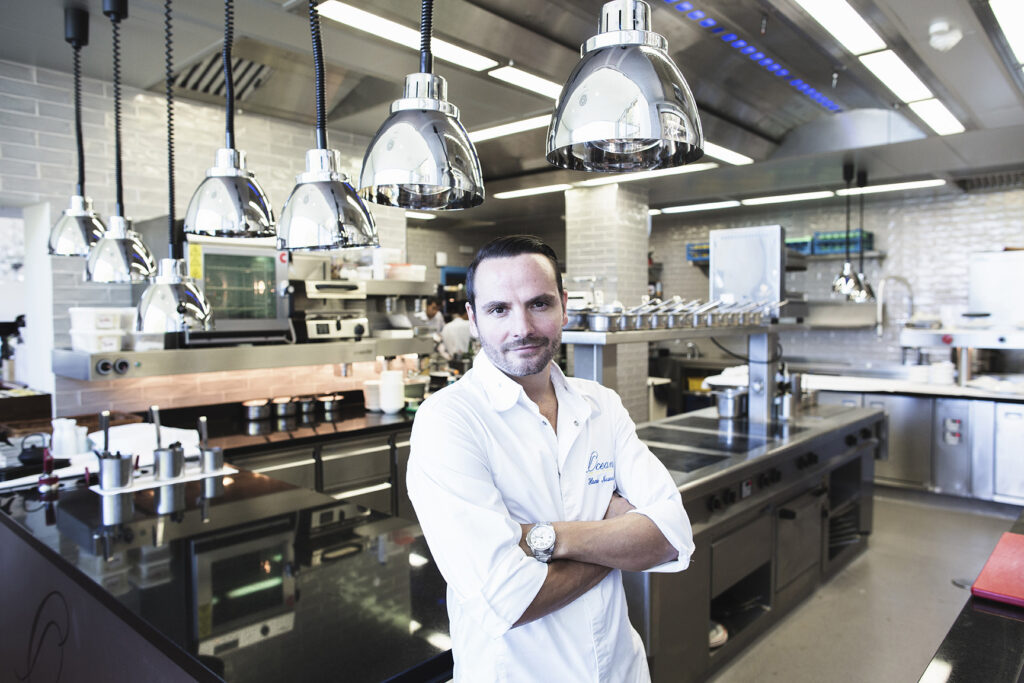
  • TRIATHLONS RETURN TO PRAIA DA LUZ AND SAGRES

    TRIATHLONS RETURN TO PRAIA DA LUZ AND SAGRES

    A great turn out for Algarve Triathlons.

    [inpost_galleria thumb_width=”175″ thumb_height=”175″ post_id=”700″ thumb_margin_left=”3″ thumb_margin_bottom=”0″ thumb_border_radius=”2″ thumb_shadow=”0 1px 4px rgba(0, 0, 0, 0.2)” id=”” random=”0″ group=”0″ border=”” show_in_popup=”0″ album_cover=”” album_cover_width=”200″ album_cover_height=”200″ popup_width=”800″ popup_max_height=”600″ popup_title=”Gallery” type=”yoxview” sc_id=”sc1428344008742″]

    Following the huge success of the first Praia da Luz Triathlon last April, and with the Martinhal Triathlon following suit in October, both events are set to return this year. Organised by Algarve Triathlons, the second Praia da Luz Triathlon takes place on April 25 and includes two distances ­ Sprint and Olympic ­ which can be entered individually or as a team/relay. Now a fixture on the Algarve’s annual calendar, the race will be followed by an after-party with barbecue, live music and chill-out bar next to Fortaleza da Luz. The Martinhal Triathlon in Sagres will take place in November (date to be confirmed). www.algarvetriathlons.com

  • SPRING SKINCARE

    SPRING SKINCARE

    [inpost_galleria thumb_width=”175″ thumb_height=”175″ post_id=”695″ thumb_margin_left=”3″ thumb_margin_bottom=”0″ thumb_border_radius=”2″ thumb_shadow=”0 1px 4px rgba(0, 0, 0, 0.2)” id=”” random=”0″ group=”0″ border=”” show_in_popup=”0″ album_cover=”” album_cover_width=”200″ album_cover_height=”200″ popup_width=”800″ popup_max_height=”600″ popup_title=”Gallery” type=”yoxview” sc_id=”sc1428347094168″]

    Like many before him, and no doubt many after, Dutchman Ron Voskamp fell in love with Ferragudo the moment he laid eyes on this charming fishing town. And while this is where his business is based, in a tiny showroom right on the main square, it is not Ferragudo he is promoting, but the mountain town of Monchique, more specifically, its spring water. The natural springs of Caldas de Monchique, the only termas in the Algarve, have been frequented since Roman times thanks to the healing properties of the water. In fact, the name Monchique comes from mons siccus, meaning ‘thirsty mountain’ in Latin. Thousands of years later, one company is harvesting the benefits of this magic potion in its skincare range, suitably named Monchique Cosmetics. From masks, scrubs, peelings and foot and hand cream to bath products, eye cream, serums and makeup remover, presented in an elegant blue and white packaging, the products all share a common link: Monchique’s very own H2O. But this is no ordinary water; it is a special combination of extremely pure H2O, free from bacteria and other contaminants, and which contains calming and smoothing properties. It is also extremely alkaline, reduces acidity in the body and neutralises free radicals. With two degrees ­ one in Engineering and another in Business Economics ­, Ron Voskamp had a physical and 40 mental breakdown around five years ago which made him decide to slow down and adopt a healthier lifestyle. It was during this process that he discovered the benefits attributed to alkaline water: although not scientifically proven, some experts believe it has antioxidant properties, helping to control hormones and even prevent cancer. It was therefore a surprise for the businessman that he could buy alkaline water from Monchique directly from the Algarve’s supermarkets when he came to the region around two years ago to write a book. It wasn’t long before Ron met fellow compatriot Agnes Hesselink, who has more than 20 years’ experience heading a Dutch skincare development and production company, and who had already discovered the benefits associated to the Portuguese water. With products for all ages and skin types, for both men and women, Monchique Cosmetics is “one of the purest ranges of cosmetics”, according to the director, and offers products that can be used at home, as well as in treatments at selected salons and spas. However, the products aren’t only based on Monchique water, but also on a well-known local fruit, which, curiously, is also drunk in the form of fire water ­ medronho. These two components are the key elements of a complex made from five ingredients, which dramatically improves skin’s hydration and which is the base of all the brand’s products ­ MIH5, the Monchique Intensive Hydration 5 Complex. “The powerful medronho extract is rich in the antioxidant vitamins C and E, which protect the skin from damage caused by free radicals and allow other ingredients to deeply penetrate the skin, and in omega-3 and 6 acids, which help reduce inflammation,” explains Ron, noting that the water’s fine molecular structure makes it Ron Voskamp easily absorbed by the body. Now living in Ferragudo, whose picturesque bay dotted with fishing boats had always been a dream location for the businessman, and embraced by the local community (every Saturday the Dutchman would play dominoes at the town’s senior citizens’ centre), it was only natural that the Monchique Cosmetics showroom would be here. While the space can be visited by appointment, the products can also be found in Caldas de Monchique and at the Vila Monchique shop, as well as at other selected locations 41 COSMETICS Ron Voskamp with Rui André across the Algarve. The idea is that in the future, the brand will be present countrywide, including the islands of Madeira and the Azores. According to the businessman, “I believe that with Monchique Cosmetics, we can contribute to people’s awareness of health and beauty, inside and out, and generate interest in Monchique and in Portugal, and thus contribute to tourism”. While the skincare line is produced in the Netherlands, the aim is to bring production to Monchique and provide employment for the local people. “It’s about shared values, and about promoting Monchique through these cosmetics,” he says. In this mission, the brand has an important partner: the president of Monchique Câmara, Rui André, who supports the project and to whom Ron and Agnes gave some of their products in a special launch box, made from the best Algarvean cork from Novacortiça. https://www.monchiquecosmeticsportugal.com 42
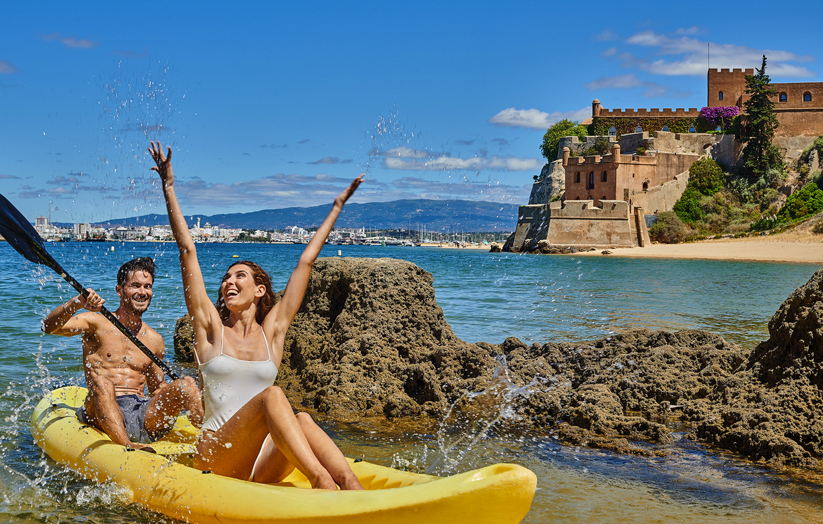
  • NEW ESTATE AGENTS OPENS IN CARVOEIRO

    NEW ESTATE AGENTS OPENS IN CARVOEIRO

    An evolution of Panoramic Invest, the Carvoeiro-based company focused on quality building projects and project management, the real estate agency Panoramic Properties opened its doors at the far end of Rua do Barranco (‘out’ road) in March. Company director Rene Kalkbrenner has developed the real estate side of the business and is joined at the new office by established sales team Maureen and Luís Barão. With a solid reputation in property management in Carvoeiro since 1985 and with experience in the real estate field for almost a decade, Maureen Barão has been building up a portfolio of properties that are in keeping with the company’s philosophy “Focus on quality”, including apartments, townhouses, plots and villas. Initially focusing on the Carvoeiro/Ferragudo area, the agents have plans to expand further throughout the Algarve. Tel: 282 359 197

  • TONY’S UNDER NEW MANAGEMENT

    TONY’S UNDER NEW MANAGEMENT

    Tony’s by Chico

    [inpost_galleria thumb_width=”200″ thumb_height=”200″ post_id=”694″ thumb_margin_left=”3″ thumb_margin_bottom=”0″ thumb_border_radius=”2″ thumb_shadow=”0 1px 4px rgba(0, 0, 0, 0.2)” id=”” random=”0″ group=”0″ border=”” show_in_popup=”0″ album_cover=”” album_cover_width=”200″ album_cover_height=”200″ popup_width=”800″ popup_max_height=”600″ popup_title=”Gallery” type=”yoxview” sc_id=”sc1428344408497″]

    One year after it first opened, Tony’s snack bar on Rua do Barranco has been taken over by another well-known Carvoeiro restaurateur, Francisco Pina, formerly of Chico’s Restaurant. In search of a more laid-back venture after many years in the restaurant business, the restaurateur has kept the same concept at Tony’s. A blend of snack and modern diner, the bright and airy venue has a large outdoor terrace and serves breakfast, lunch and dinner, with hamburgers, baguettes, jacket potatoes and various other snacks and cakes. Open from 8am until late in the high season.

  • SURF THE SKY

    SURF THE SKY

    IS IT A BIRD? IS IT A PLANE? NO, IT’S A FLYBOARD jetpack that shoots you up into the air and lets you leap in and out of the water like a dolphin all sounds very futuristic, but it’s actually a pretty common sighting just off the beach at Praia da Rocha. It’s called flyboarding and it’s the latest watersport to arrive in the Algarve. “We have been selling jet skis in the Algarve for more than 20 years, so it made perfect sense for us to introduce flyboarding,” said Stefania Balzer, a former Aquabike world A champion and marketing coordinator of the Angel Pilot Group, the company that distributes the Flyboard here in the region. Based in Parchal, Angel Pilot was set up in 1991 by Stefania’s father, Alessandro Balzer, an Italian jet ski champion with his fair share of European and world jet ski titles. It was during one of these international competitions ­ the Jet Ski World Championship in China in 2011 ­ that the Angel Pilot team witnessed first-hand the presentation of the Flyboard, 23 2 ACTIVITY an ingenious device that attaches to a personal water craft ­ in this case a jet ski ­, and propels the rider into the air and through the water. It was clear from the start that flyboarding and Angel Pilot were the perfect fit. Invented by jet ski champion Franky Zapata, the Flyboard is similar to a wakeboard, where the rider’s feet are strapped into boots with jet nozzles underneath, which are connected to the jet ski’s turbine through a long hose. Using the power of the jet ski, the rider can be thrust up to a dizzying 14 metres into the sky. It took months of waiting for the legislation to be approved, but in August last year, Angel Pilot finally got the nod to provide this unique experience to clients across the Algarve. As well as being the region’s official distributors of the Flyboard, the company also has three certified instructors who can teach clients how to manoeuvre this state-of-the-art equipment. “It’s a great sensation. At first it can be a bit nerve-racking but you soon get the hang of it!” says a smiling Stefania, who is one of the certified instructors to take clients out to their official flyboarding spot just by the mole at Praia da Rocha. “At the beginning it’s that feeling of being up high and seeing everything from a different perspective, you get a feeling of freedom. Then when you get the hang of it and move around a bit better, you can have lots of fun.” Open to anyone over the age of 16, Stefania notes that some people are quicker to pick it up than others. “Some people can get up high very quickly, others take a little longer to adapt. It has to do with the balance and the person’s understanding of how it works. You have to straighten your legs when it starts up, but for some reason there’s a natural tendency to bend your knees and that makes it harder. There are those who catch on to that straight away and those who don’t.” 24 SPORT Once you have commanded the technique and gained some height ­ during these ‘courses’, the maximum height you can reach is four metres ­, you can start doing twists and turns and dive like a dolphin into the water. More practised riders can do flips, spins, back-flips and other aerial stunts, with a number of professional flyboarding competitions already taking place around the world (the first Flyboard World Championships took place in Qatar in 2012). But for beginners and amateurs, the courses led by the Angel Pilot team sees groups of at least four people heading out to Praia da Rocha to try their hand at the region’s latest watersport. After receiving a briefing on the boat, during which time the team prepares the equipment on the jet ski, clients are given a life jacket and helmet, and a wetsuit when it’s colder, for the experience which lasts 20 minutes. “As long as people follow our instructions, there are no dangers at all,” assures Stefania. The legislation is also somewhat limiting, according to the marketing coordinator, and requires that a boat accompanies all the courses, which must take place outside the sea walls, making it particularly challenging in the winter months. However, it means that those who don’t want to try flyboarding can still join in, take pictures and enjoy a few hours out on the boat. While the 90 price tag makes it a more special experience, Angel Pilot offers reduced prices for large groups, and has created gift vouchers for the summer which are perfect as a birthday present.

    www.angelpilot.com [inpost_galleria thumb_width=”175″ thumb_height=”175″ post_id=”692″ thumb_margin_left=”3″ thumb_margin_bottom=”0″ thumb_border_radius=”2″ thumb_shadow=”0 1px 4px rgba(0, 0, 0, 0.2)” id=”” random=”0″ group=”0″ border=”” show_in_popup=”0″ album_cover=”” album_cover_width=”200″ album_cover_height=”200″ popup_width=”800″ popup_max_height=”600″ popup_title=”Gallery” type=”yoxview” sc_id=”sc1428344258962″]

  • URBAN CANVAS

    URBAN CANVAS

    ARMED WITH SPRAY CANS AND AN EYE FOR DETAIL, STEPHEN JONES IS SET ON CHANGING THE IDEA OF GRAFFITI FOR THE BETTER

    [inpost_gallery thumb_width=”175″ thumb_height=”175″ post_id=”385″ thumb_margin_left=”0″ thumb_margin_bottom=”10″ thumb_border_radius=”10″ thumb_shadow=”0 1px 4px rgba(0, 0, 0, 0.2)” js_play_delay=”3000″ id=”” random=”0″ group=”0″ border=”” type=”yoxview” show_in_popup=”0″ album_cover=”” album_cover_width=”200″ album_cover_height=”200″ popup_width=”800″ popup_max_height=”600″ popup_title=”Gallery” sc_id=”sc1422639033869″]


    It may have a negative connotation usually associated to vandalism but, wall by wall, Lagoa resident Stephen Jones is slowly changing people’s perception of graffiti. “Graffiti isn’t just tags and scribbles,” says the 22-year-old artist, “and the only way for people to understand that is to make beautiful, appealing graffiti that they enjoy looking at, and gradually they will start having a different perception of it.” One work that is certainly going some way to achieve that is the mural of Carvoeiro beach, created from a photograph taken by local photographer Jorge Fonseca on the side of a house, which welcomes visitors driving in through Rua dos Pescadores. This is the first of many projects that Stephen has done in collaboration with the União das Freguesias de Lagoa e Carvoeiro, a clear sign that the latest local council is certainly keeping up with the times.

    But how did this once sleepy fishing village become a canvas for colourful spray paints? Much of it, says Stephen, is down to word of mouth. Having collaborated on some graffiti commissions ­ his work can be seen at J BarBara bar and the Carvoeiro scouts’ headquarters, with a Jungle Book theme ­, he was later approached to do other projects individually, such as the tropical theme at Charly’s Bar. And whilst much of his work can be seen elsewhere, from a BMX track in Quarteira to a portrait of Salvador Dali at the Satori art association in Salir, it is Lagoa council itself that is helping to place its home-grown artist in the spotlight. “It was one Carnival when I helped paint some of the floats for the Carvoeiro parade. People spoke about it, word got out of the work I had been doing and when the local authorities changed, they wanted to do something new.”

    Following the Carvoeiro mural, other substantial municipal projects are already underway. In the south entrance of Lagoa, by the EN125 roundabout towards Estombar and Portimão, a wall has been earmarked for Stephen to paint some of the city’s most important landmarks, such as the convent, the market and the church, whilst on the opposite side of Lagoa, towards Silves, the graffiti artist is portraying the late Fernando Rodrigues, Lagoa’s most important potter, as part of a theme dedicated to pottery. But whilst nowadays, Stephen, whose father is English and mother is Portuguese, works alongside the council, in his youth, his artistic work wasn’t quite so legal. Experimenting with graffiti from the age of nine or ten, during his teens he set aside the spray cans and dedicated more time to skateboarding. In need of money to buy new boards, he turned to tennis coaching, a sport in which he had excelled for many years, before finding his vocation as a street artist. With no formal artistic training, besides drawing a lot in his childhood, most of his commissioned work follows a specific brief, but, left to his own devices, Stephen says he enjoys doing faces and landscapes. “I get a certain feeling when I first look at a face, and if I pay attention to that feeling, I keep painting until I can achieve that same feeling.” It’s frustrating work, even for this laid-back artist who admits that, when he starts a new project, he never knows how it will come out. Aside from graffiti, he also spends much of his time sketching, and he does many portraits with pen and paper.

    Finding inspiration “in life, in everything” and working better during introspective moments, Stephen notes that the advantage of graffiti is that it can be done anywhere, but he wants to showcase more of his work in public spaces to reach a wider audience. In fact, his goal is to make people who are walking by stop dead in their tracks. “In the faces, I try to create an expression, an intense, profound look, that’s something of a shock, one that’s able to create a moment of silence and make people think.” His dream, however, goes further than that: “I would love to do buildings; the whole side for everyone to see,” he smiles. But is Lagoa council ready for that? “Not all of a sudden. It’s a big shock, but bit by bit, people are seeing this type of work and they’re starting to accept it.”
    To see more of Stephen Jones’s work, check out his Facebook page.

  • THE ART OF HOSPITALITY

    THE ART OF HOSPITALITY

    SHAPING THE NEXT GENERATION OF FOOD AND BEVERAGE PROFESSIONALS: MEET THE HOSPITALITY AND TOURISM SCHOOL OF PORTIMÃO

    [inpost_gallery thumb_width=”175″ thumb_height=”175″ post_id=”383″ thumb_margin_left=”0″ thumb_margin_bottom=”10″ thumb_border_radius=”2″ thumb_shadow=”0 1px 4px rgba(0, 0, 0, 0.2)” js_play_delay=”3000″ id=”” random=”0″ group=”0″ border=”” type=”yoxview” show_in_popup=”0″ album_cover=”” album_cover_width=”200″ album_cover_height=”200″ popup_width=”800″ popup_max_height=”600″ popup_title=”Gallery” sc_id=”sc1422639201183″]


    Tourism is without a doubt the backbone of the Algarve’s economy, sustained by luxury hotels and quality bars and restaurants that provide the finest standards of gastronomy and service. For that, in the most part, we can thank the much-acclaimed Hospitality and Tourism School in Portimão. Created in 1970 ­ the third in the country and second in the region ­ on the city’s riverside, at a time when the Western Algarve was desperate for a vocational training centre, the school moved premises as it grew in student body and reputation. Today, the Escola de Hotelaria e Turismo de Portimão (EHT Portimão) is located in the Pedra Mourinha area of the city, and retains its status as one of the best hospitality schools in the country. Part of the school network of the national tourism authority Turismo de Portugal, EHT Portimão comprises two blocks ­ one dedicated to administration and management, with an IT room and library, and the other holding the classrooms, technical lab areas such as kitchen and demonstration restaurant and bar, and students’ bar. There’s also a residence during term-time that’s open to students who live more than 50km away from the school, or who don’t have any possible means of transportation. Although the building wasn’t purpose-built, the school’s director, Pedro Moreira, is the first to note that it hasn’t held them back: “After all, within the culture we want to develop, our motto is to transform challenges into opportunities.” It’s this attitude, paired with the highest training standards delivered by experienced tutors who are also leaders in their field, that attracts pupils from around the country to train at this centre of excellence on the Algarvean coast. The school offers two course levels: the Level IV Dual Certification Courses, such as Cooking and Pastry Techniques, aimed at under-25s who have completed 9th grade and want to gain vocational training whilst also completing their school education; and Level V Technological Specialisation Courses for those looking for an alternative to higher education. The school’s “speciality”, however, which has produced some of the country’s finest hospitality professionals, is the Level V Hospitality Management – Food & Drink (Gestão Hoteleira Restauração e Bebidas). The jewel in the school’s crown, this specialist course sets out to produce well-rounded and highly skilled F&B professionals, with reallife practical training alongside subjects such as cost-control, menu engineering and marketing. “All the courses are complementary, particularly on the practical side ­ those who cook need someone to serve what they create, and those who wait need something to serve,” explains Pedro Moreira, who is also the director of the Hospitality and Tourism School of the Algarve, in Faro.

    Everything in the school, he emphasises, is made by the pupils, guided and overseen by the tutors. In fact, every day is a real-life scenario for the students at EHT Portimão, from the impeccable uniforms (the men must also be clean-shaven and all visible piercings removed) to the typical codes of conduct followed by any prestigious hotel unit. “Our motto is almost military in its approach: ‘Train hard, fight easy’. The more accustomed our students are to the correct rules and regulations, the easier it is to follow the highest standards of hospitality elsewhere.” Of course, this approach is put into practice daily with “reallife” customers, as the school’s restaurant is open for lunch to outside visitors, with a set three-course menu (including wine, coffee and water) available from just 12.50 (booking advisable). Special menus can also be created by request. But it’s not just within the school walls that the pupils get their training. Whilst EHT Portimão can provide kitchen and waiting teams for any private event upon request (and where logistics allow), the school also has important partnerships with the region’s leading hotels and provides staff where needed. For Vila Joya’s prestigious International Gourmet Festival, for example, EHT pupils were drafted to support the world’s best chefs. “It’s a huge advantage for our students, but I also feel it’s an advantage for our partners who benefit from the youth and professionalism that our students bring,” believes the director.

    However, there is no better representation of the school’s teaching excellence than the alumni itself. Some of the region’s best bartenders, waiters, cooks and pastry chefs were trained here, and a number of former students are now executive chefs, F&B directors and department managers at leading restaurants and hotels, both here in Portugal and abroad. In fact, the school prides itself on including many former pupils ­ and now industry leaders ­ in their faculty, to ensure the continued excellence of EHT Portimão. “Of course we’re not bound by the values from 1970, but this mixture of incorporating former students and new people who come in with a different outlook and new input of the market ensures that we truly have a very strong, very cohesive and very upto-date culture,” says Pedro Moreira, himself a former pupil here who progressed rapidly through the ranks at Penina Hotel before deciding to dedicate his life to teaching.

    Noting that the industry recognises the skills and professionalism of EHT pupils countrywide, the Algarve director notes that demand remains high for these highly trained individuals. After all, that is the ultimate goal of these schools: “Our motivation is of course the employability and success of our students, and when they come back to tell us about their experience here and how it helped them with their professional success, it’s hugely rewarding,” admits Pedro Moreira. “That is exactly what we work for, to know that they have done well professionally and that they recognise the school was important in their lives.”

    www.escolas.turismodeportugal.pt/escola/ escola-de-hotelaria-e-turismo-de-portimao

  • SIGNATURE INSPIRATION

    SIGNATURE INSPIRATION

    JEWELLER NUNO LOPES CREATES PIECES THAT ARE JUST LIKE THE PEOPLE WHO WEAR THEM: ONE OF A KIND

    [inpost_gallery thumb_width=”175″ thumb_height=”175″ post_id=”381″ thumb_margin_left=”0″ thumb_margin_bottom=”10″ thumb_border_radius=”2″ thumb_shadow=”0 1px 4px rgba(0, 0, 0, 0.2)” js_play_delay=”3000″ id=”” random=”0″ group=”0″ border=”” type=”yoxview” show_in_popup=”0″ album_cover=”” album_cover_width=”200″ album_cover_height=”200″ popup_width=”800″ popup_max_height=”600″ popup_title=”Gallery” sc_id=”sc1422639472855″]


    We first spotted Nuno Lopes at the Fatacil fair in Lagoa, working away on a piece of silver as a couple of children stood by, mesmerised. We later found out that some of these children return to his stand, year after year, to watch the jeweller at work, and often get a simple band as a reward for their curiosity. For Nuno, it’s not just about promoting his work ­ beautiful one-of-a-kind pieces designed by his fair hand: “I remember coming here as a kid and losing myself in the crafts tents. I loved watching the artisans at work, so it makes me proud when children come here and ask me questions.”

    Although his love of arts and crafts stems from his childhood, jewellery wasn’t his full-time vocation. Originally from Portimão, Nuno admits he was influenced by social norms and enrolled at university to study the sensible but admittedly less artistic Agriculture and Animal Husbandry. He specialised in Aquaculture, a course he didn’t complete but which led him to work as a fish inspector in the capital. But jewellery would always be in the background ­ also prompted by a chance meeting with an Argentinian jeweller in Brazil ­, and it was in Lisbon that he took his first jewellery course at the age of 24. On his return south, however, he became disillusioned with where his life was going and, thanks to his Spanish girlfriend at that time, Carmen, who he credits for being the person that most helped him on his journey, he moved to Spain. He did several courses in jewellery and diamonds in Seville and studied gemology at the Spanish Gemological Institute in Madrid. After being invited to work in the centre’s workshop, in 2012, Nuno returned to his hometown of Portimão. At last, he was where he wanted to be: with a workshop set up in his parents’ garage and extensive training behind him, Nuno Lopes was free to create the signature pieces that have been making waves across the Algarve and beyond. Mostly working with silver and incorporating different stones, he describes his style as a reflection of his state of mind. Able to adapt to various styles, whether it’s classic or Art Deco, often his work showcases a more abstract and somewhat aggressive character that results in incredibly striking pieces. Whilst much of his jewellery is made by commission, Nuno says he often finds himself doing shells, conchs or corals, a reflection of his ties to the sea for much of his life. With beautiful collections comprising necklaces, bracelets and earrings, the jeweller admits he loves making rings, which have become something of a trademark. One thing is constant, though: each piece is the only one of its kind. “For me that’s very important. As most valuable pieces can be passed down from generation to generation, why would it be something that 300 other people have? Why not have your own, if you are unique and there’s no one like you?” For this reason, Nuno designs unusual collections that can be easily adapted to sell on the street. “If it’s affordable, you have the opportunity of having a unique piece, that’s your taste, that you can wear for the rest of your life and leave behind as a memento.” This, in fact, is what best defines Nuno’s work. They are pieces with soul that are quite simply yours and no one else’s.

    Now moving more towards galleries ­ although the Fatacil will always be on his agenda ­, in the future, the self-confessed night owl hopes to design more extravagant collections for his own fashion shows, but in the meantime, his goal is to open up his own space, with Ferragudo and Carvoeiro at the top of the list. Here, he plans to use his (fortunate) initials, NL, for his next venture: Número Limitado, to make a numbered series limited to eight or ten pieces, which will put into practice the techniques he learned from his “excellent teachers”.

    Find Nuno Lopes Joyas on Facebook or visit the Arrecadação da Luz jewellery shop in Praia da Luz which carries the exclusive collection ‘Às Voltas’.

  • PORTIMÃO CELEBRATES 90 YEARS AS A CITY

    PORTIMÃO CELEBRATES 90 YEARS AS A CITY

    Portimao-celebrates-90-2s


    Music, theatre, sports, literature and citizenship all featured heavily in the programme that aimed to celebrate Portimão’s 90 years as a city. The official anniversary may have been on December 11, but celebrations took place over a fortnight and marked a number of other milestones within the city. The programme, which “aimed to evoke the past, celebrate the present and, above all, look to the future, giving special focus to the new generation of athletes and artists in the city”, according to Portimão Câmara, included plays at the TEMPO theatre, special exhibitions at the Portimão Museum, musical performances from local organisations, charity walks, sports competitions and various ceremonies recognising athletes who have excelled in their fields and members of the community for their notable work in different areas. Alongside the Municipal Day celebrations, the programme also marked the 25th anniversary of the Western Algarve Blood Donors Association with a blood drive, the 7th anniversary of the city’s municipal market on Avenida São João de Deus, with a sushi and sashimi demonstration and gin and liqueur tasting, and the 29th anniversary of the Portimão Choral Group, with a concert held at TEMPO. For information on events throughout 2015, visit the Portimão Facebook page.
    ©Arquivo CMP/Filipe da Palma


  • New Book Launched on Birds of the Algarve

    New Book Launched on Birds of the Algarve

    [inpost_gallery thumb_width=”175″ thumb_height=”175″ post_id=”375″ thumb_margin_left=”0″ thumb_margin_bottom=”10″ thumb_border_radius=”2″ thumb_shadow=”0 1px 4px rgba(0, 0, 0, 0.2)” js_play_delay=”3000″ id=”” random=”0″ group=”0″ border=”” type=”yoxview” show_in_popup=”0″ album_cover=”” album_cover_width=”200″ album_cover_height=”200″ popup_width=”800″ popup_max_height=”600″ popup_title=”Gallery” sc_id=”sc1422639739763″]

    ‘Birds of Algarve’ is a book published in 2014 by German biologist Manfred Temme. The 256-page volume, features beautiful images and descriptions in both English and German of 190 of the 250 (approximate) bird species recorded in the Algarve.

    The idea of the book arose from the interest shown by readers of the Algarve’s German-language magazine Entdecken Sie Algarve, in its monthly articles by Dr. Manfred Temme, an accomplished ornithologist and photographer.

    The publishers (Editurismo) worked closely with Dr. Temme to design and produce the book that is intended not only for an audience of birdwatching enthusiasts, a growing niche in the Algarve tourism market, but also anyone interested in nature.

    “Birdwatchers in the Algarve gather at the principal locations that attract bird life such as the wetland areas of Ria Formosa and Lagoa dos Salgados where specific facilities exist,” said Dr. Temme. “But we also hope the book will appeal to property-owners and tourists who wish to identify and enjoy the birdlife that visit their homes, or even the hotels where they are staying.”

    For more information, contact the publishers at the Editurismo offices (Entdecken Sie Algarve): (+351) 282 341 059 | editur@editurismo.com

    Article updated 16th August, 2022

    Read more Algarve News:

  • LIFE IN THE FAST LANE

    LIFE IN THE FAST LANE

    RSR WANTS TO PROVE THE PORTIMÃO CIRCUIT IS A WORLD-CLASS RACETRACK THAT CAN BE USED ALL YEAR LONG

    [inpost_gallery thumb_width=”175″ thumb_height=”175″ post_id=”373″ thumb_margin_left=”0″ thumb_margin_bottom=”10″ thumb_border_radius=”2″ thumb_shadow=”0 1px 4px rgba(0, 0, 0, 0.2)” js_play_delay=”3000″ id=”” random=”0″ group=”0″ border=”” type=”yoxview” show_in_popup=”0″ album_cover=”” album_cover_width=”200″ album_cover_height=”200″ popup_width=”800″ popup_max_height=”600″ popup_title=”Gallery” sc_id=”sc1422640363008″]


    Ron Simons is a happy Dutchman. After racing everything from single seaters to Group C cars, he thought it would be a good idea to teach others how to do it. First he served as expert instructor for Porsche and Ferrari during the Noughties, and then decided it was time for his own enterprise, opening Ron Simons Racing in 2002. RSRNürburg was his first company, using the Nürburgring circuit in Germany as basis for his track car rentals and driver instruction programmes. For more than a decade now he has hosted several events for brands such as Dunlop, Lotus or Nissan and more than 1,000 people every year use his services. In 2009 he expanded his business, opening RSRSpa at the historic Spa-Francorchamps racetrack, a mere 100km away from Nürburg. Spa and Nürburgring are two fantastic tracks, some will even say the best in the world, but they do have a small problem: they are located in places where the sun doesn’t often make an appearance and snow, ice or heavy rain are not the best elements in which to race performance cars, not least when they are in the hands of fairly inexperienced drivers. And so, RSR is coming south and wants to make Portimão its home during the winter months, allowing customers to keep enjoying their cars when Spa and Nürburgring are next to impossible to drive on. RSRIberia made its début in late November, with a five-day event that began in Portimão and then proceeded to the Ascari Race Resort, near Malaga, Spain. Inside was there to see what the fuss was all about and came away with the distinct feeling that RSRIberia might just be what the Portimão Circuit needs to gain more awareness and make the Algarve a place of excellence for automotive tourism. So what about the cars? Well, Ron brought along some of his, including a 911 Porsche GT3, a Nissan GT-R, a BMW M3 V8, a Porsche Cayman S, a Renault Mégane RS 265 and several Lotus Exige and BMW E46 M3 race cars. Then there were some interesting customer cars, including the ex-Michael Schumacher Mercedes SLS AMG or the two McLaren 12C brought by the McLaren Driving Experience themselves. All in all, RSRIberia had more than 50 cars and 300 people involved in this first event on our peninsula. We spent so much time talking to Ron that we barely had any time to drive. Eventually we chose the new Porsche 911 GT3. We didn’t spend a lot of time at the wheel, but it was enough to see this is the most spectacular model of the current 991 generation. This is a truly fantastic piece of machinery.

    The next event will take place in February 2015, with a component aimed at classic car lovers, but meanwhile, with some of the most spectacular cars at our disposal, just a mere phone call away, there are a number of packages on offer, depending on whether you want to rent a car from RSR or bring your own, book a hotel, race on one or both tracks, or simply opt for driver instruction. It’s hoped that Ron and the people at the Autódromo Internacional do Algarve can strengthen a partnership that will boost automotive tourism in the region and make the Portimão race track a centre of excellence for driving lovers, offering the best driving courses and track day programmes in Europe.

    www.autodromodoalgarve.com

  • DOM CRISTINA

    DOM CRISTINA

    THE ALGARVE’S BELOVED BRANDY AND HONEY LIQUEUR CHANGES ITS NAME, BUT NOT ITS TASTE

    [inpost_gallery thumb_width=”175″ thumb_height=”175″ post_id=”371″ thumb_margin_left=”0″ thumb_margin_bottom=”0″ thumb_border_radius=”2″ thumb_shadow=”0 1px 4px rgba(0, 0, 0, 0.2)” js_play_delay=”3000″ id=”” random=”0″ group=”0″ border=”” type=”yoxview” show_in_popup=”0″ album_cover=”” album_cover_width=”200″ album_cover_height=”200″ popup_width=”800″ popup_max_height=”600″ popup_title=”Gallery” sc_id=”sc1422640607688″]


    Those who love their liqueurs and have visited or lived in the Algarve at one time or another will almost certainly know the name Brandymel. Made since 1955 in Portimão by the local Cristina family and winner of many international prizes, the brandy and honey tipple has recently seen a bureaucratic detail strip it of its name. Now re-branded as Dom Cristina ­ in honour of the company’s founder Oliveiros Cristina ­, the family business is strongly set on getting the word out that, although the name has changed, “everything else is the same”. “This all happened after my father died,” David Cristina, 67, told Inside. “The brand was solely registered to my father, Oliveiros Cristina, and when my father died in the early ’80s, the brand had to be re-registered. However, I didn’t know that when I took over the business, and the warning letter that supposedly was sent out by Portugal’s brand registration body never made it to us.”

    Unknowingly, the brand continued unregistered for 17 years until someone came along and registered it for themselves. The family went to court in a case that dragged on for another 15 years or so, and lost. But, with a never-say-die attitude and intent on keeping this family legacy alive, the founder’s descendants saw it as a chance for the brand to reinvent itself. “We decided to breathe some fresh air into the brand,” said David Cristina. But the family’s recipe, he says, is “as delicious as always”. In the early years, the Cristina family business was mostly known for its soft drinks, with the original Brandymel ­ a deliciously sweet golden tipple made with water, alcohol, brandy, honey and natural plant extracts, aged for at least eight months in oak barrels ­ first produced to keep the business going during the winter. Soon, it had stolen the show. Once produced at the company’s factory in front of Gil Eanes square in Portimão (which the family hopes to turn into a museum), the liqueur is currently being bottled in Castelo Branco, in the north of Portugal, with plans to establish a new production base somewhere on the outskirts of its native Portimão. For the time being, however, the Cristina family is focused on marketing a special edition of their liqueur, which is being sold without a name but with a little booklet featuring a brief overview of its history, before it is officially re-branded as Dom Cristina. “I remember when I was just a boy, we’d walk into a café and I’d be so proud to see one of our liqueur bottles on the shelves,” said David’s son, also named David Cristina, who is now in charge of the family business. “This liqueur is something that has defined our family. We are not re-launching it to make money. We want to protect our family’s legacy, our recipe and our values.” Whilst many remember it fondly as a home remedy to help fight colds, the liqueur has also won many international prizes, including gold medals in 2005 and 2008 at the San Francisco World Spirits Competition in the US and in 2008 at the International Wine & Spirit Competition in the UK. Besides being a regional and national hallmark, the liqueur is exported to a number of places abroad, including the USA, Germany and Australia. Its upcoming edition, ‘Licor Sem Nome’ (Liqueur without a name), is already available across the country. “Basically, we just want to get our story out there, and let people know that the only thing that has changed is our name,” said the younger David. “Our liqueur is the same.”

  • CROSSFIT CRAZE

    CROSSFIT CRAZE

    INSIDE CARVOEIRO WAS PUT THROUGH ITS PACES AT PORTIMÃO’S OWN CROSSFIT BOX

    [inpost_gallery thumb_width=”175″ thumb_height=”175″ post_id=”369″ thumb_margin_left=”0″ thumb_margin_bottom=”10″ thumb_border_radius=”2″ thumb_shadow=”0 1px 4px rgba(0, 0, 0, 0.2)” js_play_delay=”3000″ id=”” random=”0″ group=”0″ border=”” type=”yoxview” show_in_popup=”0″ album_cover=”” album_cover_width=”200″ album_cover_height=”200″ popup_width=”800″ popup_max_height=”600″ popup_title=”Gallery” sc_id=”sc1422640764449″]


    Looking up at the clock, there are five more reps still to squeeze in. As our arms threaten to give way beneath us, we glance around the room. There’s a distinct feeling that the words ‘giving up’ aren’t in these people’s vocabulary. Some are even smiling. It’s 7.45pm and we’re in a CrossFit class, an exercise concept and competitive fitness sport that has taken the world by storm, and one such army of followers is proud to call this box in Portimão home.

    Set up by Pedro Nobre, an IT teacher turned personal trainer and fitness instructor who “heard about an innovative and comprehensive training concept” in his search for a more challenging workout, the CrossFit Portimão “box” was officially affiliated in 2013. Starting in a small room with just five people, the box went from strength to strength, first with a dedicated area at Village Fitness in Portimão, by then catering to more than 80 ‘athletes’, and then to a 200sqm warehouse in the industrial area near Aqua Shopping, its new home since December. Described on the official website as “the principal strength and conditioning programme for many police academies and tactical operations teams, military special operations units, champion martial artists, and hundreds of other elite and professional athletes worldwide”, CrossFit is a high-intensity workout created in 2000 by American coach Greg Glassman. Essentially, it’s a full-body programme that combines functional, dynamic and extremely varied exercises by integrating elements of cardio, weightlifting, plyometrics, core training and gymnastics. With the main goal of preparing you for the unexpected, CrossFit now has a legion of supporters worldwide, and the Algarve is no different. It’s tough. There’s no denying that. But then again, few fitness concepts boast such drastic improvements in as little as two weeks, according to Pedro, a CrossFit Level 1 Trainer who has judged CrossFit competitions both here and in the UK. “It’s about overall improvement and preparing the body for everyday situations, like picking up objects or running, or it can prepare you for something specific like a marathon, for example. People find they are more able in their day-to-day lives and wake up with more energy.” At the Portimão box, a world apart from a regular gym with barbells, kettlebells, climbing ropes, plyo boxes, gymnastic rings and even tractor tyres dotted around the place, there are daily CrossFit training sessions limited to eight people (Pedro recommends three sessions a week for the best results) which comprise the WOD (Workout of the Day), a set of exercises defined by Pedro, while Benchmark workouts allow athletes to track their progress. The On Ramp class is recommended for beginners to learn the basic exercises correctly (such as air squats, shoulder presses and deadlifts) while the Open Box is there for the athletes who compete in the many CrossFit competitions now taking place across the country. Besides these, there’s Oly, which focuses on Olympic lifting movements, Strength Training, CrossFit Endurance (run and bike) and Gymnastics, the first in the country to incorporate it in its box. At the new location, they also hope to combine the concept with the self-defence technique of Krav Maga.

    While it does have its sceptics, the beauty of CrossFit, says Pedro, is that all exercises can be adapted to each individual, whatever age or sex, and there is always something to work towards or something new to try, whatever your level. “It translates into real life, from the 60-year-old doing handstands with the children to climbing a rope up a tree. It’s about feeling like kids again.” But it’s not just about the training. CrossFit has an incredibly strong community spirit and the social side is equally important to the Portimão coach. While in the box, the philosophy is to welcome and encourage others, outside they hold various monthly events, from lunches and dinners to bike rides and beach days. They also receive visits from athletes from other boxes, whether from Portugal or abroad ­ some to work out, others to simply pick up a t-shirt as a souvenir ­, and Pedro hopes to introduce CrossFit bootcamps, which would combine training, the Algarve’s climate and everything that comes with it.
    CrossFit classes are available Monday to Saturday at CrossFit Portimão

    www.crossfitportimao.com

  • CÔRTE-REAL COMES TO CARVOEIRO

    CÔRTE-REAL COMES TO CARVOEIRO

    ONE OF THE ALGARVE’S BEST ART GALLERIES NOW HAS A POP-UP EXHIBITION IN THE CENTRE OF TOWN

    [inpost_gallery thumb_width=”175″ thumb_height=”175″ post_id=”367″ thumb_margin_left=”0″ thumb_margin_bottom=”10″ thumb_border_radius=”2″ thumb_shadow=”0 1px 4px rgba(0, 0, 0, 0.2)” js_play_delay=”3000″ id=”” random=”0″ group=”0″ border=”” type=”yoxview” show_in_popup=”0″ album_cover=”” album_cover_width=”200″ album_cover_height=”200″ popup_width=”800″ popup_max_height=”600″ popup_title=”Gallery” sc_id=”sc1422640883982″]


    Set in the hills just outside Paderne, in the beautiful countryside north of Albufeira, those in search of the striking artworks on display at Côrte-Real would usually have to set aside a whole morning or afternoon to fully enjoy this picture-perfect gallery. But thanks to one local estate agent, a sample of the gallery’s eclectic collection can be seen right here in Carvoeiro. At Fine & Country Carvoeiro, one floor of the office is dedicated to the Côrte-Real Pop-Up Gallery, with a selection of paintings and sculptures from the gallery’s collection of different artists. Planned to run initially for the whole of 2015, Fine & Country decided to invite Côrte-Real to take over the space following the success of various art exhibitions held at the office since its opening in 2013. “Initially the shows were restricted to one artist, but we soon realised that a more varied approach would be of more interest to our clients and to people who visit just to view the works,” said Zoie Hawker, managing partner of Fine & Country Carvoeiro.

    While the pop-up gallery provides a taste of the essence of Côrte-Real, nothing comes close to seeing this prominent gallery in person. In a setting nothing short of idyllic, the Côrte-Real gallery was established in 2003 by partners Pedro Côrte-Real and Michael Roberts in a traditional Portuguese farmhouse that was beautifully renovated to house a collection of unique pieces of art. Dubbed by Portuguese Vogue as “a very special place” and often described as like walking into a painting, the gallery is a treat for the senses, with six bright, sunny rooms dotted with a mix of artwork, from beautiful paintings created by prestigious artists to pottery, ceramics, lighting, tapestry and other decorative items. Even postcards, soaps and a range of traditional Portuguese products (such as olive oil and sardines), all in their vintage packaging, help to add a very special charm to this unique space. Michael and Pedro travel extensively in search of something a bit different for their little piece of paradise.

    Exhibitions change regularly, and with many resident artists from all over the world, established painters join an eclectic mix of artists, where special focus is given to handcrafted pieces created by small independent artisans. “With so many galleries, visitors go in and they are intimidated by the silence and the austerity of it, and we’ve created a home that is full of joyous, lovely objects, wonderful paintings and lots of colour,” says Michael, an artist himself who mostly paints Algarvean landscapes, which he signs as Tom Compton, whilst Pedro Côrte-Real paints captivating scenes of Africa inspired by his Mozambique roots. More than a gallery, this is a place to enjoy at your own pace and while away the time; an escape, almost. Outside, a pretty terrace allows visitors to sit under the shade of a tree, with a complimentary cup of tea or coffee and delicious homemade biscuits, and admire various pieces dotted around the colourful gardens, which set off the seating area beautifully. “It’s unique, I simply can’t explain it,” admits Michael. “Its location far from the madding crowds, full of handmade arts and crafts, the quality of paintings… And it doesn’t have that hideous pretentiousness that art seems to have. It’s a joyous place.”

    The Côrte-Real Pop-Up Gallery can be visited from Monday to Friday between 9.30am and 5.30pm. The Côrte-Real gallery is open from Thursday to Sunday, from 11am to 5pm.
    www.corterealarte.com

  • CARVOEIRO, UNITED

    CARVOEIRO, UNITED

    THE PRIDE OF THE COMMUNITY: CARVOEIRO NOW HAS ITS VERY OWN FOOTBALL CLUB

    [inpost_gallery thumb_width=”175″ thumb_height=”175″ post_id=”365″ thumb_margin_left=”0″ thumb_margin_bottom=”10″ thumb_border_radius=”2″ thumb_shadow=”0 1px 4px rgba(0, 0, 0, 0.2)” js_play_delay=”3000″ id=”” random=”0″ group=”0″ border=”” type=”yoxview” show_in_popup=”0″ album_cover=”” album_cover_width=”200″ album_cover_height=”200″ popup_width=”800″ popup_max_height=”600″ popup_title=”Gallery” sc_id=”sc1422641083391″]


    They may have only formed officially in August, but FC Carvoeiro United has already taken its place in the hearts of the community. “The name started as a bit of a joke, but it really represents us well. We’re a mixture of Portuguese and foreign players of various nationalities who have all come together to represent Carvoeiro,” said John Wilson, the team’s treasurer who spoke to Inside along with the rest of the board: president Sandro Pacheco and vice-president Yannick Nicklaus, all of whom play for the team. A dream for many years, the story began with a group of English residents who played five-a-side football at the municipal pitch in Carvoeiro every Monday evening. That was eight years ago, and soon, a number of other nationalities had joined, including 22-year-old Yannick Nicklaus who set the wheels in motion to create Carvoeiro’s very own squad.


    “I was invited to train with another local team and thought the standard of our Monday-night football was superior. We decided to get a team together to play a friendly, and it went from there,” said the young founder. First they tried to approach local clubs before deciding that if they were going to make it, they would have to do it on their own. An arduous process followed, with all the necessary paperwork, countless documents, and of course the cost entailed in forming a football club and joining the official football federation. But, with the help of sponsors ­ “especially the local bars and restaurants, mainly Jan and Hemingways” ­ and the commitment and dedication of its members, FC Carvoeiro United (FCCU) was officially founded on August 29, 2014. Playing in the Algarve Football Association’s 1st division (4th tier of the Portuguese football league system), the team’s home ground is actually the municipal stadium in Estombar, granted to them for training and matches by Lagoa Câmara (which also supplies them with a coach for away games). Coached by Paul Atkins, one of the original Monday-night players, the
    team trains every Monday and Thursday to prepare for weekly matches every Saturday, which, since the formation of Carvoeiro United, has attracted an ever-growing group of supporters that reflects the team’s international character. With a mixture of Portuguese, English, Dutch, German and other nationalities all involved in the squad, aged between 17 and 38 from around the Lagoa council, the team’s members also have a range of experience, from semi-pros to amateurs, to those who started off in youth academies. “Basically we’re a bunch of lads who are friends,” says John, with president Sandro Pacheco emphasising that the team is a non-profit association: “The club’s fundamental values are playing for pleasure, enjoying the game and respecting others. No one here makes money. Everything that comes in goes towards our costs.” Agreeing that, so far, the team has surpassed their expectations, the boys admit their initial goal is simply getting through the first season. Still in their early days, they hope that by December they will have a strong, established unit, playing in their distinctive orange or baby blue kit. “We are really proud that we’re representing Carvoeiro. The team isn’t made from outsiders, it’s the local community, but we also really need the community’s support,” added the treasurer. “People are extremely proud of Carvoeiro, but they have to show it.” Alongside sponsors, the club is also appealing for muchneeded donations to ensure its survival. Matches cost 2.50 (with a chance to win a prize at half-time) and club merchandise is available to purchase.
    Support FC Carvoeiro United by visiting their Facebook page

    PHOTOS: ©MARIANNE SCHUYFFEL

  • ALGARVE ON THE TABLE

    ALGARVE ON THE TABLE

    POPULAR WITH SEAFOOD-LOVERS EVERYWHERE, THE CATAPLANA IS A REGIONAL CULINARY CLASSIC

    Algarve-on-the-table-1

    Its appearance may be unusual, but the unique cataplana is a true symbol of the Algarve’s culinary tradition, and a delicious one at that. Named after the cookware in which it is prepared ­ a clam-shaped dish that’s traditionally made of copper ­, the cataplana is a typical Portuguese seafood dish whose origin is inextricably linked to the presence of Arabs from North Africa in the Algarve many centuries ago. A relative of the North African tagine and a forerunner of the modern pressure cooker, the cataplana comprises two clamshells joined by a hinge, which clamp down to seal the dish hermetically so the food is steam-cooked in its own juices. Originally made from zinc, the utensil was later produced in copper by master craftsmen, which is credited with distributing the heat evenly and giving the contents their special flavour. Nowadays, the cataplana can also be made of stainless steel. Inside, delicious Mediterranean flavours abound, with traditional ingredients including clams, prawns and fish cooked in an aromatic stew base of tomatoes and peppers. An extremely versatile dish, there are many versions of the cataplana here in the Algarve, but a particularly delicious recipe comprises monkfish, prawns, clams, Portuguese chouriço sausage and a medley of fresh, bright vegetables, all perfectly seasoned. The dish can be made with alternative ingredients, such as octopus, cod or even meat added to the clams and prawns, but the ideal accompaniment is always a good white or green wine. For the recipe, we recommend using a high-quality, medium to large cataplana dish, which can be purchased at any handicraft shop.

  • PEDALS & PADDLES

    PEDALS & PADDLES

    ON LAND AND BY SEA, ONE NEW VENTURE IS SHOWING THE BEST OF BOTH WORLDS

    Whether it’s the heart of the Portuguese countryside or the rugged cliffs that line the coast, the Algarve has a wealth of charms beyond the traditional tourist spots that are just waiting to be discovered. Now, two companies have joined their two different modes of transportation to share the very best of both worlds, with the launch of the unique Pedals and Paddles this spring.

    With a large fleet of bicycles for hire, including mountain bikes, city bikes and road bikes, Colin Worswick joined forces with Ricardo Carrasquinho of Ferragudo-based Algarve Freedom Kayaks to create a unique tour concept that combines all the perks of a bicycle ride with the charms of a kayak trip.

    “You’ll be riding along the cliff, looking down and wishing you were in the sea, and 10 minutes later you’re going to be on that beach that you saw from the cliff-top, cooling down in the clear turquoise waters of the Algarve.” This is how Colin, a lover of outdoor sports, sums up the concept, which was conceived to “give people the possibility to see how beautiful this place is, without being rushed around all over the place”. Having worked in various fields in his native England, Colin moved to the Algarve 12 years ago and opened a restaurant in Albufeira before realising its seasonal limitations. After investing in a bicycle hire company based in Armação de Pêra and spotting a gap in the market when it came to more personal tours in the Algarve, he approached his friend and fellow business-owner Ricardo, a marine biologist who set up his kayak company on Praia Grande beach last year, to create this original product.

    Launched in April, the new venture comprises two very different tours: a downhill tour from Fóia, the highest point in the Algarve, and a more relaxed Carvoeiro/Ferragudo circuit. The first, a more demanding full-day tour designed for more energetic clients, sees a group of at least four people cycle down from Fóia, in Monchique, to the Arade river with its manypontoons, covering around 25km in just over two hours. They will then embark on the kayaks, either after taking a water taxi to the mouth of the estuary in Ferragudo, or paddling to Sítio das Fontes in Estombar where they will have lunch.

    The second tour, a half-day circuit, is a great day out that’s perfect for all the family. With plans to set off from Carvoeiro, the group (a minimum of two people) will cycle along the cliffs – avoiding roads – to Ferragudo, where, from Praia Grande, they will kayak back and stop halfway at a desert beach where lunch will be provided and where they can snorkel, swim or just sunbathe. With eight kayaks available in their distinctive blue (six doubles and two singles), Algarve-born Ricardo, who admits he feels most at home by the sea, will explain about the various rock formations and their native species along the way.

    Combining both their areas of expertise, Colin explains: “I went with him on the kayaks and he has come out with me on the bikes, and between us we’ve worked out what we think is the perfect route.” With a transfer service available, all clients are fully insured, with the organisers adding that spectators can join the tour, either in the minivan or on the boat that accompanies the kayaks. “It’s a great idea,” notes Ricardo, whose kayak tours have become extremely sought after since the company was established last year. “They are two eco-friendly sports and it’s
    great to promote the future of sustainable tourism.”

    With a relaxed approach to the tours and taking it upon themselves to provide something different for people to do, Colin notes: “One of the great things about the Algarve is that as soon as you cross the Algarve corridor, just 2km from the sea, you’re in completely rural, unspoilt countryside. We’re offering people a peaceful day, physical as it may be.” Currently in its early days, Pedals and Pedals will provide tours until the middle or end of October, depending on weather conditions. www.pedalsandpaddles.co

  • SPRING RENEWAL

    SPRING RENEWAL

    WITH THE ARRIVAL OF THE NEW SEASON, THERE WAS MORE THAN JUST A LITTLE SPRING CLEANING GOING ON AROUND CARVOEIRO

    They say that spring is a time of renewal, and no one took that more literally than the good people of Carvoeiro, as up and down the town, established businesses got complete face-lifts and new ones opened their doors. From new supermarkets and shops to totally revamped restaurants, and even a brand new boardwalk that runs along the cliffs near the church, this spring was certainly a time of rejuvenation, adding a muchwelcomed new sheen to the area.

    One of the longest-established restaurants in Carvoeiro, O Pátio has seen various changes since it was taken over by restaurateur Jan Zegers more than 30 years ago, but none as dramatic as the make-over it received earlier this year. Unveiled when it reopened in March, the restaurant’s new look saw a departure from its trademark antique look, with its original red tiles and dark wood, and welcomed a fresher, brighter décor. Maintaining the original charm of the 200- year-old building, shades of cream and grey/blue add a lighter elegance to the interior, alongside the brand new floor in slate grey. With extra seating added to what was previously only a service area, the restaurant’s quirkiest features have been maintained but stripped of the Bondex layers so that they shine in all their glory, including the large wooden port wine barrel which serves as a cosy alcove accommodating a table, and the restaurant’s wine cellar, located at the bottom of an ancient well, where the wine is placed in a bucket and pulled up by a traditional rope.

    Inspired by his travels, Jan Zegers, who also owns Piu, Martin’s Grill and Jan, all on the square, explains the reasons behind the change: “The restaurant before was too heavy, too dark. Less and less people were coming inside; now it’s more pleasant, more welcoming.”

    But the changes don’t stop at the décor; even the menu has had a revamp, with fewer options but which stay true to O Pátio’s commitment to high-quality cuisine, alongside a lunch menu offering lighter meals and a dish of the day.

    Another Carvoeiro favourite which this year gained a new, brighter look is Ele & Ela, a cosy bistro-style restaurant on Rua do Barranco (‘out’ road). With a darker décor in its previous life, chef patron Harald Kruizinga has opened up this small eatery by bringing in cream sofas and incorporating blond wood into the interior. Along with the lighter colour scheme, new lighting, tables and chairs give a more spacious feel to the restaurant, with storage areas cleverly concealed by custom- designed wooden units and a large mirror running the length of the restaurant. Changes were also made to the bar and the covered exterior (with the steel bars removed from outside to make it more inviting), but perhaps the biggest transformation was the WC area, which now looks bigger and more stylish. “Even our old regulars are happy,” says Harald. “It’s brighter, fresher, and the sofas allow us to cater for big groups.” Opened in March on Rua do Barranco, Tony’s is one of the latest additions to Carvoeiro’s food scene. The new venture of António Laginha (ex-Galé and Poço Partido restaurant), the snack bar serves hamburgers (100g and 200g), alongside baguettes, jacket potatoes and full English breakfast, alongside a range of other snacks and cakes.

    With an emphasis on white with splashes of purple here and there, the bright and airy space was designed by architect Nolasco Raposo based next door, who has created a blend of snack bar and modern diner. Seating around 50 people, it also has a large outdoor terrace and four televisions to show sports throughout the year. Open from 8am to 9pm Sunday to Friday, the eatery will be open every day until 12am during the summer. “We’re also hoping it will bring people down this way and help other businesses around here that are further away from the square,” adds António, who is joined by his wife Ana Paula in the kitchen.

    One of the most talked-about metamorphoses, however, is what was formerly the Black Stove on Estrada do Farol. Previously an Irish bar standing in relatively bare surroundings, two entrepreneurs have joined forces to transform the space with a unique concept which they have called The Wolf Bar & Grill. Totally refurbished and with a stunning garden area designed by local landscaping company

  • PRINTS CHARMING

    PRINTS CHARMING

    PORTUGUESE HERITAGE HAS NEVER BEEN SO STYLISH, THANKS TO PORTIMÃO-BASED LIPSCANI

    The day we met Mariana Pires, she was wearing one of her own designs. “I’m replacing my wardrobe, bit by bit,” explains the petite brunette. Although she doesn’t sell her clothes just yet, the 22-year-old designer is already making waves with her beautiful accessories, which have been gracing the pages of national magazines since the brand was founded in 2010.

    Named Lipscani after a neighbourhood in Romania – “I wanted a simple name, with no great meaning and that was easy to pronounce, and I remembered the neighbourhood I had visited with a strong Art Nouveau influence,” says Mariana –, the store was created in 2010 by her mother Gina in Portimão.

    With 25 years of experience in the jewellery industry, Gina Pires initially opened the store with her Dutch husband Martin as a jewellers, where she would make striking pieces full of colour, often using filigree combined with semi-precious stones. Bringing in customers from outside the city – whether for bespoke items or to “recycle” their existing jewellery – and a favourite of various public figures, the jewellery is often featured in national magazines.

    But jewellery is not the only thing that Gina does well. The proud mother is also an expert at singing her daughter’s praises, often downplaying her own work to focus on Mariana’s talents. She does have a point though: enrolling in fashion school aged just 15 after a teacher spotted her potential, Mariana has quickly become a name to be reckoned with on the fashion scene.

    Recognised as “the girl who makes bags with doors on them” after appearing on national television, the young designer joined her mother at Lipscani – thus fulfilling Gina’s dream of making it a family business – in 2011 and started making the most beautiful shawls, each one inspired by the rich history and culture of Portugal and the beauty of 20th-century architecture, especially “the Belle Époque to Art Deco”. “Having travelled so much made me value Portugal even more and seek my roots once again. I love to work with emotional values,” explains Mariana, who, according to her mother, had a passion for fabrics and drawing ever since she was a toddler. Each shawl is named after the pattern, handdrawn by Mariana from memory of things she sees every day. “I wanted to gather elements that are common to all our childhoods, our everyday lives, but I don’t like literal interpretations of what it is to be Portuguese. I don’t work with photos, and I think that gives the drawings a less conventional appearance.”

    From gramophones, street lamps and fado singers to her trademark verandas, these quirky shawls were this year joined by Lipscani’s first complete collection of handbags and, usually, customers won’t buy one without the other. It’s fair to say the collection has been a hit. The shoppers, made from polyester and waterproof and heat sensitive, each tell a story, from the balcony filled with plants across from Mariana’s sister’s house to the “ugly” building in Setúbal that the designer has transformed into an amusing accessory. The adorable satchels, skillfully crafted in layers of satin and leather and with the option of being personalised, have almost sold out, with a waiting list proving just how popular these unusual handbags are. All the items are made right here in Portugal by skilled artisans (the satchels, for example, are made in the same factory used by Louis Vuitton) with Portuguese materials, closely overseen by Mariana herself. It hasn’t been an easy journey though, they explain, with many factories unwilling to produce such small orders. Today, however, the bags, scarves and jewellery have a very special home in the bright and colourful Lipscani store on Portimão’s main shopping street, Rua do Comércio.

    For sure a rising star on the Portuguese fashion scene, Mariana, who splits her time between Lisbon and the Algarve, is a perfectionist whose passion for print and design has already brought her a loyal following. Launching a limited edition line of cushions at Christmas, Mariana hopes to organise a fashion show sometime next year with her own couture designs and visit Europe’s leading fairs to promote the brand. Lipscani is also available at selected stores in Lisbon and France, as well as through the online shop at www.lipscani.pt

  • TIME FOR CULTURE

    TIME FOR CULTURE

    THE TEMPO THEATRE IN PORTIMÃO PROVES THERE IS PLENTY OF CULTURE IN THE ALGARVE

    Here at Inside, we were surprised at the amount of people who hadn’t heard of TEMPO, and those who had still weren’t quite sure where or what it was. It is, in fact, one of the best cultural offerings in the region, housed in a beautiful 18th-century landmark in Portimão.

    TEMPO, or the Teatro Municipal de Portimão, opened in December 2008 as a cultural venue of excellence, staging a remarkable series of compelling music, theatre and dance programmes that have helped put the Algarve’s second city on the cultural map.

    Housed in the former Sárrea Palace, opposite Largo 1 Dezembro near the riverside, it once served as the city’s law court. Today, however, it is a hot spot for the performing arts, with a programme that presents everything from plays, music and dance to film cycles, exhibitions, conferences and debates. “Above all, it is the city’s theatre, which works for the local community by playing an important role in boosting the city centre,” states Susana Martinho Lopes, production director at TEMPO.

    Unfortunately, the recession has had a huge impact not only on local trade but also on cultural activities, and so, in the past few years, the theatre has had to reinvent its programme models which, at the moment, are almost exclusively made through partnerships where the profits are shared with the promoters and artists. “There has been a decrease in our audience who, for economic reasons, are pickier than ever when it comes to shows. Unfortunately, the less commercial shows are the ones that suffer the most,” explains Susana, who notes the much-needed support the theatre receives from various businesses and institutions, such as the Portimão Tourism Association and the Portimão Junta de Freguesia.

    And so, thanks to the commitment and creativity of those behind the municipal theatre, today’s programmes are more diverse than ever, supporting more local artists and thus “proving that the theatre is a house of culture that is for everyone”, adds the production director.

    Of course it helps that the building has an envious range of spaces, each with very distinctive features. The Grande Auditório, with a capacity for 440 people and featuring modern technical equipment, is the main venue for more complex performances, whilst the 165-capacity Pequeno Auditório is suited to conferences, talks and film screenings. Black Box is the smallest of the spaces, a more intimate room that allows greater proximity between the artists and the audience and where most of the educational shows and activities take place (the theatre’s Oficina do Espectador). The more informal Café Concerto is currently where the exhibitions take place and is a great little meeting point for a coffee, whilst the former exhibition room has become the Tourist Office. On the third floor is a rehearsal room for dance and theatre workshops, and this summer, the theatre opened its wonderful rooftop terrace, with unparalleled views over the river, for the unique After Work Sunset Sessions.

    As well as its multiplicity of spaces and its central location at the top of Rua Direita, the theatre’s investment in high-quality lighting and sound equipment and a competent specialist team is essential. “Having a team responsible for the programme, production and technical maintenance represents a financial strain but it is vital for the space to have its own identity and keep running, to make this project socially viable.” Aiming to promote the arts to the wider community since its inception, the theatre’s programme is incredibly rich, comprising various genres and styles that they hope will appeal to people of all ages, backgrounds and nationalities. Having recently welcomed various photographic exhibitions from local artists, film screenings from international directors and classical music concerts, the programme over the Christmas season includes a performance of Swan Lake by the Russian Classical Ballet, a concert from famous Portuguese singer David Fonseca and a Christmas Concert performed by the Portimão Philharmonic Society. Amongst the big names to have graced the stage at TEMPO, including the likes of American jazz singers Dianne Reeves and, more recently, Stacey Kent, a particularly memorable event was the Invisible Cities Festival – Bridges of Istanbul. “In particular, the performance called Dervish by Turkish choreographer Ziya Azazy was one of the biggest successes in the history of TEMPO, with the Grande Auditório full and huge applause from a moved audience,” notes Susana.

    Alongside the shows, the theatre also offers different initiatives, such as Valentine’s Day events, the After Work gatherings on Wednesday evenings and various corporate events, alongside a special educational service and its ongoing work with schools, families and senior citizens.

    “Our ideal is to make people understand that culture is essential not only as a response to the recession, but above all to build our identity, our ability to question and reflect. We exist to contribute to the construction of better citizenship,” concludes the production director. “We have to keep the theatre alive.” To consult the programme, please visit www.teatromunicipaldeportimao.pt or find TEMPO on Facebook. Tel: 282 402 470


  • RETAIL THERAPY

    RETAIL THERAPY

    FORGET SHOPPING CENTRES: CARVOEIRO AND FERRAGUDO HAVE EVERYTHING FOR THE MOST DEMANDING CUSTOMER

    The former fishing village of Carvoeiro has become synonymous with dining out, but look beyond the numerous restaurants and you’ll find that the town is also home to plenty of shops selling everything from clothes and accessories to souvenirs and items for the home and garden. Inside went window-shopping to see what the local traders have to offer and found a few gems amongst the mix.

    On the main road of Estrada do Farol, there are a number of shops selling lovely clothes, shoes and accessories, but for those looking for quality swimwear and accessories, Maracanã is a one-stop-shop for all your holiday needs. With brands like Ipanema, Billabong, Quiksilver and Rip Curl, there are clothes, swimsuits, footwear and snorkelling gear for men, women and children. Aladdins Gifts and Bacana (across the road) also offer items that you won’t find elsewhere, with pretty womenswear and accessories for any occasion. Along this road, there are plenty of shops selling a variety of gifts and souvenirs, but stores like Dacora – with quirky, oneof- a-kind pieces – near the square, and Basic Décor, further down Rua do Barranco, are filled with unique and colourful items that are perfect for the home. The open-air Praça Velha (with access from both Rua dos Pescadores and Rua do Barranco) has quite literally everything you can imagine, from handicrafts to décor items, whilst O Painel, on the right handside as you leave Carvoeiro, has beautiful handmade pottery made on-site by local artisan João Guerreiro.

    Recently, though, there has been a surge in quality clothing, with three new boutiques in particular ahead of the fashion pack and raising the retail bar in Carvoeiro. L’Atelier certainly stands out on Rua do Barranco, with its enormous heart on the façade, but the surprises continue inside, with hand-picked Portuguese, French and Italian designer labels for women and children displayed amongst the elegant, quirky interior. A few doors down is Le Macho, which belongs to the same owners and offers the same imaginative décor, with a focus on quality menswear and accessories, particularly from the Italian brand Antony Morato. But the latest sartorial addition is Kube Boutique. Opened in June near to the post office, this bright and elegant store sells exclusive pieces from Portuguese and Italian brands, with owner Lina providing personalised service and advice to her customers. Selling one-off womenswear, including shoes and accessories, you certainly won’t be caught wearing the same outfit as anyone else!

    On the jewellery front, Mariana Cabrita (Estrada do Farol) offers a great selection of quality watches and jewellery pieces, whilst Lolita on Rua do Barranco, established almost 15 years ago, has made its name for its custom fashion jewellery. Next door, however, is Imagine, a striking, glass-panelled jewellery shop which also designs its own pieces in gold, silver, and natural stones. With a more design-led approach to its creations, all carefully crafted and extremely versatile, the brand has two more shops in Portimão and Lagos, as well as a production centre in Alvor.

    Golfers will be in their element at the Carvoeiro Golf Shop at the top of Rua dos Pescadores, which provides everything a golfer could need, including clubs and balls (to buy or hire), clothing and various services, as well as discount bookings at any Algarve golf course. Down the road is the fisherman’s equivalent: Pesca & Bichos, which provides all fishing equipment and advice on fishing in the area.

    Of course it’s not just Carvoeiro that provides a bit of retail therapy. Lagoa also has an array of traditional stores and boutiques, but if it’s quirky you’re looking for, then Ferragudo is the place to go. Déjà Vu on Rua 25 de Abril, just by the square, offers an eclectic mix of art, antiques, clothes, jewellery and other appealing items, whilst across the road, next to Banif Bank, another shop also adds something very different to the usual shopping scene. A breath of fresh air, Fantasia is a bright little shop that opened in March and sells imaginative gifts, games, toys and decorative items for the home and outdoors. The pieces are pretty and unique, making it a must-visit for those who want to inject character and humour into their home.

  • TOUR DE ALGARVE

    TOUR DE ALGARVE

    INSIDE DITCHED THE CAR AND DISCOVERED THE AREA IN THREE VERY DIFFERENT WAYS

    The team at Inside is constantly encouraging its readers to discover the region and all it has to offer. True to form, we decided to do just that, but this time we snubbed the more traditional means of transportation and hopped on three very different kinds of vehicles: a retro Vespa, a high-powered buggy and an ecofriendly tuk tuk. Here, we reveal a very different side of the area from a brand new perspective.

    Sitting in Carvoeiro, we waited for our specially requested Vespas to be delivered, with images of Audrey Hepburn and Gregory Peck in the 1953 film Roman Holiday floating around in our head. They didn’t disappoint: bright and shiny, this is retro-cool at its finest, and the best way to zip around Carvoeiro with admiring glances at every turn. It’s an investment that certainly paid off for Ralf and Ilenia, who founded the Vespa rental business Grasp a Wasp in Praia da Rocha in March 2012.

    Alongside the great weather, Ralf explains why they chose the Algarve for such a business: “[A Vespa] offers much more than a car. You have ample view so you see everything, you’re air-conditioned naturally, you can sit on it in a wet swimsuit, and it boasts a luggage carrier where you can put towels, a bag, a picnic, or even a surf rack. They’re just ideal vehicles.” With nine Vespas to choose from (three are automatic), in a range of funky colours and boasting bright helmets with integrated sun visors and iPhone chargers, our pretty multicoloured number brought to mind images of picnics, romance and sunny days.

    Those who are already familiar with riding Vespas or scooters in general will be in their element, although Ralf says it’s easy to learn how to control the gears. For everyone else, the automatics are the perfect choice. Leaving Carvoeiro, we headed towards Silves to discover the side-streets of the Medieval city without having to negotiate all the steep hills on foot. This is the perfect place to park up, visit the castle and maybe enjoy a light lunch.

    After all, we were going to need it as we made our way into the Silves countryside for a very different driving experience indeed: the adrenaline-filled Bulldog Buggies. Set up last year by former car dealer Dan Savage, just east of Silves, this is the perfect way to venture out into the hills with a bit of excitement added to the mix. “It’s a scenic tour with a bit of fun,” says Dan, whose six buggies provide an experience that has earned excellent reviews on Tripadvisor.

    Suitable for all ages, the usual circuit lasts around two hours and takes visitors on a trip they’re not likely to forget any time soon. “People are surprised to see this countryside is here; many visitors think the Algarve is just sand and sea.” To emphasise his point, Dan includes three stops in the circuit that epitomise the beauty of the area, including the Arade dam and what is perhaps the highest point around, with stunning views of the mountains on one side and the ocean on the other.

    Most of the tour is off-road, with great terrain and spectacular scenery, although it is highly recommended to dress for the occasion, as the state of our clothes testified at the end of the tour (goggles and masks are provided). Dusty in summer, the best time to hop in these two-seater buggies is winter, “when the rivers are full and the grass is green”, or in March and April when the flowers are out.

    After splashing through water at the end of the tour and looking decidedly dirty, it was time to clean up and get back on our Vespas to drop them off at Praia da Rocha, but not before stopping off at Portimão Marina for a well-deserved, freshly squeezed orange juice and dipping a toe in the sea. Vespas begrudgingly returned (it’s no wonder that people prefer to rent them out for days at a time), we thought we had earned a bit of a rest, and what better way to be driven around than by tuk tuk, a little piece of Asia brought to the Algarve by local company Allgav-TukTuk.

    The brainchild of Vasco and Filipa Chaveca, the idea is to provide trips right to the heart of Algarvean towns and showcase their rich history and traditions from an insider’s point of view. Not only that, the vehicles are 100% electric and perfect for our narrow cobbled streets. Working in partnership with local hotels – “We are not selling a mass product, that is why we’ve decided to work with quality hotels,” says Vasco – the company provides one-hour circuits as well as private hire to get from A to B in a very unique, eco-friendly way.

    With a capacity for six people, the big advantage of these little tuk tuks is that they can go where other companies can’t, in complete silence. And that’s how we made our way through the fishing town of Ferragudo and back to Carvoeiro: tired, a bit dirty, and completely silent as we enjoyed the very best of this piece of paradise.

    www.graspawasp.com
    www.bulldogbuggies.com
    www.allgav-tuktuk.pt

  • SEVEN HANGING VALLEYS

    SEVEN HANGING VALLEYS

    TREAD THE ALGARVE’S CLIFFTOPS WITH THIS LOVELY MARKED TRAIL

    Formed over millions of years, the cliffs along the coast dominate the Algarve’s landscape, with caves, grottoes, secluded bays and blowholes providing some of the most spectacular scenery around. To make the most of this rich natural heritage, Lagoa Council created the Seven Hanging Valleys walk, a signposted trail high above the beaches that follows the coastline all the way from Centeanes to Marinha/Albandeira beach.

    Inaugurated in 2010, the route extends along 5.7km of coastline, and takes around six hours to complete there and back. Of medium difficulty, it’s ideal for avid walkers, and autumn is one of the best times to make the most of it. If, like us, you prefer to do it in stages or walk just part of the way, there are three clear sections that each afford unique and equally wonderful viewpoints.

    Before you set off, be sure to wear sturdy trainers (and a hat if the sun is out), take water, a walking stick if necessary – there are some pretty steep bits on the walk – and of course a camera! The route is best avoided after heavy rainfall and on windier days, and beware of large waves in the winter at the points of lower altitude. Other than that, it’s a wonderful walk, as Inside discovered.

    Setting off from Centeanes and taking the steps up past Colina Sol hotel (you will understand why there are benches at the top), the path is guided by two parallel red and yellow lines, painted on wooden markers or on rocks. If they cross, you’re going the wrong way, whilst the red line warns of any change in direction. Following the lines and the wooden barriers placed for safety reasons (this is the highest part of the walk at 45.50m above sea level), we walked east until we reached a pretty seating area on the cliffside which looks down to the sea.

    After walking along a narrow pathway, in the distance you can see the Alfanzina lighthouse, a highlight of this section of the walk. This is a wonderfully green bit of the clifftops, but with the lovely views comes a more precarious section as you cross the valley. Fortunately, a wooden structure more akin to a bus stop provides a bit of respite a bit further on, and a few metres ahead lies Carvalho beach, a bit of a local secret that was once used by smugglers. Follow the steps down and over the hill, the shapes of the fishing village of Benagil will begin to emerge.

    The trail takes you down to the beach, the lowest point of the walk and the perfect excuse to stop off at the café and watch the local fishermen as they go about their daily routine. The second part of the walk begins from the small steps to the left of O Algar restaurant, at the top of the hill that winds to the right. Starting off flat and overlooking the beach and the fishing boats bobbing below, the trail continues until walkers reach the top of the famous Algar de Benagil, a grotto only reachable by boat that’s one of the most iconic images of this area’s coastline.

    This stretch of the trail is flanked by woodlands, home to various herbs – as indicated by one of the many information boards that detail the rock formations, fauna and flora found in the area, and emergency contact numbers. Then comes a more difficult bit but well worth the exertion: down into the valley, you cross over a little bridge amongst the cliffs dotted with sink holes. With the sound of the waves beneath your feet and the ever-present cicadas, this section is particularly pretty in the spring, when the orchids and lilies add colour to the surroundings. A scramble up the other side is rewarded with amazing views from the specially made Miradouro Beauty Spot, with the rocks here taking on a very different appearance. And this is when we reach one of the most beautiful beaches in Portugal: Marinha.

    This third and final section of the walk is in fact not signposted, but promises one of the most beautiful stretches of the whole trail. Walking down among the pines and natural vegetation, shaded steps bypass the beach and afford pictureperfect views, with small fishing boats providing visits to the caves often zipping in and out of the grottoes. Walkers will come across more natural pits – the safety barriers are there for a reason –, fossils embedded in the rocks and little secluded beaches, one of which can only be reached by foot. An imposing arch formed by years of erosion marks the end of the road, as walkers reach Albandeira, a rocky beach with a small restaurant and its own picnic area. Happy walking.


  • BRICK BY BRICK

    BRICK BY BRICK

    DEVELOPERS ARE LOOKING TO CARVOEIRO AS BRAND NEW PROJECTS BEGIN TO TAKE SHAPE

    Earlier this year, estate agents across the region were reporting surprisingly promising signs on the property market, with more enquiries and property viewings than anyone had expected. But is this a sign of things to come? Maybe, maybe not, but in Carvoeiro, it’s certainly true that new projects have begun to crop up, with the foundations now being laid for tourist apartments, resorts and even futuristic luxury villas.

    One example is the land on the clifftop next to the Tivoli Carvoeiro hotel. Signs of movement began earlier this spring, with infrastructures already being put in – according to sources, the construction of a small tourist resort, comprising up to 30 townhouses, is due to begin in September. Further along the road across from Areias dos Moinhos is another tourist development in the initial stages of construction.

    Developed by Silves-based Prime Life Properties, the project will comprise two-storey tourist apartments that are due to be completed in early 2015. But perhaps more surprising is the project at the top of Estrada do Farol, an ambitious venture that comprises five villas on 2,000sqm-plots, called Palmar Villas. The brainchild of local property developer Toliloka Imobiliária, the idea was to create villas “for modern people with an exclusive lifestyle to live near the sea”, according to Antonius Verhoeven of the family-run company.

    For this, he joined forces with Thomas Van Mierlo of Waratah Properties in Almancil and architect Miguel Sintra Rebelo, who designed each four-bedroom villa with unique and exclusive aspects. “The style is minimalist and futuristic based on light, space, design, safety, luxury and hi-tech, fitting the demand of tomorrow and marking the difference between the existing and the new,” said the developer. With a complete finished villa costing just over a million euros, the whole project can also be sold as a whole or with the five building plots sold individually, upon consultation.

    And it seems it is this luxury market that’s worth focusing on, according to René Kalkbrenner, managing director and second generation of property management company Kalkbrenner, who, alongside local architect John Wilson and lawyer Marcos Mascarenhas, set up Panoramic Invest in June last year. By pooling each of their fields of expertise, the company locates and develops the most attractive properties on the Algarve’s coast, with an initial focus on the Carvoeiro area.

    With an ethos centred on providing the highest quality in the best locations, and covering everything from real estate, legal services, architecture, interior design, project management and property management, the company was founded to fill a gap in the luxury residential market and provide a construction project “from A to Z”: “People would rather have one person to deal with, to find them a piece of land, build them a house, and see them in 18 months with the keys. If they want a convertible in the driveway, we can get that, too. It’s an all-inclusive package,” said joint founder René, whose family has been in the property management business in Carvoeiro since 1980.

    With John leading the planning and project management side of things, and Marcos bringing his expertise in financial planning and property law to the table, the company has since been focusing on acquiring partnerships with established and reputable companies and speciality providers, such as luxury audiovisual experts Bang & Olufsen. In the belief that real estate is the best investment in the current market, with a number of great deals available to cash buyers who have the luxury of time, the founding partners have a growing portfolio of large plots with sea views and existing properties with huge potential.

    Advising those who buy plots to “build a good-quality, durable and cost-effective construction that 10 years down the line will be worth a lot more than it is now”, René also notes that older properties, such as the villas at Carvoeiro Club, are built on huge plots in excellent locations. “Space is an aspect of luxury that’s getting less available,” he explains. But the question is, why Carvoeiro? “Carvoeiro is relatively unique as far as the way it is constructed, with good building laws keeping a very low density of building. You also have a very stable climate, and people come here and just fall in love with the place,” believes René, adding that those purchasing a well-located seaside property, built to today’s standards of technology, will get their initial investment back in eight to ten years.

    www.toliloka.com | www.panoramicinvest.co.uk

  • WILDWATCH

    WILDWATCH

    INSIDE HOPPED ABOARD THE ECO EXPLORER TO GO DOLPHIN-SPOTTING WITH WILDWATCH, A COMPANY THAT DOES EXACTLY WHAT IT SAYS ON THE TIN

    From the moment Wildwatch’s boat, the Eco Explorer, leaves the Portimão Marina and heads out to sea, the excitement starts to build up onboard. The promise of interaction with dolphins, one of nature’s most intriguing creatures, resonates in the mind of both the passengers and the crew, leaving a feeling of anticipation that’s more akin to that of small children on Christmas Eve.

    The passion with which the crew members speak and instruct the passengers about the dolphins or the wonders of the sea shows that this is not their job, it’s their life. André Dias, owner and founder of Wildwatch and also a skipper on the trips, started fishing at the tender age of 14. His connection to the ocean led him to study Marine Biology at university, while still carrying out activities onboard boats and working at various scientific tourism companies in Lagos and Portimão.

    Having reached the end of his studies and wanting to pursue his passion, he successfully applied for the ProMar support programme to help him start his business, and since November of 2012, the owner has been working to make Wildwatch an innovative and more personal alternative to the competition.

    Throughout the course of the trips, which cost between €35 and €65, he and his crew provide information about the different dolphins’ habits and patterns, as well as the natural characteristics of the Algarve coast. An example of one of these natural hidden wonders is the underwater Portimão fault line, which serves as a haven for sea life and attracts numerous species to its depths with its vibrant habitat.

    Birds also play a part in the quest to find the dolphins. Most sea-birds are opportunists and take advantage of their flying abilities to swoop in on a dolphin’s hunt for fish and have a feast of their own. Therefore, they are sometimes used as “guides” to the location of the sea mammals. However, the sight of these birds may lead to some frustrating moments, when the hopes of a triumphant discovery are dashed by false alarms.

    Throughout the trip, passengers may be surprised by the relaxed and informal atmosphere instilled by the crew. “It is easier to get the passengers’ attention and teach them about these fascinating animals and the sea if they’re surrounded by a friendly environment,” said André Dias. Rolf van der Lans, skipper on the Eco Explorer, had worked for 10 years for several other boat trip companies before joining André’s venture. Still, he believes there is something that makes Wildwatch stand out from the crowd. “I was faced with a decision which forced me to choose between remaining at my job or following my heart. I followed my heart.”

    The genuine complicity and joy of the crew members puts on a show of its own and makes you feel at home, even when you’re nearly 30kms from the coast. Nevertheless, nothing can really compare to the excitement felt onboard when the first sign of a dolphin is sighted. The 12-seater boat abruptly changes its course and roars to the location, in the hope that the dolphins won’t be afraid of the vessel. Even more awe-inspiring is the fact that the dolphins welcome the visit. Almost racing the boat, the mammals accompany the Eco Explorer’s route at the same time as they show off their acrobatic skills. One could almost think these dolphins were trained to be entertainers, but it is just part of their natural playful personality.

    Hoping to take the perfect picture of the wondrous creatures is an unmatched thrill and definitely justifies bringing along a camera for the ride. After a while of interacting with the animals, it’s time to return to shore. The Wildwatch dolphin-watching centre in Ferragudo is the final destination, but first, a quick stop is made at the Portimão Marina to hop aboard their casual ferryboat and take a relaxed trip to the small town. “I chose Ferragudo because I have lived here from a very young age. It has an authentic atmosphere like no other place I know and its fishing traditions are still very much alive. It is my home,” said André as the ferry reached his town.

    At the centre, passengers can learn more about the trips they embarked on and the species they saw while being offered complimentary beverages and typical regional treats in the process. The crew also displays the videos captured on the journey, showing the underwater perspective of what was just experienced out in the deep blue sea, alongside an environmental instructional presentation. But there’s far more to Wildwatch than just dolphin watching. Although the company shines the spotlight on its dolphin watching, shark diving, coastal trips and bottom fishing are available, as are try dives and many other trips, making the company a versatile option for sea lovers.

    Also available is a ferryboat service, in partnership with the restaurant O Sueste, which connects the two banks of the Arade river from 9am to 11pm, or 2am if reservations are made beforehand (€3 for a one-way trip and €5 for a return trip). Clients of the restaurant and children up to 12 can use the service free of charge.

    Prices for activities start at €10. www.wildwatch.pt

  • CAMERA VS CANVAS

    CAMERA VS CANVAS

    DAVE AND ALYSON SHELDRAKE OF A3 ART DEPICT THE ALGARVE FROM TWO VERY DIFFERENT PERSPECTIVES

    Through the lens of a camera or painted in acrylic, the charm and unique light of the Algarve has been captured from two quite different yet utterly complementary perspectives. Photographer Dave Sheldrake and his wife, painter Alyson, were drawn to the region for those reasons exactly, and now, they showcase their work side by side, fulfilling something of a dream they have always harboured.

    Having discovered the pretty fishing town of Ferragudo through friends around 10 years ago and immediately falling in love with the place, Dave and Alyson bought a house here soon after in preparation for the plunge they were about to take: leave their demanding jobs in the UK – Dave was in the police force and Alyson was director of education for the Church of England – and embrace the simple life in the Algarve. And that is exactly what they did. Armed with paint brushes (Alyson) and a camera (Dave), the couple moved to their home near Ferragudo and are now happily doing what they most love – she in her sunfilled studio, he on the beaches and traditional streets of the Algarve.

    Deciding to avoid the traditional gallery route and run their own exhibition, mainly to avoid commissions and therefore keeping their prices low, the couple approached the Holiday Inn in Armação de Pêra to showcase their work. With a great response, they held their first A3 Art exhibition at the hotel in April last year, and since then it has become a regular event with a loyal following. In fact, the exhibitions have gone so well that this year also sees the couple showcase their work at Hotel Carvoeiro Sol. Entitled “New Beginnings”, their first art and photography exhibit and sale in Carvoeiro took place between March 29 and April 3, the first of a number of shows scheduled for this year.

    The popularity of their work needs no explanation. Alyson, a self-taught artist, has won over art lovers with her unique style, with most of her best-known work belonging to her self-titled ‘New Wave’ collection. “I always have a focal point, like a lighthouse, drawn out as technically as possible, and everything around it is a series of waves of colour, shape and texture. Once I know the main feature, the rest of it just falls into place,” explains Alyson, who, instead of painting on canvas, prepares her own boards to create the ideal texture for her acrylic paintings.

    Filled with the colours of the Algarve, her art is vibrant yet harmonious, which can also be seen in her latest work – the bold, bright flowers that have proven to be extremely popular. These are in fact the perfect example of how Alyson and Dave’s work goes hand in hand, as the artist was inspired by a close-up of a flower shot by her husband. “We do work together in a way,” says Dave, a police sergeant-turnedphotographer. “Alyson often paints from one of my photographs, or I might get sent out on a ‘mission’ to capture a specific tree or boat, or I might come back with something that will instantly inspire her.” And it’s not hard to see why Alyson would be inspired by his work.

    A beautiful sunset over the sea, a rickety door, a wrinkle-faced man… Dave’s photographs depict the Algarve at its best – and not without seawashed feet as a regular memento. His work also shows his fondness for photographing people, especially in ‘street photography’, where he simply asks strangers on the street if he can take their photograph. Speaking of the wonderful colours and light here, particularly during the so-called ‘golden hour’ around sunset, Dave notes: “I’ve seen some skies out here that will literally take your breath away, and actually trying to capture it is quite a challenge. How can you not be inspired?” It’s clearly a lifestyle that suits the pair, whose passion for their craft and optimistic approach to life is infectious. Also accepting commissions, Alyson admits she’s quite unique in that she doesn’t ask for payment up front until the client is happy with the finished result.

    This also applies to her Pet Portraits, which she will be demonstrating at the International Algarve Fair in Lagoa on June 1 and 2, as well as presenting a pet portrait for the Dog Show’s “Best in Show”. Their work can also now be appreciated through a collection of affordable costume jewellery designed by silversmith Something Xtra Special, which includes necklaces, pendants, key rings and cufflinks. Dave and Alyson may be at their happiest when they’re each doing what they love, but they also get great pleasure from seeing people liking their work and hearing the stories behind why they want to buy it. And if you’re lucky enough, you might even spot their ‘happy dance’ every time a piece sells.

  • OCEAN REVIVAL

    OCEAN REVIVAL

    INSIDE DISCOVERS THIS UNIQUE DIVING EXPERIENCE JUST OFF THE COAST OF PORTIMÃO

    Back in October, press from around the country gathered to witness the sinking of two disused warships almost five kilometres off the coast of Alvor. It may have taken little over two minutes to sink the Oliveira e Carmo corvette and later the Zambeze patrol ship, but it marked the beginning of a very unique project for divers everywhere: the Ocean Revival Project.

    Created under Musubmar – Association for the Promotion and Development of Subaquatic Tourism, the idea is the brainchild of Luís Sá Couto, owner of diving company Subnauta, who, in partnership with Portimão Câmara, wanted to create an underwater museum to attract divers from around the world.

    The first project of its kind, it took around five years to materialise, but with the support of the Portuguese Navy, who provided the ships in their “last mission at the service of Portugal”, divers have already been able to explore this unique underwater park.

    The idea is to create artificial reefs – or rather, the largest single artificial reef structure in the world – to increase the area’s biodiversity, and thus turn the western Algarve into an international diving destination, says Luís Sá Couto. “The park combines the natural desire to unravel the mysteries of the sea and lend sustainability and the ideal conditions for the proliferation of marine biodiversity. It’s also an unparalleled opportunity for the progress of scientific research in the marine biology field.”

    The project relies on the sinking of four warships – the remaining two, the frigate Hermenegildo Capelo and the Almeida Carvalho oceanographic vessel, are expected to be sunk on June 15 (if weather conditions allow) and mid-October, respectively – which measure between 45 to more than 100 metres in length and are located at a depth of between 16 and 30 metres. Prior to the sinking, the ships are cleaned and decontaminated, and all pieces that could compromise the safety of the divers are removed. In total, the project is said to have cost around €3million, paid for through funding and sponsorship.
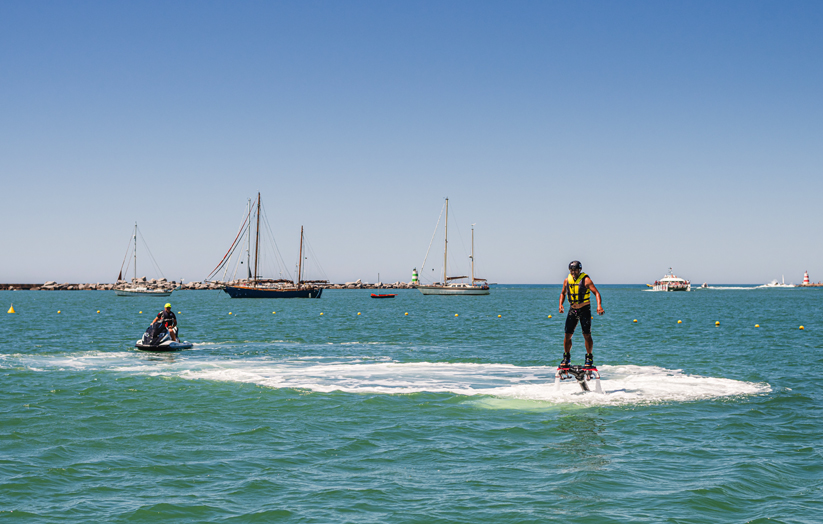
    Suited to wreck diving and underwater digital photography, among other specialities, the project also incorporates a display at the Portimão Museum, where visitors can discover the history of the ships and their patrons and commanders. Additionally, part of the project is the donation of a hyperbaric chamber to be installed at the Barlavento Hospital in Portimão, not only to provide a quick and efficient response to potential diving emergencies, but also to serve the local community and the country as a whole.

    As for location, divers have always been drawn to the Algarve. It may not have the crystal clear waters of the Red Sea or the Maldives, but the rocky cliffs and natural pools of the coastline, as well as the various shipwrecks off the coast of Sagres, in the west, have remained staple attractions. Selected for its excellent infrastructures, including its many hotels, restaurants, stores and nightlife, alongside its long, sandy beach, attractive marina and countless activities, it is hoped that Praia da Rocha will appeal to both seasoned and aspiring divers, as well as non-diving family and friends. So far, it seems to have paid off. Following the sinking of the first two decommissioned ships, more than 1,000 dives have already been registered during the months of November, December and January. “People feel the enthusiasm and the feeling of ‘flying’ through the ship, reliving its history,” explains Luís Sá Couto. “They are unanimous in saying that it’s one of the best dives and the only one of its kind. By promoting it, it will undoubtedly attract thousands of divers to the Algarve.”

    Any trained diver can access the park, although organisers recommend diving with a centre, club or diving school certified by Ocean Revival. Diving operators are also encouraged to get the Ocean Revival certification, obtainable through a course organised by the Musubmar Association. For more information, visit www.oceanrevival.pt

  • A WILD APPETITE

    A WILD APPETITE

    FORAGING IN THE ALGARVE COUNTRYSIDE, INSIDE DISCOVERS A WEALTH OF DELICACIES FREE FOR THE PICKING

    Most people living here in the Algarve can forget that the countryside is steeped in the bounties of nature, and many venture little beyond the abundant wild thyme that grows on the cliff-tops near Carvoeiro. Our guide into the depths of the Portuguese countryside was to be Raoul Van Den Broucke, a Flemish foraging expert who spent 20 years of his life living here in the Algarve until he moved to England in 1995.

    Here, he was one of the first to discover the wealth of wild mushrooms that grow in the Monchique hills and his work was the catalyst for the small but flourishing business operated today by locals of the hills, who harvest and sell the chanterelles and pied de mouton (hedgehog fungus) mushrooms that end up on the menus of gourmet restaurants as far away as the UK. But as we were to discover, there is a great deal more to foraging in the Algarve than mushrooms.

    Our journey started surprisingly with a visit to Sítio das Fontes, a natural spring in the Arade river valley near Estombar that has been developed into a leisure area for tourists and the local community. Here, walking along paved pathways, Raoul showed us counsome of the edible plant species that grow locally such as sea spinach, wild asparagus and samphire. To harvest some of the latter, we drove through Silves and en-route to Monchique stopped at a great spot in the Odelouca river valley where this much-prized product, a favourite ingredient of chefs to serve with fish due to its natural saltiness, seemed to be the main form of vegetation. It grows freely all along the tidal riverbanks and is good for eating between February and May.

    Considering that it sells at around €40 per kilo, this was quite a find! We left the river valley with a small crop of samphire and headed up the hills towards Monchique where, on a gentle slope near the village of Casais, we were led to the very place where Raoul had harvested his mushrooms back in the 1980s.  We gathered a small basketful, learning along the way some of the basic principles of identifying what we could and could not eat: mushrooms with white gills tend to be poisonous, and don’t even think of eating a mushroom you are not totally sure about.

    It’s fairly easy to get to know one or two varieties and concentrate on collecting just those, but a simple mistake can be deadly, such as the lighter shaded, morerounded mushroom that’s similar to the chanterelle which is in fact poisonous. Our crop from an hour or so of foraging for the mushrooms was limited to a small basketful, but in a tiny backstreet in Monchique town is local mushroom king José Páscoa, who had crates of chanterelles and pied de mouton stacked in his warehouse ready for export.

    Heading back down the mountain, an area of countryside near Silves is a haven for wild asparagus. But picking it is in fact no easy task, as the one or two green shoots of asparagus that grow in each of the thorny bushes are well protected. The technique is to push the bush aside with a booted foot to expose the shoot and snap it at the point where the flesh becomes tender. Elsewhere, a stone wall was covered in what looked like weeds, from where Raoul picked perhaps one of the most unusual plants of the day.

    The tiny round leaves known as pennywort taste remarkably similar to mangetout pea pods and make a fabulous salad ingredient, as do the wild fennel ferns that can be found growing all over the Algarve. There are other bounties of nature, too, just ready for the ‘picking’.

    The freshwater crayfish, for instance, that thrive in Portugal’s lakes and rivers, are a delicious treat, but must first be left in clean water for a few days to purge them of the mud that taints their flavour. And while snails of course are another favourite of foragers everywhere, it’s curious that the snail’s tiny eggs are prized by some chefs as a rare and very expensive form of “white caviar”.

  • TOUCHDOWN

    TOUCHDOWN

    THE NEWLY FORMED ALGARVE PIRATES PREPARE FOR THE NEW SEASON

    In a country with a long football tradition, how easy would it be to form a team in a sport that many had only seen on American television? Well one man tried, and it seems that the answer is, quite easy.

    American Don Dixon, who was assistant coach for the Lisbon Crusaders and who helped form the Liga Portuguesa de Futebol Americano just three years ago, has now brought American football to the Algarve, and the move seems to have paid off.
    Originally called the Portimão Pirates when it was formed back in May, the team has now changed its name to the Algarve Pirates as men from across the region flocked to Portimão to try out the sport. Just a few months on and the team now boasts almost 50 players, with around 30 attending training at any one time. Having moved to Portimão to start the Algarve branch of VidaMais, a non-profit organisation that helps promote cultural, educational and philanthropic initiatives, Don felt that an American football team was just the thing missing from the area. A football player in
    junior high and high school, he set off to promote the idea and put a team together.

    It was one such promotional tool – an article in a local paper – that caught the eye of one particular person. “I was so excited when I saw the article. All I had ever done was coaching,” says fellow American Llew Gittens, who owns a home in the Algarve. Now the head coach, Llew has been playing since he was 10 and played through junior high, high school and in the army before coaching teams in Italy and the UK.

    Coaching alongside him is Don, Franz Adebahr, who played professionally in Germany for 15 years, Pedro Viana, who worked with Don during his time at the Crusaders and American football commentator for SportTV, and Michael Reeve, a well-known local businessman who was introduced to the team at the recent BLiP exhibition.

    With training taking place at the sports complex in Mexilhoeira Grande, just outside Portimão, the team comprises players aged between 15 and 48 who travel from as far as Olhão in the east and Lagos in the west. All from different backgrounds, most are Portuguese but there are a number of international players, and although some do have some experience in the game, the majority are complete novices. “I’m so impressed after just six months. These are my
    children and they’re doing brilliantly,” says Llew. Don agrees: “We never imagined to be able to play in this
    year’s league, but they’ve been training throughout the summer and there’s so much passion already.”

    With the fourth season of the national league beginning in January and with a record number of teams taking part, Don is hoping to schedule some friendlies against teams from Portugal and even Spain. “We want to promote not only the team but also the sport and the league,” he adds. Training takes place three times a week: Monday evenings for technical and tactical training, Thursday evenings to put it into practice (both from 7.30pm to 9.30pm), and Saturday mornings between 9.30am and 12pm for drills and game play.

    The search for players (particularly those who are strong and/or fast, or with experience in rugby) is ongoing,
    as is the search for partners and sponsors to help the development of the team. To learn more about the Algarve Pirates, please visit their Facebook page or contact Don on 960 387 408.