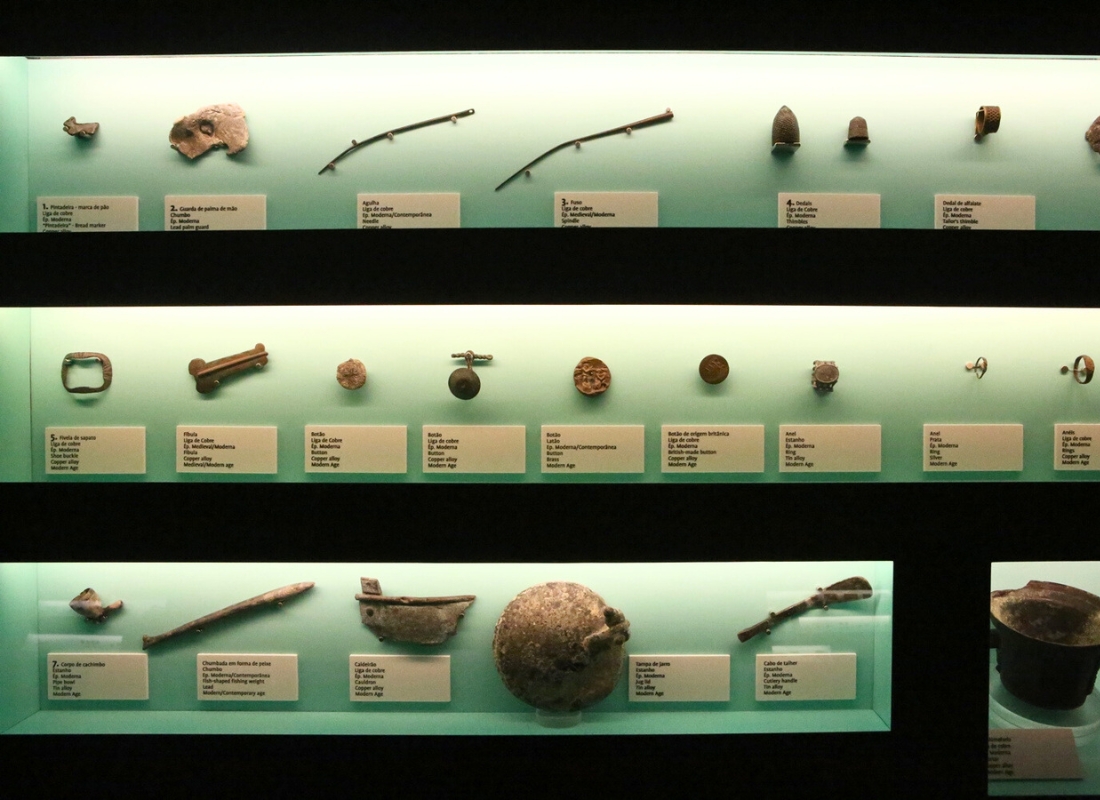
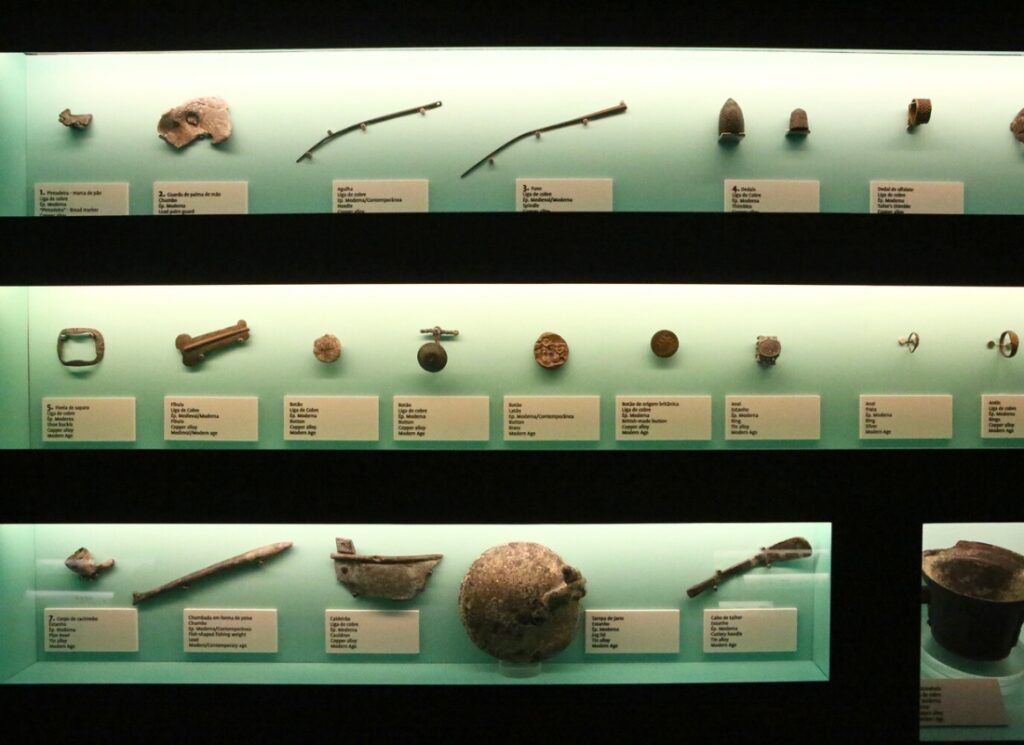
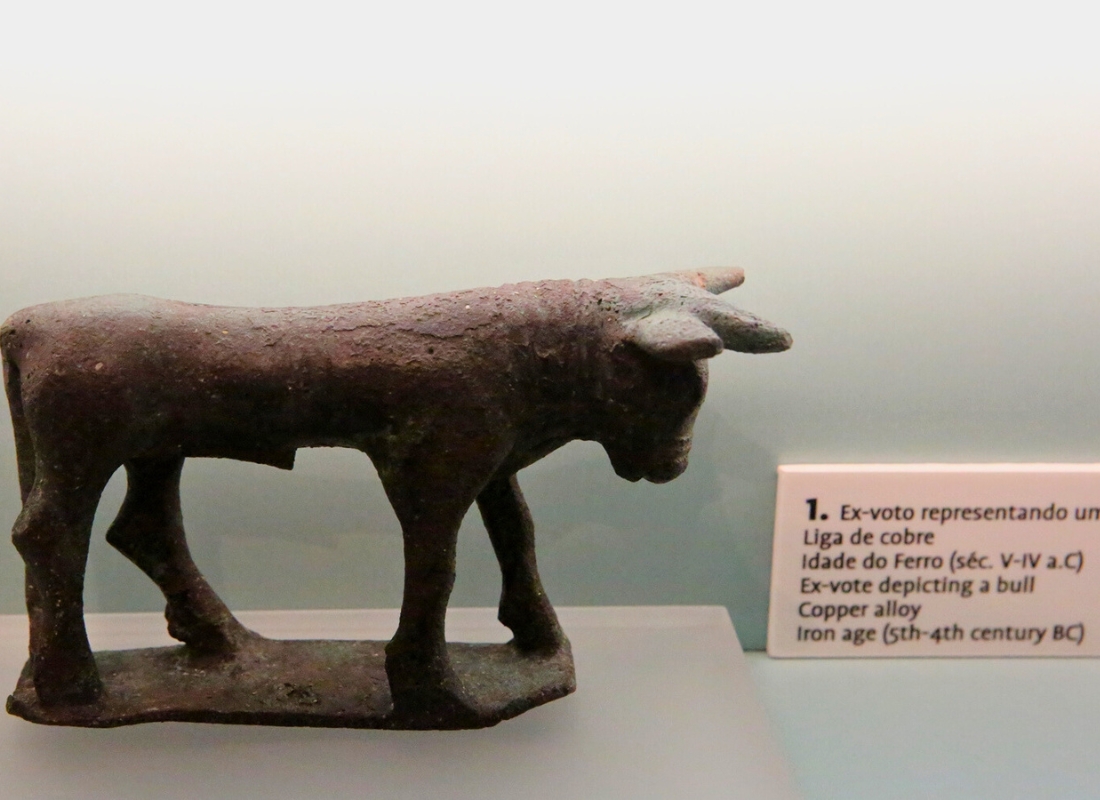
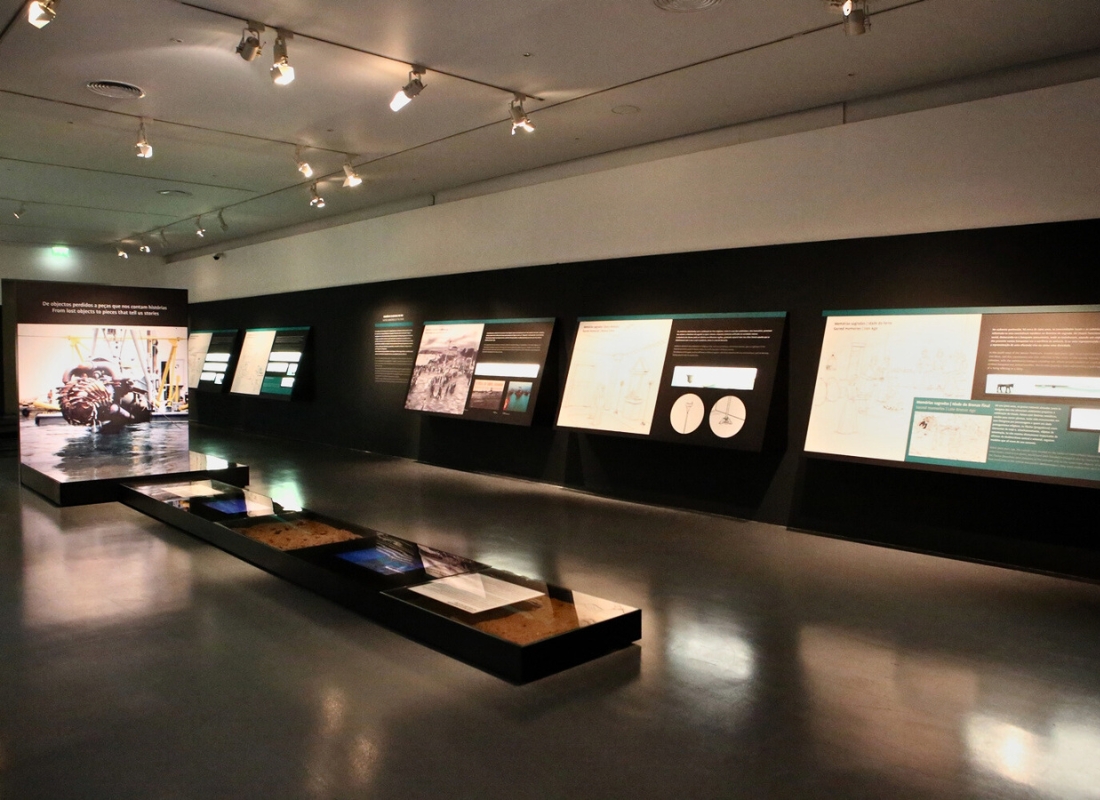
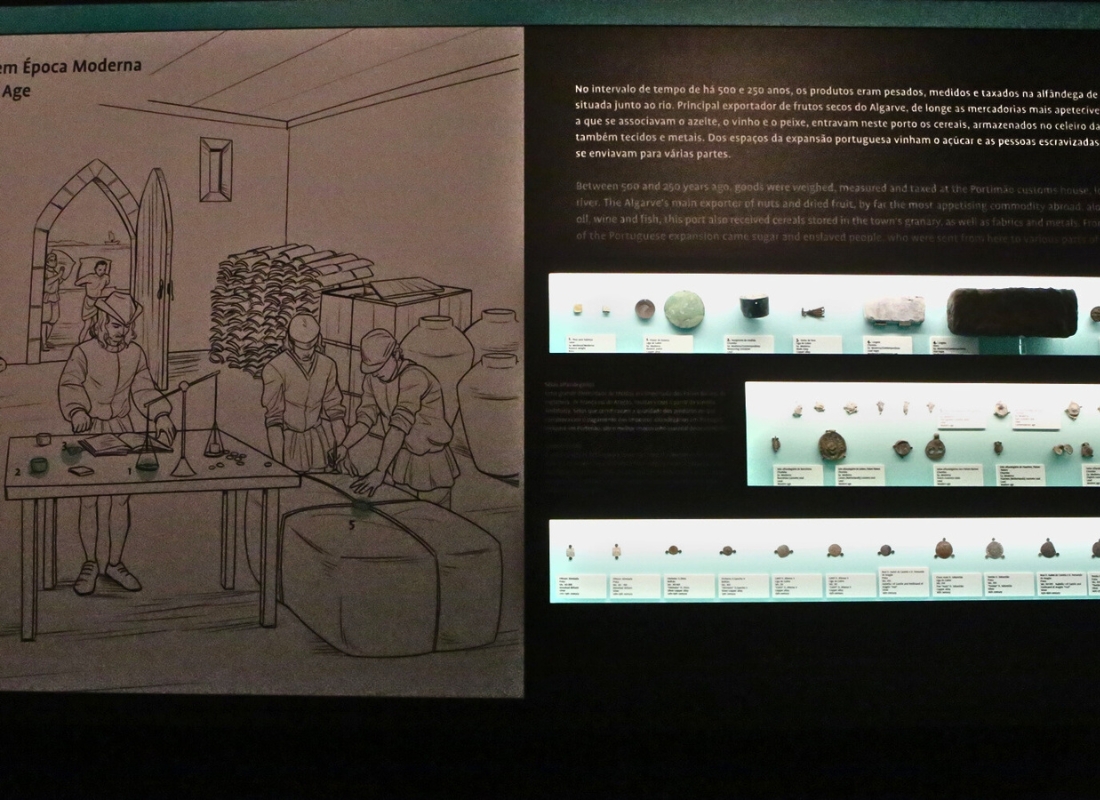
Portimão Museum is hosting an exhibition with findings from research carried out over the last few decades, showing finding proofs that the region has been occupied since prehistoric times
– March 25, 2024 | Photos Portimão Museum
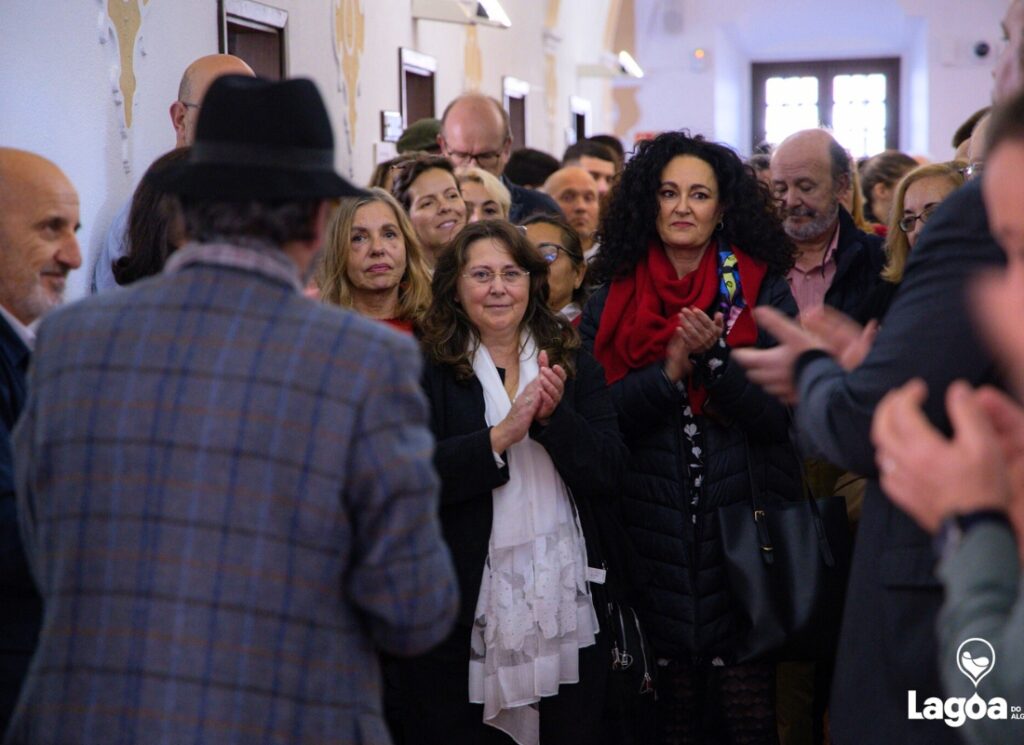
The inauguration of the exhibition “Stories That the River Brings Us” aims to show the general public the result of scientific research carried out over the last few decades.
The research has brought together various fragments of the city’s past, revealing many stories about the Arade River.
“Through objects and illustrations of environments, the visitor is taken through the stories of naval activities in a port open to the world”, with stories of “defence and protection of the port”, as well as of the daily riverside life.
Portimão’s Arade River has been an access point to the interior of the Algarve since ancient times due to the excellent natural harbour conditions of its estuary, which led Portimão to grow in close connection with the river, forming part of an extensive network of commercial and cultural exchanges.
Because of its excellent natural harbour conditions, Portimão was possibly called ‘Portus Hanibalis’, ‘Portus Magnus’, or ‘Cilpis’.
Since the Arade River has been silted progressively for some time, navigation has been restricted, requiring extensive dredging to remove considerable amounts of sediment from the riverbed, leading to the discovery of countless traces of the past, indicating that this area has been inhabited since prehistoric times.
These “testimonies from other eras” were collected by members of the Ipsiis Project Association, who have been working with the Portimão Museum carrying out an innovative research project since 2014, entitled “DETDA – Prospecting” with metal detectors in the dredged deposits of the Arade River and the Alvor estuary, with the museum also highlighting the significant involvement and participation of the public in this process.
The exhibition is open to the public as follows:
Until July 31st and from September 1st: on Tuesdays (from 2.30pm to 6pm) and from Wednesdays to Sundays (from 10am to 6pm)
During August: Tuesdays (7:30pm-11pm), Wednesdays to Saturdays (1pm-11pm), and Sundays (3pm-11pm).
The exhibition runs until November 3, 2024, and entry is free.
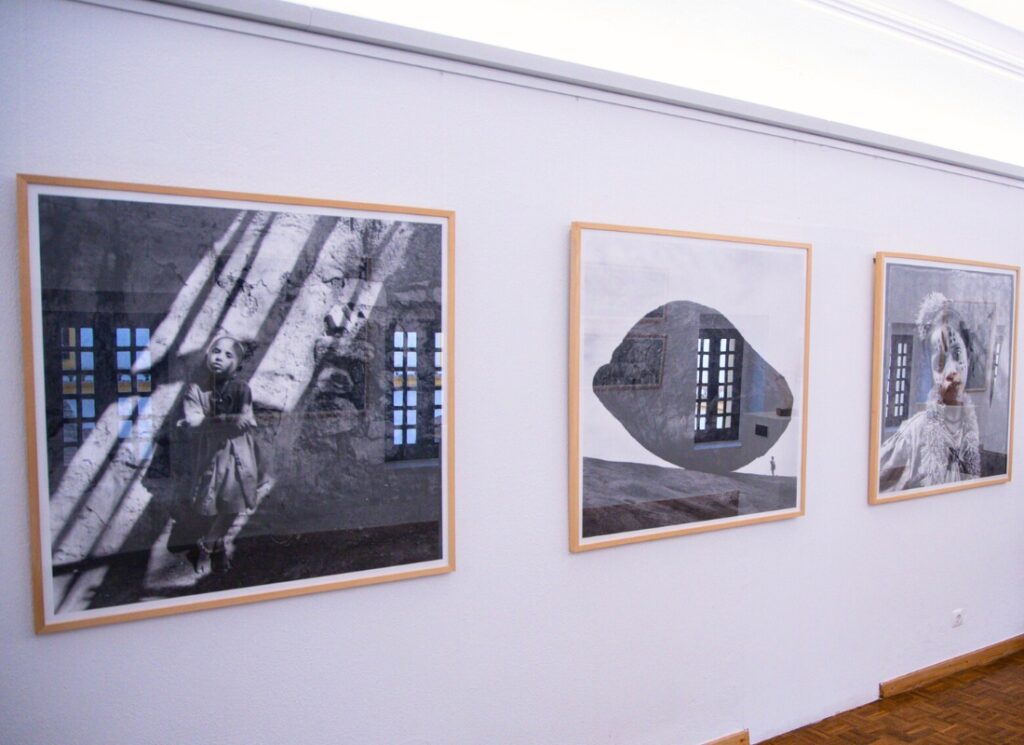
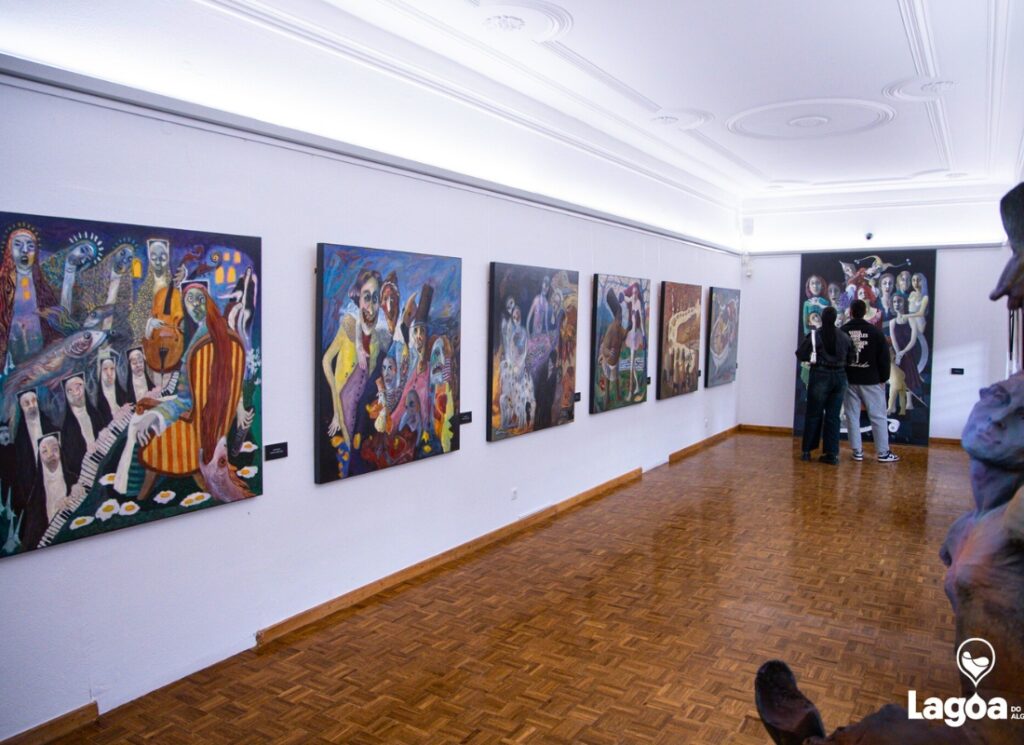
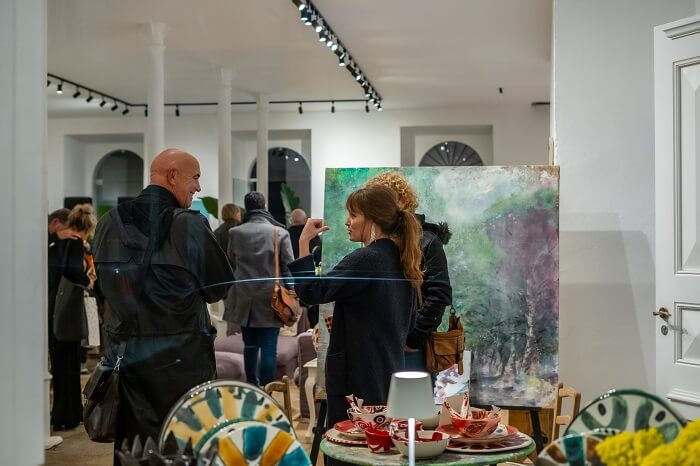
A celebration of artistic diversity, the Art Exhibition Lagoa features all forms of artistic expression, celebrating “the richness of human creativity” and offering “a showcase for emerging and established artists”.
The exhibition aims to showcase “emerging artists, providing viewers with a new and exciting window into contemporary art”, while also encouraging collaboration between artists from different disciplines as well as collaborations to live events.
By connecting art lovers from around the world and promoting cultural exchange, the Art Exhibition seeks to transcend borders and enrich global art culture.
Focusing on “diversity, collaboration and artistic discovery”, the Art Exhibition brings together two vibrant cultures from Portugal and Spain, aspiring to become “a captivating window for those looking to explore the many facets of contemporary art”.
Visitors can explore the exhibition from 9.30am to 12.30pm and 2.30pm to 5.30pm, Monday through Friday. Entrance is free.
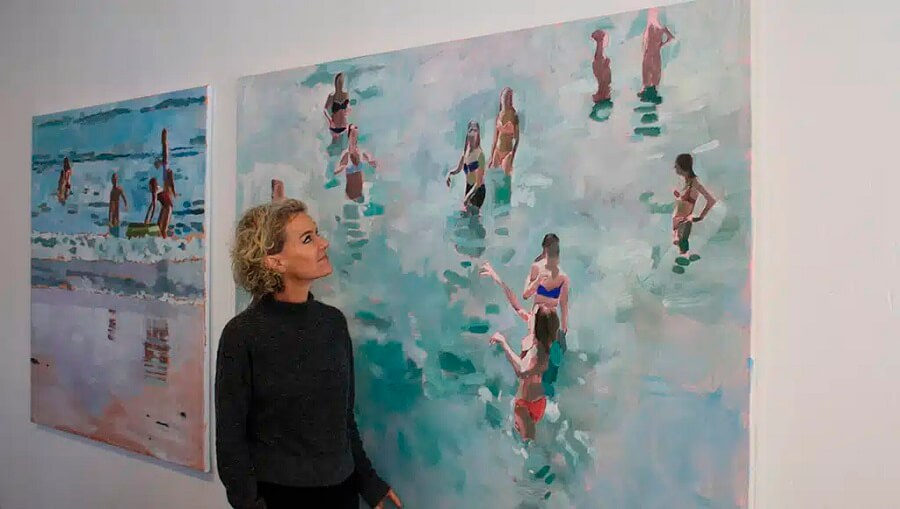
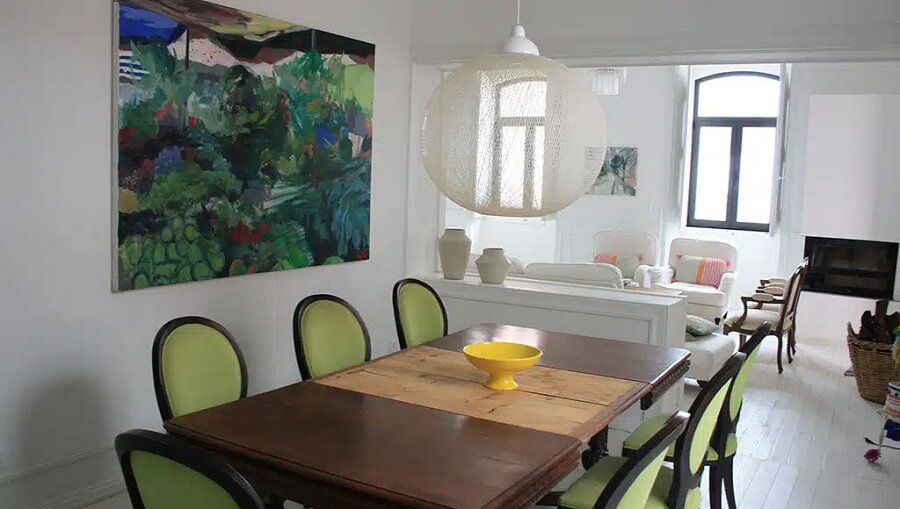
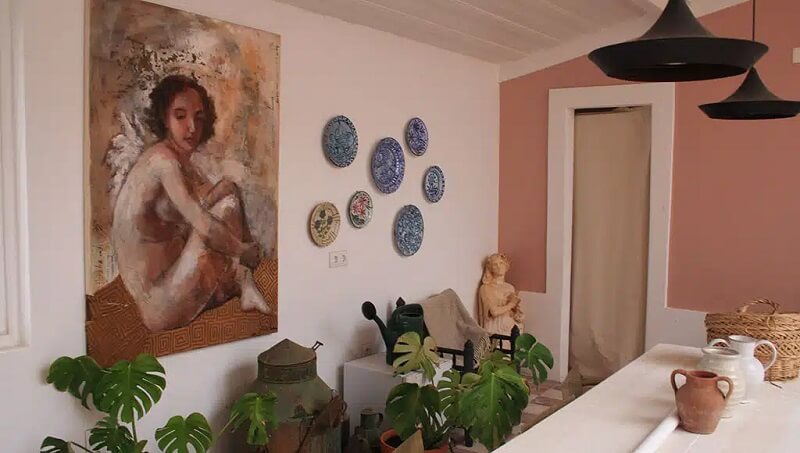
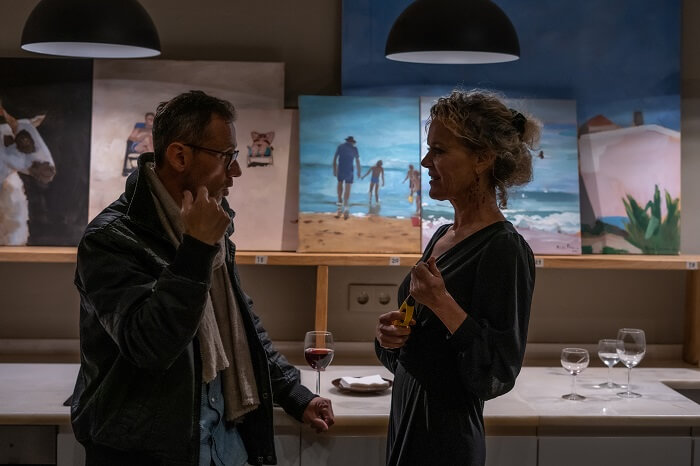
The two-storey building in Portimão showcases not only a “combination of abstract and figurative” works by Meinke, but also aims to feature “workshops, yoga, live model painting, or serving as a creative retreat space”, with temporary collective exhibitions also expected
– January 22, 2024 | Text Beatriz Maio
A year ago, the Dutch artist opened her new art gallery. Since then, the space has grown into so much more.
The special day was marked on December 15, with the gallery’s first collective exhibition, which she says is a starting point for a new facet to the gallery that she wants to explore.
Those who know Meinke, and her work, know she is a woman of many talents, ranging from ceramics to jewellery, including sculpture and decorative objects made in clay or plaster.
After spending her childhood in the Algarve, where she moved to with her parents at the age of two, Meinke returned to the Netherlands at 14. Three years later, she moved to England, where she stayed for only two years.
From age 19 to 21, she went backpacking across Europe. Her adventurous spirit took her to Italy, where she studied jewellery. However, she felt “a limitation in creativity” in this field and decided to take painting classes.
Upon returning to Portugal, she lived a year in Lisbon but eventually returned to the Algarve. She then decided to move in the 1990s to Moscow. Making jewellery in the Russian capital proved challenging due to a limited access to materials, Meinke explained. She then enrolled in the School of Fine Arts in Moscow to learn more about painting.
However, her experience at the school was affected by the collapse of the Soviet Union. While times were tough, her creativity never waned. In fact, Meinke recalled how hunger was prevalent in the country, but there was a spirit of sharing among the population, both in terms of food and ideas.
After returning to Portugal, Meinke started painting professionally at the age of 28 while residing in Lagoa again. She created sketches, drawings, and paintings but did not see art as a full-time job until she sold her first works to a friend in Moscow.
Later, she held her first exhibition at the Cultural Centre of the São José Convent in Lagoa. As she continued her journey, she met artists living in the eastern part of the Algarve, which led her to move to Olhão, where she stayed for a decade. It was a “spontaneous decision”, she explained, as she felt she needed to be surrounded by more artists.
Meinke eventually moved back closer to her family, with plans to buy a house in Portimão with a unique concept in mind. She sought a space where she could both live and showcase her work, having found it, and completely renovated it.
Setting aside her fear of opening her own gallery, Meinke took a risk, resulting in a “super challenging year” of preparation and growth. At first, Meinke wasn’t entirely sure about how the space could be used. “It wasn’t planned,” she revealed, explaining that ideas eventually started to blossom. Now, she wants the building to also host temporary exhibitions, among other events.
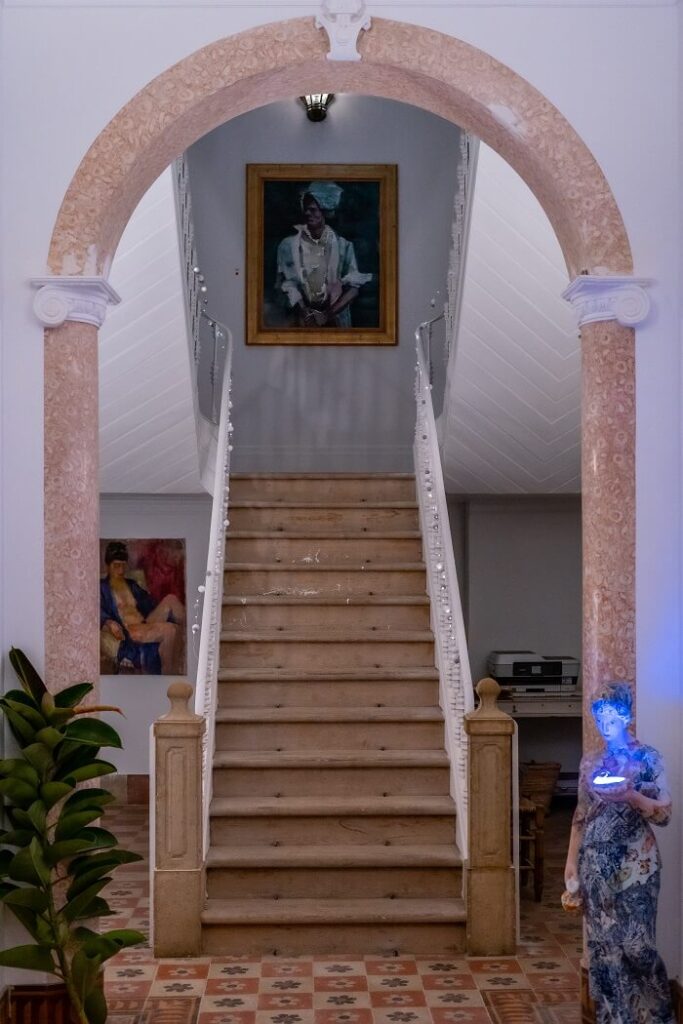
The two-storey building, functioning as an art gallery on the ground floor, has two charming apartments on the first floor, rented individually as holiday rentals (Alojamento Local, or AL). Decorated with her paintings and artworks, both aim to convey a sense of well-being and tranquillity.
One apartment has four bedrooms, with a north-facing terrace and a view of the garden, and the other has six, with two suites located on the spacious south-facing terrace. Both have ample common spaces and fully-equipped kitchens.
Throughout her life so far, Meinke took ceramic classes in the centre and south of the country, learning different techniques. She also took sculpture classes in clay in the Algarve. All of these experiences and this knowledge has led her to the style of works she presents at the gallery now: a “combination of abstract and figurative”.
Her mother is also an artist and “a very creative person in the way she approaches life”, she says. When they moved to Portugal during the Estado Novo regime, there was no freedom of expression through the arts, and creativity was limited. Restrictions, however, led Meinke to learn that “when it’s not possible to buy something, you invent, you improvise”.
The inspiration for her works comes from her experiences in her daily life. “I am a sensitive and spontaneous person, reacting to the environment around me,” she noted.
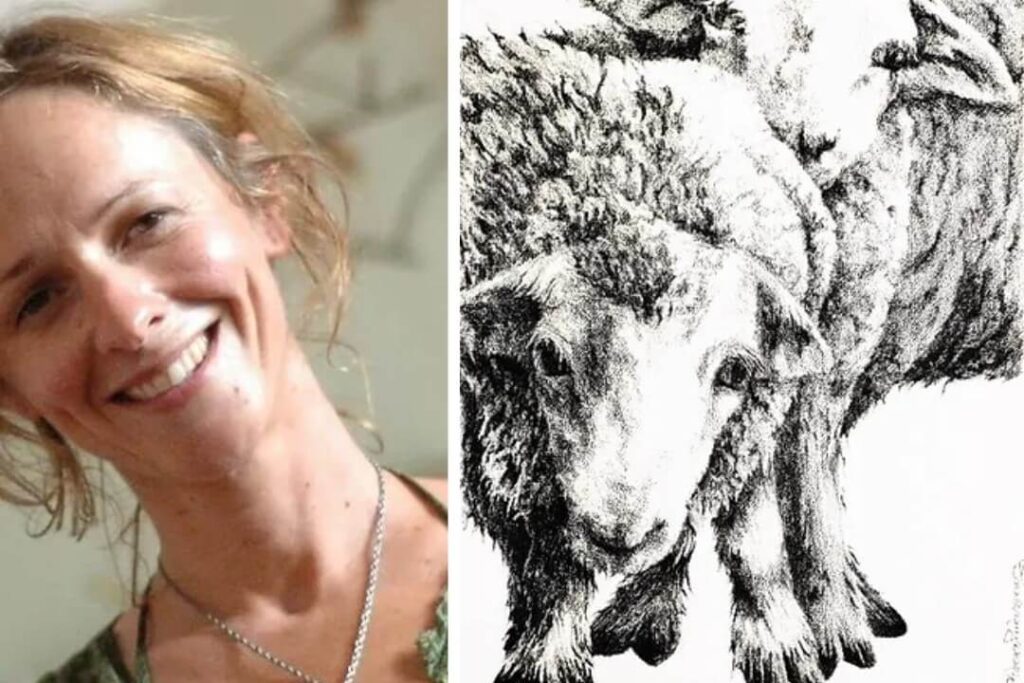
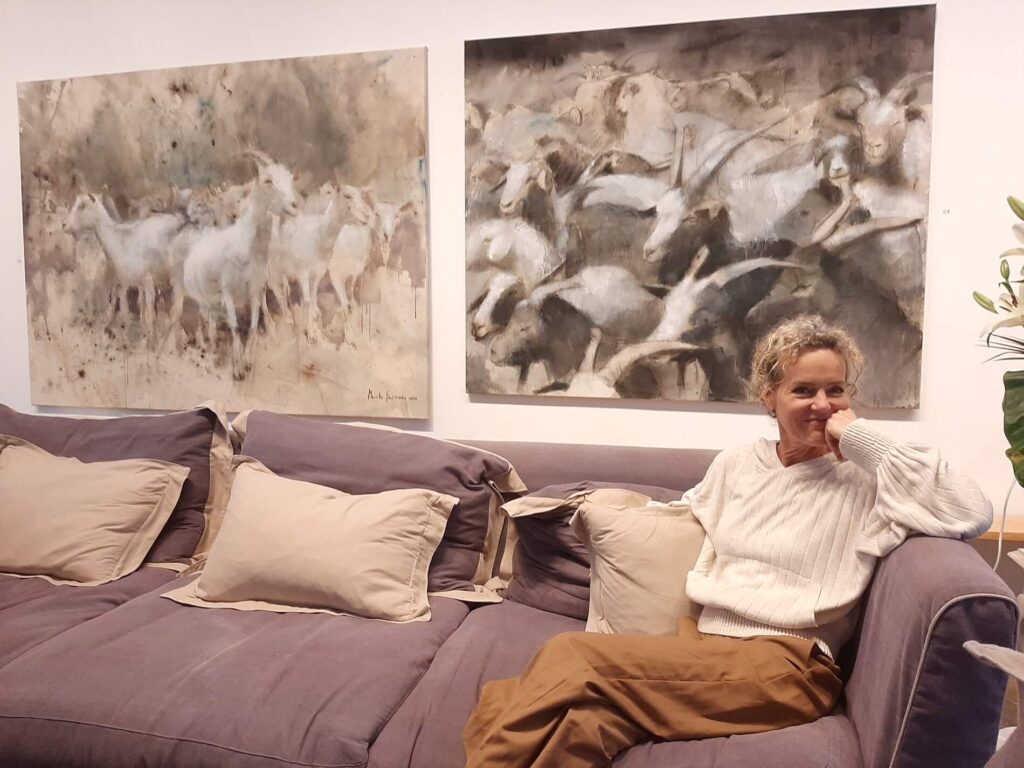
Meinke’s love for animals, nature and simplicity is evident in her paintings. She grew up on a farm surrounded by animals, but goats fascinate her the most, which is why they appear in various paintings and ceramic pieces. As for her landscape paintings, they were “a reaction to the pandemic”, namely how nature served as an escape for many during the spread of Covid-19.
Despite making great progress in the last year, Meinke says this is just the beginning, with her gallery boasting opportunities for workshops, yoga, live model painting, or serving as a creative retreat space. More temporary collective exhibitions are also expected.
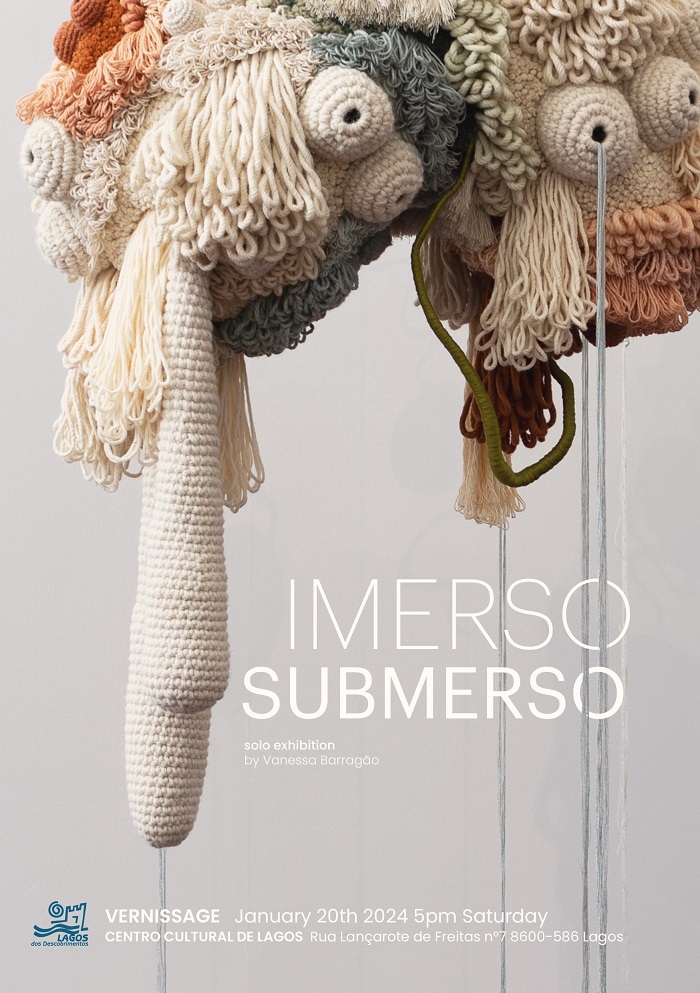
Lagos Cultural Centre will present the solo exhibition “Submerged/Immersed” by the Algarvian Vanessa Barragão
– January 19, 2024
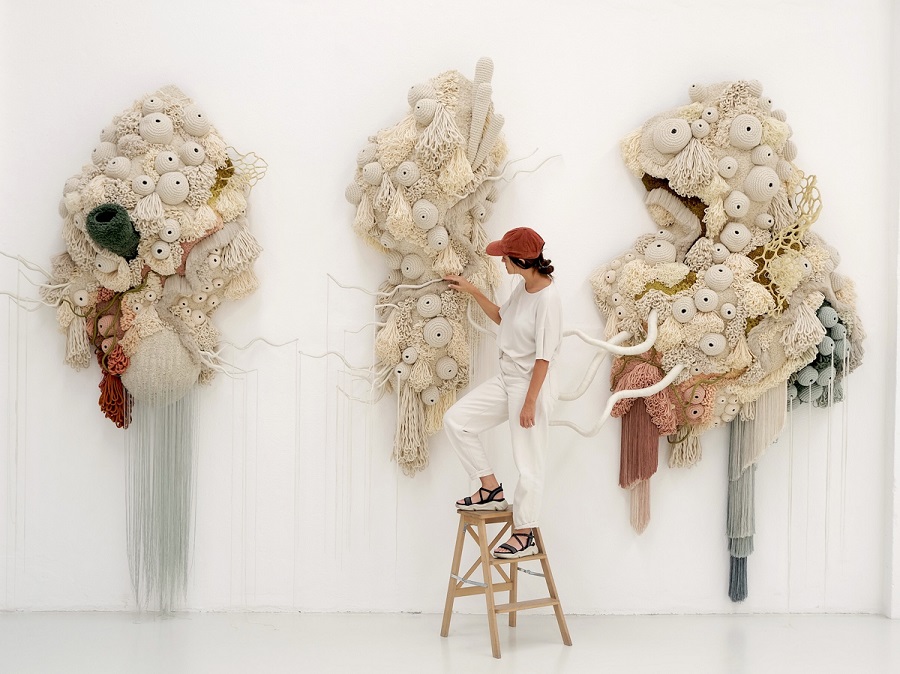
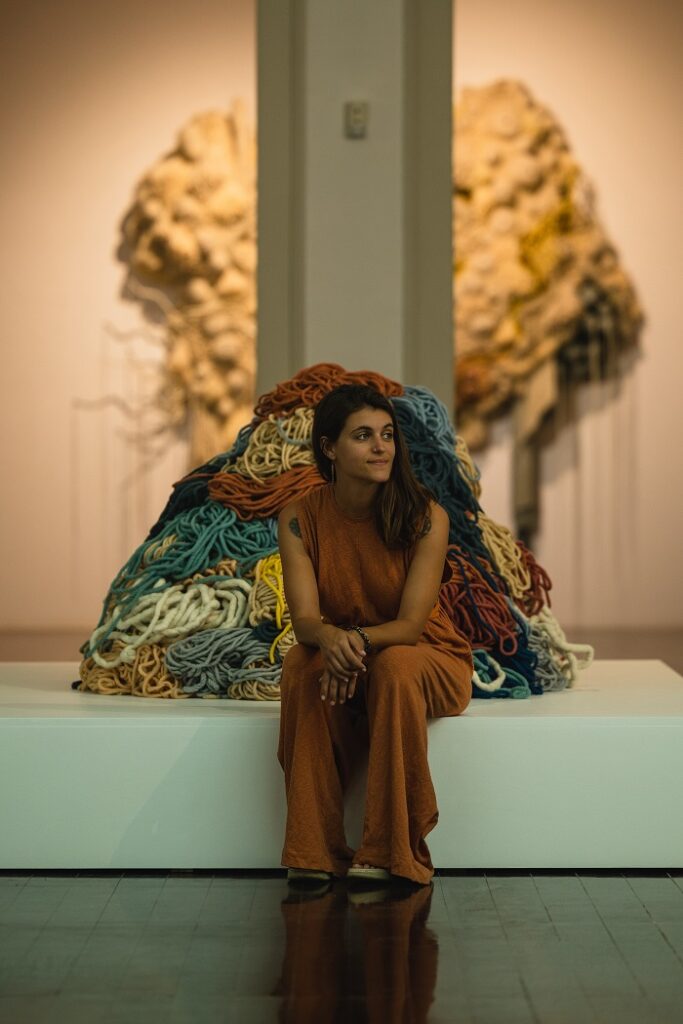
The Algarve-born textile artist Vanessa Barragão has shown her work in Portugal, England, Germany, the United States, Taiwan, Shanghai, and South Korea, garnering international recognition online with 577K followers on Instagram alone.
Her large audience has become familiar with beautifully crafted tapestries, rugs, and wall hangings, which are made from latch hooks, crochets, felts, weavings, and fibre manipulation.
The ‘Submerged’ theme of the exhibition focuses on the underwater world, “which is often ignored yet essential to the food chain and life as we know it on Earth”. It also refers to the internal world of the artist and by extension the viewer. The idea of the artist exploring the uncharted realm of the imagination, a deep dive into the subconscious and the creative process.
By following a methodical approach to production and materials, Vanessa becomes completely absorbed in each project, which is why the title ‘Immersed’ refers not just to the submarine but also to the artistic process, as well as to the intention of the exhibition.
The artist invites everyone to walk around and to explore the remarkable works at close hand, and to consider life’s relationship with the environment and art’s creative methods.
“I’m interested in creating an inner world, a moment for reflection and calm. Through an exploration of material and space, I want to present a moment in time, abstracted and far removed from the global chaos and confusion,” states Vanessa Barragão.
The exhibition opens this Saturday, January 20th, at 5 pm and will run until March 23rd at the Lagos Cultural Centre, between 10am and 6pm from Tuesday to Saturday. Entrance is free.
About the artist
Vanessa Barragão was born in Albufeira in 1992 where she spent her early years exploring the abundant coastline of the Algarve, leading to a profound connection to the Ocean.
Barragão achieved a Masters degree in Fashion and Textile Design at Lisbon University, exploring the possibilities of yarn and tapestries with an interest in sustainability and ecology.
In 2016 she relocated to Porto where she honed her artisanal skills working as a designer in a rug factory. She now works out of an impressive studio in her hometown of Albufeira.
The ‘Life Lines’ exhibition will be presented until January 2
– December 12, 2023
Artist Tara Bongard
A new exhibition titled ”Life Lines” by local artist Tara Bongard is on display at Casa Manuel Teixeira Gomes in Portimão.
The exhibition showcases Tara’s most recent graphite drawings of nature in the Algarve and runs until January 2.
About the artist
Tara Bongard was born in London, England, but her roots are Anglo-Portuguese, having spent childhood between England and Portugal. After finishing her studies in England, she continued her passion for drawing throughout her travels in America, Central America, Turkey and the Middle East. Settling In Israel for 10 years, she apprenticed in woodwork and then glass painting and fusing, returning to live permanently in Portugal in 2005.
Tara says her works are ”deeply inspired by nature”, with pieces which range ”from decorative to functional”.
In solidarity and support to the firefighters of Monchique, who “keep our Algarve hills safe”, 20% of the sales from the exhibition will be reverting to Bombeiros Voluntários de Monchique as ”every little thing counts”, according to the artist.
Lagoa’s library will host a joint exhibition of paintings starting December 11
– December 7, 2023 | Text Michael Bruxo
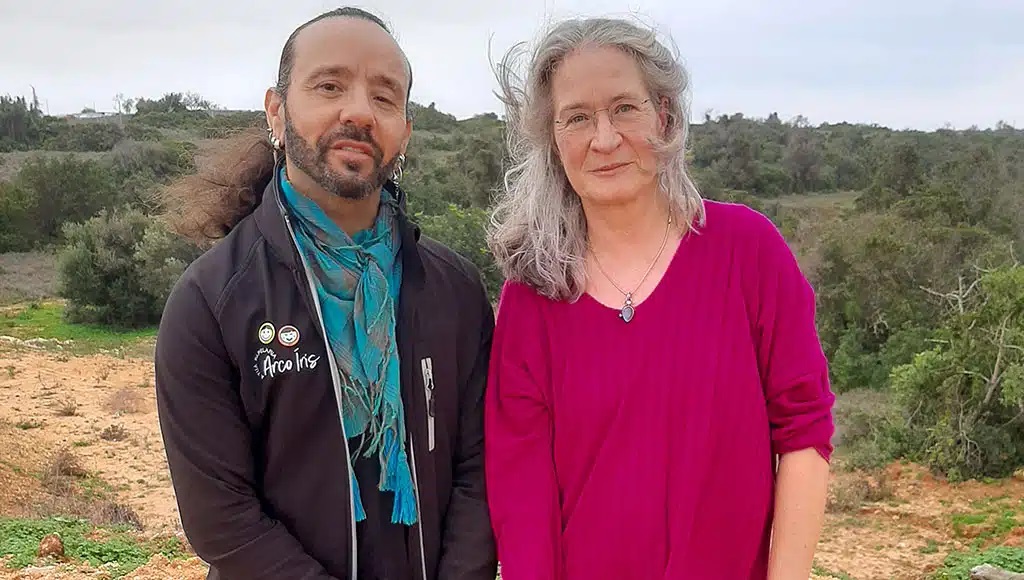
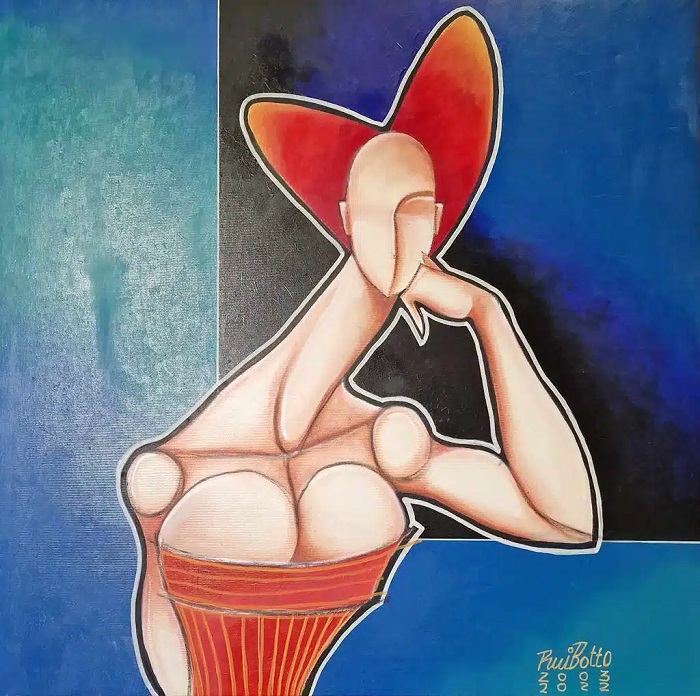
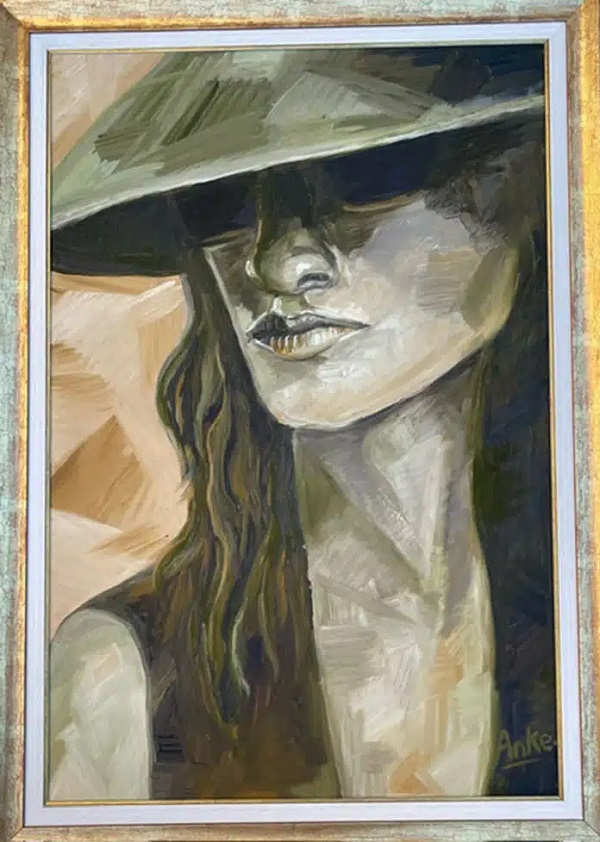
On Monday, December 11 at 5.30pm, Lagoa’s municipal library will inaugurate an exhibition of paintings by local artists Anke Punt Bach and Rui Botto.
The two Lagoa-based artists will be showcasing their creations at the library until January 31, 2024.
About the artists
Anke and Rui met at the Arco Íris stationery store at the Sudoeste Retail Park in Alcantarilha, where Rui works and where Anke led a series of art workshops.
After getting to know one another, the two artists developed a mutual respect for each other’s art.
Anke – a 58-year-old German artist who has lived and exhibited her works all over the world before moving to the Algarve in 2019 – eventually decided to challenge Rui, 55, to join her for a joint exhibition, given that Rui has not exhibited his works for over a decade.
While Anke has made a name for herself in the region for creating beautiful pieces inspired by the Algarvian coastline and using materials she finds during her hikes, Rui has remained a more reclusive artist, painting what he finds interesting and what fulfils him artistically as more of a hobby.
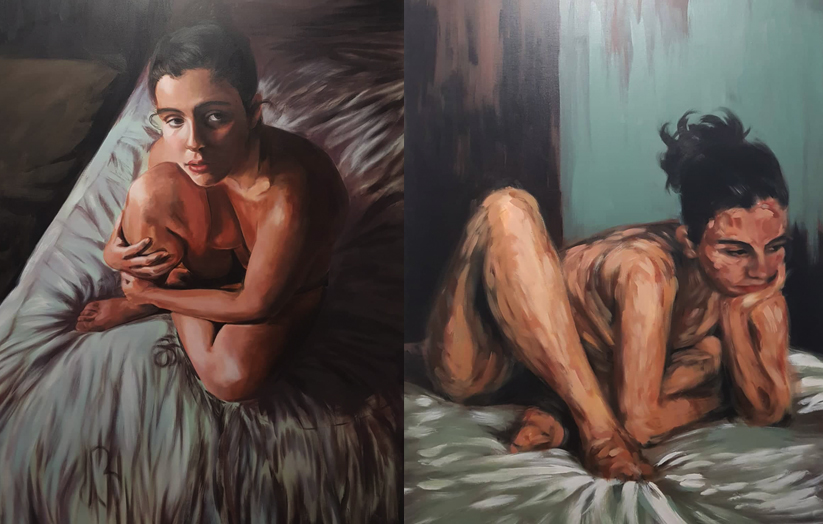
Rui Botto describes his art as “homoerotic”, “inspired by colour” and “figurative”, with his goal being to cause an impact on the viewer.
As his works often feature nude male bodies in suggestive or even sexual positions, Rui is well aware that his works might not be palatable to some. But as he explains clearly, he paints solely for himself, and whether others like his works or not is secondary.
“Whether they love it or hate, the goal is to make the viewer feel something,” Rui told us.
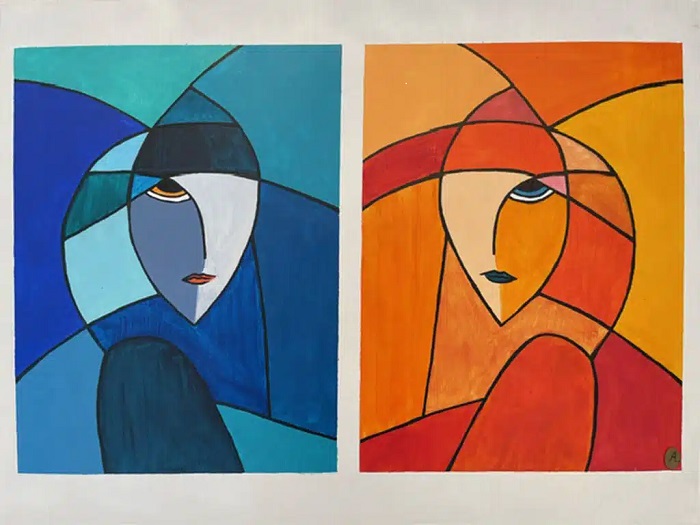
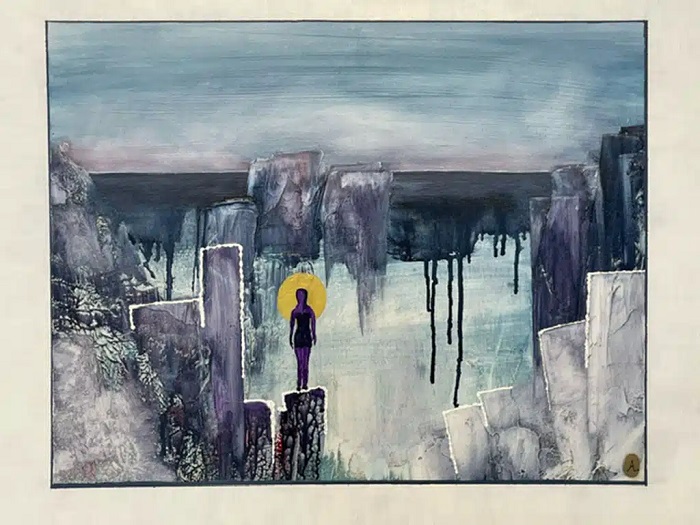
Rui, who has also worked as a professional make-up artist, will be presenting 11 paintings on canvas, while Anke will be exhibiting three paintings from her time in Russia, as well as four series of three paintings each – ‘The Red String’, ‘Serenity’, ‘True Color’ and ‘Connection’ – on wood.
For Anke, this exhibition marks a return to painting on wood after years of using materials like rocks that she has found on local beaches to create her artworks.
The name of the exhibition – ‘The Show Goes On’ – aims to represent the changes that both Anke and Rui are experiencing at this moment in their lives, with Rui exhibiting his works again after so long and Anke taking on new artistic challenges.
Anke also hopes that the exhibition may bring more attention to Rui’s work in the Algarve.
“He’s so talented and has a distinct style. If he lived somewhere like New York or Paris, he might be selling out galleries,” Anke added.
‘The Show Goes On’ can be visited during the library’s opening hours: weekdays (excluding holidays) from 10am to 1pm and 2pm to 6pm. Admission is free.
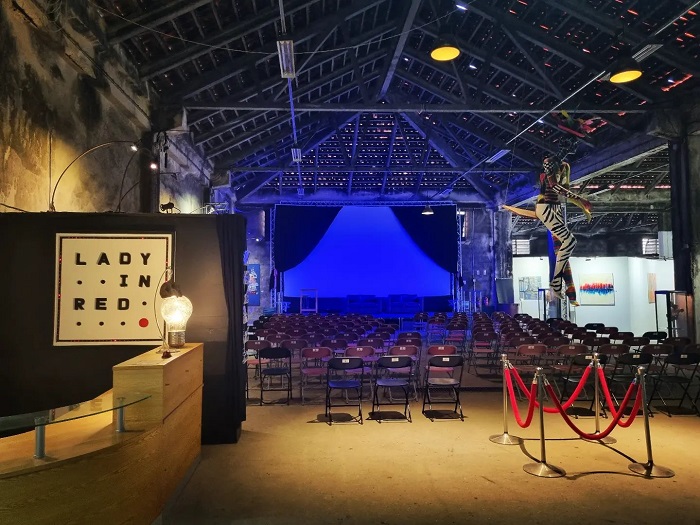
Lady in Red, the art gallery formerly located in the Adega Cooperativa building in Lagoa, moved to its new premises in Portimão in October
– December 3, 2023 | Text & Photos Michael Bruxo
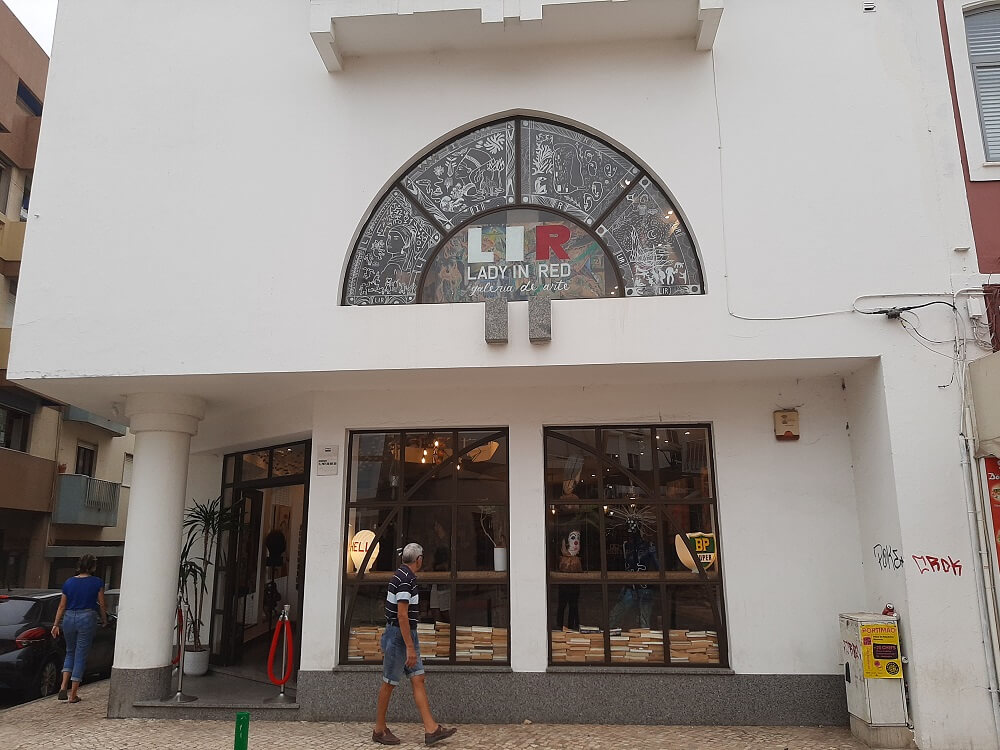
Lady in Red, the art gallery formerly located in the Adega Cooperativa building in Lagoa, moved to its new premises in Portimão in October.
The art gallery is now located in a two-storey space on the town’s busy Rua Infante Dom Henrique (no.140), just a stone’s throw away from the local shopping street Rua das Lojas and near two other art galleries, making this part of Portimão something of a new artistic hub.
As gallery managerVasco Lamberti stated, moving to a new location was just a matter of time. “The building in Lagoa was starting to collapse and was becoming dangerous for both clients and staff. It was also for sale, meaning we had no guarantee we would be able to stay there for much longer,” he said. From the get-go, the plan was to move to Portimão.
“It’s true our previous gallery was located on a national road (EN125) and had ample parking, but we wanted to be in a more central area, closer to local citizens and tourists. Daniela Medeira (co-manager) and I are also from Portimão, so it’s great to be able to bring the gallery to the town,” Vasco explained.
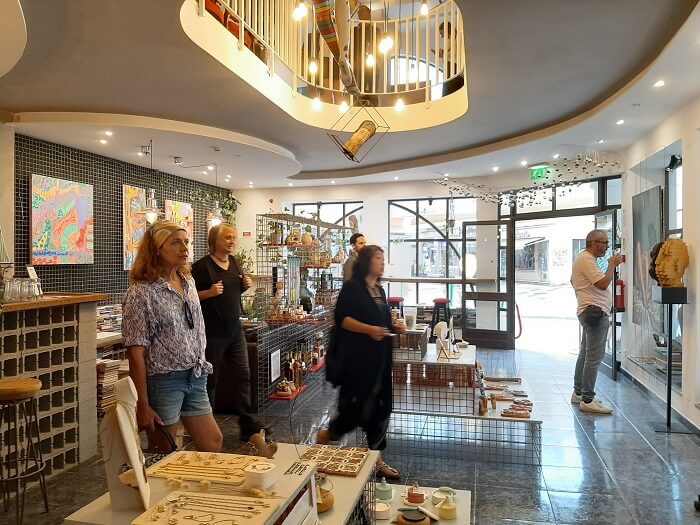
What is immediately apparent to those who knew the previous space in Lagoa is that the new gallery is much smaller. “The biggest challenge of this move was moving from a 3,000m2 space to one with 200m2; we had to fit everything in here, and that was the most difficult part,” he told us.
Whilst Lady in Red continues to work with the same 50 or so artists, both Portuguese and foreign, the number of artworks it is able to exhibit at the same time is now much lower.
The process of moving all the artworks and carrying out the needed renovations to the new building took around four months and a half. “We reused everything, from recycled materials to the metal grids we used at the previous gallery,” said Vasco. “This new space was in good condition, but it wasn’t suitable for an art gallery, so we had to transform the space to fit our theme.”
The smaller space means that Lady in Red will no longer be able to host the same scale of events that it did before, although it has maintained the concept of being “more than just an art gallery”.
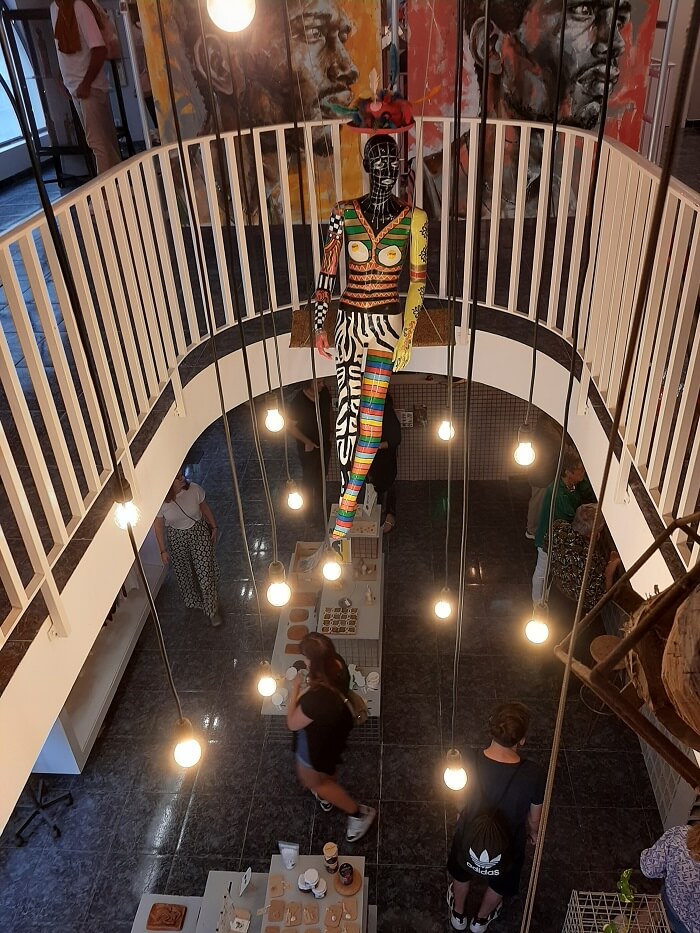
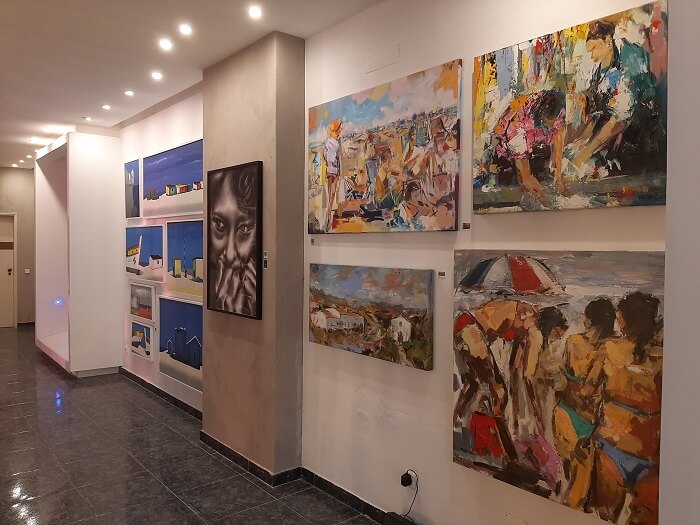
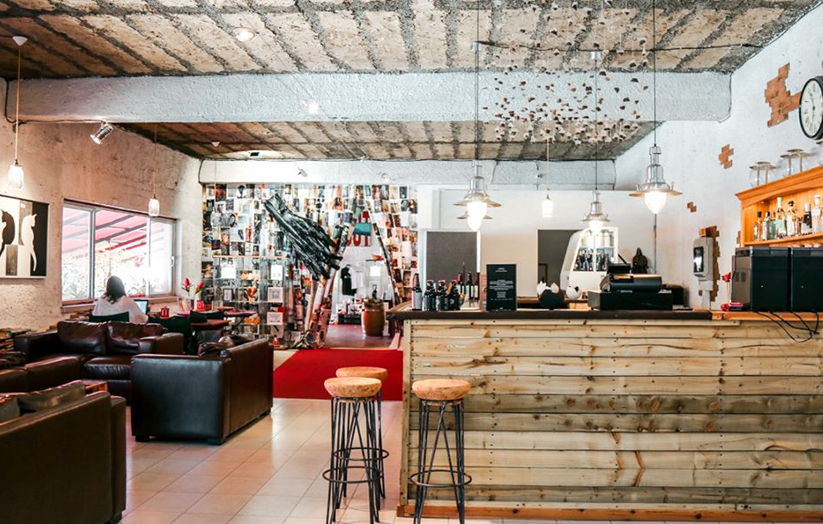
Visitors will find a selection of local products, from hot sauces and honey to liqueurs, a bar, and a selection of smaller art pieces on the ground floor, whilst the larger artworks are exhibited on the first floor, which has a floor opening providing a view of the ground floor and vice-versa.
Lady in Red will now have rotating exhibitions, allowing the gallery to showcase the many artworks of its collection over time despite its smaller physical space.
Being located near other art galleries is not something that worries Vasco Lamberti. “We actually think it is very positive, and we think the other galleries should think the same, because any client we attract can always become a client of their galleries and vice-versa,” he said, stressing that the area is becoming an “art neighbourhood”.
A nurse for over 20 years, Sandra Correia has been splitting her time between health and art, two passions that in recent years have gone hand in hand in her life.
She was born in Portimão, is a mother of three, an entrepreneur, and, recently, an artist. She has been interested in this area since she was a child – crafts were her favourite subject at school – but she had never developed it on a professional level until a year ago.
A collector of art books, she has always also enjoyed DIY (Do It Yourself) online pages and had an interest in decorating. Even if she only decided to start selling her work recently, her first paintings date back to 2020, when the Covid-19 pandemic began.
“I’ve always loved art, museums, and painting,” she stressed. The restrictions led Sandra to explore her creative side and experiment for the first time, from paintings to textured pots. Since then, she has never stopped and now she shares her works on the Instagram page “Art Mind Studio”, an account she uses to inspire others and share a little bit of her artistic side, which was “forgotten for so many years”.
Not only does she wish to convey a sense of calm, tranquillity, and well-being to those who appreciate her paintings, but she also aims to pass on a message about mental health, since she works in psychiatry and it is something she deals with closely.
“Handicrafts can be a good hobby that works as a therapy. Exploring creativity brings benefits for mental health,” the artist emphasised, mentioning the importance of “expressing feelings and emotions, self-connection and reducing stress”, but it does not stop here. Creative work has advantages such as helping you connect with your inner self, increased concentration, and the promotion of relaxation.
Anxiety at work, caused by a long-lasting crisis in the Portuguese national health system, together with monitoring cases of burnout among colleagues and complaints from patients, led Sandra to look for a “mechanism” to deal with the pressure.
It all started with old items she had at home that she no longer identified with, so she challenged herself to give them “a new life”.
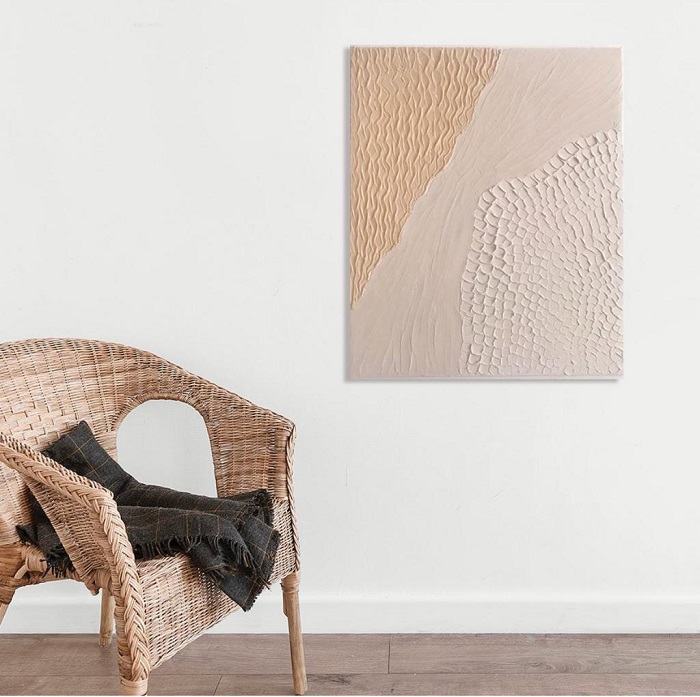
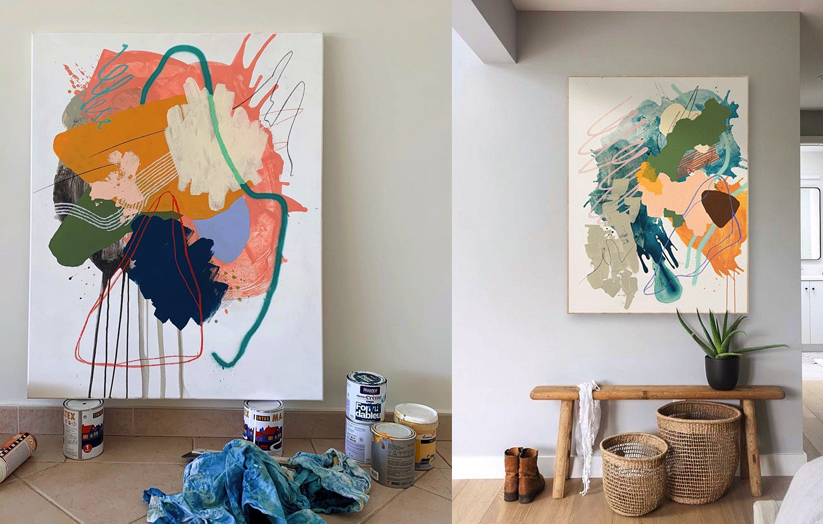
Even though Sandra created original pots that would look marvellous in any room, she preferred to dedicate herself solely to painting, discovering more techniques and realising how far her imagination could go. And so, her first painting was born, in black and white, with abstract shapes and a unique texture.
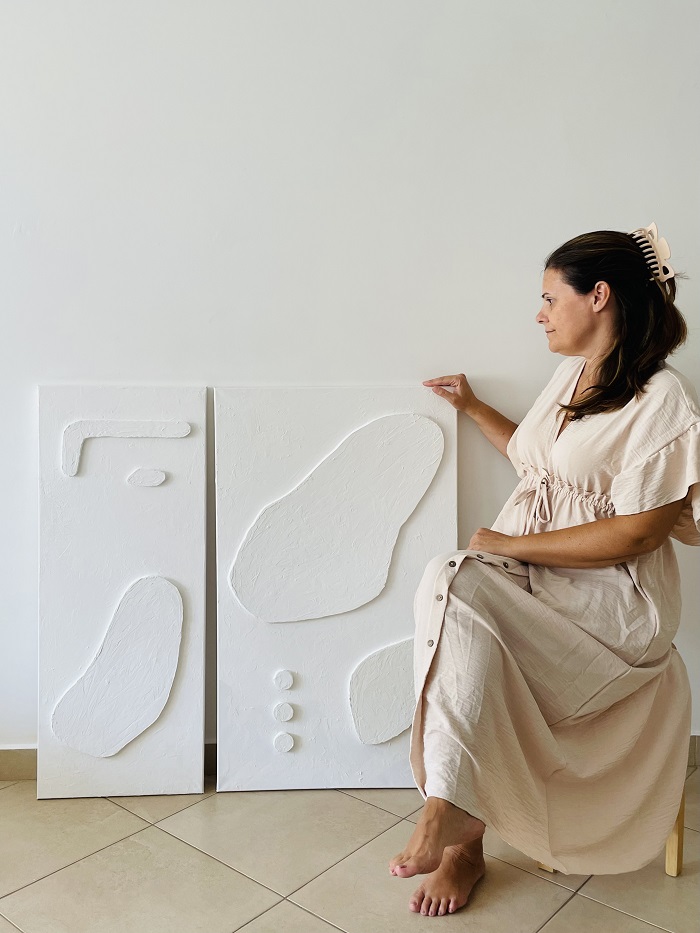
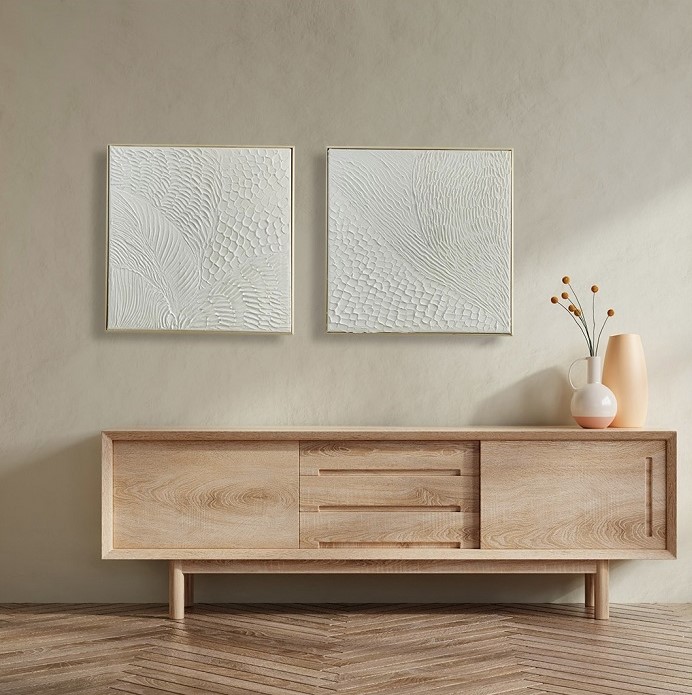
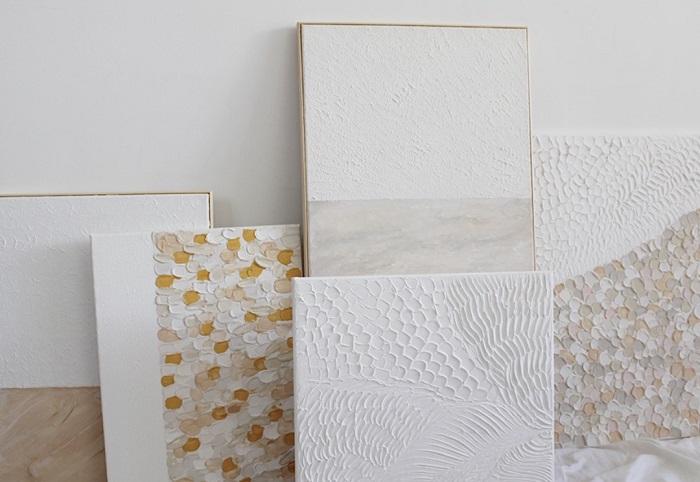
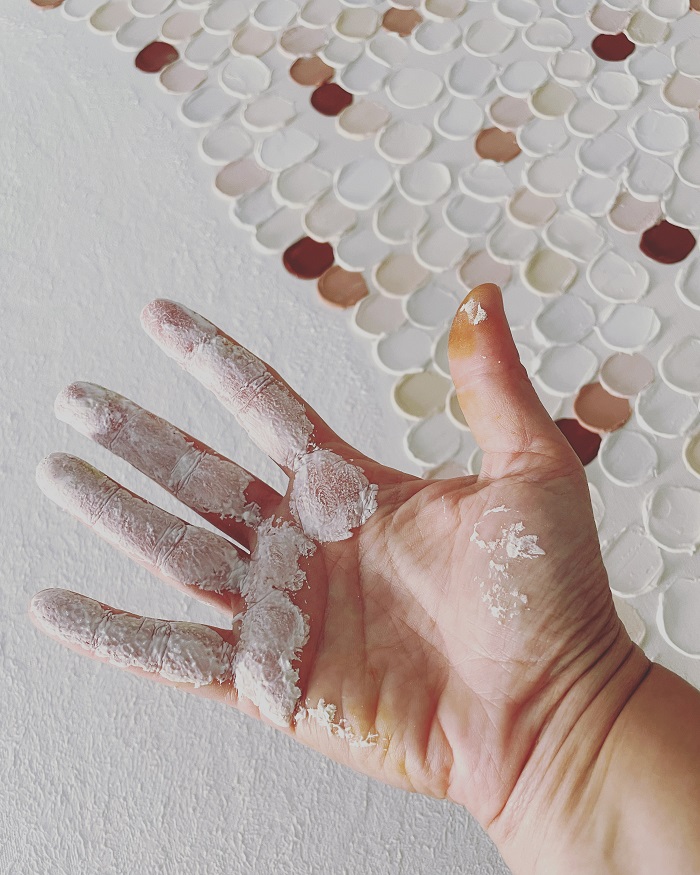
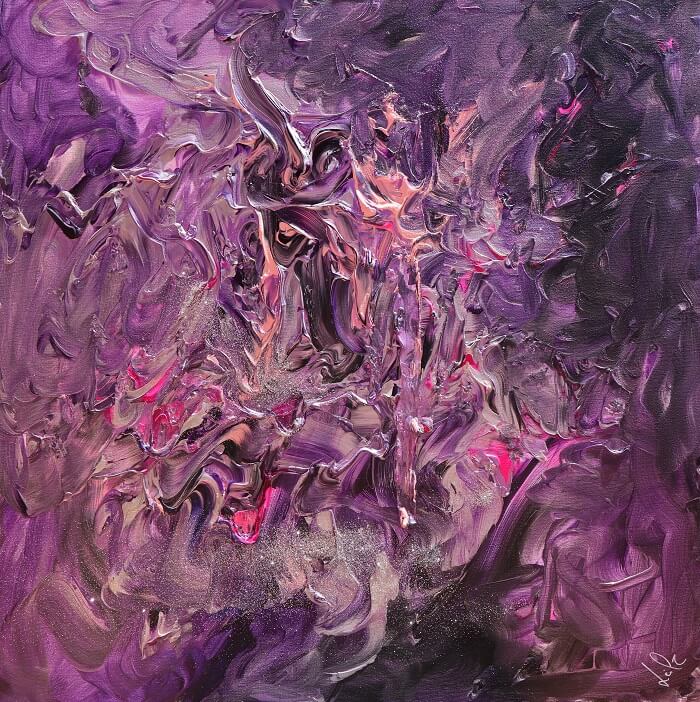
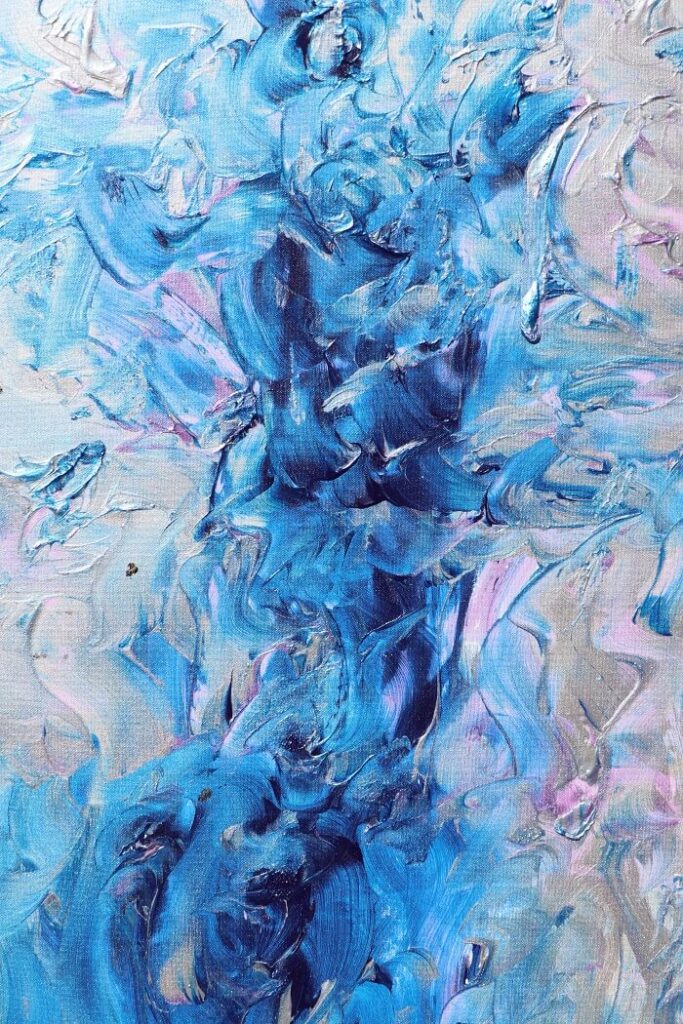
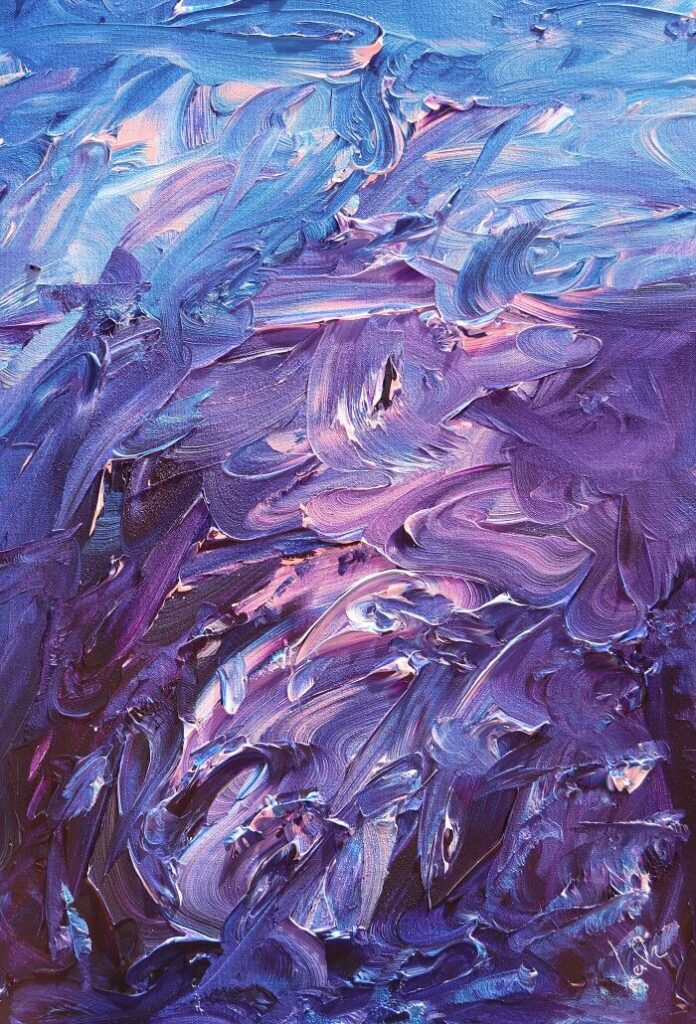
She works spontaneously and naturally with acrylic paints on canvas. “I let the idea flow, even if it comes out completely different from what I initially imagined. It doesn’t usually happen that I don’t like the result. If it does, I just repaint everything white and start again,” she shared happily. “As I never define exactly what I’m going to paint, in the end, it’s a surprise,” she confessed, adding that she uses bitumen to get the desired consistency and makes shapes with her hands or handmade K-line moulds (a rigid, ultra-light material), when she is looking for a more concrete effect. “It allows me to create textures and make singular shapes, which immediately capture anyone’s attention,” she underlined.
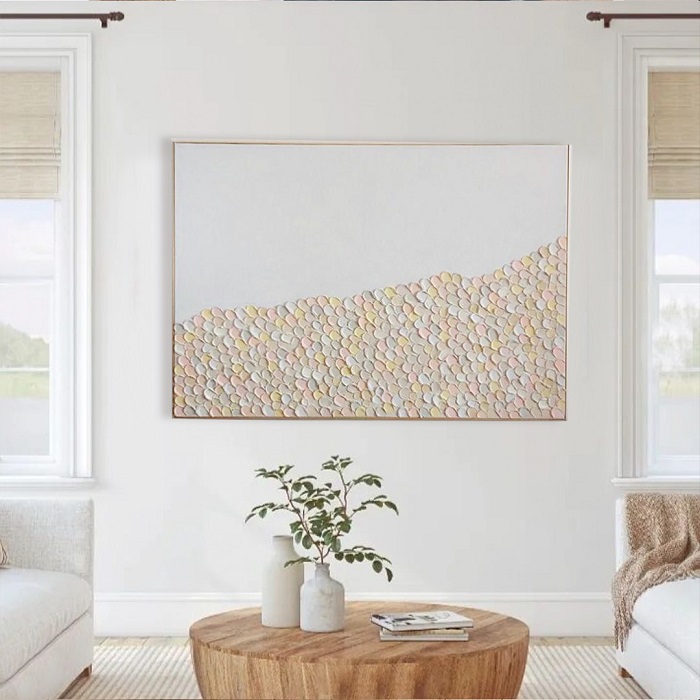
Currently, Sandra receives orders for paintings of all sizes and colours, but she prefers to paint in neutral colours because she believes they convey “serenity, peace and comfort”, and she identifies them with Nordic decor.
“I feel a sense of cosiness when I’m painting, it’s a very good feeling and that’s what I want people to feel,” she expressed, admitting that, from the beginning, she has had “very good feedback”, which is “gratifying”.
Even though she paints the same idea several times when asked to by clients, she constantly feels the “need to create something new”. Nature is her biggest inspiration, which is why it is possible to often identify various elements in her paintings, such as sand, waves, or flowers, “even if everyone interprets abstract art in their own way”, she emphasised, highlighting that in her Ciao Bella painting, “some people see scales, others see petals”.
Despite the fact that she has no formal artistic training, she has taken some online art and painting courses and has always kept up with trends.
“Knowing more and more has led me to paint better and to share my paintings on social media,” Sandra said, revealing that she initially began by publishing photographs of her decorative items, made with the hand-woven knotting technique, macramé.
Although for now, Sandra’s focus is solely on painting, she does not rule out the possibility of continuing to explore decorative items and investing in ceramics or moulding paste pieces, for instance.
Her main goal is to reach as many people as possible, not only by expanding her business from the virtual world to the real, by exhibiting her items in various physical spaces, as well as by creating a beginner’s course in texture painting, which she is already planning.
From a family of talented artists, Leila and Jasmin Chouikha paint in completely different styles, from dreamy pieces to portraits and comics
– November 30, 2023 | Text Beatriz Maio
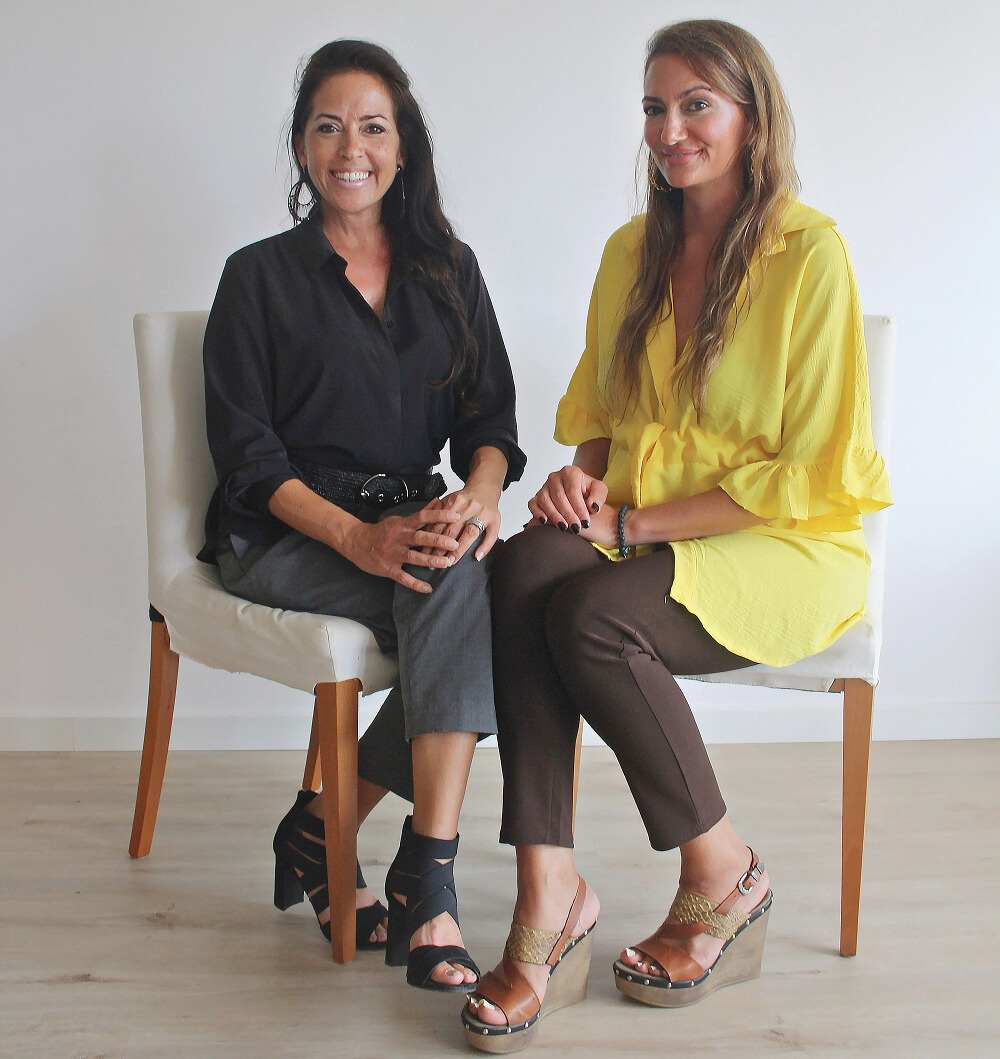
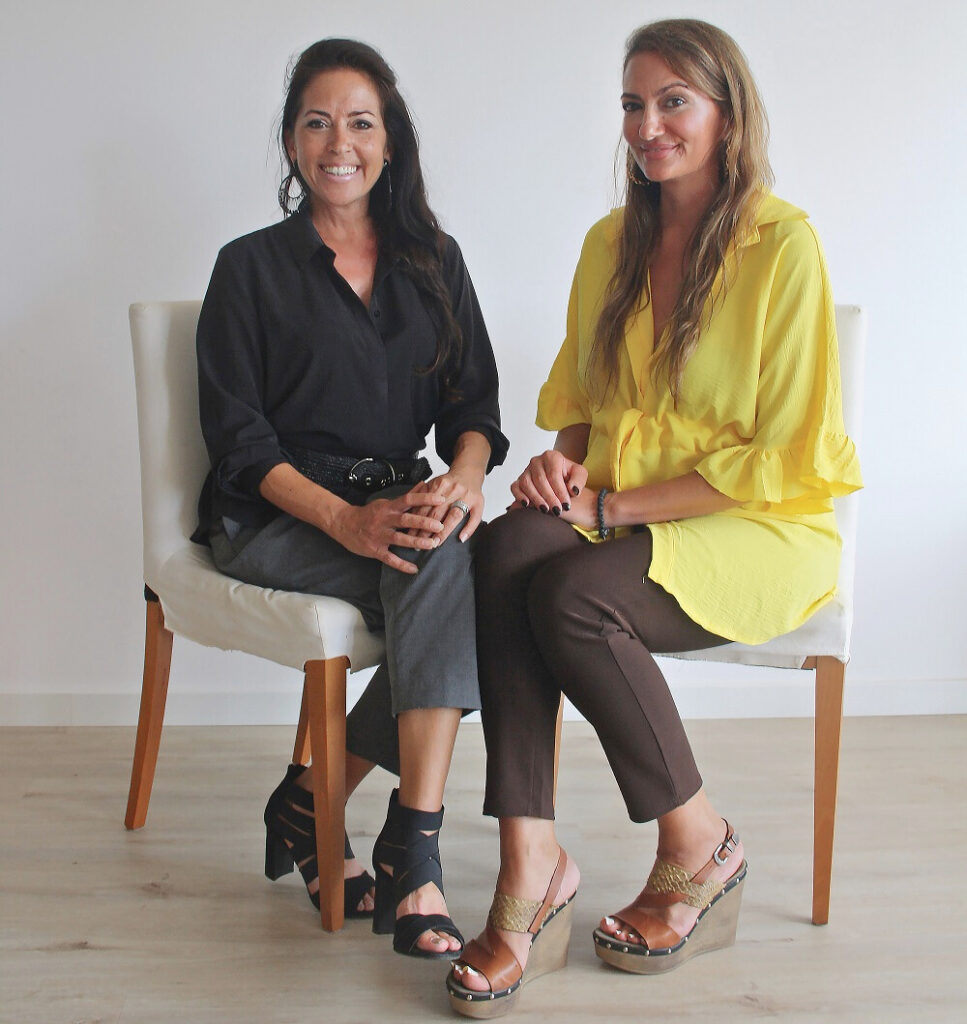
Jasmin Chouikha (left) and Leila Chouikha (right)
Born in Switzerland, Leila and Jasmin Chouikha grew up surrounded by art, in a house where the paintings and statues of their Tunisian father, a recognised photographer, painter, and sculptor, were everywhere. Unfortunately, he passed away when they were still very young, but they could feel his presence through his artworks, which made their connection to art inevitable.
“It’s in our blood,” commented Leila. The sisters recognised that their father was very talented and that his paintings look like a combination of their artwork. Their sense of imagination comes not only from their father but other relatives as well, such as their grandfather Werner and great uncles from Switzerland, as well as their uncles from Tunisia. “We come from a very artistic family,” the sisters agreed.
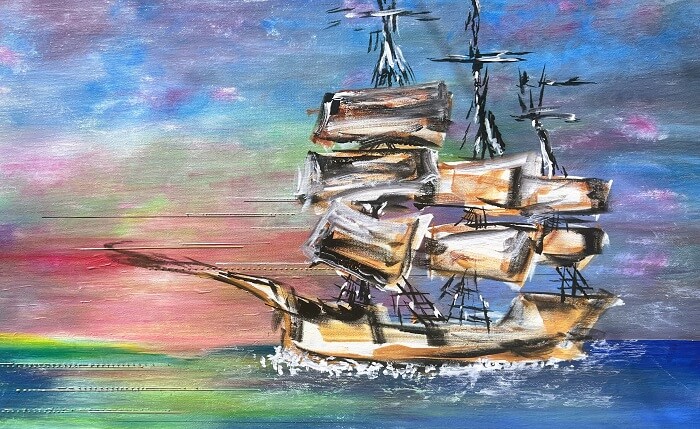
Sail away, by Jasmin Chouikha
They both started painting as children, just as a hobby, and as adults, they first followed other career paths: Leila, one year older than her sister, studied Hotel Management and later worked as a dealer at the Swiss Casino, whilst Jasmin was part of the entertainment crew on cruise ships around the world.
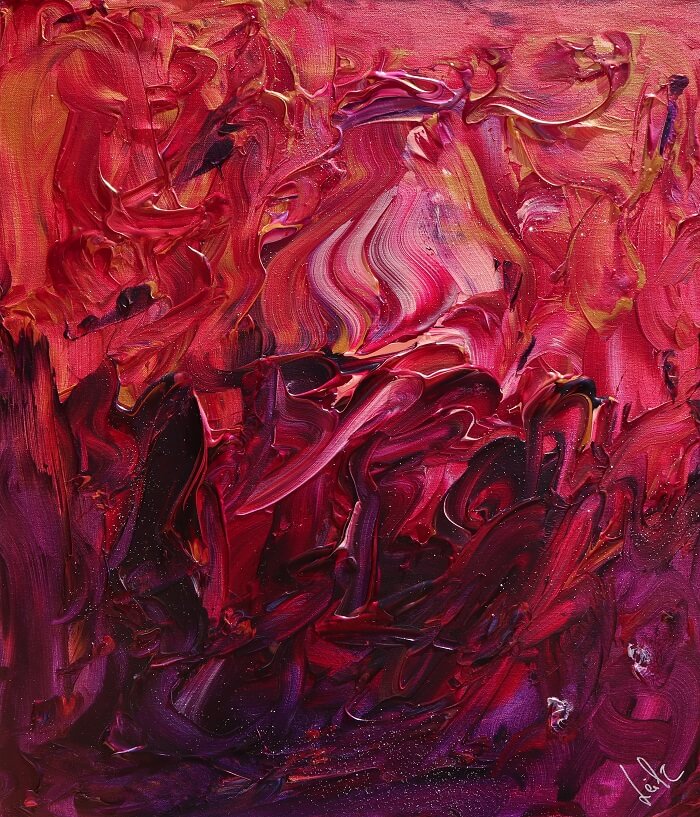
Rumphors – Angel of the Sun, Acrylic on Canvas 70 x 60cm by Leila Chouikha
Eventually the sisters opened and ran a successful cocktail bar in Switzerland for three years, where Jasmin exhibited and sold her first artworks. Although business was good, they decided it was time to try something different. “It was time for a change,” Jasmin recalled.
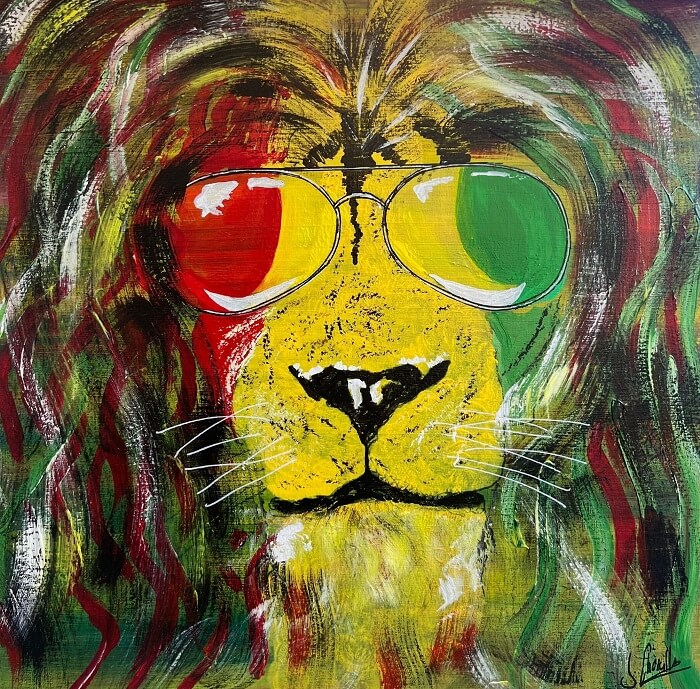
Lion, by Jasmin Chouikha
In 2011, her desire to go travelling and to show her daughter (only 2 years old back then) grew so strong, that she went on a trip around the world and spent a year away, where she got more inspiration from other cultures, and she then also worked with Aboriginal artists in Australia.
Zoz – Angel of Souls, Acrylic on Canvas 80 x 80cm, by Leila Chouikha
At the same time, Leila fulfilled one of her dreams. She went to Hollywood to study Method Acting, where she met famous actors like Eddie Murphy, and she worked together with Steve Railsback as her mentor. She studied hard and enjoyed celebrity events such as the Golden Globes.
Waterfall, by Jasmin Chouikha
In the meantime, Leila and Jasmin’s mother moved to Portugal. Leila came back from Hollywood to visit her mother in Lagos in 2012, after a year of learning and glamour. And so did Jasmin with her daughter when their world tour ended. The sisters never returned to Switzerland and Portugal became home.
Besides being an artist, Jasmin works as a skipper and as an interpreter. Since moving to Lagos, she has openedthree different galleries.
Zoala – Spirit of the Universe, Acrylic on Canvas 100 x 80cm, by Leila Chouikha
Leila, who started ballet when she was four years old and did group dancing later, and even was a choreographer, decided to devote herself to her passion and explore Oriental dance. Portugal gave her the opportunity to do what she liked to do. As a single mum with two children, now aged 4 and 5, Leila also took up painting professionally and exploring her spiritual connection. She likes to paint outdoors. “It’s just me, all the angels and spirits around me and my painting,” she revealed, adding that she sees which colours she is going to use, but not the shapes.
Jasmin, on the other hand, chooses the place to paint, inside or outside, depending on her inspiration and, whilst Leila is spontaneous, Jasmin knows exactly what she is going to paint before she starts. Although Jasmin and Leila grew up in the same environment, full of creativity and inspiration, and have the same roots, their artworks are almost opposites. Leila does abstractpaintings and Jasmin mostly follows realism and reality mixed with fantasy.
Enek – Angel of Spirit, Acrylic on Canvas 80 x 60cm, by Leila Chouikha
Their inspiration and style are very different. Leila is more into dreams and astrology; Jasmin loves exploring different techniques and transfers them into painting. She paints figurative art, portraits, landscapes, still lives and even comics. Her work has been shown in galleries all over the world.
Leila wants people to feel something, to see different things, and to enter a new world whilst looking at her paintings. With the abstract, she intends to open the imagination and make peopledream. “You can see something completely different every day when you look at my paintings,” she says.
They like to paint in series – a numerologist, Leila has sequences of 12 pieces, all in different sizes. Jasmin has sets of several works sharing the same theme, with boats, western inspirations, and many others.
The sisters both paint by their own inspiration and they also take commissions. Leila and Jasmin are planning toopen a new gallery in Lagosvery soon but in the meantime, you can explore more of their works on social media.
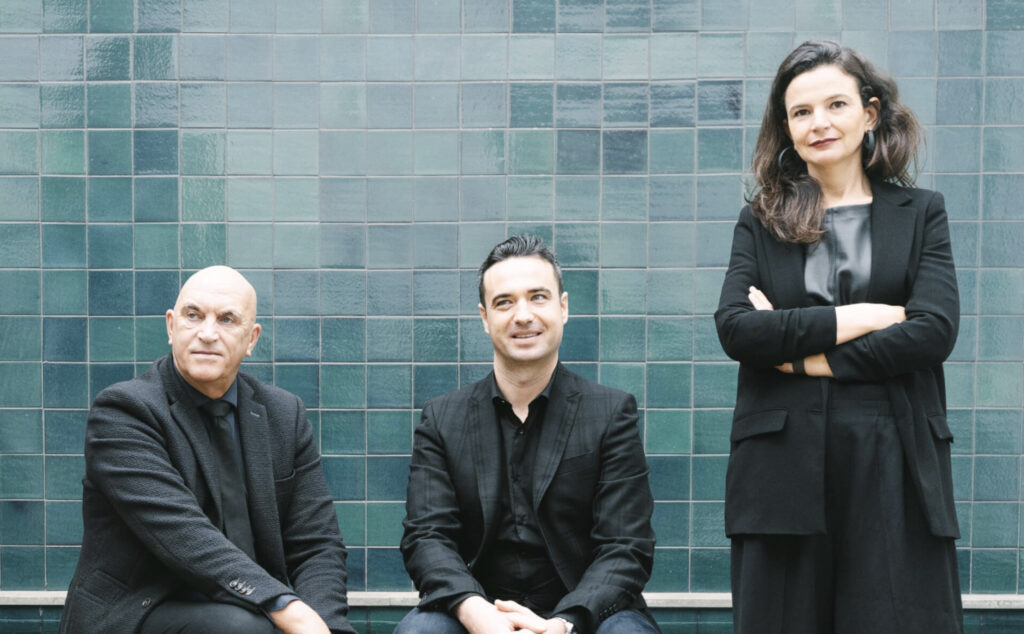
In Portimão there is an architecture studio headed by three partners with different backgrounds and visions who, together, develop unique projects with a “Moroccan touch and Portuguese techniques”.
Dutch entrepreneur Arnold Aarssen and Portuguese architects Joana Dalmau Pinto and João Carriço are behind StudioArte Architecture & Design, which was founded in 2002 with the aim of serving the life purpose of its clients.
Arnold Aarssen, João Carriço and Joana Dalmau Pinto
They have been working together for almost 14 years on different projects that include new residential modern and bioclimatic homes, rehabbing projects (which they call ‘rehab labs’), and commercial buildings, always with the aim of defining new ways of living set to high standards and contemporary designs, “more economical and conscious, whilst respecting the environment and the natural resources”, said the StudioArte CEO.
Casa Simão
Arnold Aarssen is a big traveller and has moved more than 30 times. In 1994, he bought a plot of land with three houses on it in Silves, one of which was his own and, 10 years later, he extended it to be the StudioArte office. His professional career began in the hotel industry, which gave him the opportunity to work in project development and architecture in this area.
Casa da Fé
He is currently part of two other Portuguese companies active in real estate and property design, named Espírito Verde (partner of BioclimaticHouses, focusing on sustainable and eco-friendly projects), and Generoso e Poético. Simultaneously, he is working on new high-quality kitchen lines, and on a furniture line, as well as in various development projects in the Algarve. He considers himself a creative and self-taught person, who has learned to design houses, home features, kitchens, and outdoor areas. Since he has travelled so much and lived in several countries, he believes that working in Portuguese architecture requires local professionals with an understanding of legal matters, City Council procedures and who can speak the language.
Casa Simão
That is why he hired João, from Peniche, and Joana, who is originally from Silves but was working in Lisbon at the time. Both had different ambitions: João wanted to be a DJ and Joana a painter, but their talent for putting creative ideas to paper and turning dream houses into reality led them to architecture, where they mix lines, shapes, volumes, and play with lights and colours.
bioclimatichouses
It all started in a studio located in Silves, but Portimão’s proximity to the sea and the river led the team to choose a workplace with more “city life”, said Arnold Aarssen, who acts as the creative director and consultant of StudioArte, confessing that he had no doubts when making this decision. “We should be in a city that has what we need most,” he explained, adding that the many “houses falling into pieces” he saw made him realise that “there was work to do”.
Casa Simão
Currently, Arnold leads a multinational team of 16 architects and interior designers, half of which are Portuguese. From Italians, Argentinians, Brazilians, and Dutch, to Tunisians, they all live in Portimão, in accommodation provided by the company. Their daily tasks are based on property development and project management, both nationally and internationally, with projects in the Netherlands, Spain, and Italy, many in private villas, and luxury renovations. Arnold Aarssen believes StudioArte stands out for its “uniqueness” and sets itself apart with its “specific Portuguese and sustainable signature”, with an easily identifiable concept, and adds that this characteristic brings them “a very wide variety of clients”.
Casa Joana
The lines of the houses and the use of light are the architects’ primary concerns, such as the hidden windows or a certain angle in the façade. “We work a lot with a blind wall from the northern part to protect people from the cold and we play with the light in a way that lets it come in but leaving the sun out,” illustrated the creative director.
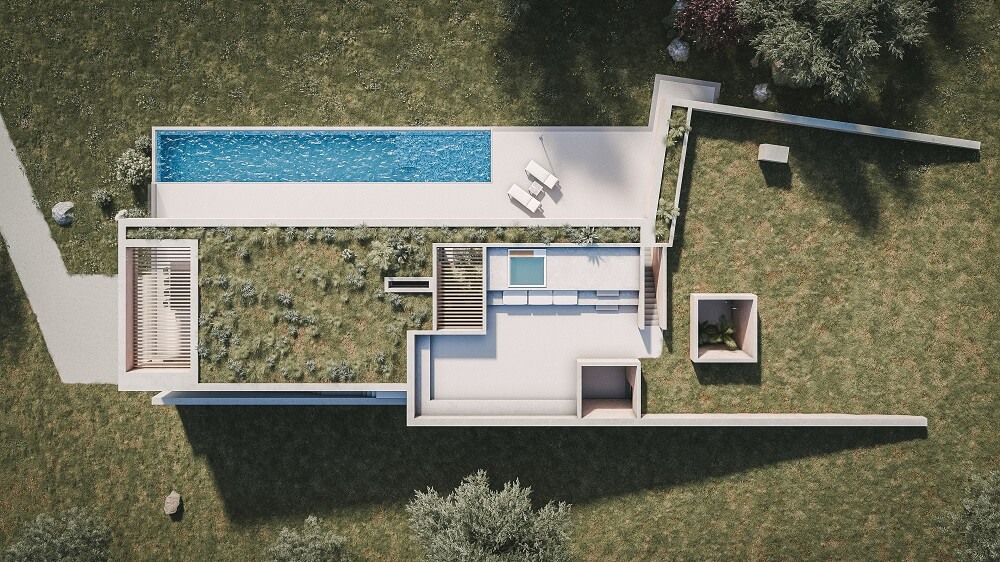
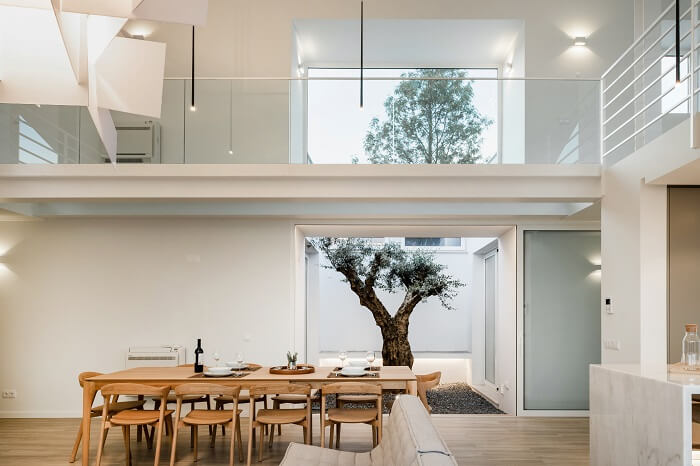
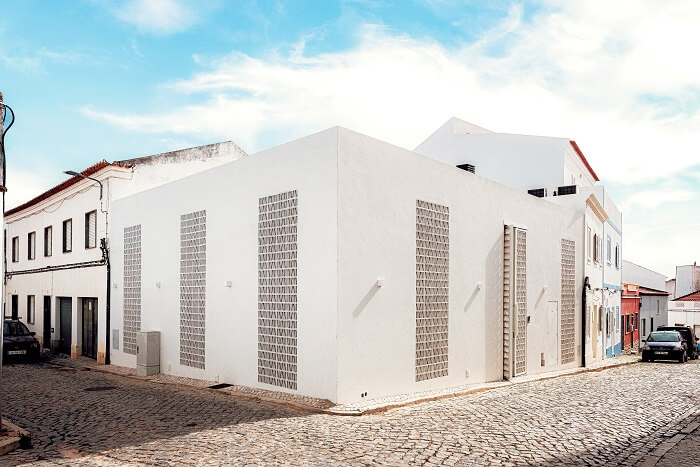
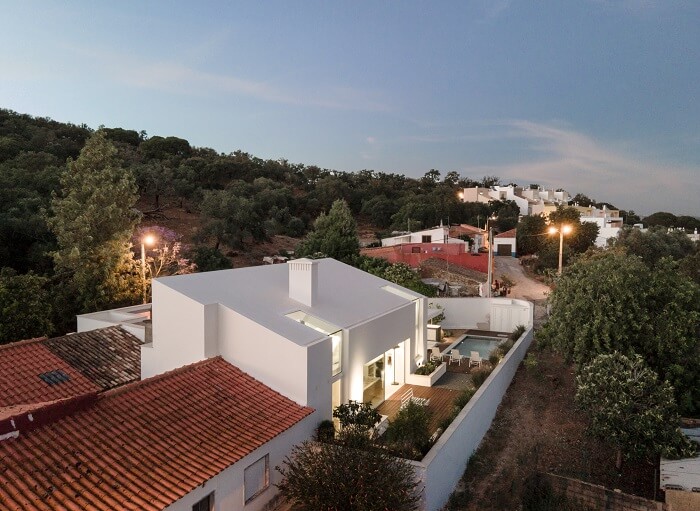
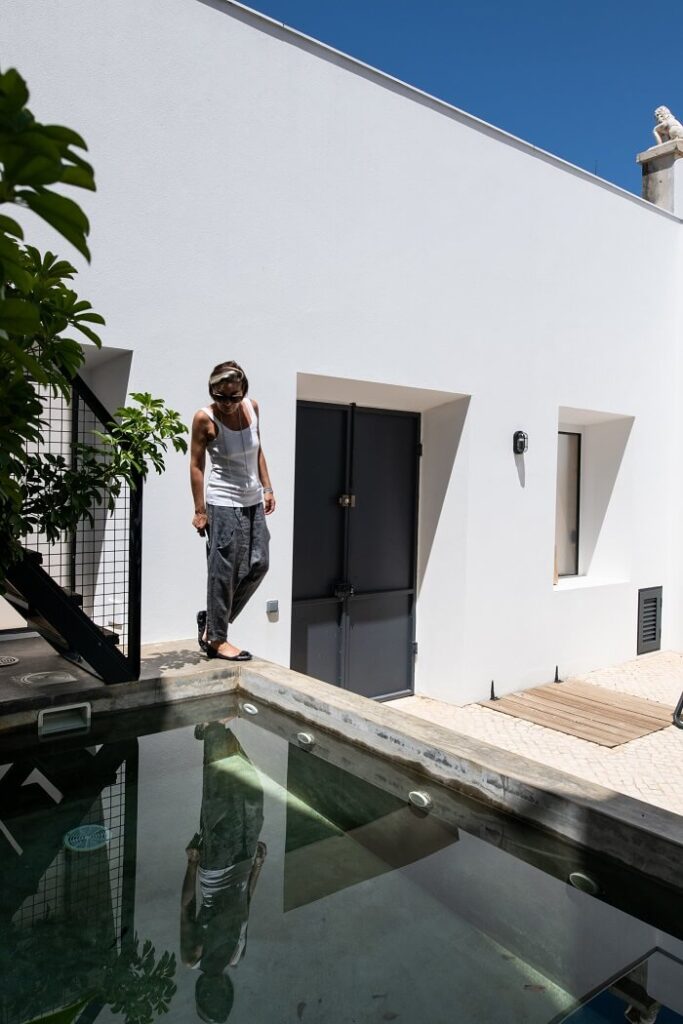
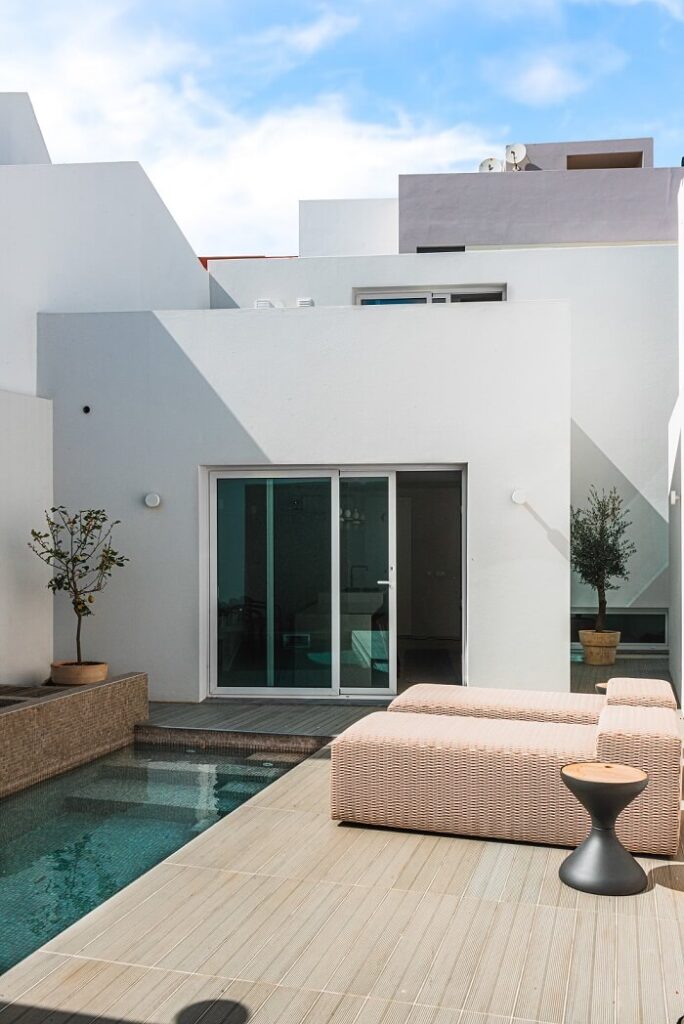
Even though they have a lot in common, each work has its own particularities, which can be seen in the company’s reference projects, such as Casa Simão, Casa Joana and Vale da Lama. The first one distinguishes itself by its solid geometric shapes developed over several levels and suspended glass walkways, with a dry-garden landscape concept. Meanwhile, Casa Joana has an expansive and open feeling, based on a minimalist approach and a stylish little courtyard and a splash pool. In a different approach there is Vale da Lama, a building where a sustainable structure integrates the terrain and the ground, instead of discarding it, creating a green roof that helps regulate the temperature, and reduce the amount of storm-water runoff.
Casa Joana
Comfort and privacy are always taken into consideration, as are the customers’ wishes. “It’s important to listen carefully to the client’s dream and understand if it’s possible to do the job”, Arnold clarified, highlighting that they do not accept “impossible missions”. Their procedure is simple: it always starts with a “pre-check”, followed by a proposal in which the team presents the idea, the whole process, and a price scheme.
Nearly all of the projects approved by StudioArte use a mix of materials in order to be as eco-friendly as possible. “We prioritise wooden structures and roofs, cork and natural insulation, and ventilated foundation,” Arnold commented, emphasising that these are national products installed by local professionals. The concern for the environment is reflected in the aim of reducing certain features in the Algarve, such as gardens with grass or huge swimming pools, to save water, or air conditioning, giving more cost-effective solutions to maintain a pleasant temperature at home.
The desire to explore “urban development” in a city that “attracts different types of tourists” has helped the company grow since its creation. StudioArte is preparing to move to a large property in Rua Infante Dom Henrique, where there will be a big office working with many partners. But that is not all; on top will be built “one of the most beautiful penthouses in Portimão”, according to Arnold Aarssen.
StudioArte’s goal is to become a “well-known company” throughout Europe and change mentalities by promoting respect for nature. “We want to move fast and promote the healthiest way of living,” highlighted Arnold, stressing that “every small step is significant for the near future”.
Madalena Telo’s robust pieces are inspired by the Algarve coast and the landscapes of the hills in Monchique
– November 28, 2023 | Text Maria Simiris
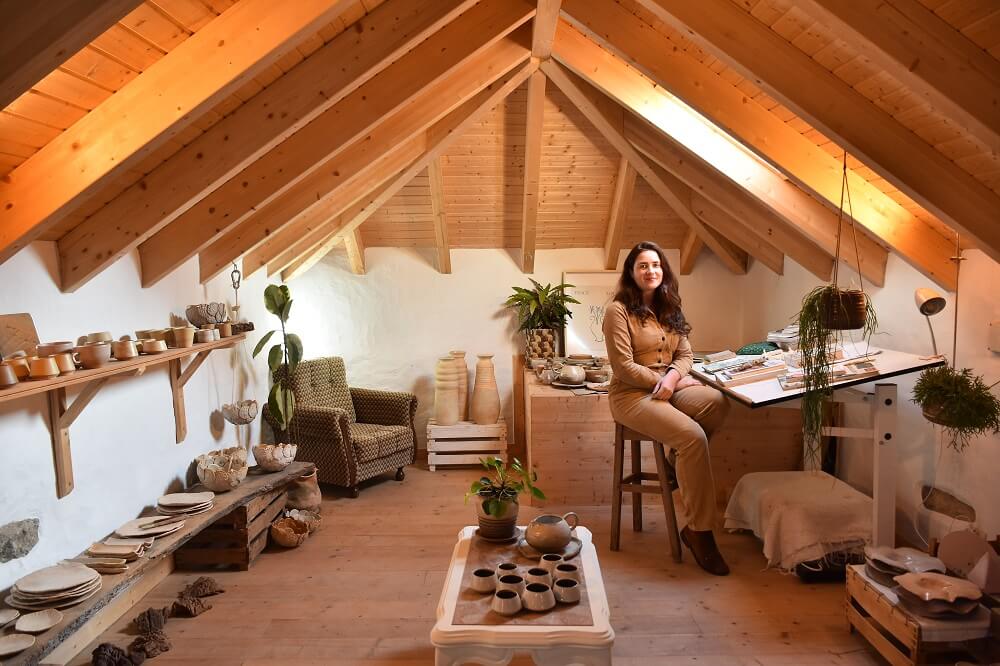
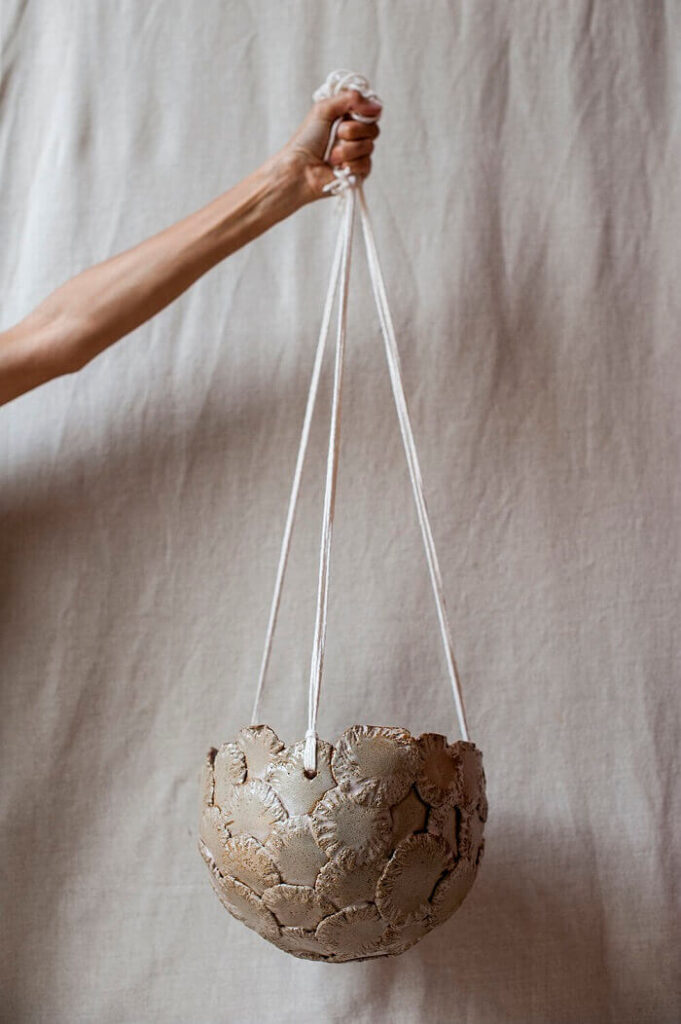
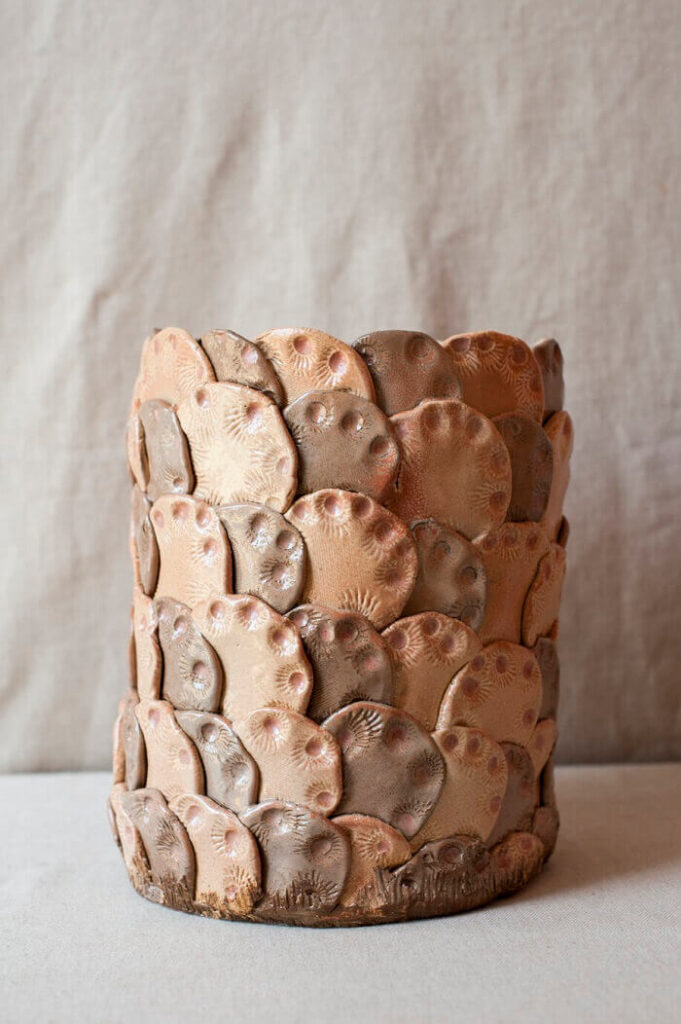
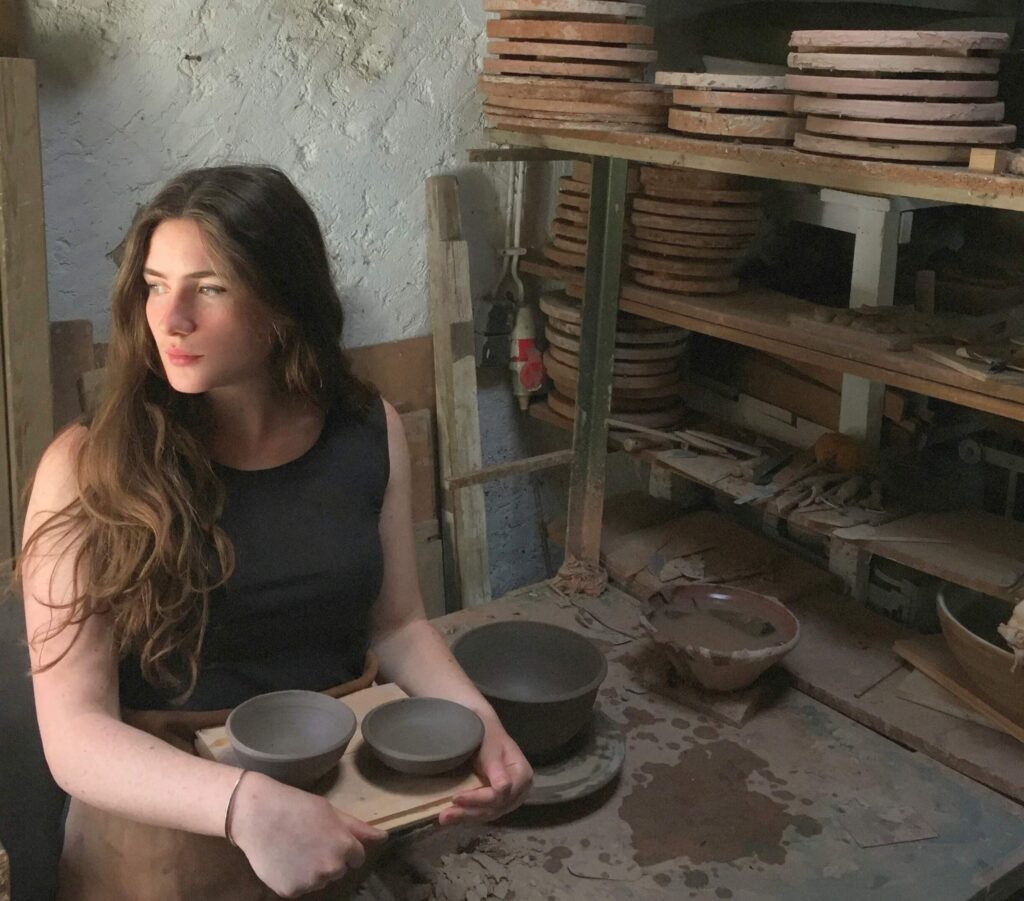
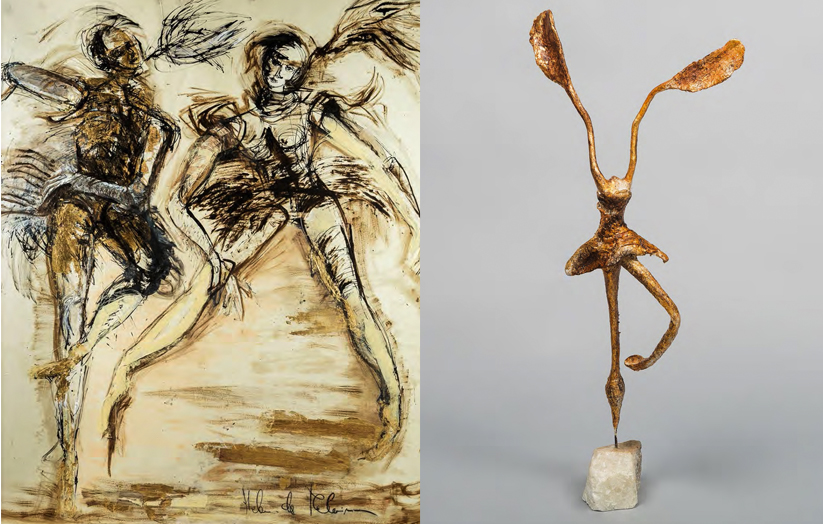
With a degree in Fine Arts, Madalena Telo finds inspiration for her ceramic pieces in the landscapes of the hills and the textures of the rocks on the Algarve coast. Since 2016, she has been working every day on the potter’s wheel in her studio in Monchique, but she was first introduced to this ancient art form many years ago.
“My parents are potters, as was my grandfather. From the day I was born, that was the universe I had around me to express myself,” she recalls.
After finishing her studies, she decided to follow in her family’s footsteps and, although she uses many techniques in her work, she follows only one artisanal recipe to make clay.
Madalena Telo makes the most of the spring to collect the clay in the Alferce area and, after preparing it, she combines it with other clay from a quarry in Caldas da Rainha. Although this is a time-consuming process and there are alternatives, such as buying the clay ready to be used, the Algarve ceramist insists on this method.
“I really like using Monchique clay because it ties in with the style of my work and being connected to nature. When I’m working, it makes all the difference to know where the raw material came from, when it was harvested and prepared. It’s almost like a ritual that I want to believe is felt in the final result,” she states.
The craftswoman describes her work as “utilitarian, above all else,” but adds that she tries to incorporate a sculptural element into all her pieces. “I like them to be robust, even if at first glance they seem delicate. I like to make pieces that people feel are handmade through a long and conscious process. But, above all, they are practical pieces that can be used every day and not just on special occasions,” Madalena Telo explains.
In fact, this is another characteristic of ceramics that inspires her the most: its durability. “Some pieces have been lost over time, some were even used over a hundred years ago and were very typical of that time. I like to re-create those shapes and modernise them in my own style.”
However, as this is a material that lasts several decades, the artisan’s responsibility is even greater. “There are many archaeological finds that contain clay. Even when they break, they don’t disappear. I realise this more and more when I’m producing a piece. Before baking it, I like to stop and make sure that I’m happy with it and that it’s going to be functional because I know it will have to last for years,” she says.
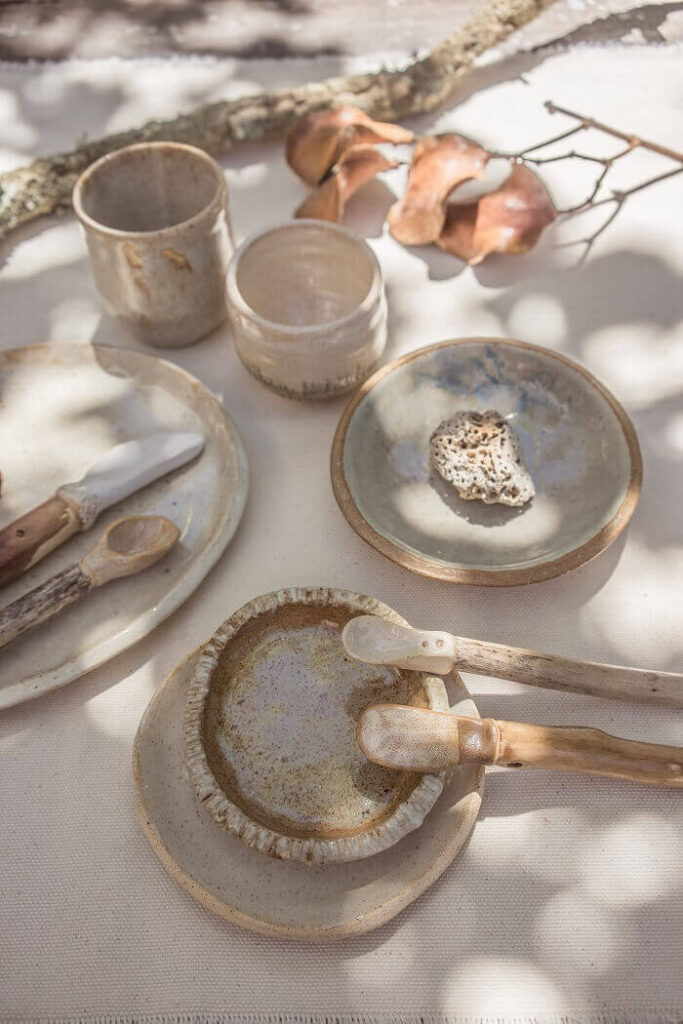
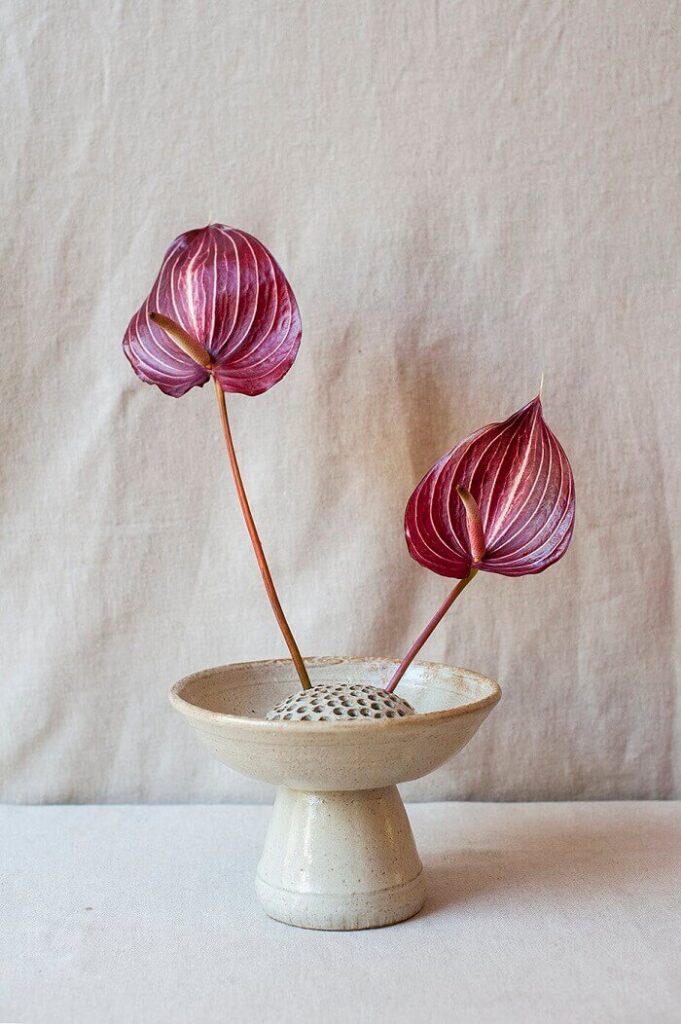
Her catalogue includes cups, cutlery, plates, tiles, jugs and vases of various sizes and shapes. Each piece takes at least three weeks to complete “because they have to be done slowly”, and Madalena Telo is guided by the seasons.
“The process is slower during the winter because there is a lot of humidity in the air and the pieces take longer to dry, but this is fantastic because it allows me to make pieces with other characteristics that aren’t possible in the summer, as they dry very quickly,” she explains.
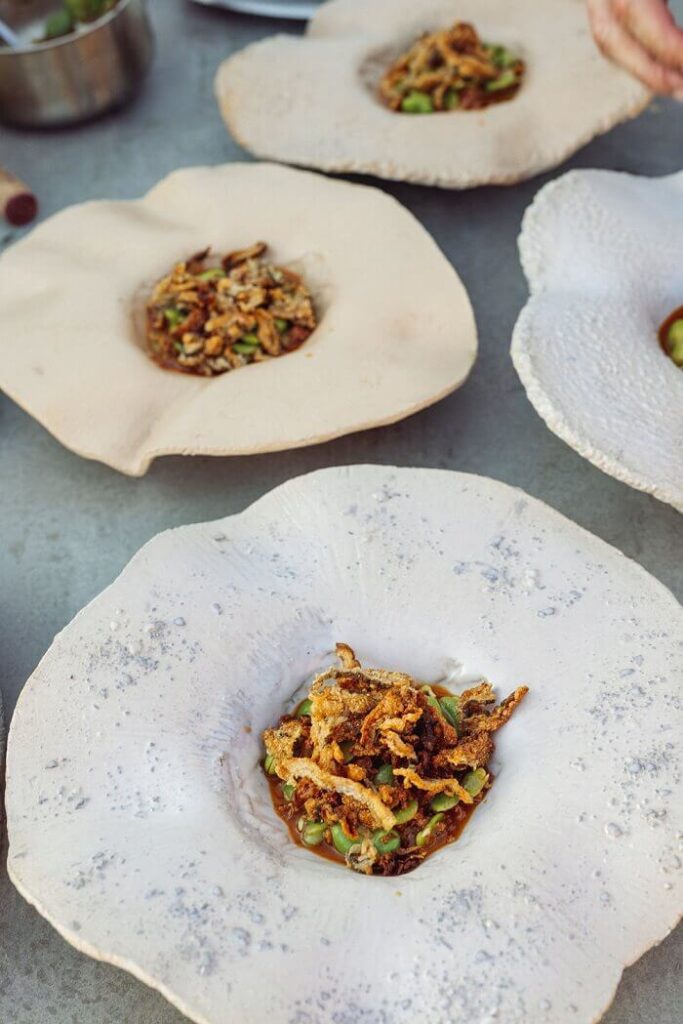
In the Algarve, there are already a number of places where you can find pieces with Madalena Telo’s signature, such as coffee shops, fine-dining restaurants and boutique hotels.
“These are all interesting projects, particularly linked to sustainability”, as is the case with Loki in Portimão, by chef João Marreiros, considered the most sustainable restaurant in Portugal.
Also in the western Algarve, in Aljezur, at the Koyo coffee shop, you can taste coffees from around the world in cups made by Madalena Telo.
And at Austa, a restaurant in Almancil focussed on local production, you will also find some pieces by the Monchique artisan.
Internationally, she has received orders from all over Europe, the United States, Japan and even New Zealand – the latter is a project the ceramist cannot forget.
“I created some spoons after the 2016 Monchique wildfires. I noticed that the trees, cistus and bushes looked burnt, but when you removed the black layer, the wood was still beautiful. The way I found to give this wood a second life was to create ceramic spoons with wooden handles. A Portuguese emigrant wrote to tell me that she felt a very strong connection to my work and asked me to send the pieces to New Zealand. The truth is that I may live in an isolated place, but I feel connected to the whole world,” says Madalena Telo.
To find out more about the work of the Monchique ceramist or to place an order, you can visit her social media pages.
Lady in Red, the art gallery located in the historic Adega Cooperative (wine cooperative) building in Lagoa, has announced it is moving to a new location.
With over nine years of existence, Lady in Red “has established itself as a benchmark in contemporary art“.
“While it is difficult to say goodbye to a space that has become so dear to all of us, we believe this move is essential for the continued renewal and growth of our gallery,” stated the art gallery.
“We are thrilled to embark on this new journey and invite you to join us in this transition. Our new space is being carefully planned to provide an even more enriching experience, where art will continue to take centre stage”.
The team at Lady in Red also says that the new location will allow them to “explore new creative possibilities” and “strengthen [their] commitment to showcasing the works of renowned and emerging artists from different styles and backgrounds”.
“We are excited about the new exhibitions we plan to offer soon and can’t wait to share all the details with you,” they add.
Visitors can visit the gallery for the last time before the end of this month, with opening hours being updated every week on its Google profile.
Dutch-Born Algarve Artist Meinke Flesseman has started a new project in an old building which is being completely renovated
– April 10, 2023
The idea to purchase the building and open her own gallery came to Meinke from the desire to create her own artistic space. “I fell in love with this place,” Meinke said. “It was big, and spooky, and had all the space that I wanted. My imagination ran wild.”
The gallery opened in December last, but the two-storey building is being renovated to act as “five spaces in one, which are still connected but nonetheless separable”. The gallery occupies just one of the building’s spaces.
Whilst the artist initially planned to take over the building with two other people, she eventually decided to move forward on her own. Renovation work began in October 2021 and has proven to be quite the endeavour.
“It has everything one could wish for, it’s true, but it’s also a lot of spare metres to fix up, and that was the naïve part. But it’s going well, and it’s exciting,” said Meinke, likening the construction process to painting.
“It’s all about building something up, and then using your imagination, changing it…,” she explained.
Right next door to Meinke’s gallery is the Sphinx Gallery, which is located in a building previously owned by Meinke.
“It is wonderful because we complement each other. I think this is already generating some out-of-the-box energy in Portimão, which has not really been seen as a place to come to see art,” the artist said.
“The same happened in Olhão. Fifteen years ago, people would ask why anyone would want to live in Olhão. And now many people want to live there. Artists attract other artists and help create reasons for other people to come there and invest,” said Meinke, adding that Portimão has the potential to continue to grow as an attractive destination for artists as well as investors.
“Portimão has a lot of qualities. It is still one of the most affordable towns in the Algarve to live in, and it offers a lot of quality, being so close to the sea and boasting such easy access. There are also a lot of beautiful buildings just waiting to be renovated,” she added.
The opening of the gallery is the culmination of an art-filled life for Meinke, who was born in Amsterdam but grew up in the Algarve “surrounded by animals, nature and simplicity”.
These sources of inspiration are evident in a lot of her work, as animals (particularly goats), are often represented in her paintings.
“They bring me good memories and good feelings, so they are a recurring element in my work. It perhaps represents a longing for simplicity and well-being, which I associate them with. They all look similar, but they have their own personalities, cheekiness, independence and ways of being,” she said.
Meinke describes herself as an artist who is particularly drawn to nature and a sense of purity. “Hence the greenery, farm animals, beach scenes and the general simplicity of everyday life that I’m able to observe,” she says.
Whilst Meinke always had a knack for using her hands to create things and express herself creatively, she only started studying art in her late 20s. “I lived in different countries and under different circumstances, but it ended up being a good thing because I only studied art later when I really knew for sure what I wanted to do with my life,” the 56-year-old artist said.
After growing up in the Algarve, Meinke moved back to the Netherlands before travelling to Italy to study jewellery-making. Several years later, she enrolled in Fine Arts School – in Moscow – with the Volkovs, and continued her Art studies, graduating from Ruud Wacker’s Academy, in Amsterdam. She moved back to Portugal with her daughter and then-husband around 25 years ago, having spent time living in Lagoa, Olhão and now Portimão.
‘Meinke Flesseman Gallery’ is located at number 126 on Rua Infante Dom Henrique – the long street which connects the old bridge between Portimão and Lagoa to the Gil Eanes square. All works currently exhibited at the gallery were created by Meinke, with almost all being available for sale.
Although it’s still early days, with other parts of the building still under renovation, Meinke is planning to also host exhibitions by other artists or collectives of artists. For now, the gallery is open only by appointment, although the plan is to eventually have the doors open to the public.
The mixed-media painting exhibition will be on display from December 2 to January 27
– December 9, 2022
German artist Anke Punt Bach has inaugurated a new exhibition, “Horizon”, at Lagoa’s Municipal Library. Although some pieces depict the horizon, the place where earth and sky meet, “it is not the only inspiration that came with the title”, reveals the artist. “To increase interest, skills or experience, you need to broaden your horizon,” she says.
Inspired by the Algarvian coastline, Anke uses materials she finds during her hikes to create her artwork. In the Horizon collection, her mixed media painting are also the horizons where “painting and life are projected and intertwined. Where time plays and reveals itself. Where the painter expresses herself metaphorically”, revealing what she feels.
“The exhibition will show you my work, my passion, my horizon”, says Anke. “More than a painter, I am a teacher who wants to inspire, share experience and broaden the horizon of my students”, explains Anke, who currently gives weekly workshops at the Papelaria Arco Íris in Alcantarilha.
The exhibition opened on December 2 is free of charge. The collection can also be viewed during the Lagoa Municipal Library’s regular opening hours (Monday to Friday from 10am to 1pm and 2pm to 6pm) until January 27.
The artwork illustrates the deep connectionwith the ocean that both the artist and chef Hans Neuner share. This collaboration celebrates Vila Vita’s mission to showcase local talent in the resort and also aims to raise awareness of the fragility of the world’s ecosystems nowadays.
A muted mix of natural white tones, creams and neutral colours with arboreal coral forming into loose, lifeless hanging threads, Vanessa Barragão’s Bleached Coral is a subtle piece made from unused and recycled yarn that complements the atmosphere and dining experience at the Michelin-starred restaurant marked by stunning ocean views.
Within the work, the artist has used an entirely new technique of implementing individual LED lights with reduced light, which, as she states, represent tiny eyes crying out for help, slowly dying as the zooxanthellae algae is expelled. This phenomenon is called “coral bleaching” and is caused by a rise in the temperature that drives the algae out. It is one of the direct effects of climate change on coral reefs.
This soft internal lighting system will also create its own environmental effect without the need for a light projected onto the piece and all the materials used within the piece are recycled, supporting the message of sustainability.
“When I was still in Porto, in one of the times I drove to the Algarve, we were invited by Vila Vita Parc to see the resort and I knew it was in the Ocean restaurant that I really wanted to have my work installed, because it makes sense to have my piece in a place that reflects and balances my artistic practice. This is a unique piece; a very special piece and I want it to be in a special place. I feel this piece is strong enough to enhance the whole dining experience in harmony with the interior of the restaurant,” adds the artist.
Currently living in Albufeira, Vanessa’s popularity is global with her labour-intensive and exquisite tapestries, rugs and wall hangings spread across several countries, with pieces ordered by Heathrow Airport, the Kew Royal Botanical Gardens or more recently purchased by the international popstar Rihanna. Her pieces are made using various textile techniques based on ancient practices, such as zip hooking, crochet, felt, weaving, embroidery and macramé, all conveying an environmental message.
Marc Thivierge, a Canadian artist, features his abstract paintings at EMARP, Portimão
– February 14, 2022
“High Tide, Low Tide” is a new visual arts exhibition opening on February 14 at the EMARPreception hall in Portimão.
It will be the first time that Canadian visual artist Marc Thivierge will be participating in such an exhibition.
The location is unique because the place serves not only as a service provider for the public, but it is also an ideal space for exhibiting artwork.
Marc Thivierge has been invited to participate in this monthly presentation because of his unique approach to painting.
The exhibition represents the back-and-forth movements of the sea. The impressions and the meditative mood felt by the sea on this abstract artist are on the canvases presented.
Every piece is like a cut in the action of the waves’ relentless movement, sometimes calm, sometimes tumultuous.
Marc Thivierge was born in the 50s in Ottawa, Canada, in a family that loved art. He is retired and spends a good part of the year in the Algarve. “The luminosity here, the colours all around us, the scents and sounds are all elements that make us come back. But it is the people of Portugal that really make the grade with us,” said the artist.
The exhibition runs until March 18 and is open on weekdays from 8.30am to 5.30pm. Portimão EMARP is located at Rua José António Marques, 17.
Local artist Anke Punt Bach unveils ‘The Power of Imagination’ in Lagoa
– January 13, 2022
An exhibition by German artist Anke Punt Bach will be unveiled at 6pm this Thursday (January 13) at the Manuela Vale Gallery of Lagoa’s Mestre Fernando Rodrigues Art School.
The exhibition, entitled ‘O Poder da Imaginação’ (The Power of Imagination), aims to inspire people to see the world around them differently or, in the words of the artist, “to show that creating something can be fun, edifying and take you on a journey to the land of imagination”.
Anke Punt Bach was born in Germany but lives in Carvoeiro, having started painting due to her passion for art, colours and nature.
Anke is inspired by the Algarvian coastline and uses materials she finds during her hikes to create her artworks.
“This is my third exhibition since we moved in 2019 to Carvoeiro, which I now call home. I love nature, teaching, painting and creating beautiful pieces which people can enjoy,” says the artist.
The exhibition will remain on display until February 18. It can be visited for free between Monday and Friday from 9.30am to midday and from 2.30pm to 5pm.
You can follow Anke on Facebook and Instagram (@ankepuntbach).
A selection of the latest works from Corte Real Gallery featuring internationally recognised artist Jean-Pierre Kunkel can be seen at the Fine & Country offices
– December 13, 2021
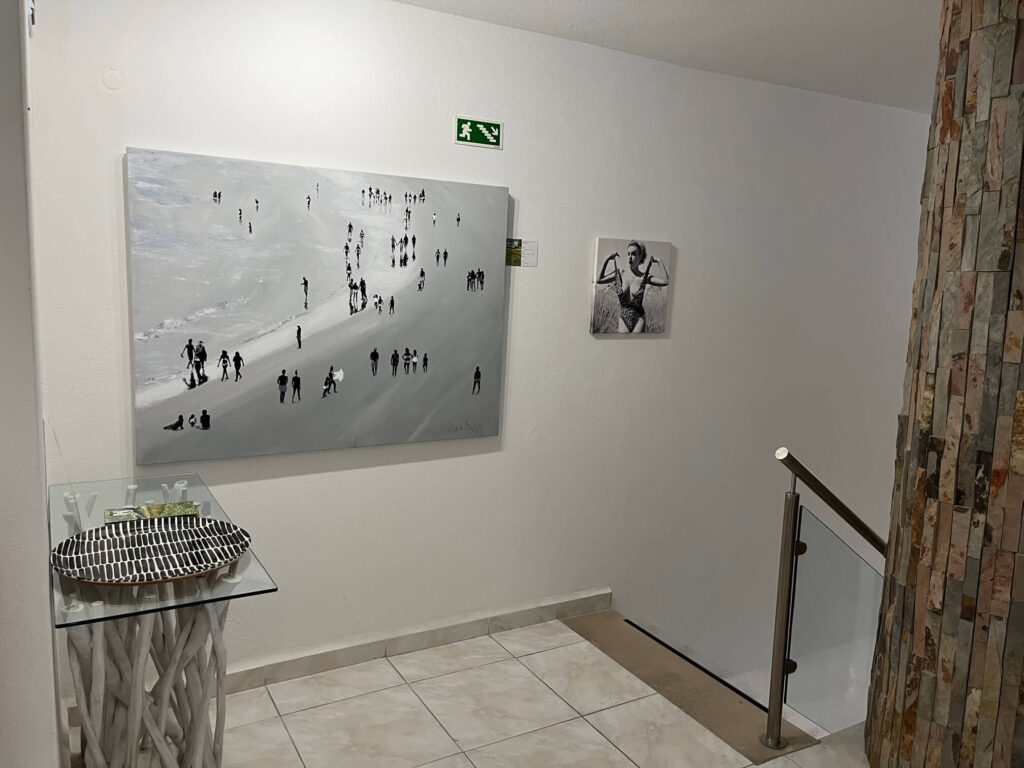
A small but stunning selection of some of the latest artworks from Corte Real Gallery in Paderne can now be enjoyed at the new pop-up gallery in the Carvoeiro offices of estate agents Fine & Country.
The main focus of the new pop-up gallery is the artworks of artist Jean-Pierre Kunkel. Internationally recognised for his artwork, which regularly adorns the covers of major newsmagazines, he has presented his pieces at world-renowned art fairs.
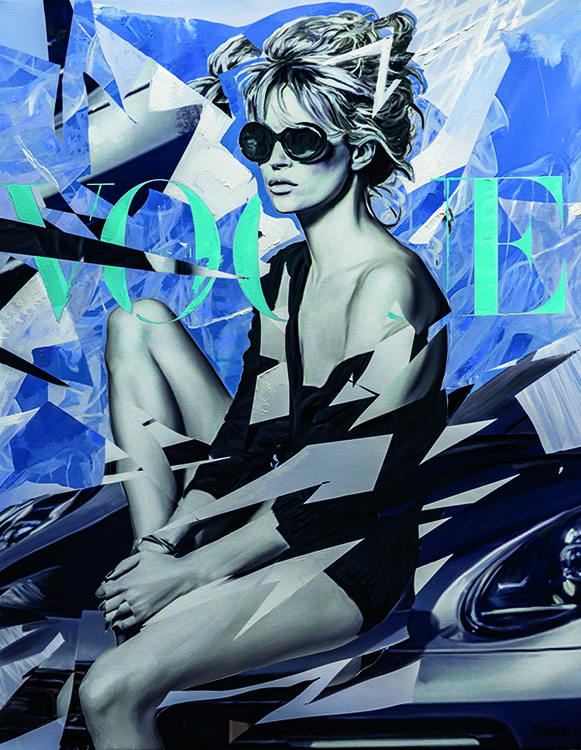
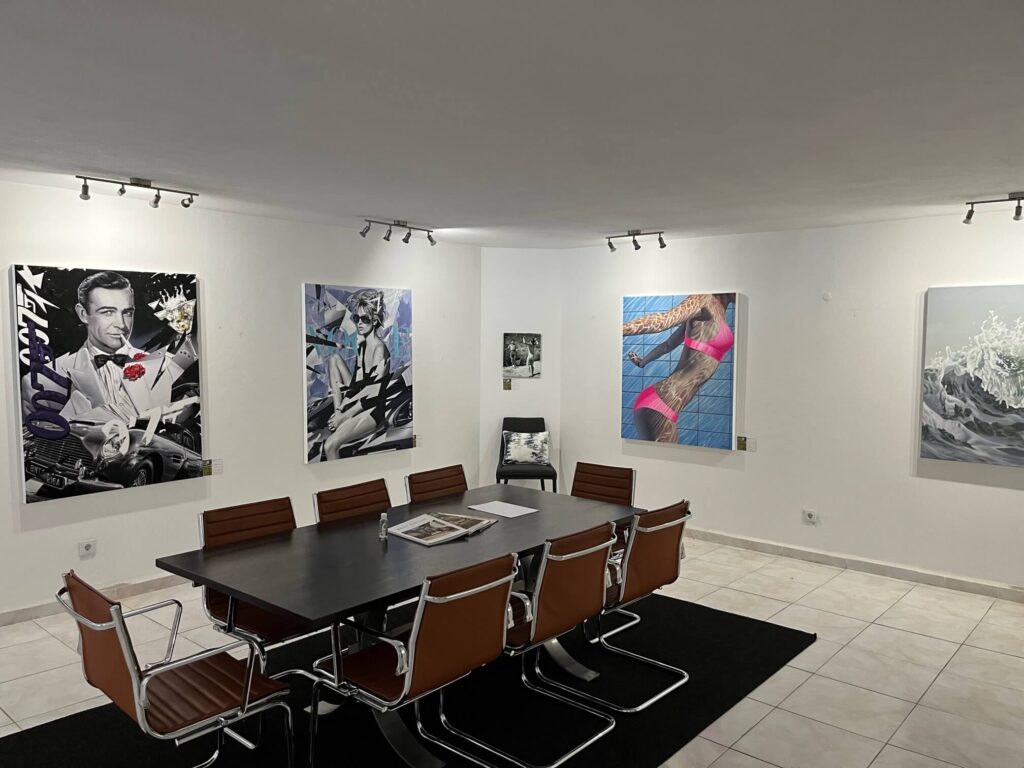
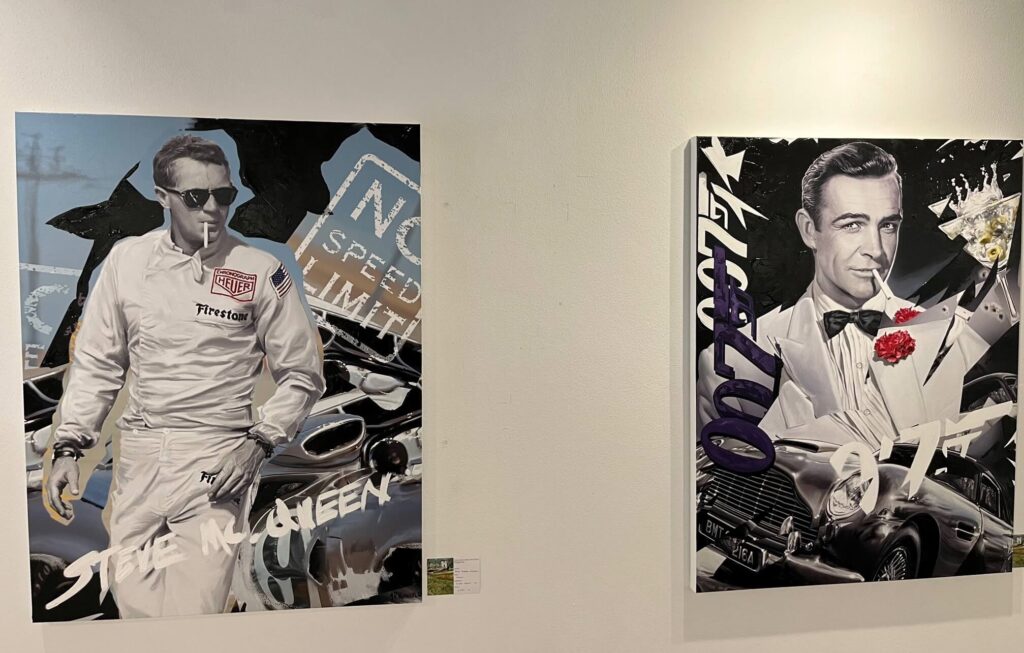
The original artworks on show in Carvoeiro from his “Icons” series showcase his fascination with combining different art forms. In these pieces, photorealistic portraits of figures such as actor Steve McQueen are complemented by details associated with them scattered around almost like a collage, such as the Vogue logo across the Kate Moss’ portrait or the Martini glass and ‘007’ logo on the painting of Sean Connery.
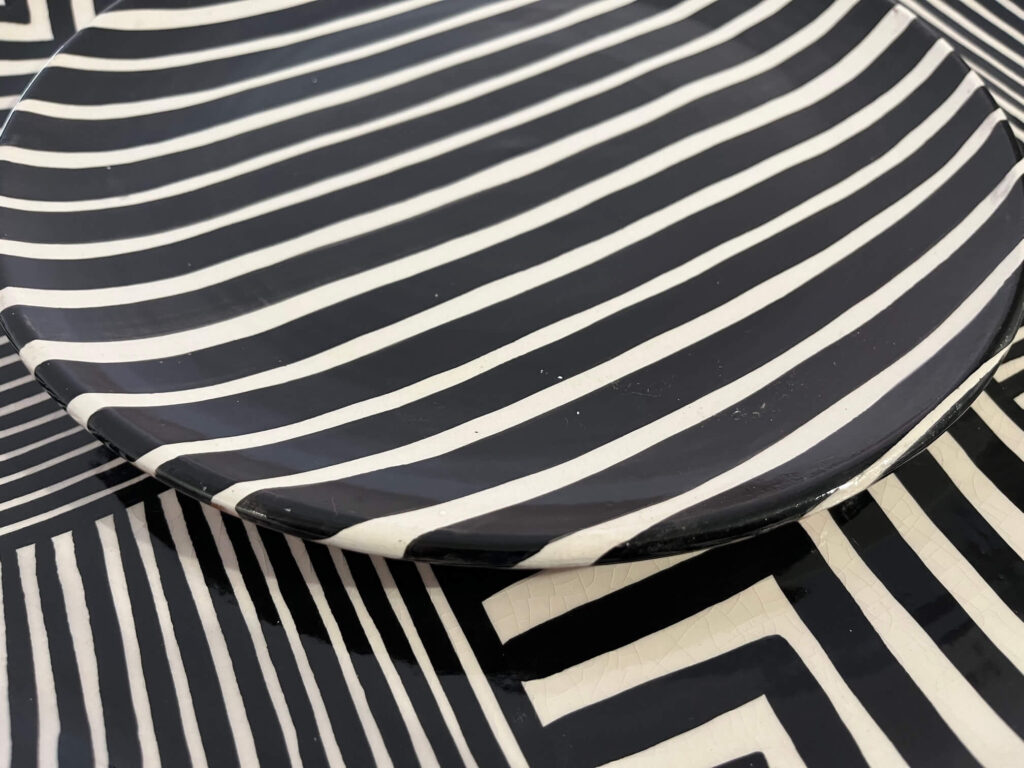
Other artworks at the new pop-up gallery in Carvoeiro include some stunning black and white pottery all made in Portugal and a small collection of cheeky black and white photos printed on canvas.
The Fine & Country office on Rua do Barranco in Carvoeiro is open Monday to Friday, from 9.30am to 5.30pm, with reduced opening hours between December 17 and January 3.
Visit Corte Real Gallery’s website, follow Jean-Pierre Kunkel on Instagram, and visit Fine & Country’s Algarve website.
Local artists showcased latest creations at Armação de Pêra’s Holiday Inn
– December 7, 2021
The Winter Exhibition was organised by Algarve Art, an art collective comprising dozens of local artists, and aimed to provide an opportunity for these artists — all of whom have seen their livelihood seriously impacted by the pandemic — to showcase their creations.
“Not much has been going on for nearly two years, but, in the last six months, things have started to open up and there have been more events taking place,” said Ian Morgan from Algarve Art. These past exhibitions have been a success with high turnouts, which Ian believes may be explained by people appreciating being able to be out of the house again after the Covid-related lockdowns. “It’s great to have people showing up and supporting these artists,” he said.
Despite all the inconveniences they caused, Ian explained the lockdowns also provided artists with more time to be creative, resulting in a lot of new works. The exhibition featured the works of Selzer d’Sousa, Frans Bresser, Bob Tidy, Rowan Marques, Lynn Collins Baldock, Mientje de Goeij-de Rooij, Aynur Foring, Samantha Van Der Westhuizen, Kay Maunder, David Trubshaw, Mickey Craig and Figs on the Funcho. Visitors were able to purchase artworks directly from the artists, who displayed a variety of works and styles.
Algarve Art was founded six years ago by Alyson Sheldrake and has been run by Ian and his wife Andrea for the past few months. The group’s goal is to organise art exhibitions, festivals and social gatherings that “provide a platform” for local artists of many different nationalities from across the Algarve. “Our goal is to promote and elevate the level of art and to empower artists to reach a bigger audience,” the couple says.
Lusitânia Handmade Gift Shop handpicks the finest handmade contemporary pieces from around 40 artists
– December 7, 2021
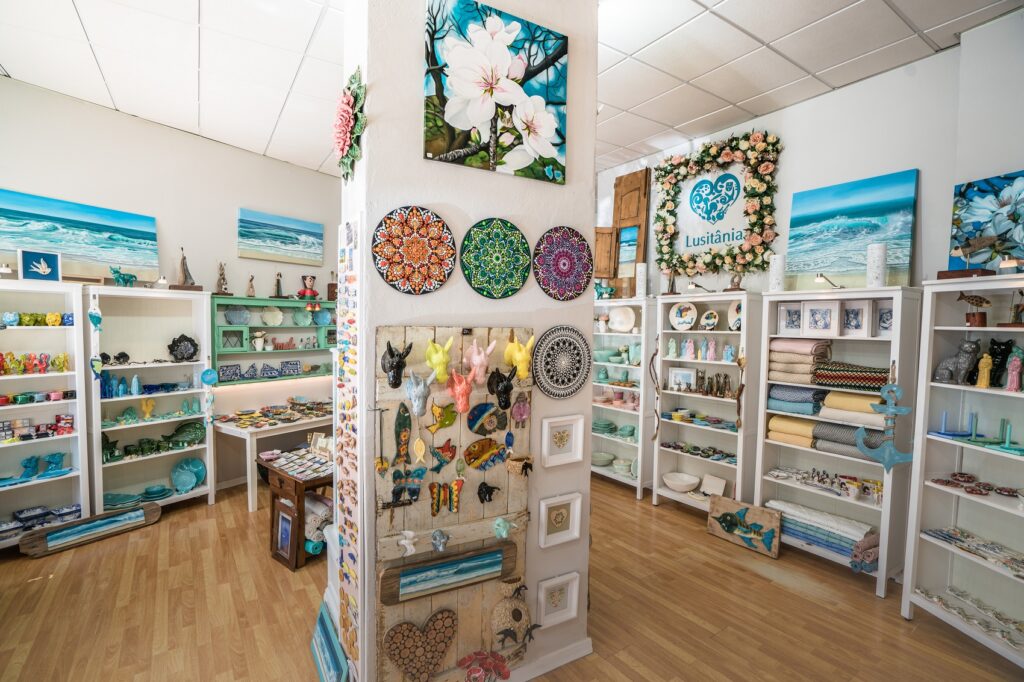
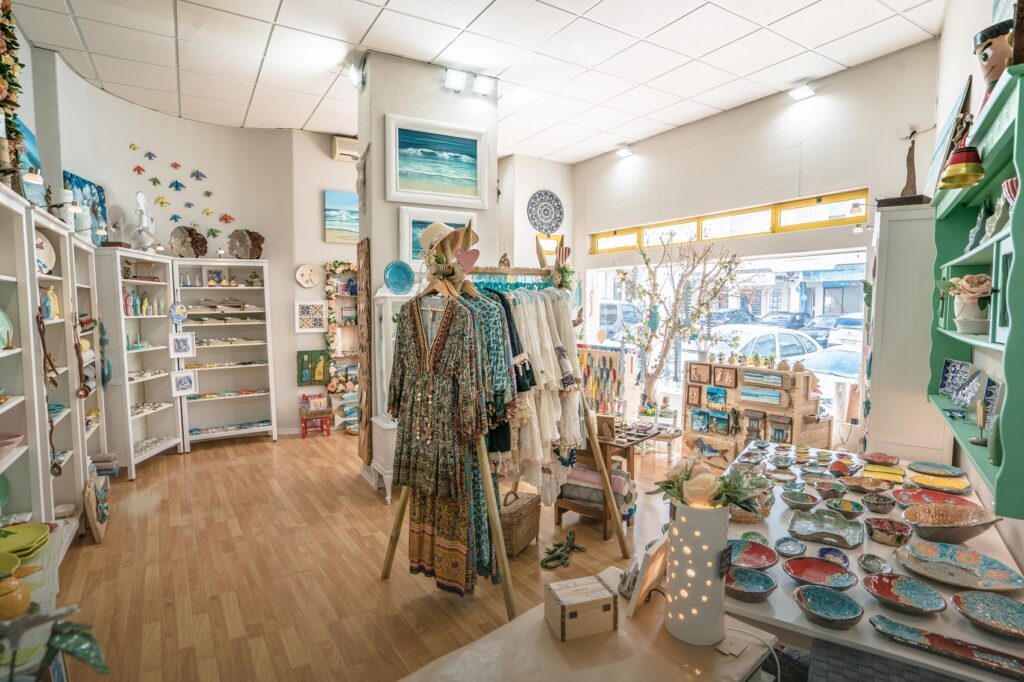
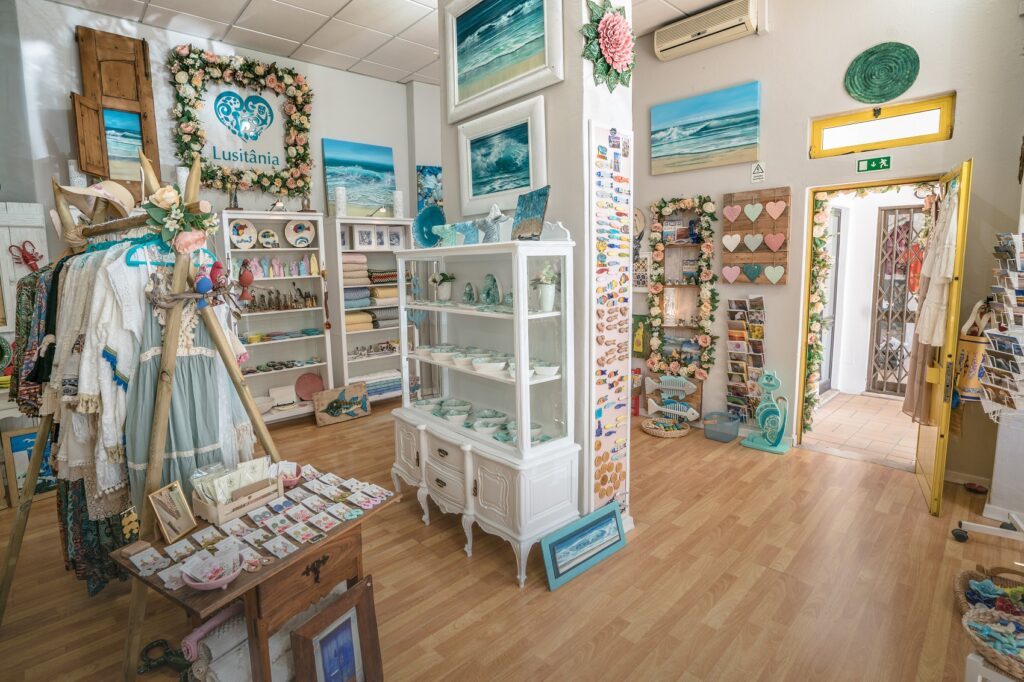
The Lusitânia Handmade Gift Shop opened its door in Carvoeiro, right before the COVID-19 pandemic cast its shadow over Portugal. After travelling all over the country and Europe, Lagoa-native Tânia Silva wanted to bring to her community a different concept of traditional craftsmanship. “It’s a project dedicated to that which is handmade in the country, in an exclusive way and totally different from industrialised products. We value contemporary craftsmanship through unique and original pieces made by our artisans,” she explains.
Lusitânia’s goal is clear: “To highlight and promote our national craftsmanship”
And so, the shop brings together pieces by around 40 artists from all over the country, of various ages and using different materials and techniques. Although very different, they all have something in common: “These are excellent products, made with soul, dedication and love, all from Portugal”, and which are difficult to find anywhere else.
In Tânia’s own words, the shop’s main goal is crystal clear: “To highlight and promote our national craftsmanship.”
A walk through Portuguese Art, from decorative to practical ceramics, macramé, jewellery, paintings and much more
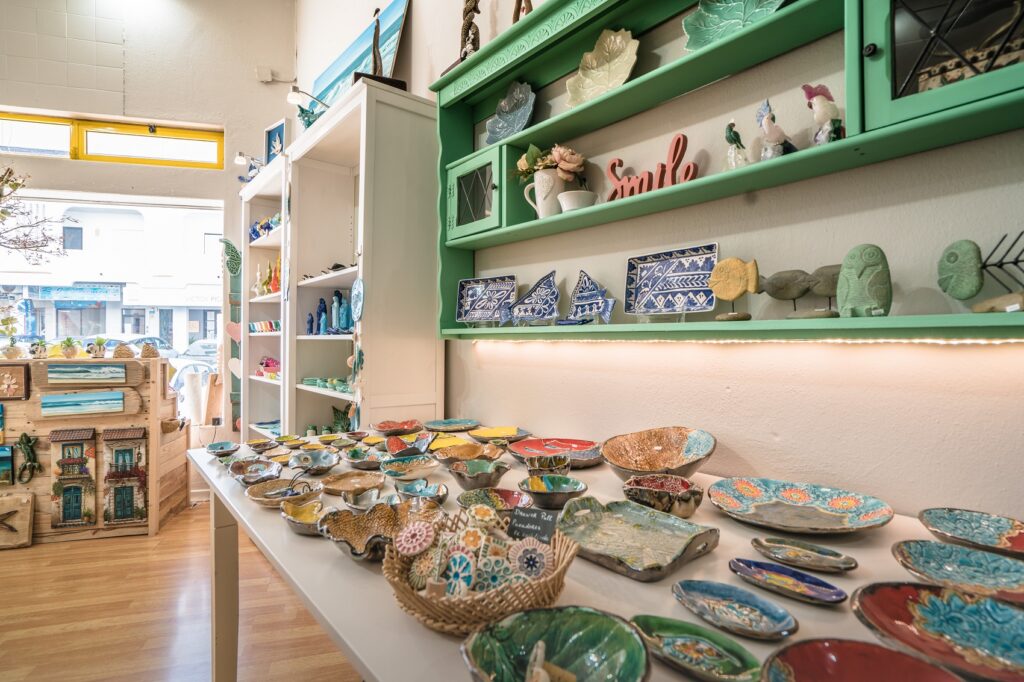
Walking into Lusitânia is like going on a journey of Portuguese art, ranging from decorative or practical ceramics, original canvases, azulejos (traditional tile work), macramé, tableware, jewellery and unique signature pieces.
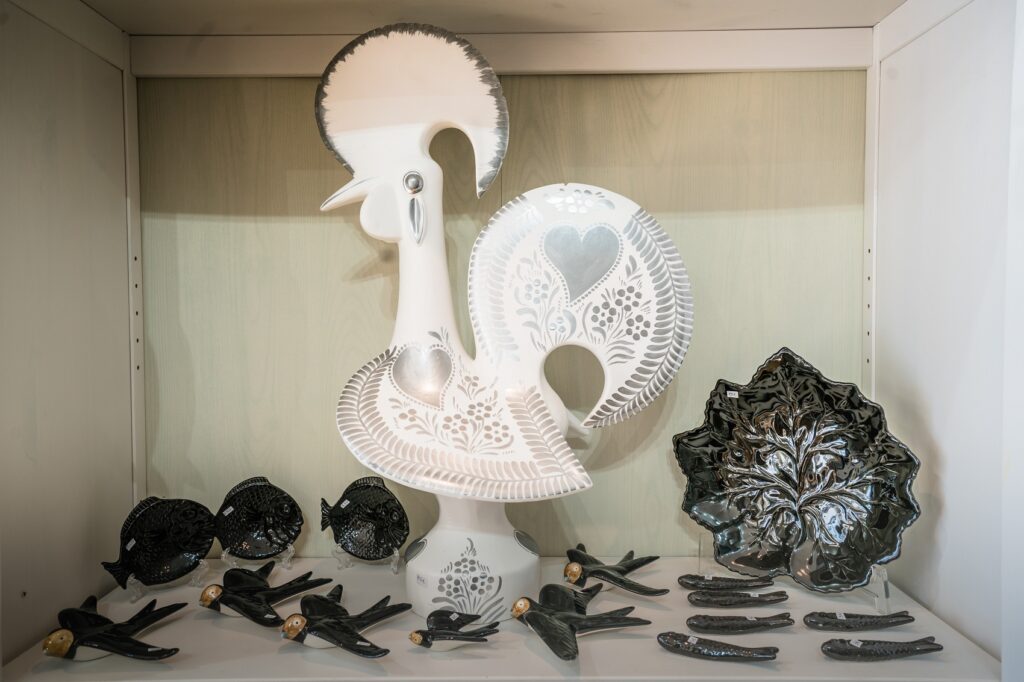
Here, you’ll find ceramics from Caldas da Rainha, typical Alentejo chairs, quilts from Serra da Estrela, religious pieces from Fátima, the Barcelos rooster, azulejos from Alcobaça and other works from Pombal, Lisbon and, of course, the Algarve. And Tânia herself handpicks all of this.
“I have a very close relationship with each artist. I visit the studios where they work so they can show me what they have and I choose the pieces that best fit the shop’s concept. Sometimes I’ll even tell them what I want and even sketch out my idea and they do it. That’s why there are a lot of custom pieces as well,” she explains.
This close relationship seems to seep into the community. Just last summer, Tânia saw several artisans come into Lusitânia requesting to have their work sold at the shop as well. But there is one thing that leads to certain elimination: “If I see that an artist doesn’t put love and dedication into their piece, I cannot invest in them because I feel that their goal is simply to sell,” she states.
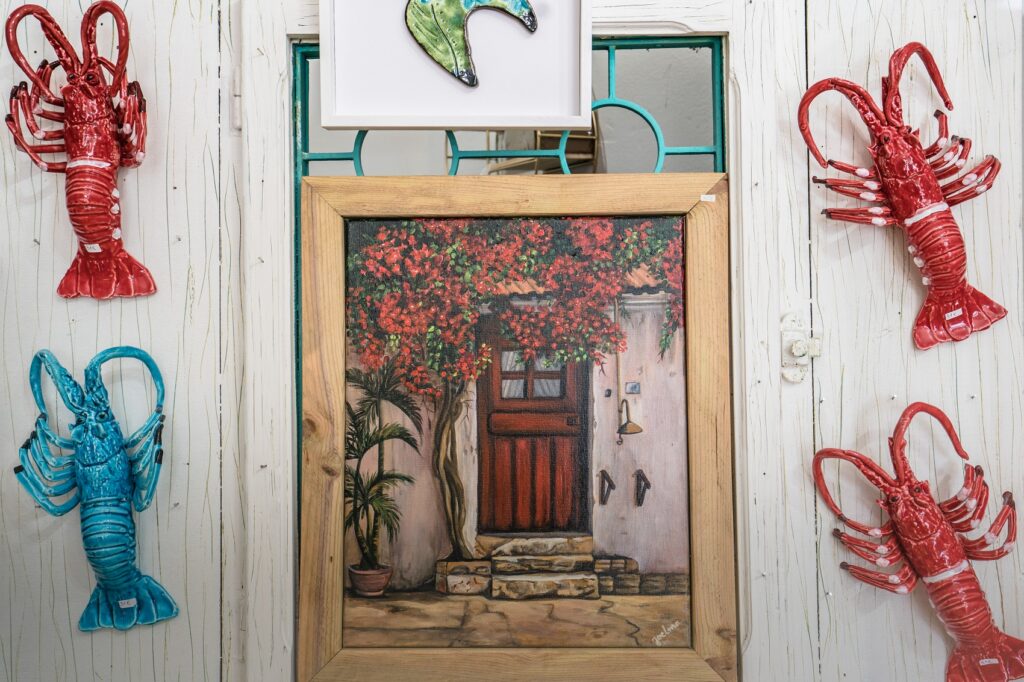
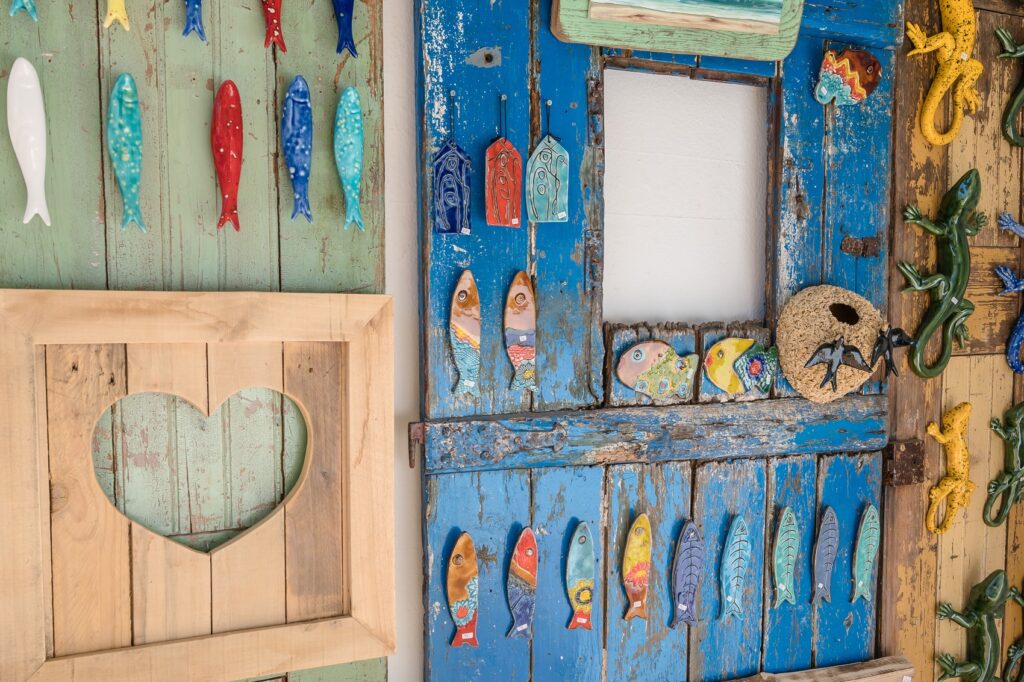
Coming into Lusitânia Handmande Gift Shop, the first thing you’ll notice is the many colours on the walls and shelves, usually loaded with ceramic sardines, lobsters and swallows.
There are also mandalas, postcards made of different materials, mugs and plenty of decorative china and tableware. Nativity scenes are sold year round, along with fridge pins, paintings using recyclable materials and paintings of seascapes, angels, key rings and books. But the top sellers are the decorative azulejos and soap dishes.
“These are all items that cannot be found anywhere else and that no other shop nearby will have. That’s our concept and it must be respected. I have a little bit of everything and something for everyone,” Tânia says, adding that she makes sure to always tell clients the story behind each piece, the materials used, who made it and where they come from. “This shop is an homage to the Portuguese people and our craftsmanship,” she says.
At her shop, Tânia Silva welcomes painters, designers, sculptors, potters, carpenters and many other artisans. As for the clientele, most are tourists, both foreign and Portuguese, but a lot of residents visit the shop as well.
From Lusitânia to the world
Lusitânia can also ship any piece to anywhere in the country or the world — Tânia has shipped orders to the US, Japan, Canada, Australia and multiple European countries. The latest order, one of the biggest, came from an American company with offices in Lisbon, which commissioned 200 swallows customised with their logo, as gifts to the staff in the Portuguese capital during a company dinner. “They found me on Instagram and made the order. I spoke to the craftsman and I’m going to deliver the pieces in Lisbon myself,” Tânia reveals.
As for the future, she hopes to take Lusitânia Handmade Gift Shop to other towns in the Algarve and beyond. “The goal is to grow and have shops all over the country. The first steps will be here in the Algarve and then elsewhere. I’ll have to do some thorough research as it will be tricky to find places that don’t sell pieces like what I have,” says Tânia. For now, she will be taking a Pottery course to create her own collections.
During winter, Lusitânia Handmade Gift Shop is open Monday to Friday from 10am to 1pm and 3pm to 6pm, and on Saturdays from 10am to 1pm.
Visit Lusitânia Handmade Gift Shop’s website, or follow on Instagram
Created by Dutch artist Eric de Bruijn, “Ana Ana” is a unique space where art and hospitality come together in multiple forms
– December 7, 2021
Imagine a home where a creative studio, an art gallery, large entertaining spaces, and comfy guest rooms coexist in a peaceful urban setting. This is Ana Ana, Eric de Bruijn’s artistic habitat.
Once an industrial building, now a serene oasis
Located close to the riverfront in Portimão, this 500sqm building was initially set to be a family home and art studio. The vast rooms with tall ceilings were ideal for Eric’s large canvases and the bedrooms sufficient to host his family. But when COVID hit, and a lockdown was imposed, the Dutch painter decided to reinvent the space. What was once an industrial building was lovingly transformed into a serene oasis. This fluid home, in constant change, is a remarkable resting place filled with bright natural light and unique art pieces, curated and designed by the artist, making Ana Ana one of a kind.
A place to immerse yourself in Art
“The house got a lot of tender loving care,” says the soft-spoken Dutchman, who opened the doors of his multipurpose home to give art lovers the chance to stay in what can be seen as a work of art in progress. “It’s still a working studio today, but can be different tomorrow,” he explains. Eric’s assistant, Marta, knows she must expect the unexpected. “Very often, I come in after the weekend, and things have changed, again,” she remarks. “Sometimes, he sells art pieces from the residence’s walls, and we need to replace them.”
Ana Ana is now a comfortable and spacious setting where guests can stay and immerse themselves in art. However, when it is not rented out, Eric lives here. It is where he comes to life, it represents who he is, and that is why he chose its name. “Ana Ana means ‘it’s me’ or ‘that’s who I am’, in Arabic,” he explains.
This space truly reflects Eric’s style, which he describes as balanced, light, inviting but also comfortable, tasteful and honest. “It’s a plural space where you will find art in many forms, from exhibitions to gastronomic events, pop-up concepts or artistic residences; anything can happen.”
Portugal, a place of inspiration for new artists
The Dutch artist, creative director and interior designer moved to the Algarve in 2006, thinking he would only stay for a year. Fifteen years later, he is still here and has no regrets. “What can I say, I love Portugal, and I love the people,” he exclaims. A passion that has led him to work with many local and national artisans to champion their work. On top of producing furniture in the north of Portugal, together with Marta, he is creating a line of furniture and objects to tell Ana Ana’s story.
He is currently also working on four interior design projects in the Algarve and others in Holland, such as a beautiful restaurant that opened last June in Nijmegen. “Hospitality is very important for me,” he insists as he reveals he is also building a small Ana Ana in Lagoa for two people.
Persian-style carpets, rustic furniture and large paintings: the scene is perfectly designed to host warm and friendly gatherings
Born in The Netherlands, where his parents had a hotel, Eric has always been a keen host. After exhibitions, he loves to cook for his guests, “to share beautiful things with interesting people”. This is why the house offers spaces for big gatherings, such as a large dining room and a sitting room with lots of white sofas, Persian-style carpets and a large rustic wooden coffee table, complemented with quirky glass-front cabinets. Another sitting room, with a huge corner sofa and pieces of art lining the walls, is the perfect spot for intimate conversations over a glass of wine or two.
There is also an opportunity to experience Ana Ana in a closer setting
The fully equipped house can be rented year-round. With its five bedrooms and studio, it can sleep up to 12 guests. Designed and curated to make guests feel good, the bedrooms are almost like cocoons. The atmosphere is light and airy with wooden shutters, spacious areas, and comfy furniture with oversized cushions. Polished cement, white floorboards or traditional Algarvian terracotta tiles are the natural materials chosen for the floors.
The villa is split into two separate units — a townhouse and a studio — along with an art gallery. On the townhouse’s ground floor, guests can spread out in an open space which includes the gallery and a kitchen and Eric’s studio (which is available to rent at an extra cost). On the second floor, there are four double bedrooms and one twin bedroom, as well as a fabulous rooftop terrace with a lounge and dining area and a firepit. This ample space is ideal for yoga retreats, which Eric and Marta will soon be organising.
Ana Ana also features an exceptional patio with its own black swimming pool. Surrounded by earthy pink walls lined with cacti, this interior courtyard gives off a mix of Moroccan and Mexican vibes. This unique home is definitely made for photoshoots and has been chosen by several brands such as Zara Home, adding yet another layer of creativity to this artistic habitat.
First Class Art, an Art Gallery by Karen Wride, showcases oil paintings from Nature to Figure studies
– December 6, 2021
Karen Wride fulfils her life-long dream of opening her own art gallery featuring her work alongside her talented daughters, opening her First Class Art Gallery, which is a bright and airy artwork space in Guia featuring eclectic pieces by Karen Wride, from oil paintings depicting scenes from around the Algarve to figure studies from her travels.
Aside from her own work, she also showcases the work of her two daughters, who are artists themselves. Previously, she had used this space to teach others with her popular art classes.
How it all started, with Portugal on the map
Whilst studying Fine Art, Karen soon realised how tough it was to make a living as an artist. She decided to change her degree to the more lucrative sector of Graphic Design and worked in London for many years as a freelance designer before being promoted to creative director and then going on to set up her own design studio.
Ten years ago, she moved to Portugal. On a holiday in Madeira, she met a fellow Welsh artist who had been teaching art classes in the Algarve. Insistent that she wasn’t a teacher, Karen initially turned down the offer to take over his art classes, but she was soon convinced otherwise. Much to her surprise, she came to realise how much she enjoyed sharing her passion with others.
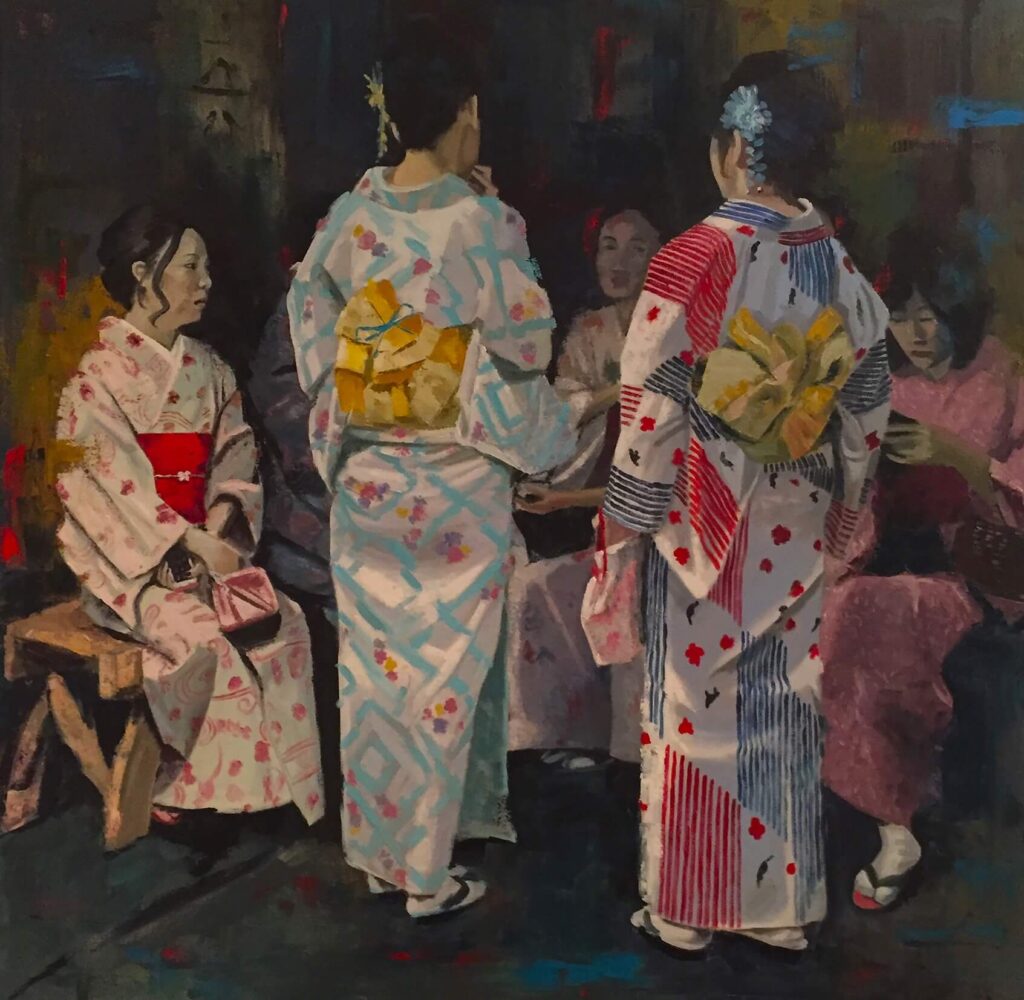
Seven Geishas
The art of Teaching
During her classes, she teaches a maximum of three people at a time to ensure that there is plenty of space and so she can concentrate on developing her students’ skills. Her classes are open to all painting abilities, genre and everyone is free to work at their own pace.
Karen believes that anyone can make art, as she explains: “You have to just build the confidence to do it. We are all born with the same ability, but some are less scared than others.”
Over the years, she has watched students pick up their first paintbrush and then transform into professional artists, even selling their own pieces.
“Nothing gives me more of a rush than when one of my students starts selling their own work.”
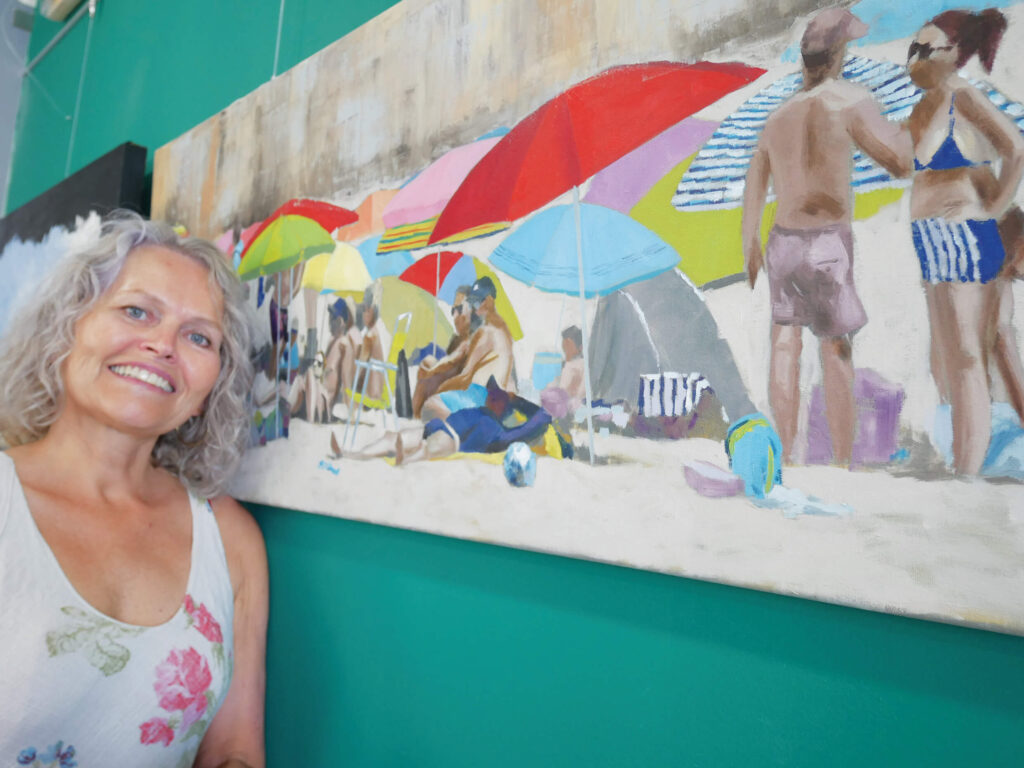
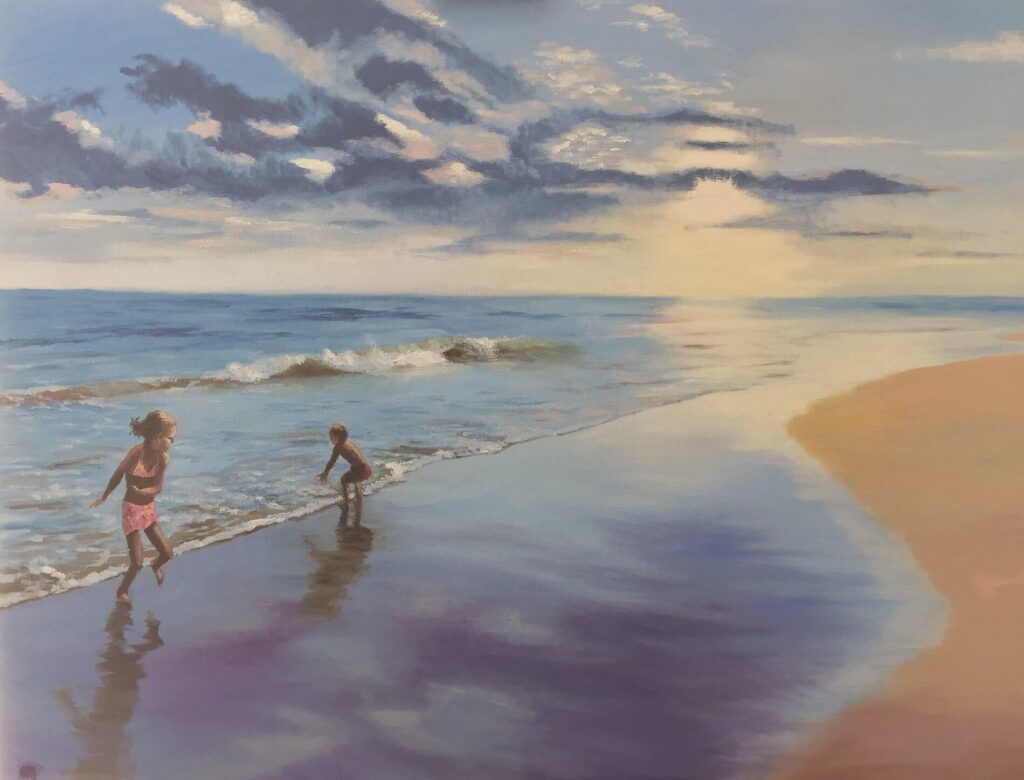
Children at the Beach
Lockdowns changed the lives of everyone, making Karen’s life-long dream a reality
Throughout the series of COVID-19 lockdowns, Karen’s classes were forced to close which encouraged her to create more pieces to sell. One piece she created was “depicting the joy of life here in the Algarve”. She donated this work to Hospital Particular in Alvor, with the hope of giving patients something to ponder whilst waiting.
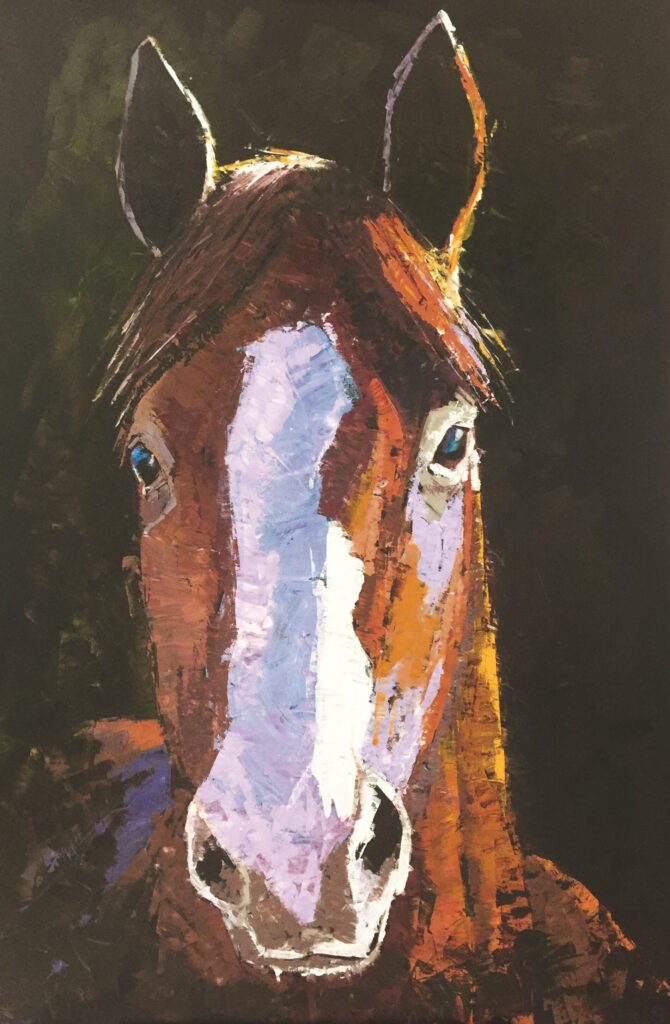
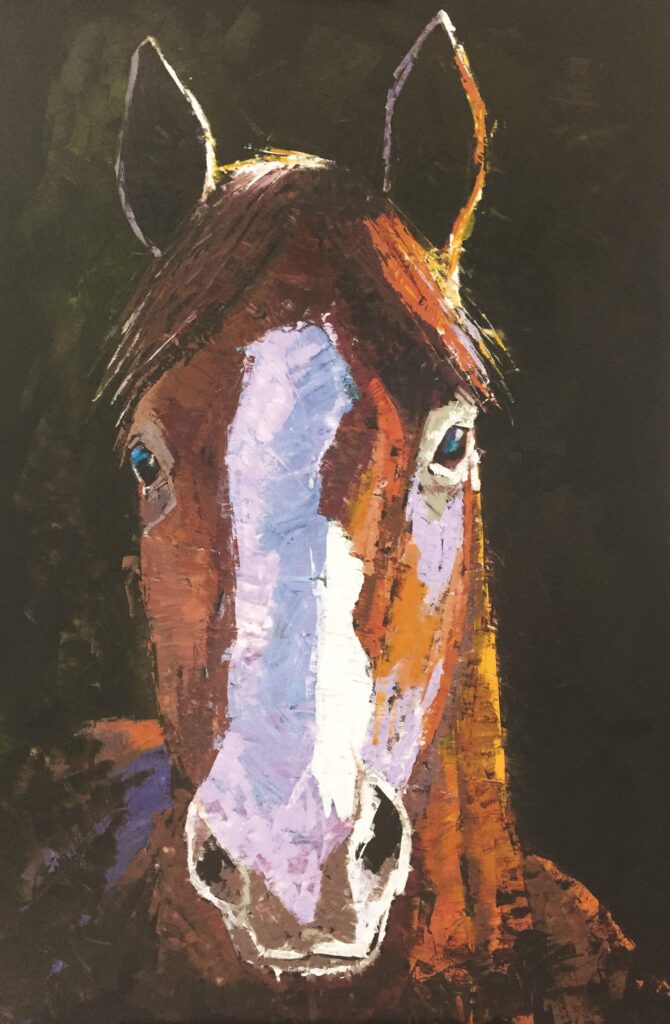
Horse Power
But dealing with galleries and selling on social media became tedious for Karen. In early 2021, she took the plunge to open her own gallery in the same premises as her art classes.
Today, First Class Art presents many of her works, including her signature contemporary, impressionistpieces featuring expressive human form.
Surfers on the West Coast
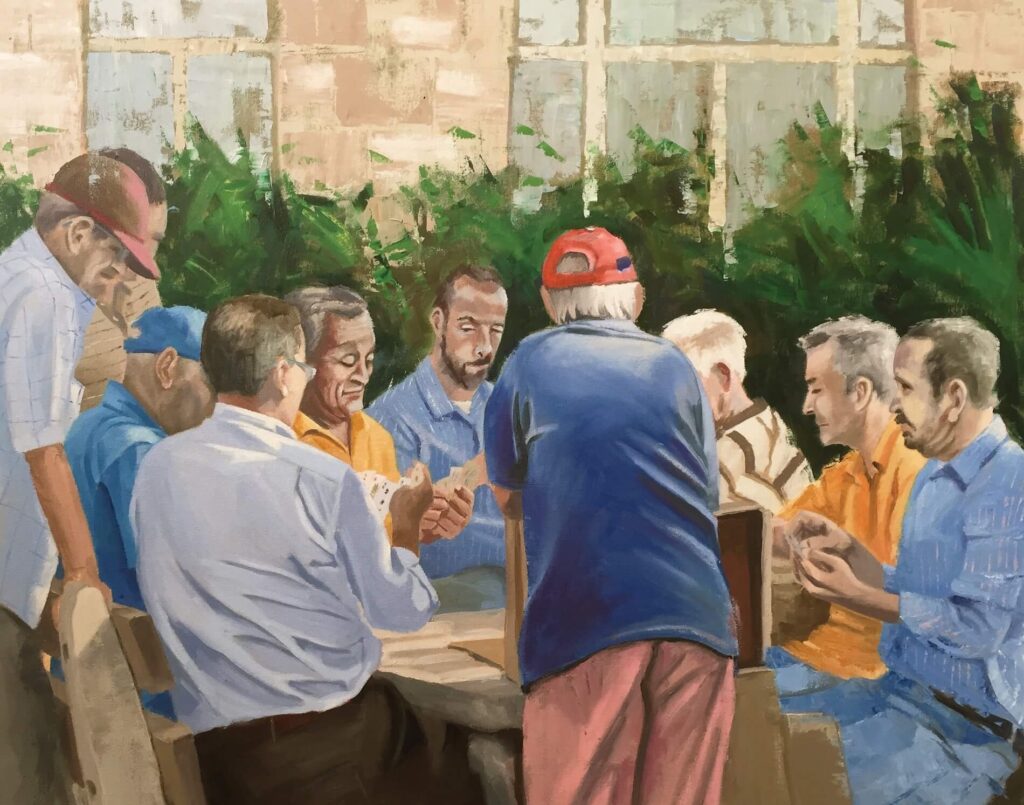
Card Cheat
Although her favourite medium is oil painting, she loves “the spontaneity of a small pen and wash sketches”, and she explains that she is drawn to the unusual, the ironic and the nostalgic. Her creative flair seems to have ‘brushed off’ on her daughters as well. Lidija, a musician, and Bianca, a tattoo artist, also have their own pieces within the gallery.
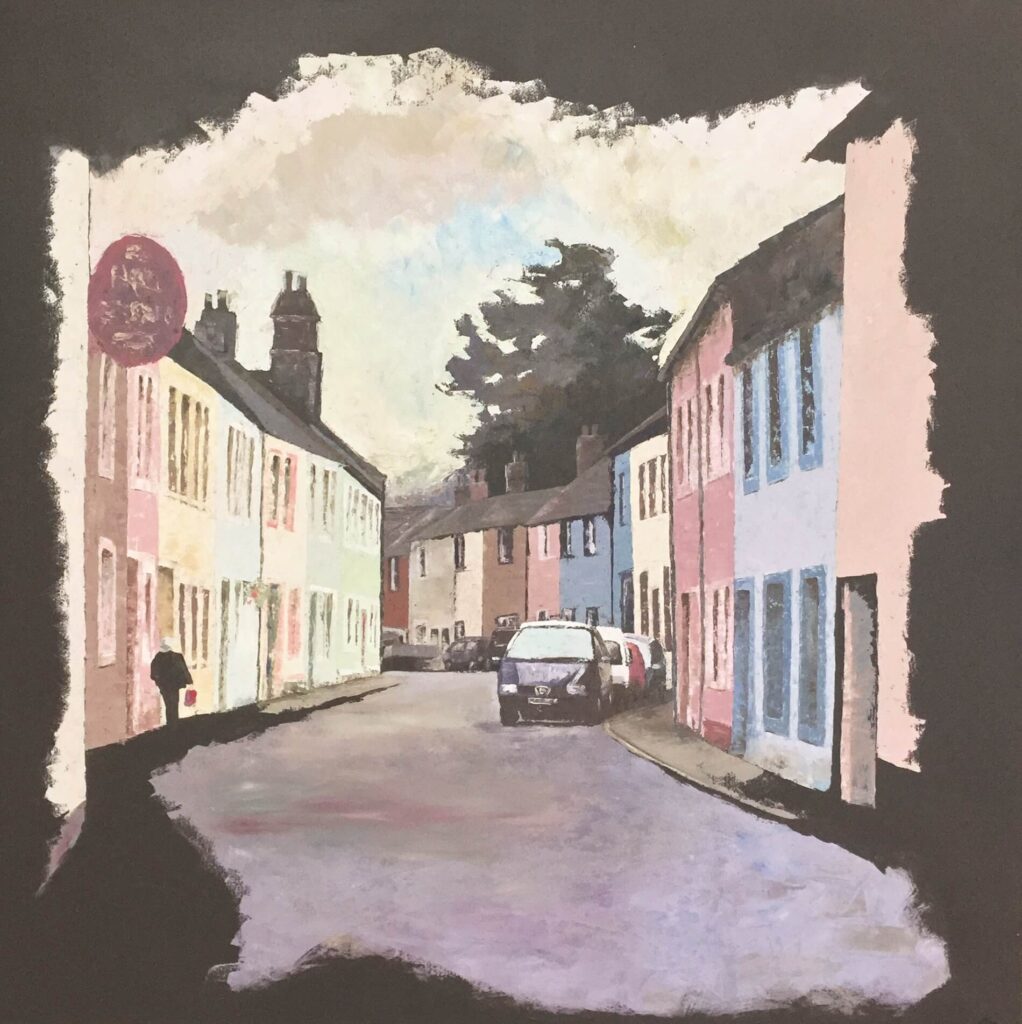
Cockermouth
“Painting makes you see the world differently,” Karen says. “People come to realise how many more colours there are in the world and that helps you see the world in more depth.” After inspiring so many students to create pieces they are proud to show others, it is only right that Karen Wride continues to do so herself, now in her own space.
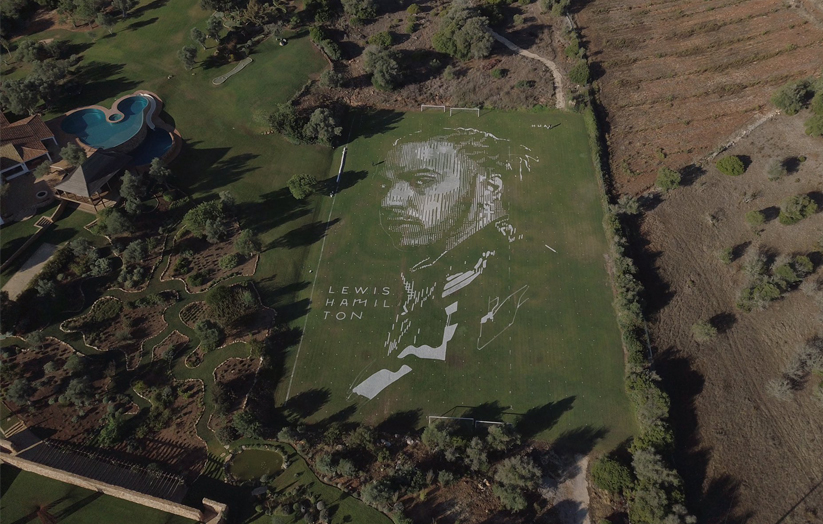
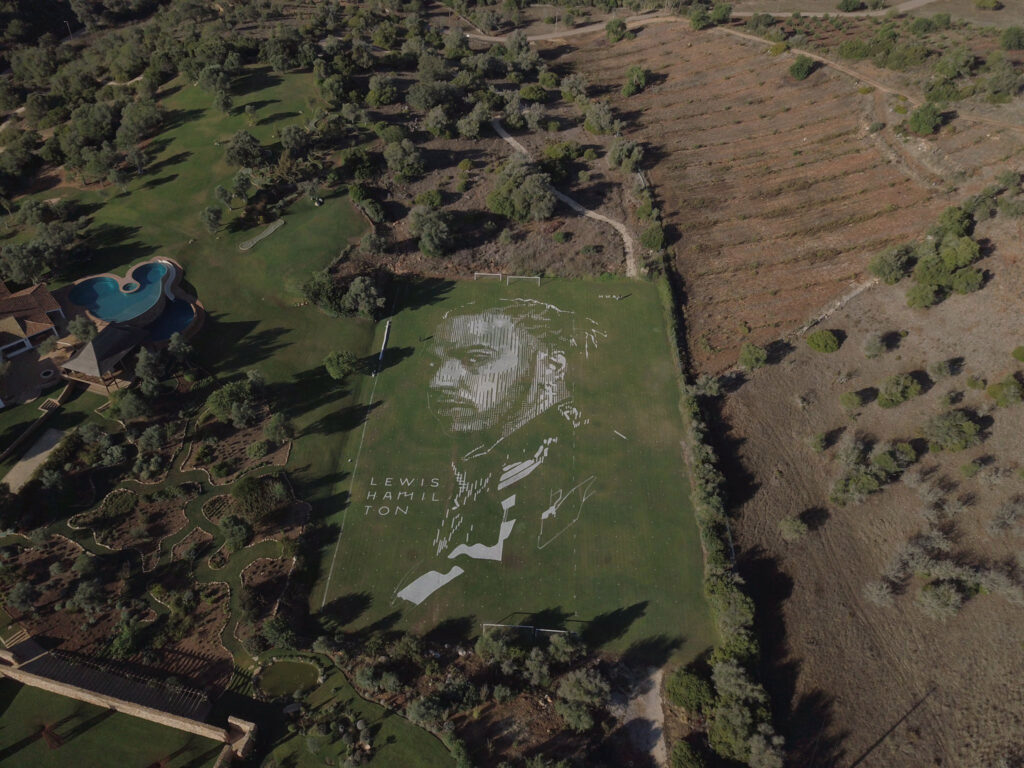
Formula 1 icon Lewis Hamilton was “totally blown away” by a giant painting in his honour that was painted onto a private football pitch in Mexilhoeira Grande, Portimão, by Algarve street artist HUARIU.
The British racing legend, who last weekend celebrated his record 92nd F1 career win at the Algarve International Racetrack, shared a video of the massive work of art on his Instagram page, which, at the time of writing, had already been viewed by nearly 850,000 people.
Lewis Hamilton by HUARIU
Speaking to the Resident, the 28-year-old from Lagoa was nearly speechless. “To be honest, I think I’m still in shock … I can’t really believe it,” he told us. “I never expected it to have the impact that it had,” HUARIU said.
The idea was pitched to him by former clients who own the football pitch and are “huge F1 fans”. They initially wanted him to simply write “Go Lewis” on the pitch, but he had something bolder in mind. “I presented them with two ideas. The one they picked was the one I ended up painting,” he told us.
As he wrote on his Facebook page: “1,000 litres of paint, 5500m², eight days and a lot of sweat is what it took to materialise this mammoth of a painting.” The process started on October 17 and was completed on Sunday (October 25), the day of the F1 GP.
But there were times when HUARIU thought it would be impossible. “We faced one full day of rain and another day with periods of rain. Thankfully, the paint survived it,” he said, adding that he wouldn’t have been able to complete the painting without the help of his girlfriend and two friends.
Despite his worries, the painting was completed just in time to celebrate Hamilton’s historic win in Portimão.
While the widespread attention he is receiving may be a first for HUARIU, this wasn’t his first major artistic project. He discovered the world of graffiti at the age of nine but eventually “lost interest” before rekindling his artistic passion again at 21. Now a full-time artist, Huariu has already made a name for himself in Portugal’s urban art scene despite his tender age.
You can find out more about him on his website (www.huariu.com) or by following his social media pages (@Huariu).
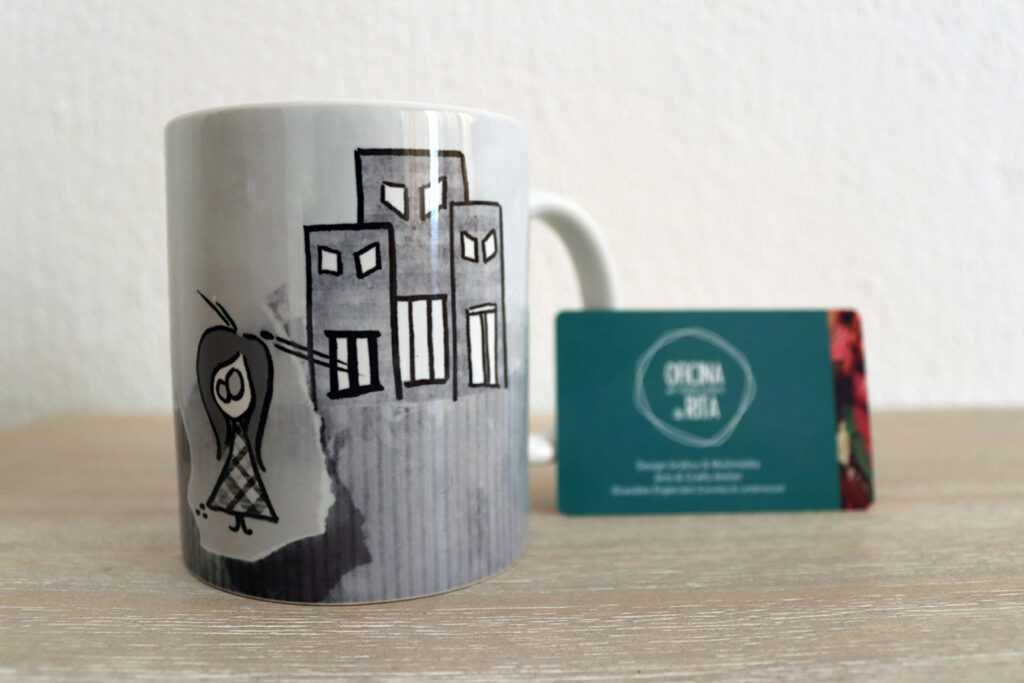
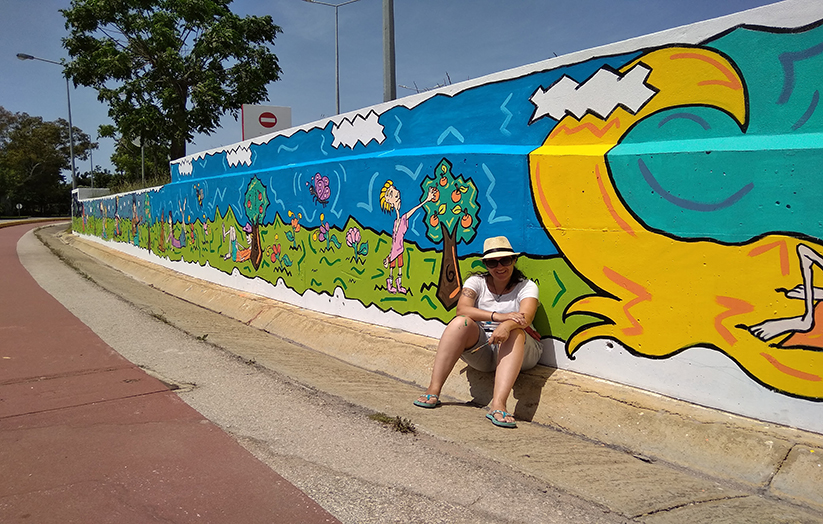
As a young adult, Rita Silva left her hometown of Lagoa to pursue her studies firstly in Portalegre, where she graduated in Graphic Design. With her passion for her chosen path intensifying, the young artist moved to Lisbon, where she gained a Masters in Design and studied Drawing and Illustration at the prestigious Belas Artes college. Rita then had the massively exciting opportunity to join the Park West Gallery from Miami as an onboard representative. This experience was fundamental in her quest to be an independent artist, as the training and connections she made while travelling the world auctioning art on a cruise ship.
Back on terra firma, Rita returned home, where she found a job with a local design company that allowed her to begin working on her projects while earning a salary. In 2016, Oficina da Rita was born and continues to evolve as her ideas and inspirations mature. “I love to draw and paint, and I needed to find something that would stimulate me, allowing me to be creative and at the same time, make some money,” said Rita.
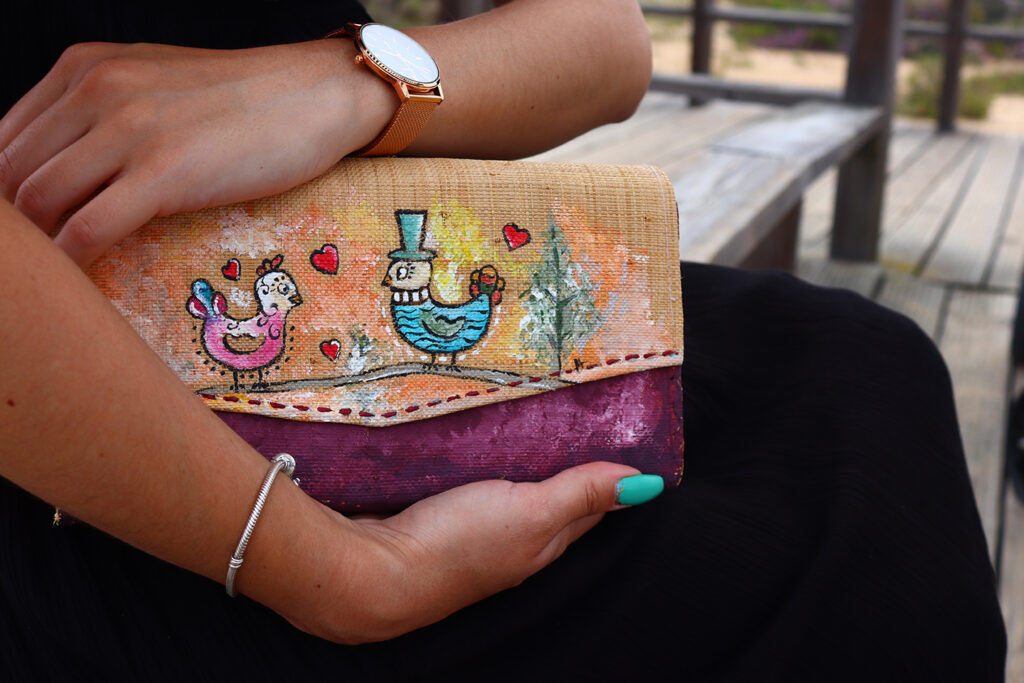
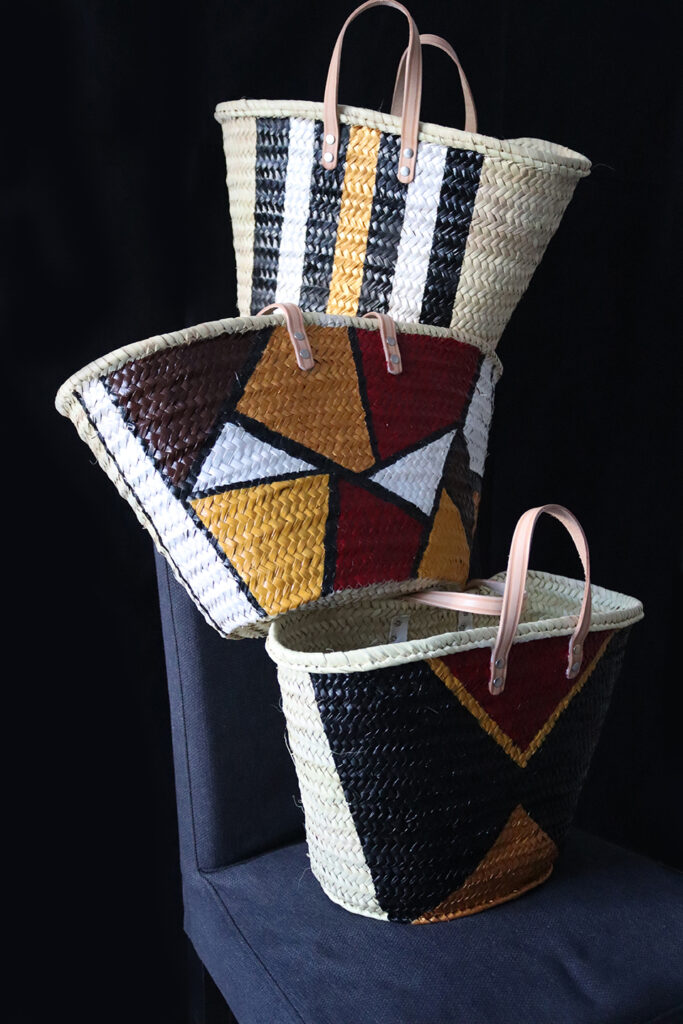
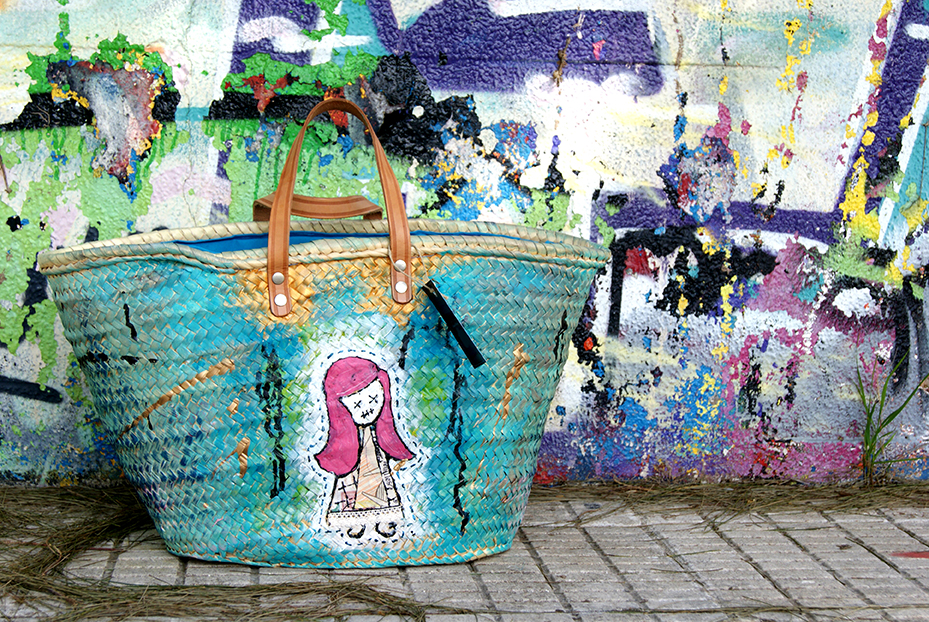
Her range is extensive from fashion accessories to ceramics, to textiles and most recently, even homemade soaps. Rita enjoys making her range of bespoke, hand-painted fashion accessories from Portuguese-sourced woven handmade baskets. There are two types of baskets with long or short handles that the artist receives in their natural state and paints either custom designs for her clients or from her own range. Each basket is unique, even the ones from her image bank as they are hand-painted, and it would be almost impossible to make an identical piece. “I’ve had some enjoyable commissions so far; the latest one was a quirky David Bowie piece, that was a lot of fun to do.”
Rita has duplicated her designs from baskets to mugs, and some people like to commission a specific design across her ever-expanding range collection. “The totes are 100% bamboo, and I use cirography on them, which allows for slight — for lack of a better word — imperfections which makes them all unique,” she explained.
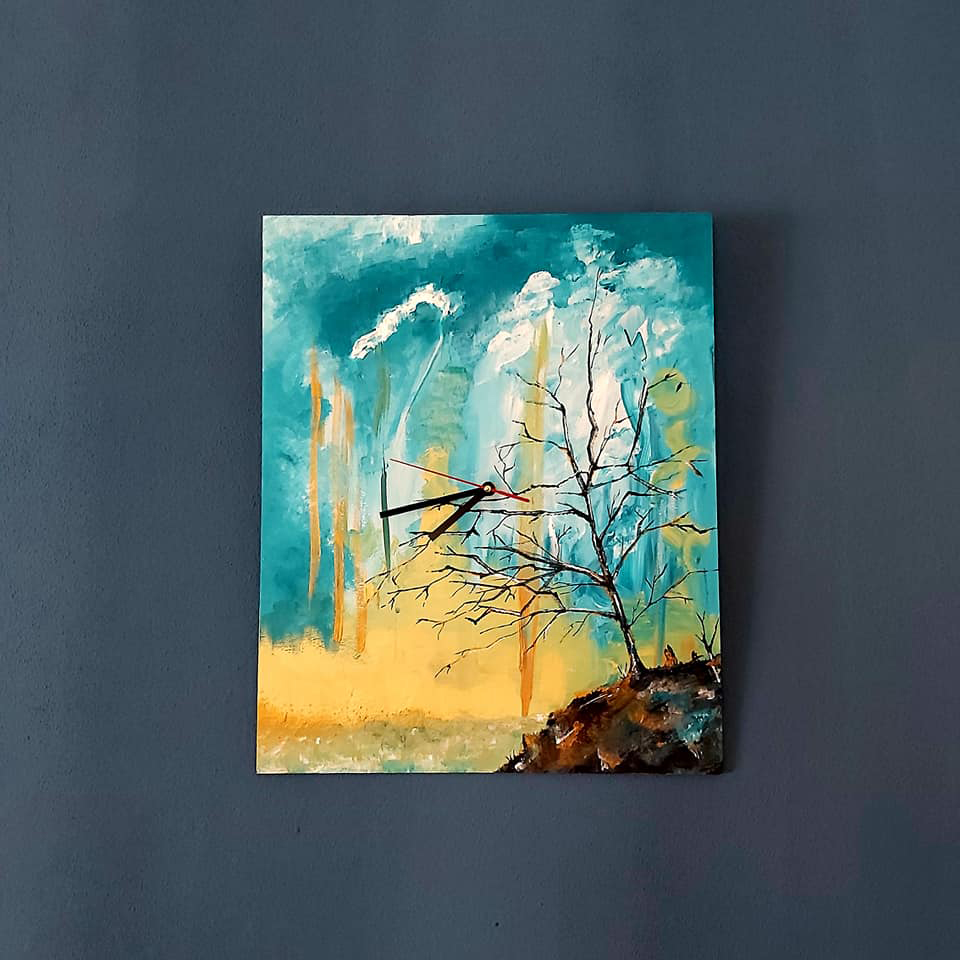
Rita is careful about finding the right suppliers for her materials and buys Portuguese, environmentally friendly, natural products whenever possible. As art is organic, so is the direction of her collection and her inspiration. You can tell that there are many dimensions to Rita’s skillset not only by the images that she creates but also by the wide selection of objects with which the artist works. Recently she has started to paint on wooden panels and making clocks. These pieces are stand-alone, one-of-a-kind wall art with the added functionality of telling the time and kind of sum up what the artist likes to do: Taking everyday objects and transforming them into personal, usable art for every occasion.
Within the selection of items that Rita brought along with her, there was a gorgeous smell coming from somewhere. She had some tiny, delicate homemade soaps that were hiding inside a little handmade soapbox, of course, painted by her. The soaps were made of natural ingredients and first devised as a dear family member had been suffering from a skin complaint. After using the soap, their skin cleared up. The soapboxes and soaps are something of a work in progress and will most likely be in the form of a wedding favour or similar.
As her business grows, Rita is being asked to do all kinds of weird and wonderful commissions but ideally what she would like to do is to push forward with her core items. This is not to say that if you have something specific that you think she could work her magic on that she wouldn’t do it. It costs nothing to enquire, and depending on her commitments and inspiration; it could well work out. Working from her studio at home in Portimão, Rita is surrounded by her work and always busy creating something.
You can visit her site and see if there’s anything from her shop that might tickle your fancy, or get in touch with your idea. Rita speaks English and Portuguese fluently.
Lagoa artist unveils mural showcasing Algarve life in vibrant shades
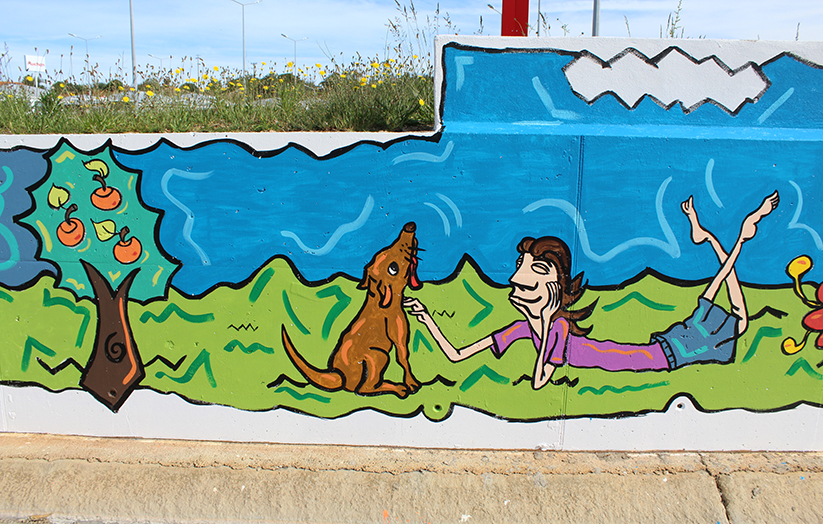
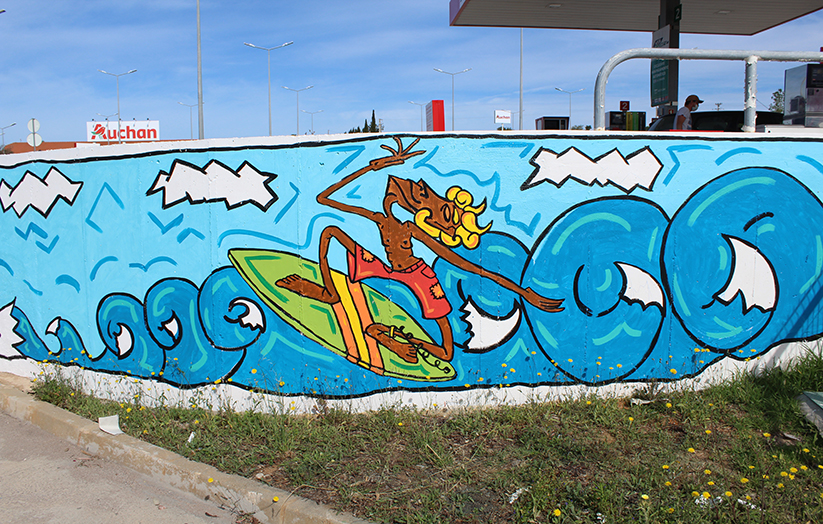
A white wall near Lagoa’s Auchan supermarket has been transformed into a head-turning work of art by local artist and art teacher Ana Nobre, who has filled it with colourful illustrations of some of Algarve’s most iconic sceneries.
From a surfer enjoying the Algarve’s waves to a couple dancing under the region’s starry sky, the mural showcases all the “wonderful things that the Algarve has to offer, such as its climate and landscapes”, said Ana. The mural was completed in May, after over a week of daily five-hour painting sessions. It’s the second mural that the artist has painted in Lagoa, around a year after she also gave a new vibrant life to a wall along the nearby Carlos Boto fitness circuit.
Ana Nobre, who teaches painting at several local primary schools as well as Lagoa’s Escola de Artes, was approached on both occasions by the local parish union, which encouraged her to use her talents in favour of the community. The second invitation came recently, and, according to her, it came at the right time. “I’d been at home since the schools closed, so I was delighted to be able to get out and return to doing what I love.”
Aside from being a teacher, Ana regularly exhibits her paintings both in Portugal and abroad. Whilst she hesitates to compare her work to any specific genre of art — although the one she says she comes closest to is Expressionism — Ana says that what she most likes to show through her paintings are “colour and movement”.
Born and raised near Lisbon, the artist moved to the Algarve around six years ago. She studied and earned a degree in visual arts in Caldas da Rainha (ESAD.CR). After a few years of working as a teacher in Lisbon, she decided to try her luck in the South due to the “lack of opportunities” she found in and around the capital. Her first job was as an entertainer at a hotel before eventually becoming a teacher in Lagoa, as well as continuing to paint in her free time. “We’ve all worked jobs that we weren’t passionate about. However, I’ve known from an early age that art was what I loved to do,” she explains, adding that the Algarve has offered her more opportunities as an artist than those she found in Lisbon.
Ana has also completed a graphic design course at the Etic Algarve school and is now dedicated to bringing her skills as an artist and as a graphic designer together. She has already worked on the cover of an album by Portuguese band Pura Cura as well as two educational books entitled ReciclArte. But like so many others, Ana is uncertain about the future due to the consequences of the COVID-19 pandemic. She had an “opportunity of a lifetime” to showcase her art at the Artifact art gallery in Manhattan, New York in 2021. “They saw my works online and invited me to exhibit there,” she reveals. While the pandemic has cast a dark cloud over her plans, Ana remains hopeful that the situation will improve until then.
The Lagoa gallery introduces some of its new artists
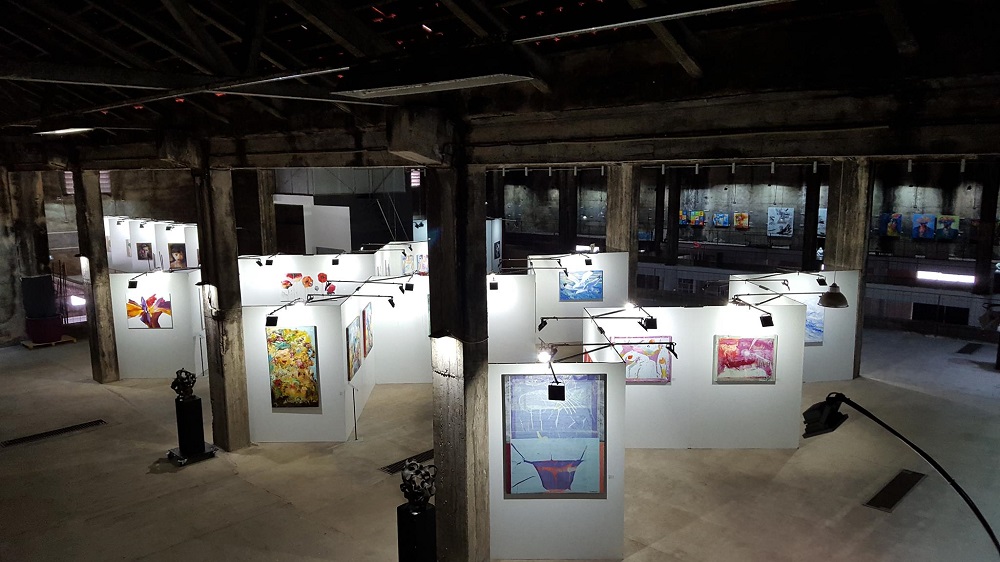
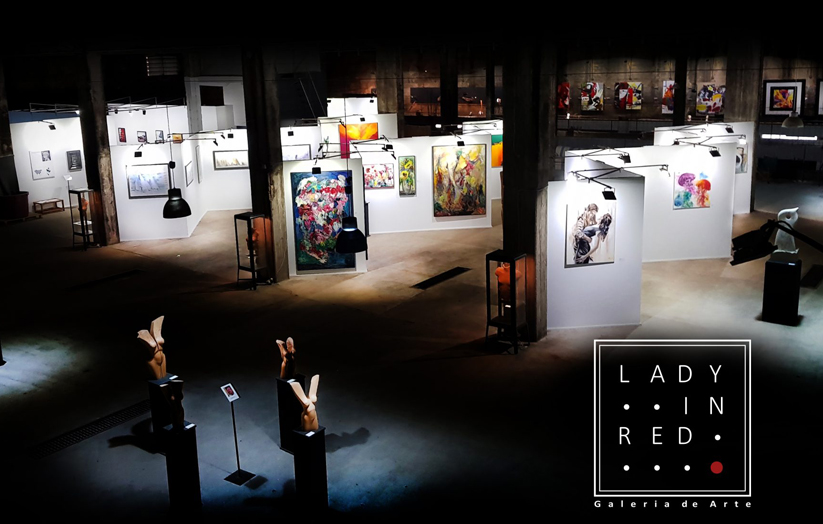
When you pass the Adega Cooperativa de Lagoa, you could easily not realise that there’s a fascinating art gallery housed inside the working wine co-op. The space is vast, with an industrial-urban vibe that would be more common in a big city than opposite the bus station in Lagoa.
The Lady in Red (LiR) gallery hosts a fabulous range of local, national and international artists, all year round, from large installations as well as smaller, take-home pieces (they can also arrange shipping and delivery). The exhibition centre is perched above the bottling and processing part of the co-op, its runways and corridors giving a bird’s-eye view of the action below, making for a unique ambience. There’s a mixture of sculptures, paintings and ceramics in spacious displays with excellent lighting to show everything at its very best.
The industrial and distressed walls give a dramatic background for the art, with some pieces almost appearing to float in mid-air. This is a venue that is well worth a visit, so allow yourself some time to take it all in, as there’s a lot to see. Entering the main gallery area, there’s a welcoming Lounge Bar area with comfy sofas to relax on, as well as a sunny terrace at the front. As you might have gathered, this is not your usual Lagoa hangout; here you can enjoy Teapigs teas, Caffe Praego or Surf Brewing craft beer — brands that exhibit sustainability, charity and flavour and match their ethos.
As an events venue, LiR is quite different. The artwork mixed with the industrial surroundings of the co-op, which has a long tradition in the region, create a very distinct ambience, as unique as the art itself. This is a vast space with a stage and seating area for live or streamed performances and presentations. Live music and productions also take place throughout the year. For 2020, LiR has welcomed a series of new artists into their fold, with the most varied background and style.
Born and raised in the quiet fishing village of Olhão, painter and sculptor Pedro Águas has an academic background in Visual Arts from the University of the Algarve. His work seeks freedom from the demands of logic and dives beyond everyday consciousness. Águas attempts to overcome the contradiction between objectivity and subjectivity, providing a poetic hallucination, an expansion of consciousness. With his clay head sculptures, he explores our unconscious and dreams, where anything is possible.
Pedro Águas
British painter Jessica Dunn has lived and worked in the Algarve for over 20 years. Following her Art studies at Kingston Polytechnic, in London, she moved to southern Portugal, where she loves taking advantage of the ever-present sunlight. Through the layering of tones, colours and texture, our eyes are drawn into a world of reflection, tranquillity and timelessness featured in her work.
Jessican Dunn
With a degree in Painting from the College of Fine Arts of the University of Lisbon, Inês Barracha is a visual artist who combines her fine-arts skills with various fields of design and multimedia. After three years in England studying and working in the area of 3D digital animation, she was invited to teach several subjects in higher and technical courses in Design, Multimedia, Animated Image and Illustration, which brought her back to Portugal. She now works with the MODO project — a neo-rural space that promotes artistic experimentation and training in various creative areas. Barracha has been developing community projects, partnerships, collaborations and other works that have been expanding the MODO concept nationally and internationally.
Inês Barracha
Lisbon-based artist Bebeko is originally from Montreal, Canada. Born Kenya Saint-Lôt and of Portuguese and African descent, she moved to Portugal last year to pursue her dream to be a full-time artist. The self-taught painter decided to use the pseudonym Bebeko for her artwork as a tribute to the childhood nickname that her father gave her. Her abstract painting style reflects her compulsive energy — when she paints, she trusts the guidance of her intuition; it’s her way to listen to her own inner voice.
Bebeko
Born in Porto, Helena de Medeiros graduated from London Fashion School and the ESAD School of Arts and Design, in Matosinhos. Her work as a costume designer is dedicated mainly to contemporary ballet but also cinema, theatre and opera. She has collaborated with great choreographers such as Gradimir Pankov, Iracity Cardoso, Mauro Bigonzetti, or Xin Peng Wang. She also has a parallel career as a painter, having displayed her work since 1990 in solo exhibitions around the world. Helena’s paintings establish an essential dialogue with her work as a costume designer.
Helena de Medeiros
Finally, Rita Pereira is a Portuguese artist based in Lagos, where she is a resident artist at Laboratório de Atividades Criativas (LAC). In 2009, she began her studies in Sculpture at Lisbon’s Fine Arts School and, in 2010, she also pursued Equipment Design, graduating in 2013, followed by a master’s degree in Product Design at the School of Arts and Design in Caldas da Rainha. The pieces on display in the Lady in Red Gallery are smaller than her usual large and often imposing works. Here, you’ll find a selection of small, one-of-a-kind stone carvings with blown glass decanters.
Rita Pereira
LiR is currently open Monday to Sunday from 12pm-5pm but times may vary (mask is mandatory). Entry is free.
There is a long tradition of pottery in the Algarve. The Phoenicians, the Romans and the Moors, all of whom occupied the region at one point, were masters of the earthenware. There are ceramics shops all over southern Portugal, but the small village of Porches is considered the Algarve’s pottery centre. It’s precisely here that you can find one of the most renowned potteries in the region, which is featured in every tourist guide: Olaria Algarve, better known as Porches Pottery.
But the village wasn’t always the ‘capital’ of this ancient art. Even though master potters went to Porches to find the clay they required, their factories were in Lagoa. The first pottery shop in Porches was only founded in 1968, by Irishman Patrick Swift, who, as the president of the local parish council says, “put Porches on the map”.
Patrick Swift
Swift discovered the region in the 1960s and fell in love with it, moving here with his wife and two daughters. At the time, the art of pottery was in decline. Intricate earthenware was being replaced by plastic and metal jars, which were mass-produced and cheap. Swift decided he wanted to save this traditional art and, coincidentally, met artist Lima de Freitas, who shared his passions for regional pottery. Together they researched the peoples who had inhabited the area in ancient times and had left their mark in pottery; they visited ceramics museums in Portugal and abroad, including the Victoria and Albert Museum, in London, which houses the largest collection of decorative arts and design in the world. The pair eventually opted to use the majolica technique, an ancient practice which is believed to have originated in Persia and was introduced in Europe by the Moors. It consists of coating the clay pieces in a tin-based glaze, after the first baking, which covers them in an opaque, white base onto which the decoration is applied after another glaze and second baking. This way, the colours and glaze melt together and form a shiny coat, which is also waterproof and resistant. The motifs created by Swift and Freitas were also inspired in ancient civilisations: the long-tailed bird features in Phoenician mythology; the hound dog and the hare were popular with the Moors; the tree of life, flanked by two birds with open wings, hails from Iberia; and fish were a recurring motif used during the Roman occupation. Both the majolica technique and these themes are still today used at Olaria Algarve, and the regional flora also serves as inspiration in many plates, platters, bowls, serving bowls and countless other pieces produced by the renowned shop.
Each piece is decorated by hand – a practice that Swift’s daughters, Stella and Juliet, were committed to preserving when they took over their father’s work after his passing, in the early 1980s. Swift started them off in the family business as teenagers, and they went on to study Art and Art History. Today, they are in charge of not only the management of the company but also its artistic direction. The sisters develop new motifs and create their own pieces, mainly panels and azulejos (hand-painted tiles). Around two years ago, Brian Fortune, Juliet’s son, also joined the team.
For Juliet and Stella, “it’s an honour to continue [their] father’s work”. And the number of clients that come through the shop’s doors, looking around in wonder at the works in display and whispering as if they were in a museum, proves they have done just that. Hand-painted ceramics lovers also have the chance to observe as the pair brings motifs to life with light but assertive brushes.
The ‘Marias’ have also been a part of the Porches Pottery team for many years: Maria Rosa has been there for 42 years; Maria do Carmo and Maria Manuela for 36; Maria Eulália for 28; and Maria José for 27. Two to three times a week, guests can also find in the shop artisan Ana Boto, who has been working there since its creation.
The shop’s building, which Patrick Swift had built in the style of a traditional Algarve home, is a piece of art in and of itself, decorated with stunning embossments and walls covered in traditional hand-painted tiles. Adjoining the shop, the family added a small café, Bar Bacchus. The intimate space, with a cosy log fire lit during winter, is named for the Roman god of wine, whose story is depicted across the tiles designed by Swift, which cover the walls.
To celebrate the Pottery’s 50th anniversary, the family is publishing a book on the history of Olaria Algarve, in September. Paul Bond pens the work but Brian, Swift’s grandson, handled the research. According to him, Paul, who lives in Bath, England, is “a historian and writer with an interest in the history of art and design and a keen collector of Porches Pottery”, which made for the ideal partnership.
“The book features a thoroughly researched and detailed biography of the pottery from its inception to the present day, supported by interviews with all the present painters and many past staff members, collectors, and friends of the pottery,” Brian explains. “It’s illustrated throughout with archival photography, and an extensive collection of remarkable pots and tiles from the last 50 years, that includes numerous previously unseen pieces from private collections. Furthermore, it also includes sections which cover the Porches Pottery style, an in-depth discussion of the azulejos that have been produced at the pottery, as well as information for collectors.” According to Swift’s grandson, the book is “an essential resource for anyone interested, not only in Porches Pottery, but in the contemporary history of Portuguese ceramic art and tiles”.
There is also an exhibition in the works at Convento de S. José in Lagoa, which will feature ceramic pieces and paintings by Patrick Swift, who studied at the National College of Art in Dublin and was a renowned figure in the artistic world during the 1950s in England and Ireland.
An artist from Lagoa, practically unknown in her hometown, is steadily making a name for herself in the world of cake art. Ana Remígio, a housewife with two children of 9 and 11, only practices this craft as an artistic occupation, since from a commercial standpoint “people only see a cake. They are not prepared to pay for the many hours spent studying and building the structure, confectioning and decorating it,” she says. “This type of cake can sell from €150 to €300 in England and Spain. Here, if I ask for €50 people think it’s too expensive. I don’t make cakes, I make edible artworks,” she explains, surrounded by the innumerous pieces decorating her house, all different and all wonderful.
It all began by chance, when a friend asked her to make a cake for her son. Passionate about confectionary since childhood thanks to her mother and grandmother, who used to make doce fino (a traditional marzipan cake, usually moulded into different shapes like animals or fruits), Ana started practising her craft for family and friends.
The cakes for sale “are usually made with a dry and hard sponge cake, to support the sugar paste sculpture added on top. The bases of mine can be diverse, like fruitcakes, chocolate or carrot cakes, and many other possibilities,” she says. “When people slice into my cakes, they are often surprised to find that they are actually very appetising, contrary to what they expected.”
Ana says the three-dimensional cake can reach considerable weight and height. “Sometimes it can weigh as much as 15 kilos. I need to consider every variable so it won’t fall apart. First I study where and how to place all the partitions so that they support the whole piece and allow for safe transportation. Only then do I start building the cake, and finally, the last step is decorating”. Between the second and third stage, the cake is frosted with a layer of sugar paste, which seals in the filling, preserving it without losing its gastronomic qualities.
Ana only started competing last year, because she wanted to know how much her art was worth, when compared to the other offers in the market. Her other motivation was, of course, learning. She started in a small and very old contest in Ireland. The organization informed her that winning a
bronze medal there would be like winning gold in other competitions of the sort, due to the high demanding criteria. She participated and earned that exact distinction, which made her want to
go even further.
The Cake International competition organizes three annual events in the United Kingdom. In August 2016, Ana Remígio went to London and won two gold medals, one silver and one bronze. In Birmingham, in November, during what is considered to be the biggest and most important contest, she won five gold medals and one silver. The bakers compete in 20 different categories and Ana won the silver medal in the cupcake category, one of the most complicated, along with wedding cakes.
“Later, after the awards were handed, the judge told me the only reason I didn’t win the gold was because the figures were slightly bigger that they should be,” making it only a matter of detail.
After her success in the competition, Ana created a new set of goals for herself: to upgrade her silver medal in the cupcake category to a gold one and to be Best in Show.
This year she achieved both those goals at the Cake International in London, in April. Over 500 bakers from all over the world competed and Ana Remígio proved her talents once again, entering three cakes and bringing home two gold medals, and a silver. The golden prize was won in the coveted cupcake category, and her piece was also considered Best in Show. In fact, the judges told her she had elevated cupcakes to a new level, as it was the first time a piece from this category achieved such a merit. Ana was also nominated for the 1st Annual Golden Tier Awards, a ceremony celebrating the best of the best in the industry. She competed for Collaboration of the Year, along with the Caketastics (an international group of cake artists) and for the American Cake Decorating People’s Choice Award.
Dared by her husband, Ana is thinking of immortalizing some of her works in clay, as the moulding technique is similar. This would keep them from spoiling and could inspire the imagination and creativity of new generations who want to follow in her footsteps. Ana’s main goals now are to continue her work, which she loves, to keep competing internationally and to give workshops and master classes.
Well-known in the Algarve art scene, Stela Barreto is a colourful, friendly, authentically creative artist and teacher preparing for a
solo exhibition at the Galeria de Arte in the Lagoa Adega (winery) from April 2017. As she prepared for the exhibition at her Portimão studio, Atelier 34, she described the long journey, via classical training, which has lead to her love of expressionism and abstract art.
Aged seven, Stela began painting portraits, progressing in her teens to oils and more complex methods. Her father was not keen on her pursuing her dream of becoming an artist, but at 16, a persistent Stela saved up for a Spanish art correspondence
course. She attended Lisbon’s António Arroio Art School and after graduating began painting professionally and teaching art.
Comfortable with her academic techniques, Stela began to explore abstract methods: “The fabulous Carlos Lança saw my work and really liked it: I was thrilled, it was a real honour! However, he told me that I wasn’t expressing myself. I took his advice on board and began to explore inwards, learning how to use my right brain as it controls three-dimensional sense, creativity, and artistic senses. I started to draw freestyle and found my path,” she explained.
The first drawings were a little dark, but they finally evolved into something that Stela could work with. As her style began to take shape, this evoked new, fresh ideas and a lust for new mediums: “I don’t want to be dependent on one method. I’m experimental – I need to discover what’s inside of me! I go through phases: it can be two or three at a time,” Stela continued. “I have to be myself. I must paint in solitude. It’s a dialogue between the painting and me: it’s my work.”
The works that Stela has prepared for the Galeria de Arte exhibition are slightly darker than last year’s collection and include portraits and architectural/landscape pieces. That’s how she works: ever changing and creating her art from within. Atelier 34 is a studio, teaching space and creative hub where Stela holds musical ‘happenings’, with talented musicians playing concerts for an audience of artists and art lovers. Donations of €5 are taken at the door and the attendees are entered into a draw where one of the lucky entrants will win a painting by Stela. You can keep up to date with events at Atelier 34 via Facebook.
Stela’s new love is her baby grand piano, which she is learning to play: “Art and music go hand in hand,” she said. “If you can compare a classical music composition to a canvas, the piece of music will often have long, purposeful silences, spaces in time, and these can be more powerful than the main chorus of the song. The canvas can have big blocks of space and they contribute to the overall impression of the piece.” Stela continues to dedicate herself to art classes and running workshops. As a founding member of the INICIARTE group, she founded the School of Art at the Casa das Artes in Portimão. Twice a week, a mixture of young people preparing for university, and older students, gather to learn techniques and improve their skills.
MONTRADARTEKIDS is a joint project with her artist daughter Sofia Barreto teaching young children to promote their creativity, development, self-esteem and to express themselves via art. Stela told us: “It’s so very important for these children to have the opportunity to learn about art and use it for their brain development. Learning how to use the right brain through art has changed my life for the better and I love to share that.”
A new multi-functional events venue is rising from the shadows of the old Adega building in Lagoa. The massive venue, spanning about 3000sqm on top of the bottling and warehouse space of the wine cellar, and complemented by a huge parking area that’s ripe for development, has now been taken over by Liz and Peter Roberts who have injected a new lease of life into the previously underused space and also created some distinguished enclaves.
When you enter the aging building you’ll find a spacious and bright coffee lounge that serves a selection of wines, made in the Adega, and local craft beer, Marafada plus soft drinks, along with fabulous teas and coffees that you won’t find elsewhere along the Algarve coast.
Liz explained: “Teapigs and Caffe Praego are great companies with ethical morals and beliefs and we are happy to be associated with them and introduce them to the local market on our big comfy sofas. Coffee and the arts have always been historically linked and, in line with our orphanage and community projects, we also support a 22-year-old art student, Frank Xavier Setto, who grew up in the Noel Orphanage. Frank is in his second year of university in Kigali, on the only art and graphic design course available in Rwanda. He is sponsored through the Point Foundation and artwork commissions from Caffe Praego who are supporting him to feed his brothers and sisters and we hope to have Frank’s art on display during 2017.”
The lounge is a perfect place to hook up with friends and a great meeting point for art lovers to engage with like-minded people in an area that would also lend itself very well to book clubs and other casual social groups.
Where the lounge is a mixture of modern, shabby chic styles and reminiscent of an American loft, the entrance into the main art gallery – “The Red Room” – is strategically lit to showcase the new art exhibits at their very best.
Art curator Pablo Malter told us about some of the new artists that we can expect in coming months. “We are very excited to be welcoming the highly acclaimed Antonio Franchini, Por- tuguese painter, sculptor and administrator of Ap’arte Galería in Porto, who will be joining us on the third leg of his tour which will culminate in a national exhibition in the Algarve. We also have local artists, including painter Gervásio from Monchique, multi-award winning photographer Alexandre Manuel and popular Swiss sculptor Sylvain Bongard and, cur- rently, we have the fabulous Marie Sulac’s paintings that have just arrived from her exhibition in Le Louvre.”
Pablo explained: “Here, we are really blessed to have the opportunity to allow ourselves a luxury that smaller galleries cannot. We can place an undiscovered artist next to someone who has just returned from an exhibition in Le Louvre in Paris, and it really doesn’t look out of place while, in the main gallery, we have black and white photography alongside huge, colourful abstract oil paintings and sculpture. This space is organic and lends itself to anything.”
It’s in the main Art Gallery where you feel the real scale of this project with its massive central hall that can easily accommodate 200 people for a sit-down event with the main stage and all of the art still in situ.
The couple has ambitious ideas for the whole space, exciting developments for the local community that include an indoor and outdoor cinema in 2017. “We are planning to have events and cinema indoors in the cooler months and outdoor screenings the rest of the year, showing classic films such as Casablanca, Pulp Fiction, Grease, The Shawshank Redemption and Breakfast at Tiffany’s etc. We are really open to suggestions from the locals on titles that they would like us to show and we can get most titles three months after they’ve been released,” Liz told us.
The future plans are nearly as big as the venue itself, embracing fashion shows, product launches, trade events, private art viewings and parties, street food events, bazaars, markets, Christmas fairs and many more weird and wonderful things.
What many people would treat as a handicap, Liz and Peter see as an adventure and are excited about the endless oppor- tunities that this fabulous building and outside space offer.
The Roberts have invested heavily, both financially and professionally, to get the gallery to its present state and if their plans and enthusiasm are anything to go by, the Galeria de Arte is somewhere that truly fits the idiom “watch this space”.
Just a few years ago, you’d be hard pushed to find much in the way of an art scene in Ferragudo. Now we’re spoilt for choice with a variety of venues to choose from.
The first and by far the largest is Galerio, in the Arade Congress Centre, overlooking Portimão’s old bridge.
The building is semi-industrial in appearance and has a slightly unfinished feel that lends itself very well as the backdrop for a contemporary art venue. You may remember Rolf Osang from the old ArtAlgarve venue, in Lagoa’s wine cooperative. Rolf moved about a year ago to look for new premises. He has since secured an arrangement with the local council to create a large art instalment in the mostly-unused congress centre, where he promotes local artists. The current exhibition includes pieces from popular artists, such as painter Kerstin Wagner, from Germany, Portuguese/French photographer Alexandre Manuel, English painter Cliff Martin Tuson, in addition to works by often-provocative sculptor Willem Sneijers. Alongside the ongoing group exhibitions, Rolf will hold concerts and art fairs. The first major international art fair, featuring the work of some 40 artists, is being held October 14-16. It’s been Rolf’s aim for a number of years to create a hub for cultural projects and artists and he could have found the right spot in the congress centre.
Centro de Congressos do Arade, Parchal. Open Tuesday-Saturday 10.30 am – 9.00 pm, by appointment, call 968 067 607
Heading back into Ferragudo, along the coastal road, we pass by Studio Bongard. The studio and gallery has been open since 1998 and has an interesting collection of clay sculptures and drawings on display and for sale. Created by husband-and-wife team Sylvain and Tara, the pieces are dotted around the many rooms, courtyards and ponds that make up the studio. “We truly believe this is more than any gallery or shop in the world; it is an immersive experience, to open your imagination and inspire, to pass and enjoy your time calmingly,” Tara explains.
Sylvain’s style is pretty distinctive, featuring many aquatic scenes and elements, while Tara seems to be focusing on flora and fauna, wildlife and human sculpture at the moment. You’ll find many of their pieces around the Algarve, including a fabulous installation in Carvoeiro’s Michelin-starred restaurant, Bon Bon.
Rua Infante D Henrique,62 Ferragudo. Tel.968362930
Open Mon-Fri 10.00 am until 5.30 pm Sat 10.00 am until 2:00 pm
As you arrive in the main square of Ferragudo, you’ll see a tiny jewellery shop in the left hand corner, called Lipscani.
Don’t be fooled into thinking that Lipscani is just a little tourist shop; owner Gina Pires is a very talented jeweller, with art in her genes.
Together with husband Martin, they have opened a quaint little gallery next door, simply called ‘Galeria’.
The gallery is tiny but every corner is brought to life with drawings and paintings.
Wisely, Gina is trying to limit the number of artists on display. The collection works well, with some items starting at around €20 and others going for €4000. There is something here for every taste and budget.
Current artists include the very talented Lígia Maria Pires Fernandes, from Setubal, who has been exhibiting throughout the Algarve and is currently working in Montenegro.
Local English artist, R Bishop, who is famous for his seascapes and life-like paintings of waves, is joined by the fabulous works of famous Portuguese artist, Pedro Buisel.
Pedro’s paintings, all inspired by the Alentejo, are vibrantly colourful and instantly recognisable.
The Galeria is open seven days a week. Evenings in the summer and during the day for the rest of the year. Tel. 911501397
Rua 25 de Abril, Ferragudo.
Continuing down the small street, you’ll come across Déjà Vu – Art Shop. Along with a choice of large works by local artists Meinke Flesseman and Eric de Bruijn, you’ll find a wonderful array of vintage beauties in this eclectic space, ranging from a star scooter with a sidecar or handbags made out of inner tubes to photos of Portuguese doors and even an old barbershop chair. Owner and artist Jerome has packed this wonderful space full of local treasures, making it an absolute must for retro fans.
Open 10.00 am until 7.00 pm until end of October, Rua 25 de Abril, Ferragudo.
Tel. 965049722
Running behind the Rua 25 de Abril, the Rua Primeiro de Maio takes you up to the church. Here, near the top of Ferragudo, you’ll find A Casa do Real Compromisso Marítimo de Ferragudo Art Gallery. Run by the local council, its aim is to host exhibitions throughout the year, enriching the cultural diversity of the village. As we went to press, the next confirmed exhibition is by a group of returning artists and friends. The exhibition will feature: ‘The Elements’, a collection of abstract pieces by Di Della Pace; as well as pieces by French contemporary painter Pascale Cfey and fellow Frenchwoman, Sylviana Loubatieres. Sylviana uses a range of media, one of the most interesting being mirrors, applying paint and gold or copper leaf. Other media include oil on canvas, ceramic tiles and period dress costumes.
This exhibition runs from October 12 to November 10, daily from 10.00 am until 6.00 pm. Call the council office for more information on 282 461 369
Artist Rosário O’Neill was born in Portimão and has now returned to her hometown, where she has since opened an atelier, interior design studio and shop, in the heart of the city centre shopping area, with good friend and colleague, Maurícia Patrício. Having gained a degree in economics and entered the professional world, Rosário began to find a little spare time and was able to join a painting group with friends, in 2008. Her natural instincts and love of restoration pushed her towards finding a creative style, experimenting with materials and techniques, which are now clear to see in both the ‘Rosário O’Neill’ and ‘Eastlondon’ collections.
Back in 2010, Rosário felt strongly motivated to start exhibiting her works, and decided to dedicate most of her time creating exclusive and original pieces.
Painting on canvas was the original focus, depicting her very distinctive style where history and modern day combine to tell a story. Rosário explains: “I like the parody of old and new creating a unity and bringing historic moments in line with the present day. I feel a real connection with the past.” Many of the pieces on display in the Portimão studio are created with fabulous old clothes trunks, which have been lovingly restored, before Rosário’s paintings are placed inside them and various finishing touches are applied, ranging from lamps and display cabinets to bars. The trunks are sourced
from antique fairs, bric-a-brac shops and online. “Imagine where these trunks have been. What they have ‘seen’. This is what attracted me to them in the first place. They fit perfectly with my artistic ethos. I’ve found some absolutely amazing trunks that still have their original packaging labels on them, which are a real find and add to the authenticity of the final piece,” Rosário explains
Rosário spends a lot of time finding and restoring the wonderful antique items that become a part of her art.
“I’m always buying things on my travels and have a habit of picking up used common objects and putting them into storage. I know I will use them someday. They are subsequently transformed through painting and other mixed techniques, thus allowing them to have a new soul and enhance their characteristics. The aim is to create a special reference, with a bold personality and enable constant interaction with their surroundings,” Rosário reveals.
In 2014, Rosário was invited to exhibit in Milan, showing her work in an international exhibition, which was attended by several art curators and critics. Her works were well received and considered amongst the latest contemporary trends in mixed media art.
Progressing on her artistic journey, as the only Portuguese artist at the event, Rosário was invited to exhibit at one of the world’s most important contemporary art events – the London Art Biennale, in January 2015. In October 2015, Rosário showed her collection at the Florence Biennale, while in April 2016, invited by a prestigious New York gallery, her works were present at ArtExpo 2016, in New York City.
Rosário’s works are now starting to be recognised abroad, through several commissioned exhibits and international contemporary events.
ArtExpo, in New York City, was the backdrop for a series of six paintings, “Light Shadow” and “Post-modern State I, II, III, IV e V”. “Light Shadow” is a dark piece, which is based on a blend of the legend of Romulus and Remus and Christianity in Roman times, contrasted with a young modern-day lady, capturing the view on her mobile phone. The five pieces making up “Post-modern State” are of a much lighter subject matter and jovial nature, depicting a young, modern man dressed as Charlie Chaplin, going about his modern-day life, and featuring references to Apple, McDonald’s and the obligatory modern accessory, a smart phone. While these paintings are classic Rosário O’Neill,
“Light Shadow” sees her style evolving. Eastlondon is a new project, which, ultimately, complements the artist’s technique, but which takes her passion to another level.
“You will notice that the east side of major cities are usually the creative hubs, a place where things usually progress a little later, by their geographical nature and where the sun rises. I think this is why artists congregate in the east side. Eastlondon, for me, is the essence of what I love, combining old and new and creating a functional, bespoke piece that will improve in its surroundings and ultimately make an impression on whoever views it.
My latest creations include a vintage clarinet, which I restored and created an acrylic lamp base to cradle it, which is topped by a modern lampshade; a distressed goatskin fireplace chair, wrapped in gold leaf; a huge ornate chandelier and an acrylic case, containing a suspended painting,” Rosário tells us.
Her work is bound for a solo exhibition in New York in 2018, but for now, you can find it at MP “Interior Concept”, at Rua Vicente Vaz das Vacas 41A, Portimão.
www.rosariooneill.com
Text MIA WALLACE
Photos MIA WALLACE & ROSARIO O’NEILL