Category: News

  • CÔRTE-REAL COMES TO CARVOEIRO

    CÔRTE-REAL COMES TO CARVOEIRO

    ONE OF THE ALGARVE’S BEST ART GALLERIES NOW HAS A POP-UP EXHIBITION IN THE CENTRE OF TOWN

    [inpost_gallery thumb_width=”175″ thumb_height=”175″ post_id=”367″ thumb_margin_left=”0″ thumb_margin_bottom=”10″ thumb_border_radius=”2″ thumb_shadow=”0 1px 4px rgba(0, 0, 0, 0.2)” js_play_delay=”3000″ id=”” random=”0″ group=”0″ border=”” type=”yoxview” show_in_popup=”0″ album_cover=”” album_cover_width=”200″ album_cover_height=”200″ popup_width=”800″ popup_max_height=”600″ popup_title=”Gallery” sc_id=”sc1422640883982″]


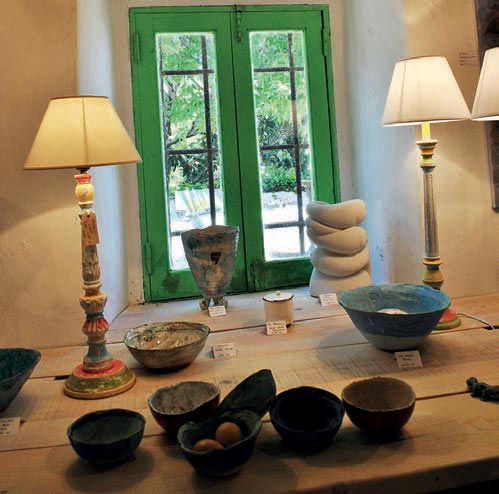
    Set in the hills just outside Paderne, in the beautiful countryside north of Albufeira, those in search of the striking artworks on display at Côrte-Real would usually have to set aside a whole morning or afternoon to fully enjoy this picture-perfect gallery. But thanks to one local estate agent, a sample of the gallery’s eclectic collection can be seen right here in Carvoeiro. At Fine & Country Carvoeiro, one floor of the office is dedicated to the Côrte-Real Pop-Up Gallery, with a selection of paintings and sculptures from the gallery’s collection of different artists. Planned to run initially for the whole of 2015, Fine & Country decided to invite Côrte-Real to take over the space following the success of various art exhibitions held at the office since its opening in 2013. “Initially the shows were restricted to one artist, but we soon realised that a more varied approach would be of more interest to our clients and to people who visit just to view the works,” said Zoie Hawker, managing partner of Fine & Country Carvoeiro.

    While the pop-up gallery provides a taste of the essence of Côrte-Real, nothing comes close to seeing this prominent gallery in person. In a setting nothing short of idyllic, the Côrte-Real gallery was established in 2003 by partners Pedro Côrte-Real and Michael Roberts in a traditional Portuguese farmhouse that was beautifully renovated to house a collection of unique pieces of art. Dubbed by Portuguese Vogue as “a very special place” and often described as like walking into a painting, the gallery is a treat for the senses, with six bright, sunny rooms dotted with a mix of artwork, from beautiful paintings created by prestigious artists to pottery, ceramics, lighting, tapestry and other decorative items. Even postcards, soaps and a range of traditional Portuguese products (such as olive oil and sardines), all in their vintage packaging, help to add a very special charm to this unique space. Michael and Pedro travel extensively in search of something a bit different for their little piece of paradise.

    Exhibitions change regularly, and with many resident artists from all over the world, established painters join an eclectic mix of artists, where special focus is given to handcrafted pieces created by small independent artisans. “With so many galleries, visitors go in and they are intimidated by the silence and the austerity of it, and we’ve created a home that is full of joyous, lovely objects, wonderful paintings and lots of colour,” says Michael, an artist himself who mostly paints Algarvean landscapes, which he signs as Tom Compton, whilst Pedro Côrte-Real paints captivating scenes of Africa inspired by his Mozambique roots. More than a gallery, this is a place to enjoy at your own pace and while away the time; an escape, almost. Outside, a pretty terrace allows visitors to sit under the shade of a tree, with a complimentary cup of tea or coffee and delicious homemade biscuits, and admire various pieces dotted around the colourful gardens, which set off the seating area beautifully. “It’s unique, I simply can’t explain it,” admits Michael. “Its location far from the madding crowds, full of handmade arts and crafts, the quality of paintings… And it doesn’t have that hideous pretentiousness that art seems to have. It’s a joyous place.”

    The Côrte-Real Pop-Up Gallery can be visited from Monday to Friday between 9.30am and 5.30pm. The Côrte-Real gallery is open from Thursday to Sunday, from 11am to 5pm.
    www.corterealarte.com
  • A WILD APPETITE

    A WILD APPETITE

    FORAGING IN THE ALGARVE COUNTRYSIDE, INSIDE DISCOVERS A WEALTH OF DELICACIES FREE FOR THE PICKING

    Most people living here in the Algarve can forget that the countryside is steeped in the bounties of nature, and many venture little beyond the abundant wild thyme that grows on the cliff-tops near Carvoeiro. Our guide into the depths of the Portuguese countryside was to be Raoul Van Den Broucke, a Flemish foraging expert who spent 20 years of his life living here in the Algarve until he moved to England in 1995.

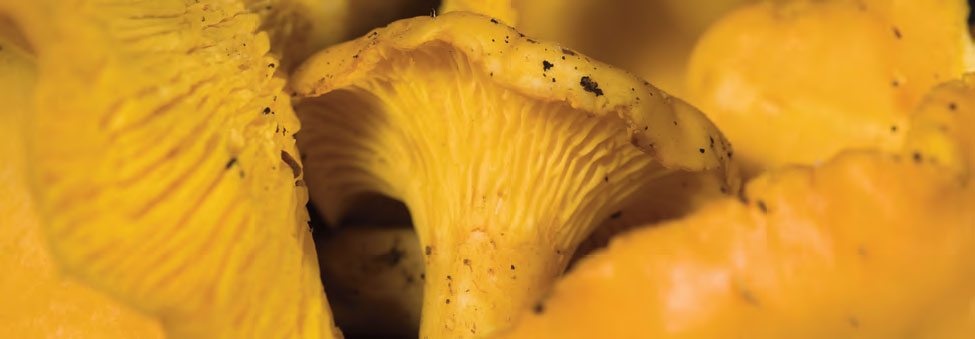
    Here, he was one of the first to discover the wealth of wild mushrooms that grow in the Monchique hills and his work was the catalyst for the small but flourishing business operated today by locals of the hills, who harvest and sell the chanterelles and pied de mouton (hedgehog fungus) mushrooms that end up on the menus of gourmet restaurants as far away as the UK. But as we were to discover, there is a great deal more to foraging in the Algarve than mushrooms.

    Our journey started surprisingly with a visit to Sítio das Fontes, a natural spring in the Arade river valley near Estombar that has been developed into a leisure area for tourists and the local community. Here, walking along paved pathways, Raoul showed us counsome of the edible plant species that grow locally such as sea spinach, wild asparagus and samphire. To harvest some of the latter, we drove through Silves and en-route to Monchique stopped at a great spot in the Odelouca river valley where this much-prized product, a favourite ingredient of chefs to serve with fish due to its natural saltiness, seemed to be the main form of vegetation. It grows freely all along the tidal riverbanks and is good for eating between February and May.

    Considering that it sells at around €40 per kilo, this was quite a find! We left the river valley with a small crop of samphire and headed up the hills towards Monchique where, on a gentle slope near the village of Casais, we were led to the very place where Raoul had harvested his mushrooms back in the 1980s.  We gathered a small basketful, learning along the way some of the basic principles of identifying what we could and could not eat: mushrooms with white gills tend to be poisonous, and don’t even think of eating a mushroom you are not totally sure about.

    It’s fairly easy to get to know one or two varieties and concentrate on collecting just those, but a simple mistake can be deadly, such as the lighter shaded, morerounded mushroom that’s similar to the chanterelle which is in fact poisonous. Our crop from an hour or so of foraging for the mushrooms was limited to a small basketful, but in a tiny backstreet in Monchique town is local mushroom king José Páscoa, who had crates of chanterelles and pied de mouton stacked in his warehouse ready for export.

    Heading back down the mountain, an area of countryside near Silves is a haven for wild asparagus. But picking it is in fact no easy task, as the one or two green shoots of asparagus that grow in each of the thorny bushes are well protected. The technique is to push the bush aside with a booted foot to expose the shoot and snap it at the point where the flesh becomes tender. Elsewhere, a stone wall was covered in what looked like weeds, from where Raoul picked perhaps one of the most unusual plants of the day.

    The tiny round leaves known as pennywort taste remarkably similar to mangetout pea pods and make a fabulous salad ingredient, as do the wild fennel ferns that can be found growing all over the Algarve. There are other bounties of nature, too, just ready for the ‘picking’.

    The freshwater crayfish, for instance, that thrive in Portugal’s lakes and rivers, are a delicious treat, but must first be left in clean water for a few days to purge them of the mud that taints their flavour. And while snails of course are another favourite of foragers everywhere, it’s curious that the snail’s tiny eggs are prized by some chefs as a rare and very expensive form of “white caviar”.

  • TOUCHDOWN

    TOUCHDOWN

    THE NEWLY FORMED ALGARVE PIRATES PREPARE FOR THE NEW SEASON

    In a country with a long football tradition, how easy would it be to form a team in a sport that many had only seen on American television? Well one man tried, and it seems that the answer is, quite easy.

    American Don Dixon, who was assistant coach for the Lisbon Crusaders and who helped form the Liga Portuguesa de Futebol Americano just three years ago, has now brought American football to the Algarve, and the move seems to have paid off.
    Originally called the Portimão Pirates when it was formed back in May, the team has now changed its name to the Algarve Pirates as men from across the region flocked to Portimão to try out the sport. Just a few months on and the team now boasts almost 50 players, with around 30 attending training at any one time. Having moved to Portimão to start the Algarve branch of VidaMais, a non-profit organisation that helps promote cultural, educational and philanthropic initiatives, Don felt that an American football team was just the thing missing from the area. A football player in
    junior high and high school, he set off to promote the idea and put a team together.

    It was one such promotional tool – an article in a local paper – that caught the eye of one particular person. “I was so excited when I saw the article. All I had ever done was coaching,” says fellow American Llew Gittens, who owns a home in the Algarve. Now the head coach, Llew has been playing since he was 10 and played through junior high, high school and in the army before coaching teams in Italy and the UK.

    Coaching alongside him is Don, Franz Adebahr, who played professionally in Germany for 15 years, Pedro Viana, who worked with Don during his time at the Crusaders and American football commentator for SportTV, and Michael Reeve, a well-known local businessman who was introduced to the team at the recent BLiP exhibition.

    With training taking place at the sports complex in Mexilhoeira Grande, just outside Portimão, the team comprises players aged between 15 and 48 who travel from as far as Olhão in the east and Lagos in the west. All from different backgrounds, most are Portuguese but there are a number of international players, and although some do have some experience in the game, the majority are complete novices. “I’m so impressed after just six months. These are my
    children and they’re doing brilliantly,” says Llew. Don agrees: “We never imagined to be able to play in this
    year’s league, but they’ve been training throughout the summer and there’s so much passion already.”

    With the fourth season of the national league beginning in January and with a record number of teams taking part, Don is hoping to schedule some friendlies against teams from Portugal and even Spain. “We want to promote not only the team but also the sport and the league,” he adds. Training takes place three times a week: Monday evenings for technical and tactical training, Thursday evenings to put it into practice (both from 7.30pm to 9.30pm), and Saturday mornings between 9.30am and 12pm for drills and game play.

    The search for players (particularly those who are strong and/or fast, or with experience in rugby) is ongoing,
    as is the search for partners and sponsors to help the development of the team. To learn more about the Algarve Pirates, please visit their Facebook page or contact Don on 960 387 408.