Category: Must Read

  • Wines with a View: explore the region’s wineries with tours, wine tastings and more

    Wines with a View: explore the region’s wineries with tours, wine tastings and more

    Algarve Views has a simple goal: to showcase the Best the Region has to offer by bringing together Wine, Food, Nature and Culture
    Algarve Views

    – April 7, 2022

    To combat seasonality in the region, Algarve Views is the brainchild of visionary Andreia Ferreira, who worked at Lagoa’s Wine Cooperative. She witnessed the gradual growth of wine production in the region, at a time when there were few wineries here. With a degree in Marketing and a post-graduation in Wine Business, she recalls that, in those years, wine tourism was not a well-known concept, at least in the Algarve.

    “Wine tourism is available year-round, and I noticed that many vineyard owners were beginning to show interest in producing their own wine. That is when I realised this market was an opportunity,” says Andreia, who brought Algarve Views to life in 2017.

    A tourism company focusing mainly on winemaking, Algarve Views wants to showcase the region’s wineries from west to east, but it does not stop there. Besides the wine-tasting tours and visits to the producers, the company also enhances these experiences with different activities to suit all tastesfrom boat tripsand visits to the Silves Museum and art galleries to nature walks. Although daily tours have a set itinerary, you may opt for a personalised event, with a choice of 13 wineries11 restaurants, and eight tours. Families with underage children can request babysitting services.

    Available Monday to Friday, the set tours cost €130 per person, and they are all different, sharing a common motto: “Unique activities that show the potential of each venue and the best they have to offer,” says Andreia.

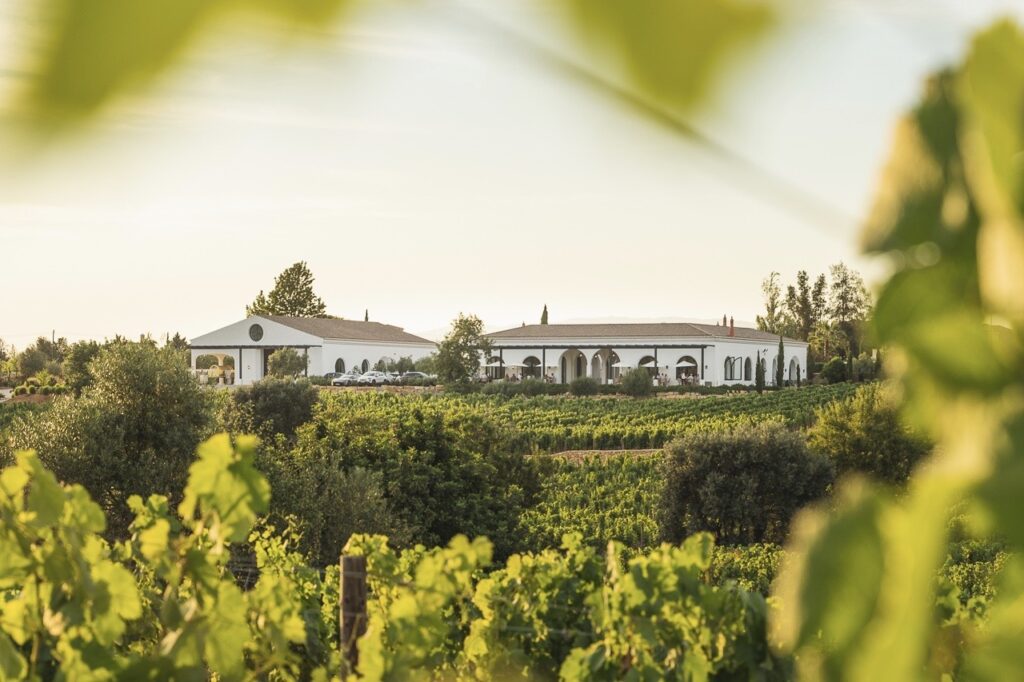
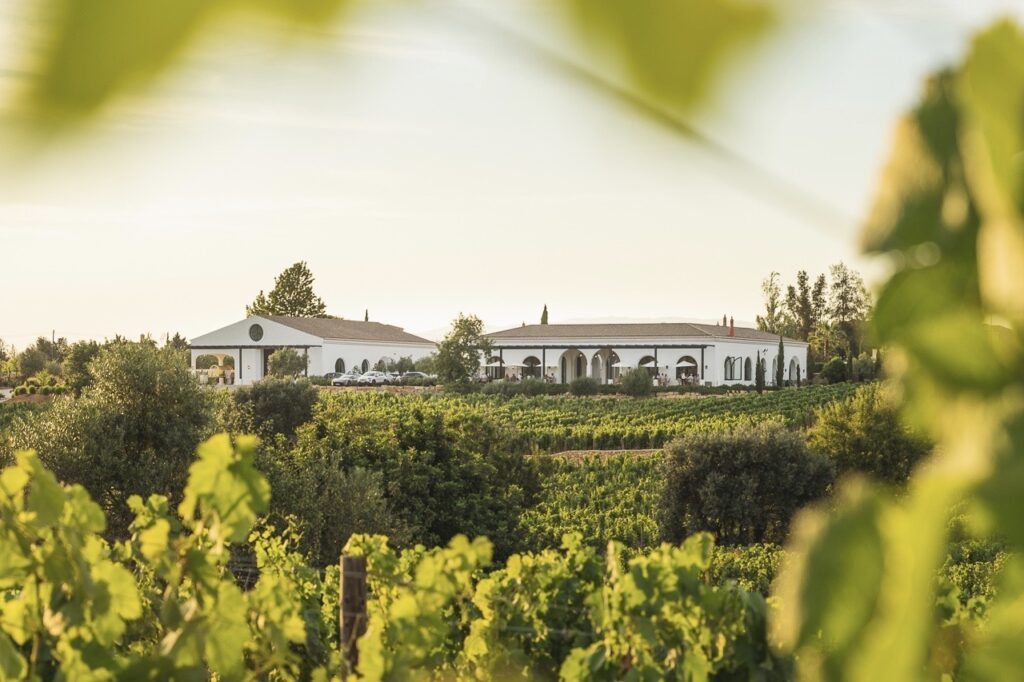
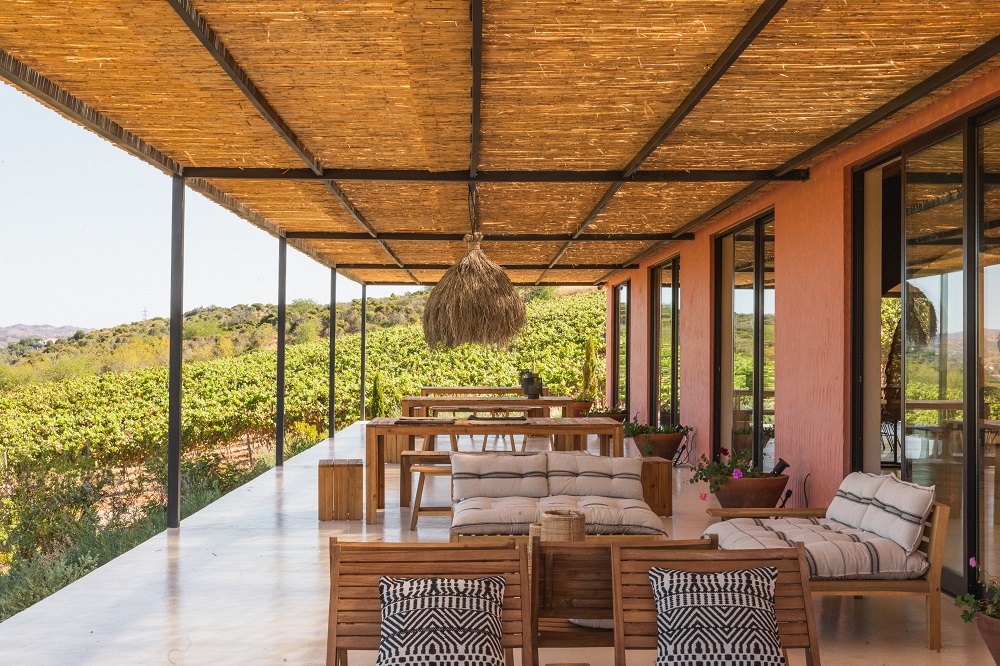
    To start off the week, the experience starts with a tour of Quinta da Vinha, a 14-hectare estate which has been operating since 1977 in Silves and where the famous Cabrita wines are produced. The tour ends with a tasting of their finest wines alongside tapas, in a room with a privileged view towards the vines.
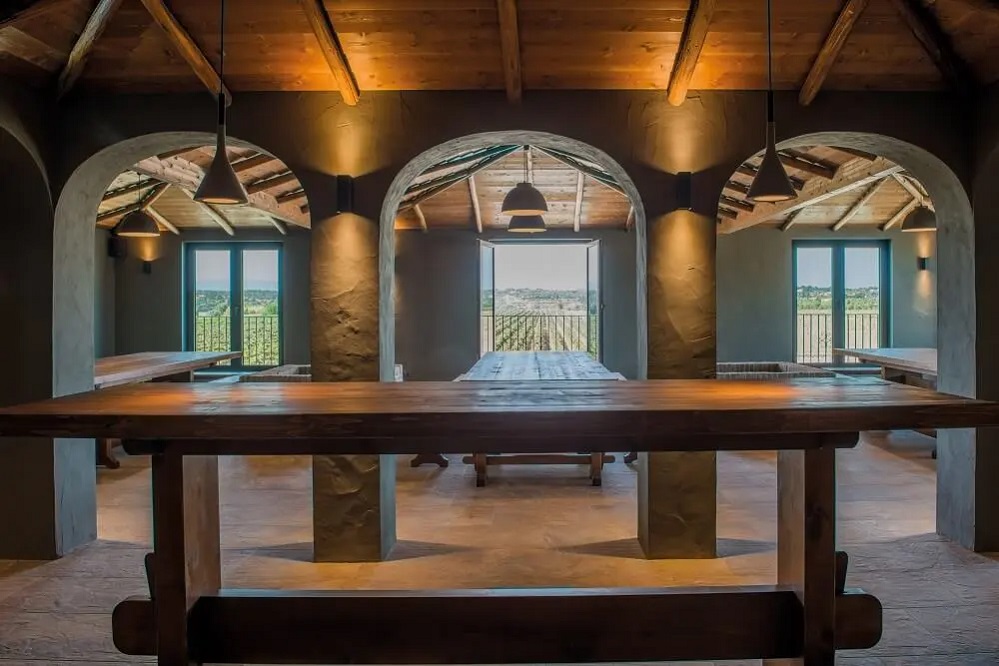
    Quinta da Vinha
    Quinta da Vinha

    Next is a walk along the Algarve coast, stopping at Praia da Marinha, widely regarded as one of the most beautiful beaches in the world. Lunch is later served at Morgado do Quintãoin Lagoa, where visitors are invited to discover the grape varieties used by this winery whose history dates back over 200 years.

    Thursday is spent in Silves, with a tour of the Castle and the Museum, followed by a visit to the winery and cellar at Quinta do Francês, where you can taste the wines produced at this eighthectare estate. After lunch at Ponte Romana restaurant, it is time to discover the region’s first organic wine producer, Quinta Rosa, and taste their organic and clay-aged wines.
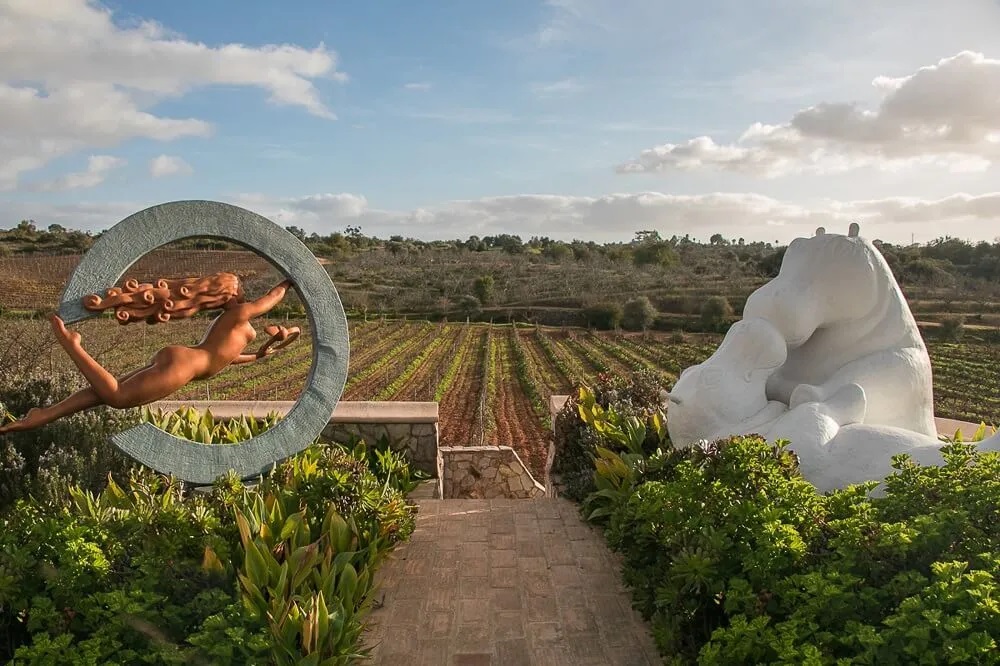
    Quinta-dos-Vales
    Quinta dos Vales

    Closing the week, Friday starts bright and early with a 3km cliff walk along the Seven Hanging Valleys Trail, in Lagoa, between Praia da Marinha and Praia de Benagil. Also in the morning, Quinta dos Vales, in Estômbar, hosts guests for a visit and tasting of four wines, with a privileged view of the large sculptures in the winery’s gardens. Visitors will also have the opportunity to learn professional wine-tasting techniques. Lunch and the tour end at Quinta dos Santos.
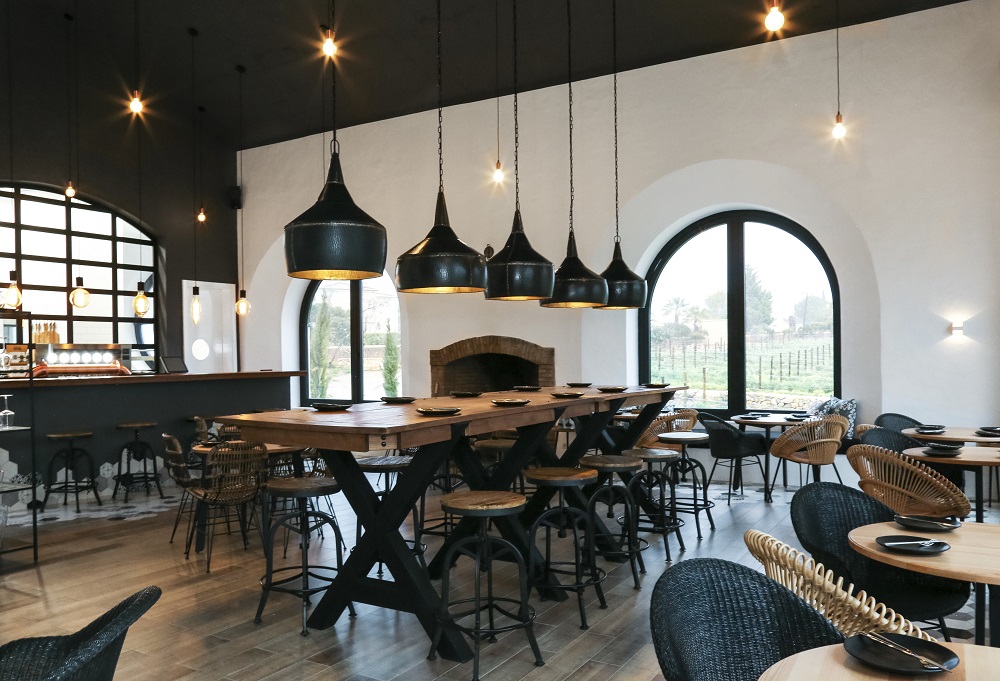
    Quinta dos Santos
    Quinta dos Santos

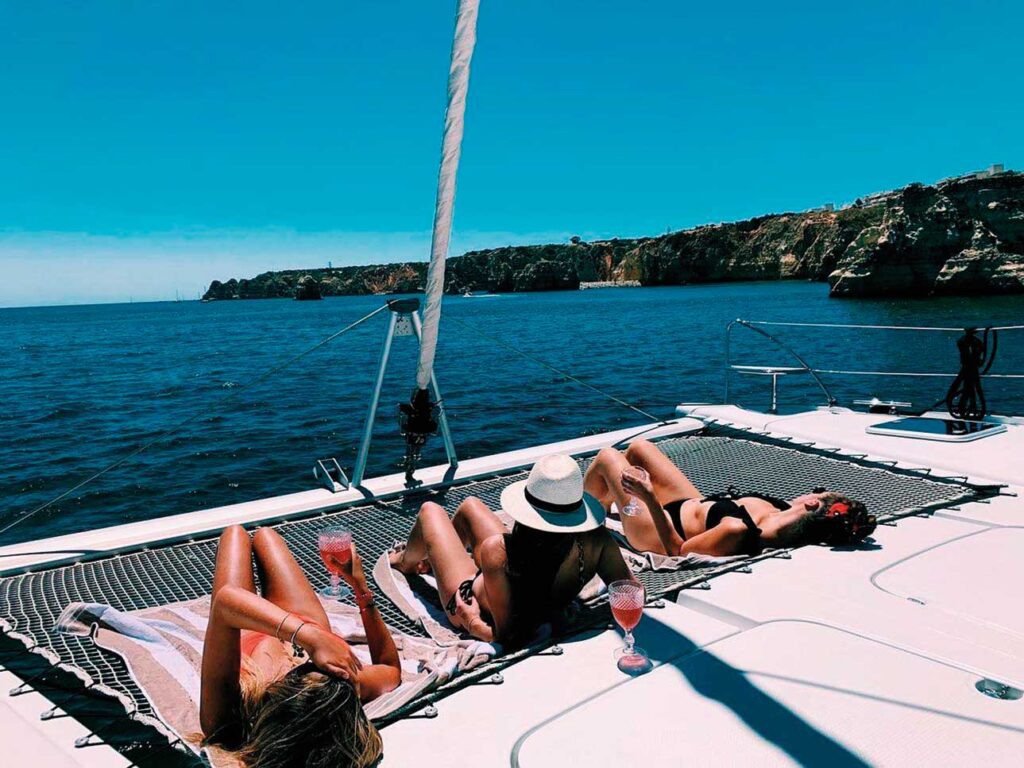
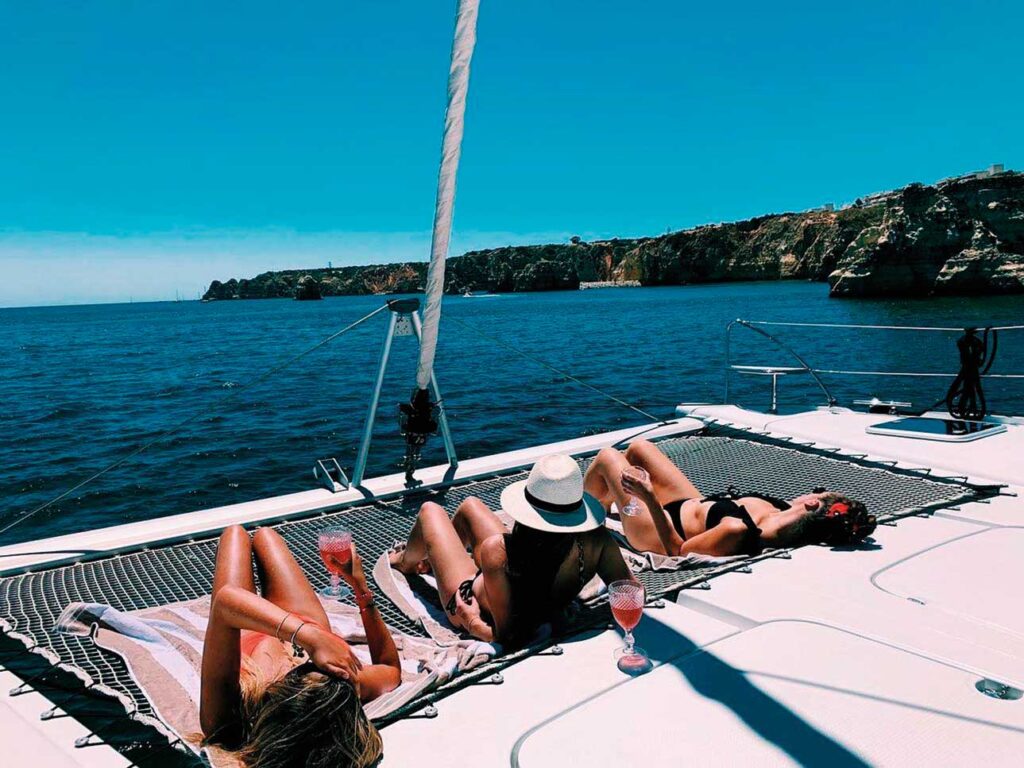
    For 2022, Algarve Views will organise exclusive tours with partnering hotel chains (Vila Vita ParcEpic Sana Algarve, and The Lake Spa Resort). Clients will also have the chance to be winemakers for a day at Quinta dos Vales with The Winemaker Experience, to discover, by boat, Arvad Wines on the banks of the Arade River, and to take a trip to Sagres. Another new addition to the programme is the yacht trips with white or rosé wine tastings, whilst enjoying the sunset or until dawn. Prices for the latter start at €890 for 4 people. The bespoke packages, where clients choose the activities they want, vary in price, starting at €130.

    Aside from all this, Algarve Views also organises private events, represents Algarve wine producers at national events, and is currently preparing to open its first shop at Silves Market as soon as it reopens following renovations.
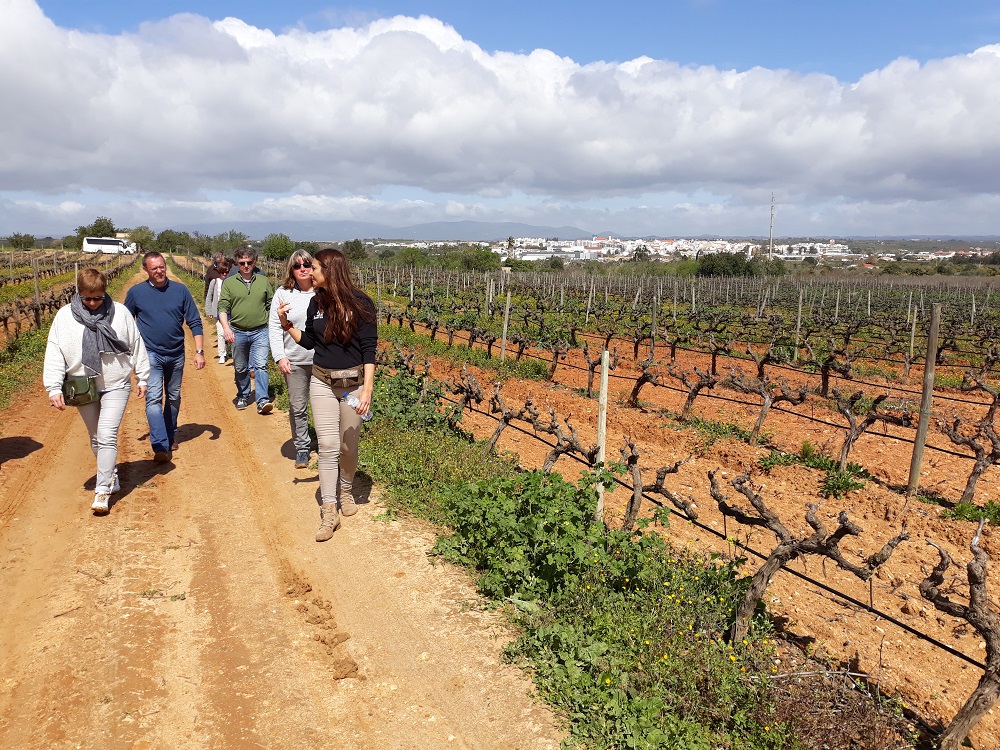
    Algarve Views wine tours
    Algarve Views wine tours

    Text by Maria Simiris


    Read more:

    More News     More Events

  • Revisiting the hidden treasures and new flavours of Quinta dos Santos

    Revisiting the hidden treasures and new flavours of Quinta dos Santos

    Inside Carvoeiro revisits Quinta dos Santos to Discover their New Flavours

    – April 7, 2022

    It was 2018 when the dos Santos family, originally from South Africa but with Portuguese roots, opened their stunning creation. Quinta dos Santos, an eight-hectare property located in Sesmarias, Lagoa, is better known for its artisanal beers, wines, and even olive oil. However, behind the gates of the whitewashed buildings, you’ll find treasures that do more than just stimulate your tastebuds. The symbiosis of quality and good taste is guaranteed at this family business focused solely on national flavours.

    Quinta dos Santos wine production

    “The cornerstone of our business is artisanal production, focusing on national products and quality. We’re a family business with a very unique and growing project,” states Ann dos Santos, all of whom, together with their dedicated staff, play an essential role at Quinta dos Santos.

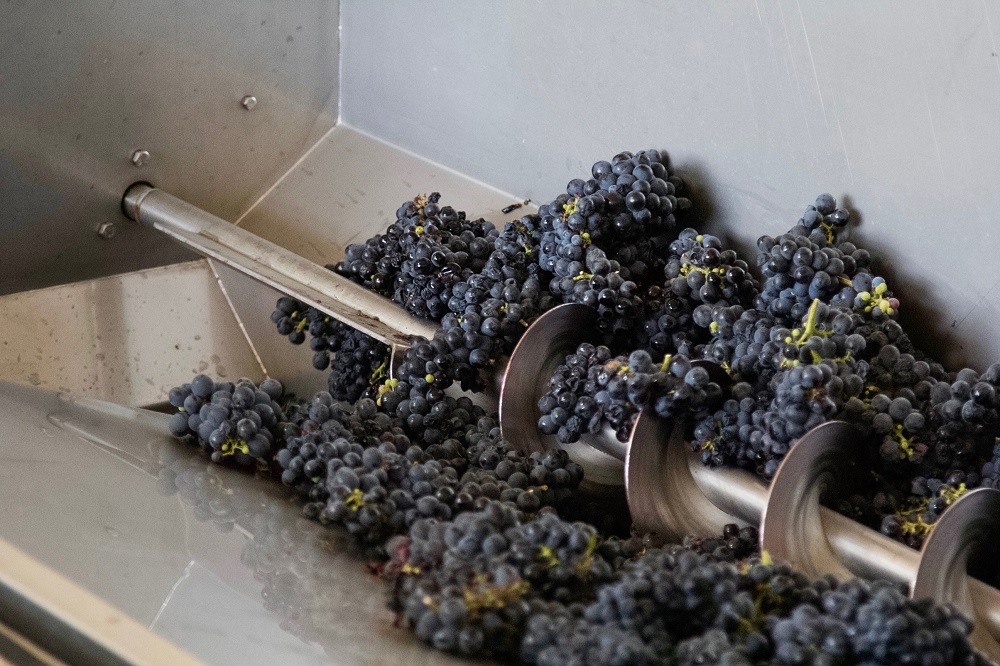
    At the estate, the three hectares of vines planted in 2017 are now bearing fruit. The family invested exclusively in Portuguese grape varieties, four reds (Touriga Nacional, Negra Mole, Sousão and Bastardo) and four whites (Malvasia Fina, Arinto, Verdelho and Esgana Cão). These varieties take centre stage on the aptly named Tesouro (Treasure) labels, the estate’s premium range. Quinta dos Santos has another range, also produced in-house, labelled Escolhido (Chosen) made with grapes from local producers but from harvests meticulously selected by the dos Santos family. The cellar, managed by oenologist Mário Andrade, has unique properties that allow for ideal conditions for the production, storage, and ageing of all their wines. This space, which is open to visits, boasts structured and planned production procedures with fermentation in concrete and clay vats as well as wooden barrels. “We like to use different methods, and this is something that makes us stand out as producers,” says Ann.

    Quinta dos Vales grapes

    The secret behind the Tesouro range lies in the quality and care of the grapes. “We have learned so much since the inception of this project and apply this knowledge with care. We plant cover crops – a combination of seeds that include chamomile flowers, clover, and green herbs that benefit the soil, the environment, and, consequently, the vines. Our pruning technique ‘guyot’ also allows us maximum yields of high-quality grapes” she explains.

    Quinta dos Vales beer
    Quinta dos Vales beer

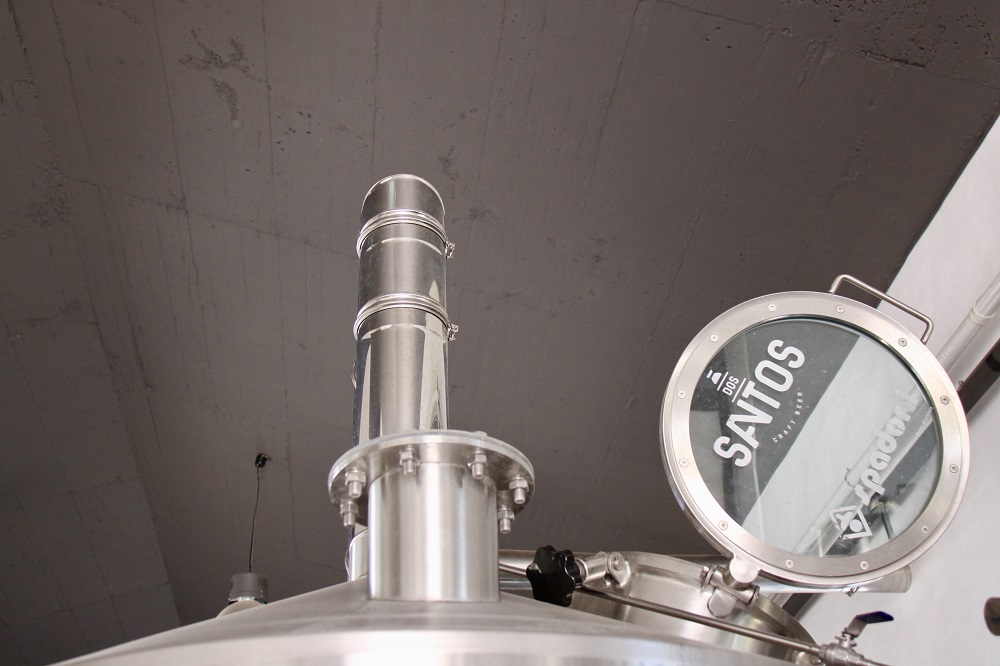
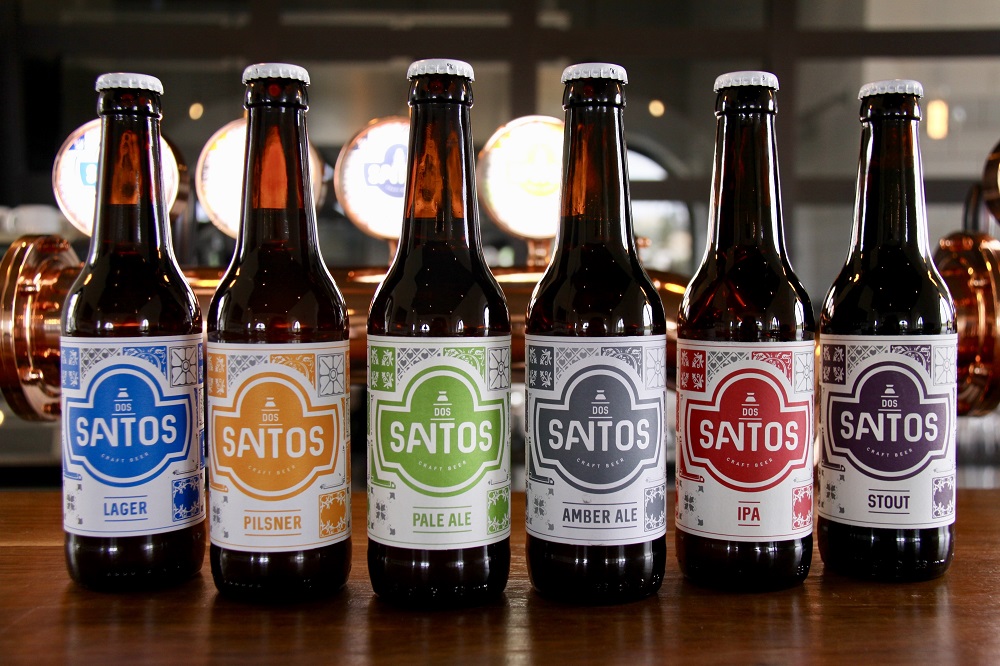
    Under Greg’s watchful eye, the estate’s artisanal brewery has the capacity to produce up to 35,000 litres of Dos Santos beer every month. The German Reinheitsgebot production method is combined with state-of-the-art equipment to produce the brand’s six varieties — Lager, Pilsner, Amber Ale, Pale Ale, IPA, and Stout. They all share a simple production method, with no additives or preservatives, but with very distinct flavours. The Pale Ale, for example, has a lower alcohol content but fosters a tropical feel with aromatic American hops. On the other hand, the Stout is a black beer in which the roasted malt creates intense coffee and chocolate flavours.

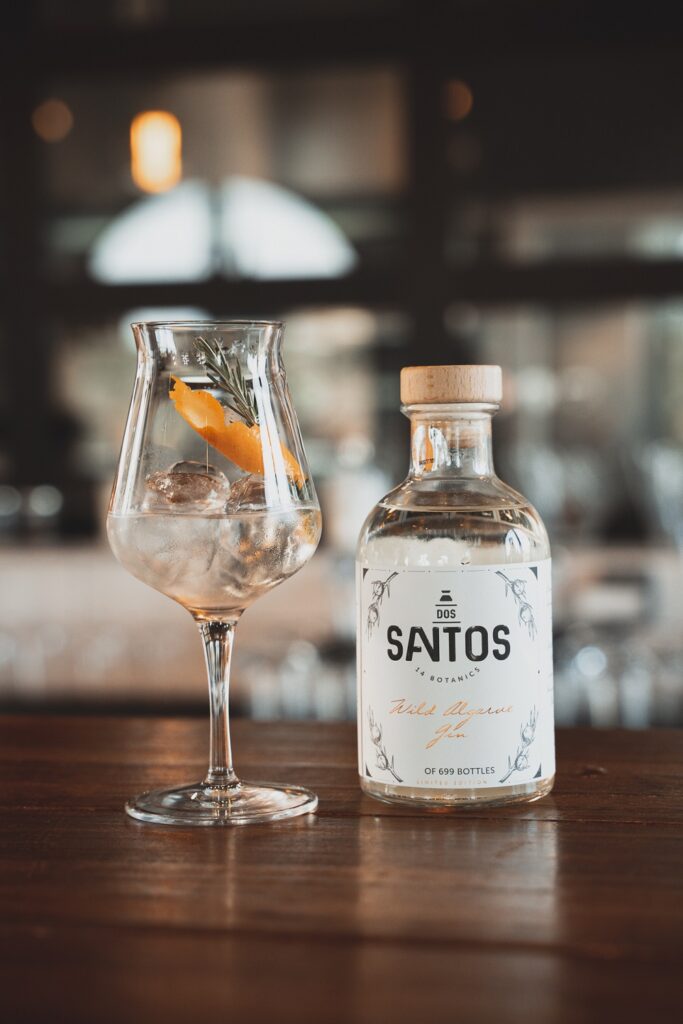
    Having established their brands, the dos Santos family is now looking to develop a distillery so that they can produce their own spirits as well. And the first steps have already been taken. After launching the Escolhido Sparkling Wine in 2020, they released a very limited, 699-bottle edition of Dos Santos Gin.

    However, the family assures there will be a second edition later this year. “Our gin is unique, produced with 14 local botanicals such as eucalyptus and rosemary, as well as hops” says Ann.

    Quinta dos Santos Restaurant A Esquina
    Quinta dos Santos Restaurant “A Esquina”

    At the heart of the estate, and where all the flavours come together at the table, ‘A Esquinarestaurant is spearheaded by Portuguese-Venezuelan chef René Santos and manager Mariana Silva, and it also hosts wine and beer tastings enjoyed after a guided tour of the Quinta with sommelier, David Ferreira-Jorge.

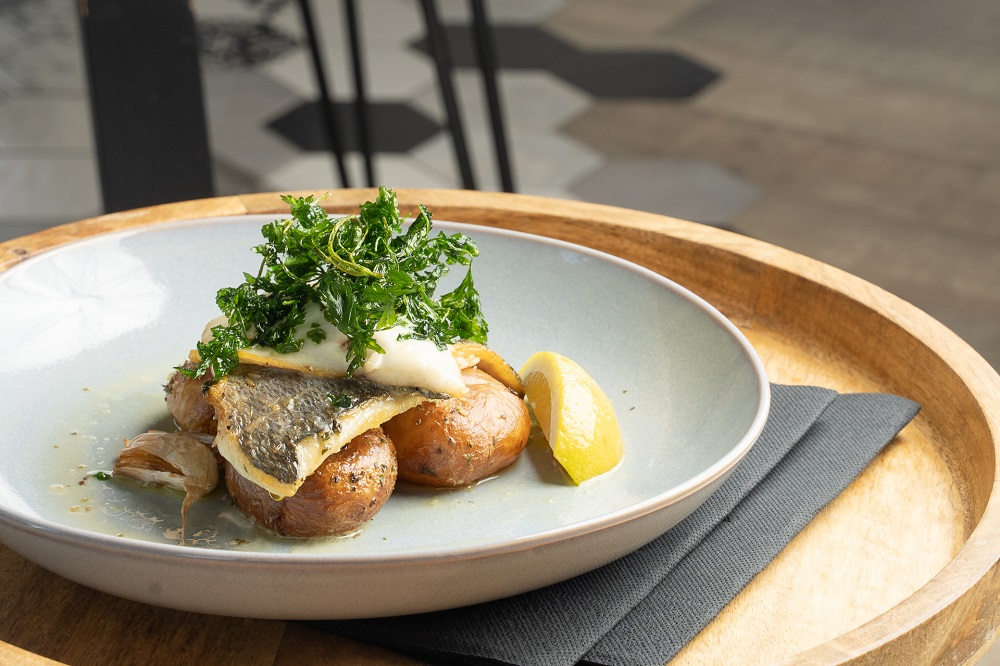
    The menu changes twice a year according to seasonality and features creative contemporary re-interpretations of traditional dishes with local, seasonal ingredients. “We have fish, meat, seafood, and vegetarian dishes, highlighting our own production with dishes designed to pair well with our beers and wine,” Ann says. After a year of great demand, mainly for weddings, the family decided to open another private room which is ideal for small groups while exclusive use of the Quinta is given for large groups of up to a maximum of 60 guests.

    Quinta dos Santos bottle

    Future plans for Quinta dos Santos

    As for the future, Quinta dos Santos plans to increase its wine production capacity. To do so, the idea is to plant more vines with new grape varieties. For 2023, the estate plans to launch the Tesouro Sparkling Wine and a few red Tesouro labels. Until then, they are also considering producing artisanal honey, as well as boosting the production of olive oil, which is currently only for restaurant use.

    Ann states: “We have so many ideas, all of which are inspired and begin at the Quinta. We are open-minded about what direction to follow in our business and there is continued room for expansion, but always with the philosophy of maintaining quality in all that we produce.”

    Visit Quinta dos Santos‘s website, or follow them on Instagram and Facebook.

    Text by Maria Simiris
    Read more:

    More News     More Events


  • Arvad Wines is the “New Kid on the Block” in the Algarve Wine Scene

    Arvad Wines is the “New Kid on the Block” in the Algarve Wine Scene

    Arvad Wines: A new vineyard with ancient history

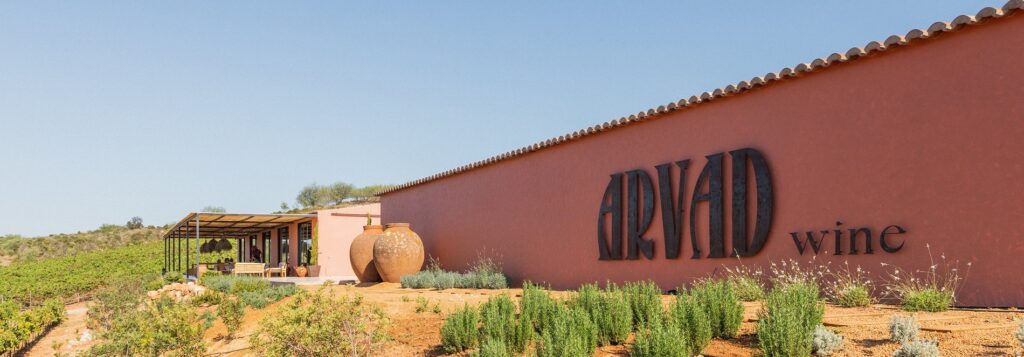
    Arvad Winery

    – April 7, 2022

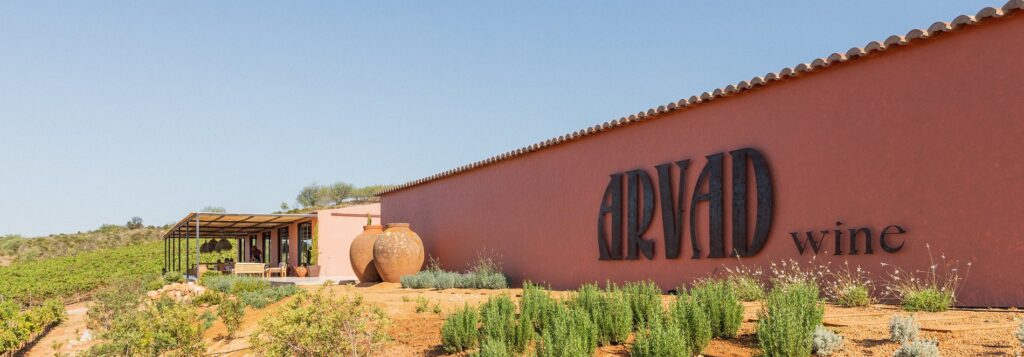
    On a property by the Arade River, running along the riverbanks, Arvad is a winery made of history. Inaugurated in 2016, the winery rolls over 50 hectares of land, including nine hectares of vines, which are exposed to the winds from the north and the Algarve sun. “A Mediterranean climate with Atlantic influence”, the terroir consists of calcareous clay soil.

    The Algarve wine culture has experienced many highs and lows. Its history dates back to early A.D. In fact, the region where Arvad is based, Lagoa, is precisely where wine was introduced into Portuguese territory. Brought from the east by Phoenician travellers who took root in the Silves area, and through the word of exchange and discovery, became a ritual and proof of civilization.

    Back then, Arvad, was a word for “haven”, which appropriately named the new winery as it applies to the care and quality of their wines. This new vineyard is home to Portuguese red grape varieties such as Alicante Bouschet and Touriga Nacional, along with Cabernet Sauvignon, as well as white grape varieties, Alvarinho, Arinto, and Sauvignon Blanc.

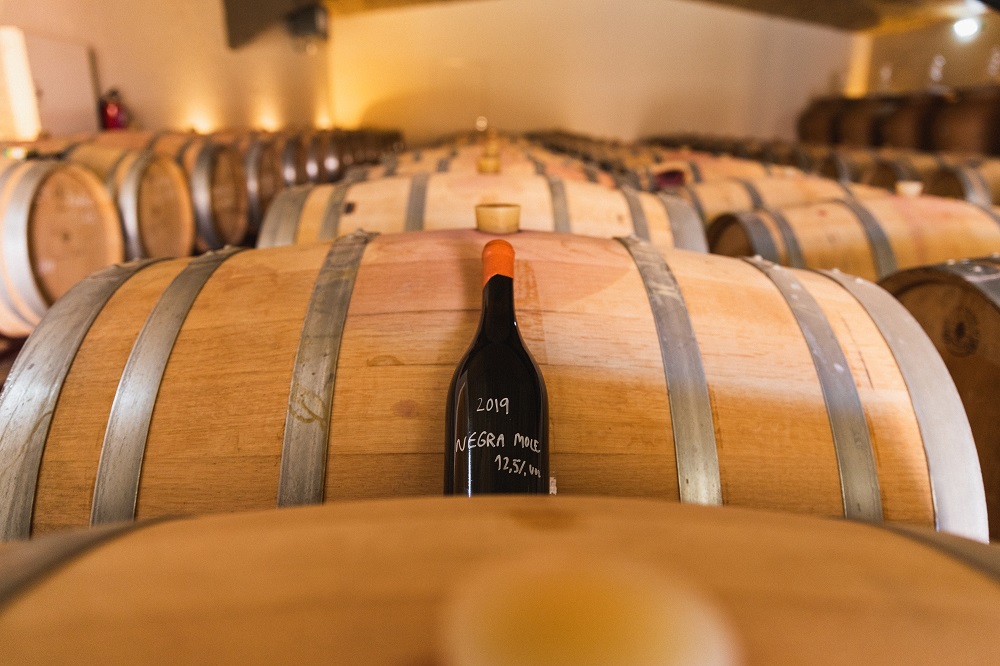
    The grapes are picked at Arvad and are sent to a partner winery for the winemaking process, Cabrita. A well-known name for Algarve-wine lovers, Cabrita is located in the picturesque Quinta da Vinha, in Silves, and has 6.6 hectares of vineyards. The tradition of Cabrita wine dates back to 1977, when José André, a fruit merchant, acquired the farm, and it has since been passed down through the Cabrita family. “After the wine is processed, the raw product comes back to us and is then carefully aged in oak barrels or terracotta amphoras for approximately one year,” explains Arvad manager Mariana Canelas. “After the ageing process is completed, it goes back to Cabrita to be bottled.

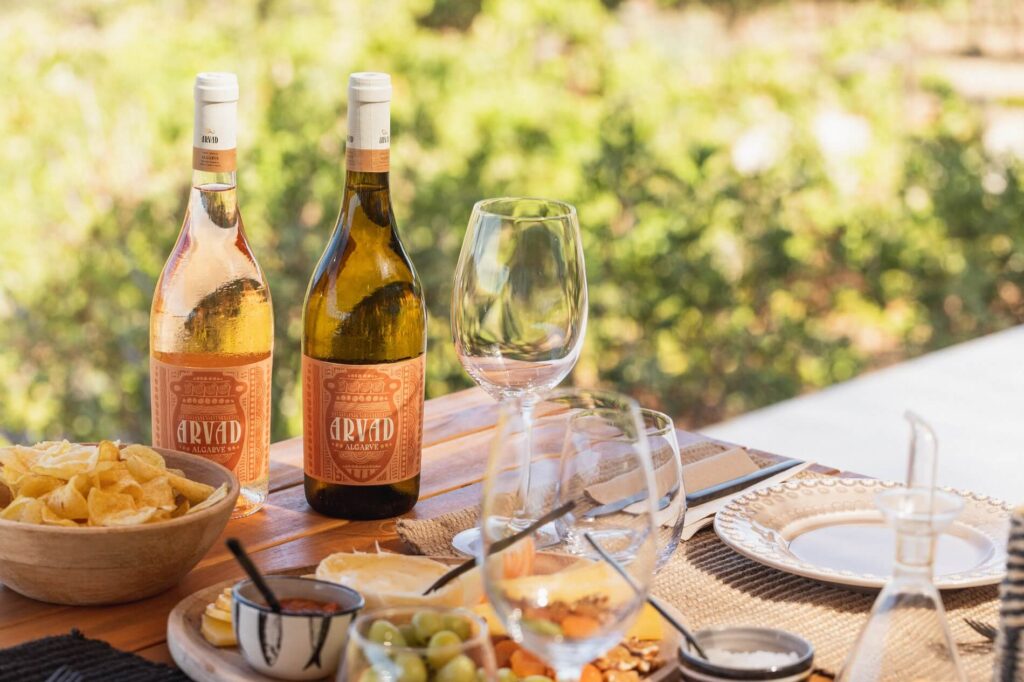
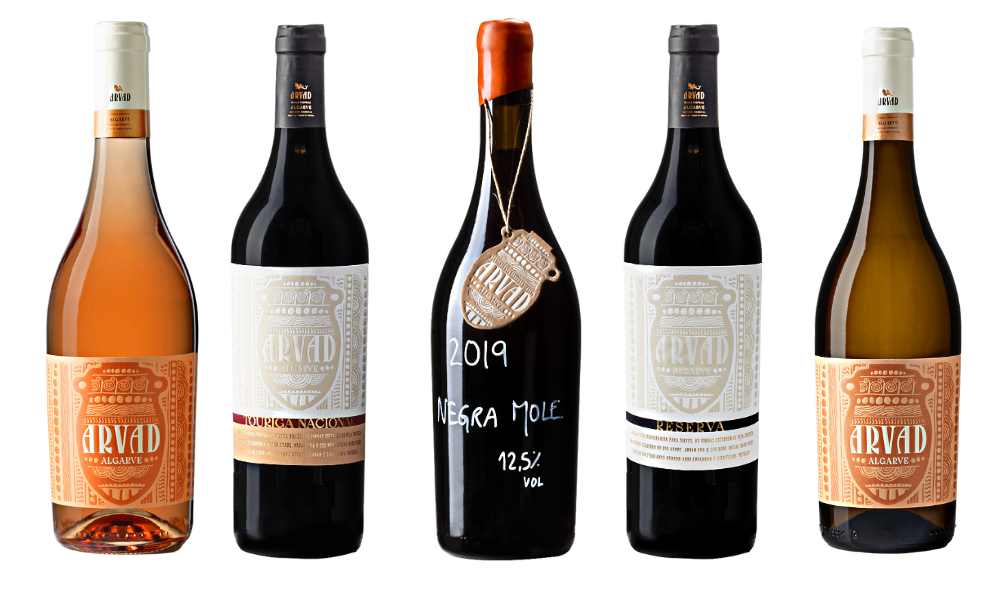
    Arvad 'wines

    The wine-making process is under the control of award-winning winemaker Bernardo Cabral. He explains the difference between ageing the bottles in the oak barrels compared to the terracotta amphoras: “When an oak barrel is produced, it is toasted on the inside in order for chemical reactions to take place with the wood compounds that enhance aromas and that will influence the wine. The family of these aromas is dependent on the temperature and time that the reaction takes place. In the case of Arvad, the barrels are standard size barrels at 225 litres.”

    The winemaker goes on to explain that, when ageing with terracotta, “the wine acquires a discreet clay profile that is very reminiscent of the origins of the soil in which the vines are grown. Ageing tends to happen slower and more gradually, which allows the original fruit of the wine to be preserved very well”. Available to the public today is a selection of six different Arvad wines which can be purchased directly from the vineyard, or from selected distributors. The white wine has a lot of freshness. Aromatically, the fruit notes are involved in a discreet presence of the barrel, where it is partially fermented. In the mouth, it is smooth, enveloping, and with refreshing acidity. Meanwhile, the rosé is very light and fresh, with notes of fresh red fruits and light floral hints. It is smooth and has good acidity, ideal as an aperitif or accompanied by salads, seafood, or Asian food.

    The red is an elegant combination of ripe red fruits and balsamic notes with subtle hints of spices and some vanilla suggestions. And finally, their most popular is the Negra Mole, which has notes of cherry and fresh raspberries delicately combined with some aromatic herbs. Each label of the Negra Mole is carefully handwritten for an authentic touch.

    Arvad Winery leasure

    The winery overlooks the vines and has panoramic views of the stunning Portuguese countryside as well as the Arade River, and you can arrive at the vineyard by water or by land. The building boasts a stunning porch attached to the restaurant, which makes it the perfect setting for sunset-watching in summer.

    In addition to being available for ceremonies and events, the winery also provides tours and tasting experiences. Enjoy regional delicacies and samples of each wine whilst being enlightened with local history. These experiences are available all year round from Tuesday to Sunday, from 10am to 6pm. The Algarve’s wine scene has taken a step up over the last few years, and Arvad seems to be one to watch.

    With big plans for the future, including an Arvad Hotel and having been showcased at several wine events across Portugal in the past few years, it seems that this young, stylish vineyard is only at the beginning of its prosperous journey.

    You can visit Arvad‘s website, or follow them on Instagram and Facebook.

    Text by Alex Brennan 

    Read more:

    More News     More Events

  • “Carvoeiro Living: Reflections of a life in the Algarve”

    “Carvoeiro Living: Reflections of a life in the Algarve”

    Inside Magazine’s Publisher, Bruce Hawker reflects on over 40 Years of Living in Praia Do Carvoeiro

    Carvoeiro-Living-in-the-Algarve

    – April 7, 2022

    My first memory of Carvoeiro is of arriving here at the age of seven with my parents, in the summer of 1974 for a family holiday, at a time when few foreign tourists visited the Algarve, considering that the country was only just emerging as a democracy after the bloodless “Carnation” revolution a few months before. Needless to say, my folks fell in love with the place, and by 1978 we were already living here with my dad still spending some time in the UK running his business.

    Carvoeiro Living
    Bruce Hawker

    I wonder these days how he managed to run his business from afar, without e-mail and Zoom or even a fax machine. I’ve seen so much change over the years, some for the better and some for the worst, but I have to say, mostly for the better.

    From my teenage years, I have fond memories of what we used to call the “unfinished hotel”, the shell of what is now the Tivoli Carvoeiro where we used to get up to all sorts of mischief. And right next door to the hotel there was a small settlement of shanty buildings occupied by creative sorts from around the world; there were artists, artisans and musicians and I remember many nights enjoying jam sessions and generally getting up to more mischief.

    If there is one thing that Carvoeiro had better back then than it does now, it had to be the nightlife. By the time I was in my midteens and sneaking into nightclubs, there was just the Sobe e Desce disco (now the Jailhouse bar) and O Bote on the beach, the latter at the time being a very swish little place. By the mid-80s, a further three nightclubs had opened and Carvoeiro had turned into something of a nightspot. Today, only O Bote on the beach still exists but no longer as a nightclub. In 1984, we threw an engagement party at the Scoobydoo disco. The old photo on this page shows my wife Zoie and me on the dance floor with my late father John up in the DJ box.

    I met Zoie at the International School of the Algarve (now the Nobel International School), where we were both students and we went on to raise three kids here ourselves. As they were growing up, one of my memories from their teenage years is of drenched clothes scattered around the house from when they had come home in the early hours after the infamous foam parties at O Bote. But it was not all about partying, our kids got an excellent education from the International School and all of them went on to universities in the UK.

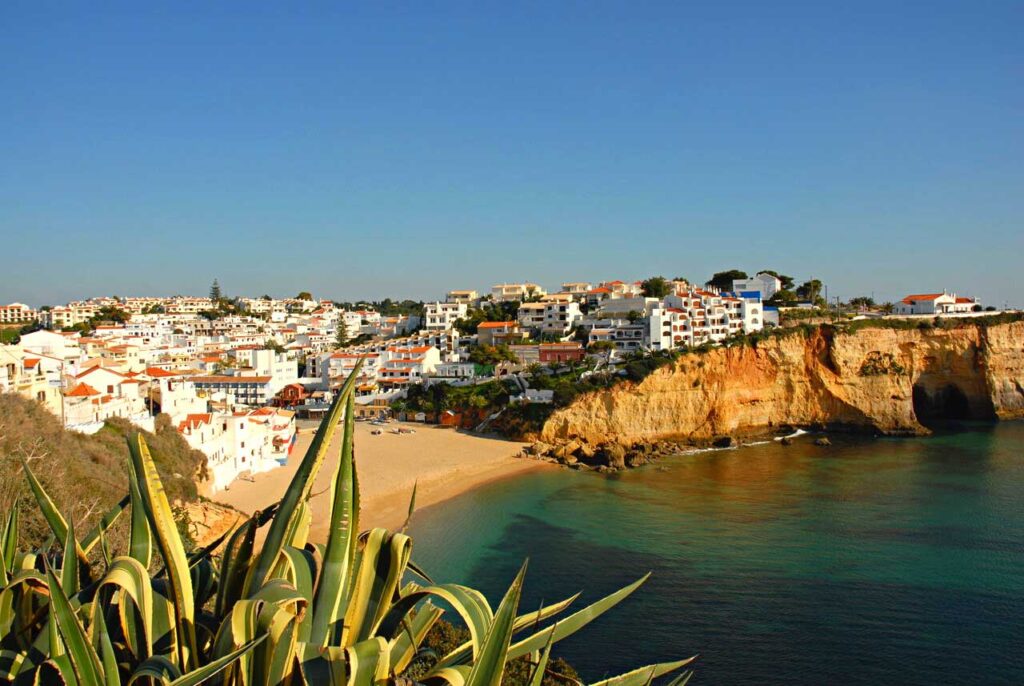
    Over the years, I have seen Carvoeiro grow, but unlike many coastal resort towns, Carvoeiro has grown outwards rather than upwards. High-rise buildings have never been permitted and if we stand up by the church and look down over the village today, it still has most of the authentic charm that got my parents hooked all those years ago. We have built our lives here, as part of both the international and the local communities, myself working in the publishing business and my wife Zoie in property. We have travelled widely over the years and I feel proud to say that there is nowhere in the world we would rather live than Praia do Carvoeiro.

    Text by Bruce Hawker


    Read more:

    More News     More Events

  • Lusitânia Shop pays Tribute to Finest Portuguese Products

    Lusitânia Shop pays Tribute to Finest Portuguese Products

    Lusitânia Handmade Gift Shop

    Lusitânia Handmade Gift Shop handpicks the finest handmade contemporary pieces from around 40 artists

    – December 7, 2021

    The Lusitânia Handmade Gift Shop opened its door in Carvoeiro, right before the COVID-19 pandemic cast its shadow over Portugal. After travelling all over the country and Europe, Lagoa-native Tânia Silva wanted to bring to her community a different concept of traditional craftsmanship. “It’s a project dedicated to that which is handmade in the country, in an exclusive way and totally different from industrialised products. We value contemporary craftsmanship through unique and original pieces made by our artisans,” she explains.

    Lusitânia’s goal is clear: “To highlight and promote our national craftsmanship”

    And so, the shop brings together pieces by around 40 artists from all over the country, of various ages and using different materials and techniques. Although very different, they all have something in common: “These are excellent products, made with soul, dedication and love, all from Portugal”, and which are difficult to find anywhere else.

    In Tânia’s own words, the shop’s main goal is crystal clear: “To highlight and promote our national craftsmanship.”

    Lusitânia Handmade Gift Shop

    A walk through Portuguese Art, from decorative to practical ceramics, macramé, jewellery, paintings and much more

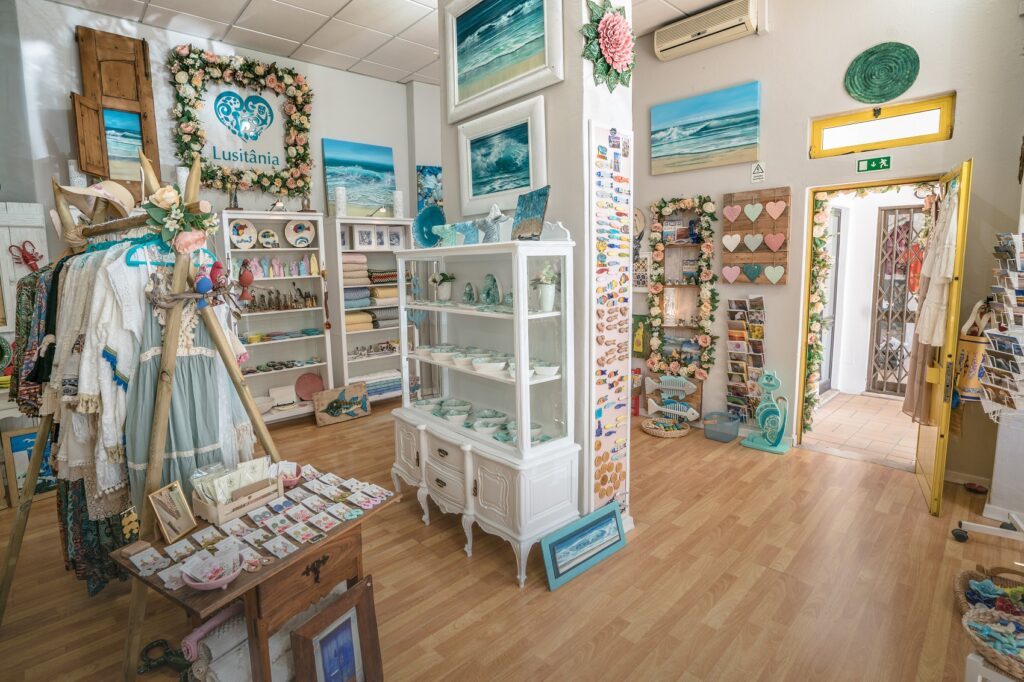
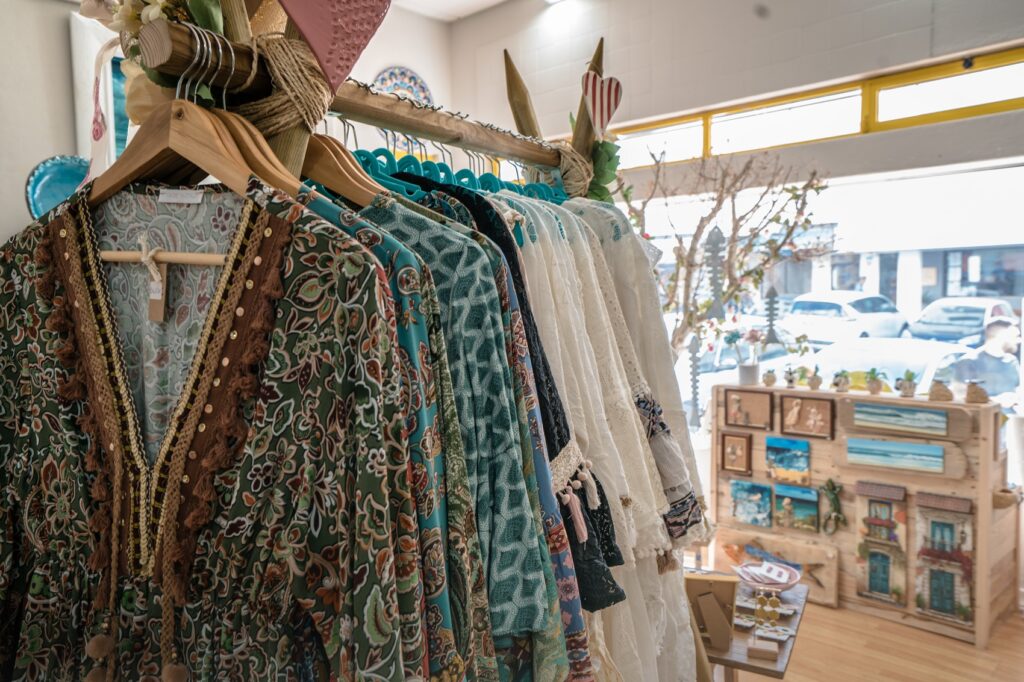
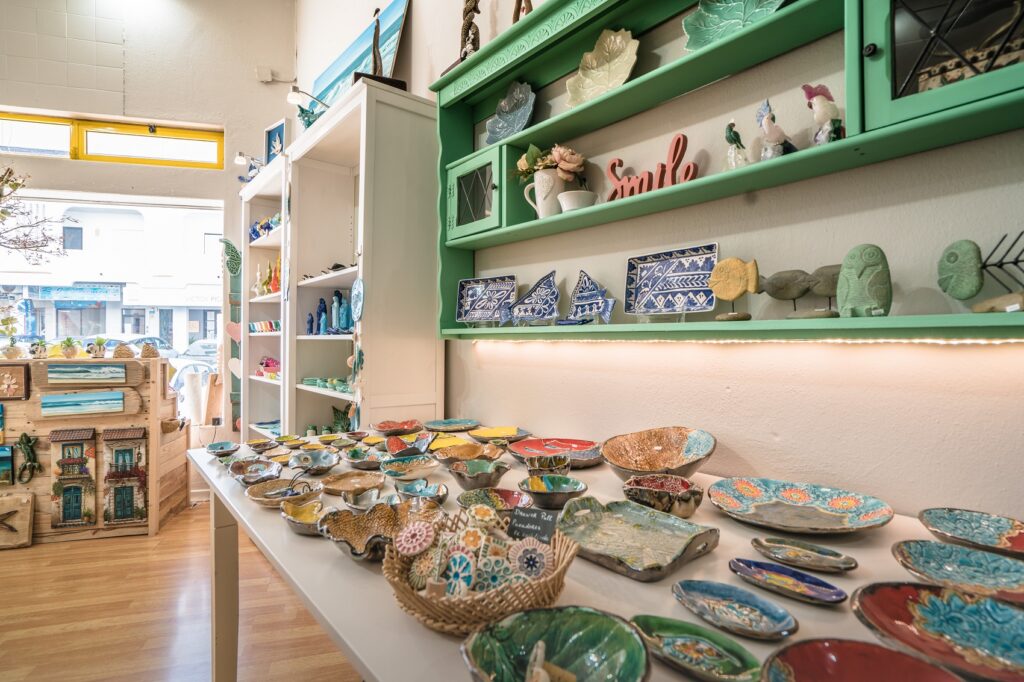
    Walking into Lusitânia is like going on a journey of Portuguese art, ranging from decorative or practical ceramics, original canvases, azulejos (traditional tile work), macramé, tableware, jewellery and unique signature pieces.

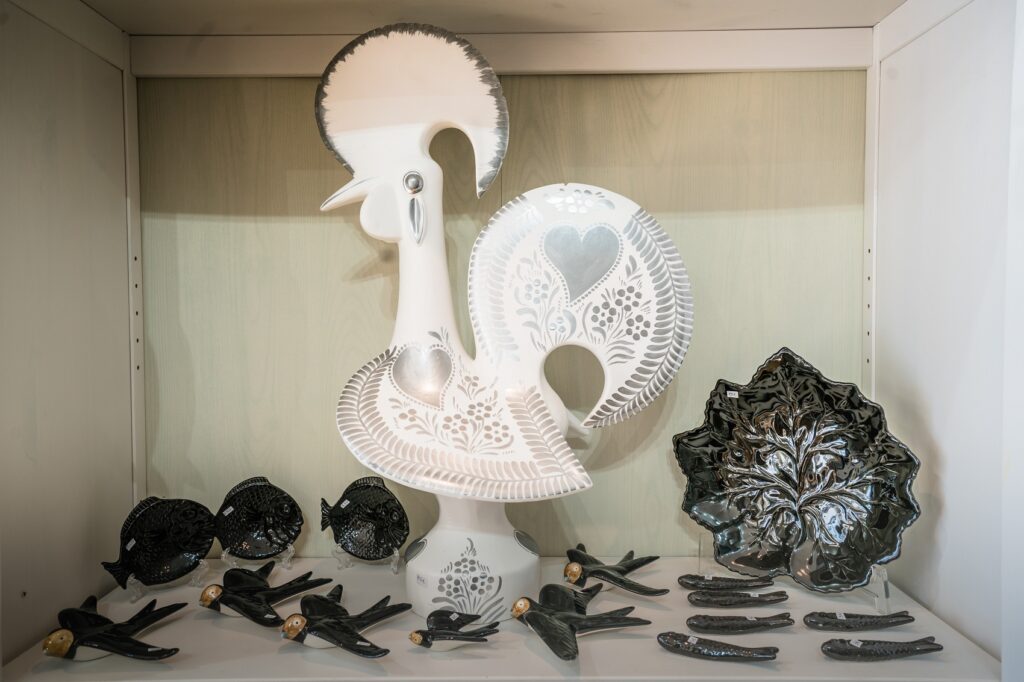
    Here, you’ll find ceramics from Caldas da Rainha, typical Alentejo chairs, quilts from Serra da Estrela, religious pieces from Fátima, the Barcelos rooster, azulejos from Alcobaça and other works from Pombal, Lisbon and, of course, the Algarve. And Tânia herself handpicks all of this.

    “I have a very close relationship with each artist. I visit the studios where they work so they can show me what they have and I choose the pieces that best fit the shop’s concept. Sometimes I’ll even tell them what I want and even sketch out my idea and they do it. That’s why there are a lot of custom pieces as well,” she explains.

    This close relationship seems to seep into the community. Just last summer, Tânia saw several artisans come into Lusitânia requesting to have their work sold at the shop as well. But there is one thing that leads to certain elimination: “If I see that an artist doesn’t put love and dedication into their piece, I cannot invest in them because I feel that their goal is simply to sell,” she states.

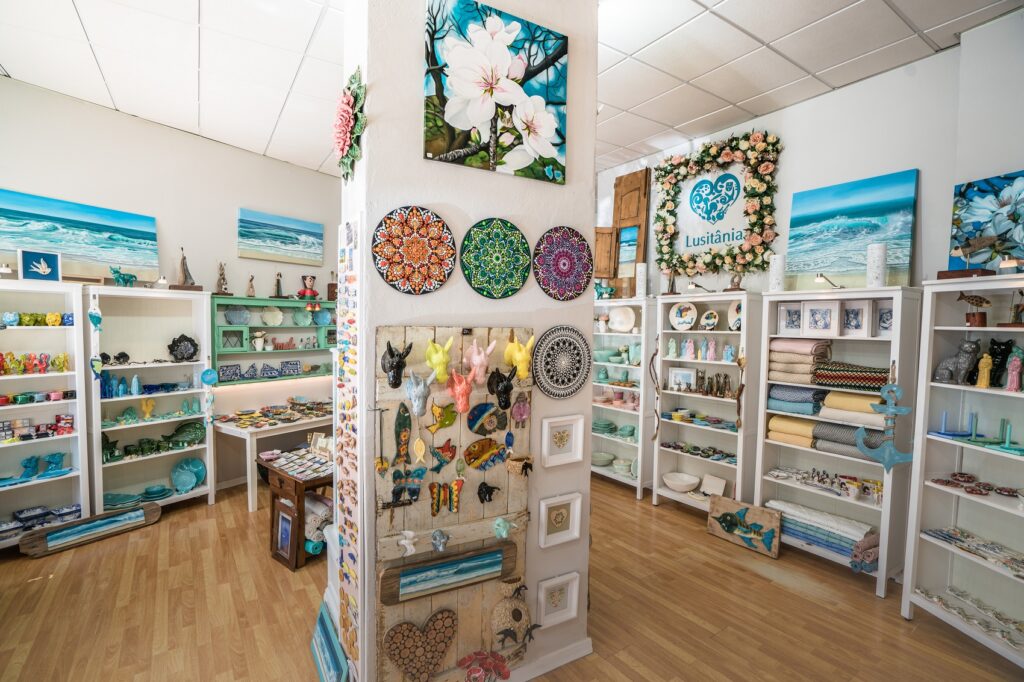
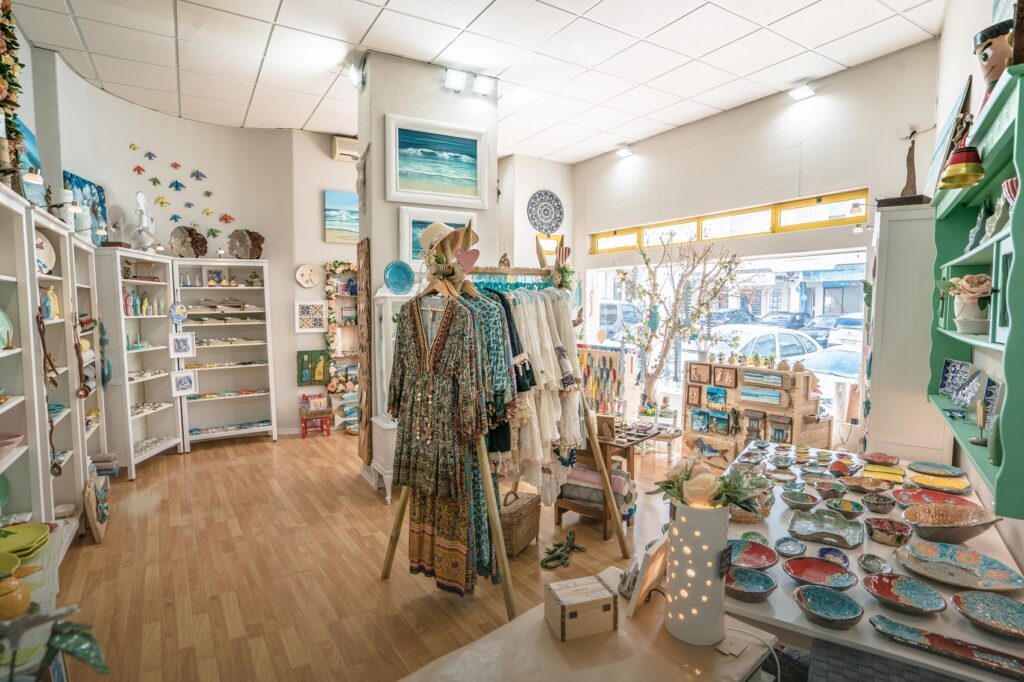
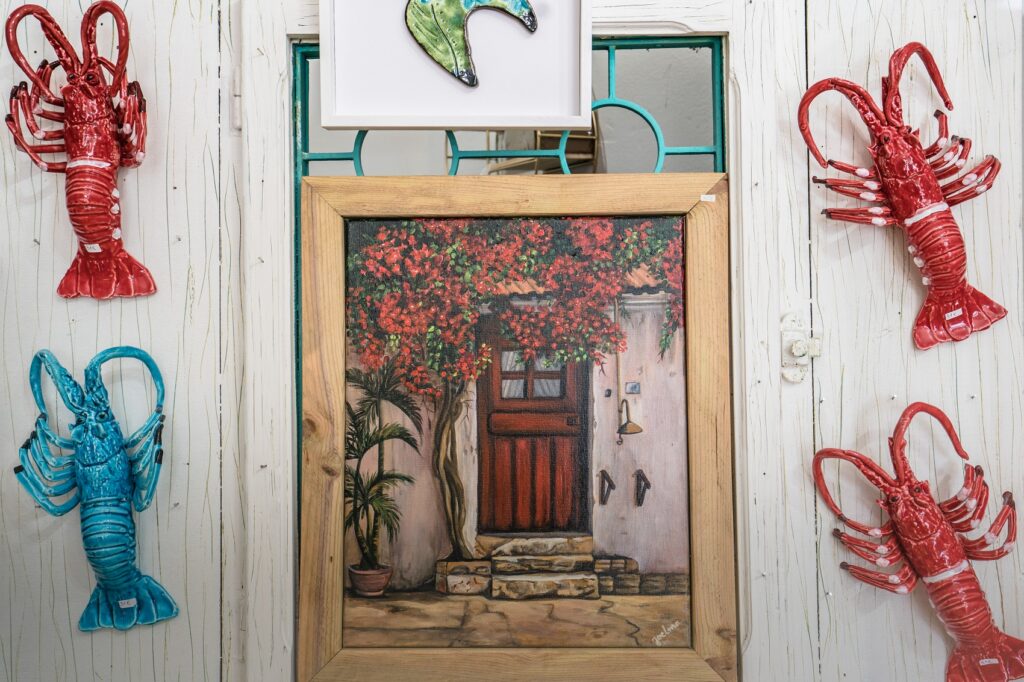
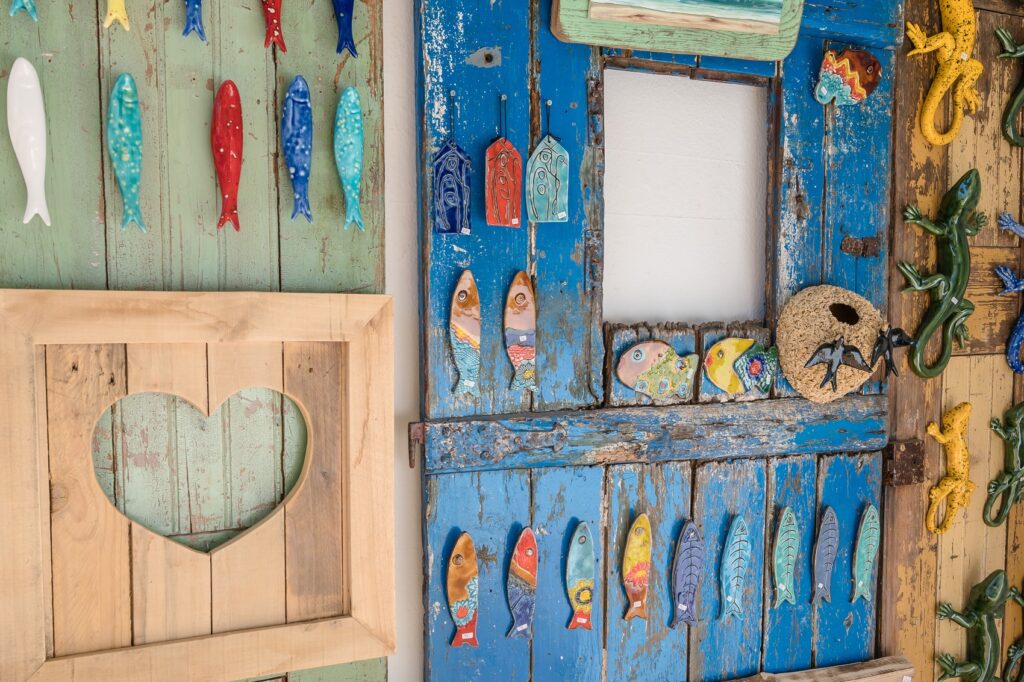
    Coming into Lusitânia Handmande Gift Shop, the first thing you’ll notice is the many colours on the walls and shelves, usually loaded with ceramic sardines, lobsters and swallows.

    There are also mandalas, postcards made of different materials, mugs and plenty of decorative china and tableware. Nativity scenes are sold year round, along with fridge pins, paintings using recyclable materials and paintings of seascapes, angels, key rings and books. But the top sellers are the decorative azulejos and soap dishes.

    “These are all items that cannot be found anywhere else and that no other shop nearby will have. That’s our concept and it must be respected. I have a little bit of everything and something for everyone,” Tânia says, adding that she makes sure to always tell clients the story behind each piece, the materials used, who made it and where they come from. “This shop is an homage to the Portuguese people and our craftsmanship,” she says.

    At her shop, Tânia Silva welcomes painters, designers, sculptors, potters, carpenters and many other artisans. As for the clientele, most are tourists, both foreign and Portuguese, but a lot of residents visit the shop as well.

    From Lusitânia to the world

    Lusitânia can also ship any piece to anywhere in the country or the world — Tânia has shipped orders to the US, Japan, Canada, Australia and multiple European countries. The latest order, one of the biggest, came from an American company with offices in Lisbon, which commissioned 200 swallows customised with their logo, as gifts to the staff in the Portuguese capital during a company dinner. “They found me on Instagram and made the order. I spoke to the craftsman and I’m going to deliver the pieces in Lisbon myself,” Tânia reveals.

    As for the future, she hopes to take Lusitânia Handmade Gift Shop to other towns in the Algarve and beyond. “The goal is to grow and have shops all over the country. The first steps will be here in the Algarve and then elsewhere. I’ll have to do some thorough research as it will be tricky to find places that don’t sell pieces like what I have,” says Tânia. For now, she will be taking a Pottery course to create her own collections.

    During winter, Lusitânia Handmade Gift Shop is open Monday to Friday from 10am to 1pm and 3pm to 6pm, and on Saturdays from 10am to 1pm.

    Visit Lusitânia Handmade Gift Shop’s website, or follow on Instagram

    Text Maria Simiris
    Photos Phaze Photography
  • Discover a Unique Art Oasis designed by Artist Eric de Bruijn

    Discover a Unique Art Oasis designed by Artist Eric de Bruijn

    Created by Dutch artist Eric de Bruijn, “Ana Ana” is a unique space where art and hospitality come together in multiple forms

    – December 7, 2021

    Imagine a home where a creative studio, an art gallery, large entertaining spaces, and comfy guest rooms coexist in a peaceful urban setting. This is Ana Ana, Eric de Bruijn’s artistic habitat.

    Once an industrial building, now a serene oasis

    Located close to the riverfront in Portimão, this 500sqm building was initially set to be a family home and art studio. The vast rooms with tall ceilings were ideal for Eric’s large canvases and the bedrooms sufficient to host his family. But when COVID hit, and a lockdown was imposed, the Dutch painter decided to reinvent the space. What was once an industrial building was lovingly transformed into a serene oasis. This fluid home, in constant change, is a remarkable resting place filled with bright natural light and unique art pieces, curated and designed by the artist, making Ana Ana one of a kind.

    A place to immerse yourself in Art

    “The house got a lot of tender loving care,” says the soft-spoken Dutchman, who opened the doors of his multipurpose home to give art lovers the chance to stay in what can be seen as a work of art in progress. “It’s still a working studio today, but can be different tomorrow,” he explains. Eric’s assistant, Marta, knows she must expect the unexpected. “Very often, I come in after the weekend, and things have changed, again,” she remarks. “Sometimes, he sells art pieces from the residence’s walls, and we need to replace them.”

    Ana Ana is now a comfortable and spacious setting where guests can stay and immerse themselves in art. However, when it is not rented out, Eric lives here. It is where he comes to life, it represents who he is, and that is why he chose its name. “Ana Ana means ‘it’s me’ or ‘that’s who I am’, in Arabic,” he explains.

    This space truly reflects Eric’s style, which he describes as balanced, light, inviting but also comfortable, tasteful and honest. “It’s a plural space where you will find art in many forms, from exhibitions to gastronomic events, pop-up concepts or artistic residences; anything can happen.”


    Portugal, a place of inspiration for new artists

    The Dutch artist, creative director and interior designer moved to the Algarve in 2006, thinking he would only stay for a year. Fifteen years later, he is still here and has no regrets. “What can I say, I love Portugal, and I love the people,” he exclaims. A passion that has led him to work with many local and national artisans to champion their work. On top of producing furniture in the north of Portugal, together with Marta, he is creating a line of furniture and objects to tell Ana Ana’s story.

    He is currently also working on four interior design projects in the Algarve and others in Holland, such as a beautiful restaurant that opened last June in Nijmegen. “Hospitality is very important for me,” he insists as he reveals he is also building a small Ana Ana in Lagoa for two people.

    Persian-style carpets, rustic furniture and large paintings: the scene is perfectly designed to host warm and friendly gatherings

    Born in The Netherlands, where his parents had a hotel, Eric has always been a keen host. After exhibitions, he loves to cook for his guests, “to share beautiful things with interesting people”. This is why the house offers spaces for big gatherings, such as a large dining room and a sitting room with lots of white sofas, Persian-style carpets and a large rustic wooden coffee table, complemented with quirky glass-front cabinets. Another sitting room, with a huge corner sofa and pieces of art lining the walls, is the perfect spot for intimate conversations over a glass of wine or two.

    There is also an opportunity to experience Ana Ana in a closer setting

    The fully equipped house can be rented year-round. With its five bedrooms and studio, it can sleep up to 12 guests. Designed and curated to make guests feel good, the bedrooms are almost like cocoons. The atmosphere is light and airy with wooden shutters, spacious areas, and comfy furniture with oversized cushions. Polished cement, white floorboards or traditional Algarvian terracotta tiles are the natural materials chosen for the floors.

    The villa is split into two separate units — a townhouse and a studio — along with an art gallery. On the townhouse’s ground floor, guests can spread out in an open space which includes the gallery and a kitchen and Eric’s studio (which is available to rent at an extra cost). On the second floor, there are four double bedrooms and one twin bedroom, as well as a fabulous rooftop terrace with a lounge and dining area and a firepit. This ample space is ideal for yoga retreats, which Eric and Marta will soon be organising.

    Ana Ana also features an exceptional patio with its own black swimming pool. Surrounded by earthy pink walls lined with cacti, this interior courtyard gives off a mix of Moroccan and Mexican vibes. This unique home is definitely made for photoshoots and has been chosen by several brands such as Zara Home, adding yet another layer of creativity to this artistic habitat.

    Visit ANA ANA’s website, or follow Eric de Bruijn on Instagram.

    Text Alexandra Stilwell
    Photos Luís da Cruz, Antonella Antonucci & Alain de Bruijn