Category: Must Read

  • SPRING RENEWAL

    SPRING RENEWAL

    WITH THE ARRIVAL OF THE NEW SEASON, THERE WAS MORE THAN JUST A LITTLE SPRING CLEANING GOING ON AROUND CARVOEIRO

    They say that spring is a time of renewal, and no one took that more literally than the good people of Carvoeiro, as up and down the town, established businesses got complete face-lifts and new ones opened their doors. From new supermarkets and shops to totally revamped restaurants, and even a brand new boardwalk that runs along the cliffs near the church, this spring was certainly a time of rejuvenation, adding a muchwelcomed new sheen to the area.

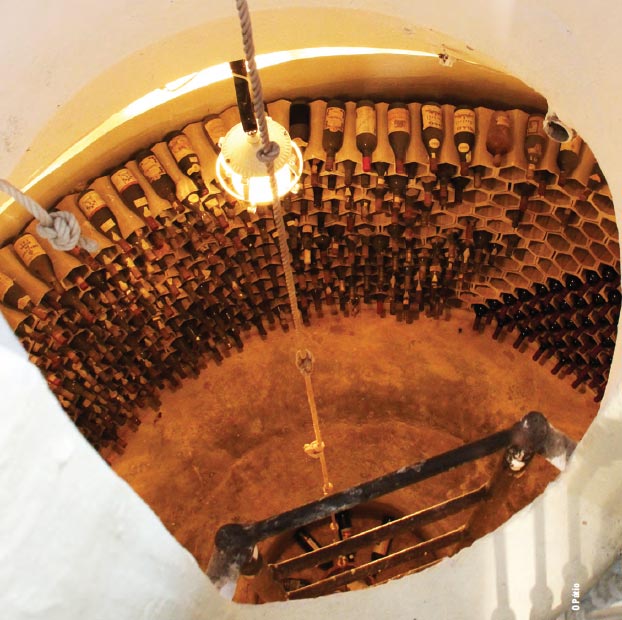
    One of the longest-established restaurants in Carvoeiro, O Pátio has seen various changes since it was taken over by restaurateur Jan Zegers more than 30 years ago, but none as dramatic as the make-over it received earlier this year. Unveiled when it reopened in March, the restaurant’s new look saw a departure from its trademark antique look, with its original red tiles and dark wood, and welcomed a fresher, brighter décor. Maintaining the original charm of the 200- year-old building, shades of cream and grey/blue add a lighter elegance to the interior, alongside the brand new floor in slate grey. With extra seating added to what was previously only a service area, the restaurant’s quirkiest features have been maintained but stripped of the Bondex layers so that they shine in all their glory, including the large wooden port wine barrel which serves as a cosy alcove accommodating a table, and the restaurant’s wine cellar, located at the bottom of an ancient well, where the wine is placed in a bucket and pulled up by a traditional rope.

    Inspired by his travels, Jan Zegers, who also owns Piu, Martin’s Grill and Jan, all on the square, explains the reasons behind the change: “The restaurant before was too heavy, too dark. Less and less people were coming inside; now it’s more pleasant, more welcoming.”

    But the changes don’t stop at the décor; even the menu has had a revamp, with fewer options but which stay true to O Pátio’s commitment to high-quality cuisine, alongside a lunch menu offering lighter meals and a dish of the day.

    Another Carvoeiro favourite which this year gained a new, brighter look is Ele & Ela, a cosy bistro-style restaurant on Rua do Barranco (‘out’ road). With a darker décor in its previous life, chef patron Harald Kruizinga has opened up this small eatery by bringing in cream sofas and incorporating blond wood into the interior. Along with the lighter colour scheme, new lighting, tables and chairs give a more spacious feel to the restaurant, with storage areas cleverly concealed by custom- designed wooden units and a large mirror running the length of the restaurant. Changes were also made to the bar and the covered exterior (with the steel bars removed from outside to make it more inviting), but perhaps the biggest transformation was the WC area, which now looks bigger and more stylish. “Even our old regulars are happy,” says Harald. “It’s brighter, fresher, and the sofas allow us to cater for big groups.” Opened in March on Rua do Barranco, Tony’s is one of the latest additions to Carvoeiro’s food scene. The new venture of António Laginha (ex-Galé and Poço Partido restaurant), the snack bar serves hamburgers (100g and 200g), alongside baguettes, jacket potatoes and full English breakfast, alongside a range of other snacks and cakes.

    With an emphasis on white with splashes of purple here and there, the bright and airy space was designed by architect Nolasco Raposo based next door, who has created a blend of snack bar and modern diner. Seating around 50 people, it also has a large outdoor terrace and four televisions to show sports throughout the year. Open from 8am to 9pm Sunday to Friday, the eatery will be open every day until 12am during the summer. “We’re also hoping it will bring people down this way and help other businesses around here that are further away from the square,” adds António, who is joined by his wife Ana Paula in the kitchen.

    One of the most talked-about metamorphoses, however, is what was formerly the Black Stove on Estrada do Farol. Previously an Irish bar standing in relatively bare surroundings, two entrepreneurs have joined forces to transform the space with a unique concept which they have called The Wolf Bar & Grill. Totally refurbished and with a stunning garden area designed by local landscaping company
  • PRINTS CHARMING

    PRINTS CHARMING

    PORTUGUESE HERITAGE HAS NEVER BEEN SO STYLISH, THANKS TO PORTIMÃO-BASED LIPSCANI

    The day we met Mariana Pires, she was wearing one of her own designs. “I’m replacing my wardrobe, bit by bit,” explains the petite brunette. Although she doesn’t sell her clothes just yet, the 22-year-old designer is already making waves with her beautiful accessories, which have been gracing the pages of national magazines since the brand was founded in 2010.

    Named Lipscani after a neighbourhood in Romania – “I wanted a simple name, with no great meaning and that was easy to pronounce, and I remembered the neighbourhood I had visited with a strong Art Nouveau influence,” says Mariana –, the store was created in 2010 by her mother Gina in Portimão.

    With 25 years of experience in the jewellery industry, Gina Pires initially opened the store with her Dutch husband Martin as a jewellers, where she would make striking pieces full of colour, often using filigree combined with semi-precious stones. Bringing in customers from outside the city – whether for bespoke items or to “recycle” their existing jewellery – and a favourite of various public figures, the jewellery is often featured in national magazines.

    But jewellery is not the only thing that Gina does well. The proud mother is also an expert at singing her daughter’s praises, often downplaying her own work to focus on Mariana’s talents. She does have a point though: enrolling in fashion school aged just 15 after a teacher spotted her potential, Mariana has quickly become a name to be reckoned with on the fashion scene.

    Recognised as “the girl who makes bags with doors on them” after appearing on national television, the young designer joined her mother at Lipscani – thus fulfilling Gina’s dream of making it a family business – in 2011 and started making the most beautiful shawls, each one inspired by the rich history and culture of Portugal and the beauty of 20th-century architecture, especially “the Belle Époque to Art Deco”. “Having travelled so much made me value Portugal even more and seek my roots once again. I love to work with emotional values,” explains Mariana, who, according to her mother, had a passion for fabrics and drawing ever since she was a toddler. Each shawl is named after the pattern, handdrawn by Mariana from memory of things she sees every day. “I wanted to gather elements that are common to all our childhoods, our everyday lives, but I don’t like literal interpretations of what it is to be Portuguese. I don’t work with photos, and I think that gives the drawings a less conventional appearance.”

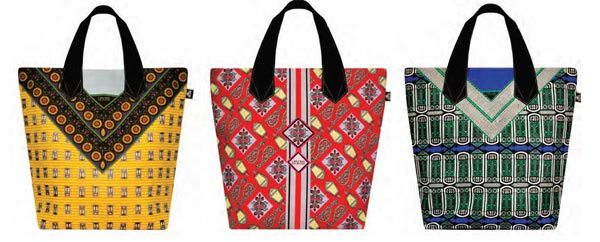
    From gramophones, street lamps and fado singers to her trademark verandas, these quirky shawls were this year joined by Lipscani’s first complete collection of handbags and, usually, customers won’t buy one without the other. It’s fair to say the collection has been a hit. The shoppers, made from polyester and waterproof and heat sensitive, each tell a story, from the balcony filled with plants across from Mariana’s sister’s house to the “ugly” building in Setúbal that the designer has transformed into an amusing accessory. The adorable satchels, skillfully crafted in layers of satin and leather and with the option of being personalised, have almost sold out, with a waiting list proving just how popular these unusual handbags are. All the items are made right here in Portugal by skilled artisans (the satchels, for example, are made in the same factory used by Louis Vuitton) with Portuguese materials, closely overseen by Mariana herself. It hasn’t been an easy journey though, they explain, with many factories unwilling to produce such small orders. Today, however, the bags, scarves and jewellery have a very special home in the bright and colourful Lipscani store on Portimão’s main shopping street, Rua do Comércio.

    For sure a rising star on the Portuguese fashion scene, Mariana, who splits her time between Lisbon and the Algarve, is a perfectionist whose passion for print and design has already brought her a loyal following. Launching a limited edition line of cushions at Christmas, Mariana hopes to organise a fashion show sometime next year with her own couture designs and visit Europe’s leading fairs to promote the brand. Lipscani is also available at selected stores in Lisbon and France, as well as through the online shop at www.lipscani.pt

  • TIME FOR CULTURE

    TIME FOR CULTURE

    THE TEMPO THEATRE IN PORTIMÃO PROVES THERE IS PLENTY OF CULTURE IN THE ALGARVE

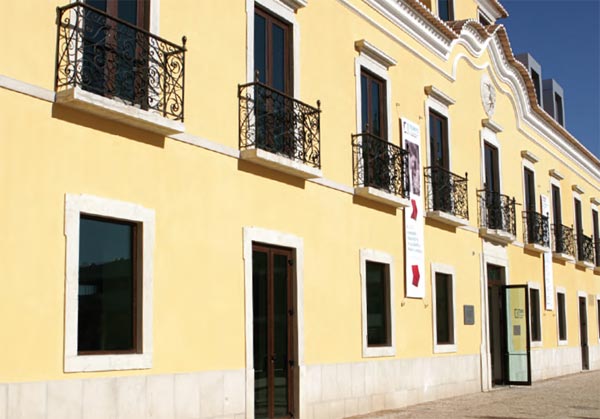
    Here at Inside, we were surprised at the amount of people who hadn’t heard of TEMPO, and those who had still weren’t quite sure where or what it was. It is, in fact, one of the best cultural offerings in the region, housed in a beautiful 18th-century landmark in Portimão.

    TEMPO, or the Teatro Municipal de Portimão, opened in December 2008 as a cultural venue of excellence, staging a remarkable series of compelling music, theatre and dance programmes that have helped put the Algarve’s second city on the cultural map.

    Housed in the former Sárrea Palace, opposite Largo 1 Dezembro near the riverside, it once served as the city’s law court. Today, however, it is a hot spot for the performing arts, with a programme that presents everything from plays, music and dance to film cycles, exhibitions, conferences and debates. “Above all, it is the city’s theatre, which works for the local community by playing an important role in boosting the city centre,” states Susana Martinho Lopes, production director at TEMPO.

    Unfortunately, the recession has had a huge impact not only on local trade but also on cultural activities, and so, in the past few years, the theatre has had to reinvent its programme models which, at the moment, are almost exclusively made through partnerships where the profits are shared with the promoters and artists. “There has been a decrease in our audience who, for economic reasons, are pickier than ever when it comes to shows. Unfortunately, the less commercial shows are the ones that suffer the most,” explains Susana, who notes the much-needed support the theatre receives from various businesses and institutions, such as the Portimão Tourism Association and the Portimão Junta de Freguesia.

    And so, thanks to the commitment and creativity of those behind the municipal theatre, today’s programmes are more diverse than ever, supporting more local artists and thus “proving that the theatre is a house of culture that is for everyone”, adds the production director.

    Of course it helps that the building has an envious range of spaces, each with very distinctive features. The Grande Auditório, with a capacity for 440 people and featuring modern technical equipment, is the main venue for more complex performances, whilst the 165-capacity Pequeno Auditório is suited to conferences, talks and film screenings. Black Box is the smallest of the spaces, a more intimate room that allows greater proximity between the artists and the audience and where most of the educational shows and activities take place (the theatre’s Oficina do Espectador). The more informal Café Concerto is currently where the exhibitions take place and is a great little meeting point for a coffee, whilst the former exhibition room has become the Tourist Office. On the third floor is a rehearsal room for dance and theatre workshops, and this summer, the theatre opened its wonderful rooftop terrace, with unparalleled views over the river, for the unique After Work Sunset Sessions.

    As well as its multiplicity of spaces and its central location at the top of Rua Direita, the theatre’s investment in high-quality lighting and sound equipment and a competent specialist team is essential. “Having a team responsible for the programme, production and technical maintenance represents a financial strain but it is vital for the space to have its own identity and keep running, to make this project socially viable.” Aiming to promote the arts to the wider community since its inception, the theatre’s programme is incredibly rich, comprising various genres and styles that they hope will appeal to people of all ages, backgrounds and nationalities. Having recently welcomed various photographic exhibitions from local artists, film screenings from international directors and classical music concerts, the programme over the Christmas season includes a performance of Swan Lake by the Russian Classical Ballet, a concert from famous Portuguese singer David Fonseca and a Christmas Concert performed by the Portimão Philharmonic Society. Amongst the big names to have graced the stage at TEMPO, including the likes of American jazz singers Dianne Reeves and, more recently, Stacey Kent, a particularly memorable event was the Invisible Cities Festival – Bridges of Istanbul. “In particular, the performance called Dervish by Turkish choreographer Ziya Azazy was one of the biggest successes in the history of TEMPO, with the Grande Auditório full and huge applause from a moved audience,” notes Susana.

    Alongside the shows, the theatre also offers different initiatives, such as Valentine’s Day events, the After Work gatherings on Wednesday evenings and various corporate events, alongside a special educational service and its ongoing work with schools, families and senior citizens.

    “Our ideal is to make people understand that culture is essential not only as a response to the recession, but above all to build our identity, our ability to question and reflect. We exist to contribute to the construction of better citizenship,” concludes the production director. “We have to keep the theatre alive.” To consult the programme, please visit www.teatromunicipaldeportimao.pt or find TEMPO on Facebook. Tel: 282 402 470


  • RETAIL THERAPY

    RETAIL THERAPY

    FORGET SHOPPING CENTRES: CARVOEIRO AND FERRAGUDO HAVE EVERYTHING FOR THE MOST DEMANDING CUSTOMER

    The former fishing village of Carvoeiro has become synonymous with dining out, but look beyond the numerous restaurants and you’ll find that the town is also home to plenty of shops selling everything from clothes and accessories to souvenirs and items for the home and garden. Inside went window-shopping to see what the local traders have to offer and found a few gems amongst the mix.

    On the main road of Estrada do Farol, there are a number of shops selling lovely clothes, shoes and accessories, but for those looking for quality swimwear and accessories, Maracanã is a one-stop-shop for all your holiday needs. With brands like Ipanema, Billabong, Quiksilver and Rip Curl, there are clothes, swimsuits, footwear and snorkelling gear for men, women and children. Aladdins Gifts and Bacana (across the road) also offer items that you won’t find elsewhere, with pretty womenswear and accessories for any occasion. Along this road, there are plenty of shops selling a variety of gifts and souvenirs, but stores like Dacora – with quirky, oneof- a-kind pieces – near the square, and Basic Décor, further down Rua do Barranco, are filled with unique and colourful items that are perfect for the home. The open-air Praça Velha (with access from both Rua dos Pescadores and Rua do Barranco) has quite literally everything you can imagine, from handicrafts to décor items, whilst O Painel, on the right handside as you leave Carvoeiro, has beautiful handmade pottery made on-site by local artisan João Guerreiro.

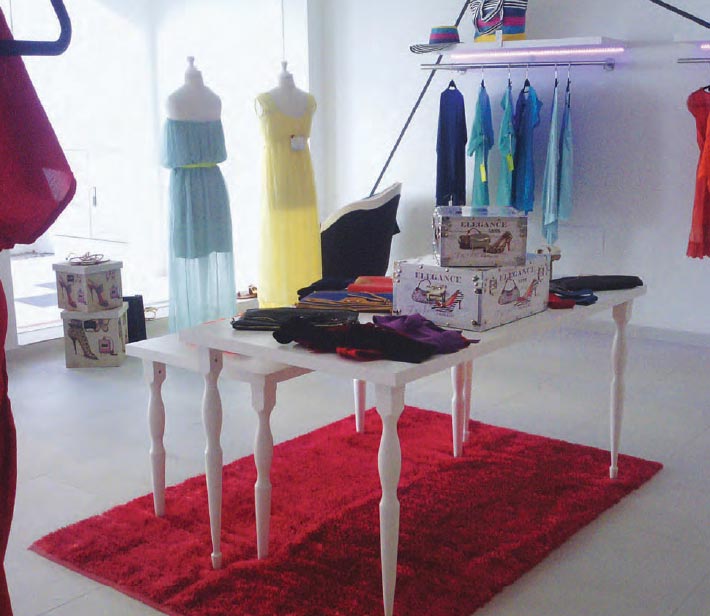
    Recently, though, there has been a surge in quality clothing, with three new boutiques in particular ahead of the fashion pack and raising the retail bar in Carvoeiro. L’Atelier certainly stands out on Rua do Barranco, with its enormous heart on the façade, but the surprises continue inside, with hand-picked Portuguese, French and Italian designer labels for women and children displayed amongst the elegant, quirky interior. A few doors down is Le Macho, which belongs to the same owners and offers the same imaginative décor, with a focus on quality menswear and accessories, particularly from the Italian brand Antony Morato. But the latest sartorial addition is Kube Boutique. Opened in June near to the post office, this bright and elegant store sells exclusive pieces from Portuguese and Italian brands, with owner Lina providing personalised service and advice to her customers. Selling one-off womenswear, including shoes and accessories, you certainly won’t be caught wearing the same outfit as anyone else!

    On the jewellery front, Mariana Cabrita (Estrada do Farol) offers a great selection of quality watches and jewellery pieces, whilst Lolita on Rua do Barranco, established almost 15 years ago, has made its name for its custom fashion jewellery. Next door, however, is Imagine, a striking, glass-panelled jewellery shop which also designs its own pieces in gold, silver, and natural stones. With a more design-led approach to its creations, all carefully crafted and extremely versatile, the brand has two more shops in Portimão and Lagos, as well as a production centre in Alvor.

    Golfers will be in their element at the Carvoeiro Golf Shop at the top of Rua dos Pescadores, which provides everything a golfer could need, including clubs and balls (to buy or hire), clothing and various services, as well as discount bookings at any Algarve golf course. Down the road is the fisherman’s equivalent: Pesca & Bichos, which provides all fishing equipment and advice on fishing in the area.

    Of course it’s not just Carvoeiro that provides a bit of retail therapy. Lagoa also has an array of traditional stores and boutiques, but if it’s quirky you’re looking for, then Ferragudo is the place to go. Déjà Vu on Rua 25 de Abril, just by the square, offers an eclectic mix of art, antiques, clothes, jewellery and other appealing items, whilst across the road, next to Banif Bank, another shop also adds something very different to the usual shopping scene. A breath of fresh air, Fantasia is a bright little shop that opened in March and sells imaginative gifts, games, toys and decorative items for the home and outdoors. The pieces are pretty and unique, making it a must-visit for those who want to inject character and humour into their home.

  • TOUR DE ALGARVE

    TOUR DE ALGARVE

    INSIDE DITCHED THE CAR AND DISCOVERED THE AREA IN THREE VERY DIFFERENT WAYS

    The team at Inside is constantly encouraging its readers to discover the region and all it has to offer. True to form, we decided to do just that, but this time we snubbed the more traditional means of transportation and hopped on three very different kinds of vehicles: a retro Vespa, a high-powered buggy and an ecofriendly tuk tuk. Here, we reveal a very different side of the area from a brand new perspective.

    Sitting in Carvoeiro, we waited for our specially requested Vespas to be delivered, with images of Audrey Hepburn and Gregory Peck in the 1953 film Roman Holiday floating around in our head. They didn’t disappoint: bright and shiny, this is retro-cool at its finest, and the best way to zip around Carvoeiro with admiring glances at every turn. It’s an investment that certainly paid off for Ralf and Ilenia, who founded the Vespa rental business Grasp a Wasp in Praia da Rocha in March 2012.

    Alongside the great weather, Ralf explains why they chose the Algarve for such a business: “[A Vespa] offers much more than a car. You have ample view so you see everything, you’re air-conditioned naturally, you can sit on it in a wet swimsuit, and it boasts a luggage carrier where you can put towels, a bag, a picnic, or even a surf rack. They’re just ideal vehicles.” With nine Vespas to choose from (three are automatic), in a range of funky colours and boasting bright helmets with integrated sun visors and iPhone chargers, our pretty multicoloured number brought to mind images of picnics, romance and sunny days.

    Those who are already familiar with riding Vespas or scooters in general will be in their element, although Ralf says it’s easy to learn how to control the gears. For everyone else, the automatics are the perfect choice. Leaving Carvoeiro, we headed towards Silves to discover the side-streets of the Medieval city without having to negotiate all the steep hills on foot. This is the perfect place to park up, visit the castle and maybe enjoy a light lunch.

    After all, we were going to need it as we made our way into the Silves countryside for a very different driving experience indeed: the adrenaline-filled Bulldog Buggies. Set up last year by former car dealer Dan Savage, just east of Silves, this is the perfect way to venture out into the hills with a bit of excitement added to the mix. “It’s a scenic tour with a bit of fun,” says Dan, whose six buggies provide an experience that has earned excellent reviews on Tripadvisor.

    Suitable for all ages, the usual circuit lasts around two hours and takes visitors on a trip they’re not likely to forget any time soon. “People are surprised to see this countryside is here; many visitors think the Algarve is just sand and sea.” To emphasise his point, Dan includes three stops in the circuit that epitomise the beauty of the area, including the Arade dam and what is perhaps the highest point around, with stunning views of the mountains on one side and the ocean on the other.

    Most of the tour is off-road, with great terrain and spectacular scenery, although it is highly recommended to dress for the occasion, as the state of our clothes testified at the end of the tour (goggles and masks are provided). Dusty in summer, the best time to hop in these two-seater buggies is winter, “when the rivers are full and the grass is green”, or in March and April when the flowers are out.

    After splashing through water at the end of the tour and looking decidedly dirty, it was time to clean up and get back on our Vespas to drop them off at Praia da Rocha, but not before stopping off at Portimão Marina for a well-deserved, freshly squeezed orange juice and dipping a toe in the sea. Vespas begrudgingly returned (it’s no wonder that people prefer to rent them out for days at a time), we thought we had earned a bit of a rest, and what better way to be driven around than by tuk tuk, a little piece of Asia brought to the Algarve by local company Allgav-TukTuk.

    The brainchild of Vasco and Filipa Chaveca, the idea is to provide trips right to the heart of Algarvean towns and showcase their rich history and traditions from an insider’s point of view. Not only that, the vehicles are 100% electric and perfect for our narrow cobbled streets. Working in partnership with local hotels – “We are not selling a mass product, that is why we’ve decided to work with quality hotels,” says Vasco – the company provides one-hour circuits as well as private hire to get from A to B in a very unique, eco-friendly way.

    With a capacity for six people, the big advantage of these little tuk tuks is that they can go where other companies can’t, in complete silence. And that’s how we made our way through the fishing town of Ferragudo and back to Carvoeiro: tired, a bit dirty, and completely silent as we enjoyed the very best of this piece of paradise.

    www.graspawasp.com
    www.bulldogbuggies.com
    www.allgav-tuktuk.pt

  • SEVEN HANGING VALLEYS

    SEVEN HANGING VALLEYS

    TREAD THE ALGARVE’S CLIFFTOPS WITH THIS LOVELY MARKED TRAIL

    Formed over millions of years, the cliffs along the coast dominate the Algarve’s landscape, with caves, grottoes, secluded bays and blowholes providing some of the most spectacular scenery around. To make the most of this rich natural heritage, Lagoa Council created the Seven Hanging Valleys walk, a signposted trail high above the beaches that follows the coastline all the way from Centeanes to Marinha/Albandeira beach.

    Inaugurated in 2010, the route extends along 5.7km of coastline, and takes around six hours to complete there and back. Of medium difficulty, it’s ideal for avid walkers, and autumn is one of the best times to make the most of it. If, like us, you prefer to do it in stages or walk just part of the way, there are three clear sections that each afford unique and equally wonderful viewpoints.

    Before you set off, be sure to wear sturdy trainers (and a hat if the sun is out), take water, a walking stick if necessary – there are some pretty steep bits on the walk – and of course a camera! The route is best avoided after heavy rainfall and on windier days, and beware of large waves in the winter at the points of lower altitude. Other than that, it’s a wonderful walk, as Inside discovered.

    Setting off from Centeanes and taking the steps up past Colina Sol hotel (you will understand why there are benches at the top), the path is guided by two parallel red and yellow lines, painted on wooden markers or on rocks. If they cross, you’re going the wrong way, whilst the red line warns of any change in direction. Following the lines and the wooden barriers placed for safety reasons (this is the highest part of the walk at 45.50m above sea level), we walked east until we reached a pretty seating area on the cliffside which looks down to the sea.

    After walking along a narrow pathway, in the distance you can see the Alfanzina lighthouse, a highlight of this section of the walk. This is a wonderfully green bit of the clifftops, but with the lovely views comes a more precarious section as you cross the valley. Fortunately, a wooden structure more akin to a bus stop provides a bit of respite a bit further on, and a few metres ahead lies Carvalho beach, a bit of a local secret that was once used by smugglers. Follow the steps down and over the hill, the shapes of the fishing village of Benagil will begin to emerge.

    The trail takes you down to the beach, the lowest point of the walk and the perfect excuse to stop off at the café and watch the local fishermen as they go about their daily routine. The second part of the walk begins from the small steps to the left of O Algar restaurant, at the top of the hill that winds to the right. Starting off flat and overlooking the beach and the fishing boats bobbing below, the trail continues until walkers reach the top of the famous Algar de Benagil, a grotto only reachable by boat that’s one of the most iconic images of this area’s coastline.

    This stretch of the trail is flanked by woodlands, home to various herbs – as indicated by one of the many information boards that detail the rock formations, fauna and flora found in the area, and emergency contact numbers. Then comes a more difficult bit but well worth the exertion: down into the valley, you cross over a little bridge amongst the cliffs dotted with sink holes. With the sound of the waves beneath your feet and the ever-present cicadas, this section is particularly pretty in the spring, when the orchids and lilies add colour to the surroundings. A scramble up the other side is rewarded with amazing views from the specially made Miradouro Beauty Spot, with the rocks here taking on a very different appearance. And this is when we reach one of the most beautiful beaches in Portugal: Marinha.

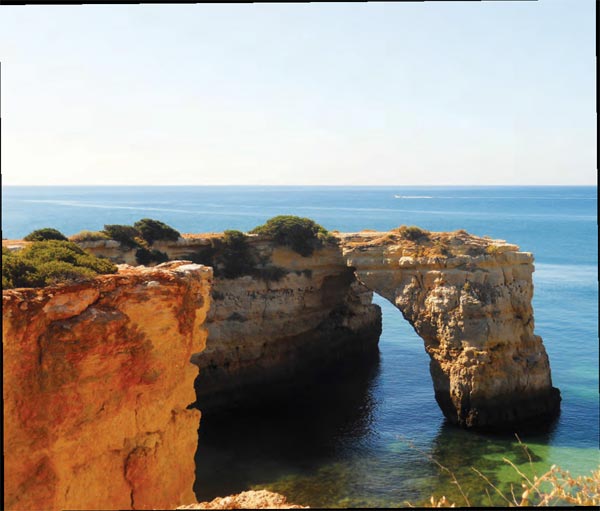
    This third and final section of the walk is in fact not signposted, but promises one of the most beautiful stretches of the whole trail. Walking down among the pines and natural vegetation, shaded steps bypass the beach and afford pictureperfect views, with small fishing boats providing visits to the caves often zipping in and out of the grottoes. Walkers will come across more natural pits – the safety barriers are there for a reason –, fossils embedded in the rocks and little secluded beaches, one of which can only be reached by foot. An imposing arch formed by years of erosion marks the end of the road, as walkers reach Albandeira, a rocky beach with a small restaurant and its own picnic area. Happy walking.