Category: Must Read

  • LIFE IN THE FAST LANE

    LIFE IN THE FAST LANE

    RSR WANTS TO PROVE THE PORTIMÃO CIRCUIT IS A WORLD-CLASS RACETRACK THAT CAN BE USED ALL YEAR LONG

    [inpost_gallery thumb_width=”175″ thumb_height=”175″ post_id=”373″ thumb_margin_left=”0″ thumb_margin_bottom=”10″ thumb_border_radius=”2″ thumb_shadow=”0 1px 4px rgba(0, 0, 0, 0.2)” js_play_delay=”3000″ id=”” random=”0″ group=”0″ border=”” type=”yoxview” show_in_popup=”0″ album_cover=”” album_cover_width=”200″ album_cover_height=”200″ popup_width=”800″ popup_max_height=”600″ popup_title=”Gallery” sc_id=”sc1422640363008″]


    Ron Simons is a happy Dutchman. After racing everything from single seaters to Group C cars, he thought it would be a good idea to teach others how to do it. First he served as expert instructor for Porsche and Ferrari during the Noughties, and then decided it was time for his own enterprise, opening Ron Simons Racing in 2002. RSRNürburg was his first company, using the Nürburgring circuit in Germany as basis for his track car rentals and driver instruction programmes. For more than a decade now he has hosted several events for brands such as Dunlop, Lotus or Nissan and more than 1,000 people every year use his services. In 2009 he expanded his business, opening RSRSpa at the historic Spa-Francorchamps racetrack, a mere 100km away from Nürburg. Spa and Nürburgring are two fantastic tracks, some will even say the best in the world, but they do have a small problem: they are located in places where the sun doesn’t often make an appearance and snow, ice or heavy rain are not the best elements in which to race performance cars, not least when they are in the hands of fairly inexperienced drivers. And so, RSR is coming south and wants to make Portimão its home during the winter months, allowing customers to keep enjoying their cars when Spa and Nürburgring are next to impossible to drive on. RSRIberia made its début in late November, with a five-day event that began in Portimão and then proceeded to the Ascari Race Resort, near Malaga, Spain. Inside was there to see what the fuss was all about and came away with the distinct feeling that RSRIberia might just be what the Portimão Circuit needs to gain more awareness and make the Algarve a place of excellence for automotive tourism. So what about the cars? Well, Ron brought along some of his, including a 911 Porsche GT3, a Nissan GT-R, a BMW M3 V8, a Porsche Cayman S, a Renault Mégane RS 265 and several Lotus Exige and BMW E46 M3 race cars. Then there were some interesting customer cars, including the ex-Michael Schumacher Mercedes SLS AMG or the two McLaren 12C brought by the McLaren Driving Experience themselves. All in all, RSRIberia had more than 50 cars and 300 people involved in this first event on our peninsula. We spent so much time talking to Ron that we barely had any time to drive. Eventually we chose the new Porsche 911 GT3. We didn’t spend a lot of time at the wheel, but it was enough to see this is the most spectacular model of the current 991 generation. This is a truly fantastic piece of machinery.

    The next event will take place in February 2015, with a component aimed at classic car lovers, but meanwhile, with some of the most spectacular cars at our disposal, just a mere phone call away, there are a number of packages on offer, depending on whether you want to rent a car from RSR or bring your own, book a hotel, race on one or both tracks, or simply opt for driver instruction. It’s hoped that Ron and the people at the Autódromo Internacional do Algarve can strengthen a partnership that will boost automotive tourism in the region and make the Portimão race track a centre of excellence for driving lovers, offering the best driving courses and track day programmes in Europe.

    www.autodromodoalgarve.com
  • DOM CRISTINA

    DOM CRISTINA

    THE ALGARVE’S BELOVED BRANDY AND HONEY LIQUEUR CHANGES ITS NAME, BUT NOT ITS TASTE

    [inpost_gallery thumb_width=”175″ thumb_height=”175″ post_id=”371″ thumb_margin_left=”0″ thumb_margin_bottom=”0″ thumb_border_radius=”2″ thumb_shadow=”0 1px 4px rgba(0, 0, 0, 0.2)” js_play_delay=”3000″ id=”” random=”0″ group=”0″ border=”” type=”yoxview” show_in_popup=”0″ album_cover=”” album_cover_width=”200″ album_cover_height=”200″ popup_width=”800″ popup_max_height=”600″ popup_title=”Gallery” sc_id=”sc1422640607688″]


    Those who love their liqueurs and have visited or lived in the Algarve at one time or another will almost certainly know the name Brandymel. Made since 1955 in Portimão by the local Cristina family and winner of many international prizes, the brandy and honey tipple has recently seen a bureaucratic detail strip it of its name. Now re-branded as Dom Cristina ­ in honour of the company’s founder Oliveiros Cristina ­, the family business is strongly set on getting the word out that, although the name has changed, “everything else is the same”. “This all happened after my father died,” David Cristina, 67, told Inside. “The brand was solely registered to my father, Oliveiros Cristina, and when my father died in the early ’80s, the brand had to be re-registered. However, I didn’t know that when I took over the business, and the warning letter that supposedly was sent out by Portugal’s brand registration body never made it to us.”

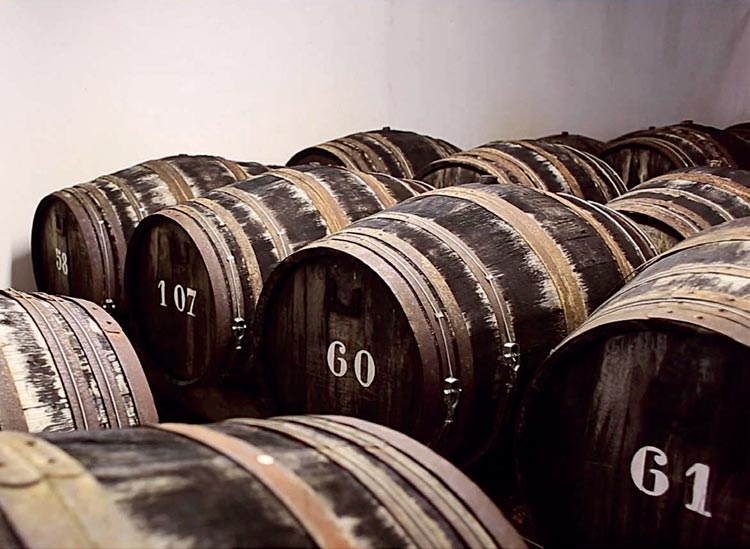
    Unknowingly, the brand continued unregistered for 17 years until someone came along and registered it for themselves. The family went to court in a case that dragged on for another 15 years or so, and lost. But, with a never-say-die attitude and intent on keeping this family legacy alive, the founder’s descendants saw it as a chance for the brand to reinvent itself. “We decided to breathe some fresh air into the brand,” said David Cristina. But the family’s recipe, he says, is “as delicious as always”. In the early years, the Cristina family business was mostly known for its soft drinks, with the original Brandymel ­ a deliciously sweet golden tipple made with water, alcohol, brandy, honey and natural plant extracts, aged for at least eight months in oak barrels ­ first produced to keep the business going during the winter. Soon, it had stolen the show. Once produced at the company’s factory in front of Gil Eanes square in Portimão (which the family hopes to turn into a museum), the liqueur is currently being bottled in Castelo Branco, in the north of Portugal, with plans to establish a new production base somewhere on the outskirts of its native Portimão. For the time being, however, the Cristina family is focused on marketing a special edition of their liqueur, which is being sold without a name but with a little booklet featuring a brief overview of its history, before it is officially re-branded as Dom Cristina. “I remember when I was just a boy, we’d walk into a café and I’d be so proud to see one of our liqueur bottles on the shelves,” said David’s son, also named David Cristina, who is now in charge of the family business. “This liqueur is something that has defined our family. We are not re-launching it to make money. We want to protect our family’s legacy, our recipe and our values.” Whilst many remember it fondly as a home remedy to help fight colds, the liqueur has also won many international prizes, including gold medals in 2005 and 2008 at the San Francisco World Spirits Competition in the US and in 2008 at the International Wine & Spirit Competition in the UK. Besides being a regional and national hallmark, the liqueur is exported to a number of places abroad, including the USA, Germany and Australia. Its upcoming edition, ‘Licor Sem Nome’ (Liqueur without a name), is already available across the country. “Basically, we just want to get our story out there, and let people know that the only thing that has changed is our name,” said the younger David. “Our liqueur is the same.”

  • CROSSFIT CRAZE

    CROSSFIT CRAZE

    INSIDE CARVOEIRO WAS PUT THROUGH ITS PACES AT PORTIMÃO’S OWN CROSSFIT BOX

    [inpost_gallery thumb_width=”175″ thumb_height=”175″ post_id=”369″ thumb_margin_left=”0″ thumb_margin_bottom=”10″ thumb_border_radius=”2″ thumb_shadow=”0 1px 4px rgba(0, 0, 0, 0.2)” js_play_delay=”3000″ id=”” random=”0″ group=”0″ border=”” type=”yoxview” show_in_popup=”0″ album_cover=”” album_cover_width=”200″ album_cover_height=”200″ popup_width=”800″ popup_max_height=”600″ popup_title=”Gallery” sc_id=”sc1422640764449″]


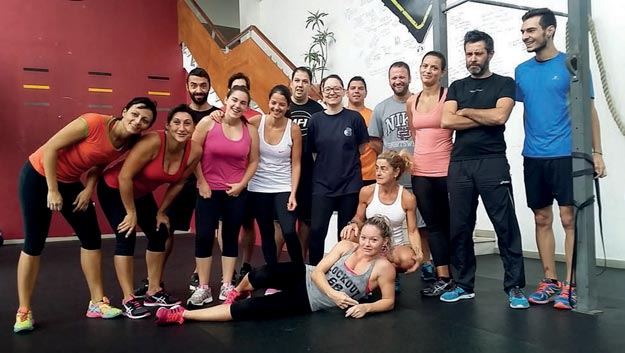
    Looking up at the clock, there are five more reps still to squeeze in. As our arms threaten to give way beneath us, we glance around the room. There’s a distinct feeling that the words ‘giving up’ aren’t in these people’s vocabulary. Some are even smiling. It’s 7.45pm and we’re in a CrossFit class, an exercise concept and competitive fitness sport that has taken the world by storm, and one such army of followers is proud to call this box in Portimão home.

    Set up by Pedro Nobre, an IT teacher turned personal trainer and fitness instructor who “heard about an innovative and comprehensive training concept” in his search for a more challenging workout, the CrossFit Portimão “box” was officially affiliated in 2013. Starting in a small room with just five people, the box went from strength to strength, first with a dedicated area at Village Fitness in Portimão, by then catering to more than 80 ‘athletes’, and then to a 200sqm warehouse in the industrial area near Aqua Shopping, its new home since December. Described on the official website as “the principal strength and conditioning programme for many police academies and tactical operations teams, military special operations units, champion martial artists, and hundreds of other elite and professional athletes worldwide”, CrossFit is a high-intensity workout created in 2000 by American coach Greg Glassman. Essentially, it’s a full-body programme that combines functional, dynamic and extremely varied exercises by integrating elements of cardio, weightlifting, plyometrics, core training and gymnastics. With the main goal of preparing you for the unexpected, CrossFit now has a legion of supporters worldwide, and the Algarve is no different. It’s tough. There’s no denying that. But then again, few fitness concepts boast such drastic improvements in as little as two weeks, according to Pedro, a CrossFit Level 1 Trainer who has judged CrossFit competitions both here and in the UK. “It’s about overall improvement and preparing the body for everyday situations, like picking up objects or running, or it can prepare you for something specific like a marathon, for example. People find they are more able in their day-to-day lives and wake up with more energy.” At the Portimão box, a world apart from a regular gym with barbells, kettlebells, climbing ropes, plyo boxes, gymnastic rings and even tractor tyres dotted around the place, there are daily CrossFit training sessions limited to eight people (Pedro recommends three sessions a week for the best results) which comprise the WOD (Workout of the Day), a set of exercises defined by Pedro, while Benchmark workouts allow athletes to track their progress. The On Ramp class is recommended for beginners to learn the basic exercises correctly (such as air squats, shoulder presses and deadlifts) while the Open Box is there for the athletes who compete in the many CrossFit competitions now taking place across the country. Besides these, there’s Oly, which focuses on Olympic lifting movements, Strength Training, CrossFit Endurance (run and bike) and Gymnastics, the first in the country to incorporate it in its box. At the new location, they also hope to combine the concept with the self-defence technique of Krav Maga.

    While it does have its sceptics, the beauty of CrossFit, says Pedro, is that all exercises can be adapted to each individual, whatever age or sex, and there is always something to work towards or something new to try, whatever your level. “It translates into real life, from the 60-year-old doing handstands with the children to climbing a rope up a tree. It’s about feeling like kids again.” But it’s not just about the training. CrossFit has an incredibly strong community spirit and the social side is equally important to the Portimão coach. While in the box, the philosophy is to welcome and encourage others, outside they hold various monthly events, from lunches and dinners to bike rides and beach days. They also receive visits from athletes from other boxes, whether from Portugal or abroad ­ some to work out, others to simply pick up a t-shirt as a souvenir ­, and Pedro hopes to introduce CrossFit bootcamps, which would combine training, the Algarve’s climate and everything that comes with it.
    CrossFit classes are available Monday to Saturday at CrossFit Portimão

    www.crossfitportimao.com

  • CARVOEIRO, UNITED

    CARVOEIRO, UNITED

    THE PRIDE OF THE COMMUNITY: CARVOEIRO NOW HAS ITS VERY OWN FOOTBALL CLUB

    [inpost_gallery thumb_width=”175″ thumb_height=”175″ post_id=”365″ thumb_margin_left=”0″ thumb_margin_bottom=”10″ thumb_border_radius=”2″ thumb_shadow=”0 1px 4px rgba(0, 0, 0, 0.2)” js_play_delay=”3000″ id=”” random=”0″ group=”0″ border=”” type=”yoxview” show_in_popup=”0″ album_cover=”” album_cover_width=”200″ album_cover_height=”200″ popup_width=”800″ popup_max_height=”600″ popup_title=”Gallery” sc_id=”sc1422641083391″]


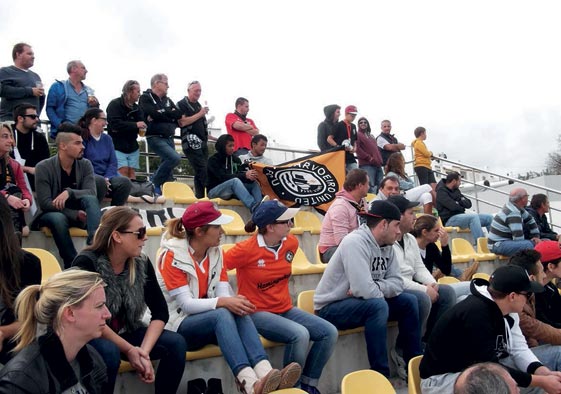
    They may have only formed officially in August, but FC Carvoeiro United has already taken its place in the hearts of the community. “The name started as a bit of a joke, but it really represents us well. We’re a mixture of Portuguese and foreign players of various nationalities who have all come together to represent Carvoeiro,” said John Wilson, the team’s treasurer who spoke to Inside along with the rest of the board: president Sandro Pacheco and vice-president Yannick Nicklaus, all of whom play for the team. A dream for many years, the story began with a group of English residents who played five-a-side football at the municipal pitch in Carvoeiro every Monday evening. That was eight years ago, and soon, a number of other nationalities had joined, including 22-year-old Yannick Nicklaus who set the wheels in motion to create Carvoeiro’s very own squad.


    “I was invited to train with another local team and thought the standard of our Monday-night football was superior. We decided to get a team together to play a friendly, and it went from there,” said the young founder. First they tried to approach local clubs before deciding that if they were going to make it, they would have to do it on their own. An arduous process followed, with all the necessary paperwork, countless documents, and of course the cost entailed in forming a football club and joining the official football federation. But, with the help of sponsors ­ “especially the local bars and restaurants, mainly Jan and Hemingways” ­ and the commitment and dedication of its members, FC Carvoeiro United (FCCU) was officially founded on August 29, 2014. Playing in the Algarve Football Association’s 1st division (4th tier of the Portuguese football league system), the team’s home ground is actually the municipal stadium in Estombar, granted to them for training and matches by Lagoa Câmara (which also supplies them with a coach for away games). Coached by Paul Atkins, one of the original Monday-night players, the
    team trains every Monday and Thursday to prepare for weekly matches every Saturday, which, since the formation of Carvoeiro United, has attracted an ever-growing group of supporters that reflects the team’s international character. With a mixture of Portuguese, English, Dutch, German and other nationalities all involved in the squad, aged between 17 and 38 from around the Lagoa council, the team’s members also have a range of experience, from semi-pros to amateurs, to those who started off in youth academies. “Basically we’re a bunch of lads who are friends,” says John, with president Sandro Pacheco emphasising that the team is a non-profit association: “The club’s fundamental values are playing for pleasure, enjoying the game and respecting others. No one here makes money. Everything that comes in goes towards our costs.” Agreeing that, so far, the team has surpassed their expectations, the boys admit their initial goal is simply getting through the first season. Still in their early days, they hope that by December they will have a strong, established unit, playing in their distinctive orange or baby blue kit. “We are really proud that we’re representing Carvoeiro. The team isn’t made from outsiders, it’s the local community, but we also really need the community’s support,” added the treasurer. “People are extremely proud of Carvoeiro, but they have to show it.” Alongside sponsors, the club is also appealing for muchneeded donations to ensure its survival. Matches cost 2.50 (with a chance to win a prize at half-time) and club merchandise is available to purchase.
    Support FC Carvoeiro United by visiting their Facebook page

    PHOTOS: ©MARIANNE SCHUYFFEL

  • ALGARVE ON THE TABLE

    ALGARVE ON THE TABLE

    POPULAR WITH SEAFOOD-LOVERS EVERYWHERE, THE CATAPLANA IS A REGIONAL CULINARY CLASSIC

    Algarve-on-the-table-1

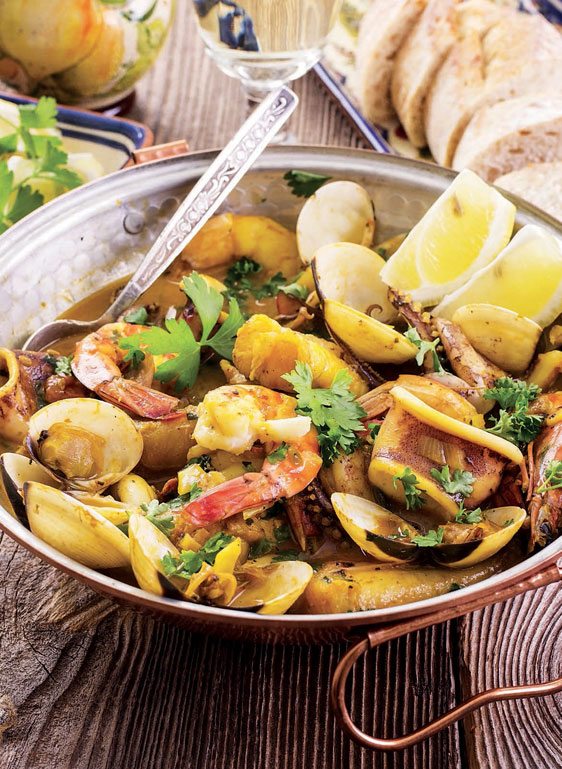
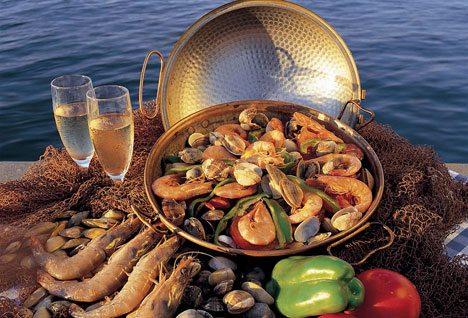
    Its appearance may be unusual, but the unique cataplana is a true symbol of the Algarve’s culinary tradition, and a delicious one at that. Named after the cookware in which it is prepared ­ a clam-shaped dish that’s traditionally made of copper ­, the cataplana is a typical Portuguese seafood dish whose origin is inextricably linked to the presence of Arabs from North Africa in the Algarve many centuries ago. A relative of the North African tagine and a forerunner of the modern pressure cooker, the cataplana comprises two clamshells joined by a hinge, which clamp down to seal the dish hermetically so the food is steam-cooked in its own juices. Originally made from zinc, the utensil was later produced in copper by master craftsmen, which is credited with distributing the heat evenly and giving the contents their special flavour. Nowadays, the cataplana can also be made of stainless steel. Inside, delicious Mediterranean flavours abound, with traditional ingredients including clams, prawns and fish cooked in an aromatic stew base of tomatoes and peppers. An extremely versatile dish, there are many versions of the cataplana here in the Algarve, but a particularly delicious recipe comprises monkfish, prawns, clams, Portuguese chouriço sausage and a medley of fresh, bright vegetables, all perfectly seasoned. The dish can be made with alternative ingredients, such as octopus, cod or even meat added to the clams and prawns, but the ideal accompaniment is always a good white or green wine. For the recipe, we recommend using a high-quality, medium to large cataplana dish, which can be purchased at any handicraft shop.

  • PEDALS & PADDLES

    PEDALS & PADDLES

    ON LAND AND BY SEA, ONE NEW VENTURE IS SHOWING THE BEST OF BOTH WORLDS

    Whether it’s the heart of the Portuguese countryside or the rugged cliffs that line the coast, the Algarve has a wealth of charms beyond the traditional tourist spots that are just waiting to be discovered. Now, two companies have joined their two different modes of transportation to share the very best of both worlds, with the launch of the unique Pedals and Paddles this spring.

    With a large fleet of bicycles for hire, including mountain bikes, city bikes and road bikes, Colin Worswick joined forces with Ricardo Carrasquinho of Ferragudo-based Algarve Freedom Kayaks to create a unique tour concept that combines all the perks of a bicycle ride with the charms of a kayak trip.

    “You’ll be riding along the cliff, looking down and wishing you were in the sea, and 10 minutes later you’re going to be on that beach that you saw from the cliff-top, cooling down in the clear turquoise waters of the Algarve.” This is how Colin, a lover of outdoor sports, sums up the concept, which was conceived to “give people the possibility to see how beautiful this place is, without being rushed around all over the place”. Having worked in various fields in his native England, Colin moved to the Algarve 12 years ago and opened a restaurant in Albufeira before realising its seasonal limitations. After investing in a bicycle hire company based in Armação de Pêra and spotting a gap in the market when it came to more personal tours in the Algarve, he approached his friend and fellow business-owner Ricardo, a marine biologist who set up his kayak company on Praia Grande beach last year, to create this original product.

    Launched in April, the new venture comprises two very different tours: a downhill tour from Fóia, the highest point in the Algarve, and a more relaxed Carvoeiro/Ferragudo circuit. The first, a more demanding full-day tour designed for more energetic clients, sees a group of at least four people cycle down from Fóia, in Monchique, to the Arade river with its manypontoons, covering around 25km in just over two hours. They will then embark on the kayaks, either after taking a water taxi to the mouth of the estuary in Ferragudo, or paddling to Sítio das Fontes in Estombar where they will have lunch.

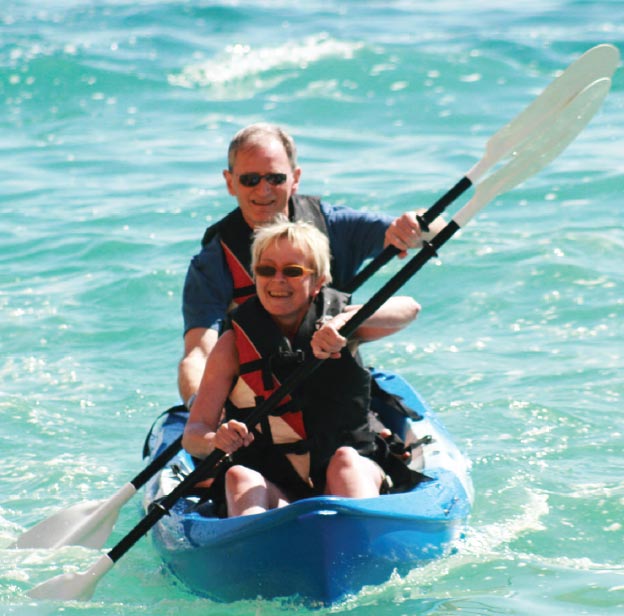
    The second tour, a half-day circuit, is a great day out that’s perfect for all the family. With plans to set off from Carvoeiro, the group (a minimum of two people) will cycle along the cliffs – avoiding roads – to Ferragudo, where, from Praia Grande, they will kayak back and stop halfway at a desert beach where lunch will be provided and where they can snorkel, swim or just sunbathe. With eight kayaks available in their distinctive blue (six doubles and two singles), Algarve-born Ricardo, who admits he feels most at home by the sea, will explain about the various rock formations and their native species along the way.

    Combining both their areas of expertise, Colin explains: “I went with him on the kayaks and he has come out with me on the bikes, and between us we’ve worked out what we think is the perfect route.” With a transfer service available, all clients are fully insured, with the organisers adding that spectators can join the tour, either in the minivan or on the boat that accompanies the kayaks. “It’s a great idea,” notes Ricardo, whose kayak tours have become extremely sought after since the company was established last year. “They are two eco-friendly sports and it’s
    great to promote the future of sustainable tourism.”

    With a relaxed approach to the tours and taking it upon themselves to provide something different for people to do, Colin notes: “One of the great things about the Algarve is that as soon as you cross the Algarve corridor, just 2km from the sea, you’re in completely rural, unspoilt countryside. We’re offering people a peaceful day, physical as it may be.” Currently in its early days, Pedals and Pedals will provide tours until the middle or end of October, depending on weather conditions. www.pedalsandpaddles.co