Category: Must Read

  • ALL THAT JAZZ

    ALL THAT JAZZ

    [inpost_galleria thumb_width=”175″ thumb_height=”175″ post_id=”897″ thumb_margin_left=”3″ thumb_margin_bottom=”2″ thumb_border_radius=”2″ thumb_shadow=”0 1px 4px rgba(0, 0, 0, 0.2)” id=”” random=”0″ group=”0″ border=”” show_in_popup=”0″ album_cover=”” album_cover_width=”200″ album_cover_height=”200″ popup_width=”800″ popup_max_height=”600″ popup_title=”Gallery” type=”yoxview” sc_id=”sc1436290731181″]


    THE ALGARVE JAZZ ORCHESTRA MAKES LAGOA ITS NEW HOME

    W hen the PS party took power of Lagoa Câmara, one of their promises was to place more importance on culture, not least because president Francisco Martins was once the city hall’s councillor of culture and sports. True to its word, the local government has been promoting various cultural events and providing much-needed support for a number of cultural entities.

    The OJA – Orquestra de Jazz do Algarve (the Algarve Jazz Orchestra) is one such entity, and now, with the backing of the local Câmara, Lagoa has become its new home. While it has always had a regional character, the orchestra has its roots in Lagos, the hometown of founder and acclaimed musician Hugo Alves who produced the Lagos Jazz Fest for nine years. But it was the 2004 edition of the event, which received more funding from the Ministry of Culture, that sowed the seed of what was to become the region’s first jazz orchestra. “It was the biggest workshop to date and I managed to put together an orchestra of pupils, within what was possible in four or five days, but it was enough to give a taster that caught the attention of Lagos Câmara.” Just a few months later, the orchestra was born with the name Orquestra de Jazz de Lagos, later becoming Associação Músicas no Sul.

    Celebrating its 10th anniversary last year, the OJA, as it is now known, comprises around 17 musicians – four trumpets, four trombones, five saxophones and a rhythm section of piano, guitar, contrabass and drums, with two singers on hand should they be needed – with mostly Portuguese members aged 17 to 81.  The orchestra has a vast and versatile selection of repertoires, including Big Band numbers (interpreting the likes of Glenn Miller and Duke Ellington), the classics of Ella Fitzgerald and Louis Armstrong, the improvisation style of New Orleans, golden Hollywood hits and even Latin jazz and bossa nova, as well as special Christmas concerts.

    Performing across the region, OJA also travels countrywide, with notable concerts including the Assembly of the Republic in 2008, A Arte de Big Band in Lisbon and Douro Jazz 2014. But although logistical issues limit their reach, they are nothing if not flexible. The orchestra also has smaller formations with different repertoires to suit each occasion, a versatility that was showcased in Lagoa to mark the International Jazz Day on April 30 and at the Carvoeiro Black & White Night in June: OJA Redux, a reduced version of the orchestra comprising between six and eight musicians; The Messy Band, a more traditional jazz band with more improv; a saxophone quartet called 4tet; and a quintet that’s more linked to the teaching side of the organisation.

    Another branch of OJA is of course the music school, which is currently based at the São José Convent. With 25 to 30 pupils of all ages and between five and seven teachers, the school is aimed at all levels, from those who wish to learn an instrument because they never got the chance, to those who are serious about becoming professional musicians and go on to Higher Education.  This year, the courses are part of the official programme at ETIC, the image and communication school based in Faro, although lessons and workshops will continue as usual in Lagoa. In fact, this educational side of music is of a huge importance to Hugo Alves, who also teaches at the Superior School of Music in Oporto. “Besides our music school, we also have an educational programme that takes jazz to schools, in partnership with the Ministry of Education. At the time [2006], it was very innovative and it had a huge impact. Today, the music being taught in schools is well-thought-out and far more interesting,” notes the musical director, who began studying music aged seven, developed his studies further aged 12 and is now an internationally acclaimed trumpet player with 25 years of experience, four albums under his belt and another on the way. “Improvisation in particular is more appealing to children and it’s amazing for their development.

    Traditional classes don’t work for everyone.” Introduced to jazz at a young age, thanks to the strong jazz community in Lagos at that time, Hugo sings the praises of this genre, whose “languages are never lost and which is always renewing itself ”, but emphasises the funding and support needed to keep orchestras like this one alive. “We can only exist if there is funding, and Lagoa Câmara believed we should be and deserved to be here. We also need people to support us; there is plenty of culture around, they just need to come find it!”

    For upcoming performances and further information, please find OJA Orquestra de Jazz do Algarve on Facebook.
  • BIRD’S  EYE VIEW

    BIRD’S EYE VIEW

    [inpost_galleria thumb_width=”175″ thumb_height=”175″ post_id=”907″ thumb_margin_left=”3″ thumb_margin_bottom=”2″ thumb_border_radius=”2″ thumb_shadow=”0 1px 4px rgba(0, 0, 0, 0.2)” id=”” random=”0″ group=”0″ border=”” show_in_popup=”0″ album_cover=”” album_cover_width=”200″ album_cover_height=”200″ popup_width=”800″ popup_max_height=”600″ popup_title=”Gallery” type=”yoxview” sc_id=”sc1436290269907″]SIT BACK AND ENJOY THE RIDE AS FLYALVOR TAKES TO THE SKIES

    When he was a child, Eduardo Ferreira would dream of flying through the mountains like a bird, which explains why, today, there is nowhere he feels safer or more at home than high above the buildings and beaches of the Algarve. He may have achieved his dream, but the 46-year-old’s wings rely on the power of an engine as well as the wind.

    Born in the mountainous area of Serra da Estrela, Eduardo is the only licensed and certified paramotor instructor in the region. Initially a paraglider, he was introduced to the paramotor – essentially a paraglider propelled by a motor – in 2000 and the advantages were clear from the start: “With paragliding you have to go to the top of a mountain, take your partner or whoever, do the flight, and then they have to come get you wherever you have landed.   And if they can’t find you, there are quarrels… It’s all very complicated!” says Eduardo, half-jokingly.

    “With the paramotor you have complete autonomy, you don’t have to rely on anyone and you can arrive right back to where you set off.”

    After qualifying as an instructor, he now provides paramotoring courses through his company, FlyAlvor, in association with the Lagos Aerodrome. A member of the Portuguese Paramotor Commission and an instructor of the Portuguese Aeronautical Federation and the Portuguese Free Flying Federation, Eduardo’s courses not only teach pupils how to fly, but also vital elements such as aerodynamics, meteorology and flight effects, before they get their licence, with exams much like a driving licence. “There is a lot of theory, because you have to know what you’re doing, and there are rules in place to ensure your safety and the safety of others,” notes the instructor, adding that the length of the course depends on each individual, who must be at least 16 (with parental consent).

    But aside from teaching others how to safely enjoy this activity, Eduardo can often be seen taking to the skies doing aerial stunts and entertainment for events, working with aerial photographers, carrying special messages for celebrations and weddings, and, on one occasion, even taking the groom to the altar.

    His longest role to date, however, has been that of Father Christmas, donning a Santa costume and flying over Portimão and Ferragudo every year since 2001 – in 2011, Santa even came complete with two flying reindeer –, while he also organises annual Father Christmas paramotor gatherings.

    With four paramotors and two trikes, specially developed for disabled passengers, a service that Eduardo introduced this year, the flyer admits there is nothing more fulfilling than taking people up in the paramotor and seeing their reaction as they take in the region from a bird’s eye view. For this, FlyAlvor offers flight baptisms, which take clients (mostly foreign tourists) over Portimão, Alvor, Armação de Pêra or Tavira and last between 15 to 20 minutes. Passengers, who are strapped into a seat in front of Eduardo, are given a helmet and mufflers and are in constant communication for total peace of mind. “I always explain that the engine will cut out once we’re gliding – and we won’t fall! It’s like paragliding; the motor is just there as a propeller for taking off.” That’s one of the beauties of paragliding, notes the Portimão resident: “You don’t need a mountain. You can take off from anywhere, as long as you have 50sqm.” Once up in the sky, the paramotor can travel up to 72km/h, depending on the wing and the wind (if wind conditions are too strong then Eduardo chooses not to fly for the comfort of his passengers, while those with diabetes are not allowed to fly). He is also quick to dispel any fears people may have. “Even if the engine breaks down, it’s just like normal paragliding. In fact paramotoring is much safer than a car!” But what makes the paramotor experience so special that clients and even his own mother  comes back again and again.

    Searching for words, Eduardo’s eyes sparkle as he tries to describe the activity that has seen him rack up more than 2,000 flight hours. “It’s just spectacular, and totally different to anything from the ground. I’ve covered the length of the Algarve, from Sagres to Spain, I’ve flown in the north of Portugal, but the best flight has to be between Portimão and Armação de Pêra. It’s an hour’s flight but it’s marvellous. The sea contrasts with the ochre cliffs, and in the springtime the greenery is just astounding.” Along with spring, the paramatorist believes autumn is another great time for flying, or the height of summer if people want to see the beaches in all their high-season glory.

    Having also provided his services for television reports, anniversary events and celebrations, and even search and rescue operations, Eduardo spends much of his time where he always dreamed: soaring high above the madding crowds.

    Prices for flights start at €60 (booking required).
    Contact 965 475 385 or find FlyAlvor on Facebook for more information.

  • THE JAILHOUSE IS RETURNING TO ITS ROOTS

    THE JAILHOUSE IS RETURNING TO ITS ROOTS

    [inpost_galleria thumb_width=”175″ thumb_height=”175″ post_id=”862″ thumb_margin_left=”3″ thumb_margin_bottom=”2″ thumb_border_radius=”2″ thumb_shadow=”0 1px 4px rgba(0, 0, 0, 0.2)” id=”” random=”0″ group=”0″ border=”” show_in_popup=”0″ album_cover=”” album_cover_width=”200″ album_cover_height=”200″ popup_width=”800″ popup_max_height=”600″ popup_title=”Gallery” type=”yoxview” sc_id=”sc1436288761176″]

    THE JAILHOUSE AN ICONIC MUSIC VENUE SINCE THE 1960s, IS RETURNING TO ITS ROOTS

    The story goes that, after months of sitting on a melody with the working title Scrambled Eggs, Sir Paul McCartney wrote the lyrics to the Beatles’ classic hit Yesterday while on holiday in the Algarve.     Whether it was in Albufeira, as sources suggest, or on the cliffs of Algar Seco, as business-owner and musician Roger Bernou believes, the fact of the matter is that, during the late ’60s, the legendary Beatle often came to Carvoeiro.

    It was a golden age of musical legends, with the likes of Cat Stevens, Tom Jones, Cliff Richard and of course Paul McCartney himself gracing this relatively unknown seaside village in the south of Portugal. And their venue of choice? A former grain mill called Sobe e Desce, which now goes under the name Jailhouse.

    Today it’s a name that everyone will recognise, but perhaps few know that this bar – one of Portugal’s first nightclubs – holds a rich musical legacy that led it to become a famous Algarvean landmark and a hub of creativity and musical genius.

    Under new ownership since last year, the new managers Roger and wife Lynne have taken it upon themselves to take the Jailhouse back to its roots as a live music venue of excellence.

    From Sobe e Desce to the Jailhouse In 1967, a few years after foreign tourists first began discovering Carvoeiro, Irish music producer and photographer Tim Motion opened a nightclub on the road just past the post office, and called it Sobe e Desce (meaning ‘to go up and down’). He soundproofed the entire venue with cork and, before long, it became the in-place for performers and music-lovers everywhere.   In those days, the club could lay claim to having welcomed some of the biggest names in the music industry, such as Cat Stevens, Lulu, Barry Gibb, Donovan and Ronnie Scott. “They wanted to go somewhere exclusive where nobody knew who they were, where they could just sit down and play their music without any pressure,” says current owner Roger Bernou.

    In the 1970s, Carvoeiro native Carlos Lopes took over Sobe e Desce to become one of the few proper nightclubs in the Algarve, welcoming Portuguese and foreign party-goers alike.  Still, Carlos, a DJ who also managed the door at the time and who now owns Casa Tilinha just down the road with his wife Domitília (known to all as Tilinha), recalls Brian Ferry coming in with his backing dancers as well as many other big names of the music and film industries – “far too many to remember”, in fact. “We never made a big deal about the celebrities who used to walk through the door at the time,” he said. “We just left them to enjoy themselves.” It was also the first time that a 17-year-old Roger, on holiday with his parents, was introduced to the bar that he would one day run.

    In the early ’80s it became Whispers, an English-run pub-style music venue, but it was when the resident musician, Dave Hedges, bought the bar that it became the Jailhouse. Dubbed “Portugal’s beacon of swing” by the Guardian newspaper in 1995, this is the era that most visitors will remember, not least because of the main man himself, ‘Jailhouse Dave’, whose music, jokes and friendly banter earned him a huge following over the 15 years that he run the bar and who, despite handing over the reins last year, still plays at the Jailhouse twice a week.

    New era for Jailhouse With extensive background in music, from performing and writing to record-producing and engineering, Roger Benou was no doubt the perfect candidate to take the reins of this iconic venue. Working with big names in genres as vast as hip hop, dance, soul, R&B, pop, and African and Brazilian music at his four recording studios in London, the Brazilian-born musician moved to the Algarve to bring up his young family around seven years ago. He founded the band Mad Cats and played gigs across the region, but soon an opportunity arose that he couldn’t refuse: to take over the Jailhouse and transform it into the live music venue it once was. Pooling his enviable network of artists and performers when he took over last summer, the Jailhouse now has an incredibly varied programme of live music every night, including blues, rock, fusion, afro-funky and disco nights, as well as ladies’ nights and the twice-weekly gigs of ex landlord Jailhouse Dave.

    Its jazz nights, in association with Cultugarve, are a particular highlight. “We have some top jazz people; the quality is absolutely astounding,” says Roger, who also takes to the stage on occasion. Praising his great staff, including manager Mark Richardson, he emphasises: “It’s a complete turnaround. We want to get it back to its roots as a great live music venue, with different styles of music and a good energy.”

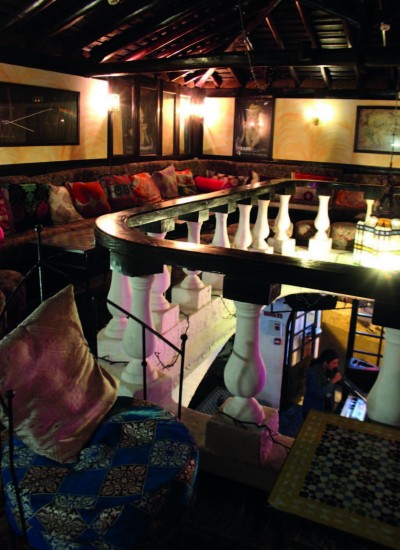
    Re-equipped with a new music system, the décor has also received a make-over, with a Moroccan lounge theme featuring authentic cushions, lamps, shishas and other details complementing the music-themed wall art.  Besides the main room that’s home to the stage, there is a further mezzanine lounge area, a covered outdoor terrace with a pool table and an outside terrace with added seating. And like the venue and the music programme, the clientele itself is equally varied. Open from 9.30pm (with happy hour until 10.30pm) and closing at 5am, the Jailhouse caters for young and old alike, including families, teenagers, tourists and locals, from live music-lovers to party-goers, until the early hours of the morning.

    Also planning to serve Portuguese petiscos and welcoming various events, the new management’s goal is clear: to return!

  • CRUNCH TIME

    CRUNCH TIME

    [inpost_galleria thumb_width=”175″ thumb_height=”175″ post_id=”712″ thumb_margin_left=”3″ thumb_margin_bottom=”0″ thumb_border_radius=”2″ thumb_shadow=”0 1px 4px rgba(0, 0, 0, 0.2)” id=”” random=”0″ group=”0″ border=”” show_in_popup=”0″ album_cover=”” album_cover_width=”200″ album_cover_height=”200″ popup_width=”800″ popup_max_height=”600″ popup_title=”Gallery” type=”yoxview” sc_id=”sc1428367144714″]

    THE GRUPO DESPORTIVO DE LAGOA NOW HAS ITS OWN BASKETBALL TEAM

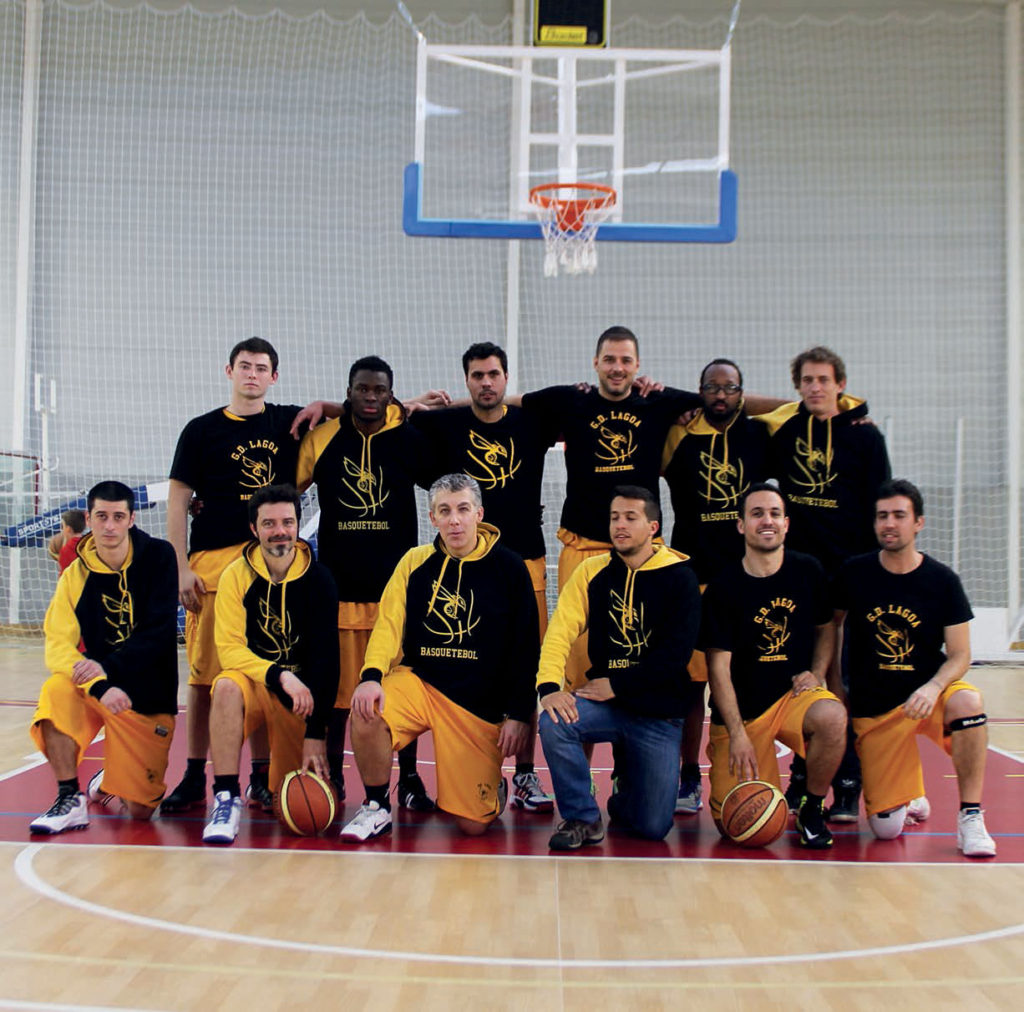
    In September 2014, they didn’t even have a ball, let alone a kit. By mid-season, they were 5th in the league. This may only be its first official season as GD Lagoa, but the basketball team now wearing Lagoa’s municipal colours has actually been around for much longer. Already veterans on the country’s basketball scene, the players once formed the ACD Ferragudo team, and took the club the furthest it had ever been in the national tables. However, when internal restructuring saw the team paying increasing costs, the members had to rethink their position and, just 10 days before the registration cut-off point, the GD Lagoa senior I men’s basketball team was born. With many of the players having represented the Ferragudo team for years ­ some since childhood ­, it was no doubt a difficult decision, and one that hasn’t come cheaply. But with the commitment and hard work of the players, vital financial aid from a number of sponsors, and the support of Lagoa Câmara (who “never expected to have their own basketball team this year”, noted player and board member Sérgio Pastrana), the club is only just beginning its journey. Granted the use of the pavilion in Parchal and now headed up by Dário Valentim (sports director), Sérgio Pastrana 18 SPORT (responsible for the financial side/sponsorships) and Pedro Castanheiro (design and marketing), all of whom are also players, GD Lagoa Basquetebol already boasts more than 40 members, split between the senior team, Baby Basket and Mini Basket (both coordinated by Dário Lopes). Every Saturday from 10.30am, coaches Rita Martins, Pedro Castanheiro, Sergio Dumanskyy, André Marzagão and José Mendes teach the sport to children aged 3 to 6 in the Baby Basket and 6 to 12 in the Mini Basket, who play in gatherings with other clubs to also help nurture social development in a fun yet organised atmosphere. “We live in a very football-focused society and basketball is such a different sport,” says Sérgio Pastrana, whose son is taught by team-mate Pedro in the Baby Basket. “Boys and girls play together and the parents come to cheer them on. The kids love it when they try it for the first time!” But perhaps the most visible side of the club is the senior men’s team, coached by Dário Valentim and which comprises players aged 18 to late 30s, most of which are Portuguese but also of English, Cape Verdean, Ukrainian and even Spanish/Norwegian nationality. The colours may have changed but the team has remained, and their performance 19 2 SPORT is no less impressive. Now playing in the 1st division ­ the third tier of the sport in Portugal ­ and placed 5th of the 12 teams playing in the Zona Sul – Grupo B division, the team brandishing the hornet as its logo trains three times a week at the pavilion, and plays weekly during the season that runs from October to June. What the club has achieved so far is no small feat, not least because, as Sérgio is keen to emphasise, these are amateur players who receive no monetary compensation. “We are an amateur team. We pay to play while other teams in the division are paid to play. One of us is a bank manager, another a nurse, another a swimming teacher, we have families, personal lives… Everything we do is pro bono.”

    As Pedro Castanheiro explains: “For us it’s a passion more than anything. We usually say we are a group of friends, each with their own lives, who come together to play basketball.” For this reason, the sponsors have been vital in securing a future for the club that started, quite literally, with nothing. Officially named GD Lagoa/CLUB NAU, other important local sponsors include Primavera restaurant, Slide & Splash and Podosaúde, but ongoing costs mean the club is constantly looking for more sponsors and those all-important donations. “This year has been about organising and establishing ourselves. The important thing now is to promote the club and create its own identity,” notes Sérgio who, at 1.98m, is the team’s tallest player. Having already hosted the first International GD Lagoa Basketball Championship last September with teams from Portugal and Spain ­ which they hope will become an annual event ­, the team’s main goal has been to promote the sport as a whole, with training sessions open to anyone who wants to join in. “It’s all in the name of camaraderie and friendship,” said the team-members. “We want to do everything we can to play and create a club for future generations.” For more information, please find G.d. Lagoa Basquetebol on Facebook.

    PHOTOS: JOANA ALCOCK

  • THE ITALIAN JOB

    THE ITALIAN JOB

    [inpost_galleria thumb_width=”175″ thumb_height=”175″ post_id=”711″ thumb_margin_left=”3″ thumb_margin_bottom=”0″ thumb_border_radius=”2″ thumb_shadow=”0 1px 4px rgba(0, 0, 0, 0.2)” id=”” random=”0″ group=”0″ border=”” show_in_popup=”0″ album_cover=”” album_cover_width=”200″ album_cover_height=”200″ popup_width=”800″ popup_max_height=”600″ popup_title=”Gallery” type=”yoxview” sc_id=”sc1428349418493″]

    FROM ITALY TO THE ALGARVE ­ INSIDE LOOKS AT THE METEORIC RISE OF THE NOSOLO GROUP

    From its humble beginnings as a small ice cream parlour that opened on Portimão’s riverside in the early ’80s, today, you can’t visit the Algarve ­ and now Lisbon, for that matter ­ without seeing the Nosolo logo somewhere on your travels. It’s a name that’s on everyone’s lips, and one that has become synonymous with delicious pizzas, poolside cocktails and summer parties with the sand beneath your feet. With at least a dozen establishments specialising in everything from artisanal ice cream and authentic Italian pizzas to sophisticated settings with the best national and international DJs, the Nosolo Group is easily one of the most successful businesses in the country. But its roots, just like those of the three Italian brothers who created it, are right here in the Algarve. It all started when Marco Lorenzi, the middle brother of the three, left his home of Bergamo in Italy to open an ice cream parlour in his Portuguese mother’s hometown of Portimão in 1982. He called it Bella Italia, which prided itself on selling ice cream using artisanal methods and local ingredients.

    As it became more successful, Marco built further infrastructures, including the Nosolo Gelato artisanal ice cream factory in Parchal, a defining move for the group that truly propelled the expansion of the brand and consolidated the market position of the Nosolo Group. It wasn’t long before his two brothers, Franco and Filippo, had joined him.

    “They are something of a triumvirate, in that their strengths and personalities are very different but also complementary,” says Raphaël Jerónimo, franchising coordinator and Filippo’s right-hand man at the group’s headquarters in Lagoa. “Marco was the pioneer; he is the one with the vision and he usually has the final say in any decisions regarding changes in the brand (…). Franco, perhaps because he is the youngest, is more linked to the image, he has a bolder approach to advertising and social media, and is always looking to renew the image. He isn’t afraid to experiment. Filippo worked for many years and helped develop his father’s metalwork company in Bergamo and so has a more industrialised approach. He was the driving force behind the group’s reorganisation, the franchising and the professionalisation of all the different branches.”

    It is this united front that has taken the group ­ formed officially in 2004 ­ to where it is today. Alongside Cletonina, the restaurant and wine cellar in Praia da Rocha which opened in 1985 and whose name is a combination of the Lorenzi brothers’ parents’ ­ Anacleto and Adelina ­, the original ice cream parlour grew to become Nosolo Italia Portimão.

    The Nosolo Italia name soon expanded beyond the municipality, with locations in Albufeira Montechoro and Vilamoura Marina, and later at Portimão Marina and Albufeira Marina. A winning formula since its inception, the restaurant concept serves authentic Italian pizzas and pastas and other specialities, as well as snacks and the now-famous ice cream made using traditional Italian recipes from fresh, local produce and which, according to Raphaël, is the “base of the Nosolo pyramid”.

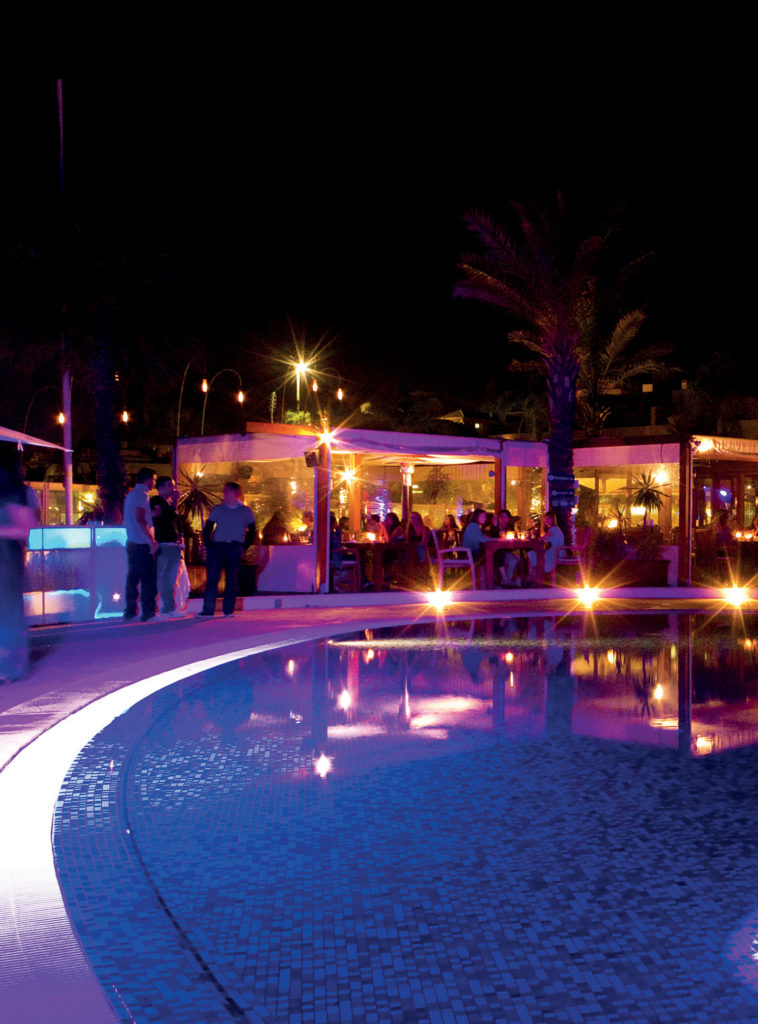
    In the group’s mission to constantly innovate, the first NoSoloÁgua space opened on Falésia beach in Vilamoura in 2001 and became one of the hottest spots on the region’s summer party calendar. However, it was the opening of NoSoloÁgua Portimão five years later that placed the brand well and truly on the map. Considered the jewel in the Nosolo crown, the poolside setting of this restaurant and bar added a touch of glamour and sophistication to Portimão Marina. A location like few others in this part of the Algarve, with an oriental-inspired décor featuring furniture and decorative pieces imported from Southeast Asia, the restaurant offers an international à la carte menu, including Portuguese, French, Mexican and Japanese cuisine, as well as an extensive snack menu. With the private beach opened two years later, flaunting a beach-chic décor, loungers on the sand and the iconic Sunset Parties, both venues offer bright cocktails and laid-back vibes by day and flashy parties filled with famous faces by night. With the glamorous Água Moments in Vilamoura and a further two Nosolo Italia franchises in Lisbon, the future is still shining brightly for the Nosolo Group. But there is more than meets the eye, notes Raphaël, and there’s a whole other world “behind the curtain” that ensures the Nosolo machine runs smoothly. The nerve centre of the whole operation, the No Solo Lda headquarters in Lagoa deals with all the company’s logistics, from IT, accountancy and marketing to international purchasing and catering, and even has an industrial kitchen for some food preparation and recipetesting. “Logistically it means we can deal with all the front lines so that each unit can focus solely on the service and the clients,” explains the coordinator. All fresh produce comes from local and regional producers, and most of the furniture and tableware is Portuguese. However, in keeping with their philosophy that “you can’t fake authenticity”, products like real mozzarella, porcini mushrooms, pancetta and flour are all imported from Italy. And while the recipe is the same, each restaurant makes its own pizza base, with the group’s pizzaiolos having even received training at Italy’s pizza academy. But beside the strict quality control, the company also takes its social responsibility seriously and values its human capital.

    According to Raphaël, Nosolo is a truly multicultural company and one that takes care of its own, with the opportunity of career progression a real prospect, providing job satisfaction and security in an industry that is notoriously seasonal. Looking to grow even further ­ although definite plans are yet to be confirmed ­, the Nosolo Group is a force to be reckoned with, driven in no uncertain terms by three brothers who have brought a taste of Italy to their mother’s homeland. “They might have fiery debates if they don’t agree on something, but to the rest of the world they are a common and united front,” sums up Raphaël. “Not many people can boast about working with family, especially for almost 33 years, and continue to grow. It’s a real achievement. There may be disagreements but the unit always prevails, and that has been true for 33 years.”

    www.nosoloitalia.com | www.nosoloagua.com

  • LIVING THE GOOD LIFE

    LIVING THE GOOD LIFE

    [inpost_galleria thumb_width=”175″ thumb_height=”175″ post_id=”708″ thumb_margin_left=”3″ thumb_margin_bottom=”0″ thumb_border_radius=”2″ thumb_shadow=”0 1px 4px rgba(0, 0, 0, 0.2)” id=”” random=”0″ group=”0″ border=”” show_in_popup=”0″ album_cover=”” album_cover_width=”200″ album_cover_height=”200″ popup_width=”800″ popup_max_height=”600″ popup_title=”Gallery” type=”yoxview” sc_id=”sc1428348460208″]

    COLOURFUL AND LARGER THAN LIFE ­ THE FUN ARTWORK OF MADELEINE VAN KLEEF

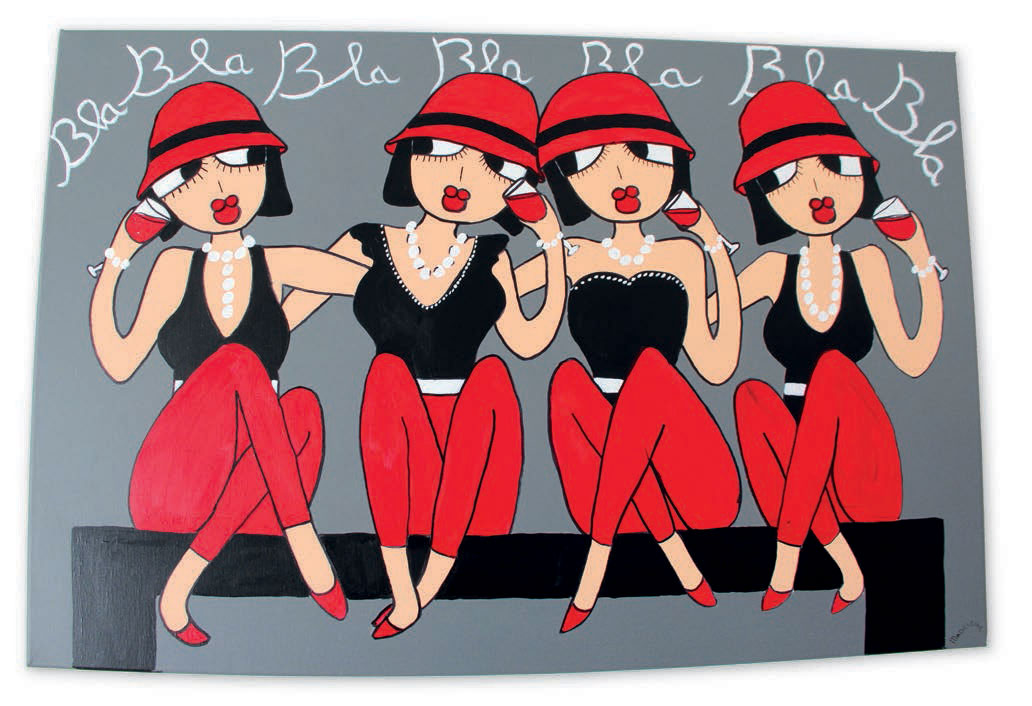
    When Madeleine van Kleef decides to do something, she does it. That much was clear when she gave up working as a secretary in her native Holland to become a beautician relatively late in life, just as it was clear when she suddenly decided to learn how to paint. Fast-forward nine years, during which time she moved to Portugal to be closer to her son’s young family, and Madeleine’s work has certainly made an impression. “I saw a nice, happy picture one day, full of colour, and I thought, ‘maybe I could do that’. I started taking lessons and looked on the internet for inspiration from different artists, and I just started painting.” W After selling her beauty farm in Holland and downsizing her business, it was her move to the Algarve that allowed her to dedicate more time to her painting. Madeleine’s work is incredibly distinctive, and her brightly coloured, full-figured characters enjoying good food, good wine and general merriment are always sure to raise a smile. And in truth, it’s not hard to see where Madeleine gets her inspiration from: “I love champagne!” she laughs. “It’s about people having a good time, friendship, drink, food, cake… My paintings are fun and colourful, everyone is having a good time. It’s what I would do!” With titles like Shall we party later?, Chocolate Party and Love is in the air, her bar and party-themed paintings in particular have been a huge hit. Using mostly acrylic, her medium of 37 2 choice, Madeleine’s subjects are generally portly with large eyes and mouths ­ “Small mouths aren’t funny. They have to be big and smiling” ­, depicted with details such as Portuguese wine, French Champagne, lobster, tea and cakes. “I started painting really fat ladies, but they have got slimmer over the years,” admits the artist, a true lady of leisure who paints at her home in Carvoeiro where she lives with her partner. Another series that has received much interest is ‘Bla Bla Bla’, a more French-chic style that’s “a bit more serious with slimmer women, but they do talk a lot”, explains Madeleine, who usually opts for red, black, white and grey in this particular series. Receiving various commissions, particularly of bar scenes ­ one such painting is currently hanging up at Carvoeiro Bar ­, her work has been displayed at the Arte Algarve gallery in Lagoa and was one of the most appealing stands at the gallery’s summer art exhibition along the quay at Ferragudo. “It’s great to see people walking past, stop, and suddenly a big smile appears on their face.” Having recently started taking lessons in oil-painting to “understand how to work with it”, Madeleine has also experimented with other styles, but admits she prefers her larger-than-life characters to more realistic portraits. When asked if moving to the Algarve has helped develop her work, Madeleine ponders for a moment: “In Holland everything is behind closed doors. Here, because of the weather, everyone is outside, they go to the beach, have parties…” She smiles, “I have a good time in Portugal”.

    For more information, contact 912 061 936 or find Madeleine Art on Facebook.