Category: Must Read

  • French connection

    French connection

    [inpost_galleria thumb_width=”175″ thumb_height=”175″ post_id=”1008″ thumb_margin_left=”3″ thumb_margin_bottom=”2″ thumb_border_radius=”2″ thumb_shadow=”0 1px 4px rgba(0, 0, 0, 0.2)” id=”” random=”0″ group=”0″ border=”” show_in_popup=”0″ album_cover=”” album_cover_width=”200″ album_cover_height=”200″ popup_width=”800″ popup_max_height=”600″ popup_title=”Gallery” type=”yoxview” sc_id=”sc1441268581437″]

    Contemporary artist Pascale C. Fey creates a world of self-discovery

    There are two things that Pascale Chaleyssin-Fey must do before she brings to life her appealing works of art: the first is to turn on some music or perhaps an audio book, and the second is to paint her canvas black before layering on blocks of colour.

    It seemed fitting that, as we walked into her studio – a bright room filled with paints and canvasses at her home in Vale d’El Rei – on one August morning, the romantic sound of the accordion could be heard playing from the radio, evoking images of a bohemian French riverside café.

    Born in La Rochelle, France, Pascale, a graphic designer by profession, moved to Portugal with her family two years ago. It’s a country she has always loved, having spent family holidays here since the age of 8, and the quiet surroundings of Caramujeira provide the ideal setting for the soft-spoken artist to create her incredibly successful paintings. But nature is not what inspires her: “The city inspires me. Things I see on websites, or even advertisements on a bus. I see a picture and start to transform it in my mind. I don’t paint nature; I paint people, situations…”

    With acrylic as her medium of choice, Pascale’s dream-like paintings have become larger over the years, as has the amount of colour she uses in her work. “At the beginning I just used grey, black and red. Now I want to use more colours, because I’m happy to live here!”

    A sort of therapy for the contemporary artist, one thing that hasn’t changed is Pascale’s companion, Georges, a mysterious character that appears in many of her paintings and has proved to be extremely sought-after by gallerists and art-buyers. Always shown from the back, donning a large grey overcoat and hat, Pascale explains: “He is anonymous; I want him to be everyone. At the same time he is me, my father, everybody. He can say everything I can’t, he is a reflection of my soul.”

    The artist’s “avatar” is depicted walking in the rain, riding a bicycle, touching the stars or on a zebra crossing as he explores the world, with elements of colour and whimsy added in the form of a single balloon or a sea of umbrellas, for example. The only painting showing Georges’ face is particularly special to Pascale, who points to a picture hanging on the wall behind us. “That is my father. I will never sell that one.”

    While Georges is very much in demand by galleries, the petite French painter has also developed other popular series, including the angel-inspired La part des anges, the imposing La Dérive des Continents, the shadowy Jeux d’Ombre, Montée des Eaux, which features a series of buildings standing on stilts above rising water, and the introspective Quis suis-je?, which sold out in a single day.

    Now represented by the prestigious ArtCatto gallery in Loulé, Pascale has exhibited her work at the Tivoli Carvoeiro hotel, the S. José Convent and Arte Algarve, both in Lagoa, alongside several exhibits in her native France. Upcoming exhibits include shows at the Real Compromisso Marítimo in Ferragudo in September and Casa Manuel Teixeira Gomes in Portimão in November. In the meantime, the artist’s work can also be purchased in a much smaller form: working with her son Antoine, Pascale creates house name plaques which feature her quirky and very appealing designs.


    www.cfeypascale.wix.com/fey

    Text Cristina Alcock

    Photos Joana Alcock


  • Taste for Salsa

    Taste for Salsa

    [inpost_galleria thumb_width=”175″ thumb_height=”175″ post_id=”1075″ thumb_margin_left=”3″ thumb_margin_bottom=”2″ thumb_border_radius=”2″ thumb_shadow=”0 1px 4px rgba(0, 0, 0, 0.2)” id=”” random=”0″ group=”0″ border=”” show_in_popup=”0″ album_cover=”” album_cover_width=”200″ album_cover_height=”200″ popup_width=”800″ popup_max_height=”600″ popup_title=”Gallery” type=”yoxview” sc_id=”sc1441281276658″]

    Classic Cuban cocktails & Salsa with Italian hospitality

    There’s nothing quite like the sound of Salsa music to lift your spirit and transport you back in time to the bustling streets of Havana, Cuba in the mid-twentieth century.

    Aramis Reyes, a native Cuban and professional dance instructor met his wife Verena Musanti in her hometown of Turin in Italy. The couple shared a passion for dancing and made the decision to move back to Havana where Verena could take an intensive dance instructors course and gain the necessary qualification to become a teacher.

    Upon arriving in Havana, Verena found that she became captivated by the city’s vibrant atmosphere and felt a particular bond with Salsa.

    With her course completed, the couple began to think about where they would be best suited for the future. Due to a family connection, they chose Ferragudo and formed their dance group, Salsa & Sapori in 2001 in the Centre for Languages, Culture and Communication (CLCC) in Portimão to promote Cuban Salsa (and other Latin rhythms) in the Algarve. They were astounded when more than 50 students turned up for the first class.

    Verena joked, “I honestly think the fact that Aramis didn’t speak the language was a hit with the ladies. On a serious note though, it encouraged the students to absorb the music and not be distracted by verbal instruction, which gave great results. We soon felt that the dance group was not so much a class but a meeting of friends”.

    The dance group grew across the Algarve, with weekly classes from east to west becoming more and more popular.

    The couple began to perform shows, attend events in the summer season in front of large groups of tourists and even started travelling further afield to other regions of Portugal and abroad. Such was the demand for Salsa and Latino music, Aramis morphed into DJ Aramis, playing in many of the Algarve hotspots of the time, including Manoel’s Jazz Club and The Bote in Carvoeiro.

    Their Mediterranean and Cuban characters, and professional and personal relationship make them the perfect hosts for their new project, Salsa & Sapori – Cuban Music Bar. It was a natural choice, which originated from the couple’s roots and young family commitments. They have brought their love of Salsa dancing, entertaining, eating and drinking together in an intimate corner property, owned by Jose Mourinho’s father, just off Ferragudo harbour.

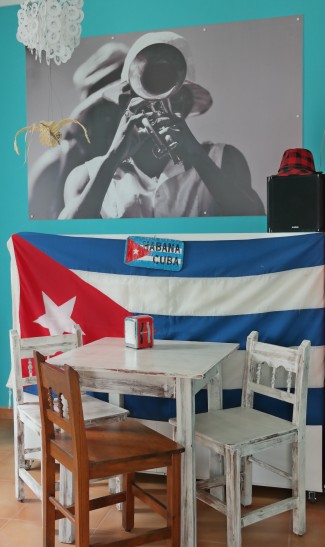
    Salsa & Sapori opened it’s doors in April 2015, revealing a brightly painted bar area with large Cuban images decorating the walls and hand-distressed furniture giving a classic Cuban feel.

    Salsa and Latin music pour out onto the street enticing people inside, where a warm welcome awaits and the drinks keep flowing until the early hours. Smiling, Verena explained, “We offer everyone a small tapas with each drink. We really want people to feel welcome and enjoy our little slice of Havana”.

    “We never know when the dancing will start. More often than not, the tables and chairs end up outside on the terrace and the bar area turns into a dance floor where we usually end up choreographing a routine with willing participants. Most people do end up joining in but we certainly would not force anyone to dance. Some people are more than happy in their seats, tapping their feet”.

    With big plans for the future they are already taking reservations for private dance classes in the bar with one-to-one, group and even couples coming for pre-wedding dance lessons. The plans also include an extended menu to showcase several Italian favourites, daytime opening, parties and events.


    Tel: 282 483 214

  • Freestyling in Ferragudo

    Freestyling in Ferragudo

    [inpost_galleria thumb_width=”175″ thumb_height=”175″ post_id=”1077″ thumb_margin_left=”3″ thumb_margin_bottom=”2″ thumb_border_radius=”2″ thumb_shadow=”0 1px 4px rgba(0, 0, 0, 0.2)” id=”” random=”0″ group=”0″ border=”” show_in_popup=”0″ album_cover=”” album_cover_width=”200″ album_cover_height=”200″ popup_width=”800″ popup_max_height=”600″ popup_title=”Gallery” type=”yoxview” sc_id=”sc1441289306523″]

    Metro Bikes adds a twist to bespoke bicycles

    Moving down from the hills of Monchique to Portimão at the age of 12, Sérgio “Monchique” Gonçalves began to notice that he was spending most of his pocket money on bicycle repairs. He realised that it would be prudent to learn how to fix his own equipment and save his money to upgrade his bike. His dedication paid off and he soon started to fix his friends’ bikes, which stood him in great stead in the future.

    It was soon evident that he was dedicated to his BMX and loved spending hours perfecting stunts on his bike, as many young boys did, but he felt a real affinity with his bicycle and refused to give up. The bumps and scratches from the many falls only gave fuel to his determination and made him follow his dream.

    People began to realise that he was very serious about his hobby and, with support from his friends and family, he went on to become a world champion in BMX flatland categories (flatland is a freestyle BMX riding style performed on smooth flat surfaces and is sometimes described as a form of artistic cycling with a blend of breakdancing). With BMX titles including world champion (Flatland Master) in 2000 in Cologne, Germany, and three times national champion (also in the Flatland Master category), it was clear to see that this young man from Monchique had a great talent and a real understanding of his chosen sport. But with his university days coming to an end, it was time to leave these glorious times behind and join the rat race. After 10 years conforming to the 9-to-5, Monday-to-Friday working week, he realised life wasn’t filling him with joy, so he took the bold move to leave his steady job, listen to his heart and create his own company. And so, Metro Bikes was born of a combined passion for bicycles and his homeland of Portugal.

    Predominately an online store which sells custom bikes and accessories, it has the added bonus of having a showroom located in the garage of Sérgio’s home in the picturesque village of Ferragudo, allowing clients to arrange an appointment to see some of the fantastic options available first-hand and discuss their specific requirements in person.

    Building a large variety of bespoke projects that vary massively in price and, of course, appearance, Sérgio loves the diversity of his chosen profession – the core elements of the business are BMX and retro design, renovation and accessory sales – and complete customer satisfaction is his main objective. With a huge amount of options including cork coatings, various hub brake systems, leather seats, hand-painted finishes, coloured spokes, trims, handles and chains in every colour of the spectrum to choose from, having your very own bike made is actually quite accessible. Prices start from €300 for the vintage styles, but of course, depending on the clients’ requirements and imagination, costs can climb up into the thousands.

    “The use of hub brakes is becoming very fashionable,” notes Ségio. “They have two main advantages: one being aesthetic, in that there is no need for brake handles on the bikes frame, making it more slimline, and the other being cost. Brakes and gears are the most expensive core element in cycling and the things that tend to go wrong most often, which will incur additional maintenance.”

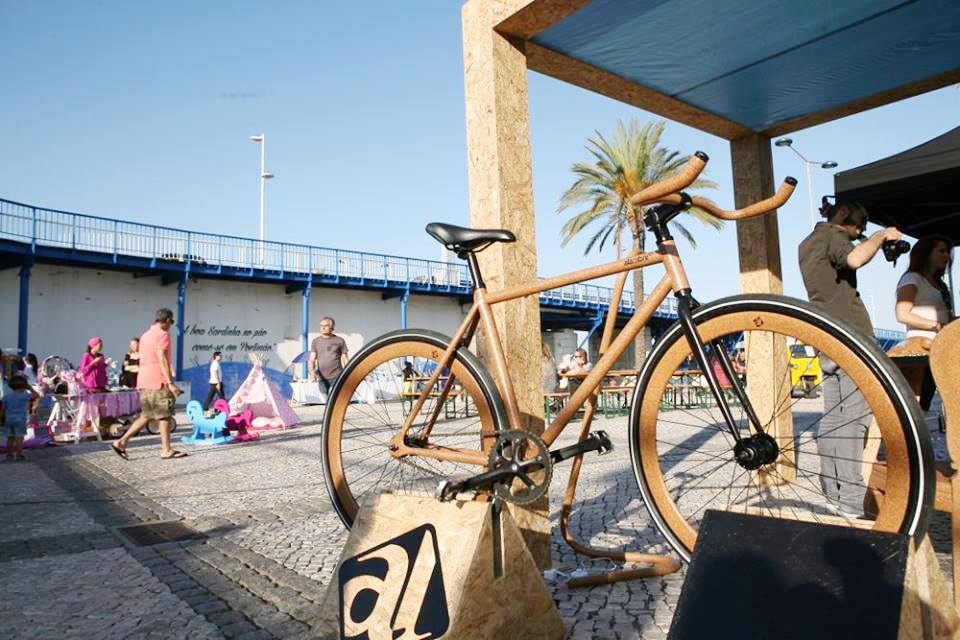
    A recent collaboration between Portimão-based Alambre Exclusive Furniture and Metro Bikes also allowed a few clients to have a really unique finish using the wonderful, natural, local resource that is cork. One Dutch client requested the whole frame of his custom bike be covered in cork, and Sérgio had the handles of one of his showroom bikes wrapped in it. He often displays the model with the cork-wrapped handles in one of the stores of Repto, a Portuguese clothing brand, in Portimão or Vilamoura. This synergy between urban fashion and Portuguese tradition seems to work very well and is becoming more and more popular with the online market boosting its reach.

    Other recent projects have included a 1950s bicycle that was passed down the generations and made its way into the workshop. “The current owner wanted the cycle restored to its former glory with a few subtle, modern twists,” notes the former BMX world champion, and hopes that this example of the sleek 1950s style will be handed down through future generations for a long time to come.

    Keeping the retro theme going, Sérgio is currently restoring an American 1980s Honda CB650 from scratch in his spare time, which will take pride of place in his two-wheeled collection.

    Always happy to jump on his bike to show off his skills, the Ferragudo resident loves to reminisce about his old BMX days and takes every opportunity to help organise events and pass on his skills to upcoming enthusiasts.


    www.metro-bikes.com

  • Made in Portugal

    Made in Portugal

    [inpost_galleria thumb_width=”175″ thumb_height=”175″ post_id=”1023″ thumb_margin_left=”3″ thumb_margin_bottom=”2″ thumb_border_radius=”2″ thumb_shadow=”0 1px 4px rgba(0, 0, 0, 0.2)” id=”” random=”0″ group=”0″ border=”” show_in_popup=”0″ album_cover=”” album_cover_width=”200″ album_cover_height=”200″ popup_width=”800″ popup_max_height=”600″ popup_title=”Gallery” type=”yoxview” sc_id=”sc1441268163768″]

    Local producers take canned fish to a new level

    Canned fish became fashionable a few years ago with gourmet cafés and shops popping up all over Portugal, with some only supplying canned fish products and creating inventive ways of serving them.

    To reflect its rising popularity, an artisanal “canned fish” production facility opened in July of this year. Saboreal is the brainchild of three entrepreneurs with the collective vision of keeping everything as fresh, sustainable, handmade and local as possible.

    Vincent Jonckheere, 34, a Belgian professor of hospitality economy, Manuel Mendes, 30, a pharmacist and André Teixeira, 28 a fishing vessel owner, both Portuguese, formed their company and began looking for suitable premises. After much deliberation, they found the ideal site in Parchal, not far from the old Portimão bridge. It was a logical choice, as sardines and mackerel arrive directly from the fishermen’s boats into the production facility, guaranteeing the freshest possible product.

    The majority of the ingredients used in production are sourced within a 20-30 kilometer radius of the Parchal factory. Garlic, carrots, lemons, onions, olives, almonds, coriander, dried tomatoes and sea salt are prepared on site ready for “canning day” and stored in the refrigeration area until required.

    Vincent explained “We are effectively a three-man operation. We select the fish ourselves, clean and prepare them in our purpose-built facility – where we ensure that each fish passes our quality control a second time – before preparing them in a special Portuguese-built oven, which rapidly cooks the fish while maintaining the flavour, colour and texture. Then we fillet each fish by hand to make a batch of Tapas.”

    The recipes were conceived after months of testing, experimentation and market research. The results are natural and flavoursome – the very essence of the Algarve.

    The trio decided to use glass containers, Manuel Mendes told us “the jars lend themselves to a handmade image, which is vital to convey. Cans also need much greater industrialisation and a higher volume of fish, which is not our goal. Our line handles less than 100 kilograms of fish a day and that just wouldn’t warrant acquiring the machinery to make the cans”.

    Andre adds, “it’s important to the consumer to be able to see the quality of the product that they are buying”.

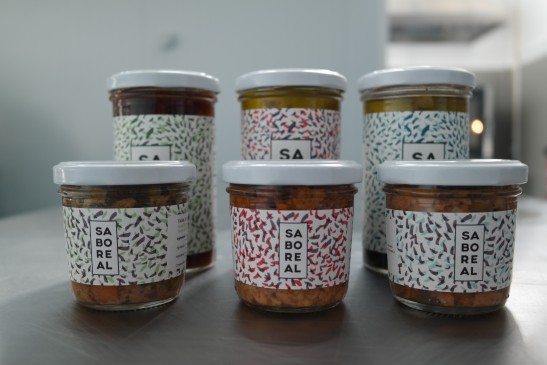
    The glass jars are sterilised in a large cleaning vat in the preparation zone where there is a small window of time to fill each of the jars by hand with the fresh fish mixture. The sterilisation process, called “autoclaving”, creates a vacuum seal inside the glass jars, enabling the contents to have a shelf life of around three years. Once the caps have been fitted, the labels are affixed to the jars by hand, packed and ready for distribution.

    Saboreal currently produce three varieties of fish tapas, sardines with sun-dried tomatoes, mackerel with almonds and green olives, and horse mackerel with carrot and coriander, which are available in small jars. Whole fillets of sardines, mackerel or horse mackerel preserved in extra virgin olive oil are on sale in larger jars.

    An animated Vincent exclaimed, “We believe in handmade products. Working with our hands enables us to produce a product with a unique flavour and quality. We place great value in using the skills of man rather than heavy machinery. We are firm advocates of local and sustainable products. To make good products we need good ingredients, so we use local producers to get them.”

    The operation runs like a well-oiled machine with the drive and determination of each of the three owners evident at every stage of the process. They are passionate and focused on pushing their venture onwards and upwards with talk of expanding into tuna part of their plans for the future.

    Saboreal Tapas are available from carefully selected retailers in the local area, Earth Shop & Cafe in Carvoeiro, Da Nossa Terra em Alvor Casa Grande in Ferragudo and Maria do Mar in Portimao.


    Find them on Facebook: ConserveiraSaboreal


  • Tangerine Gin

    Tangerine Gin

    [inpost_galleria thumb_width=”175″ thumb_height=”175″ post_id=”947″ thumb_margin_left=”3″ thumb_margin_bottom=”2″ thumb_border_radius=”2″ thumb_shadow=”0 1px 4px rgba(0, 0, 0, 0.2)” id=”” random=”0″ group=”0″ border=”” show_in_popup=”0″ album_cover=”” album_cover_width=”200″ album_cover_height=”200″ popup_width=”800″ popup_max_height=”600″ popup_title=”Gallery” type=”yoxview” sc_id=”sc1436290151415″]

    Introducing the only gin made in the Algarve, by Algarveans

    There is no drink quite as fashionable as gin right now.

    A Dutch invention that’s quintessentially English at heart, the spirit once associated to middle-aged, middle-class drinkers in the form of the classic gin & tonic has exploded to become Portugal’s drink du jour.

    In the last couple of years, gin bars have been popping up across the country, with an increasing number of gin experts serving carefully prepared concoctions in balloon glasses to various generations of Portuguese and international drinkers alike. But “the perfect serve” is more than a fleeting trend and Portuguese businesses have taken notice. Today, there are a number of gins produced here in Portugal, but only one of them is made right here in the Algarve with products that best represent the region: Tangerine Gin.
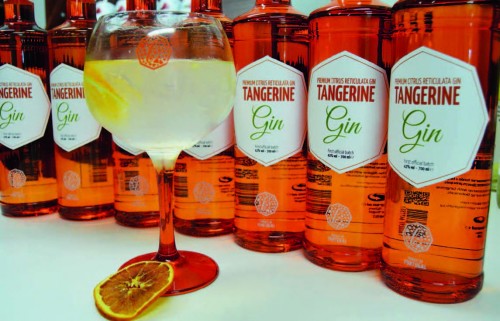
    Presented in a distinctive orange bottle bearing the words ‘Premium Citrus Reticulata Gin’, Tangerine Gin is the result of two years of development, the brainchild of Portimão native Eduardo Peixinho Reis. It was when he joined forces with local producer Luís Sequeira, the man behind the Talurdinha aguardente firewaters and liqueurs in the village that has been distilling as far back as 1747, that the Algarve’s first and only gin was born.
    It’s in a distillery between Lagoa and Silves that Luís Sequeira produces this citrusy gin, first launched in late 2014. London dry in style, it is triple distilled in copper steam boilers, with nine different dehydrated botanicals added to the spirit: juniper, tangerine, orange, lemon, almond, black pepper

    (the only botanical not from Portugal), liquorice, angelica and coriander seed. Still in its early days as a gin-maker, the distillery can produce 30,000 litres, a figure that can increase depending on market demands.
    “The gin trend isn’t a global thing, but it has become huge in some countries including Portugal, so producing a gin was inevitable,” explains Eduardo, a food engineer who also teaches at the Hospitality School in Portimão. “We had to set it apart from London gin; we can’t compete with all the English gins so we had to create a different product that also promotes the Algarve and its own products. From the start, the idea was to produce an aromatic product with a different look.”
    With 42% alcohol, the gin is extraordinarily versatile, according to the producers, and there are many debates as to the best way to serve it. Eduardo recommends serving it with tonic and a slice of orange – or just the zest if it’s sweet enough – or freshly squeezed orange juice (“using Silves oranges, of course!”), coriander, lemon or basil. “It can also be drunk straight as it’s very easy to drink, and it’s amazing in cocktails,” adds the Algarvean.
    Speaking from the distillery’s tasting room, which is open to visitors, the team explains: “We have two big advantages here. First, that our distilling tradition dates back to the 18th century – in fact the Algarve is the region that has been distilling the longest, a tradition that comes from the Moors –, and second, our microclimate and temperature, which gives us everything, aromatic plants and other ingredients.” They note, however, that the Algarve has one handicap when it comes to gin production: it doesn’t have juniper, which only grows at high altitudes. To produce Tangerine Gin, the junipers are brought in from the Serra da Estrela mountain range.
    Bearing the stamp ‘Product of Portugal’, which reflects Eduardo’s belief that we should promote the country and the Algarve through its unique products and experiences, the gin was also created in collaboration with some of the region’s beverage professionals, whose feedback helped perfect the final recipe. “Their input is in the genesis of the product today, they all left their stamp. So you could say it really is a product of the Algarve through and through.”
    As well as in bars and restaurants, Tangerine Gin is available at supermarkets and wine shops across the Algarve, including Intermarché in Carvoeiro and Rei das Praias Boutique in Ferragudo (RRP around €25).

  • Casa Tuia

    Casa Tuia


    [inpost_galleria thumb_width=”175″ thumb_height=”175″ post_id=”926″ thumb_margin_left=”3″ thumb_margin_bottom=”2″ thumb_border_radius=”2″ thumb_shadow=”0 1px 4px rgba(0, 0, 0, 0.2)” id=”” random=”0″ group=”0″ border=”” show_in_popup=”0″ album_cover=”” album_cover_width=”200″ album_cover_height=”200″ popup_width=”800″ popup_max_height=”600″ popup_title=”Gallery” type=”yoxview” sc_id=”sc1436289888033″]


    Glamping has never been more luxurious, as Inside discovered.
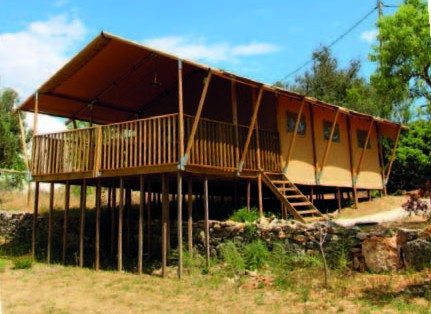
    In peaceful surroundings, standing high above the ground on wooden stilts and appointed with authentic Balinese furniture, four charming glamping tents ensure that being closer to nature has never been more luxurious. You would be forgiven to think that we’re talking about an exotic, far-flung destination, but thanks to the vision and ingenuity of one Belgian couple, a new definition of rustic luxury can be found right here in the Algarve, just outside Carvoeiro.
    The brainchild of Olivier Beliën and Kim Sterckx, Casa Tuia has redefined the concept of glamping, in what previous guests have described as “Out of Africa meets Bali in the Algarve”. The safari-like tents, which cater for four to six guests, sit within a 3.5-hectare plot that overlooks vineyards close to Intermarché supermarket, but the tranquil setting allied with clever interior design and welcoming hosts, adds soul to a location that feels like it’s a million miles away.

    Opened earlier this year, the idea, according to the founders, is to provide an experience of being closer to nature and enjoying the outdoors but with luxury at its core – picturesque canvas tents hold real, comfy beds, a kitchen (with fridge-freezer and microwave) and a bathroom, with lavastone sinks and even a luxury hydromassage shower complete with music and lights.  Outside, the terrace features outdoor cooking facilities, a dining table and sumptuous bean bags that embody the very definition of al fresco living.
    While the glamping concept had always been in the couple’s plans, it was only after they found a unique plot on the outskirts of Carvoeiro that the rest of the project developed. “Initially we wanted to make houses in the ground, but when we found this plot, everything changed.

    We had this big building and we had to do something with it,” explains Kim, whose background in decoration and interiors was key in designing Casa Tuia. In fact, the project really is the result of the couple’s blood, sweat and tears, as Olivier, who ran a construction company for 10 years in their native Belgium, built much of what can be seen here, from the large container that is home to the communal bar, to the beds, doors and wardrobes made from authentic Balinese wood.
    The result was three beautifully furnished apartments (two with double bed and bunk-bed and one with a double bed and two singles, with the possibility of adding a further two single beds to cater for six people), each comprising a fully equipped kitchen with dishwasher and coffee machine, a lounge area, an elegant bathroom with large walk-in rainfall shower and a private terrace.

    Guests staying at Casa Tuia also benefit from a large outdoor swimming pool and sun loungers, while the lounge bar is the perfect meeting point should they choose to mingle with their fellow guests, whether it’s a relaxed drink or an informal barbecue or pizza night.


    While it only opened its doors in the spring (August is now fully booked), Casa Tuia has already welcomed countless nationalities, with guests aged between 25 and 60, including young families and older couples who are well catered for in the winter months for long-term rentals.
    But while the couple’s passion for Bali, where they have spent many family holidays, can be seen in every piece of furniture and decorative item at Casa Tuia, from the Balinese umbrellas right down to the bath and bed linen, their relationship with Portugal was an altogether more fortuitous affair. “Kim always wanted to move abroad and had had enough of the hectic lifestyle, while I was happy to stay in Belgium,” explains Olivier, who soon changed his mind when they discovered Portugal three years ago. Within one year, they had sold their house and moved to the Algarve with their two young children, and after narrowing down their search on the back of a motorcycle, they chose Carvoeiro as their home.
    With a complementary car rental business – Retrorent offers two Meharis and two 2CVs, at the disposal of guests and the perfect way to travel during the summer –, Kim and Olivier have plenty of plans in store for Casa Tuia, including a children’s playground, further relaxation areas, an oriental-inspired wellness area with massage and sauna, and eventually three or four more apartments.
    For now, at least, they are concentrating on what makes this ‘Out of Africa meets Bali in the Algarve’ experience so sumptuously special: nature, luxury and nothing but good vibes.

    www.casatuia.com