Category: Must Read

  • Live like a local

    Live like a local

    [inpost_galleria thumb_width=”175″ thumb_height=”175″ post_id=”1292″ thumb_margin_left=”3″ thumb_margin_bottom=”2″ thumb_border_radius=”2″ thumb_shadow=”0 1px 4px rgba(0, 0, 0, 0.2)” id=”” random=”0″ group=”0″ border=”” show_in_popup=”0″ album_cover=”” album_cover_width=”200″ album_cover_height=”200″ popup_width=”800″ popup_max_height=”600″ popup_title=”Gallery” type=”yoxview” sc_id=”sc1448996618168″]

    Enjoying the best for less

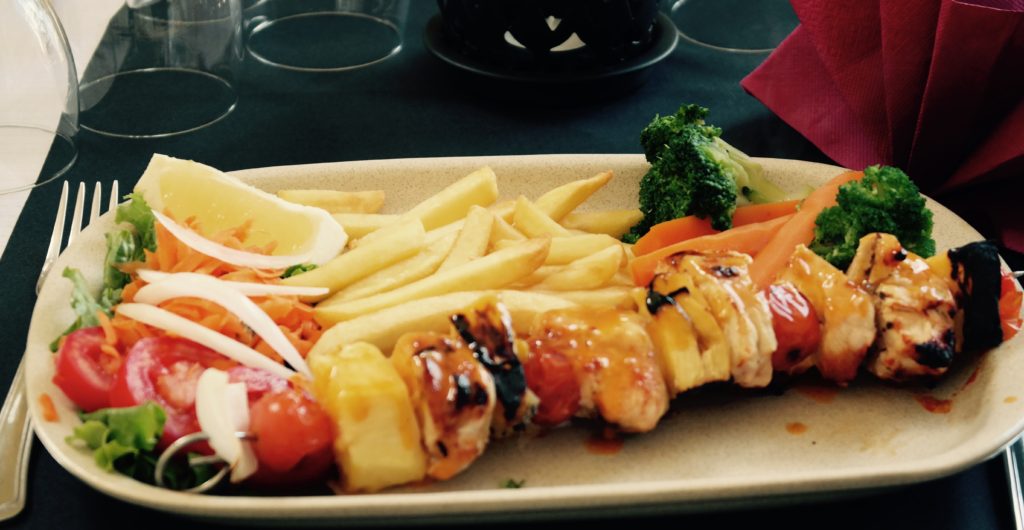
    The staple ingredients in the Portuguese diet are chicken, pork, fish, vegetables, salad and wine, which are thankfully still easily accessible to everyone at a good price. Many restaurants prepare a special lunchtime menu called “Prato do Dia” (Dish of the Day) and offer a decent variety of meat or fish dishes as part of an all inclusive menu for as little as €7.

    The “Prato do Dia” was originally introduced for the country’s workers to ensure that they had a hearty meal to get them through the day. Thankfully, it also made economic sense, so the tradition continues to this day and has evolved to meet the demands of the mainstream market. Most establishments serving the Dish of the Day follow the same format: bread, butter, pate and olives, accompanied by a main course, dessert, a drink (some venues include a bottle of wine for 2 people) and coffee for surprisingly good value, from €7 to €10 for everything.

    In Carvoeiro there are a number of eateries to enjoy the Dish of the Day. Vimar is the most central restaurant with a €9.50 lunch including a starter. They also offer an all-inclusive evening menu at a slightly higher price that is available every day. On the outskirts of the village, A Tasquinha features a pleasant menu with a fresh salad or starter and liqueur thrown in from Tuesday to Friday. Escondidinho, Ponto de Encontro, O Branco and Jophil are all located just outside of the village yet are still easily accessible. Further afield, there are excellent options in and around Porches with A Rampa and Tia Teresa proving very popular with the locals, while in Ferragudo you will find Portarade in the main square.

    The aforementioned restaurants cook the traditional menu where everything is included. However, some diners may find a three course meal too filling at lunch time. For lighter dining alternatives, Café Fino have a meal deal which includes a drink, soup and a meal for €7.50. Tony’s offer a burger or bifana meal deal as another option at €4, or €5 for a main meal. The Wolf has a 2 course lunch with a drink and coffee for €15, Pimenta Preta in Palm Gardens have a 2 course freshly prepared menu for €13 (no drinks included) and even the Carvoeiro Tandoori have a main meal with rice and a drink for €9.99.

    So, enjoy the beautiful winter days sitting in the sun and soaking up the atmosphere. Savour an appetising lunch with a glass of wine and live like a local.

  • Made with love

    Made with love

    [inpost_galleria thumb_width=”175″ thumb_height=”175″ post_id=”1294″ thumb_margin_left=”3″ thumb_margin_bottom=”2″ thumb_border_radius=”2″ thumb_shadow=”0 1px 4px rgba(0, 0, 0, 0.2)” id=”” random=”0″ group=”0″ border=”” show_in_popup=”0″ album_cover=”” album_cover_width=”200″ album_cover_height=”200″ popup_width=”800″ popup_max_height=”600″ popup_title=”Gallery” type=”yoxview” sc_id=”sc1448996921457″]

    Bespoke, natural and Portuguese

    In 2009, master craftsman Jose Manuel “Alambre” Bailhote sat with his two sons, Marco and Paulo, thinking about ways to move their furniture production business forward. Eldest son Marco proposed the novel idea of using cork.

    Under their father’s watchful eye, Marco and Paulo started to experiment with different bonding aids and techniques. Jose continued to make his bespoke furniture pieces, while his sons began to put the cork coating side of their business into practice from their workshop in downtown Portimao.

    When Jose unveiled the first piece to his sons, they were astonished with the result. Paulo told us, “My father had been working on an old chair, which he completely coated with cork sheeting. He presented the chair to us and we were stunned. The quality and beauty of the finish was breathtaking. We were really excited and started to think of items that we could coat with cork, soon realizing that the list was more or less endless.”

    Cork is one of Portugal’s provincial treasures. Elegant, classic, luxurious and impermeable, this valuable natural resource was the perfect material to launch the new brand.

    As they began to get to grips with the limitations of cork coating, they realized that cork’s durable and impermeable qualities would be perfect for the handlebars on bicycles. Luckily, the brothers had connections in the cycling industry and contacted their friend Sergio at Metro Bikes in Ferragudo. Sergio saw the potential in a collaborative effort and instantly agreed to a joint venture, where he would supply bicycle parts and the newly formed Cork Coating division of Alambre would coat the pieces in cork. The successful joint venture has resulted in more and more people ordering cork finishing to their custom bikes.

    Paulo explained: “We tried so many different objects. With the aid of a 3D printer, we started to make small nautical themed anchors, fish key rings and fish bone trinkets to sell at the Lota Cool Market in Portimao, where we were exhibiting our new range of cork-coated items. The small pieces where more for people to be able to feel the texture and offer something cute and portable to take away from the market. This isn’t really our main production line, they were just for fun.”

    Their presence at the market was proving popular and people were enthusiastic about the cork-coated telephone, typewriter, briefcase, chairs, helmet, lamps, USB pens, bottle openers and star of the show, the cork-coated bicycle.

    Then, tragedy befell the family. While Marco was exhibiting the bicycle at the market, he fell unconscious and subsequently died from a heart attack at the tender age of 36. Following Marco’s death, Jose and Paulo picked up their tools again, and in a touching tribute to Marco, turned their focus to pushing forward with the brand using cork wherever possible.

    Speaking to Paulo about their future plans, he told us, “Our primary focus is to build on the cork coating side of our business. We are constantly experimenting with new objects and are really happy with the results. We can make anything from a key ring to a house,” he laughed. “Seriously, it would be a very expensive house but we could do it if someone commissioned it.”

    With recent projects including a large counter and table set in the funky hangout Casa da Tocha in Portimao, and beautiful bespoke personal projects, Alambre is going from strength to strength, building solid foundations for what will no doubt be a very popular design brand. Watch this space.

    Find Alambre on Facebook alambrefurniture

    Text Mia Wallace

  • Porches’ hidden treasures

    Porches’ hidden treasures

    [inpost_galleria thumb_width=”175″ thumb_height=”175″ post_id=”1302″ thumb_margin_left=”3″ thumb_margin_bottom=”2″ thumb_border_radius=”2″ thumb_shadow=”0 1px 4px rgba(0, 0, 0, 0.2)” id=”” random=”0″ group=”0″ border=”” show_in_popup=”0″ album_cover=”” album_cover_width=”200″ album_cover_height=”200″ popup_width=”800″ popup_max_height=”600″ popup_title=”Gallery” type=”yoxview” sc_id=”sc1448999667457″]

    From traditional chimneys to unknown medieval castles, Inside visits Porches’ rich cultural heritage.

    This unassuming town, alongside the EN 125, might go unnoticed by some, but there are few places that can lay claim to so many treasures, legends, traditions and such beautiful scenery. Over the years, Porches has proved highly skilled, not only at respecting tradition and authenticity, but also at combining them with the modern world. Its 16.5 square kilometres and its 2,725 inhabitants hold an endless supply of tales to be told.

    The fort of Nossa Senhora da Rocha (Our Lady of the Rock), and its small whitewashed chapel overlooking the Atlantic, constitute one of the Algarve’s greatest attractions. Stood on a promontory, the old fort commissioned by King João III protected against pillaging marauders. Old stories say that there was once a kind of “crane” here, with a counterweight, which was used to lift goods out of boats and onto land. Another interesting fact which few are aware of is that inside the chapel, under the altar, there is a hole through which you could hear and see the sea; a kind of passage that connects the chapel over dozens of metres to the sea. This has always been closed, but the hole has been sealed for safety reasons.

    The chapel exudes an aura of mystery and its construction date remains unknown to this day. And because legends are part of the intangible heritage, of the memory and identity of the community, legend has it that, “when work first began on building the chapel, the workmen making the initial excavations would leave their tools at the end of each day, only to find they had been moved, further down, to the point of the rock, when they returned following morning. They came to the conclusion that Our Lady didn’t want the chapel there and so they started to build it on the site where their tools appeared every morning. From then on, the tools never disappeared or moved about” (Portuguese Archive of Legends).

    The chapel and fort were seriously damaged in the 1755 earthquake, but the chapel was partially restored. Listed as a “building of public interest” since 1963, a research project is still pending to this day.

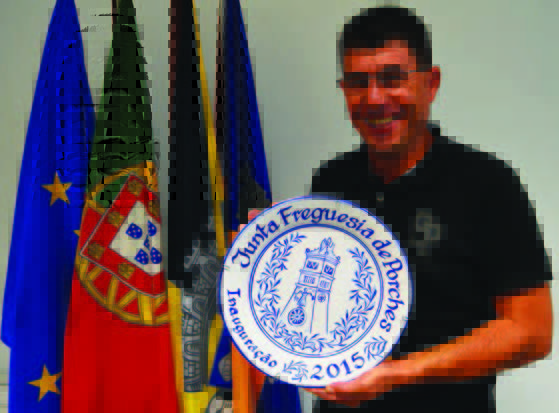
    Few people are aware that there was once a medieval castle in Porches, given the lack of visible remains. José Bentes, the local mayor, laments the lack of interest in exploring such important heritage: “There is still much to study and discover,” he said. In 1911, Ataíde Oliveira wrote in Monografia de Porches: “As the government doesn’t want to spend a penny on prehistoric research, there is no choice but to wait for the property owner to work and turn his lands. And it wouldn’t cost much to find a great abundance of remains of civilisations in the entire area of Porches Velho, Senhora da Rocha, Crastos and Quinta dos Alporchinhos.” More than a century later, such treasures are still waiting to be unearthed.

    Another highlight is Porches Parish Church, whose bell tower rises high above the town’s rooftops. Built in the 16th century, it was badly damaged in the 1755 earthquake. However, in 1882, António Joaquim Cabrita donated “4,000 réis”, enabling its reconstruction.

    The art of pottery has been practiced since time immemorial. After falling into decline, the tradition was picked up again in the late 1960s by Irish artist Patrick Swift and Lima de Freitas, who founded Olaria Algarvia. As Luís Bentes stressed, “Swift put Porches on the world map”. Today there are several pottery workshops along the EN125, but there are few that still paint the earthenware by hand. One Saturday morning, we met up with Juliet Swift, 56, as she was dealing with the many customers entering the Olaria Algarvia. She and her sister Estella, 46, are the daughters of the Irish artist. Having trained as artists themselves, the two sisters decided to continue the work their father started. And the next generation of potters is secured too, with Juliet’s son now working in the field. On another workbench, Maria Eulália, 58, is painting a piece of earthenware, prior to being glazed. “I’ve been working here for 25 years and I love it. I paint, I deal with customers, I do everything.” While they take in the incredible diversity of pieces of all shapes and colours, the people entering the workshop are a picture of admiration and amazement.

    Nearby, under the guiding hand of Scotsman Ian Fitzpatrick, 60, stands the Olaria Pequena, located in an old farmhouse. Ian arrived in the Algarve 34 years ago. A trained artist, he decided to dedicate himself to the pottery tradition of Porches. He and Marco Correia are the mentors behind every item on display. “Every piece is crafted and painted by hand. No two pieces are the same,” reads a sign, as you enter.

    Finally, it is impossible to visit Porches without noticing its typical chimneys: original, colourful and very old. Talking about the chimneys, Luís Bentes reveals that the parish council will shortly launch a ‘Porches chimney route’, which will explain their history. “It’s well worth taking a stroll around the town’s streets to admire the old roofs and chimneys. Each one reflects how wealthy the family was,” he explained. One of the most mythical and mysterious can be found above the Casa Museu, in the Rua da Chaminé street. It features a castle keep, a spoked wheel and a human figure, and dates from 1793. In the Travessa do Correio there is another, dating from the 18th century, with four sides. Another highlight is the chimney of the charming Leão de Porches restaurant, located within an impressive restored building, dating from the 18th century. Here we find a lion, crowned with vine leaves. Legend has it that a baby lion appeared in the town many years ago and that it was looked after by the family of this house.

    Text & photos Sara Alves

  • Scissor chairs

    Scissor chairs

    [inpost_galleria thumb_width=”175″ thumb_height=”175″ post_id=”1072″ thumb_margin_left=”3″ thumb_margin_bottom=”2″ thumb_border_radius=”2″ thumb_shadow=”0 1px 4px rgba(0, 0, 0, 0.2)” id=”” random=”0″ group=”0″ border=”” show_in_popup=”0″ album_cover=”” album_cover_width=”200″ album_cover_height=”200″ popup_width=”800″ popup_max_height=”600″ popup_title=”Gallery” type=”yoxview” sc_id=”sc1441281020944″]

    The master chairman

    Inside met a seasoned artisan who makes one of Monchique’s biggest symbols: the scissor chair

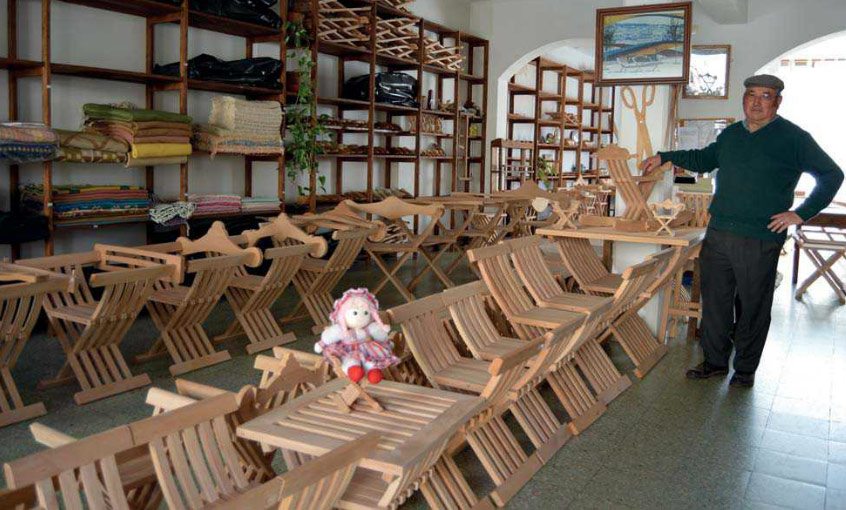
    One of José Leonardo Salvador’s favourite things to do when he was a child was to take a planer and smooth out wood planks until the floor was covered in curly shavings. At that time, scissor chairs were not yet called scissor chairs – they were simply known as Monchique chairs –, and many Portuguese children were forced to leave school to work at a young age. José was one of those children; after completing primary school, he began working with his father and grandfather, both sawyers, when he was 13. Now, at 72 years old, José is one of the few remaining master carpenters who grasp the complex art of scissor chairs, one of the most iconic symbols of Monchique and part of the region’s Roman heritage. He is also one of the best known, as his innovative ways led him to develop the traditional chair into around 30 models, from benches to tables and even rocking chairs.

    Following his family’s tradition in the wood industry, José worked as a carpenter for most of his life. In the ’60s, when the Brits “discovered” the Algarve as a tourist destination and became avid buyers of such craftsmanship, José found himself flooded with orders. “My work, which I described as a carpenter’s work, was now called an artisan’s job,” he jokes, adding that it was also due to the tourists that the Monchique chairs became known as scissor chairs.

    Actually more a stool than a chair, these pieces were the most common type of seating in the Roman period, mainly due to their portability, as they folded in a scissor style. A democratic chair – it was used by both emperors and slaves –, it is one of the strongest symbols of the Roman presence in the area, along with Monchique’s extremely popular water springs.

    Making the most of this wave of interest in an old regional classic, José opened a small family-run shop in 1977 on Monchique’s Rua Calouste Gulbenkian, where his workshop is still based. Located in what at the time was one of Monchique’s busiest streets, José’s business blossomed, and he eventually felt the need to separate the shop from his workshop. That is why Casa dos Arcos moved a few steps away from his workshop to Estrada Velha around 20 years ago. A great display space for José’s work, the shop is literally filled with pieces – all inspired by the traditional scissor stool model. There are tables, long benches, chairs with embellished arms and backs and even eating chairs, with a purpose-built support for dishes and cups. According to José, he created his first new model in 1978 and has since expanded his range of creations. Many have tried to copy him, he added, but making these pieces requires such an intricate process that few had the patience to carry on.

    The shop’s walls, covered in memorabilia, also tell the story of this proud artisan: pictures sent by clients of his pieces in countries such as the US, Germany, Scotland and Denmark; newspaper cut-outs of the many articles written about him, and even images of the three churches in Belgium that were completely furnished with his pieces can all be found hanging from the walls. In a garage next door, clients can also see one of José’s most popular pieces: a giant scissor chair that he made back in 2002 and which helped attract huge media attention to his work. “It is not for sale though,” he says, adding proudly that he’s had quite a few requests.

    Each basic chair José makes takes around four to five hours of work to complete. Whilst everything was done by hand in the past, he now relies on the help of a few machines, but the process is still very much artisanal and time-consuming, depending on the chosen finishes. The most complex pieces have wooden finishes throughout and display José’s carved signature.

    His wood of choice is alderwood, which grows near water courses and which he buys locally. “We have good quality wood in the area,” notes the carpenter. “The best quality wood is the one that is chopped off in the autumn.” To showcase such quality, the craftsman chooses to sell his pieces in natural wood, without any varnish or finishing product. Clients can then apply teak wax or the product of their choice to protect their pieces.

    Whilst before, most of his customers were British, José’s chairs are now bought mainly by Swiss and German tourists, who can rely on the help of his friendly daughter Célia. Having helped her dad sell his pieces since she was seven – “I spoke to tourists by using gestures!” she recalls, smiling – Célia has extensive knowledge of her father’s work and is also in charge of shipping his pieces abroad if requested by clients.

    As the owner of what he calls a “true family business”, José admits he would like to have an apprentice to pass on his know-how. He shows us a little wood sculpture carved by his son Paulo, who is currently living abroad, and says: “I still hope it will be him.” Prices for a basic stool start at €25 but they can go up to €200 for the more intricate models. The shop is open Monday to Saturday from 10.30am to 7pm.

    Casa dos Arcos – Estrada Velha, Monchique | Tel: 282 911 071

    Text Ana Tavares – Photos Sara Alves

  • Built to a tee

    Built to a tee

    [inpost_galleria thumb_width=”175″ thumb_height=”175″ post_id=”1079″ thumb_margin_left=”3″ thumb_margin_bottom=”2″ thumb_border_radius=”2″ thumb_shadow=”0 1px 4px rgba(0, 0, 0, 0.2)” id=”” random=”0″ group=”0″ border=”” show_in_popup=”0″ album_cover=”” album_cover_width=”200″ album_cover_height=”200″ popup_width=”800″ popup_max_height=”600″ popup_title=”Gallery” type=”yoxview” sc_id=”sc1441290292495″]

    Inside looks at the golf property market in the western Algarve

    The Algarve is traditionally a region of sun, sand and sport, or to be more precise, golf. With more than 40 courses (some designed by true golf legends), mild temperatures all year round and little rain, it’s no surprise that the Algarve boasts the highest number of golf courses in Portugal and is often considered one of the best golf destinations in the world.

    Such accolades have had an impact, with local real estate agents and golf resorts’ sales managers stating that golf property remained popular (even if prices decreased) throughout the recession. Now that the market is on the road to recovery, they all agree on one thing: golf property is a good investment.

    “This is a safe investment away from the financials. That may sound strange, but if you take away the financial investment and look purely on the lifestyle investment, you get a safe, well-maintained environment with all the facilities on your doorstep,” said owner of B&P Real Estate Agency in Lagos, David Westmoreland. Adding that golf properties are now 50% cheaper within a resort and 30% off resort, the real estate agent assured that the main reason for the price drop was that the properties “increased higher than the market for a number of years”.

    A good example is the former Parque da Floresta in Budens, home to an 18-hole course and which is now known as Santo Antonio Villas, Golf & Spa. Whilst the resort was riding “the crest of a wave in the noughties”, it was declared bankrupt in 2012, making properties “almost unsalable for a few years”. Now under new management, things are finally looking up, with B&P (which also has properties in Penina and Boavista) selling around 12 properties last year. “Prices are not increasing yet, hence it is a great time to buy. The resort looks great and it is getting back its buzz,” said the real estate agent and former Parque da Floresta’s sales and marketing manager.

    The profile of buyers is also changing, with Russian, French, German and Swedish clients now in full force, and mostly purchasing for their own use. ”The rental periods really fall into the peak periods of August and July when a lot of owners prefer not to be there, as the resort is too busy.” With prices ranging from €150,000 in the golf village for a two-bedroom townhouse to €550,000 for a four-bedroom villa, owners at Santo Antonio benefit from preferred tee times and discounted green fees, as well as the use of a golf academy, health & beauty spa and gym.

    In fact, given the added benefits and facilities available, it’s not just golfers who are buying golf property, as Oceânico’s sales and marketing executive Filipa Glória explained: “The properties are much higher quality than the market average and are proving popular with clients. Golf resort buyers are often looking for more than just golf.”

    A renowned golf operator and property developer, Oceânico owns the luxurious Amendoeira Golf Resort in Alcantarilha, a modern development with 242 properties and three golf courses – the stunning Oceânico Faldo Course and Oceânico O’Connor Jnr., and the beginner-friendly Oceânico Academy. The first phase, comprising 80 houses (two-bedroom apartments, and three-, four- and five-bedroom villas), was launched at the end of May, with more than 30 properties already reserved and property owners enjoying an array of discounted services. Prices range from almost €261,000 for a two-bedroom apartment to €942,000 for a luxury four-bedroom villa. According to Filipa Glória, clients are mostly golfers, pensioners and families from the UK, France, Scandinavia and Benelux countries, and like at Santo Antonio, some rent out their properties to cover costs. “Generally younger buyers look to rent more than retirement buyers,” she noted.

    Home to three courses, including the first 18-hole golf course in the Algarve – the Sir Henry Cotton Championship Course – Penina Hotel & Golf Resort is a symbol of golf excellence in the Algarve. Whilst the resort, which is located in Portimão and encompasses a 5-star hotel, does not have new property for sale, it is a sought-after spot for resale opportunities. With a number of homes at Penina in her portfolio, managing partner of Fine & Country Carvoeiro, Zoie Hawker, says that Penina, “the Algarve’s oldest golf resort, is always popular”. “Buyers are especially attracted by the facilities of the 5-star hotel, the three gold golf courses and attractive membership fees. Plus, the plots are all large (at least 2,000sqm) and there is no condominium charge,” she added. Here, prices for a five-bedroom villa can reach €875,000 and, like in any other golf resort, “views over the fairways are always popular”.

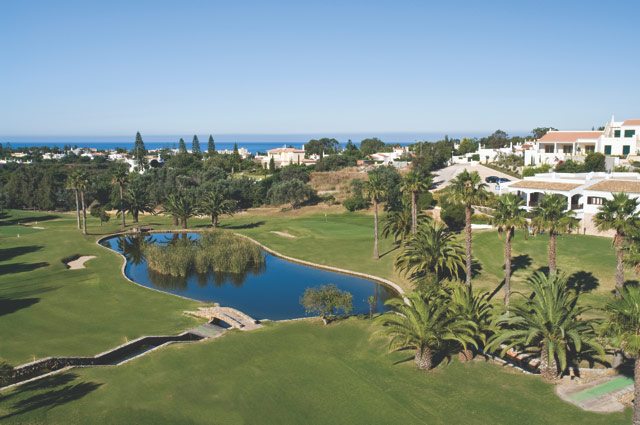
    Further east, in Carvoeiro, we find Vale de Milho, a nine-hole course affording gorgeous views over the Atlantic. Co-owner and developer Mark Stilwell has built 10 luxury townhouses on-site: “Five of the owners rent. The English play

    golf, the Swiss and Dutch a bit and the Portuguese do not play,” he said. Real estate agency Fine & Country also has a number of houses for sale within walking distance of the Carvoeiro course, including a three-bedroom townhouse for €290,000.

    Commenting on the current state of the Algarve market, Mark noted, “property sales are improving, but buyers are careful about running costs and expect discounts”. That seems to be the case in the well-established Boavista Golf Resort & Spa, just outside Lagos. “Clients are becoming more discerning and often ask about the resort support and ongoing costs, as well as the social activities and security,” said Jayne Stanley, sales manager at Boavista. With an 18-hole course offering views over the beautiful Lagos bay, the resort has 12 golf frontage properties on sale, with a further four under construction and six more in planning. These range from two-bedroom townhouses to five-bedroom detached villas with pool and come with resort privileges. Clients can also opt for resale properties, from apartments to detached villas. Highlights include a brand new, fully-furnished two-bedroom townhouse for €270,000, a great opportunity to put your hands on a new golf product, which Fine & Country’s Zoie Hawker says “is scarce in the Algarve”. With a lovely clubhouse and quality spa facilities, Boavista also provides (if requested) a full property service, as well as the advantage of no resort fees, making the job of real estate agents a lot easier. One such agencies is the Lagos-based ToGoFor-Homes, part of a chain with offices in Tavira and Vilamoura, which offers a complete portfolio of golf properties not only at Boavista, but also at Santo Antonio.

    Still in the Lagos area, but this time at Meia Praia, Onyria Palmares Beach & Golf Resort is a good option for those who wish to plan their home from the ground up. With a spectacular 27-hole course designed by Robert Trent Jones Jr. and plans to build a 5-star hotel on-site, the resort has several plots of land for sale. A more established option in the western Algarve is Pestana Golf, with courses in Silves (Silves Golf) and Carvoeiro (Gramacho and Vale da Pinta), and an array of real estate options – mostly resale – to back it up.

    With manicured courses providing great views even for those who don’t play the game, excellent build quality and a wide range of facilities, golf property is set to continue in high demand. “Clients look for security, exclusiveness, quality, one stop shop holidays and holidaying with like-minded people,” noted David Westmoreland. In the western Algarve, all you have to do is take your pick.

    Text Ana Tavares

    Photos

    Top, Boa Vista

    Left to right – Santo Antonio Villas, Boa Vista, Vale de Milho.
  • Salicornia

    Salicornia

    [inpost_galleria thumb_width=”175″ thumb_height=”175″ post_id=”1081″ thumb_margin_left=”3″ thumb_margin_bottom=”2″ thumb_border_radius=”2″ thumb_shadow=”0 1px 4px rgba(0, 0, 0, 0.2)” id=”” random=”0″ group=”0″ border=”” show_in_popup=”0″ album_cover=”” album_cover_width=”200″ album_cover_height=”200″ popup_width=”800″ popup_max_height=”600″ popup_title=”Gallery” type=”yoxview” sc_id=”sc1441290049164″]

    Introducing a little-known Ria Formosa culinary delicacy

    The first samples of a little known, yet deliciously salty plant are currently being harvested in Ria Formosa. Salicornia (whose common names range from marsh samphire to glasswort and pickleweed) is tickling the tastebuds of many of Algarve’s chefs.

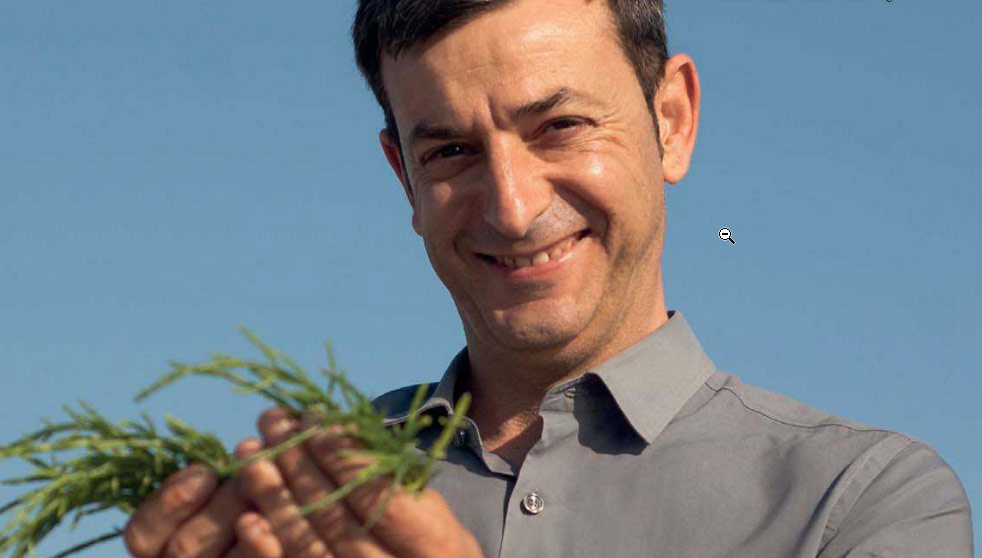
    Miguel Salazar, the CEO of start-up company ‘RiaFresh’, is not surprised. No stranger to the Portuguese gourmet scene himself, Salazar – a Spaniard living in the Algarve for 13 years – believes Ria Formosa’s variety is in a class of its own.

    Although Salicornia grows naturally from Wales to the Algarve coast, it is “a very complex plant,” the head of RiaFresh told us, “with a taste that varies “immensely” from area to area.

    “Even botanists have difficulty identifying the many varieties that exist,” the 43-year-old with a PhD in agronomic engineering admitted.

    “Historically, we were told there were four basic taste receptors: sweet, sour, bitter and salty,” he explained. “But some years ago in Japan, a fifth was identified, in the central part of the tongue. It involves the reaction of chemical components that increase the palate.”

    One of the characteristics of salicornia is a savoury taste known as “umami” – a Japanese word meaning “delicious”. It is the “umami” of salicornia that acts as a natural flavour booster. “Its texture, structure and morphology make it a very special finishing touch to many dishes. It is also a natural and healthy salt substitute.”

    RiaFresh developed as a result of research work conducted by mother-company Agro-On between 2011 and 2014 at Castro Marim’s Reserva Natural do Sapal.

    The research was designed to sustainably produce halophytes – plants that grow in or near salty water. Based in Faro, Agro-On has worked on many quality control food projects around the world.

    The start-up company is growing its first plants in a controlled environment, echoing the “natural conditions of Ria Formosa”, not far from Faro’s University of the Algarve in Gambelas.

    These custom-grown yet fragile plants are better protected from “extreme temperature changes, as well as other external factors” that could threaten quality standards, according to Salazar.

    “In our case, we’re producing an indigenous eco-type known as Salicornia da Ria Formosa, which involves a ‘thorough selection’ of the plant’s tiny seeds.”

    RiaFresh’s first seeds were planted last December and by the end of March, the plants were ready for harvesting, just short of maturity – and in their prime.

    Salazar’s initial goal is to produce 300 to 500 kilos of Salicornia de Ria Formosa – enough to introduce this new Algarve delicacy to the region’s gourmet market and fine dining restaurants.

    “For now, all we need is a small group of chefs to get creative,” Salazar declared, adding: “this far, we’ve had great feedback.”

    The first batch is available in 30, 60 and 100-gram packages and can remain fresh for up to two weeks “if kept cool” – but the likelihood is that people will gobble it up in a blink of the eye.

    Salazar is aiming to sell the delicacy at gourmet stores and selected outlets, “But for now, we run an online store where people can order it.”

    RiaFresh isn’t content to limit itself to salicornia. It’s also planning to cultivate other vegetable species naturally found along the Ria.

    “This is just the beginning”, revealed Salazar.

    www.riafresh.com

    Text Bruno Filipe Pires