Category: Must Read

  • CANINE LUXURY

    CANINE LUXURY

    OPENED IN 2011 AND EXPANDED IN 2016, HOTEL DO CÃO IS SETTING TAILS WAGGING

    [inpost_galleria thumb_width=”175″ thumb_height=”175″ post_id=”1608″ thumb_margin_left=”3″ thumb_margin_bottom=”2″ thumb_border_radius=”2″ thumb_shadow=”0 1px 4px rgba(0, 0, 0, 0.2)” id=”” random=”0″ group=”0″ border=”” show_in_popup=”0″ album_cover=”” album_cover_width=”200″ album_cover_height=”200″ popup_width=”800″ popup_max_height=”600″ popup_title=”Gallery” type=”yoxview” sc_id=”sc1467804338521″]

    Browsing the Facebook page of Hotel do Cão, a pet hotel nestled in the countryside in Vale da Rainha, on the road from Portimão to Monchique, we find hundred of pho- tographs of happy pooches of all breeds and sizes playfully stretching their paws in an idyllic fenced area. Looking at the sheer number of photo albums, it’s no surprise that 48-year- old Miguel Maia Costa, a former agronomist engineer, has had to ex- pand his dog hotel, which was opened in 2011, from eight pens to the current 50. While leaving their beloved pets at a hotel can be an unsettling experience, both for dogs and their owners, at Hotel do Cão the proof is in the pudding: dogs are relaxed when their owners come to pick them up, and tails are set wagging as soon as they approach the gates for another stay. “Some dogs enjoy staying with us so much that some owners often leave them here for a weekend as a reward, simply because they love it,” he says. And figuring out why dogs are eager to return to Hotel do Cão is not that difficult: covering 30,000 sqm, the hotel is a true haven for our four-legged companions, with its two lakes, comfortable and spacious boxes (with underfloor heating and a water mist system to keep dogs cool in the scorching summer heat), and a number of outdoor grass areas, where the pooches are walked or left to sunbathe for a couple of hours every day. Furthermore, to make pets feel truly at home, there is TV ambient sound throughout, with smaller dogs being kept in wood and glass enclosures, which replicate house windows.
    The success of Hotel do Cão is not only a product of its facilities, but also of its completely personalised approach. As Miguel explains, the hotel’s loving team tries to keep the animal’s routine as normal as possible: owners are encouraged to bring their pet’s food and treats (to avoid undesired stomach disorders from adjusting to a different kibble), dogs are walked on their own leads, preferably, and are fed the same number of times they would be at home. Twenty-minute walks take place at least twice a day, and the pooches are also left outside for two hours a day to enjoy the Algarve sunshine and safely socialise with other dogs. For added peace of mind for owners, the pens and walk areas are divided according to the pet’s size – small, medium and large – and dogs never share accommodation, unless they belong to the same person. Such care and dedication have made the hotel’s clientele grow by leaps and bounds since its inception in 2011, ranging from visitors who flock to the Algarve on holiday and want to be close to their pets, expats who have to temporarily return to their native country, and local residents out on holiday or work trips. “Demand has been growing ever since we opened,” says the businessman and German Shepherd breeder, who initially built the hotel to accommodate his dogs. “People in the Algarve have changed their lifestyle and have begun to include dogs in their lives. There’s what we call a ‘dog culture’, they now care about training their dogs and including them in their social life,” he adds.
    To meet the needs of these clients, Hotel do Cão was expanded in June to accommodate more animals (there are 50 dog pens), a large reception area, a veterinary consultation room and grooming services suited to the most pampered pooches, provided by an experienced local groomer.
    Also home to a training centre, the hotel now has an in-house dog behaviourist and trainer, who only uses positive reinforcement methods. There are group sessions available for both puppies and adult dogs, as well as individual sessions for animals with behaviour problems or specific training for sports competition dogs.
    Another new addition, which will open in the summer, is accommodation facilities for cats, which Miguel says have been in high demand from clients. “We will have wooden facilities built upwards, with several ‘floors’, because, while dogs feel safe in dens, cats feel more comfortable if they have a place to climb to. There will also be a sun room,” he explains.
    For now, the price for a basic daily stay for dogs is €14, excluding food. Grooming and training services can be added as part of the package, as well as extra walks. All dogs staying at Hotel do Cão must have their vaccinations up to date (including kennel cough), and owners can bring their pets’ personal objects, such as toys or bed.
    For a closer look at the hotel’s facilities – or a general cuteness overload -, the Hotel do Cão also has a promotional video on its Facebook page, a canine love story, which stars many of the hotel’s four-legged clients, the sequel of which will be released soon. Much like the hotel, the video is a hit, boasting nearly 190,000 views on Facebook – no wonder pups keep lining up for check-in.

    Text – ANA TAVARES
  • CULTURAL HERITAGE

    CULTURAL HERITAGE

    [inpost_galleria thumb_width=”175″ thumb_height=”175″ post_id=”1600″ thumb_margin_left=”3″ thumb_margin_bottom=”2″ thumb_border_radius=”2″ thumb_shadow=”0 1px 4px rgba(0, 0, 0, 0.2)” id=”” random=”0″ group=”0″ border=”” show_in_popup=”0″ album_cover=”” album_cover_width=”200″ album_cover_height=”200″ popup_width=”800″ popup_max_height=”600″ popup_title=”Gallery” type=”yoxview” sc_id=”sc1467804916125″]

    FOR THOSE WHO LIKE TO LISTEN TO THE YEARNING SOUND OF FADO, THERE IS A NEW LOCALE IN LAGOA

    Lagoa de Fado is the brainchild of Ondina Santos and Carlos Tapadinhas. Ondina worked as an art teacher and is known for her poetry books and music CDs for children, as well as for her voice. Carlos studied business management in Coimbra, where he discovered the Portuguese guitar, but the 45-year-old only started accompanying Fado singers
    five years ago. “It’s never too late to dis-cover Fado,” he says cheerfully. They have
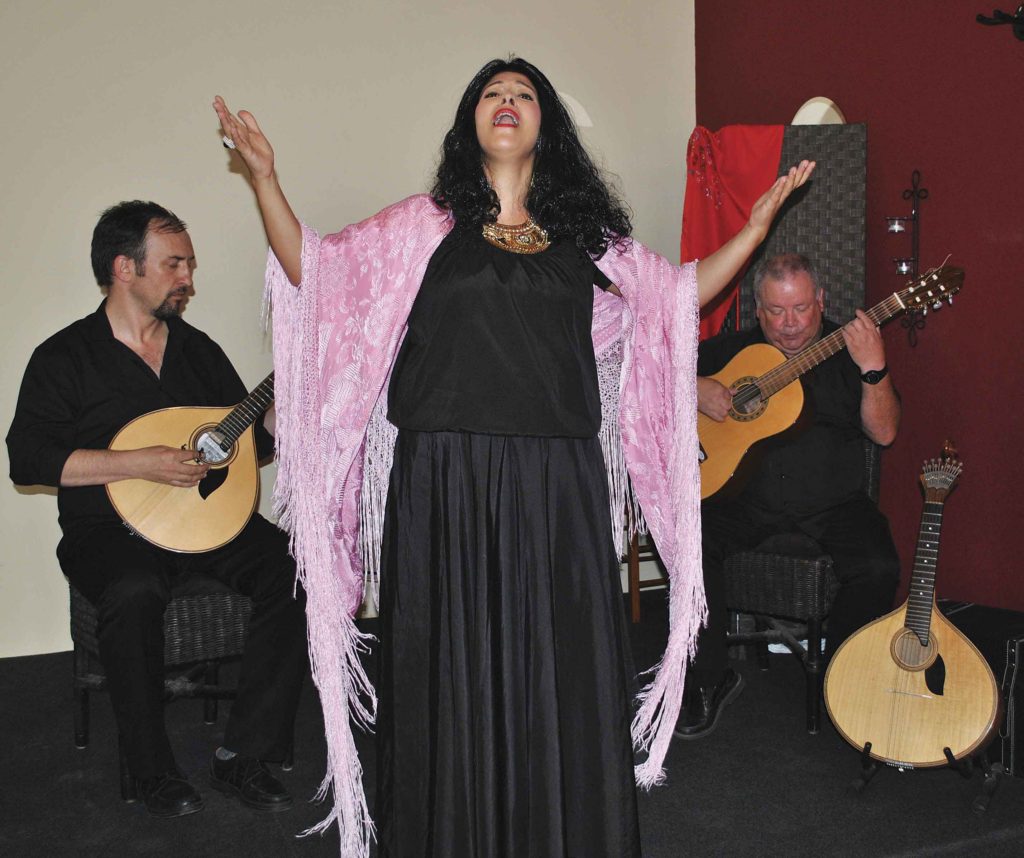
    been performing together for several years in various venues. During their performances they were repeatedly approached by guests, who felt disturbed by the clattering of dishes, waiters rushing past or louder diners. That set them thinking about given small-scale, intimate Fado concerts, away from the hustle and bustle. “In addition to the concerts we also wanted to tell our guests about the history of Fado, as well as offering a stage to other Fado singers and aficionados,” explains multi-talented Ondina, who not only her show-cases her voice, but also her acting abilities at Lagoa de Fado. The one-hour “History of Fado” show tells, as the name suggests, the story of the Portuguese music style, which was declared an Intangible Cultural Heritage by UNESCO, in 2011. It reveals the roots of Fado, its development, its composers, its most-sung subject matter, as well as the first famous singer and esteemed Fado Divas, who followed her and took Fado out into the wider world. Ondina not only sings the respective fadistas’ most popular songs, but also imitates their voices and gestures. In a room with 30 seats, decorated with paintings by local artists, including Patico and Clara Andrade, she sings with the same melancholy as Maria Severa, a prostitute from Lisbon, who is considered Portugal’s first well-known Fado singer. Using actress and singer Hermínia Silva, who was popular in the 1930s and 40s, as an example, Ondina shows that Fado can also be very cheerful. She also reinterprets the the dramatic gestures of Fado queen Amália Rodrigues, who died in 1999 and who contributed undeniably to the
    international fame of Fado. A talent to have contributed to the worldwide fame of Fado in more recent times is Mariza, who is undoubtedly the most famous representative of contemporary Fado. Between each interpretation, Ondina disappears behind a screen, changing clothes and wig, while guests listen to the sounds of Carlos Tapadinhas’ Portuguese guitar. There are translations into English wherever necessary. Those who aren’t shy and feel like having a go at Fado themselves after the concert can do so at “Fado Vadio”, where spectators provide the vocals. “Just like Fado, which orginally was sung in taverns and on the streets of Lisbon’s slums,” Ondina explains. Everyone, who would like to express their feelings, can sing. “Not everyone can really sing,” Ondina says, smiling, “you will hear one or the other note out of tune, but often you also get goose bumps, when all of a sudden an inconspicuous-looking lady expresses her feelings with a mournful, pervasive voice.” A cook, a lawyer, a street sweeper and a businessman might share the stage, as virtually every Portuguese person considers themselves to be a Fado talent and in fact many of Portugal’s most celebrated fadistas have been discovered in Lisbon’s taverns at such “Fado Vadio” nights.
    Every Wednesday there are also themed Fado concerts. “Sometimes it’s all about love and passion, sometimes about yearning, wine or bullfights or about certain fadistas and authors,” says Ondina. On every third Sunday of the month the stage belongs to known fadistas and new Fado talents from the region.
    This month Ondina and Carlos will also perform at the Centro de Congressos do Arade, in Parchal. The Fado concert on July 08 features singers Isa Brito, César Matoso, Sérgio Gonçalves and ten-year-old Luana Velasques. Carlos Tapadinhas (Portuguese guitar), João Aroube (guitar) and Tó Correia (bass), will accompany the fadistas.


    LAGOA DE FADO
    Rua Município de São Domingos, Lote 2, R/C Esq, Lagoa (behind the Health Centre)
    Reservation needed (24 hours in advance)
    919 887 265 / 966 720 909 | lagoadefado@gmail.com
    Every Wednesday
    Themed Fado concerts, 4.00 pm – 5.00 pm
    Every Thursday
    The history of Fado, 2.30 pm – 3.30 pm, 4.00 pm – 5.00 pm Every second Saturday
    Fado Vadio, 4.00 pm – 6.00 pm
    3rd Sunday of the month
    Lagoa de Fado invites …, 4.00 pm – 6.00 pm
    Concerts will depend on the number of reservations. For groups of 10 people and above,
    concert dates can be booked on request.
    08/07 Fado night
    Centro de Congressos do Arade, 7.30 pm, €15 (€12 when bought in advance)
    Tickets at the GaleRio art gallery
    (in the Centro de Congressos do Arade) Mob. 968 067 607 | galerio.arade@gmail.com

    TEXT & PHOTOS ANABELA GASPAR

  • Sítio das Fontes

    Sítio das Fontes

    [inpost_galleria thumb_width=”175″ thumb_height=”175″ post_id=”1515″ thumb_margin_left=”3″ thumb_margin_bottom=”2″ thumb_border_radius=”2″ thumb_shadow=”0 1px 4px rgba(0, 0, 0, 0.2)” id=”” random=”0″ group=”0″ border=”” show_in_popup=”0″ album_cover=”” album_cover_width=”200″ album_cover_height=”200″ popup_width=”800″ popup_max_height=”600″ popup_title=”Gallery” type=”yoxview” sc_id=”sc1459778426444″]

    The Sítio das Fontes is the perfect setting for some fine-weather exercise, to lose unwanted pounds, or simply for a relaxing walk.

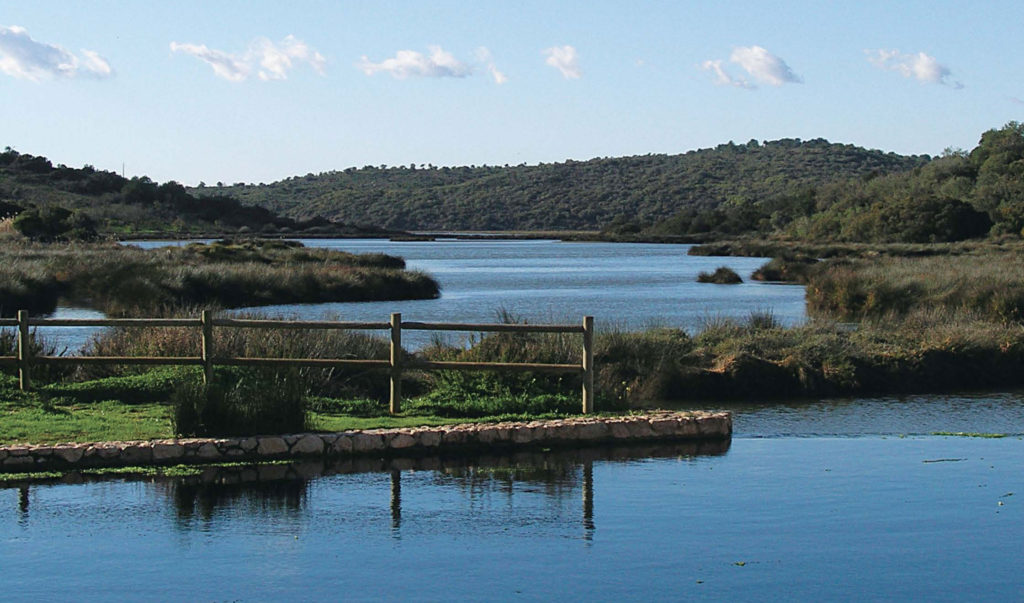
    The Sítio das Fontes Muncipal Park, 1.5 km outside Estômbar, in the municipality of Lagoa, covers an area of 18 hectares, at the start and along the banks of a creek on the left bank of the River Arade. It owes its name, translating to “Place of the Springs”, to the presence of many springs that bubble up here and which boast the heaviest flow of the Algarve’s largest aquifer, known as Lias-Dodger or Querença-Silves.

    Since the land in which the park is located was acquired, in 1989, Lagoa Municipal Council has restored some of the existing buildings, such as the tide mill, the miller’s house and old irrigation system, while others, such as the reception building, the warden’s house, the toilets, the amphitheatre, the picnic area, the fitness circuit, the Nature Interpretation Centre and a small wharf were built from scratch. As a whole, the park offers visitors a choice of activities to spend the day surrounded by nature, soaking up stunning views over the River Arade.

    The sign-posted walking trail inside the park is only 1.7 km long, but it takes you through a range of landscapes, including salt marsh, Mediterranean scrubland, a temporary pond, pools and waterways and abandoned farmland. For the more active, there is an extensive fitness circuit, while following the trail’s yellow signs affords you a pleasant stroll. The trail starts at the park entrance, on the right side of which stands a wheel-operated well, which was used to irrigate the farmland once here. The Nature Interpretation Centre stands behind this, in a fully renovated traditional Algarve house. The centre organises workshops and walks throughout the year, including dragonfly watching, and can be visited by appointment (Tel 282 432 784/282 380 400, sitio.fontes@cm-lagoa.pt). Passing through the picnic area, furnished with wooden benches and tables, and barbecues, and behind the park’s reception building, you are treated to a first impressive view over the park and over the creek, in which, depending on the time of year, you can see hundreds of water bird species.

    The biodiversity of the habitats found here and the seasonality of plant and animal species, reflect the typically Mediterranean climate, with scarce and irregular rainfall in winter months and summers mellowed by offshore winds from the Atlantic. Formerly, the areas surrounding the park were thick with carob, almond and fig trees, as well as olive groves. But farming has long been forgotten in these parts and nature has taken over. Nature’s revival has led to the arrival of other species, including the pepper tree, the dwarf palm, the kermes oak, cistus gums and, depending on the time of year, you can also see wild orchids and squills.

    The trail then leads to the bank of the creek and a few metres later you reach, on the left side of the path, a white column, with a sign revealing the end of the park and of the trail. Nevertheless, anyone choosing to continue along the trail beside the water won’t regret it. The scenery is of breathtaking beauty. Surrounded by nature at its purest, only birdsong interrupts the silence. After about 700 metres, you come to the River Arade. It’s almost impossible to imagine just how important this river, the source of which lies in the hills of the Serra do Caldeirão and which reaches the Atlantic between Ferragudo and Praia da Rocha, once was. For hundreds of years it was the communications route that enabled Silves to become the capital of the Al-Gharb kingdom under Moorish rule. Products from the Silves region were exported to the world via the river and Phoenicians, Carthaginians, Greeks and Romans reached the city along it. The subsequent silting of the river means that only small leisure craft are able to navigate upstream now. A river trip, which locals and visitors to the region should make at least once in their life.

    Returning on the same path to the park, the trail now takes you to the old tide mill. There are about 20 mills of this kind between Portimão and Silves. Unfortunately most of them have been abandoned and are now nothing more than ruins. Records of this mill date back to the 15th century, when it is mentioned in the “Book of Silves Warehouse”, as a “(…) place of springs in which Vicente Pirez has a mill (…)”. The miller’s house, which has also been renovated, stands next to the mill. The municipal council has also built an open-air amphitheatre nearby, which in the summer stages concerts and other events, such as the international Didgeridoo festival, or the “Obrigado Portugal” festival, organised by the resident foreign community. The final section of the trail takes you over the wooden bridge, across the mill’s tanks and next to a small pond at the end of one of the tanks, back to the start of the trail. Prior to the summer bathing season the two tanks, of varying depths, are cleaned so as to remove any algae and provide refreshing pools for visitors.

    The fact that the trail has come to an end doesn’t mean that you need leave the park. You can take a break in the picnic area, while your children enjoy the playground, or take a refreshing dip.

    Insider’s tip: the park is very busy at the weekend. If it’s peace you’re looking for, visit the park during the week.

    How to get there:

    In Estômbar, take the road towards Silves, passing the school and football pitch. After 800 metres you pass under the A22 motorway and then 200 metres later the Sítio das Fontes is signposted. Following the sign, to the left, a few metres later you reach the car park.

    Text & photos Anabela Gaspar

  • Under the Spotlight

    Under the Spotlight

    [inpost_galleria thumb_width=”175″ thumb_height=”175″ post_id=”1520″ thumb_margin_left=”3″ thumb_margin_bottom=”2″ thumb_border_radius=”2″ thumb_shadow=”0 1px 4px rgba(0, 0, 0, 0.2)” id=”” random=”0″ group=”0″ border=”” show_in_popup=”0″ album_cover=”” album_cover_width=”200″ album_cover_height=”200″ popup_width=”800″ popup_max_height=”600″ popup_title=”Gallery” type=”yoxview” sc_id=”sc1459874832622″]

    Dutch entrepreneur Erik de Vlieger talks about his real estate ventures.

    Famous back in his native Holland for being the number one radio chat show host and television personality, 56 year old Erik de Vlieger is set to become one of the Algarve’s biggest entrepreneurs. His lively, energetic and inquisitive nature, not only make him a great entrepreneur, but also the ideal candidate to inject some much-needed innovation into Carvoeiro’s real estate scene.

    He has acquired a wealth of experience throughout his diverse career, which he initiated in the family’s sewing machine business. He then went on to conquer the Dutch media and invested in real estate in several European countries. A natural extrovert, he talks with great ease, but also expresses himself through art, his favourite hobby being painting on large canvases.

    As soon as we meet him it’s easy to understand why he is the most famous and controversial radio host in Holland. Not afraid of voicing his opinions, he has almost been suspended from the show on several occasions. But, although he describes himself as a clown, he is a serious businessman. “I’m a Dutch businessman, we are known for our tough negotiation skills,” he says. He’s an entrepreneurial chameleon, adapting his skills and know-how to every new business opportunity.

    Investing in Portugal was a good choice for him, “It’s so much cheaper than the rest of Europe,” he insists. And, to top it all, he fell in love with the Algarve, “with its people and their friendliness.” According to Erik, “life in Holland is so hard, here everything feels much lighter”. He first came to Portugal in 1996, to view a piece of land close to Lagos, part of the “Match Algarve” project, a large sporting facility, where professional football teams would come to train. In addition to football pitches, facilities for other sports, such as rugby, tennis and footgolf had also been planned.

    Sadly the project never took off, due to trouble in obtaining licences. This year, 20 years on, the paperwork has finally been approved and the project may soon see the light of day, becoming a great asset for the Algarve. “This will not only attract professional football teams during the high season but also amateurs off peak, helping with the region’s seasonality,” he claims.

    Erik doesn’t like to waste time and needs to keep himself busy, ensuring that his businesses are profitable. The first person in the office every morning, he sets an example for his hard-working staff. At the moment he seems to have a finger in every pie. Besides “Match Algarve” he is also involved in the rehabilitation of the Mabor building, in the centre of Portimão. But his biggest project is the Carvoeiro Club Group, which he is rapidly expanding, together with his partner and friend Andreas Stocker, whom he met 10 years ago, when de Vlieger bought Stocker’s house in Carvoeiro. “I don’t believe in working with friends, it can be dangerous and ruin a relationship, but with Andy it’s different,” says de Vlieger.

    Last November they bought the Quinta do Paraíso resort, adding it to their already impressive portfolio of Carvoeiro Clube, Monte Carvoeiro, Algarve Clube Atlantico, Presa de Moura, Monte Dourado resorts and the real estate company Quinta da Palmeira. And when the time came to choose the right managing director for the group, they didn’t have to look far. Having managed Quinta do Paraíso for more than 20 years, Swiss-born Patricia Bürer was the obvious choice.

    Carvoeiro Club already offers a great choice of services, ranging from property administration to gardening and even tax and rental assistance. With almost 200 employees and more than 300 managed properties in six different holiday resorts and three large servicing agreements in resorts in the area of Carvoeiro, the Carvoeiro Clube Group is the largest tourism enterprise in the Carvoeiro-Lagoa area.

    But that’s not enough for de Vlieger, who is always one step ahead, planning the next expansion. “The plan is to take over and manage more tourist developments,” he says. Not only in the Carvoeiro area, but also towards Armação de Pêra, Ferragudo, Portimão and even Lagos. “We want to become the biggest resort in the Algarve!”

    Text Alexandra Stilwell


  • Prized berry

    Prized berry

    [inpost_galleria thumb_width=”175″ thumb_height=”175″ post_id=”1518″ thumb_margin_left=”3″ thumb_margin_bottom=”2″ thumb_border_radius=”2″ thumb_shadow=”0 1px 4px rgba(0, 0, 0, 0.2)” id=”” random=”0″ group=”0″ border=”” show_in_popup=”0″ album_cover=”” album_cover_width=”200″ album_cover_height=”200″ popup_width=”800″ popup_max_height=”600″ popup_title=”Gallery” type=”yoxview” sc_id=”sc1459778646250″]

    The strawberry tree is the star of two new projects being developed in the Western Algarve.

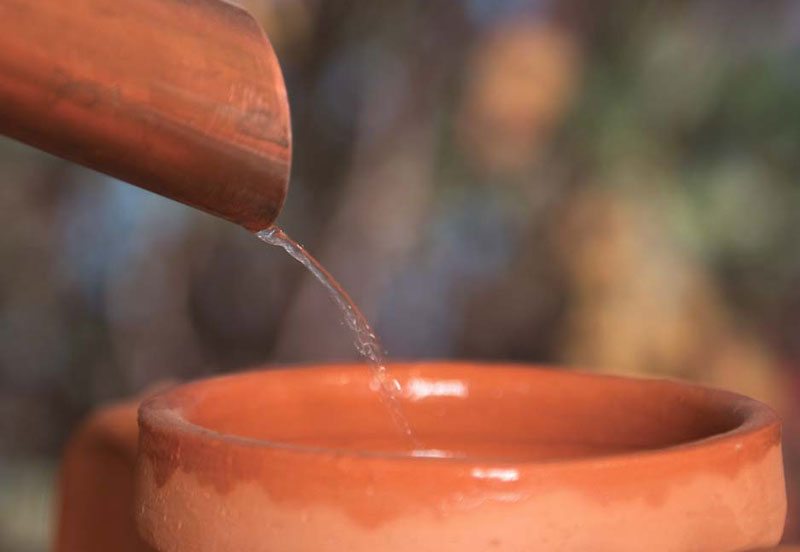
    An iconic calling card for Monchique, medronho brandy is known far beyond the hills that witness its distillation. Medronho is made from the fuzzy, yellowish-red berries of the strawberry tree, Arbutus unedo, which, despite the name, is actually a bush, indigenous to Portugal and commonly found in the centre of the country, as well as in the Algarve. Medronho manufacture was once a family affair, with small distilleries all across the Monchique area producing this powerful, clear firewater. However, due to strict government regulations and the small dimension of the distilleries, there has never been a fully-fledged medronho industry. Until now, that is: located in the secluded rural landscape of Bensafrim and covering a whopping 271 hectares, Corte Velada is a large-scale project focused on producing and selling high-quality strawberry trees and berries, not only for the production of brandy, but mainly as a fruit and ornamental plant.

    With €6mn invested thus far, this innovative project began back in 2009, the brainchild of a Norwegian family, who wanted to give something back to the Algarve, a region they have been visiting for years. Besides medronho production, plans for Corte Velada include a four-star hotel, which will join the eight dams and 14 kilometres of nature trails already constructed.

    But for now, Ricardo Jacinto, the project’s director and head researcher, has his eyes set on the medronho berries. The first step involved improving the quality of the strawberry trees, to ensure the project’s sustainability. How was this achieved? By cloning only the best trees, to maximise production. With the help of a state-of-the-art greenhouse, a unique prototype with the flashy price tag of €500,000, the team at Corte Velada is creating cloned medronho bushes, which start producing fruit in a shorter period of time and are able to adapt to different climates. “This development process has been done for years to other fruit trees, but somehow nobody’s ever done it with the strawberry tree,” says Ricardo Jacinto. These new and improved strawberry trees can be sold to farmers worldwide, who wish to establish their own plantations, whilst the berries can be sold directly to other industries, such as the beauty, pharmaceutical and food industries, which will make the most of their antioxidant and anti-inflammatory properties to create cosmetic products, medicines or healthy snacks. The surplus berries will be used to make brandy and the construction of an on-site distillery is set to take place in the next months. “We’ve always set our sights on being self-sufficient, and the distillery is part of that vision,” explains the director.

    A very different entity that is also committed to promoting these small berries is the parish council of Marmelete, a small village with about 600 inhabitants, located close to Monchique. “We wanted to attract visitors to our municipality but we didn’t have many tourist attractions, and the ones we had were unfortunately under-promoted,” says young parish president Marta Martins. Her solution was simple: to create a place where medronho and its rich history would take centre stage. The result was the opening of the Casa do Medronho de Marmelete (Marmelete House of Medronho) last October, following the conversion of the parish’s old garage into a fully working distillery. Whilst the works took less than a year to complete, the president said she had to cut through a lot of red tape to see the project come to life, as it’s rather unusual for a parish council to have a working community distillery.

    “There was a lot of field work involved and we visited many distilleries and old cellars,” she explains. The purpose of such visits was to collect information and ideas, making the Casa do Medronho a faithful replica of a traditional distillery, from its taipa (rammed earth) walls to its vital caldeira (boiler).

    At the Casa, visitors can learn more about the production process, view a collection of traditional utensils, taste local products such as sausages, sweets and, of course, medronho or melosa (which combines medronho brandy and honey), or even distil their own medronho (by appointment only). The local council parish has also created a Medronho Roadmap, which includes nine local licensed distilleries open for visits, which work in partnership with the Casa to offer a few workshops, such as the medronho berry picking workshop. As part of the activity, visitors help pick the fruit and then enjoy a relaxed lunch in the countryside. The daughter of a medronho distiller, Marta Martins stresses that much of the appeal of medronho making lies exactly in its social side, as people use it as an excuse to gather around the table and drink. “We aim to turn these distilleries into local tourist attractions, as the landscape around them is beautiful and the whole process couldn’t be more authentic.”

    The Casa do Medronho de Marmelete is open Monday to Friday, from 9am – 12.30pm and 2pm – 5pm. Group visits take place at weekends by appointment (Tel: 282 955 121 info@casadomedronho.com). Ticket prices start at €1.

    Text Ana Tavares

    Photos 1000olhos.pt & Ana Varela

  • An insider’s tour around the taverns of Portimão

    An insider’s tour around the taverns of Portimão

    [inpost_galleria thumb_width=”175″ thumb_height=”175″ post_id=”1499″ thumb_margin_left=”3″ thumb_margin_bottom=”2″ thumb_border_radius=”2″ thumb_shadow=”0 1px 4px rgba(0, 0, 0, 0.2)” id=”” random=”0″ group=”0″ border=”” show_in_popup=”0″ album_cover=”” album_cover_width=”200″ album_cover_height=”200″ popup_width=”800″ popup_max_height=”600″ popup_title=”Gallery” type=”yoxview” sc_id=”sc1459775609280″]Tasty Taverns

    Portimão was once a vibrant city, full of energy and the hustle and bustle that you’d expect from a town with a fishing port. Thankfully, with the hard work and foresight of a few, there are definitely signs that things are heading back in that direction.

    A new wave of taverns is popping up all over Portimão city centre and luckily all within walking distance of each other. Although based on the old-style taverns of days gone by, the new taverns are sympathetically designed to incorporate the best from both new and old-world materials and ambience.

    We took this opportunity to sample what they have to offer over a few visits.

    Walking from the old bridge that takes you over Portimão harbour, the first tavern that you come across is the very popular, family-run Taberna da Maré. The downstairs area is actually more a restaurant than a tavern, but upstairs you’ll find Tasca Almaredo, a great bar setting, where you can kick back, enjoy the atmosphere and some live music.

    Heading towards Portimão, Tasca Chique Dona Benta is just a stone’s throw away. Occupying a street corner, this small, modest eatery boasts a tasty homemade tapas menu, which includes a version of Oporto’s famous snack, the “Francesinha”.

    Next along the route, we come to Velocity Café, located on a side street next to the new waterfront development. Very humble and discreet from the outside, inside is a treasure trove of historical artefacts, joined by an art gallery, an internal terrace, a steakhouse restaurant and bicycles galore.

    Lovingly restored by Manuel Matos, who opened the doors in June 2014, Velocity Café is a fitting tribute to its previous tenant, English artist Michael Tannock, who still exhibits and maintains a small studio on site. History lovers will appreciate the attention to detail Manuel has employed when restoring this very important building. He even has the key to the original safe, which contains agricultural logbooks from the 1800s.

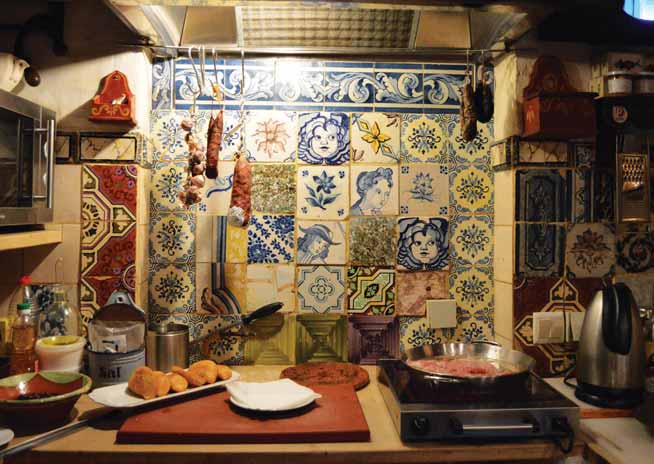
    Our next stop is the more fashionable and most-recently opened “taberna” on our route – Casa da Tocha. Old and new are harmoniously paired in this grand old bar. The owners have painstakingly renovated the original tiles and every inch of the venue they could, to create a very welcoming atmosphere, which is complemented by a hand-crafted bar area (made by Alambre), retro seating and a great pop-up shop area, stocking Portuguese-made items ranging from lightshades to artisan beers. The house drink is vermouth, but they also have some excellent wines etc., and the tapas menu constantly changes, depending on the season.

    The next stop is Taberna Cool 33, located on a side street between Rua Direita and the Praça da República. Adorned with a large bougainvillea, at the entrance, once inside you find an inner courtyard, surrounded by small, cosy rooms, with a bar area and a wine bar. Tiago has been running the bar for some time now and has a regular clientele, who enjoy his hospitality and varied menu, which now includes lunch. The famous Wednesday “after-work” DJ session is complemented by drink and food promotions to break up the week.

    Just around the corner is Tasca Porta Velha. Owner Luís Coelho is always around, in fact he lives here. Originally meant to be his home, and nothing more, after friends insisted that the space would make a wonderful bar, he decided to take their advice and began collecting bric-a-brac and upcycling unwanted items to create this special, eclectic setting. Serving homemade Portuguese dishes, bear in mind that this “tasca” only opens at 10.00 pm.

    Selling canned fish and much more besides, Maria do Mar, on the Rua Direita, has reintroduced canned fish to Portimão, once a hub of the canning industry. Benefitting from the recent image overhaul enjoyed by canned fish, Maria do Mar uses sardines etc. as a great tapas topping, serving them with liquid refreshment, or selling them in their delightful retro packaging.

    The area around the Rua Dr. José Joaquim Nunes has witnessed the arrival of a number of new taverns, including Taberna de Portimão, Tasc’alado and TasCa, all adhering to the same winning formula, using local material to transform old buildings and local produce to whet our appetites.

    Restaurante Lusana has been around for years, but has now opened a lovely little “wine bar” area at the end of the restaurant, where you can enjoy the specialities of the house with some beautiful Portuguese wines.

    Our last stop on this very enjoyable trip around Portimão takes us back to the riverside and to a large, stone-clad tavern known as Tapa Latina. With a large central bar, tapas on display and a sunny terrace, it’s the perfect place to end our tour. There’s no better way to discover the city than sampling the tasty titbits it has to offer.

    1 – Taberna da Maré (13h00-15h00; 19h00-23h00 – Closed on Monday) – Travessa da Barca, 9

    2 – Tasca Almareado (20h00-02h00 – Closed on Monday) – Travessa da Barca, 18

    3 – Tasca Chique Dona Benta (12h00-24h00) – Rua da Barca, 1

    4 – Velocity Café (18h00-24h00 – Closed on Monday – Rua Stª Isabel, 5

    5 – Casa da Tocha (12h00-24h00 – Closed on Sunday) – Rua Sr.ª da Tocha, 24

    6– Taberna Cool 33 (Monday – Saturday 12-3 & 6-late) – Rua João Anes, 33

    7– Tasca Porta Velha (Monday – Saturday 22 til 04) Travessa Manuel Dias Barão, 3

    8– Maria do Mar (11h00-21h00 – Closed on Sunday) – Rua Direita, 89

    9– Taberna de Portimão (12h00-02h00) – Rua Damião Faria e Castro, 6

    10 – Tasc’alado (16h00-01h00 Closed on Monday) – Rua Dr. José Joaquim Nunes, 13

    11- Lusana – Rua Dr. José Joaquim Nunes, n.º 6 (11.30 – 23.00 – Closed on Sunday)

    12– TasCá (12h00-01h00) – Rua Júdice Biker, 24

    13 – Tapa Latina (12h00-22h00 – Closed on Wednesday) – Largo do Dique, 16

    Text Mia Wallace

    Photos Sara Alves