Category: Must Read

  • It’s all about the beer

    It’s all about the beer

    [inpost_galleria thumb_width=”175″ thumb_height=”175″ post_id=”1683″ thumb_margin_left=”3″ thumb_margin_bottom=”2″ thumb_border_radius=”2″ thumb_shadow=”0 1px 4px rgba(0, 0, 0, 0.2)” id=”” random=”0″ group=”0″ border=”” show_in_popup=”0″ album_cover=”” album_cover_width=”200″ album_cover_height=”200″ popup_width=”800″ popup_max_height=”600″ popup_title=”Gallery” type=”yoxview” sc_id=”sc1473251716084″]

    Liquid gold is probably the most important thing at Oktoberfest, but there’s much more to it than that.

    In Rio de Janeiro, Brazil, they live for Carnival, in Munich, Germany, for the Oktoberfest. When one is over, it’s time to look forward to the next. But what exactly is the Oktoberfest?

    The Oktoberfest tradition started in 1810, to celebrate the marriage of Bavarian Crown Prince Ludwig to the Saxon-Hildburghausen Princess Therese. The citizens of Munich were invited to join in the festivities, which were held over five days in the fields in front of the city gates, since known as the Theresienwiese gardens, in honour of the Princess. The main event of the original Oktoberfest was a horse race. The event was so successful that they decided to hold the horse race the following year and then every year after that, before the celebration eventually evolved into the massive festival we know today, with 568,000 visitors in 2015. But if you live in the Algarve you don’t need to travel to Munich to enjoy the genuine Oktoberfest-feeling.

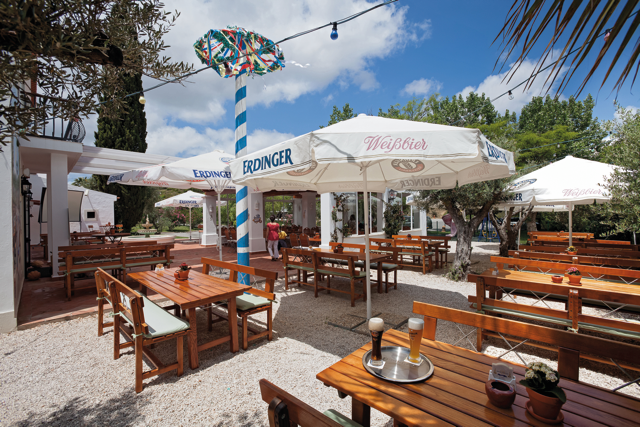
    Since 2012, Vila Vita Biergarten, in Porches, has been holding its own annual Oktoberfest celebrations. This year they will be held between September 29 and October 5. The authentic Munich-style beer garden is located just off the EN 125, off the Porches roundabout, and features staff in Dirndls and Lederhosen, the traditional Bavarian costumes, as well as vivid murals portraying scenes from Bavarian life. Open all year, the restaurant will be particularly lively during Oktoberfest, with music every evening provided by the famous Münchner Gaudiblosn band, special menus with German delicacies throughout the week, and of course plenty of Erdinger beer, made by one of Germany’s most celebrated breweries.

    Highlights on the menu prepared by executive chef Manfred Kickmaier include traditional Bavarian appetisers and sausages, authentic and delicious side dishes and the bestseller, crispy knuckle of pork (Schweinehaxe). The meat melts with every bite, while the crispy touch makes your mouth water. A dish to die for!

    Start with a Brezel, the traditional German bread, in the shape of a loose knot, salted on the outside, together with Bavarian Obatzda, a cheese spread, the rich and exquisite flavour of which results from the perfect combination of three kinds of cheese. Try the Spätzle, one of the Biergarten’s specialities. This is made with dough, cooked in boiling water, before being sautéed with lots of onion, garlic and two types of cheese. Finally, it’s topped off with a crispy touch of pan-fried onions. When it comes to sausages, take your pick from Weißwurst, Currywurst, Thüringer, Nürnberger, Wiener or Merguez. Boasting an array of authentic flavours and a variety of herbs and spices, these sausages are prepared with the best organic pork and beef from Vila Vita Parc’s on-site butcher’s. The butcher’s works to the “Farm to Table” concept: the meat comes from Vila Vita Parc’s Herdade dos Grous estate, near Beja in the Alentejo and is prepared into delicious cold cuts and sausages at the on-site butcher’s. This way, Vila Vita Parc can control the quality of its meat from its origins, right up to the final product. The estate rears regional and local breeds, in the open, feeding them on the best pasture. This is reflected in the high-quality meat joined by side dishes such as potato salad, Sauerkraut, red cabbage, bread dumplings, sautéed potatoes or herb Spätzle, to make a perfect meal. You’ll be spoiled for choice! And of course, to end the meal in the best possible way, homemade Apple Strudel, served with whipped cream.

    Ensuring the theme of the festival, Erdinger beer, in its Kristall, Weiß or Dunkel versions. The latter is even used at Vila Vita Parc Biergarten as an ingredient in its delicious freshly-baked bread, and to make ice cream and sauces.

    Joining fine Bavarian beer, there is another, new drink, currently enjoying huge success at Vila Vita Parc, which will also be available at the Biergarten during the Oktoberfest – sangria made with beer and apple juice.

    With its relaxed atmosphere and children’s play area in the gardens, the festival is a great treat for the whole family. During the Oktoberfest, the Vila Vita Biergarten will be open from 1pm to 10pm, with the band playing from 7pm onwards.

    Tel 282 381 177


    www.vilavitaparc.com

    Text Anabela Gaspar


  • EXPLOSIVE SPIRIT

    EXPLOSIVE SPIRIT

    [inpost_galleria thumb_width=”175″ thumb_height=”175″ post_id=”1610″ thumb_margin_left=”3″ thumb_margin_bottom=”2″ thumb_border_radius=”2″ thumb_shadow=”0 1px 4px rgba(0, 0, 0, 0.2)” id=”” random=”0″ group=”0″ border=”” show_in_popup=”0″ album_cover=”” album_cover_width=”200″ album_cover_height=”200″ popup_width=”800″ popup_max_height=”600″ popup_title=”Gallery” type=”yoxview” sc_id=”sc1467804210132″]FROM VOLCANIC PEAKS TO THE END OF THE WORLD

    
    The Algarve is a wonderful melting pot of nationalities and very often a new-found home for free spirits from all over the globe. This motto can easily be extended to both the latest super premium vodka to be launched on the market, VOLCANIC, and its front man in Portugal, Arni Elliot.
    Inside magazine met up with Ferragudo resident and Icelander Arni, to discover the connection between the two.
    “In 2010 my partners were brainstorming for a name. They wanted it to be something powerful, something very ‘Icelandic’, and had been toying with the idea of using something to do with volcanoes, but weren’t completely convinced. It was then that Eyjafjallökull famously began to erupt and became a huge, worldwide event, reaching and affecting millions of people overseas, despite being a relatively small eruption. With the eruption, the deal was sealed. It reflected just what we wanted to do: we are small but want to go far! It seemed only right to honour our country and the enormous power of its nature by naming the brand Volcanic,” Arni explains.
    “The company was distilling and producing spirits and coolers for the Icelandic market when, in 2013, I joined them and we began experimenting with new, high-quality materials, a new image and a foot in the southern European market, where I’ve been living for some time,” Arni adds.
    This vodka is truly an international product. The grains come from the Champagne region, in France. The spirit is distilled in Iceland, and packaged in a designer bottle, from France again, before being sealed with a high-quality wooden bottle top, from Italy. “We wanted to use cork stoppers to add a little bit of Portugal into the blend, but during the testing process, we found that cork and pure vodka were not compatible as the cork can taint the colour and taste, which obviously wouldn’t work out. It’s a shame, but the Italian wooden option is incredibly stylish and was the sensible choice,” Arni continues, adding, “The branding has been a lot of fun, thanks to the creative input of fantastic Scottish artist, Beau McClellan.” Beau is famous for his spectacular light installations. With his passion for lighting design, Arni tells us how, “the glass that we chose was a perfect background for Beau to work with, as it absorbs light, and obviously vodka is a clear spirit, so the bottle quickly adapts to its surroundings, which has a really dramatic effect on the shelf”.
    VOLCANIC is to vodka what Remy Martin XO is to cognac and Icelandic water is considered to be amongst the best and purest in the world. Compare the qualities associated with Scotch whisky, which are due to the water and you’ll soon get the picture.
    Arni has been busy discussing events with luxury resorts all along the Algarve. The response has been amazingly warm and positive with some of the big players already on board and local distributers Wine Emotions, from Parchal, signed up to take care of things. We can see a very bright future for this icy cool, cosmopolitan newcomer, emerging onto the premium market with the ultra smooth, VOLCANIC VODKA following three years of development. The vodka is now ready to launch, with the first bottles already being sampled and considered for bar lists in some of the top resorts along the coast.
    40% proof, with a warm, smooth finish, this vodka is best served super chilled and neat. Volcanic Vodka is distilled seven times and filtered through rock and lava in the distillery in Reykjavik, Iceland by a young, independent team, with its driving force in Ferragudo. We wish them every success.

    www.volcanic.is

    TEXT MIA WALLACE
    PHOTOS CHLOE OPHELIA

  • A BLAST FROM THE PAST

    A BLAST FROM THE PAST

    [inpost_galleria thumb_width=”175″ thumb_height=”175″ post_id=”1604″ thumb_margin_left=”3″ thumb_margin_bottom=”2″ thumb_border_radius=”2″ thumb_shadow=”0 1px 4px rgba(0, 0, 0, 0.2)” id=”” random=”0″ group=”0″ border=”” show_in_popup=”0″ album_cover=”” album_cover_width=”200″ album_cover_height=”200″ popup_width=”800″ popup_max_height=”600″ popup_title=”Gallery” type=”yoxview” sc_id=”sc1467805123202″]

    CONTEMPORARY ARTIST BRINGS HISTORY BACK TO LIFE

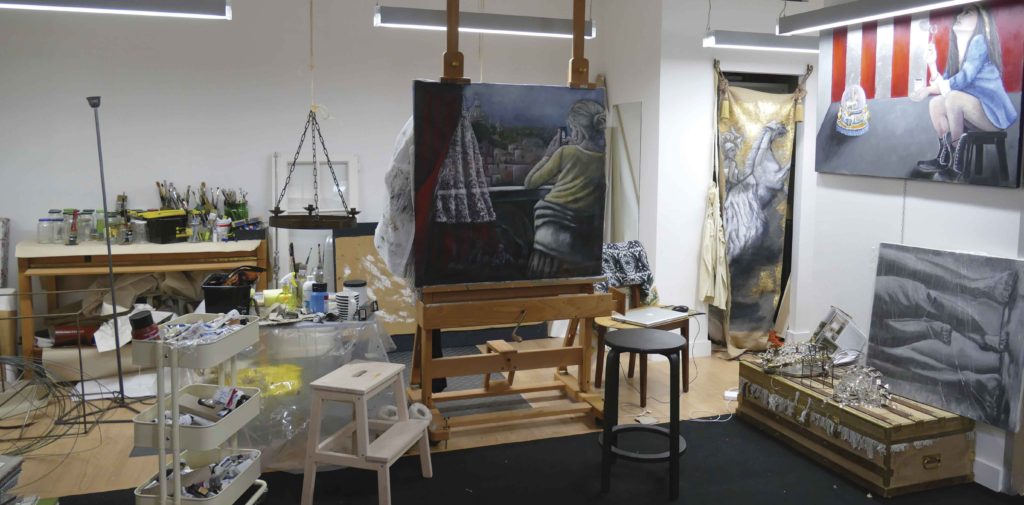
    Artist Rosário O’Neill was born in Portimão and has now returned to her hometown, where she has since opened an atelier, interior design studio and shop, in the heart of the city centre shopping area, with good friend and colleague, Maurícia Patrício. Having gained a degree in economics and entered the professional world, Rosário began to find a little spare time and was able to join a painting group with friends, in 2008. Her natural instincts and love of restoration pushed her towards finding a creative style, experimenting with materials and techniques, which are now clear to see in both the ‘Rosário O’Neill’ and ‘Eastlondon’ collections.
    Back in 2010, Rosário felt strongly motivated to start exhibiting her works, and decided to dedicate most of her time creating exclusive and original pieces.
    Painting on canvas was the original focus, depicting her very distinctive style where history and modern day combine to tell a story. Rosário explains: “I like the parody of old and new creating a unity and bringing historic moments in line with the present day. I feel a real connection with the past.” Many of the pieces on display in the Portimão studio are created with fabulous old clothes trunks, which have been lovingly restored, before Rosário’s paintings are placed inside them and various finishing touches are applied, ranging from lamps and display cabinets to bars. The trunks are sourced
    from antique fairs, bric-a-brac shops and online. “Imagine where these trunks have been. What they have ‘seen’. This is what attracted me to them in the first place. They fit perfectly with my artistic ethos. I’ve found some absolutely amazing trunks that still have their original packaging labels on them, which are a real find and add to the authenticity of the final piece,” Rosário explains
    Rosário spends a lot of time finding and restoring the wonderful antique items that become a part of her art.
    “I’m always buying things on my travels and have a habit of picking up used common objects and putting them into storage. I know I will use them someday. They are subsequently transformed through painting and other mixed techniques, thus allowing them to have a new soul and enhance their characteristics. The aim is to create a special reference, with a bold personality and enable constant interaction with their surroundings,” Rosário reveals.
    In 2014, Rosário was invited to exhibit in Milan, showing her work in an international exhibition, which was attended by several art curators and critics. Her works were well received and considered amongst the latest contemporary trends in mixed media art.
    Progressing on her artistic journey, as the only Portuguese artist at the event, Rosário was invited to exhibit at one of the world’s most important contemporary art events – the London Art Biennale, in January 2015. In October 2015, Rosário showed her collection at the Florence Biennale, while in April 2016, invited by a prestigious New York gallery, her works were present at ArtExpo 2016, in New York City.
    Rosário’s works are now starting to be recognised abroad, through several commissioned exhibits and international contemporary events.
    ArtExpo, in New York City, was the backdrop for a series of six paintings, “Light Shadow” and “Post-modern State I, II, III, IV e V”. “Light Shadow” is a dark piece, which is based on a blend of the legend of Romulus and Remus and Christianity in Roman times, contrasted with a young modern-day lady, capturing the view on her mobile phone. The five pieces making up “Post-modern State” are of a much lighter subject matter and jovial nature, depicting a young, modern man dressed as Charlie Chaplin, going about his modern-day life, and featuring references to Apple, McDonald’s and the obligatory modern accessory, a smart phone. While these paintings are classic Rosário O’Neill,
    “Light Shadow” sees her style evolving. Eastlondon is a new project, which, ultimately, complements the artist’s technique, but which takes her passion to another level.
    “You will notice that the east side of major cities are usually the creative hubs, a place where things usually progress a little later, by their geographical nature and where the sun rises. I think this is why artists congregate in the east side. Eastlondon, for me, is the essence of what I love, combining old and new and creating a functional, bespoke piece that will improve in its surroundings and ultimately make an impression on whoever views it.
    My latest creations include a vintage clarinet, which I restored and created an acrylic lamp base to cradle it, which is topped by a modern lampshade; a distressed goatskin fireplace chair, wrapped in gold leaf; a huge ornate chandelier and an acrylic case, containing a suspended painting,” Rosário tells us.
    Her work is bound for a solo exhibition in New York in 2018, but for now, you can find it at MP “Interior Concept”, at Rua Vicente Vaz das Vacas 41A, Portimão.
    www.rosariooneill.com

    Text MIA WALLACE
    Photos MIA WALLACE & ROSARIO O’NEILL

  • JUMPING FOR JOY

    JUMPING FOR JOY

    [inpost_galleria thumb_width=”175″ thumb_height=”175″ post_id=”1598″ thumb_margin_left=”3″ thumb_margin_bottom=”2″ thumb_border_radius=”2″ thumb_shadow=”0 1px 4px rgba(0, 0, 0, 0.2)” id=”” random=”0″ group=”0″ border=”” show_in_popup=”0″ album_cover=”” album_cover_width=”200″ album_cover_height=”200″ popup_width=”800″ popup_max_height=”600″ popup_title=”Gallery” type=”yoxview” sc_id=”sc1467805021853″]

    ALGAR SECO CLIFF JUMPERS ARE MAKING A BIG SPLASH

    Cliff jumping may seem like a crazy new adrenaline activity, but it’s actually been around for a very long time. It was first documented in 1770, when Kahek- ili II, king of Maui, engaged in a practice called “lele kawa”, which in English means to leap into the ocean, feet first, without splashing.
    The king’s warriors were challenged to participate, proving in the process that they were courageous and loyal to the king. The practice later developed into a competition, under King Kamehameha I, where jumpers were judged on their style and amount of splash upon entering the water.
    As with most things, they evolve and take on their modern- day form, making them more accessible.
    Young, local entrepreneur, Sebastien Kock, founded Algar Seco Cliff Jumpers in 2015.
    “I’ve been cliff jumping at Algar Seco for years, and it’s something that is quite a tradition here in Carvoeiro. My passions are videography and adrenaline sports, so this was a fantastic outlet for me,” Sebastien explains.
    Algar Seco Cliff Jumpers held its first event in the summer of 2015, attracting around 80 people. “The people who came were a really mixed bunch of many different nationalities, ages and fitness levels. Some people just do it for fun but there are quite a few who are fitter and more gymnastic; they take it much more seriously,” Sebastien reveals. The event incorporates two main stages. The first and lowest jumping
    point is around a 10-metre drop into a depth of seven metres, while in the second, there is a jaw-dropping 30 metres of nothingness between the jumper and the sea below.
    Algar Seco is a very popular area because of its cliff formations and the area is relatively safe for jumpers, without many underwater rocks, and the excellent bonus of “smugglers steps”, enabling the participants to climb back up into the cliffs with ease.
    Jumping from this famous local landmark is nothing new and has been taking place for as long as people can remember. What is new is that Sebastien saw an opportunity
    to unite likeminded people in a social gathering and create an official event.
    Algar Seco Cliff Jumpers has been attracting commercial interest across the globe, from Indonesia to Poland. The people behind ‘Big Swings’, the cliff jumping app, have been in touch with a proposal, and most recently, Portuguese TV channel TVI.
    The success of Red Bull Cliff Diving is something to bear in mind. Starting in 2009, it now has a highly respected world series, with a huge following and a stop in São Miguel, in the Azores. Sebastien is in discussions to bring the event to the Algarve, which will hopefully become an extreme sports destination in the near future.
    One can only imagine why it’s becoming so popular. Voices of mothers, shouting: “If someone told you to jump off a cliff, would you?” spring to mind. Perhaps it’s because cliff jumping is probably the least complicated extreme sport, with no equipment, special clothing or provider services to pay for. It’s just your body, falling through the air from dizzying heights and plunging into a body of water below – “man against the sea”. The highest jump would be the equivalent to jumping off an eight-storey building.
    The 2016 Algar Seco Cliff Jumping event is scheduled for August 7 and has attracted huge interest, both locally and internationally, with around 400 people expected to turn up on the day. The event is free of charge and open to everyone. You can keep up to date with events and progress via the Facebook page Algar Seco – cliff jumpers

    TEXT MIA WALLACE

  • LAGOA’S GOLDEN COAST

    LAGOA’S GOLDEN COAST

    [inpost_galleria thumb_width=”175″ thumb_height=”175″ post_id=”1602″ thumb_margin_left=”3″ thumb_margin_bottom=”2″ thumb_border_radius=”2″ thumb_shadow=”0 1px 4px rgba(0, 0, 0, 0.2)” id=”” random=”0″ group=”0″ border=”” show_in_popup=”0″ album_cover=”” album_cover_width=”200″ album_cover_height=”200″ popup_width=”800″ popup_max_height=”600″ popup_title=”Gallery” type=”yoxview” sc_id=”sc1467804768196″]

    JOURNALIST ANABELA GASPAR TAKES US ON A GUIDED WALK ALONG ONE OF THE MOST SPECTACULAR STRETCHES OF COASTLINE IN THE AREA

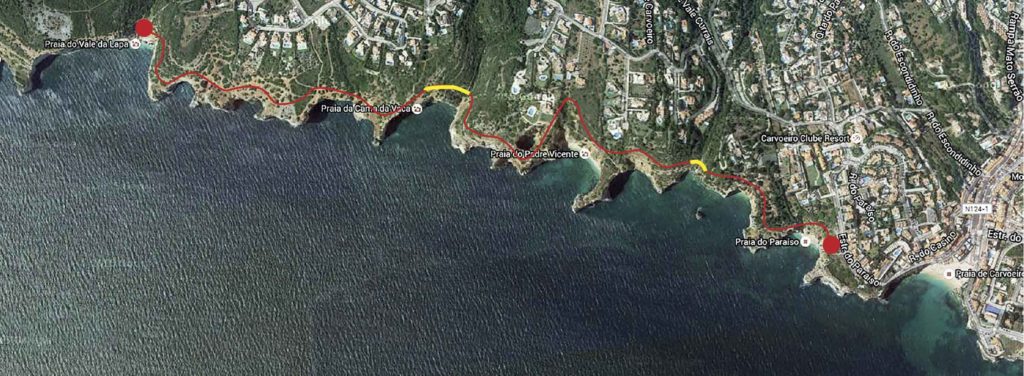
    Awalk along Lagoa’s coastline is a thrill, no matter how many times you do it. For this issue, we discovered the stretch between Praia do Paraíso and Praia do Vale da Lapa – an un-signposted section.
    No matter how many times I walk above Lagoa’s cliffs, I am always left speechless by its stunning scenery. The entire coastline is shaped by an array of rugged golden cliffs, dotted with sinkholes, arches, caves, evergreen pine trees and mastic shrubs, and washed by the shimmering vast Atlantic Ocean. And yet, along the coast’s various sections nature offers ever-new perspectives, and always appears different to the viewer. When we took these photos in early spring, the cliffs were at their greenest with Bermuda buttercup blossoms here and there. Our starting point is Praia do Paraíso (paradise beach) west of the well-known beach of Carvoeiro. This small, sheltered bay, boasting fine sand and clear water, more than deserves its name. As the beach is only accessible via a long, steep staircase there will always be a little spot for your towel here, even in the height of summer. But the beach is not our destination today, despite clear skies and sunshine. In the car park we take some pictures of the bay, and down the white cobblestone stairs nestling in the slope, before passing the restaurant, and joining the trail above the cliffs. From here the white houses above the bay shine in the spring sunlight and you can spot a small cave on the beach’s eastern side. Soon Vale Currais beach extends before us, to the west. Fine sand is nowhere to be seen. Instead black rocks protrude from the water. Red cliffs protrude skyward, in a distant nod to America’s magnificent Grand Canyon. This isn’t the work of the sea’s erosive powers, surely, rather that of a talented sculptor? These natural sculptures also remind us that these rocks won’t be here forever. So be careful, especially where the path passes close to the edge and also when descending into the valley to the west of this beach.
    The fence along the path is a great support in this respect, preventing walkers from slipping. The path heading up the other side of the valley proves just as steep. This stretch of coastline doesn’t require the height of fitness, we just managed it after all, but it isn’t suitable for people with walking difficulties or children. A magnificent view from the headland at Praia Salgadeira will reward you for your efforts shortly after, stretching to Lagos and Ponta da Piedade in the west and on a clear day you can even make out Sagres on the horizon. The sandy Padre Vicente beach extends west of the headland. Girdled by a group of caves, this bay is one of Lagoa’s many wild beaches that can only be reached by boat. Even though there’s a ladder at the western end, down which you can climb to the beach, the fence above the rocks blocks any access to driveable tracks. The path leads slightly below the cliff line at this point, around the cleft in the valley and then along a property fence back to the edge. Here we find one of the largest sinkholes along Lagoa’s coastline. We had been looking forward to peering down into the depths, onto the turquoise water below, but soon realise that the land is private and therefore fenced in. Slightly disappointed, we continue down into the valley of Cama da Vaca beach. At this point we lose our bearings and end up on a tennis court far from the cliffs. It is best to stay as close as you can to the edge, we learn. The path bends round the rock and then descends steeply. The Cama da Vaca beach, the strange name of which (cow bed) I will make no comment, is allegedly one of Lagoa’s best kept secrets. It is a small space – where you could only fit a cow, hence the name, perhaps – below a cliff, of which not a single centimetre remains dry at high tide. Like most beaches in this coastal section, it is only accessible by boat.
    Then we head up the steep track, onto the cliffs again. Half way up my slightly out of breath walking partner remarks: “This is almost like on Kilimanjaro!” A slight exaggeration of course, but I must admit that the ascent is quite a challenge and I reach the top in a sweat. The last part however is pretty simple and flat. To the east we can see the whitewashed houses of our starting point (Carvoeiro) in the distance and not far away to the west lies our destination, Vale da Lapa beach. Shortly before Vale da Lapa I find myself standing on a rock jutting out into the sea, from which the view over the coast is incredibly beautiful. I take a deep breath of the fresh salty air,
    enjoying the views in all directions. In my mind I see the scene in which Leonardo Di Caprio stands with open arms at the bow of the Titanic and I’m tempted to scream out “I’m the King of the World”. But the dizzy height I find myself at stops me. After all, I am standing on a rock just a metre and a half wide, about twenty metres above the shimmering waters below. Shortly after this quick little detour we reach our destination, one and a half hours after setting off. This beach is also very small and entirely flooded at high tide, but it is accessible by land, over a wide, driveable dirt road at first, followed by a rocky track.
    The return trip is a little quicker, not least because we’ve already taken so many amazing pictures on the way there. But we still come to a halt now and then, in contemplative admiration. There are always new things to see, even the way the light falls makes the rocks seem different now.
    

    PHOTOS ANABELA GASPAR & SUSANNE RÖHL

  • AN EVERGREEN WORLD

    AN EVERGREEN WORLD

    [inpost_galleria thumb_width=”175″ thumb_height=”175″ post_id=”1606″ thumb_margin_left=”3″ thumb_margin_bottom=”2″ thumb_border_radius=”2″ thumb_shadow=”0 1px 4px rgba(0, 0, 0, 0.2)” id=”” random=”0″ group=”0″ border=”” show_in_popup=”0″ album_cover=”” album_cover_width=”200″ album_cover_height=”200″ popup_width=”800″ popup_max_height=”600″ popup_title=”Gallery” type=”yoxview” sc_id=”sc1467804609237″]THE LITTLE PICTURESQUE SPA TOWN OF CALDAS DE MONCHIQUE IS THE ANTITHESIS OF THE ALGARVE’S SEASIDE RESORTS

    In Caldas de Monchique, it is easy to think that you are in a different region of Portugal, or even in another country. It is hard to believe that the beach and the sea are a mere 30 kilometres away. Thanks to the humid and mild, sub- tropical maritime mountain climate, the fertile granite soil and the many springs and watercourses, the flora of this town sit- uated at 350 metres above sea level is very different to that of the rest of the Algarve. Besides typical Mediterranean plants, such as oaks and strawberry trees, the specific microclimate also allows for trees and plants that normally grow in more humid climates, such as pine, chestnut and plane trees, or camellias. Many of the lush, densely-packed trees grow to a height of about ten metres and the trunks reach up to two me- ters in diameter. But it’s not only the flora that is different; the buildings in Caldas are not typical for the Algarve and hint at a grand and noble past. All this and much more can be dis- covered on a two-kilometre round tour of Caldas.
    We leave the car at the entrance road and walk the few metres to the main square. From there we follow the road to the right and soon reach the Chapel of Santa Teresa, built in 1940,
    which is made entirely of syenite, an igneous rock that is very common here and therefore perfectly integrated into the landscape. Inside the single-nave chapel there are several tile panels dating from the 18th century, depicting the life of Santa Teresa. The main façade is decorated with a round window, a doorway with a stone frame and a portico supported by pillars. A small park with wooden bridges spanning the stream has been created around the chapel.
    After going round the chapel, we follow the trail directly below the slowly-decaying building to the right of the chapel, and then under the many-century-old, crooked-grown oak, up to the other park of Caldas de Monchique. There are two to three paths leading to this artificially created, exuberantly- growing park. The path to the far right is not suitable for people with reduced mobility.
    The paths lead past watercourses, pools and springs. Aquatic plants similar to water lilies, creepers, herbs, cacti, and colourful flowers and moss on the walls grow in the shade of plane trees, chestnut trees, acacias and eucalyptus trees. Among the plant life there are natural stone steps, granite pool surrounds, tables and benches, inviting you to stay and have a picnic, a labyrinth of narrow and wide channels, as well as large and small pools guiding the water down the gentle slope, and wooden bridges – in short: orderly wilderness.
    Around a dozen springs feed the streams, whose origin may lie high up in the Serra de Monchique. Practically each one of these springs is connected to a popular belief. Such as, for example, the Lovers’ Spring, which flows out of a small pipe on a stone wall in the northern part of the park, below an unsightly green metal door. The lover should return several times to say the name of their beloved and drink from the water, so that the love will be heard or will remain. I’m considering whether I should fill my water bottle with this water, but a few metres further south the Spring of Youth is flowing into a small natural pool. Its water is meant to rejuvenate regular drinkers by six years each year. I’m already in love and married, but I’m certainly not getting any younger. So perhaps I better bottle some of this water, instead?
    Lost in these thoughts, I soon reach the main square. Coins and other items, which were found at the site of the spa, where the modern spa is now located, prove that the Romans already used the local springs, the sulphur-rich, 32oC-warm water of which is said to have therapeutic properties, especially beneficial for sufferers of respiratory diseases and rheumatism. After the Romans left, the place became somewhat forgotten. The Moors were apparently not that interested in the springs. The history of the spa town is only reprised in 1495, when King João II tried to cure his ailments here. Unfortunately, without success. He died in October 1495, in Alvor. Four years later Vasco da Gama opened up the sea route to India, in accordance with the late king’s plans. Shortly afterwards Pedro Álvares Cabral discovered Brazil. The discoveries were in full swing and from Caldas it was a mere three-day trip to Sagres, from where Henry the Navigator sent the explorers into the wide unknown world. Caldas thus became an increasingly popular destination for secular and spiritual nobility.
    After the great earthquake, in November 1755, Bishop Dom Francisco Gomes de Avelar ordered some improvements in the town. In 1773 Caldas de Monchique received the status of small town (Vila). In 1789 the medical properties of the water were examined professionally for the first time and the positive results led to the construction of a hospital. From 1833, the management of the hospital was also responsible for the welfare of the poor population. Seven years later it was nationalised; in 1869 a decree followed, which required a doctor’s visit, before and after bathing in the springs. In 1899 the scientist Professor Charles Lepierre examined the spring water with the result: “This has the highest mineral content of any water I’ve experienced!”
    During the Salazar dictatorship the place lost its charisma. With the Carnation Revolution, in 1974, the town was handed over to state-run Pousada owner Enatour. The houses and the spa were increasingly deteriorating in condition. In 1993 Enatour put the majority of the site up for sale. One year later the Fundação Oriente, a development company of a Macau- born Chinese, bought it. After nearly four years of construction work, the Termas de Monchique hot springs were reopened, in May 2000. Not only did the thermal springs become the best known in the country, but Caldas de Monchique has since developed into one of the region’s most popular attractions. Hardly surprising, since the small town is a haven of peace and the park is an idyllic retreat.
    Most of the buildings in the village centre are owned by the foundation, which operates the thermal baths and serve as accommodation for guests. There are also restaurants, a café and a handicrafts shop, as well as manicured gardens with lush green lawns. It’s not just the former aristocratic residences resembling small palaces that attract our attention. The small details are just as fascinating, such as the retro street lighting, stone-framed windows or even the cute dwellings of Pernalta (“longleg”) the tom-cat.
    The walk then continues behind the building with the Arab windows, under the arcades and then along the slope below the EN 266. We now look onto the pool of the thermal spas hotel and the three-storey building that doesn’t fit within the landscape and the small village at all. Following the cobbled street in front of the hotel’s entrance, we soon pass the filling facility for Monchique’s famed mineral water. The large halls, in which the sulphur flavour is extracted from the water, are even more unsightly than the hotel and would better suit an industrial area. One must, however, try to see the positive side, as the filling facility provides jobs for the local population and the nationwide distribution of its water further shines the spotlight on Monchique. Finally we take the wide path right back to the centre and shortly afterwards relax in front of the Taberna with a glass of wine, looking onto the traditional oven.
    You don’t need to visit the thermal spa in order to feel good and recharge your batteries, a walk through the park and the town is more than enough to achieve this. Especially if you stop in one of the many restaurants along the road on your way home and try something tasty from the mountains, such as cured ham, sausages or ‘migas’ with pork, just as my grandmother used to make!

    TEXT & PHOTOS ANABELA GASPAR