Category: Must Read

  • Oceans of vision

    Oceans of vision

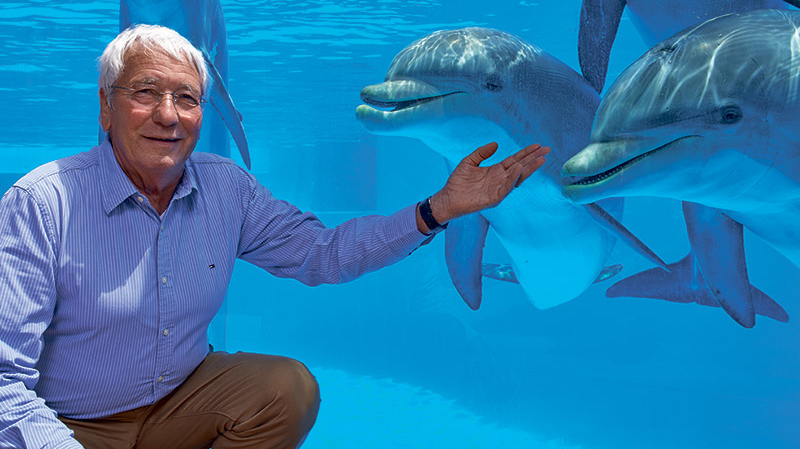
    A look at the history of Zoomarine with its founder

    In 1991 Portuguese-Argentinean businessman, Pedro Lavia, opened the doors to what has been his lifelong dream and an absolutely innovative project in Portugal and a defining element in the Algarve: Zoomarine.
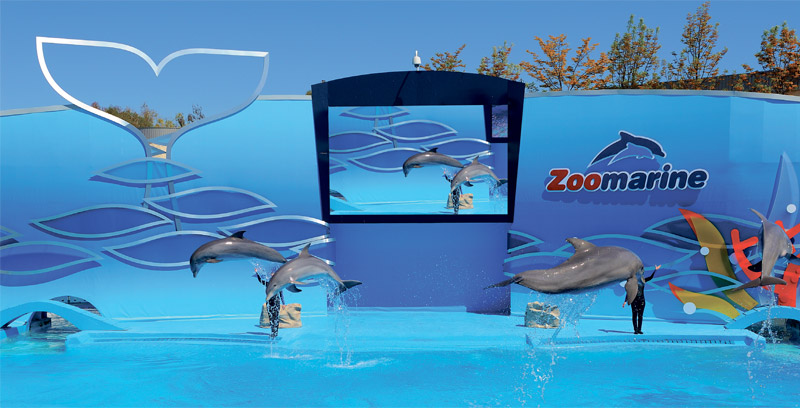
    Boasting a haul of tourism and scientific awards, the team was the first to introduce dolphins to the country and, in 2002, opened the first marine species rehabilitation centre in Portugal, Porto d’Abrigo.
    Pedro Lavia has worked with dolphins for 45 years, still retains his South American accent, and talks in detail about what happens behind the scenes at the park. He is an entrepreneur who is quick to laugh and a much-loved man among his employees. We managed to find out why.

    When you opened Zoomarine’s doors in 1991, was this where you hoped you would be down the line?
    Yes, and I can only thank God and my family and all my employees that brought us to this point. I think that we have greatly exceeded expectations, especially as there was no other project like it. The original idea was to create a park like SeaWorld [in the USA], but we found ourselves adding mechanical attractions and, because of the intense heat of summer, we had to add swimming pools, because the tourists who come here are looking for sun and beach holidays. This ended up changing the format of the project. I am very happy with what we have achieved, but it was thanks to the human capital we have here, our highly dedicated and professional staff, in addition to the magic of our animals and respective shows.

    Tell us a little about your working life. You have been involved in theme parks for 45 years.
    I am Argentinean by birth, Italian by blood – through my grandparents – and I am Portuguese out of conviction. I have Portuguese nationality and I came here in 1988 from Brazil with my wife and children, two of which are Brazilian. I am an engineer and, in 1969, there was an international sea exhibition in Buenos Aires, with the first presentation of dolphins in the country. It was extraordinary because nobody there had ever seen dolphins before. I became a partner of the Americans from this project and I started this life: I worked throughout Latin America, initially only with dolphins, always with the satisfaction that I was introducing them to people for the first time. Back then, many people still thought that dolphins were fish. We were responsible for changing public opinion of dolphins. Educating people is very important and I am proud of the fact that the first dolphins people ever saw in Latin America were mine. The same thing happened in
    Portugal, when I arrived here to present dolphins from Miami.

    How can a park such as Zoomarine educate the public?
    Introducing them to animals, ecosystems. We do it in a fun way, which is more effective, because people learn through the shows. We have an education department, which not only provides training to schools, but also to the public. We are also committed to research; we work with some universities, developing scientific projects and master’s degrees, such as, for example, in the area of reproduction, which is very important, and more. Every animal we have has come to us from other zoos or was born here and we are very proud of this. Just as we take great pride in our close ties with the University of the Algarve, with which we signed our first cooperation agreement back in 1990, before the park had opened to the public.

    In your opinion, what impact has Zoomarine had in Portugal?
    We’re proud of being pioneers, but we didn’t invent a thing.
    We followed many of the models of Disney and of SeaWorld: this project was created while watching others, but while developing our own identity. We are proud to be the tenth best theme park in Europe [in TripAdvisor’s rankings], but we’re really small. The park in first place has 15 million annual visitors, while we only have 500 thousand. We have given the public what they would have liked to have when visiting a park.
    We have great food, sun, staff members that speak an unrivalled number of languages. The feedback we hope tourists give in their home countries is that they had an enjoyable day, in an excellent country, where they were treated well by everyone, in a happy, secure and friendly manner.

    You say that you are Portuguese out of conviction.
    What do you still love about the Algarve?

    It’s my home, my friends, my house, my dream. This park is my dream; it is the land of my children. The Algarve is a paradise. There is no other place with so many nationalities in which I have wanted to live other than the Algarve, for its quality of life, for its climate, its food, security and environmental quality. This place gave me the opportunity to make my dream come true and I am also proud to be recognised. We were awarded the PME Excelência 2015 prize, by IAPMEI and the Portuguese Tourist Board, which was a great accolade.

    Zoomarine is open from 10am until 7.30pm, 7 days a week. www.zoomarine.pt

    Text: Ana Tavares
    Cover photo: Hélio Ramos
  • Top 10 Algarve wines

    Top 10 Algarve wines

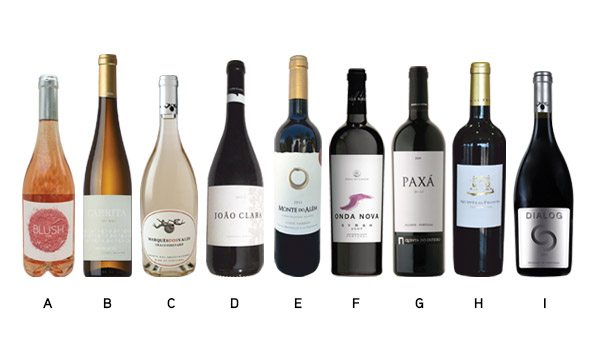
    For the 10th anniversary of Inside Carvoeiro, Algarve-based wine writer, Patrick Stuart, shares his list of 10 favourite Algarve wines as prepared for the special 100th edition of our sister magazine Essential Algarve

    A) Barranco Longo Blush Rosé

    A difficult rosé to beat in the sub 10-euro price range, there are fresh and delicate red fruit notes on the nose and a slight creaminess in the mouth with good acidity with a dry yet fruity finish. A wine that looks and tastes like a Provence pink, but is actually 100% Portuguese, made from the indigenous Touriga Nacional variety right here in the Algarve. | www.quintadobarrancolongo.com

    B) Cabrita Moscatel White

    The Muscat (Moscatel) grape is mostly used in Portugal to produce fortified wines but there are a few exceptions, one of them being Cabrita here in the Algarve. On the nose there are floral and green fruit notes with great freshness in the mouth and just a touch of sweetness on the finish, pairs well with spicy Asian food. | josemanuelcabrita.wixsite.com/quintadavinha

    C) Grace Vineyard White

    The white wines of Quinta dos Vales are quite different from those of any other producer in the Algarve, or in the Alentejo for that matter. This producer has always had a strong focus on its whites, creating wines with a characteristic freshness and delicate structure. Top of the pile is this Grace Vineyard, the dominant grapes of which are Viognier and Arinto. | www.quintadosvales.eu

    D) João Clara Negra Mole Red

    Not easy to find but worth looking out for, this light bodied red made from the local Negra Mole variety will bring a smile to the face of any Pinot Noir lover. The winemaker, located in Alcantarilha, has nurtured this humble variety to give us a smooth and delightfully light wine in the Burgundy style, with typical leathery notes along with fresh berry fruits on the nose and a velvety smooth finish. | www.joaoclara.com

    E) Monte do Além Petit Verdot Red

    Monte do Além is a small Belgian-owned winery located near Odiáxere in the west Algarve, where a great deal of care goes into making wines as naturally as possible. This Petit Verdot varietal stands out as one of the best examples. On the nose, there are rich dark berry notes with very wellintegrated oak, firm and full bodied in the mouth, with present but nicely rounded tannins, and a very fresh finish. | www.monte-do-alem.com

    F) Onda Nova Syrah Red

    The Syrah grape is the foreign red variety to have had most success here in the Algarve and one of the first producers to make a varietal from the grape was Sir Cliff Richard’s Adega do Cantor (the winery of the singer). Many producers in the Algarve produce good quality Syrah but we singled this one as it represents very good value for money and is easy to find in the shops. | www.winesvidanova.com

    G) Paxá Special Red

    This premium label from Paxá near Silves is a big, bold and powerful red made from Syrah, Aragonês and Alicante Bouschet. Intense and jammy forest fruits on the nose with well-integrated oak. Rich and smooth in the mouth with a long finish this wine is an excellent companion to hearty winter dishes like a nice lamb stew. | www.paxawines.pt

    H) Quinta do Francês Red

    The winery produces various excellent wines and this main label blend made from of Cabernet Sauvignon, Syrah and Aragonês grapes is a full bodied and elegant wine with ripe dark and red fruit flavours. This producer allows the wines to mature in the bottle before releasing. | www.quintadofrances.com

    I) Quinta dos Vales Dialog Red

    The premium red wine from this multi-award-winning producer, Dialog 2011 (the vintage currently on the market) is a blend of 60% Cabernet Sauvignon and 40% Petit Verdot. This is a wine of great structure with spicy and chocolate notes marrying with dark berry fruits on the nose. Full bodied with well-rounded tannins in the mouth, good  acidity and long dry finish. | www.quintadosvales.eu

    Viognier (varietals) Whites | www.essential100.info

    To single out any one producer of Viognier as a varietal would be very difficult. Much like Syrah, the Viognier grape has adapted extremely well to the Algarve and many of the region’s producers make excellent examples, amongst the Quinta dos Vales, Quinta do Francês and Adega do Cantor.

  • Perfectly Stela

    Perfectly Stela

    Abstract art for all

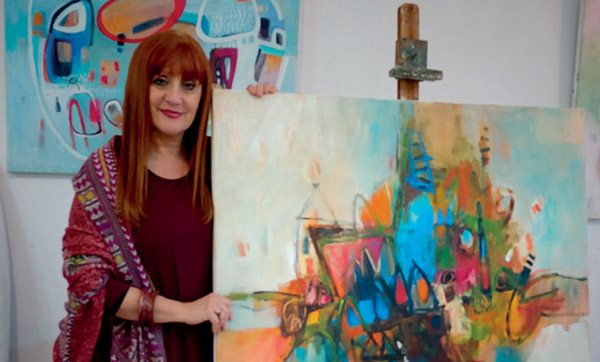
    Well-known in the Algarve art scene, Stela Barreto is a colourful, friendly, authentically creative artist and teacher preparing for a

    solo exhibition at the Galeria de Arte in the Lagoa Adega (winery) from April 2017. As she prepared for the exhibition at her Portimão studio, Atelier 34, she described the long journey, via classical training, which has lead to her love of expressionism and abstract art.

    Aged seven, Stela began painting portraits, progressing in her teens to oils and more complex methods. Her father was not keen on her pursuing her dream of becoming an artist, but at 16, a persistent Stela saved up for a Spanish art correspondence

    course. She attended Lisbon’s António Arroio Art School and after graduating began painting professionally and teaching art.

    Comfortable with her academic techniques, Stela began to explore abstract methods: “The fabulous Carlos Lança saw my work and really liked it: I was thrilled, it was a real honour! However, he told me that I wasn’t expressing myself. I took his advice on board and began to explore inwards, learning how to use my right brain as it controls three-dimensional sense, creativity, and artistic senses. I started to draw freestyle and found my path,” she explained.

    The first drawings were a little dark, but they finally evolved into something that Stela could work with. As her style began to take shape, this evoked new, fresh ideas and a lust for new mediums: “I don’t want to be dependent on one method. I’m experimental – I need to discover what’s inside of me! I go through phases: it can be two or three at a time,” Stela continued. “I have to be myself. I must paint in solitude. It’s a dialogue between the painting and me: it’s my work.”

    The works that Stela has prepared for the Galeria de Arte exhibition are slightly darker than last year’s collection and include portraits and architectural/landscape pieces. That’s how she works: ever changing and creating her art from within. Atelier 34 is a studio, teaching space and creative hub where Stela holds musical ‘happenings’, with talented musicians playing concerts for an audience of artists and art lovers. Donations of €5 are taken at the door and the attendees are entered into a draw where one of the lucky entrants will win a painting by Stela. You can keep up to date with events at Atelier 34 via Facebook.

    Stela’s new love is her baby grand piano, which she is learning to play: “Art and music go hand in hand,” she said. “If you can compare a classical music composition to a canvas, the piece of music will often have long, purposeful silences, spaces in time, and these can be more powerful than the main chorus of the song. The canvas can have big blocks of space and they contribute to the overall impression of the piece.” Stela continues to dedicate herself to art classes and running workshops. As a founding member of the INICIARTE group, she founded the School of Art at the Casa das Artes in Portimão. Twice a week, a mixture of young people preparing for university, and older students, gather to learn techniques and improve their skills.

    MONTRADARTEKIDS is a joint project with her artist daughter Sofia Barreto teaching young children to promote their creativity, development, self-esteem and to express themselves via art. Stela told us: “It’s so very important for these children to have the opportunity to learn about art and use it for their brain development. Learning how to use the right brain through art has changed my life for the better and I love to share that.”

    www.iniciarteartista.blogspot.pt | facebook.com/iniciarte.associacao
    www.montradartekids.blogspot.pt | facebook.com/vanessa.barreto.5070
    Text: Mia Wallace
  • Setting the wheels in motion

    Setting the wheels in motion

    Getting around the parish of Lagoa has never been easier

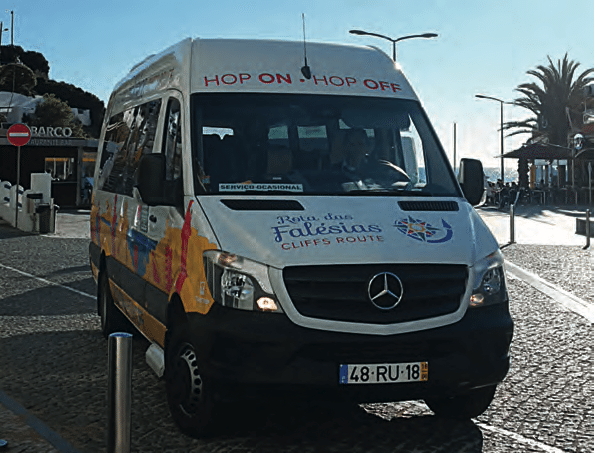
    The comfortable, flexible hop-on, hop-off Rota das Falésias (cliffs’ route) minibus service is a great way to see the sights of Carvoeiro, Ferragudo and Lagoa. The 20-seater, air-conditioned Mercedes Benz minibus runs every half hour, seven days a week, with passengers able to hop on and off as many times as they like, buying either a 24- or 48-hour ticket.

    So, for an interesting day out, you could catch the morning bus from Clube Atlântico, have breakfast by the beach in Carvoeiro or Centianes, then head inland to Lagoa. Perhaps pop into the Convento de São José and check out an exhibition or visit the fabulous art gallery, Galeria de Arte, in the old winery beside the EN125, enjoying some fair trade coffee with your art or maybe a spot of people-watching at one of the many roadside cafes. Hop back on and take the coastal road to beautiful Caneiros beach, home of the stylish fish restaurant, Rei das Praias. Near Canerios bus stop you will also find Saluki, a brilliant Moroccan-inspired restaurant, with lounge bar, roof terrace and swimming pool open to patrons.

    If you head to Praia Grande beach, you’ll find four very different beach bars and a Kayak/Stand-up Paddleboarding kiosk; Club Nau has a delicious new sushi menu, live music several days a week and an outstanding wine/cocktail selection. Back on the bus, you could pop into the sleepy fishing village of Ferragudo, walk through the tiny cobbled streets, browse the shops and lunch at one of the many decent restaurants, such as Borda do Cais on the harbour front – a real treat for fish lovers. Nearby is a great marine biologist-run excursion company, Wildwatch, which has an excellent success rate finding wild dolphins.

    This fabulous service has stops at Clube Atlântico, Rocha Brava, Palm Gardens, Tivoli Carvoeiro, Algar Seco, Carvoeiro square, Monte Carvoeiro, Sesmarias, Caneiros, Vila Castelo, Ferragudo centre and Lagoa library.The Spring/Summer schedule is 9am until 11pm. Tickets cost €10 for 24 hours and €15 for 48 hours. In a first for Portugal, electric bikes can now be rented in Carvoeiro’s

    main square. The network includes 20 state-of-the-art e-bikes, all equipped with GPS and 3G communications, as well as alarms and other anti-theft and anti-vandalism devices. With bikes and charging points based in Carvoeiro, Ferragudo and Senhora da Rocha (Porches), the bikes can be rented automatically with a membership card or by downloading the Bewegen Lagoa app on iPhone and Android smart phones. Membership cards or occasional user passes can be bought at docking station, with prices ranging from €5 to €80. Residents can buy six-monthly or annual subscriptions for €72 and €108 respectively (a Portuguese tax number and address are needed for the residents’ subscription). Smart bikes are exactly that: they know where they are, and where they’ve been. Using the website and mobile app, you can track your previous bike routes, see how far you have travelled, check the time of your trips, and much more. The great news is that they can be ridden for a full day and still have battery life remaining.

    Created by the Portuguese company bikeemotion, the bikes are yet another great, home-grown product designed to make the most of this beautiful country. The bike network was a top-voted idea in Lagoa’s 2014 citizens’ budget, which allows locals to suggest and vote for their own projects. It cost €125,000 to bring to life, €65,000 of which was funded by Lagoa council and the rest by Wegoshare Lda, one of the project’s partners.

    Council president Francisco Martins thanked the project’s partners for “the idea and the fact that they contributed a functional, alternative option that should help combat the difficultly of traffic congestion in the summer months”. Thanks to these two new local transport options, visitors and locals alike can enjoy a safe and stress-free summer.

    www.turistrem.com/rotadasfalesias | bewegen.pt

    Text: Mia Wallace

  • Floating fun, a first in Portugal

    Floating fun, a first in Portugal

    Hovertrack Portugal brings three fabulous hovercrafts to Portimão

    Some people take the expression “New Year, new beginnings” to a whole new level and it’s safe to say that for Nuno and Fernanda Mourão, opening their dream, Hovertrack Portugal, on December 31, 2016 fits that phrase perfectly.

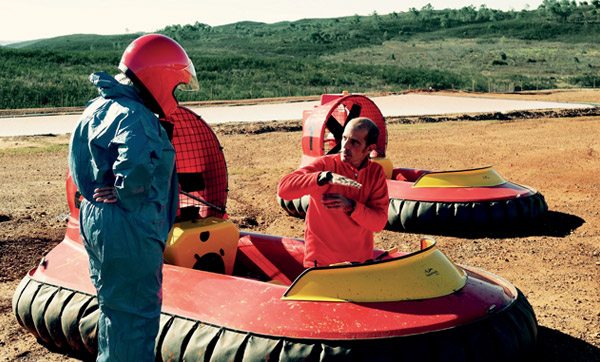
    The first of its kind in Portugal, with three hovercrafts on site and an ever- changing track, the hovertrack has been purposebuilt and the business has taken over three years of bureaucratic blood, sweat and tears to finally come to fruition. Inside Magazine took the opportunity to visit Hovertrack Portugal a few weeks after opening to meet the people who made it happen and try out the hovercrafts for ourselves. We set off from Carvoeiro taking the pretty, scenic drive up towards the Autódromo do Algarve (Algarve Racetrack) and around 20 minutes later we came across the large sign for Hovertrack Portugal on the right-hand side. Glad that we decided to drive there by car rather than bike, we went offroad, down the dirt track towards the reception cabin where we met the lovely Nuno and Fernanda.

    They showed us around the three, 300m tracks, which consist of both dry and wet areas with varying degrees of elevation and levels of difficulty to suit both novice and experienced pilots (drivers). Nuno told us: “It is different to anything anyone has ever driven or tried to drive.”

    We headed back to the reception where we watched an informative orientation/instruction video to acquaint ourselves with the machines, along with basic operating techniques and a quick safety briefing. We were then ready to put on our protective overalls

    and helmets and walked back to the track where the three, bright red and yellow hovercrafts were sitting.

    Nuno explained: “The machines have 600cc, 17kw, four-stroke petrol engines that power the fans, lifting them off the ground and use pressurised air to keep them afloat.”

    It’s pretty strange, but a lot of fun, when you start up the craft and the “tyre” fills with air – it’s a bit like riding a floating

    quad bike, if you can imagine that … Steering is not as straight forward as you might imagine and the hovercrafts can pick up some speed as they glide over land and water, but they are actually very safe as the moment you take your hand off the throttle the skirt (tyre) deflates and the craft stops.

    There are members of staff at various points on the track to guide and assist the pilot as and when they may need it. You can navigate the track at a leisurely pace if that’s your preference or, for the more adrenalineminded speed lovers out there, you can accelerate around the course and pick up some real momentum.

    We asked Nuno and Fernanda how they came up with this unique idea and an animated Fernanda explained that this is in fact her husband’s childhood dream come true: “Nuno always loved engines, ever since he was a child. When he was young, he saw a hovercraft championship on TV – it must have been around 1994 – and he never forgot it.”

    Nuno grew up working in mechincal engineering and spent a few years as a manager at the neighbouring Kartódromo do Algarve (Algarve Go-kart Track) where he could combine his love of engines and enjoy racing on the track.

    When we asked the couple how they came up with the idea, they both smiled and Nuno told us that they were sitting at home thinking about track racing and what they could do in that area, they looked at each other and in unison said “hovercraft”.

    The original project was pitched to a scheme called Portugal 2020, a partnership between the Portuguese and the European Commissions, with huge investment funding for the future. Unfortunately, the application wasn’t successful, but by this point they had invested so much time and energy into the business plan and could visualise Nuno’s childhood dream, that they took the brave decision to proceed alone.

    The investment so far, has been considerable: finding the land, attaining the appropriate planning permissions and licences, creating the tracks, buying the hovercrafts and putting themselves on the map. Of course, as the business develops there will be a need to purchase more hovercrafts, change the track and the couple has some new and exciting ideas and they are involved in discussions to reactivate the championship races again with the help of local councils.

    We did a 30-minute session, which was thoroughly enjoyable and plan on going back with a group. Prices are inclusive of

    safety/instruction briefing, protective clothing and equipment, tuition and time in the hovercraft.

    The couple has kindly extended a 10% discount to Inside Magazine readers with the regular prices being €45 for 20 minutes,

    €60 for half an hour, €90 for 45 minutes and €115 for an hour | www.hovertrackportugal.com
    Text & Photo: Mia Wallace
  • Júlia´s jams

    Júlia´s jams

    The best ingredients and traditional recipes make the jams from Doces da Julinha absolutely unforgettable. They´re also the perfect gift

    They say that every cloud has a silver lining. This could well apply to the story of Júlia Inácio: born and bred in Monchique, she worked in the hotel industry on the Algarve coast, and later in the Alentejo, until some years ago. However, the ill-fated financial

    crisis led to sackings everywhere, and Júlia was one of the victims. Back in Monchique, she thought about what she could do, but the outlook was bleak. One day, her brother, who was also unemployed, joked that they could make marmalade. “It was just a joke, but I thought ‘why not?’” Half-jokingly, Júlia answered that she was going to sell marmalade on the side of the road. And that’s how the hotel world lost an employee and the gourmet world gained an admirable jam producer. That was at the beginning of 2010.

    Since then, Júlia founded a small business called Doces da Julinha, whose catalogue comprises delicious jams made from selected fruits – each jam is made up of 60% fruit.

    When it comes to the contents, there is no limit to the imagination. Anything that can be picked in Monchique is blended in: oranges with dried figs or carobs, pumpkin with almonds, quince with walnuts, melon with strawberries…

    Other flavours include wild blackberry, kiwi, plum and fig. Of course, one of the flavours had to be the Monchique speciality of medronho (arbutus berry), as well as tomato jam, which is one of the most traditional jams in Portugal. Some jars, such as the ‘Lovers’ Jam’, have a bit of piri-piri added too, meaning there is something for all tastes. All the jams are made following old family recipes, just how Júlia’s Tel: 966 173 015 | docesdajulinha@hotmail.com mother and grandmother used to make them. There is no such thing as secret ingredients; rather the know-how begins right at the picking – Júlia only picks the ripest fruit. Besides

    sugar, fruit and water, one also needs patience and passion for what one does. “When we do something with love, the result is much better. That’s why when I’m in a bad mood or I quite simply don’t feel like it, I don’t touch anything,” smiles Júlia, who ensures that food additives, such as preservatives and colourings, can’t be found in her kitchen. The result is a range of refined and delicious jams, packaged with love and which bring colour to the breakfast table for a sunny start to the day.

    The journey has not been easy: European Union directives and regulations imposed by the Portuguese food safety authority ASAE have put plenty of obstacles in her way. “Without the support of the local Câmara, I would have given up a long time ago,” admits the producer, who recalls that, when she started, “anyone could sell their homemade goods at fairs and markets”. Then came the first regulations that led production costs to rise: she had to find a separate location for production, licences, abide by labelling

    requirements and much more. Without the local council, Júlia would never have beaten the bureaucracy.

    Doces da Julinha can be found at Loja do Medronho in Monchique’s main square, as well as at Loja das Tradições, or at Delicious Sabores (Silves) and Da Nossa Terra (Alvor).

    Tel: 966 173 015 | docesdajulinha@hotmail.com
    Text & Photo: Anabela Gaspar