Category: Must Read

  • East meets west

    East meets west

    Introducing the new menu and cuisine at one of Carvoeiro´s favourite restaurants

    Earlier this year, Chef Valdemar Guerreiro joined the team of the Pimenta Preta restaurant, at Palm Gardens, and brought his lifetime of world travels and experience with him to create a bright, vibrant and delicious fusion menu to the resort restaurant, formally famed for its white gloves and fine dining.
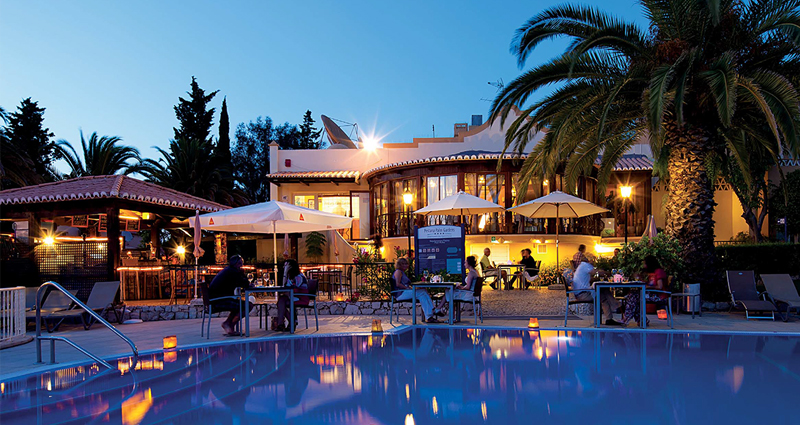
    The changes see the introduction of numerous mildly spicy dishes, with Thai, Indian and South American cuisine adding to the restaurant’s Mediterranean offerings.

    Chef Guerreiro spent some 20 years of his career working around the world both on luxury cruise liners and on land, which is evident in all the flavours packed into the dishes.

    Having spent all these years working as a chef between the USA, Mexico, Australia, Alaska, Argentina, the UK and Central America, the Portuguese-born chef decided it was time to return to his roots and be with his family again, back in the Algarve, bringing a wealth of global gastronomic tricks of the trade with him.

    During his travels, he took a few trips to Thailand, India and Japan to further improve his skillset. In Japan, he began to learn the craft of sushi-making and even dabbled in preparing the highly toxic pufferfish. Whilst in Chiang Mai, Thailand, and Goa, India, Chef Valdemar really got to grips with the oftencomplex techniques involved in preparing and blending spices.
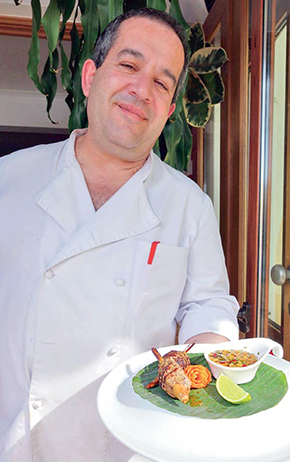
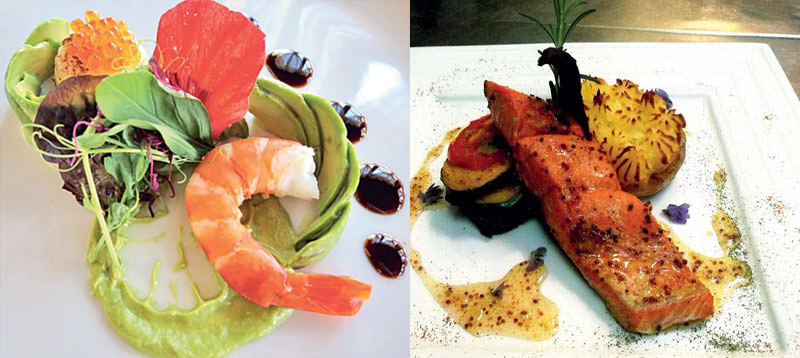
    Valdemar has a true world cuisine approach, using simple but authentic techniques. He grinds all of his own spices and makes everything from scratch for dishes such as the Thai green curry of sole, red curry monkfish and chicken tikka masala. Anyone who appreciates a well-made curry will recognise the care and attention that goes into making his sauces. When trying out the dishes, it’s always advisable to discuss the level of intensity that you prefer, as most dishes are very fragrant but not too spicy. It’s really a matter of asking the waiter or waitress to let the chef know that you would like the dish to be spiced up a bit.

    Whilst the menu features numerous authentic Asian dishes, others such as wild salmon fillets with honey, mustard and ginger sauce, offer just a slight influence in the Pacific Rim fusion style.

    We asked Chef Valdemar to choose his favourite 3-course meal from the current menu, and, as a great fish lover, he told us he has access to “some of the best fish around here. The sea is literally on our doorstep so I would go for the beautiful mixed fresh fish ceviche as a starter, a ‘meaty’ monkfish in red curry with lychees as a main course and the sticky rice with mango for dessert.”

    “The fresh flavours in this menu are perfect for the long summer here in the Algarve. I’ve created somewhat of a fusion menu, which is effectively the essence of my personal voyage and culinary experiences over the past 20 or so years.”

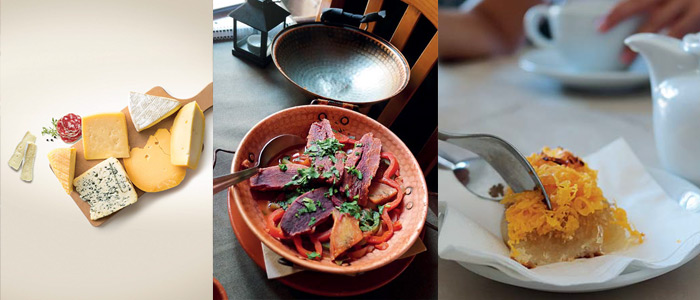
    The restaurant, of course, still has a few western classics on the evening menu, including Caprese Salad, veal loin “Rossini”, Chocolate Fondant and the fabulous, theatrical Flambéed Crepe station, which is prepared tableside.

    There really is something for everyone, at very reasonable prices considering the quality and, as always is the case at Pimenta Preta, an excellent and well-priced wine selection, which is generally something that is sorely missing when enjoying Asian flavours. With a new, bright paint job and a few small decorative touches, the restaurant is more relaxed in style now, creating the perfect harmony between venue and menu. Pimenta Preta is open daily for lunch and dinner but the full menu is only available in the evening.
     

  • Musical versatility

    Musical versatility

    There’s more to the Portuguese guitar than fado, says master player and teacher José Alegre

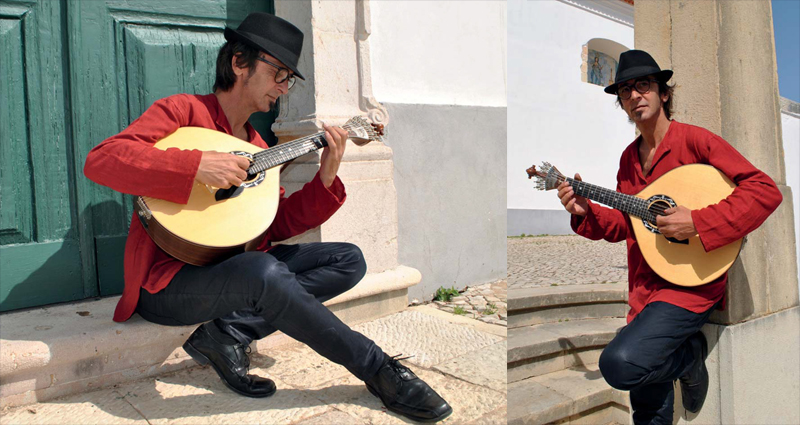
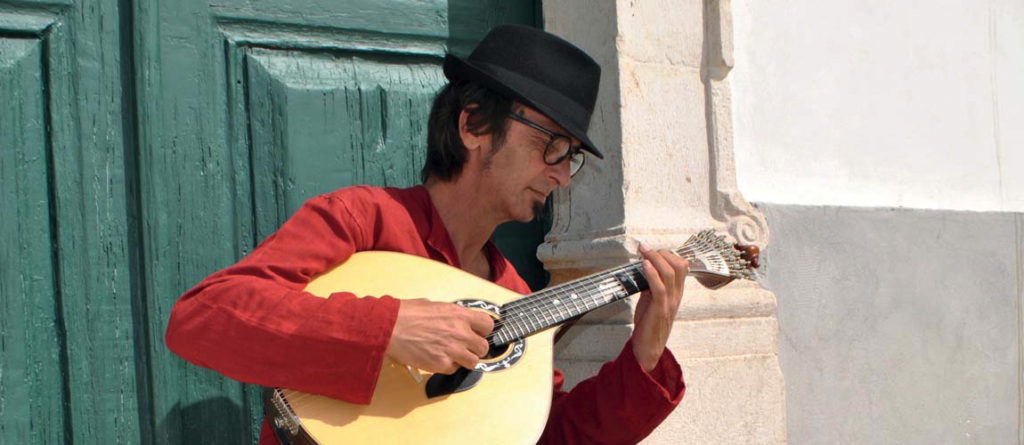
    José Alegre says he never planned to become a musician: “It just happened. Music chose and surrounded me,” he said, smiling. But it was José who chose the Portuguese guitar and made it into his instrument of choice. “It is the most important thing in my life, my partner, the box where I keep my dreams.”

    There were no music schools in his hometown of Alcácer do Sal, so José had to learn to play the guitar by himself. He moved to Faro to study marine biology and also enrolled in classical guitar lessons at the regional music conservatory. Between his music lessons and performances, there wasn’t much time left for marine biology, so he dropped out of university a year later and dedicated himself to music.

    His innate talent made it easy for him to learn not only the Portuguese guitar but also other traditional string-instruments like the cavaquinho (a small guitar, similar to the ukulele) or the viola braguesa (a guitar with 10 strings in five courses, popular in the Portuguese northwest).

    “Back then, I already had a Portuguese guitar, but I didn’t dare play such a special instrument,” recalls the musician. He was always curious about the Portuguese cittern, but also very respectful of it. “You have to be authentic when playing it,” José states.

    “The great turning point”, as he puts it, happened in 2002. Miguel Drago, a renowned Portuguese guitar player, who was originally from Vila Real de Santo António, returned to the region. “When I was offered the opportunity to learn from such a virtuous and authentic musician, I didn’t have to think twice,” explains José, adding that he owes Miguel, who sadly passed away in 2015, everything he knows.

    In 2005, José took lessons from guitarist and composer Pedro Caldeira Cabral, one of the great masters of the Portuguese guitar. Three years later, he enrolled in the first nationwide degree on the Portuguese guitar at the Superior School for Applied Arts in Castelo Branco. He proudly adds that he was the first student to complete the course.

    Now he passes down his knowledge to young talents in the music academies of Loulé, Portimão, Lagoa and Lagos. When asked what makes the Portuguese guitar so special, he answers with another question: “What makes it so special for people who have never seen the instrument before?”

    He has played in countries where this 12-string instrument isn’t known and “as soon as I take it out of the case, it catches everybody’s attention”. And there’s also its incomparable sound. “The Portuguese guitar has enormous power and its sound touches your heart.”

    When asked to describe his style, José says: “My roots lie in fado, my heart belongs to rock, but I am open to all sounds of the world.” Fado is his foundation, but his passion is to incorporate the Portuguese guitar into other genres, especially international music. As part of the group TerraXama, José Alegre, Rui Afonso (percussion) and Cátia Alhandra (vocals) mix sounds from the Christian, Jewish and Muslim cultures. “Music from the melting pot of cultures that was the Iberian Peninsula in the Middle Ages,” explains José. Another of his projects is the Fad´Nu group, which is now working on its first album, dedicated to a new interpretation of fado.

    José also performs as a soloist, which brings him great joy because while in fado the Portuguese guitar is used alongside classical guitar and “remains in the shadow” compared to the vocals, in solo concerts the instrument takes the spotlight. “It’s at the heart of the concert, where it belongs, and the audience has the opportunity to discover its unique sound,” José explains enthusiastically.

    Traditionally, the Portuguese guitar is an instrument played by men, but more and more women are developing an interest in it. Half of José’s teenage students are girls. Some of them chose this instrument because they’re interested in fado, but most of them had their first contact with the Portuguese guitar at the music school’s Open Day, where students can try every instrument. “Each student has 15 minutes to try each instrument, and many are immediately impressed by the sound of the Portuguese guitar and fall in love with it,” he explains. According to the musician, if there were more teachers, there would also be more students, but there’s a limited number of vacancies.

    José will take to the stage with TerraXama at the Algarve (In)temporal festival, in Silves, on October 13.

    Facebook: Jose Alegre Guitarra Portuguesa

    Text & Photos: Anabela Gaspar

  • Hungry for history

    Hungry for history

    Discovering the historical and gastronomic treasures of Silves

    When friends Joana Cabrita and António Guerreiro left University to travel to far away lands and follow their professional careers in international television production, arts and branding, they never imagined being back in Faro in 2017 and operating Eating Algarve Tours. Both passionate about culture, tradition and gastronomy, they decided to return to their homeland and follow their hearts.

    “We love Portugal and missed so many things when we were abroad,” Joana told us. “While chatting one day, I came up with the idea to introduce the real taste of Portugal to other cultures and thought that as we are both such passionate foodies and history geeks, a food and culture tour could be the perfect thing for us to do, and from his LA base, António was very quick to agree”.

    The pair headed back to Portugal and began putting their company together. They met with local historians, visited many establishments and handpicked authentic producers, service providers and locations for their tours.

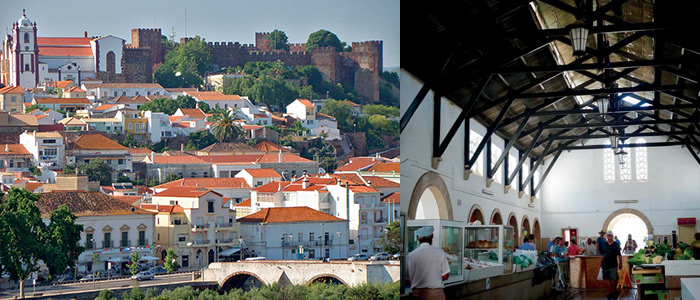
    We opted for the Arade Food Tour and met the lovely Joana at the foot of the Roman bridge in Silves, where the tour began with a brief introduction to the itinerary and we were presented with a lovely little souvenir, an Eating Algarve Tours book, with blank pages for taking notes, local recipes on the back and the company’s business card. Joana took this chance to inform us that there would be no Port Wine or pastéis de nata on this tour, as lovely as they both are, since they’re not indigenous products of the Algarve and therefore she feels that they would have no place in this tour.

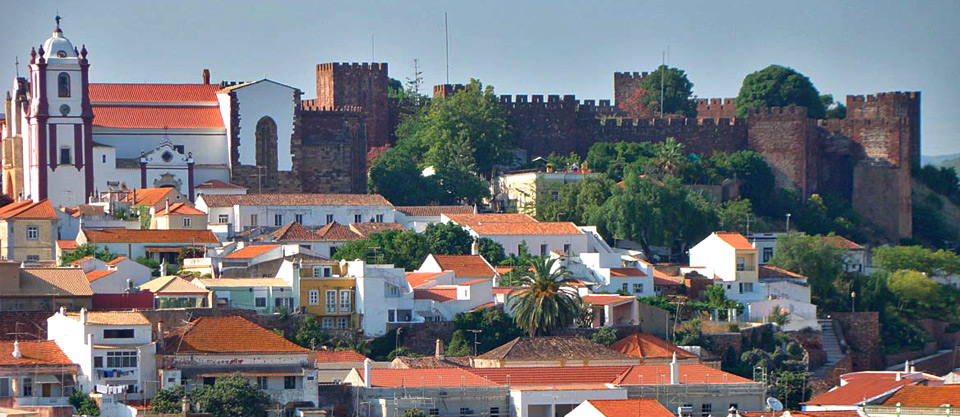
    Our tour started at 11am and began with a spot of something very Algarvean, orange picking. We harvested our oranges and headed inside to prepare our fresh orange juice, which is very hard to beat when it comes to a taste of the Algarve. After a refreshing start, we headed over to the market, where we got to grips with some of the local produce, sampled an excellent variety of liqueurs, met the people who make it all happen and hung out in a local bar, feasting on a bifana (pork sandwich). Fuelled and ready to take on the steep cobbled streets of Silves, we visited some fascinating historical monuments, museums and the castle, where Joana impressed us with her incredibly well-researched facts.

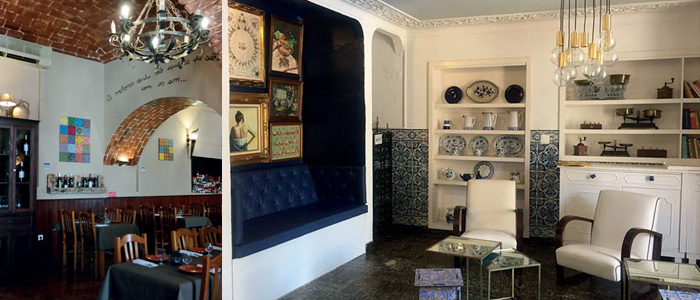
    Silves can be considerably warmer than the coast and difficult to navigate, but fortunately, part of the tour takes you into a stunning, air-conditioned, traditional café where you can sample some delicious teas and native sweets, while chatting about the experience thus far. The café is beautifully decorated  with traditional tiles, pottery and furnishings, and serves some of the best ice tea, cakes and homemade popsicles around.

    We found this spot gave us a great opportunity to pick Joana’s brain about the area and the cuisine in general, and you’ll find that she is only too happy to share her wealth of knowledge with you in her very eloquent way.

    With our sugar levels back in the right place, we carried on for a little bit more culture and a leisurely walk around Silves, appreciating the ancient capital and enjoying the energy of the old town, before heading for lunch in a tavern specialised in all things Algarvean or, at the very least, Portuguese, including a good selection of craft beers.

    Our menu, complements of the tour, consisted of a selection of petiscos (tapas), a glass of good quality, crisp, Algarve white wine and the pièce de résistance, an octopus and sweet potato Cataplana. Over lunch we chatted with Joana, who continued to deliver factual and informative anecdotes throughout the lunch, including a virtual tour of the vineyard where the wine was produced, along with some technical information about the grapes and a description of each ingredient used in the dishes that we enjoyed at the tavern. With the local dessert, coffee and digestive taken care of, the 5-hour tour came to an end.

    Eating Algarve Tours is based in Faro and currently offers three different tours, with more in the pipeline. Groups of up to 12 people work best for the food tours and the price is €69 per person without transport. If you’d like to arrange something special to get you to Silves and back, try Algarve Classic Tours VW Camper van.

    To find out more visit:  www.eatingalgarvetours.com  and  www.algarveclassictours.com

    Text & Photos: Mia Wallace

  • The Way it was… A personal account

    The Way it was… A personal account

    Photographer Tim Motion documented the Algarve during the ´60s and ´70s


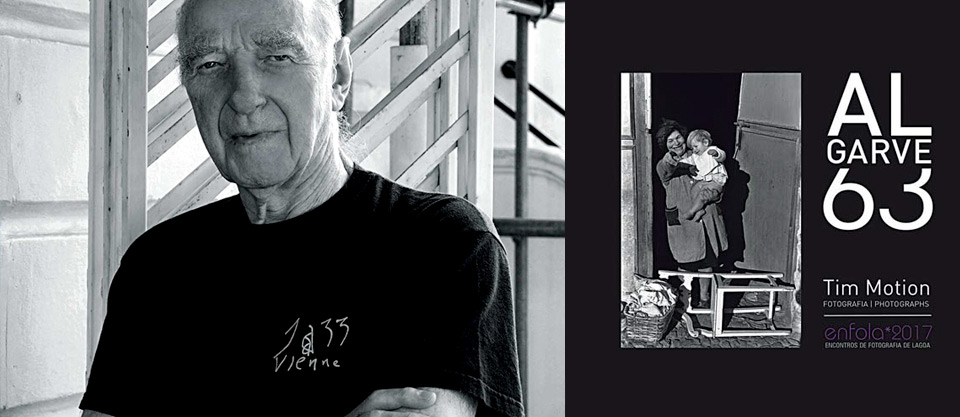
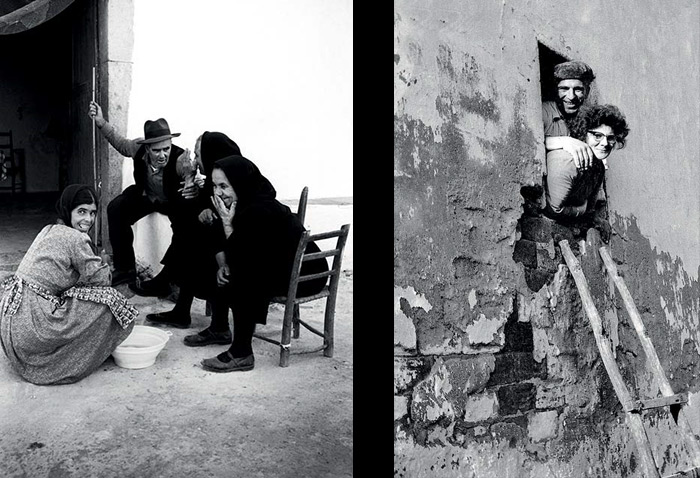
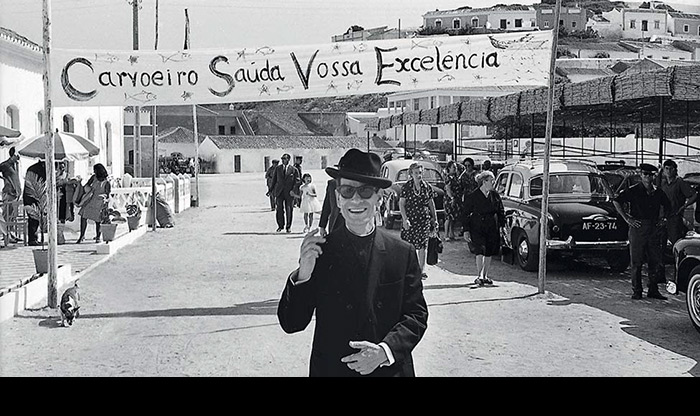
    London-based photographer Tim Motion documented the Algarve, where he lived, in the ‘60s and ‘70s. A fascinating exhibition of his photographs, entitled ‘ALGARVE 63’, is on display at the Parque Municipal das Fontes de Estômbar (Lagoa), until September 16. In addition to this, a photobook featuring his works will be on sale at the exhibition (€30) and is due to be available online too. Here he reflects on his time in an Algarve that has since changed so dramatically.

    I arrived to stay in Carvoeiro on a stormy night in December 1962. The rainwater was rushing like a river down the steep street, past the green house overlooking the beach. This was my new home and I was very happy.

    The house consisted of five rooms on the first floor including the kitchen, with bare boards and almost no furniture except two beds with mattresses stuffed with dried maize leaves – a haven for various forms of wildlife. There was a ‘bathroom’ with a cement floor, a non-flushing loo, a washbasin with a tiny mirror hooked to the wall, and a bucket. The bucket, attached to a rope, was for drawing water from the cisterna in the small yard outside, a dampening chore in rainy weather. The village did not have mains water. For hot water there was a large aluminium saucepan on the Calor gas stove. ‘What more do you need,’ I said, besides which the month’s rent was less than that for a week in one grimy room in London with a shared bathroom.

    The day after my arrival I looked out of the window to see the entire village square from the beach to the main street under six feet of blown spume from the stormy sea. This was real weather!

    There were only six foreigners in the village. The Irish painter Patrick Swift, his wife Oonagh and two daughters Kate and Julie, Claude Bourgier, a French collector of gemstones and budding poet, and his wife Marie, a French-Canadian painter. David Wight, the South African poet, was visiting. He and Swift were later to propose the idea of a book on the Algarve to a publisher in London.

    With such a limited pool for social life, any new arrival, even if staying only for a day or two, was invited to dinner, welcomed with quantities of Lagoa wine, Portuguese brandy and Irish whiskey, interrogated, argued with, examined, and entertained with Gaelic songs and recordings of Amália Rodrigues and Alfredo Marceneiro.

    The test, which is what it was, a kind of social initiation, was carried out with stringent debate, great wit and good humour. Superficial modishness and pretension were swept aside. For me, a rather naïve lad with a very English upbringing, it was a revelation. Some passed the test, some did not; I am glad to say that with my hard head we drank each other under the table. I was welcomed into the fold.

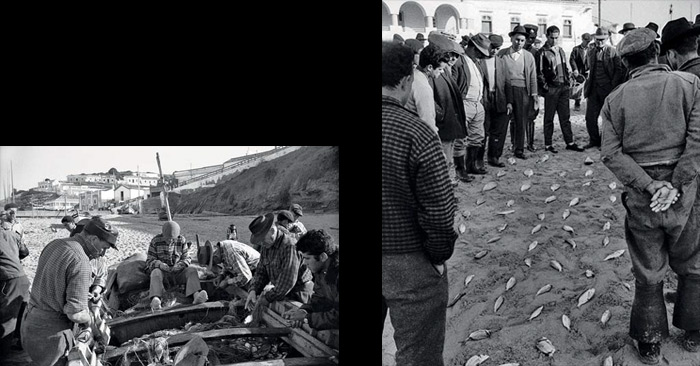
    Fish were auctioned most days on the beach, a short walk from my charcoal grill. Days were spent painting, walking in the landscape, visiting other villages and vineyards. Wine tasting was an integral part of daily life. There was no shortage of bars in Carvoeiro, as the saying was: “Taberna sim, taberna não” meaning every other door was a fisherman’s bar.

    The locals welcomed us with curiosity and friendship, and tales of hard times in the past. These were places we frequented often and, with my desire to learn Portuguese, resulted in my acquiring a marked ‘Algarvian’ accent. This caused great amusement on my visits to Lisbon, especially as most Lisbonese dismissed Algarve as being part of North Africa!

    There was also the ‘Sociedade’, which was a community hall and bar where Saturday night dances were held. These were formal affairs overseen by mothers and aunts in black at one  end, monitoring their daughters in new dresses and the testosterone – filled youths at the other end in their best suits.

    The accordionist played tangos and quicksteps, and the swishing sound of shoes across the sawdust-sprinkled floor was a prelude to the mating game. This was not too far removed from the society balls at Grosvenor House in London during

    The Debutante Season where eligible young men were listed and assessed.

    David Wright returned the next year and work began on the book Algarvea portrait and a guide. Naturally, as I had a car and a camera, I had a part to play.

    The truth is, if I had not been encouraged by Patrick Swift, the selection of photographs for “ALGARVE 63” would not  exist as they do. We embarked on this opportunity to observe and record life in Algarve with avid enthusiasm, visiting every church, chapel, taberna, restaurant, fishing port, pottery and local market we could find, communicating with local people.

    For me the most exciting and rewarding events, photographically, were the big annual animal fairs at Tavira, Faro and Castro Verde (Alentejo). Oxen, mules, horses, donkeys and cattle were bartered, dominated by the large and picturesque gipsy community. After a long hot day in the dust, we would sit in the semi darkness at a small candle-lit table behind the stalls, demolishing a bottle of medronho, the lethal liquor distilled from arbutus berries.

    Life continued in similar vein, with house building and marriage, children and occasional trips back to London and Dublin, until April 1967 when, after a two-year preparation,

    I opened a jazz bar or, as the operating licence stated, ‘taberna with music’. There was some difficulty in categorising my establishment as it did not fall within the three basic categories then existent in Portugal – tabernas, Casinos, or what were euphemistically referred to as ‘Dancings’. To describe the whole process of its formation would require another article and the subsequent lifestyle and events, a book.

    Suffice it to say that ‘Sobe-e-Desce’ was born and flourished as a disco and jazz club, with barely controlled chaos, fame and excitement for eight years. It was visited by international and local musicians, denizens of the night and high society from Lisbon and Porto, British pop stars, a Duke or two, crazy Brazilians, with after-hours dawn or moonlit swimming on Centianes beach. It was a life far removed from the tranquillity of painting and walking in the landscape.

    Text & Photos: Tim Motion

  • Free as a bird

    Free as a bird

    A new wave of camper van tourists arrives in the Algarve

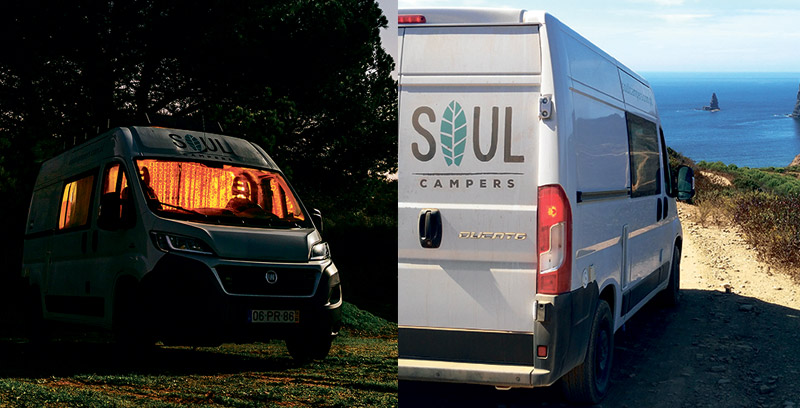
    The freedom of touring around and finding the perfect spot to spend the night has always been very attractive to me, so I was thrilled to come across a company called Soul Campers, here in the Algarve, who offered exactly what I was looking for. Not being a fan of being caught short or camping in general, popping a tent in the back of the car has never had much appeal but having a fully self-contained mobile home sounded like my idea of heaven.

    I booked a campervan that can accommodate four for my husband and I via the company’s website and was really pleased to find that they also hire out a number of useful items such as heaters, collapsible tables and chairs, surfboards and full sets of linen (ideal for people coming straight from the airport).

    We set off to São Brás de Alportel to pick up our home for the weekend and have a chat with Tânia and Pedro about their fun, new venture.

    Soul Campers started in 2015, and is run by husband and wife Pedro and Tânia Guerreiro. The couple started with four purpose built vans and, due to popular demand, they are now converting vans into campers onsite and will be doubling their fleet this year to have eight.

    Tânia told us “Pedro and I used to live in Lisbon and the idea of starting the company came after a long trip along the coast of Spain and Portugal with our old Mercedes wagon from 1991, equipped with only a mattress in the back and some camping material. Both of our childhoods were linked to nature and the sea and for some time we longed to live and to have an activity that would allow us this connection. Our grandparents are from the Algarve where we have always been vacationing, hence also the choice of location.”

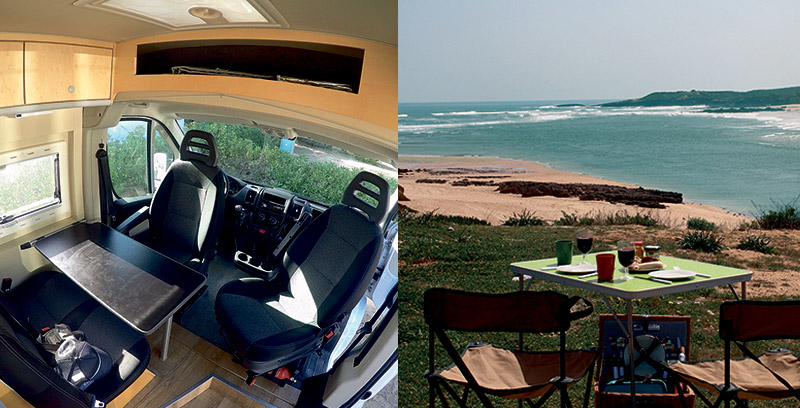
    The campervans on offer are a long way off from the old Mercedes that the couple had their road trip in, all those years ago. They are fully equipped with a fitted double bed, a shower room with a chemical toilet, a little kitchenette with a fridge, stove, crockery and everything you might need to prepare and eat a small meal aboard. There is electricity, running water, power sockets, USB chargers, a comfortable seating/dining space for four people and all of the windows are fitted with retractable mosquito nets and black-out curtains. They really have thought of everything to ensure comfort and have even gone as far as to insulate the campers with one of Portugal’s biggest resources: cork.

    We set off on our road trip and were very pleased to find that the campervan was actually very easy to drive with light steering and it was not too big so we didn’t feel like a menace on the road.

    Heading inland, the landscape changes so much that you could imagine you were in Central America. The sleepy villages and wildlife are a real treat to observe and a total contrast to the coastal areas.

    We decided to partake in a spot of “Wild Camping” which is actually still legal in Portugal. The most important thing to be aware of is that just like any other vehicle on the road, we must read the signs and abide by them. There are a few spots dotted around that have a no campervans sign and be sure to take heed, as not doing so will result in fines and potentially an unwelcome knock on your door at 2am or thereabouts to tell you to move on.

    Our trip took us up to Vila Nova de Milfontes and we stopped at every beach along the stunningly beautiful west coast on the way back down to our beachfront spot in Sagres, where we spent the night. On the second day, we continued to Lagos for lunch, with a leisurely drive back towards Carvoeiro and back inland to enjoy some time around Silves and the Dam.

    There are plenty of campsites for people who prefer to use them and on longer trips they would be very helpful to refill the water tank and meet some likeminded people but for us, the beauty of this trip was that we had no real plan when we started off. We just followed the coast and were blown away by the outstanding beauty that was bountiful.

    Tânia concluded “We believe that more than campervan rental, we offer the possibility to live unique and genuine experiences with total freedom, allowing exploration of the different landscapes and cultures. The new vans will have solar power, but for now we can only dream of the future vans that worked on renewable energy and not oil.”

    www.soulcampers.com.pt

    Text: Mia Wallace
    Photos: Mia Wallace & Soul Campers


  • Eating with your eyes

    Eating with your eyes

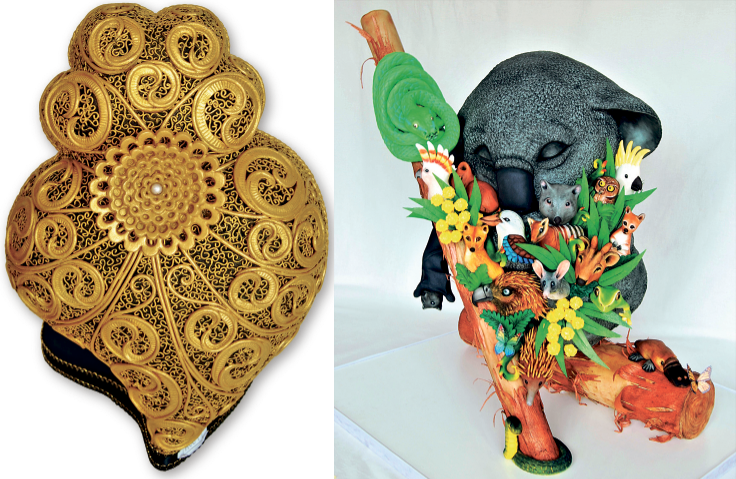
    Ana Remígio´s wonderful edible art

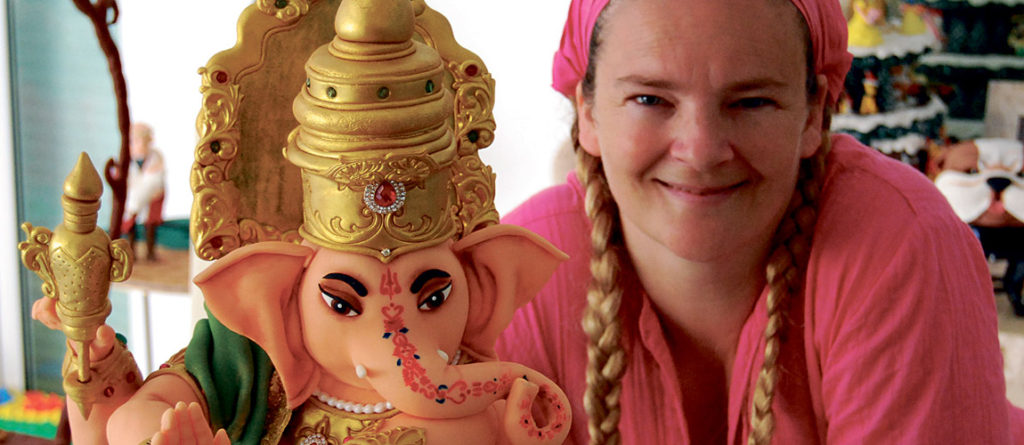
    An artist from Lagoa, practically unknown in her hometown, is steadily making a name for herself in the world of cake art. Ana Remígio, a housewife with two children of 9 and 11, only practices this craft as an artistic occupation, since from a commercial standpoint “people only see a cake. They are not prepared to pay for the many hours spent studying and building the structure, confectioning and decorating it,” she says. “This type of cake can sell from €150 to €300 in England and Spain. Here, if I ask for €50 people think it’s too expensive. I don’t make cakes, I make edible artworks,” she explains, surrounded by the innumerous pieces decorating her house, all different and all wonderful.

    It all began by chance, when a friend asked her to make a cake for her son. Passionate about confectionary since childhood thanks to her mother and grandmother, who used to make doce fino (a traditional marzipan cake, usually moulded into different shapes like animals or fruits), Ana started practising her craft for family and friends.

    The cakes for sale “are usually made with a dry and hard sponge cake, to support the sugar paste sculpture added on top. The bases of mine can be diverse, like fruitcakes, chocolate or carrot cakes, and many other possibilities,” she says. “When people slice into my cakes, they are often surprised to find that they are actually very appetising, contrary to what they expected.”

    Ana says the three-dimensional cake can reach considerable weight and height. “Sometimes it can weigh as much as 15 kilos. I need to consider every variable so it won’t fall apart. First I study where and how to place all the partitions so that they support the whole piece and allow for safe transportation. Only then do I start building the cake, and finally, the last step is decorating”. Between the second and third stage, the cake is frosted with a layer of sugar paste, which seals in the filling, preserving it without losing its gastronomic qualities.

    Ana only started competing last year, because she wanted to know how much her art was worth, when compared to the other offers in the market. Her other motivation was, of course, learning. She started in a small and very old contest in Ireland. The organization informed her that winning a
    bronze medal there would be like winning gold in other competitions of the sort, due to the high demanding criteria. She participated and earned that exact distinction, which made her want to
    go even further.

    The Cake International competition organizes three annual events in the United Kingdom. In August 2016, Ana Remígio went to London and won two gold medals, one silver and one bronze. In Birmingham, in November, during what is considered to be the biggest and most important contest, she won five gold medals and one silver. The bakers compete in 20 different categories and Ana won the silver medal in the cupcake category, one of the most complicated, along with wedding cakes.

    “Later, after the awards were handed, the judge told me the only reason I didn’t win the gold was because the figures were slightly bigger that they should be,” making it only a matter of detail.

    After her success in the competition, Ana created a new set of goals for herself: to upgrade her silver medal in the cupcake category to a gold one and to be Best in Show.

    This year she achieved both those goals at the Cake International in London, in April. Over 500 bakers from all over the world competed and Ana Remígio proved her talents once again, entering three cakes and bringing home two gold medals, and a silver. The golden prize was won in the coveted cupcake category, and her piece was also considered Best in Show. In fact, the judges told her she had elevated cupcakes to a new level, as it was the first time a piece from this category achieved such a merit. Ana was also nominated for the 1st Annual Golden Tier Awards, a ceremony celebrating the best of the best in the industry. She competed for Collaboration of the Year, along with the Caketastics (an international group of cake artists) and for the American Cake Decorating People’s Choice Award.

    Dared by her husband, Ana is thinking of immortalizing some of her works in clay, as the moulding technique is similar. This would keep them from spoiling and could inspire the imagination and creativity of new generations who want to follow in her footsteps. Ana’s main goals now are to continue her work, which she loves, to keep competing internationally and to give workshops and master classes.

    Cakes & Dreams Portugal: www.facebook.com/byAnaRemigio

    Text: José Garrancho
    Photos: Ana Remígio